Can You Wear Glasses Or Contact Lenses On A Dolphin Swim?
A practical answer for spectacle and contact lens wearers booked on an Adelaide or Kangaroo Island dolphin swim, including the prescription masks carried on the Glenelg boat.
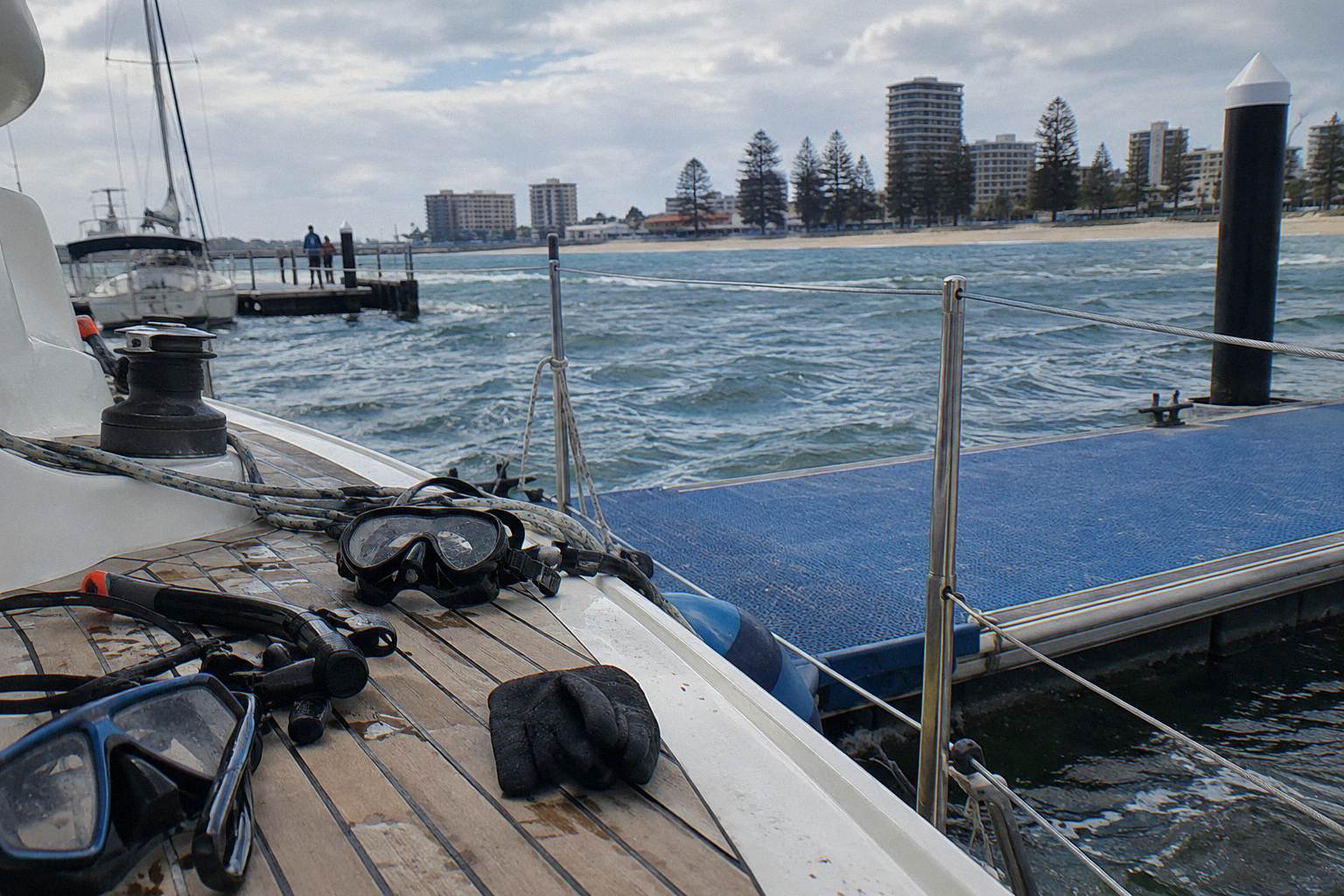
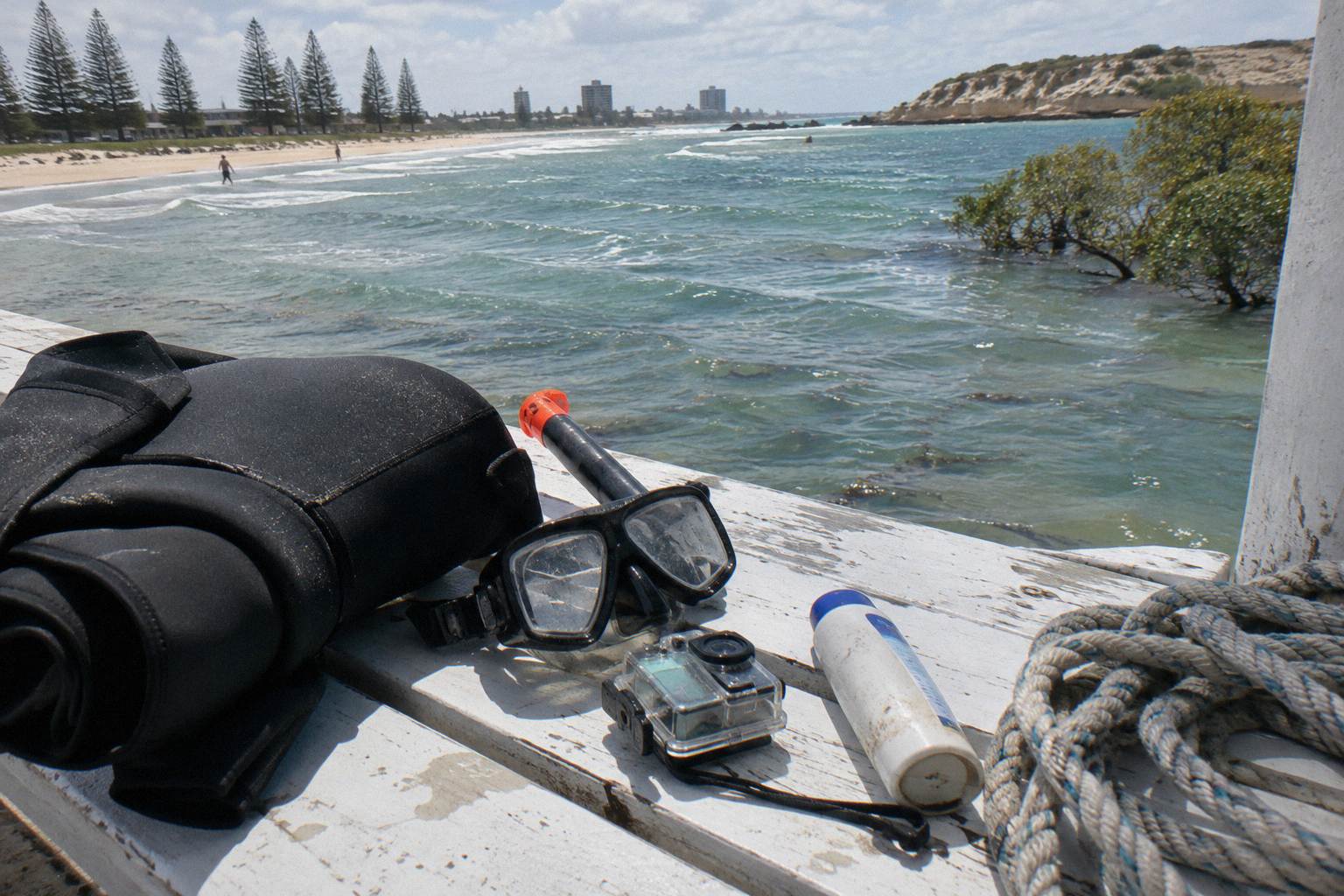
A snorkel mask works by pressing a soft silicone skirt against the skin of your face, and anything sitting under that skirt, including the arms of a pair of glasses, breaks the seal and lets water in. That single mechanical fact shapes the whole answer for anyone who needs vision correction on a dolphin swim. Masks and snorkels are demonstrated at the crew briefing on the Glenelg trips, and the operator there carries prescription masks on board. Contact lens policy is not stated by either swim operator, so it is a question to ask before booking rather than something to assume.
This page sets out only what the operators themselves publish, what the booking pages state, and where the record is simply silent. Where a fact is not stated anywhere official, it says so, because guessing about your eyes on a moving boat is worse than asking one question by email.
Ordinary glasses cannot go under a mask, because the mask seals against skin and a spectacle frame breaks that seal; contact lens rules are not stated by the two South Australian swim operators, so ask before you book; and the Glenelg operator carries prescription masks on board in strengths of -1.5, -3 and -4.5, which it demonstrates at the briefing alongside the mask and snorkel.
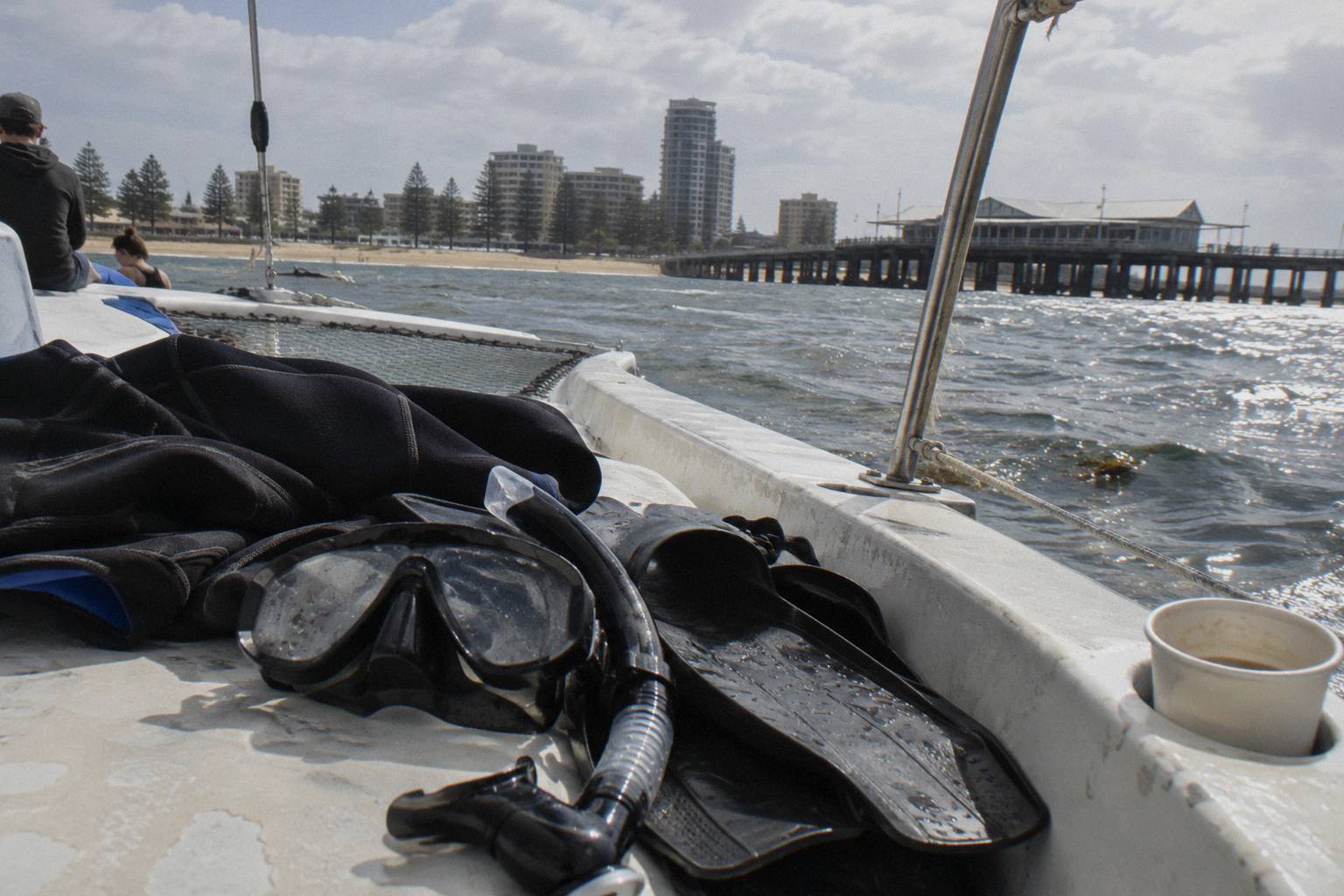
Start with the mechanics, because they settle the glasses half of the question on their own. A mask has to hold a pocket of air over your eyes, and it does that with a skirt of soft silicone that presses evenly around your eye sockets and the bridge of your nose. Slide a pair of spectacles under it and the arms cut channels through the seal at your temples. The mask floods, partially or completely, every time you duck your head or the boat's wake washes over you. No operator needs to ban this, physics already has.
The contact lens half is genuinely less settled. Neither the Glenelg swim operator nor the Kangaroo Island Ocean Safari publishes a contact lens policy on the pages researched for this site. Plenty of snorkellers wear lenses in the sea every day, but a controlled dolphin swim adds its own quirks: you hold a flotation line at the stern while the boat moves slowly, water washes across your face on entry and exit, and the crew may rotate you between two swim positions. Whether any of that matters for lenses is a question for the operator, not for a travel article. Ask before booking, in writing, and keep the reply.
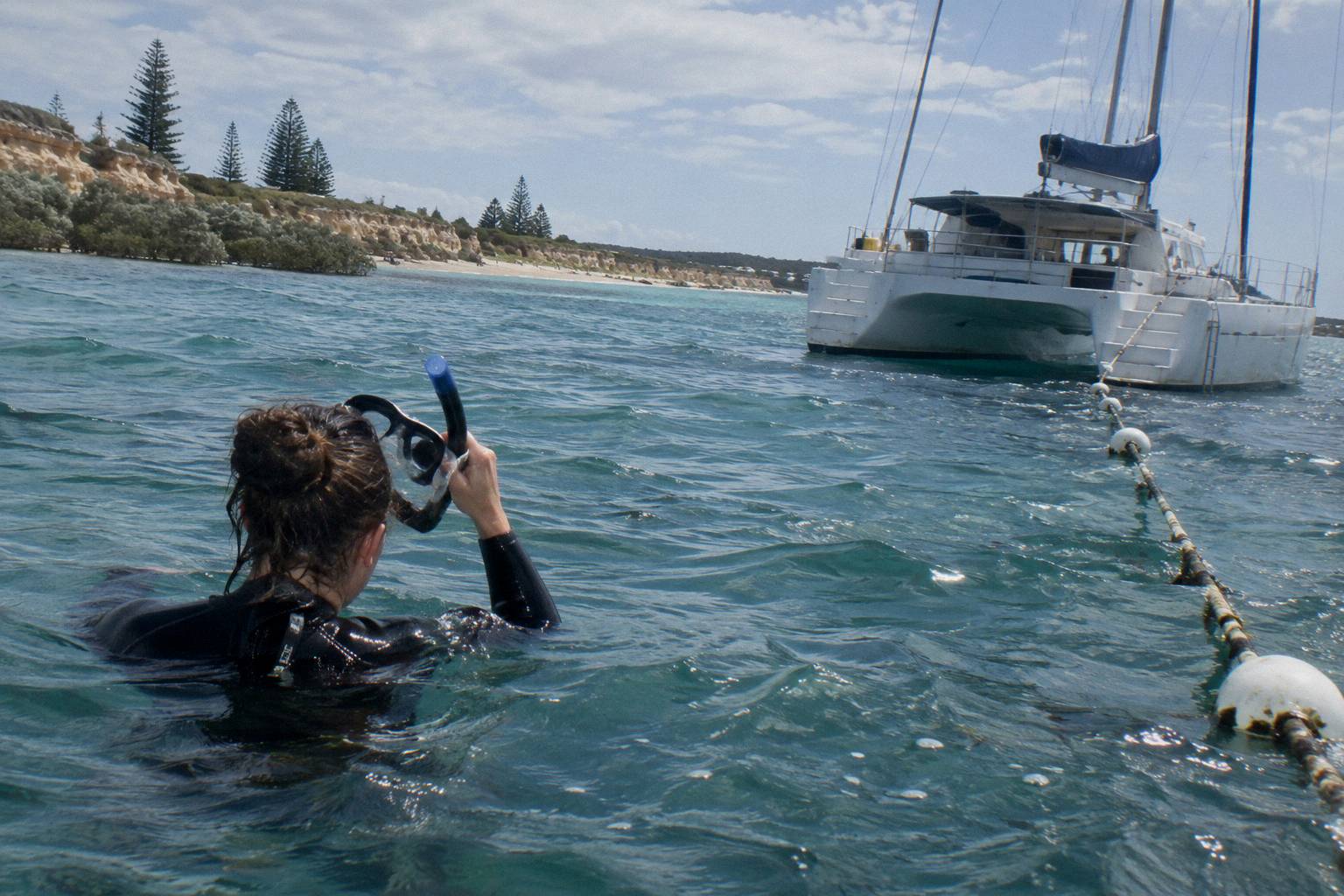
That leaves the option the Glenelg operator has already thought through. Its FAQ and tour pages state that prescription masks are carried on board in three strengths, -1.5, -3 and -4.5, and that the crew demonstrates the mask and snorkel during a briefing of about 15 minutes before anyone enters the water. If your correction falls outside those three strengths, that is again a question to send the operator before you pay, because a mask that nearly matches your prescription is not the same as one that does.
The choice between the three trips above is partly a vision question. The Wild Dolphin Swim From Glenelg With Temptation Sailing is the one whose operator publishes anything at all about eyesight, listing from USD 104 per person, rated 4.7 across 493 reviews, about 4 hours on the water, minimum age 9, with wetsuit and swim gear included. The Kangaroo Island Ocean Safari Swim, from USD 132 per person and rated 4.4 across 137 reviews, is 2 hours, also minimum age 9, also with wetsuit and gear included. The Wild Dolphin Watch From Glenelg, from USD 62 and rated 4.8 across 409 reviews, is watching only, which changes the eyewear question entirely, more on that below.
What The Glenelg Boat Actually Carries For Eyes That Need Help
The operator states that prescription masks are on board in strengths of -1.5, -3 and -4.5, that masks and snorkels are demonstrated at a briefing of about 15 minutes, and that every swimmer gets a full-length 5 mm wetsuit; it says nothing about contact lenses, and nothing about glasses worn under a mask, so both of those remain questions to ask.
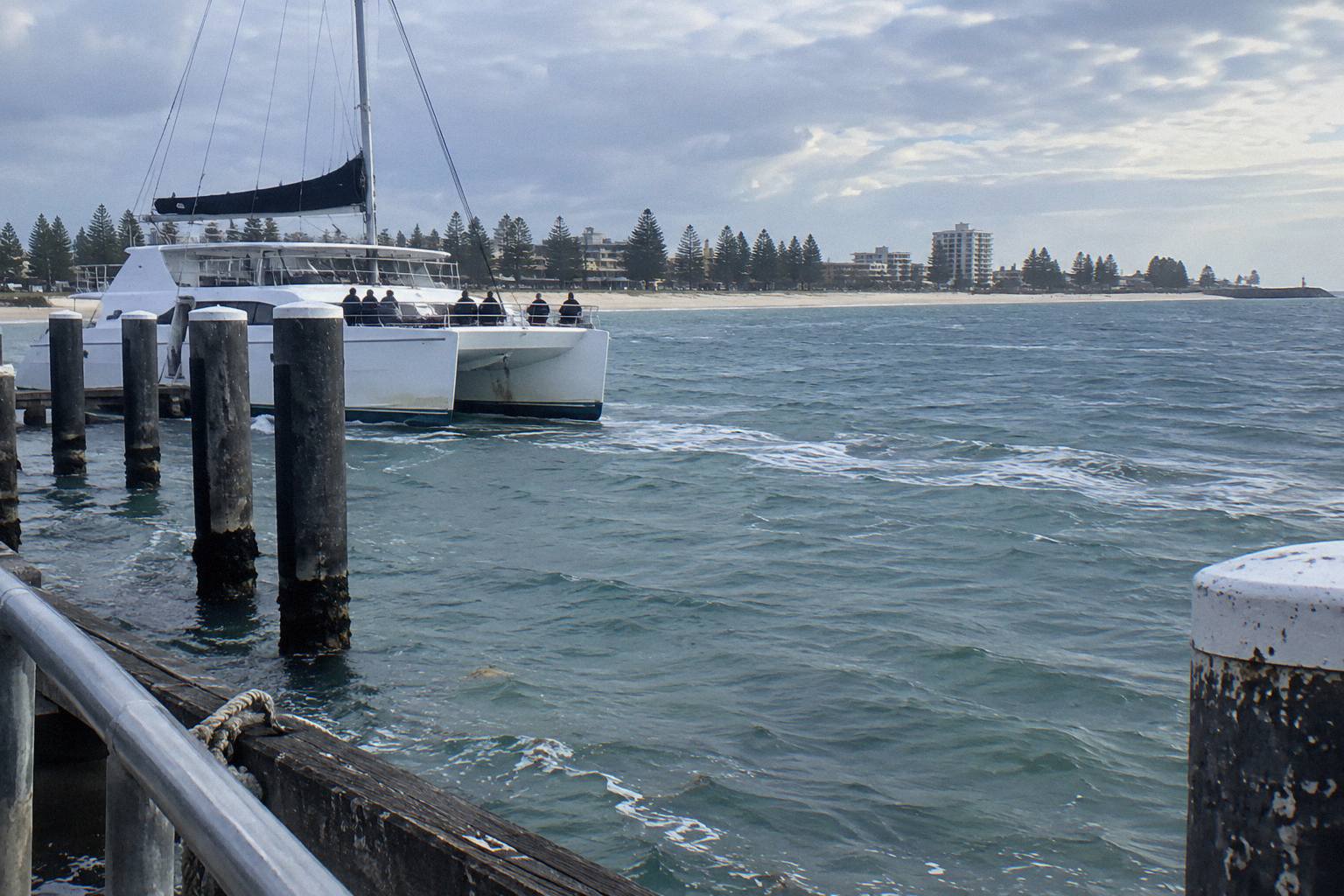
The Glenelg swim runs on a vessel the operator describes as a 58 ft sailing catamaran surveyed for up to 50 passengers, boarding at Marina Pier, Holdfast Shores Marina, at the bottom of the stairs in front of the Oyster Bar, with boarding starting 15 minutes before a morning departure. The tour goes for approximately 4 hours, with the boat back in the marina between 11:30am and midday; the exact departure time appears on your booking confirmation. The operator says it has run dolphin swim and watch tours from Glenelg since 2002 and calls itself the first vessel in South Australia given a licence to swim with dolphins, which is its own statement, not this site's.
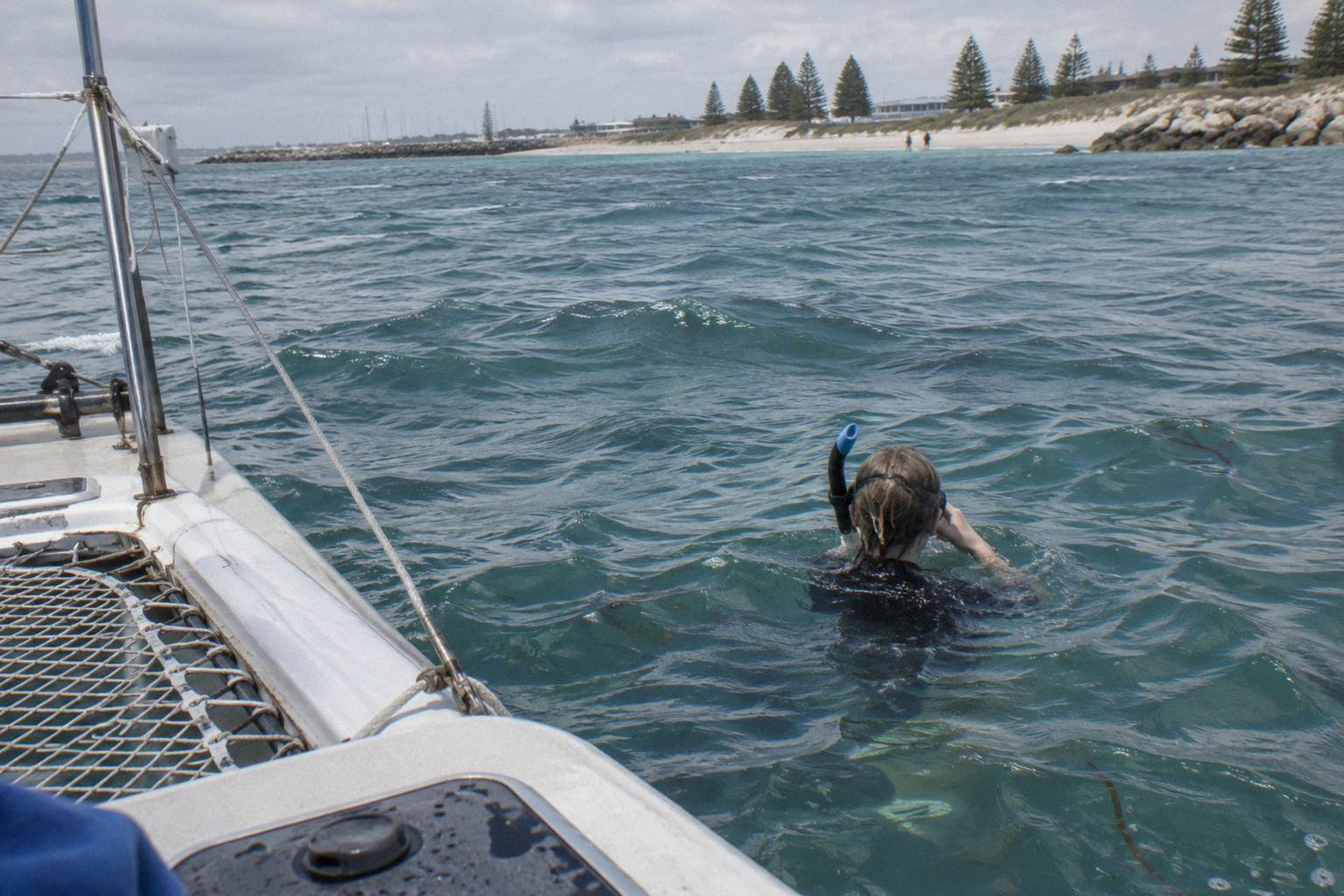
None of that is eyewear trivia. It is the context in which the prescription masks matter. You board, you are fitted with a wetsuit that the operator says also acts as a full body flotation device, and you sit through a briefing where the crew shows everyone how the mask and snorkel work. That demonstration is the moment to test one of the three prescription strengths against your own correction, before the boat has left the marina, and to say something if the fit or the strength is wrong for you. Wetsuits run to size 4XL and life jackets are carried but not used for the swim, so the fitting stage is thorough, and the mask fitting is part of the same flow.
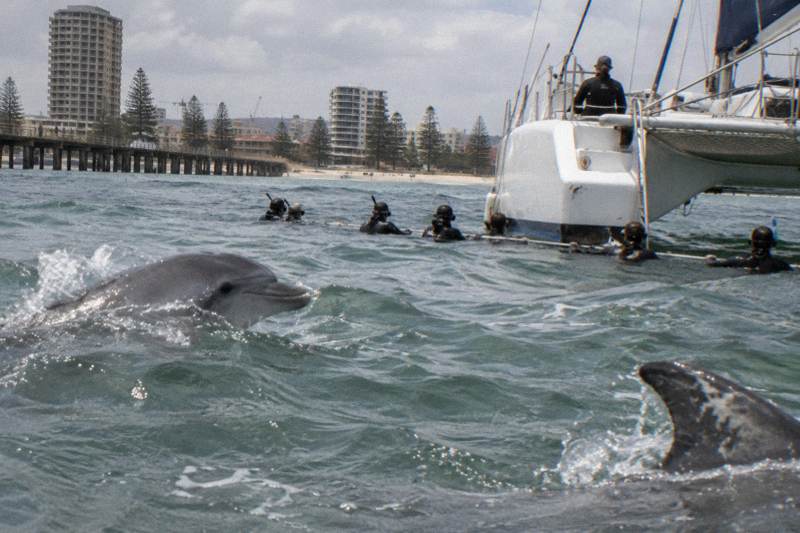
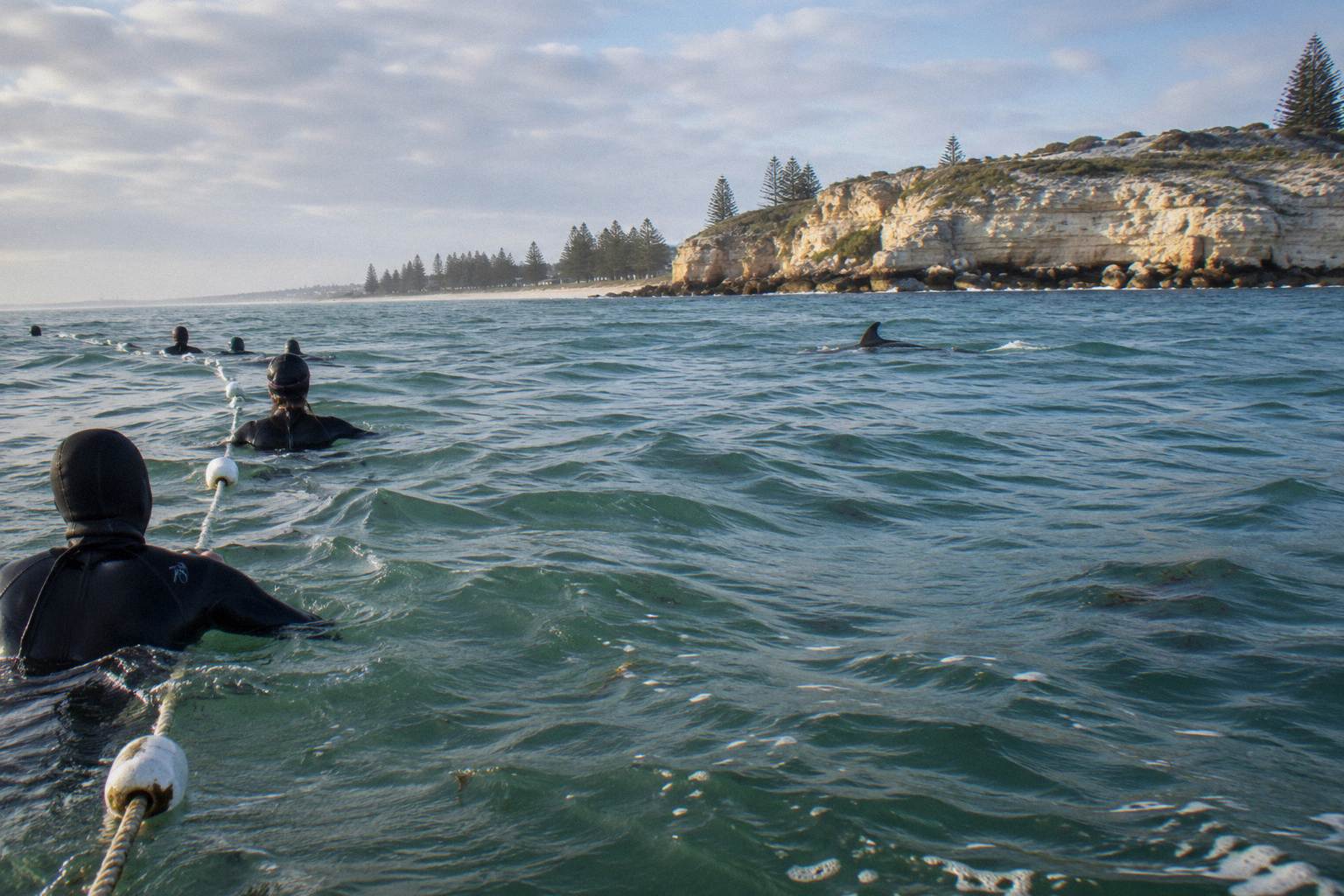
The swim itself is controlled rather than free. All swimmers hold a flotation line connected to the stern while the boat moves slowly, there are two experiences, Front Swim and Back Swim, and swimmers are rotated between them. The crew puts swimmers in only once dolphins have turned toward the boat and stops entries when the dolphins get too close. For a swimmer whose main worry is losing a lens or a mask, it helps to know that this is a line-hold in the boat's wake, not an open-ocean freestyle session, though water does cross your face on entry, on the line and at the ladder, which has three rungs to climb.
Contact Lenses: What Is Stated, And What You Should Ask
Neither swim operator states a contact lens policy anywhere this site could verify, so there is no published rule to quote; the honest position is to ask the operator in writing before booking, covering rough water, mask removal on the boat, and what happens if a lens is lost mid-swim.
It is worth being precise about why this article will not fill the gap with general advice. Travel content often does: it says lenses are fine, or daily disposables are safer, or you should close your eyes on entry. None of that appears on either operator's own pages, and none of it is this site's to claim. Eye-health advice belongs to clinicians, and operator policy belongs to operators. What a good article can do is tell you exactly where the silence sits, so your one pre-booking email asks the right things.
For the Glenelg trip, useful questions include whether the crew is used to swimmers in lenses on the line-hold swim, whether you can request one of the three prescription masks instead, and what the protocol is if you need to stop and clear your eyes mid-trip. For the Kangaroo Island trip, where a swimmer line with buoys is often used at the back of the vessel and the operator says reasonable swimming ability is recommended, the same questions apply, plus one more: the operator provides gloves as well as the standard gear, and you may want to confirm the mask fitting process at the 30-minute pre-departure check-in.
One practical note that is stated, and that touches your eyes indirectly: SA Health's algal bloom advice says beaches can still be enjoyed, but to stay away from foamy or abnormally coloured water and to rinse afterwards. Rinsing your face and eyes after any sea swim is ordinary good practice on metropolitan water, whatever eyewear you choose. The official health advice page puts it simply: if the water is clear, it is fine to swim.
| Vision option | What is actually stated | Where it stands |
|---|---|---|
| Glasses under the mask | Not offered; a mask seals against skin and a frame breaks the seal | Settled by the equipment itself, leave spectacles aboard |
| Contact lenses | No policy published by either swim operator | Ask the operator in writing before booking |
| Prescription mask, Glenelg | On board in -1.5, -3 and -4.5, demonstrated at the briefing | Stated by the operator; confirm your strength fits one of the three |
| Prescription mask, Kangaroo Island | Not mentioned on the operator's snorkelling page | Ask the operator; do not assume |
| Watching only, no mask | Wild Dolphin Watch from USD 62 and Port River cruise from USD 60 | Wear your glasses the whole trip; no eyewear question at all |
The table is the whole decision in five rows. If your correction matches one of the three Glenelg mask strengths, the question is largely answered. If it does not, or if you wear lenses and dislike unanswered policy, the watch-only trips remove the issue completely, and they are cheaper into the bargain.
The Kangaroo Island Swim And The Question Nobody Has Answered
The Kangaroo Island Ocean Safari provides wetsuit, gloves, mask, snorkel and fins on its 2-hour Snorkelling Safari and says water temperatures sit between 14 and 15 degrees, but its published pages say nothing about prescription masks or contact lenses, so the same ask-first rule applies, from USD 132 per person, rated 4.4 across 137 reviews.
The Kangaroo Island product is described by its operator as a swim with wild dolphins or among seals, and the page is candid that a given departure may turn out to be dolphins only, seals only or a coastal snorkel. Swimmers meet at the Kangaroo Island Information Stop, 43 Howard Drive, Penneshaw, 30 minutes before departure for fitting and a safety brief. The vessels are described as 28-seaters, and the operator's own statement is that the water is between 14 and 15 degrees, with thick wetsuits allowing participation year round. Cool water on your face is a constant of this trip, whatever month you choose.
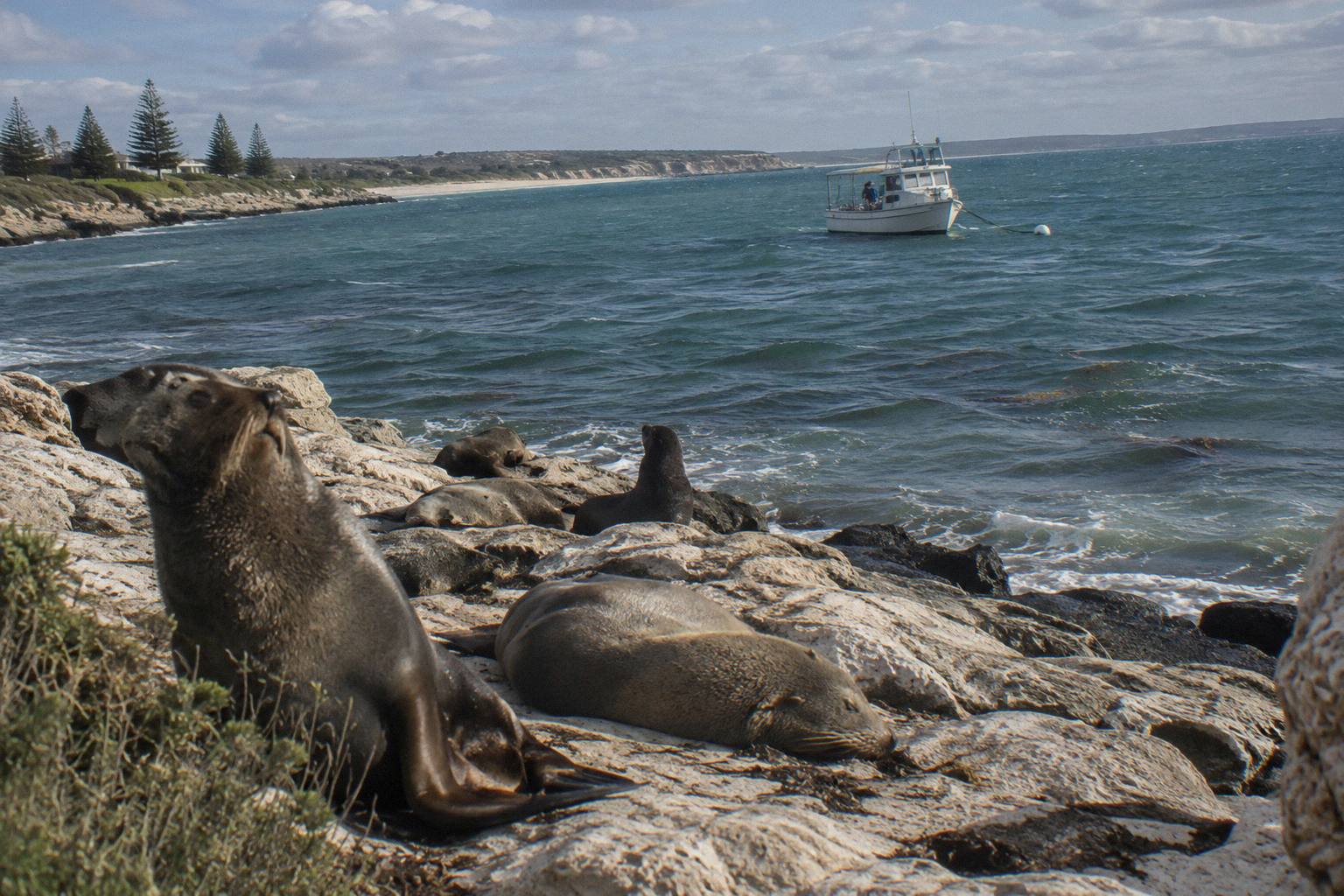
For eyesight, the page is silent, and this site will not invent a policy. The operator's own snorkelling safari page lists the gear provided and nothing about prescriptions, so if you book this trip, ask specifically whether prescription masks are available or whether you should plan around lenses. The operator also states that the dolphin swim uses a swimmer line with buoys at the back of the vessel requiring upper body strength, with a ladder exit needing lower body strength, and shark shields fore and aft. None of that mentions eyes, but it sketches the physical setting your eyes will be working in: a line-hold behind a moving boat, in cool water, with a climb back aboard at the end.
The operator's refund position is also worth knowing before you commit, because it interacts with any hesitation about eyewear. Wildlife interactions are not guaranteed, and the operator states plainly that if you get in the water at any stage, you do not get any money refunded. The operator's snorkelling safari page carries that wording, and its FAQ adds that dolphins are present year-round around Kangaroo Island while sightings cannot be promised on every trip. A swimmer who hesitates over a mask or a lens on the day is therefore making an expensive hesitation, which is one more reason to settle the eyewear question by email first.
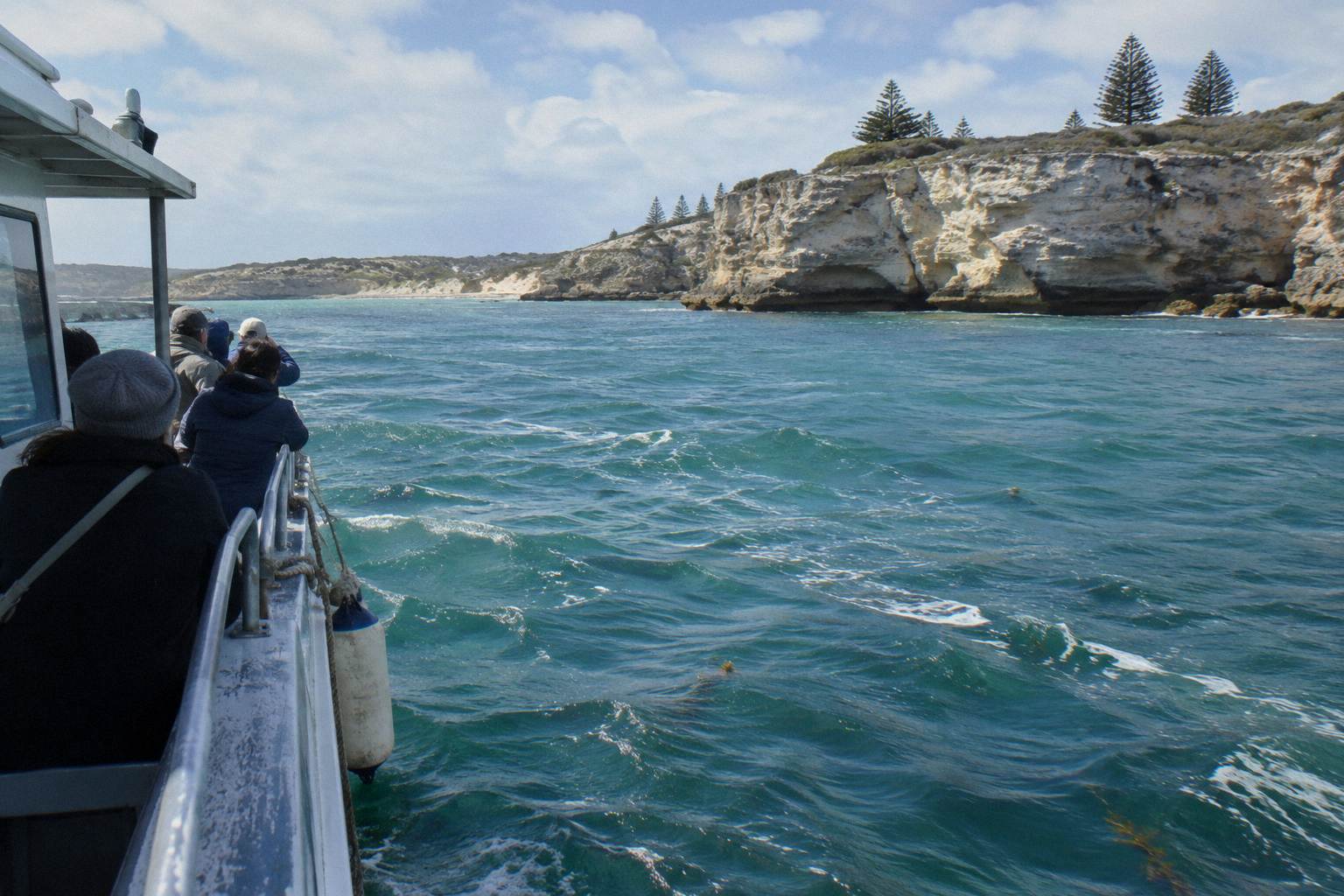
Swimmers must be 9 or older for the swim, children 3 to 12 pay a child rate, infants 2 and under are not available for the swim, and a coastal snorkel is offered from age 8. The operator also lists the trip as not suitable with a pacemaker or pregnancy, with no wheelchair access. The booking page shows free cancellation up to 24 hours; the operator's own terms run in tiers, with a full refund if the operator cancels for minimum numbers, weather or unforeseen circumstances with no alternative time, rescheduling with more than 48 hours' notice, and credit held 24 months for late cancellations.
If You Would Rather Keep Your Glasses On: The Watch-Only Trips
Watching-only trips need no mask at all, so you keep your spectacles on the whole time: the Wild Dolphin Watch From Glenelg runs about 3.5 hours from USD 62 per person, rated 4.8 across 409 reviews, and the same Glenelg boat carries swimmers and watchers together, so mixed groups can travel on one booking.
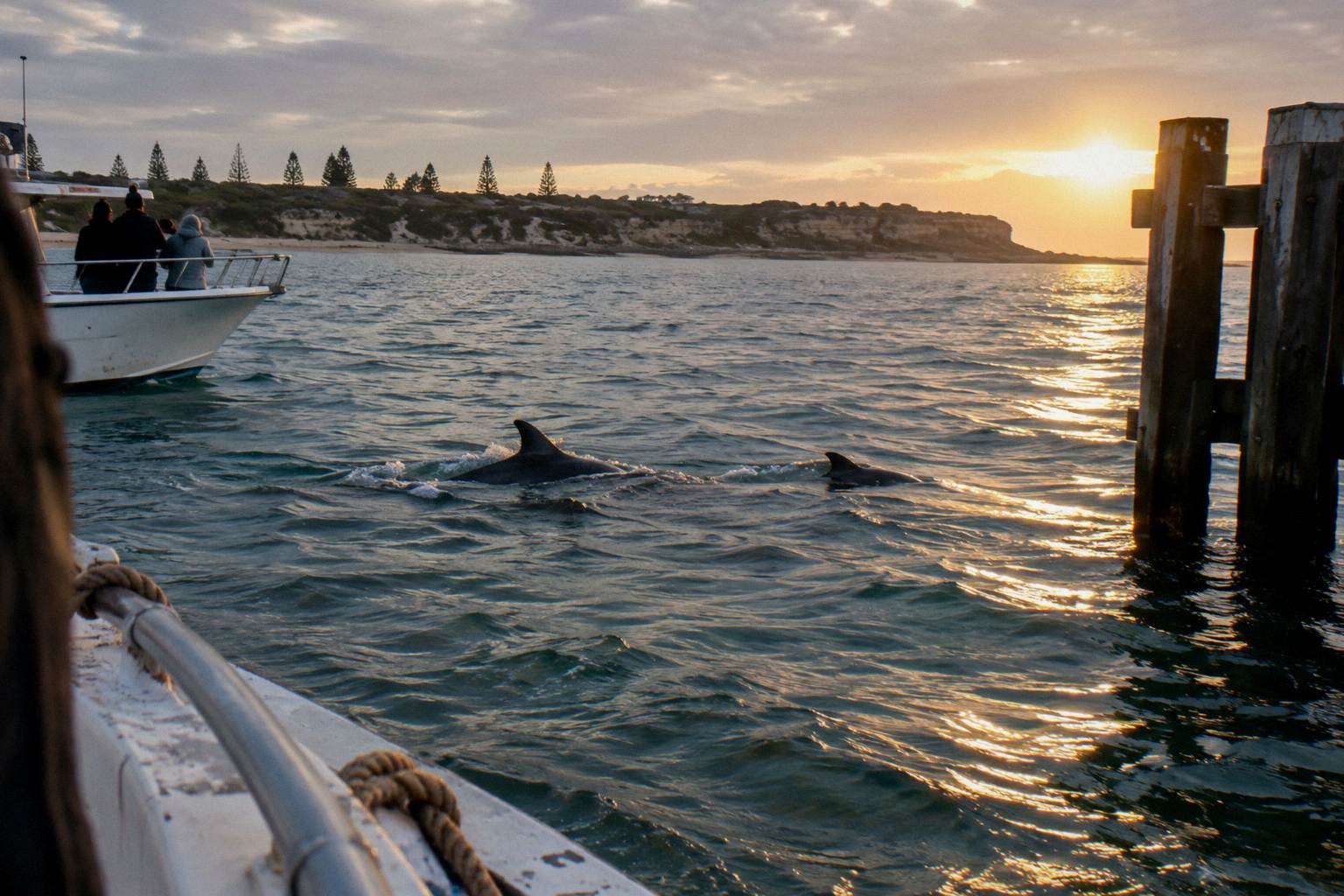
This is the option many mixed parties stumble into happily. The Glenelg operator runs swim and watch guests on the one boat, booked together or separately, and a non-swimmer or a nervous swimmer can ride as a watcher on the same vessel. For a swimmer whose eyesight makes the mask question genuinely awkward, the watch ticket is not a consolation prize: dolphins are watched from the deck, glasses stay on your nose, and the operator's own claim is that it has never had a day without seeing dolphins from above the water, with its tour page stating a 100% success rate of seeing dolphins onboard since 2002. That is the operator's claim, about above-water sightings only, never a promise about what a swimmer sees underwater. More of these guides are collected on Adelaide Swimming With Dolphins.
Two other watch-only trips serve the Adelaide region. The Port River Dolphin Cruise, from USD 60 per person and rated 4.5 across 481 reviews, runs 1.5 hours through the Adelaide Dolphin Sanctuary, the Port River and Barker Inlet estuary north of Port Adelaide, a quite different waterway from the Glenelg swim area, and one where the resident dolphins are Indo-Pacific bottlenose dolphins. The Dolphin Sanctuary Kayak Tour, operated by Adventure Kayaking SA, from USD 54.72 per person, rated 4.8 across 300 reviews, is paddling only with a minimum age of 8, and a paddler can wear glasses with a retainer far more easily than a swimmer can wear them under a mask. Durations for the kayak tour are not confirmed, so none is printed here.
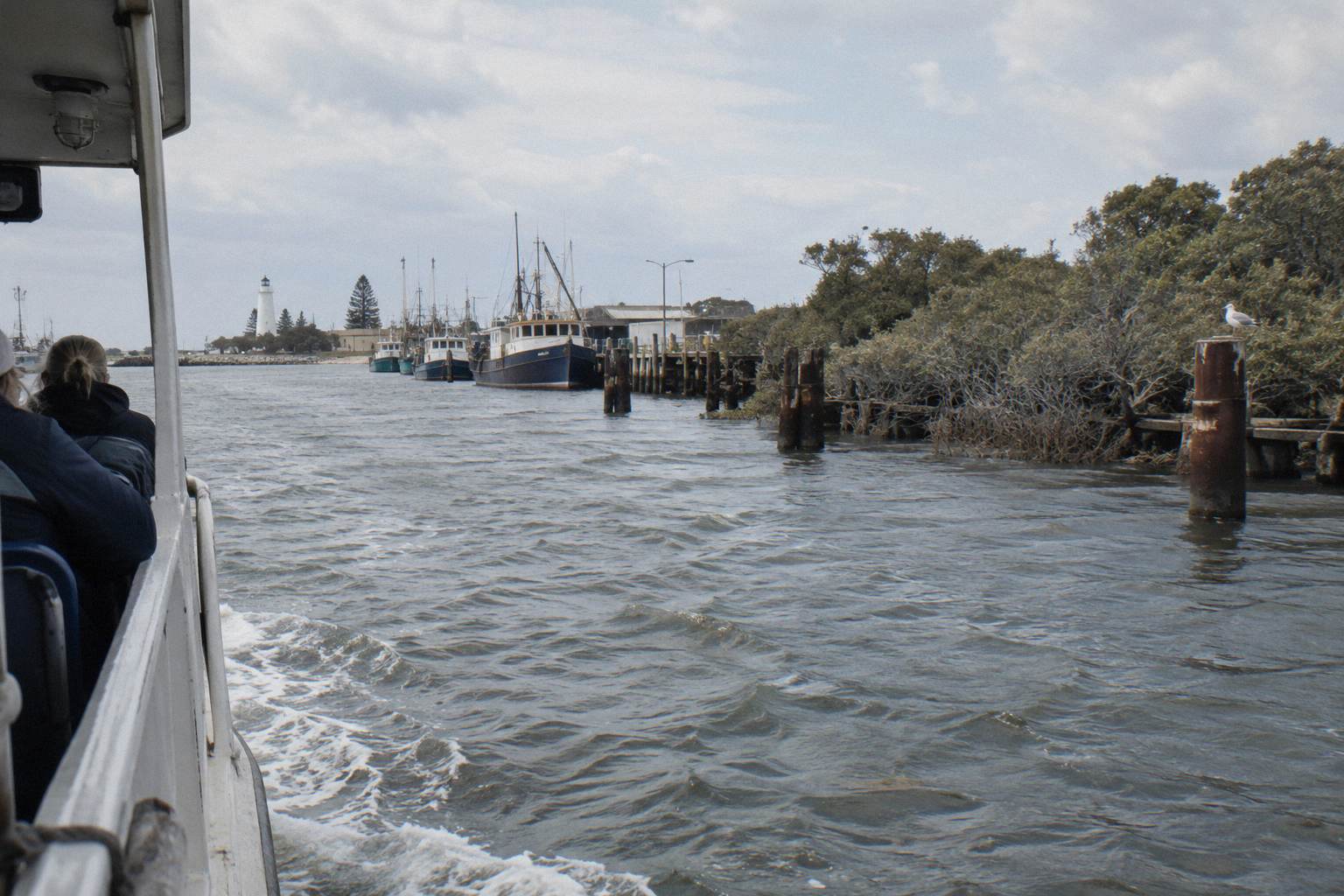
The trade-off is honest and worth stating plainly. A watcher does not get in the water, does not need the 5 mm wetsuit, does not hold the line, and does not face the eyewear question at all. A swimmer gets the water-level encounter and carries every practical problem this page describes, mask seals included. Neither choice is the soft one; they are simply different products at different prices, and the price gap is real: from USD 62 to watch from the Glenelg boat against from USD 104 to swim from it, both with free cancellation up to 24 hours on their booking pages.
How The Swim Works, And Why It Matters For Your Mask
The Glenelg swim is a controlled line-hold, not free swimming: all swimmers hold a flotation line connected to the stern, the crew enters swimmers only once dolphins turn toward the boat, and two swim experiences, Front Swim and Back Swim, rotate swimmers between them, with two shark shields on the back swim and none on the front.
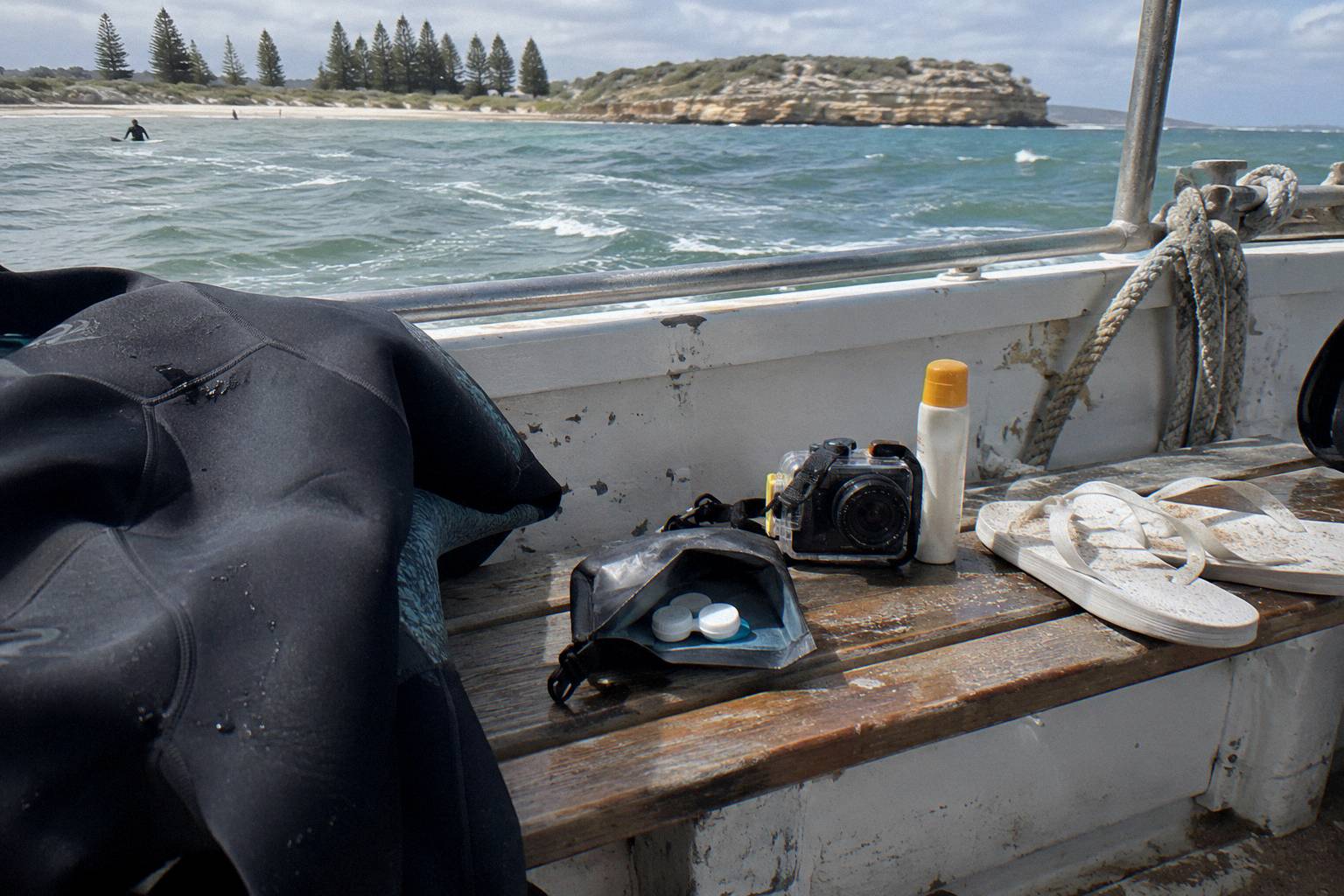
The relevance to eyewear is straightforward. A swim in which your face crosses the surface repeatedly, in water that the operator itself calls between-season cool, is a swim in which your mask gets cleared, adjusted and possibly removed more than once. Adelaide sea temperatures run from around 14 °C in August to around 21 °C in February, so on almost any date in the September to April season your face is in water cool enough to make eyes water on their own. Anyone in contact lenses should fold that into the question they send the operator, and anyone relying on a prescription mask should expect to handle it with wet, cold hands on a moving deck.
The briefing is where all of this is meant to be settled. The operator describes a crew briefing of about 15 minutes in which the mask and snorkel are demonstrated, prescription masks in the three strengths are available, and swimmers learn the line-hold and the ladder. Marine biologist hosts are aboard. The operator also says that if a swimmer does not feel confident after the briefing, they may stay aboard as a watcher, and for bookings made direct with the operator the swim-minus-watch difference is refunded; nervous-swimmer terms like that belong to direct bookings, and resellers may carry their own terms, so check which applies to your ticket.
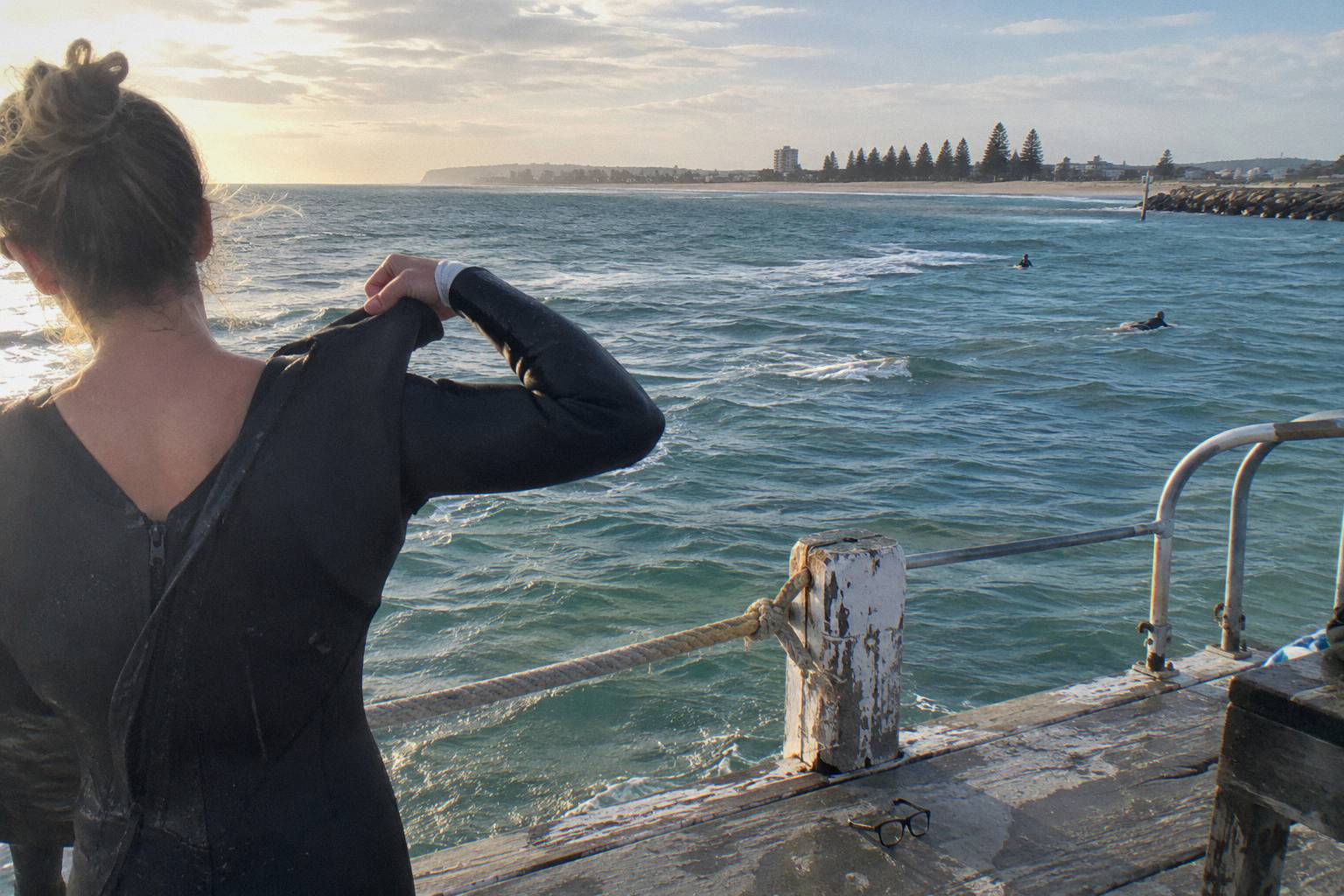
Prescription masks are a small thing that decides a big purchase, and it is worth reading how each trip handles the rest of the gear before you compare them:
| Trip | Booking-page price | Rating and reviews | Eyewear position |
|---|---|---|---|
| Wild Dolphin Swim From Glenelg With Temptation Sailing | from USD 104, about 4 hours | 4.7 across 493 reviews | Prescription masks on board in -1.5, -3, -4.5; lens policy not stated |
| Kangaroo Island Ocean Safari Swim | from USD 132, 2 hours | 4.4 across 137 reviews | Mask, snorkel, fins provided; prescriptions and lenses not mentioned |
| Wild Dolphin Watch From Glenelg | from USD 62, about 3.5 hours | 4.8 across 409 reviews | Watching only, keep glasses on throughout |
| Port River Dolphin Cruise | from USD 60, 1.5 hours | 4.5 across 481 reviews | Watching only, keep glasses on throughout |
| Dolphin Sanctuary Kayak Tour, Adventure Kayaking SA | from USD 54.72, duration not confirmed | 4.8 across 300 reviews | Paddling only, glasses wearable with a strap |
| Kangaroo Island Dolphin Watch | from USD 61.74, about 1 hour 15 minutes | 4.8 across 640 reviews | Watching only, non-refundable on its booking page |
Booking With Your Eyes In Mind
Ask the eyewear question before you pay, not at the pontoon: confirm whether your correction matches one of the Glenelg operator's three mask strengths, get any contact lens answer in writing, and remember the first five trips in this article's roster show free cancellation up to 24 hours on their booking pages, while the Kangaroo Island Dolphin Watch does not.
Practically, this means one short email per operator, sent before booking, and a saved copy of the reply. For the Glenelg swim, the questions that matter are whether a mask in -1.5, -3 or -4.5 is close enough to your prescription for a 4-hour trip, and what the crew's practice is with swimmers in contact lenses on the line-hold. The operator's FAQ answers many common questions and is the natural place to check what is already covered before you write; the operator's FAQ page is the source for the prescription mask strengths, the briefing length and the season, September to April, with no cruises in the cooler months from May to August.
For Kangaroo Island, ask whether prescription masks exist at all on the 28-seater vessels, and whether the 30-minute pre-departure fitting can accommodate one. If the answer is no and you depend on correction, the honest arithmetic points to a watch ticket, and there is a good one on the island: the Kangaroo Island Dolphin Watch, from USD 61.74 per person, rated 4.8 across 640 reviews, about 1 hour 15 minutes, watching only, though its booking page lists it as non-refundable, so unlike the other trips it does not carry a 24-hour free cancellation window.
Families should fold age limits in at the same time. Both swim trips set a minimum age of 9, the operator citing insurance on the Glenelg side, with children under 9 able to watch and under-18s needing a parent or guardian on board, who may swim or hold a watch ticket. The kayak tour takes children from 8, and the watch cruises take spectators of any age, so a household with one spectacle-wearing adult and one keen young swimmer has workable combinations across the roster rather than a single all-or-nothing product.
If you are weighing more than the eyewear question, this site's guides go deeper on the choices: whether to swim with dolphins at Kangaroo Island or from Glenelg, what wild dolphin swim prices include, and how to judge whether a wild dolphin swim is safe all sit alongside this page.
What To Remember At The Pontoon
Take your glasses off and stow them before the wetsuit goes on, ask for a prescription mask at the briefing if one of the three strengths suits you, keep a spare pair of spectacles ashore for the return, and put the contact lens question to the operator in writing days or weeks before departure rather than at the stairs.
The small logistics help more than they sound like they will. Spectacles stowed in a case in your bag travel better than spectacles handed to a crew member mid-briefing, and a swimmer who cannot find their glasses on a 50-passenger catamaran after four hours of salt water has traded a good day for a bad one. Contact lens wearers who get the operator's blessing should treat spares the same way: packed dry, ashore, where they can actually be used. And whatever the operator replies about lenses or masks, bring the reply, because the crew who answer booking emails are not always the crew who fit masks at the marina.
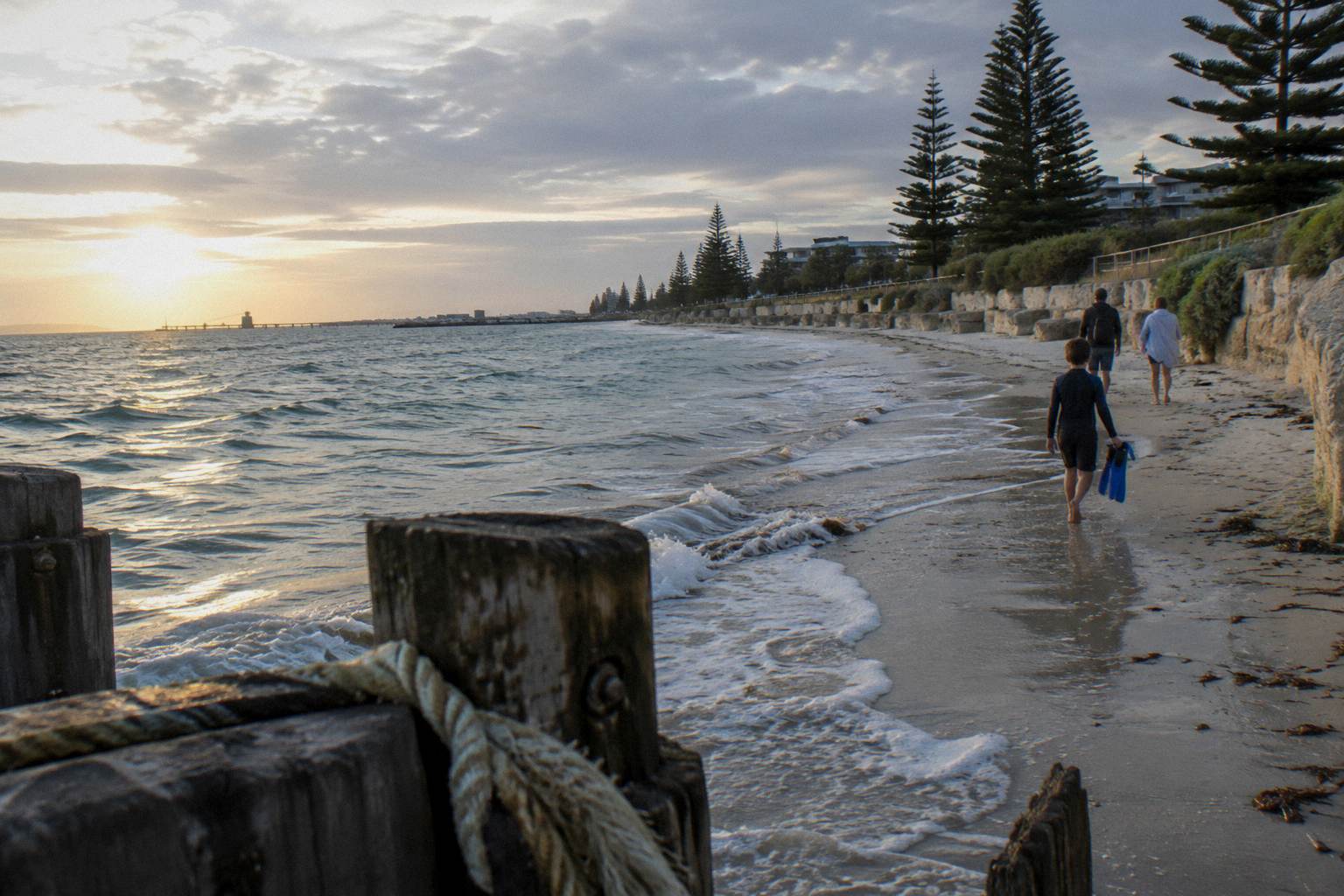
The Glenelg boarding sequence is worth knowing in advance so the eyewear moment does not rush you. Boarding starts 15 minutes before departure at the bottom of the stairs in front of the Oyster Bar at Marina Pier, wetsuit fitting and the briefing follow, and the boat is back in the marina between 11:30am and midday. The operator suggests seasickness tablets 30 minutes before the trip and gives no refund for seasickness, so anyone whose stomach and eyes conspire together on boats should plan both at once.
That is the whole picture, and it is fair to say the industry has not made the glasses question complicated: it has simply not written much down. One operator put three prescription masks on the boat and said so, from USD 104 to swim with them. The other put the question back to you, politely, at a 30-minute check-in. Your part is one email, one honest look at your prescription, and one decision about whether the water-level encounter is worth working around your eyes for the morning. For most swimmers it is, and for the rest there is a very good deck to watch from.
Common Questions About Glasses And Contact Lenses On Dolphin Swims
Can You Wear Glasses Or Contact Lenses On A Dolphin Swim?
Ordinary glasses cannot go under a mask because the frame breaks the seal. The Glenelg operator carries prescription masks in -1.5, -3 and -4.5. Contact lens policy is not stated by either swim operator, so ask before booking. Watch-only trips let you keep your glasses on throughout.
Do The Prescription Masks Fit Every Prescription?
No. The Glenelg operator states strengths of -1.5, -3 and -4.5 only. If your correction differs, ask the operator before booking whether any of the three is workable for you.
Can I Wear My Glasses On A Dolphin Watching Cruise Instead?
Yes. Watching-only trips involve no mask, so spectacles stay on the whole time. The Wild Dolphin Watch From Glenelg runs from USD 62 per person, rated 4.8 across 409 reviews, and the Port River Dolphin Cruise from USD 60, rated 4.5 across 481 reviews.
What If I Wear Contacts And Lose One In The Water?
Neither operator publishes a policy for this. Ask in writing before booking, and pack spare lenses or glasses ashore for after the trip. The Glenelg swim is a controlled line-hold, but water does cross your face on entry, on the line and at the ladder.
Does The Kangaroo Island Swim Provide Prescription Masks?
The operator's pages list wetsuit, gloves, mask, snorkel and fins, and say nothing about prescription masks. Ask the operator directly before booking the 2-hour Snorkelling Safari, from USD 132 per person, rated 4.4 across 137 reviews.
Where Do I Test The Mask Before Swimming?
At the briefing. The Glenelg operator runs a crew briefing of about 15 minutes before departure in which the mask and snorkel are demonstrated, and that is the moment to check fit and prescription strength while the boat is still at the marina.