Is A Wild Dolphin Swim Safe? Sharks, Seals And The Water
Safety is the last question most people ask before booking a dolphin swim, and the honest answer is that the operators describe a set of specific, named measures rather than a blanket promise. Here is what each operator states, what the law requires, and what the water itself is doing.
Short answer
Neither swim operator publishes safety statistics, so the honest verdict rests on their stated measures: a controlled swim on a flotation line, full 5 mm wetsuits that double as flotation, briefed crews, marine biologist hosts at Glenelg and shark shields on some swims. South Australian law caps swimmer distance at 30 m and prohibits touching or feeding.
South Australia's two dolphin swim operators do not publish incident statistics, and this site will not invent a verdict no one can back. What exists instead is a detailed, checkable set of operator-stated measures: flotation lines, wetsuits that double as flotation devices, briefed crews, shark shields on parts of the operation and a legal framework that limits how close anyone may get to a wild dolphin. This guide lays all of that out, section by section, so you can weigh it yourself.
It also separates three questions that tend to get muddled together in search results. The first is the animal question: are dolphins, seals or sharks a danger to a swimmer on a line beside a boat. The second is the water question: temperature, wetsuits and the algal bloom that has coloured discussion of South Australian swimming for the past two years. The third is the suitability question: whether a particular person, a child, a nervous swimmer, someone with a medical condition, should be in the water at all. Each has a different kind of answer, and mixing them produces the vague reassurances this page deliberately avoids.
Is A Wild Dolphin Swim Actually Safe?
No operator or agency publishes an incident rate for dolphin swims in South Australia, so there is no statistical verdict to quote, and any site offering one is guessing. What can be checked are the measures each operator states on its own pages, the distances the law imposes on swimmers and vessels, and the conditions the operators themselves say should rule someone out. Read those, then decide.
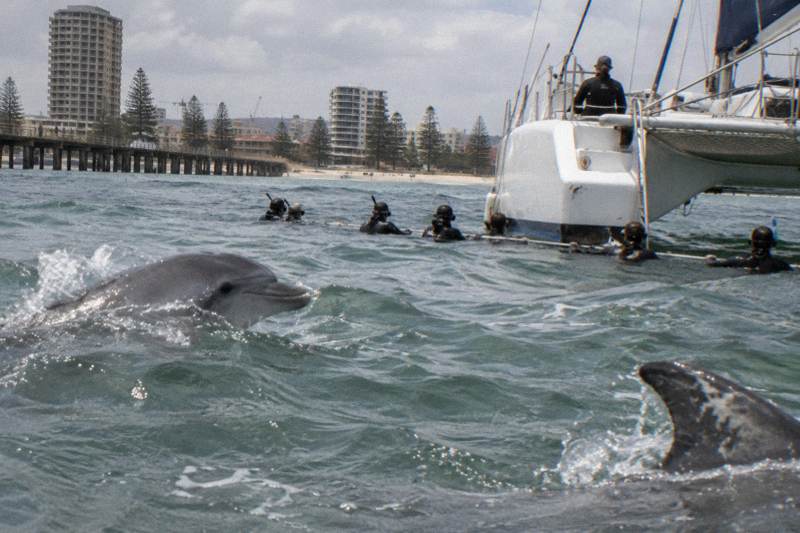
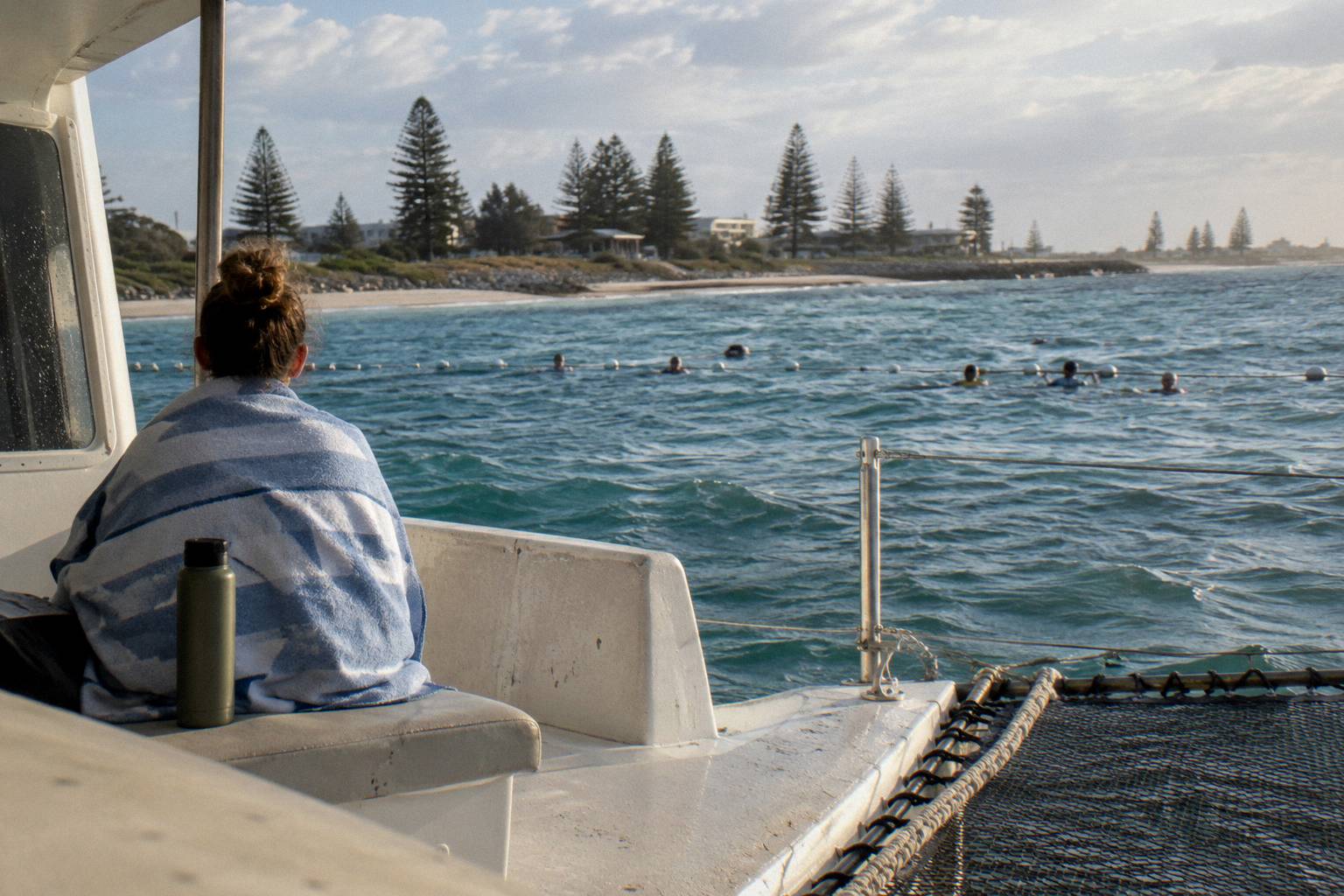
The honest framing matters here. A wild dolphin swim is a controlled activity, not free swimming in open ocean. At Glenelg, every swimmer holds a flotation line connected to the stern of the boat while it moves slowly, and the crew decides when swimmers go in and when they come out. At Kangaroo Island, a swimmer line with buoys is often used at the back of the vessel. In both cases the swimmer is attached to or beside a crewed vessel, not swimming off alone among wild animals.
The animals are wild, which is the point and also the limit of any promise. Dolphins choose to approach or not, and the crew's job is to read that choice: the Glenelg operator states its crew puts swimmers in only once dolphins have turned toward the boat, and stops entries when dolphins get too close. That is a procedural answer to safety, not a statistical one, and it is the strongest kind of answer available.
It is also worth being clear about what a swim is not. You are not dropped overboard to swim freely through a pod. You are not towed at speed. You do not chase animals, because the law forbids the vessel from doing so and the crew from letting you. Once those constraints are understood, the safety question narrows to something concrete: can you hold a line in cool water and climb a ladder afterwards, and is a crewed vessel with shields and briefing procedures a setting you trust. Those are answerable questions.
What Safety Measures Do The Dolphin Swim Operators Use?
At Glenelg, the operator states each swimmer gets a full-length 5 mm wetsuit that also works as a flotation device, a roughly 15 minute crew briefing, prescription masks, marine biologist hosts and a stern-connected flotation line, with two shark shields on the back swim and none on the front swim. At Kangaroo Island, the operator provides wetsuit, gloves, mask, snorkel and fins, a buoyed swimmer line, and shark shields fore and aft.
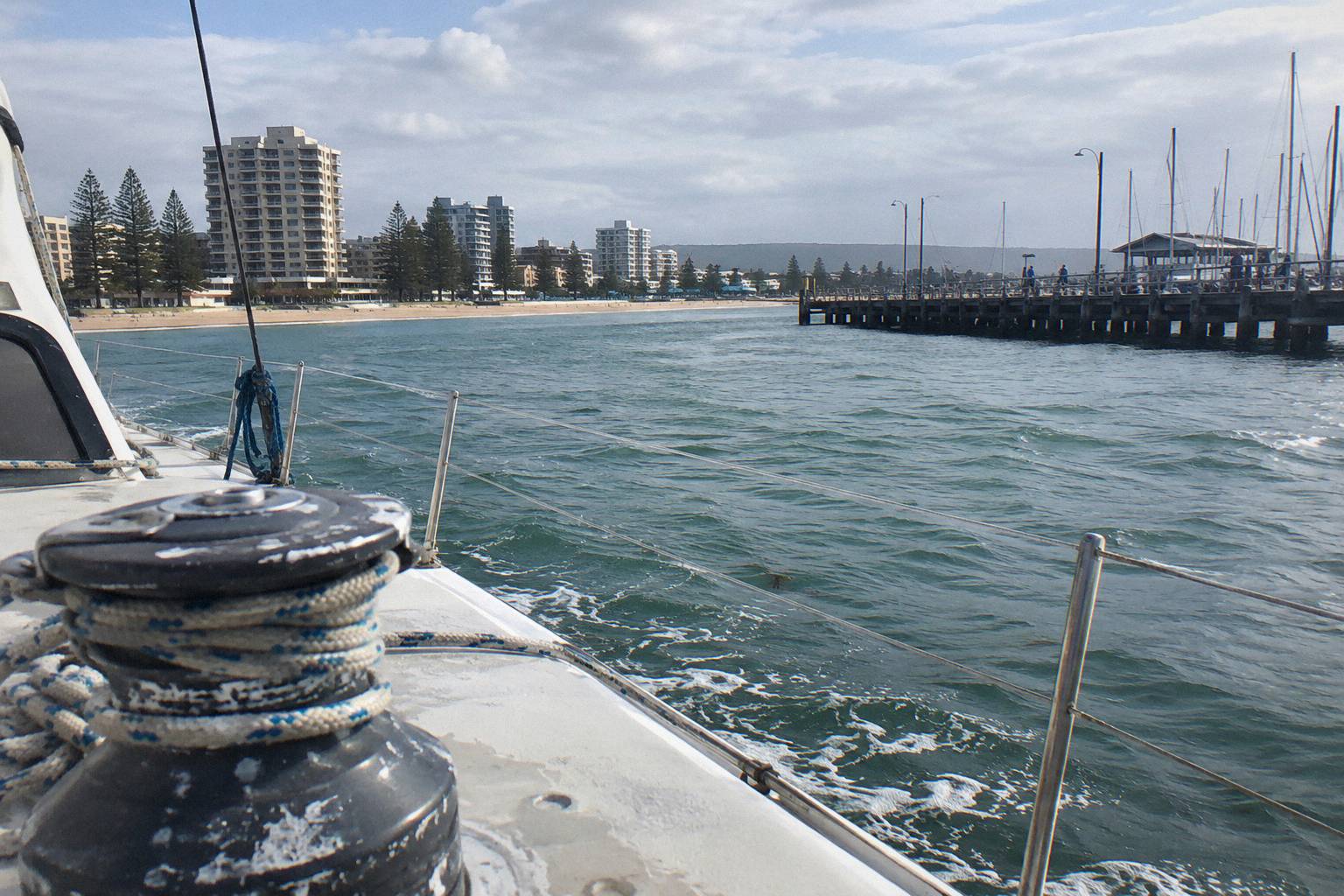
The Glenelg trip runs on a 58 ft sailing catamaran the operator describes as surveyed for up to 50 passengers, with life jackets carried on board though not used for the swim itself. Wetsuits run to size 4XL and prescription masks are stocked in three strengths. Swimmers rotate between two experiences, the Front Swim and the Back Swim, and the difference matters for the shark question covered below.
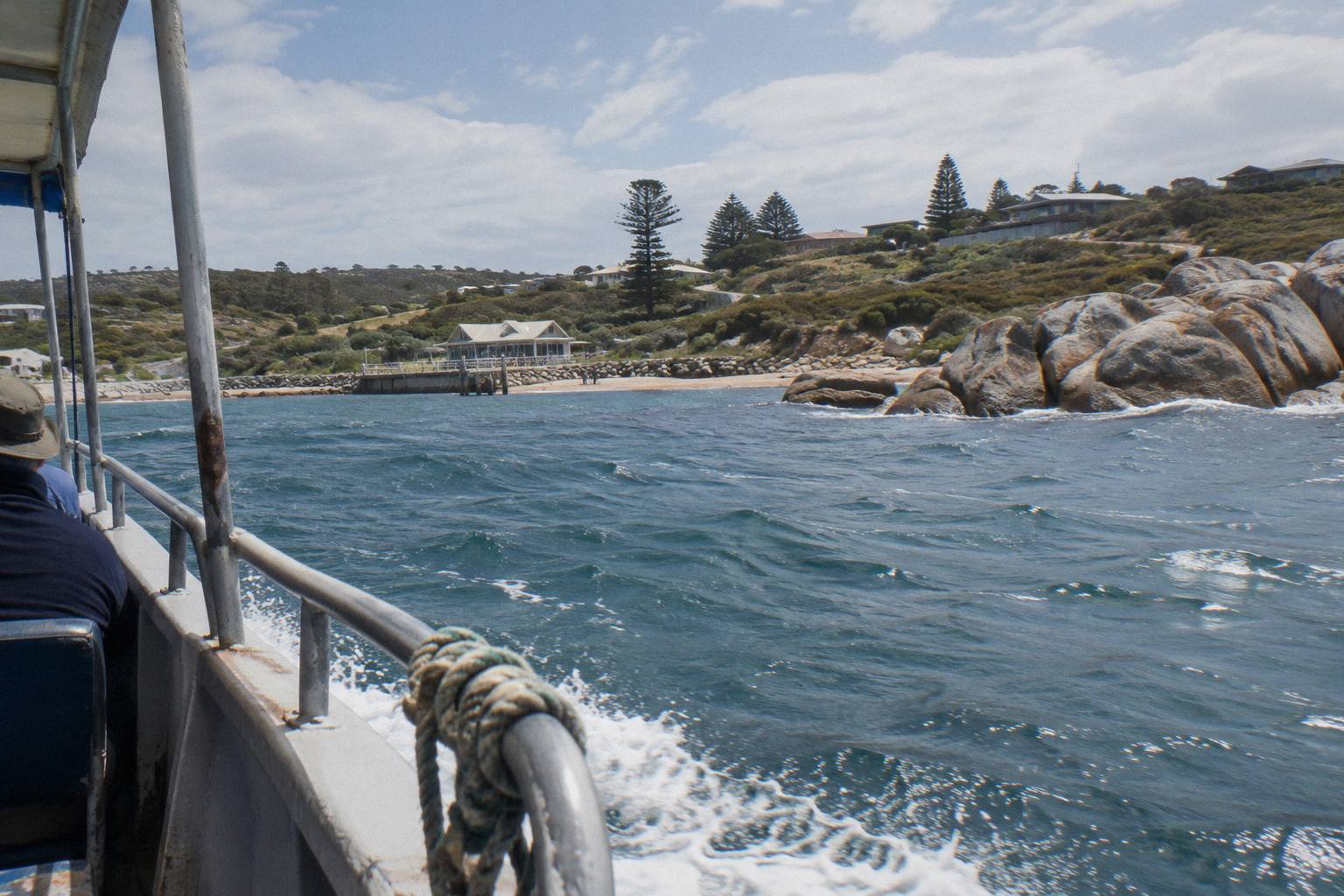
The Kangaroo Island Snorkelling Safari runs on vessels the operator describes as 28-seaters, with a life jacket and a pool noodle available for anyone who wants extra support in the water. The operator recommends reasonable swimming ability, notes the swimmer line needs upper body strength and the ladder exit needs lower body strength, and asks guests to arrive 30 minutes before departure for wetsuit fitting and a safety brief at the Kangaroo Island Information Stop, 43 Howard Drive, Penneshaw.
| Measure | Glenelg swim (operator-stated) | Kangaroo Island swim (operator-stated) |
|---|---|---|
| Flotation | 5 mm full-length wetsuit doubles as flotation; stern line | Thick wetsuit; buoyed swimmer line; life jacket and noodle available |
| Briefing | About 15 minutes, mask and snorkel demonstrated | Fitting and safety brief 30 minutes before departure |
| Hosts | Marine biologist hosts | Crew on 28-seater vessels |
| Shark shields | Two on the back swim; none on the front swim | Fore and aft |
| Entry control | Crew enters swimmers only when dolphins turn toward the boat; stops entries when dolphins get too close | Swimmer line with buoys often used at the back of the vessel |
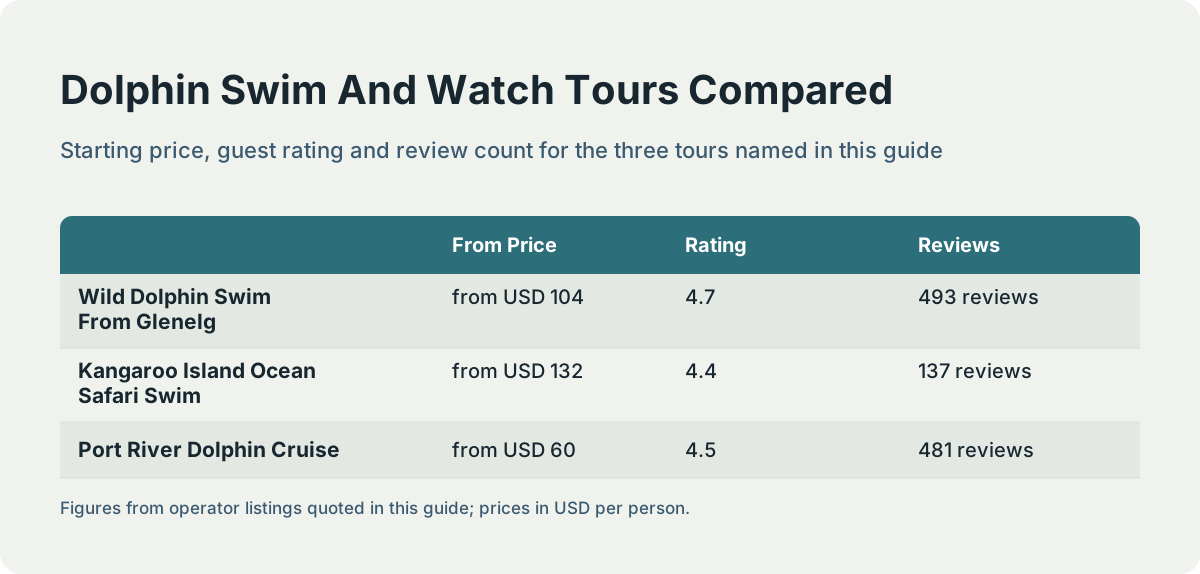
If reading this far has already settled the nerves, the featured option is the Wild Dolphin Swim From Glenelg With Temptation Sailing, rated 4.7 across 493 reviews and from USD 104 per person.
What About Sharks On A Dolphin Swim?
Both operators use electric shark shields, but not identically: the Glenelg operator runs two shields during the back swim and none on the front swim, while Kangaroo Island Ocean Safari states it runs shields fore and aft. Neither operator's incident history is published in a form this site can verify, so no claim about shark safety records is made here.
The Glenelg detail is worth slowing down on, because it is the kind of fact that only appears in an operator's own FAQ. The Back Swim Experience, where swimmers hold a line at the stern, has two shark shields running. The Front Swim has none. The operator also has a pacemaker restriction connected to the shields, so pacemaker wearers should ask the operator before booking. That is an honest, checkable description of the setup, and it is more useful than a vague assurance.
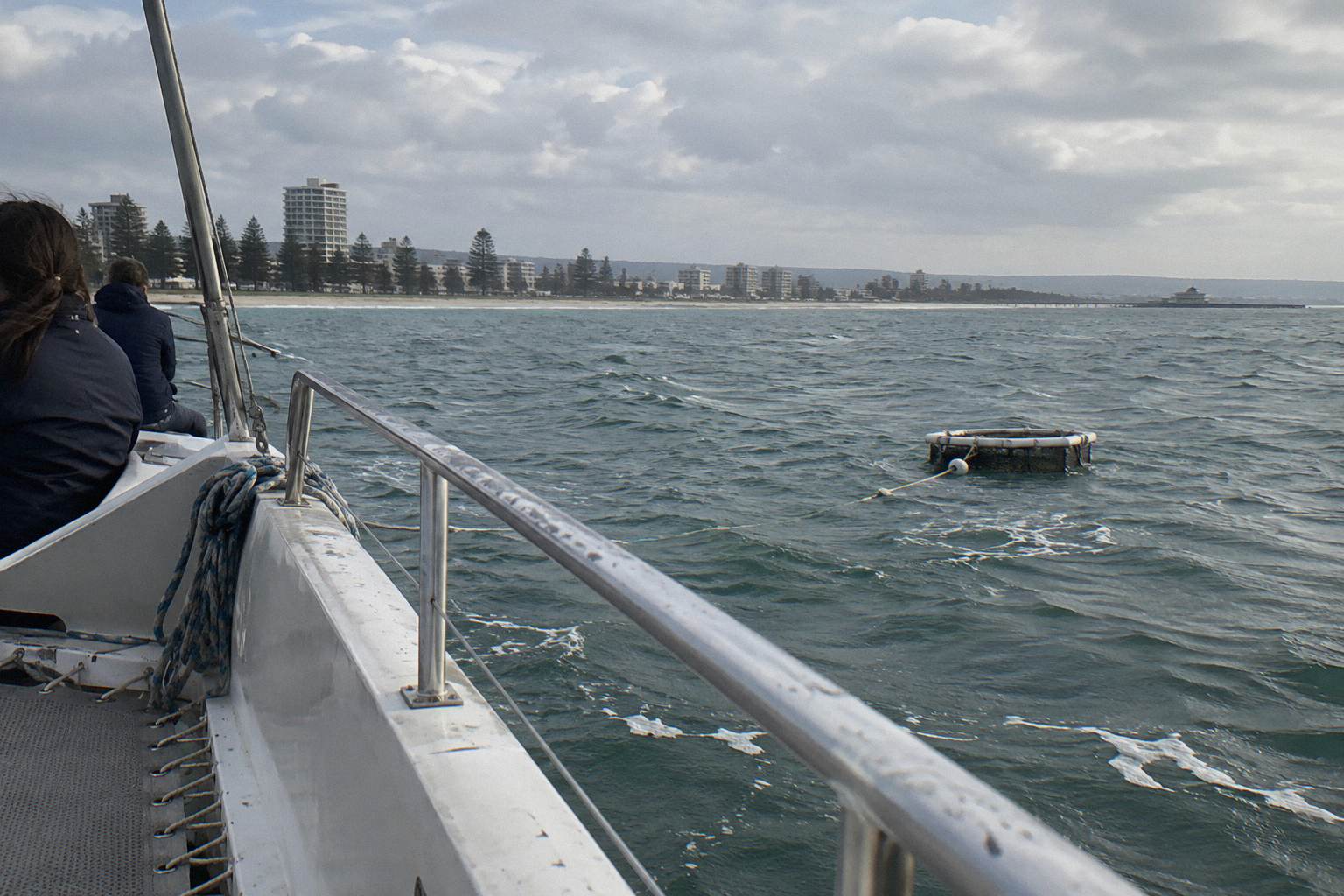
Kangaroo Island Ocean Safari states its shields run fore and aft. The operator's own claim of never having had a shark incident is not printed here as fact, because an operator's marketing claim and a verifiable record are different things. If the shark question is the one holding you back entirely, there is a middle path: the Wild Dolphin Watch From Glenelg is the same waters and the same boat family, rated 4.8 across 409 reviews and from USD 62 per person, with no water entry at all.
Are Seals Dangerous On A Dolphin Swim?
Seals are part of the Kangaroo Island swim by design, not a hazard that wanders in: that operator's page describes a trip that may be dolphins only, seals only or a coastal snorkel, and states seals peak in winter and are lowest November to January. The Glenelg swim is a dolphin-focused product and its operator's safety pages do not frame seals as part of the swim.
The Kangaroo Island product is honestly sold as a snorkelling safari rather than a guaranteed dolphin swim. The operator states wildlife interactions are not guaranteed, and if you get in the water at any stage there is no refund. Depending on the day, the swim may happen among seals instead of dolphins, or as a coastal snorkel. For some readers that variety is a feature. For someone specifically nervous about sharing the water with two species rather than one, it belongs in the decision.
South Australian law treats seals the same as dolphins in the water: a swimmer may not go closer than 30 m to a marine mammal, and must stay at least 150 m away from one that shows disturbance, appears sick or injured, is stranded or entangled, or is a calf or pup. The full rules are set out later in this guide, and they apply to seals and dolphins alike. The booking page for the Kangaroo Island swim also notes it does not run when the pod has neonates, a new-calf rule that keeps swimmers out of the water around the most protective mothers.
The swim itself is physically demanding by the operator's own description: the swimmer line needs upper body strength and the ladder exit needs lower body strength. The Kangaroo Island Ocean Safari Swim is rated 4.4 across 137 reviews and from USD 132 per person.
Is The Water Itself Safe: Temperature, Wetsuits And The Algal Bloom?
Sea temperature off Adelaide runs from around 14 °C in August to around 21 °C in February, and both operators kit swimmers in thick wetsuits for that water. On the algal bloom question, the state's testing summary shows zero or low Karenia along the metropolitan coast and Kangaroo Island; check the operator before booking a swim.
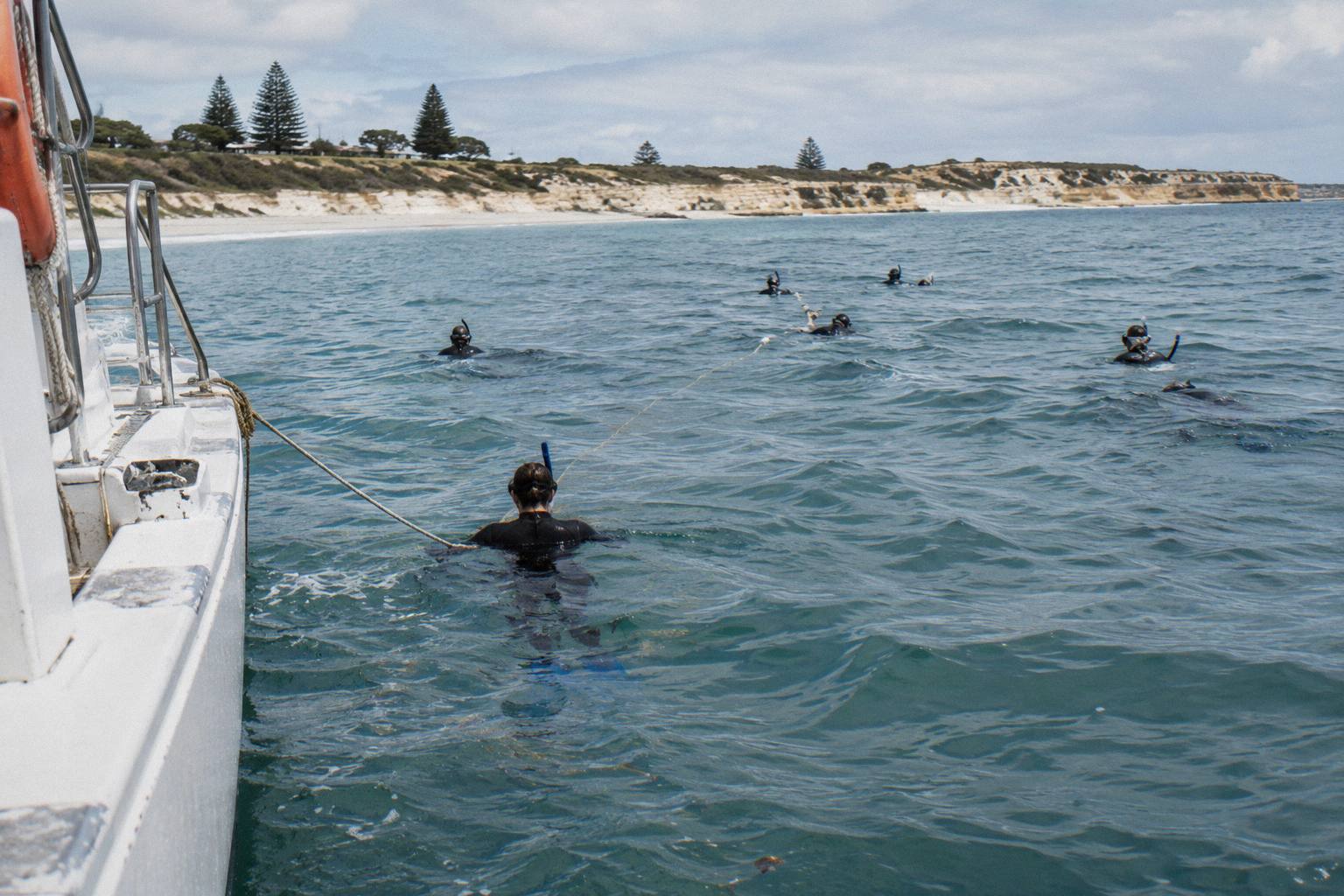
Temperature is a comfort question more than a danger question once a wetsuit is in play. The Glenelg operator's 5 mm suit is described as acting as a full-body flotation device as well as insulation, and the Kangaroo Island operator states its water sits between 14 and 15 degrees and that thick wetsuits allow the swim year round. The sibling guide on wetsuits and water temperature on a dolphin swim goes deeper on what to expect, including how cold you feel after you climb out.
The algal bloom question deserves a careful answer. The official state bloom page reports that the vast majority of South Australia's coastline has recorded zero or low levels of Karenia since February 2026, and its onshore testing summary lists the metropolitan coast, Kangaroo Island, Southern Fleurieu and the offshore gulf sites as zero or low. That is a testing summary, not a declaration that the bloom is finished, and agencies state they remain vigilant to future blooms.
Health advice from the same site is plain: beaches can still be enjoyed, stay away from foamy or abnormally coloured water, rinse afterwards, and in the agency's own words, "if the water's clear, it's fine to swim" (SA Health advice on the bloom). On the operator side, Temptation's FAQ carries an undated notice that the bloom may affect its wild dolphin tour, especially the swim, that algae concentration is assessed a week before the season starts, and that a full refund follows if a trip is cancelled on that basis, for bookings made direct with the operator. Kangaroo Island Ocean Safari's pages carry no bloom notice that this site's research found.
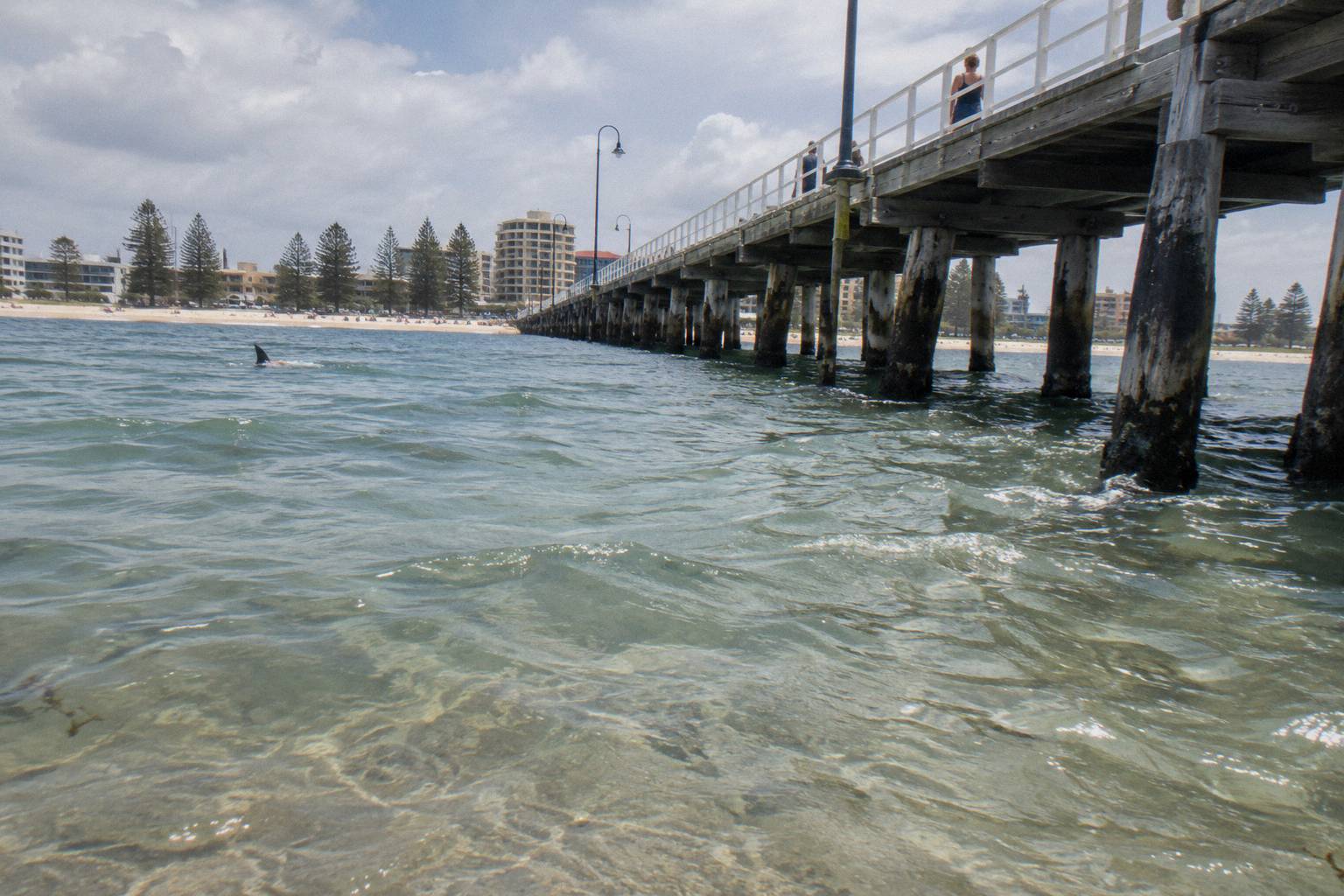
For anyone whose answer to the water question is simply no, a cruise keeps you above it entirely: the Port River Dolphin Cruise is rated 4.5 across 481 reviews, from USD 60 per person, and travels the sanctuary itself.
How Close Can You Legally Get To A Wild Dolphin?
South Australian regulations in force since 1 September 2025 keep swimmers at least 30 m from a marine mammal, at least 150 m from one that is disturbed, sick, injured, stranded, entangled or a calf or pup, and limit any swimmer to 30 minutes within 150 m. Vessels must keep 50 m, or 150 m with a calf or if the dolphins show disturbance, and touching or feeding is prohibited.
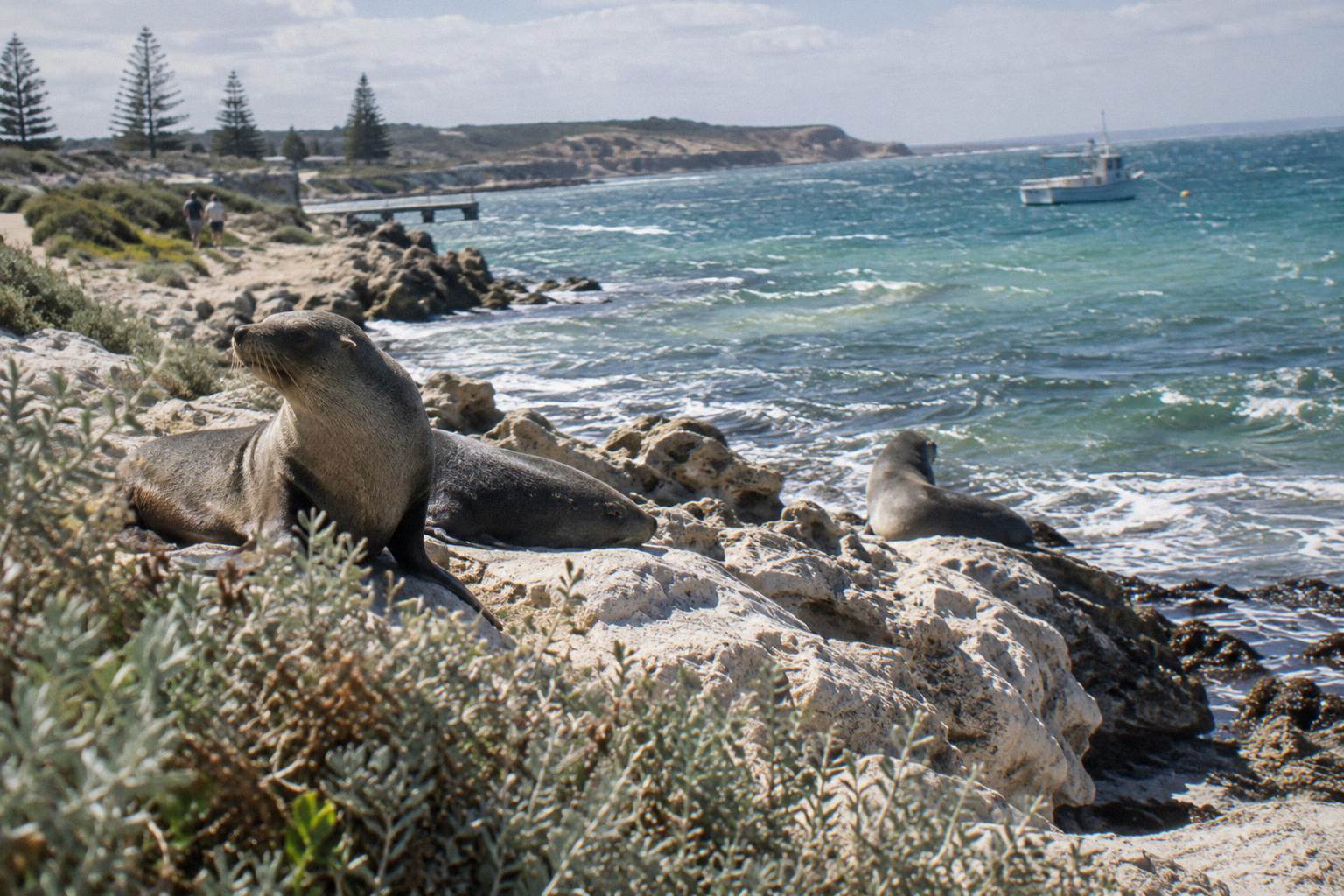
Snorkelling legally counts as swimming under these rules, so they apply directly to both swim products. A commercial swim itself is only lawful under a Ministerial permit or other lawful authority, because the regulations prohibit taking another person into the vicinity of a marine mammal for fee or reward without one. The permit register and any permit conditions, such as swimmer numbers or time in the water, were not found anywhere official, so none are claimed here.
The enforcement figure is an expiation fee of AUD 315 per alleged offence under regulation 20. The official text is published by the South Australian legislation site. The 300 m figure sometimes quoted in forums is the jet-ski rule, not the swimmer or vessel rule, and is not the number that applies to you on a swim boat.
| Who | Minimum distance | Extra rule |
|---|---|---|
| Swimmer or snorkeller | 30 m from any marine mammal | 150 m if disturbed, sick, injured, stranded, entangled, or a calf or pup; no more than 30 minutes within 150 m |
| Vessel | 50 m from a non-whale marine mammal | 150 m with a calf or if the animal shows disturbance; 4 knots within 150 m |
| Everyone | No touching, no feeding | Expiation fee AUD 315 per alleged offence |
These distances explain why a permitted swim works the way it does. The boat cannot chase dolphins down and the swimmers cannot swim out to them; the crew holds position, watches whether the dolphins turn toward the vessel, and only then puts people on the line. In practice, the animals close the remaining distance themselves if they choose to, which is what makes a swim feel extraordinary while staying inside the rules. The full framework is unpacked in the guide to dolphin swim rules and how close you can get.
Who Should Not Swim With Dolphins?
The Glenelg operator sets a minimum swim age of 9, requires a parent or guardian on board for under-18s, requires swimmers to hold the flotation line while towed and climb three ladder rungs, and asks pacemaker wearers to enquire before booking. Kangaroo Island Ocean Safari sets the swim at 9-plus, does not recommend it with a pacemaker or pregnancy, and recommends reasonable swimming ability.
Neither operator states a weight limit or a defined swimming standard, and this site makes no medical claims of any kind. The correct move for anyone with a medical condition is to check with your doctor and tell the operator when you book. Both operators state their vessels are not wheelchair accessible and require stairs or a ladder to board and exit.
| Restriction | Glenelg swim | Kangaroo Island swim |
|---|---|---|
| Minimum swim age | 9, for insurance reasons the operator cites | 9 for the swim; coastal snorkel offered from age 8 |
| Pacemakers | Pacemaker wearers should ask the operator before booking | Not suitable with a pacemaker |
| Pregnancy | No operator restriction stated on the pages read | Not suitable |
| Mobility | Not wheelchair accessible; stairs to board; three ladder rungs to exit | No wheelchair access; ladder exit needs lower body strength |
| Guardians | Under 18 needs a parent or guardian on board, swimming or watching | Child rate 3 to 12; infants 2 and under not available for the swim |
Two softer exclusions matter just as much. A nervous swimmer at Glenelg can stay aboard as a watcher after the briefing, and the operator refunds the swim-minus-watch difference for bookings made direct with the operator. A non-swimmer in the family can simply buy a watch ticket and ride the same boat, which makes the trip workable for mixed groups. The guide to dolphin swims for non-swimmers and weak swimmers covers both situations in full.
A Pre-Booking Safety Checklist
Before you book, confirm five things: the operator's stated measures match what you need, the legal distances are understood, the physical requirements, holding a line and climbing a ladder, are within reach, any medical condition has been checked with a doctor and declared, and the cancellation terms on the live listing are the ones you can live with. Safety here is a series of checkable facts, not a feeling.
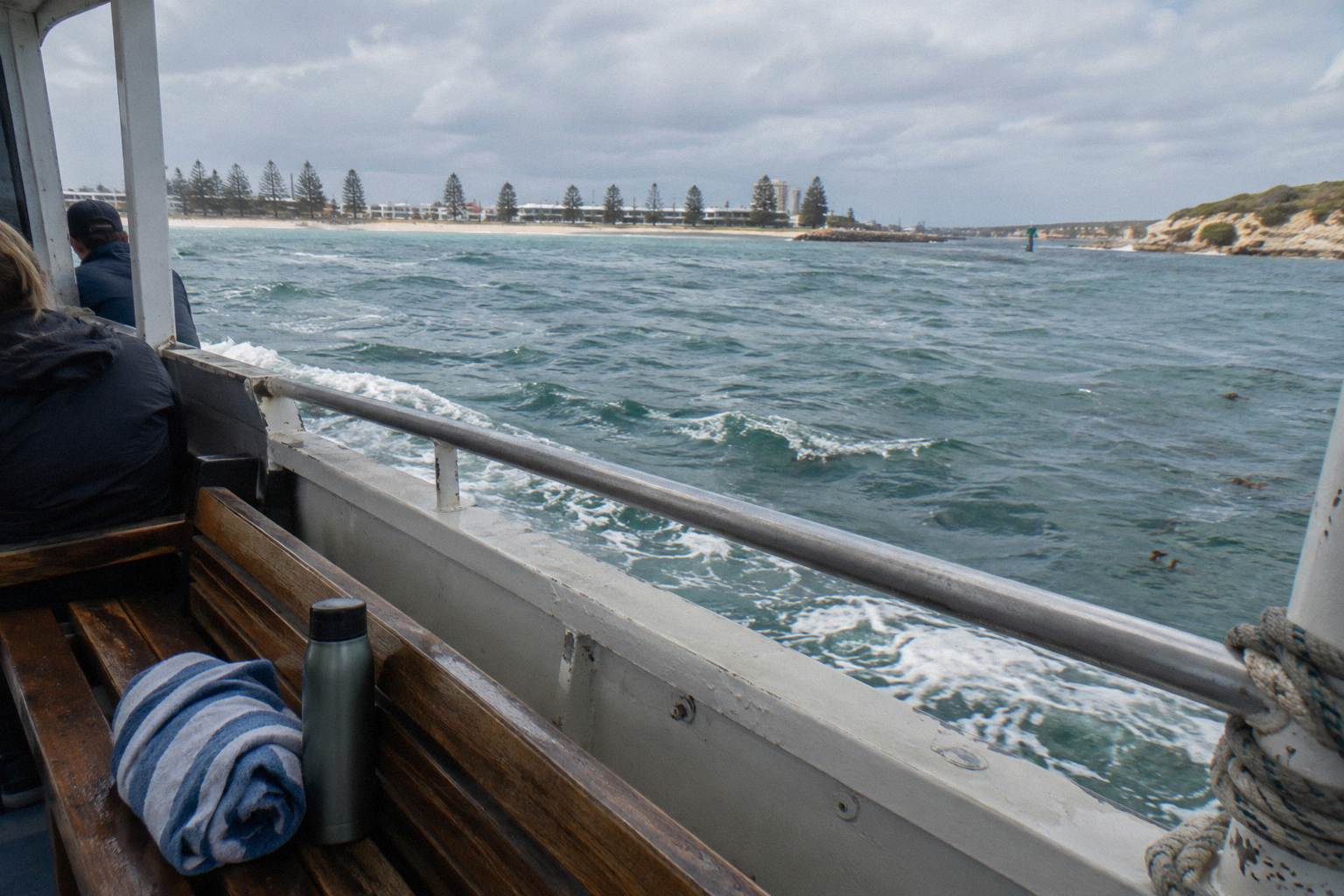
Work down the list in order. Read the operator's own FAQ pages rather than a summary, including the Glenelg operator's cancellation policy, because the booking page and the operator's direct terms differ, and only the live listing's terms govern your booking. For the record, the Glenelg operator's direct terms for bookings of five or fewer allow no refund or reschedule inside 24 hours or on a no-show, while larger groups face per-person charges for cancellations 24 hours to 7 days out; if the operator cancels for weather or mechanical reasons, the choice of a full refund or a reschedule sits with the booking holder. Kangaroo Island's own operator tiers run 48 hours and 7 days instead, though the booking page itself shows free cancellation up to 24 hours before.
Check the season next: the Glenelg operator runs September to April and does not cruise in the cooler months, while the Kangaroo Island operator says thick wetsuits allow its swim year round. Check the bloom status on the official page and put any question to the operator directly before paying. Then check yourself honestly against the physical requirements, holding a line while towed slowly and climbing a ladder, because no wetsuit substitutes for that.
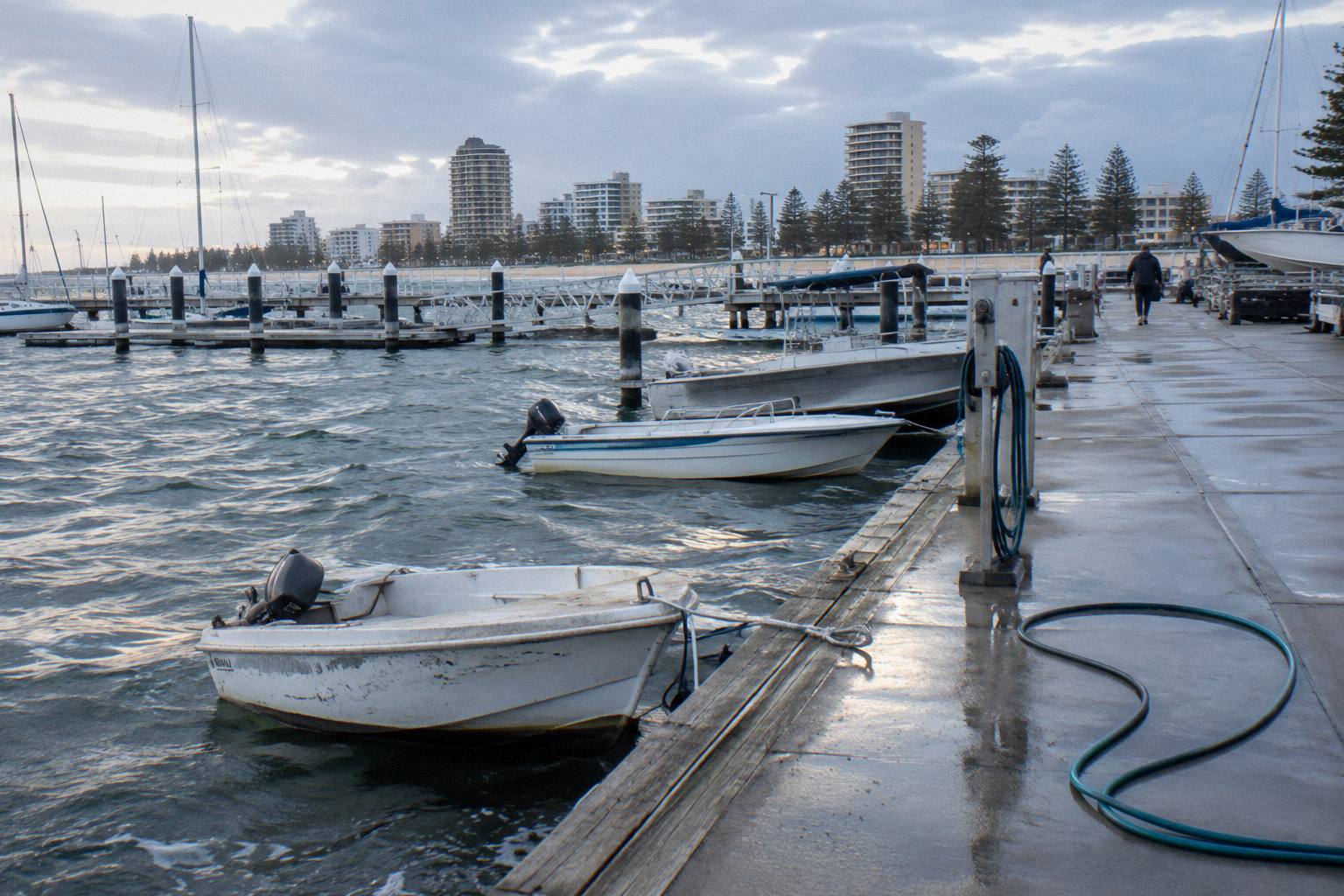
This is also where Adelaide Swimming With Dolphins earns its keep as a research site: every measure quoted above is attributed to the operator that stated it, every legal figure comes from the regulations in force, and nothing on this page is a promise about wild animals. The ethics question is covered separately in the guide to whether a wild dolphin swim is ethical, and it pairs closely with this one.
Common Questions About Dolphin Swim Safety
Is A Wild Dolphin Swim Actually Safe?
No operator publishes incident statistics, so the verdict rests on stated measures: controlled swims on flotation lines, 5 mm wetsuits that double as flotation, briefed crews, shark shields on parts of each operation and marine biologist hosts at Glenelg, inside a legal framework of 30 m swimmer distance and no touching or feeding.
Are There Shark Shields On Dolphin Swim Boats?
Yes, but not uniformly. The Glenelg operator runs two shark shields on the back swim and none on the front swim, while Kangaroo Island Ocean Safari states it runs shields fore and aft. Neither operator's incident record is published in a verifiable form.
Do You Swim With Seals As Well As Dolphins?
On the Kangaroo Island safari, possibly. That operator's page says a trip may be dolphins only, seals only or a coastal snorkel. The Glenelg swim is a dolphin-focused product and its operator does not frame seals as part of the swim.
Is The Water Too Cold For A Dolphin Swim?
Adelaide's sea temperature runs from around 14 °C in August to around 21 °C in February. Both operators provide thick wetsuits, and the Glenelg operator describes its 5 mm suit as a full-body flotation device as well as insulation.
Is The Algal Bloom Still A Problem For Swimming?
The state's testing summary shows zero or low Karenia along the metropolitan coast and Kangaroo Island. The health agency advises avoiding foamy or abnormally coloured water and rinsing afterwards. Check the operator before booking a swim.
Who Should Not Swim With Dolphins?
Per the operators: anyone under 9, anyone who cannot hold a towed flotation line or climb the boarding ladder, and, at Kangaroo Island, anyone with a pacemaker or who is pregnant. Pacemaker wearers at Glenelg should ask the operator before booking. Check with your doctor and tell the operator when you book.