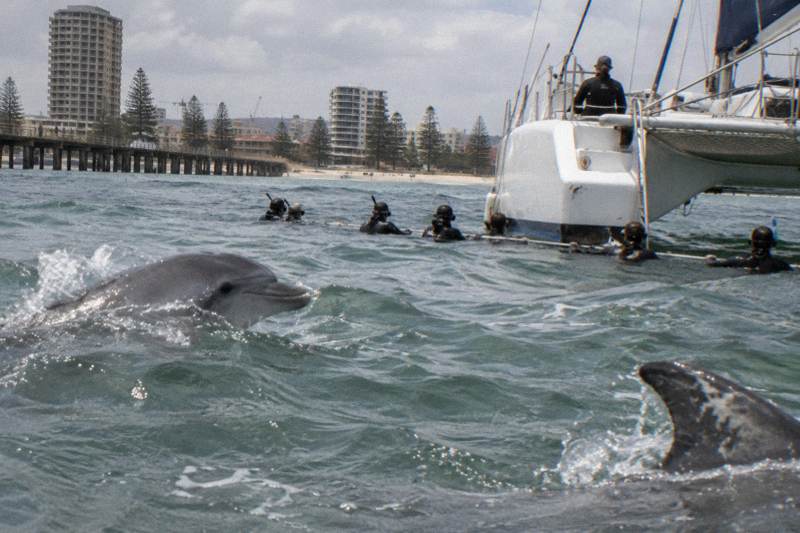
Dolphin Swim Rules And How Close You Can Get In Australia
South Australian law sets hard distance limits between people and marine mammals. Here is exactly what the rules allow, what they prohibit, and how a permitted dolphin swim actually works inside those limits.
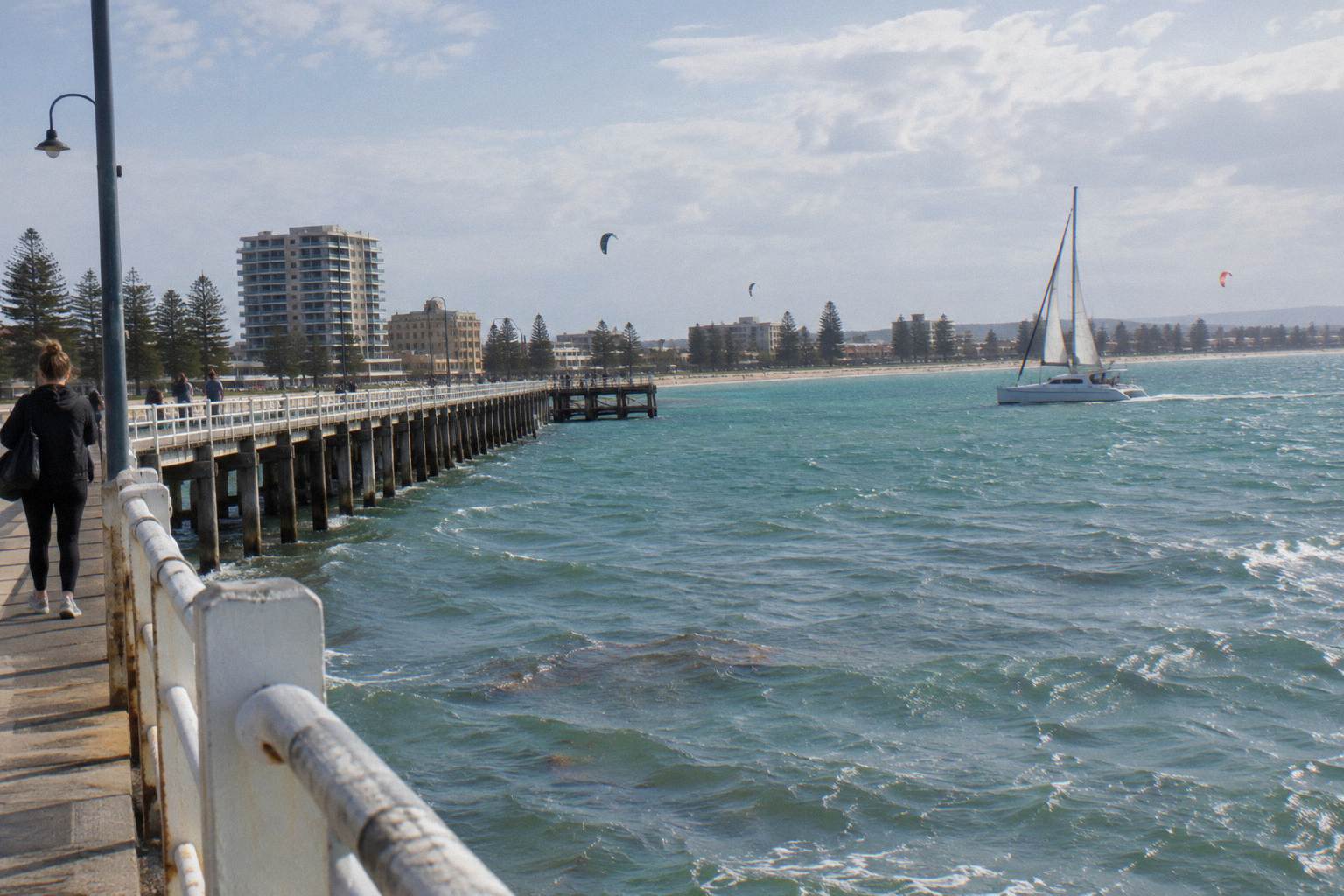
Short answer
In South Australia a swimmer or snorkeller may not come closer than 30 m to a dolphin, and vessels must keep at least 50 m away, or 150 m if there is a calf or the dolphins show disturbance. Paid dolphin swims are lawful only when the operator holds a permit. Touching and feeding are prohibited, with a AUD 315 expiation fee per alleged offence.
A dolphin that chooses to approach a boat is one thing. A person who swims at a dolphin is another, and South Australian law draws the line between the two with specific distances, specific prohibitions and a permit system that decides who may sell the experience at all. The rules live in the National Parks and Wildlife (Protected Animals, Marine Mammals) Regulations 2025, which came into operation on 1 September 2025, and they bind swimmers, snorkellers, kayakers and vessel operators alike, whether or not money changes hands.
This page covers South Australia only, because that is where this site's tours run. Other Australian states set their own marine mammal rules under their own legislation, and none of what follows should be read as applying to Western Australia, Victoria or Queensland. Within South Australia, though, the numbers are clear enough to plan around, and a licensed dolphin swim is built to sit inside them rather than fight them.
How Close Can You Get To Wild Dolphins In Australia?
In South Australia the law draws two circles around every dolphin: swimmers and snorkellers may not come closer than 30 m, and vessels must keep at least 50 m away, rising to 150 m if there is a calf or the dolphins show disturbance. A swimmer also may not stay within 150 m of a dolphin for more than 30 minutes. Breaches carry a AUD 315 expiation fee per alleged offence.
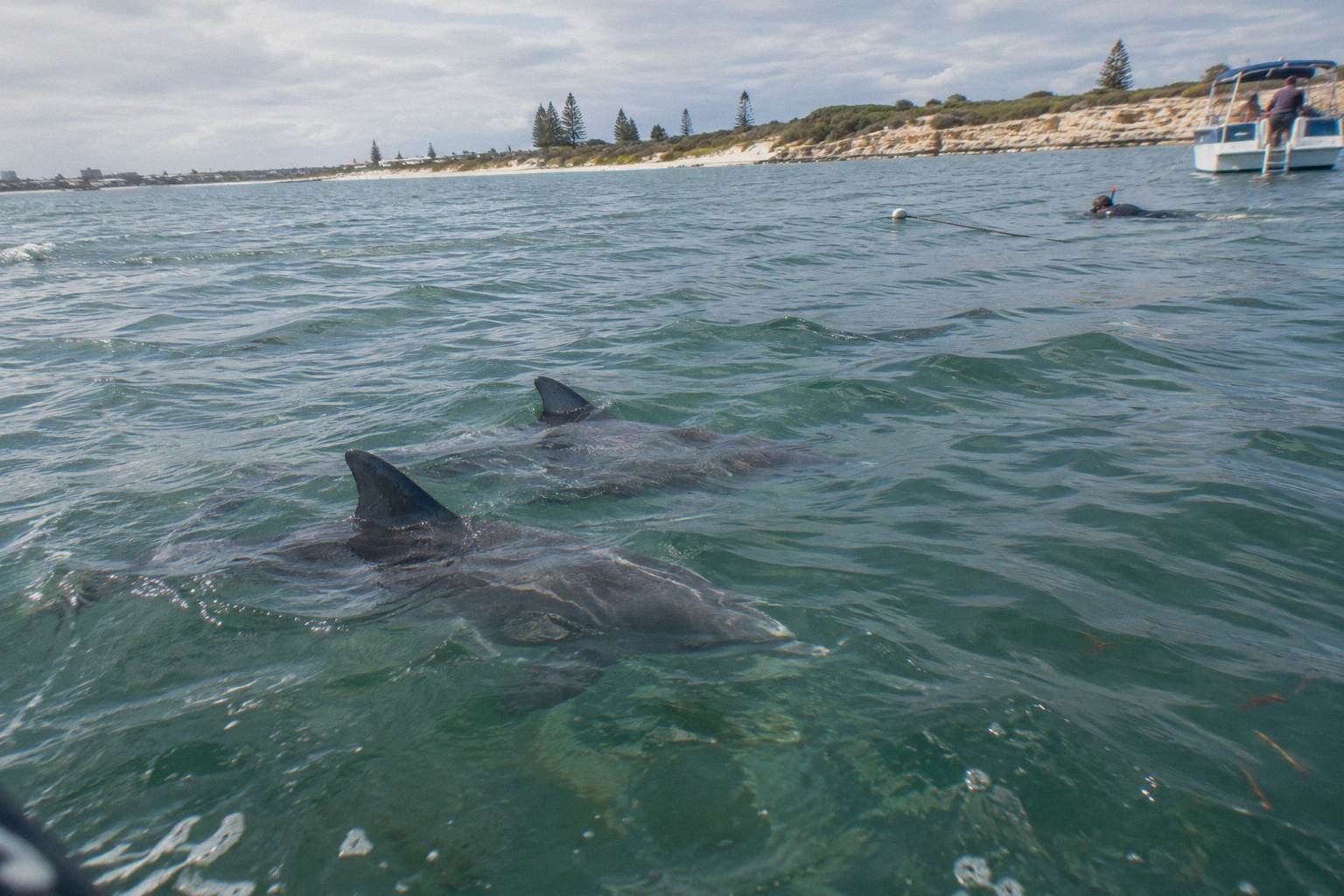
Those numbers come from the regulations themselves, and the wording matters as much as the figures. The 30 m swimmer distance is a minimum separation you must maintain: it does not say you will always be 30 m away, because dolphins are free agents who sometimes close the gap themselves. The crew-controlled swims described later in this guide exist precisely because the law puts the responsibility on the person and the vessel, not on the animal. When dolphins choose to ride a boat's bow wave or drift toward a swimmer holding a line, the animals are not breaking a rule and, in the ordinary reading of the regulations, neither are you for holding still.
The 150 m figure appears in two places and they are easy to blur. For swimmers, 150 m applies when a non-whale marine mammal shows disturbance, appears sick or injured, is stranded or entangled, or is a calf or pup: in those cases you stay at least 150 m away and no closer. For vessels, 150 m is the standard distance whenever there is a calf in the group or the dolphins show disturbance; otherwise boats keep 50 m. The 30-minute rule for swimmers, incidentally, is a regulation that applies to the swimmer, not a permit condition or an operator's house rule, and it is worth keeping the three ideas separate in your head because tour marketing sometimes blends them.
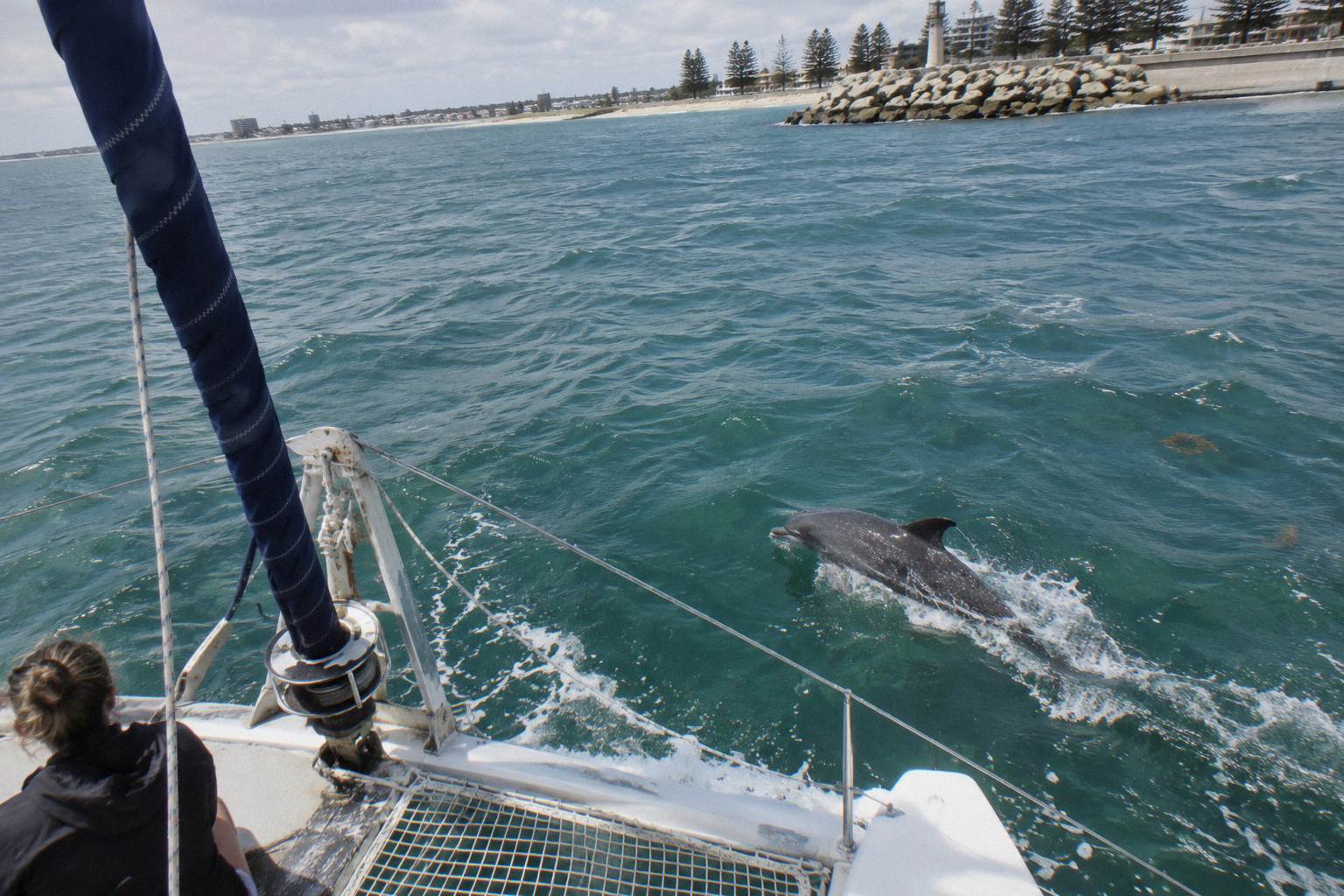
Vessels also have speed and behaviour obligations inside those zones: 4 knots within 150 m of a marine mammal, no feeding, and no touching, which the regulations prohibit outright. None of this is negotiable by an operator, and none of it is waivable by a customer. If a tour ever suggests handling a dolphin or luring one in, it is describing something the regulations forbid, whatever the brochure says.
Is It Legal To Swim With Wild Dolphins In South Australia?
Yes, but only through an operator holding a permit. Regulation 19 of the 2025 regulations prohibits anyone, for fee or reward, from using a vessel to take another person into the vicinity of a marine mammal to observe it or swim near it, without a Ministerial permit or other lawful authority. In plain terms: a paid wild dolphin swim is lawful only under permit, while swimming from shore on your own is governed by the distance rules instead.
That distinction is the single most useful thing to understand before booking. A company cannot simply buy a boat and start selling dolphin swims; it needs lawful authority under section 68 of the National Parks and Wildlife Act 1972 to do what the regulations otherwise prohibit. The permit register itself, and any conditions attached to permits, such as swimmer numbers or time in the water, are not published anywhere official that this site could verify, so nothing specific about permit conditions is claimed here. What can be said is that the legal architecture exists, is current, and is the reason licensed operators structure their swims the way they do.
The operator behind this site's featured swim, Temptation Sailing, states on its own pages that it has run dolphin swim and watch tours from Glenelg since 2002 and calls itself the first vessel in South Australia to be given a licence to swim with dolphins. That is the operator's own claim about its own history, printed here as exactly that, and it is consistent with how the permit system works: longevity in this business usually means a licence held and renewed over many seasons.
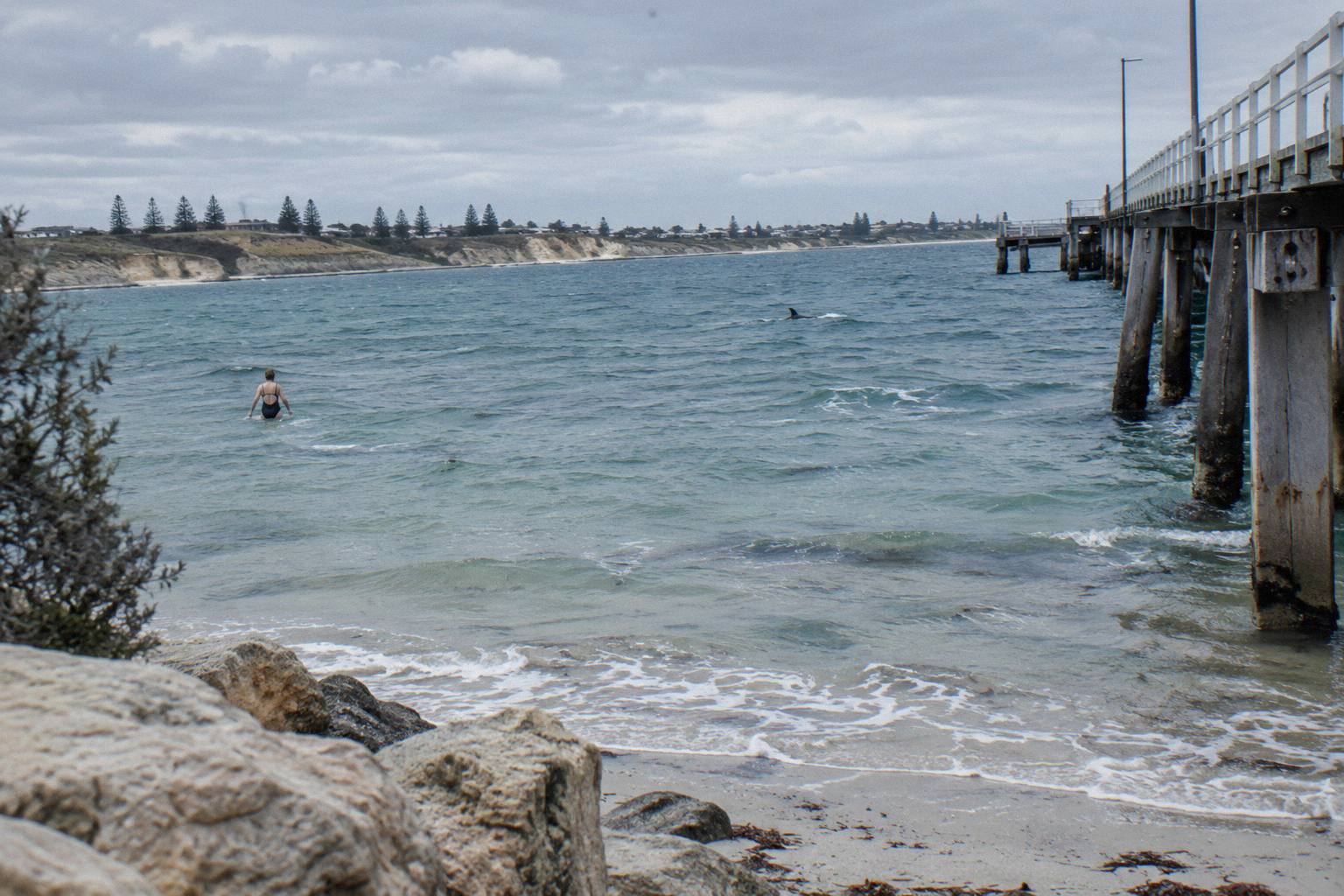
For swimmers going it alone, the law is not a blanket ban. Snorkelling counts as swimming under the regulations, so the 30 m and 150 m distances and the 30-minute limit apply to you from the moment you enter the water. If dolphins approach you, the position is different from you approaching them, and the sensible reading, backed by the state's own guidance on enjoying marine mammals, is to stay calm, stay still and let the animals control the encounter. The rules exist to stop pursuit, crowding and harassment, not to punish a passive swimmer for a curious dolphin's choice.
Distance Rules For Swimmers And Vessels, Case By Case
A swimmer must stay at least 30 m from a dolphin and at least 150 m from any dolphin that is a calf, disturbed, sick, injured, stranded or entangled, for no more than 30 minutes inside 150 m. A vessel must keep 50 m, or 150 m with a calf or visible disturbance, travel no faster than 4 knots within 150 m, and never feed or touch any marine mammal. Each breach can attract a AUD 315 expiation fee.
The table below puts every distance on one page, because the numbers are scattered across separate regulations and easy to mix up. Note again that the figures sometimes quoted as blanket "300 m" rules are not dolphin rules at all: 300 m belongs to jet-skis and to whales, so do not anchor your planning to it.
| Who | Standard distance | Heightened distance | Extra limits |
|---|---|---|---|
| Swimmer or snorkeller | 30 m from any marine mammal | 150 m if the animal is a calf or pup, disturbed, sick or injured, stranded or entangled | No more than 30 minutes within 150 m of a non-whale |
| Vessel (boat, kayak, any craft) | 50 m from a non-whale marine mammal | 150 m if there is a calf or the dolphins show disturbance | 4 knots maximum within 150 m |
| Everyone, always | Feeding prohibited | Touching prohibited | AUD 315 expiation fee per alleged offence |
Two practical readings follow from the table. First, the heightened 150 m trigger is behavioural, not just biological: a mother with a calf is the obvious case, but a pod that changes direction repeatedly, dives abruptly or splits apart is showing disturbance, and the larger distance applies. Second, the 4-knot zone is why permitted swim boats move so slowly during a swim; the sedate pace is not caution for its own sake, it is the regulatory operating speed near marine mammals.
If you want to read the primary source rather than a summary, the full text of the regulations is published as an official PDF by the South Australian legislation site: the National Parks and Wildlife (Protected Animals, Marine Mammals) Regulations 2025. The distance and conduct rules are in regulations 9, 13, 14, 16 and 17, and the expiation fee is set in regulation 20.
Each sits inside the distance rules differently, and the next section shows how.
How A Permitted Dolphin Swim Works Within The Rules
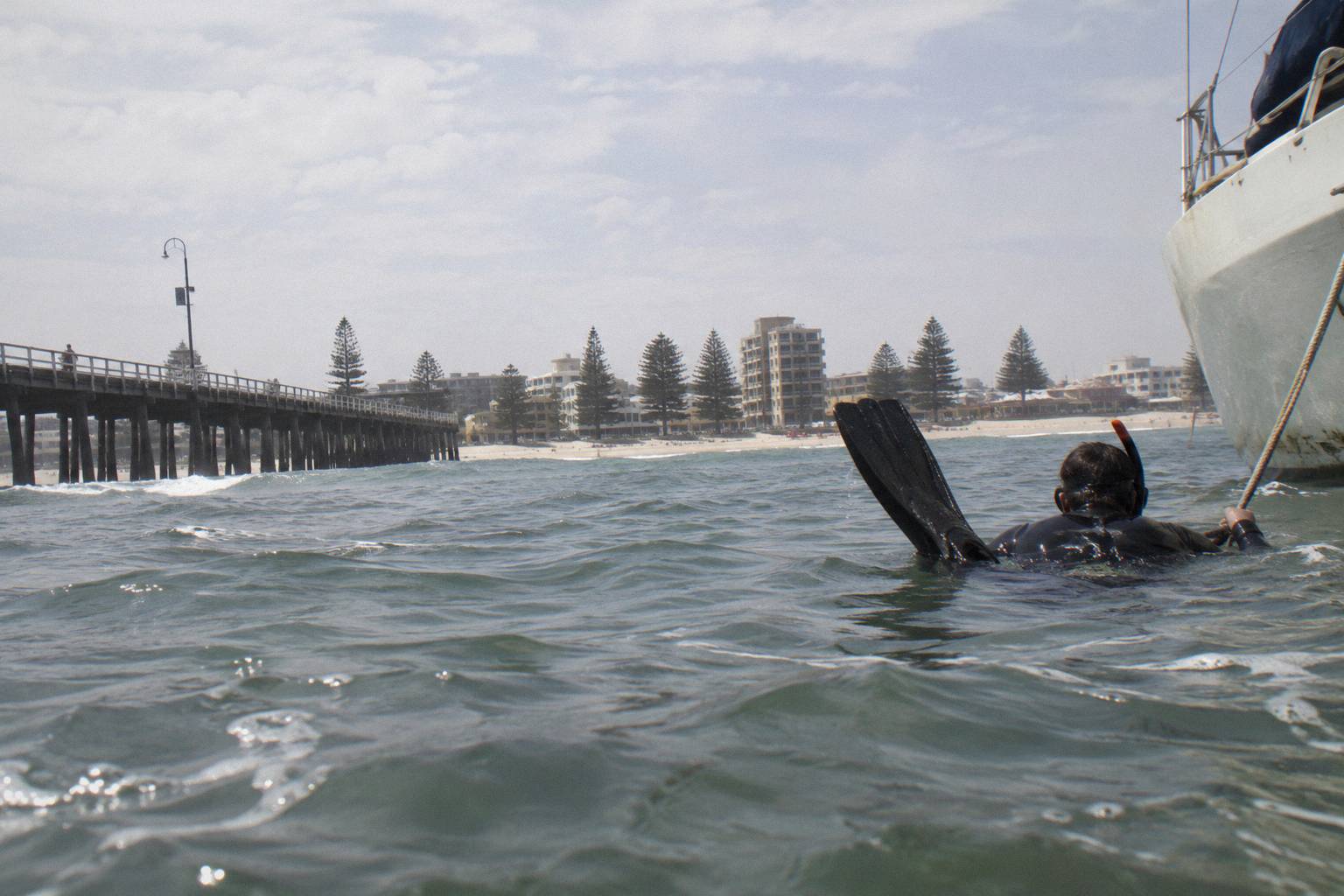
The permitted Glenelg swim never lets you free-swim at dolphins: every swimmer holds a flotation line connected to the stern while the boat drifts slowly, and the crew puts swimmers in the water only once the dolphins have turned toward the boat, stopping entries when the animals come too close. Wetsuits, masks and briefings are all handled on board. It is a controlled interaction designed so the dolphins make the approach, not the swimmers.
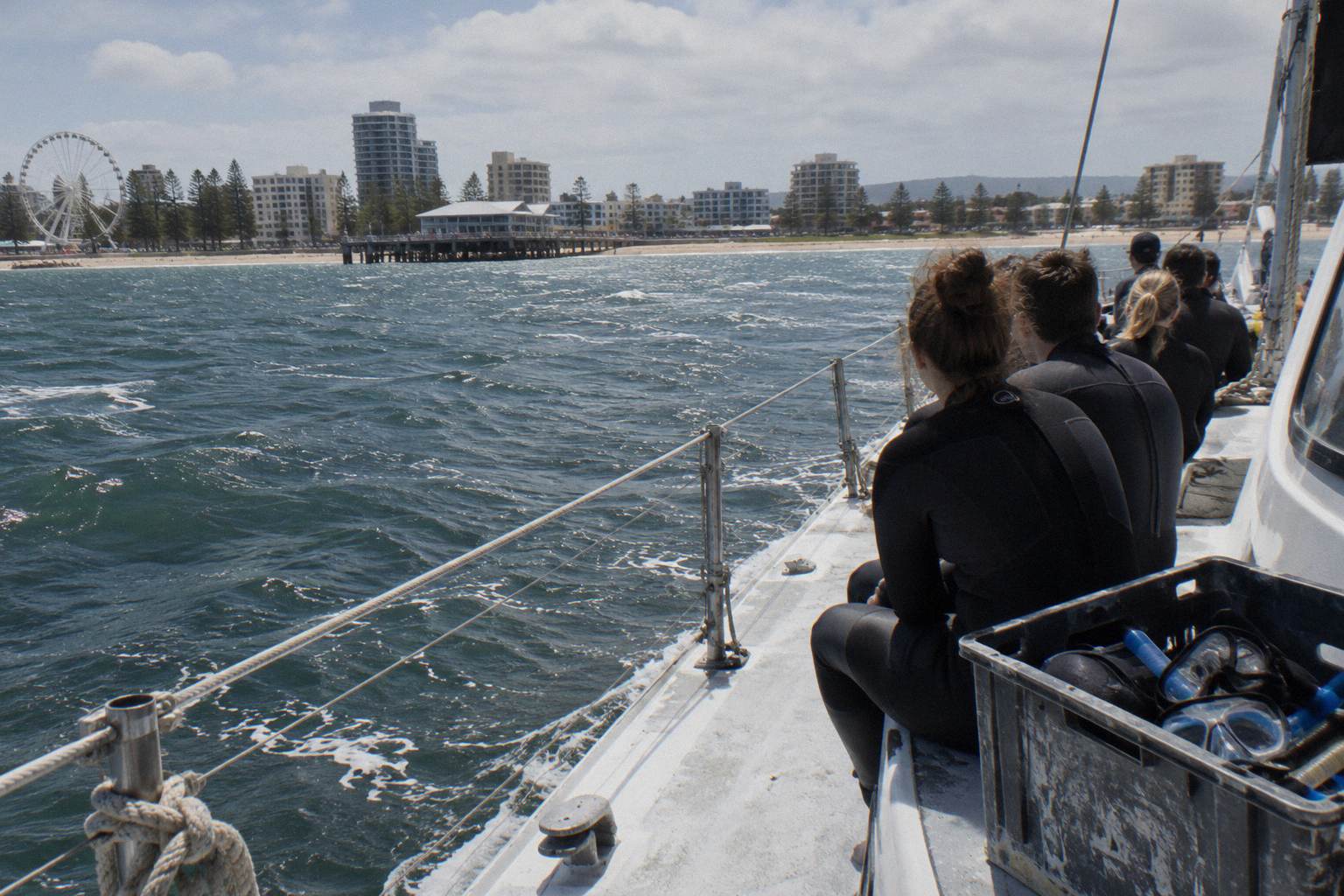
In practice, per the operator's own description of its Glenelg trips, boarding happens at Marina Pier in the Holdfast Shores Marina, starting 15 minutes before a morning departure, and the tour runs approximately 4 hours. Each swimmer is fitted with a full-length 5 mm wetsuit that doubles as a flotation device, followed by a crew briefing of about 15 minutes covering the mask, snorkel and the line itself. Prescription masks are carried on board, wetsuits run to size 4XL, and life jackets are available although they are not used for the swim. The format is exactly what the distance rules reward: a line of swimmers towed slowly, with the animals free to bow-ride, pass beneath or ignore the boat entirely. Other pages covering the same trip are gathered on Adelaide Swimming With Dolphins.
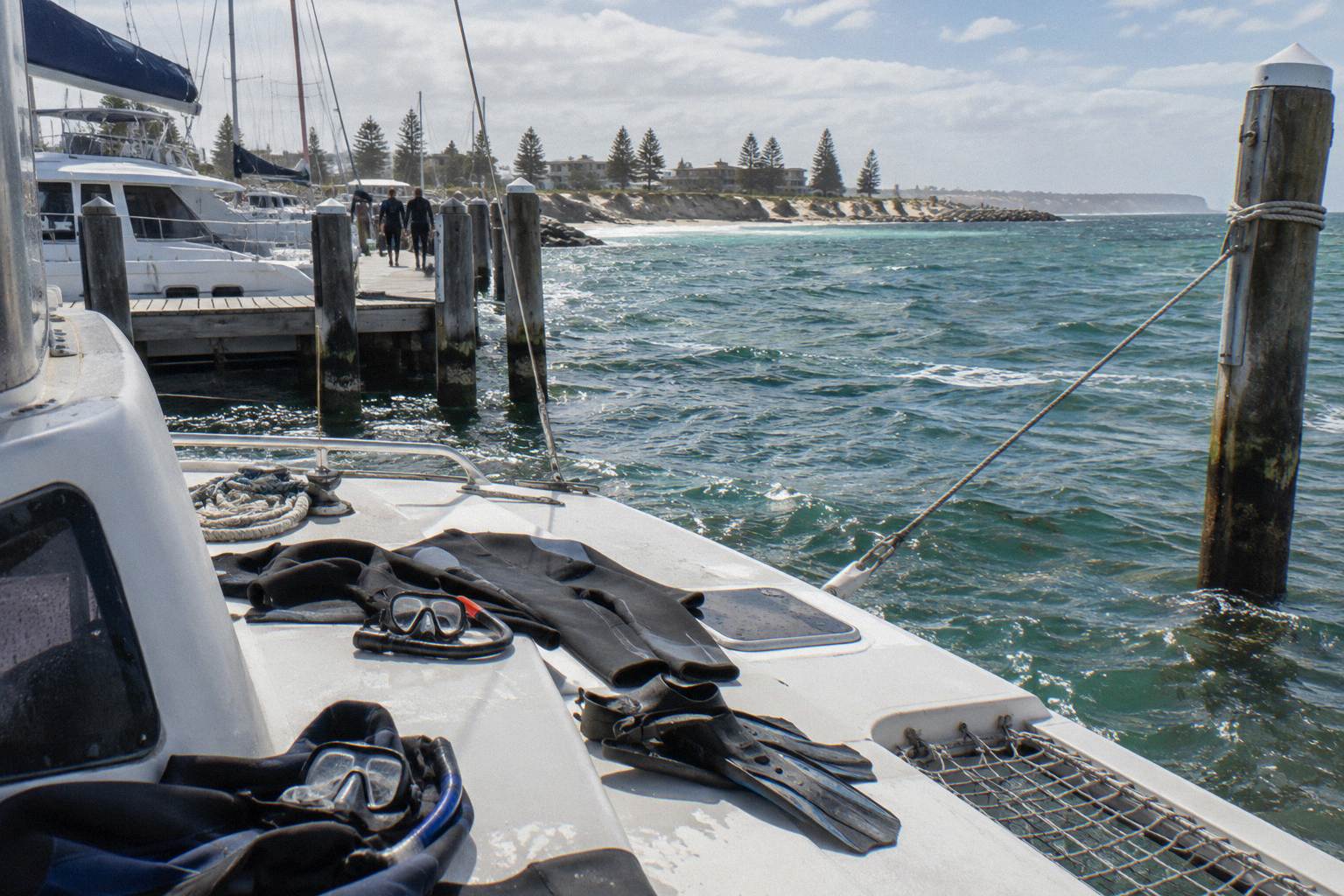
The rotation matters too. The operator runs two experiences, a Front Swim and a Back Swim, and rotates swimmers between them. Two shark shields run during the back swim; the front swim has none, and pacemaker wearers should ask the operator before booking. Minimum age for the swim is 9, an insurance-based limit the operator states, and anyone under 18 needs a parent or guardian on board, who can swim or take a watch ticket. The full run of what a cruise involves, from briefing to ladder, is covered in the companion guide to what actually happens on a wild dolphin swim cruise.
The operator's stated controls, and what each one is for, are worth laying out side by side. Every element below is the operator's own description of its Glenelg trips, not a permit condition, since no permit conditions are published anywhere official.
| Operator-stated control | What it means on the water |
|---|---|
| Flotation line connected to the stern | Swimmers hold the line while the boat moves slowly; no free swimming toward dolphins |
| Entry only once dolphins turn toward the boat | The animals initiate the approach, which is how the swim stays inside the distance rules |
| Entries stopped when dolphins come too close | The crew cuts the interaction before the animals are crowded |
| Front Swim and Back Swim rotation | Every swimmer gets both positions across the trip |
| Two shark shields on the back swim | Deterrence on the line position; the front swim runs without shields |
| About 15-minute crew briefing | Mask, snorkel and line technique demonstrated before anyone enters the water |
The featured listing for this swim is the Wild Dolphin Swim From Glenelg With Temptation Sailing, rated 4.7 across 493 reviews and listed from USD 104 per person with free cancellation up to 24 hours before. Check availability
One point of honesty that fits naturally in a rules discussion: no operator can promise an underwater dolphin encounter, and the rules would forbid chasing one anyway. What this operator says, as its own claim, is that it has never had a day without seeing dolphins from above the water, and that its direct-booking terms allow a free return within a year if none appear. The separate question of what happens when sightings fail, and whose terms apply, is unpacked in the guide to dolphin swim sightings and what to expect if none appear.
Kangaroo Island: The Same Law, A Different Operator
The same state regulations apply around Kangaroo Island, and the permitted operator there, KI Ocean Safari, describes a similar line-based format: a 2-hour Snorkelling Safari that may be dolphins, seals or a coastal snorkel, with a swimmer line with buoys often used at the back of the vessel, needing upper body strength to hold and a ladder exit needing lower body strength. Sharks shields run fore and aft, and the swim starts from age 9.
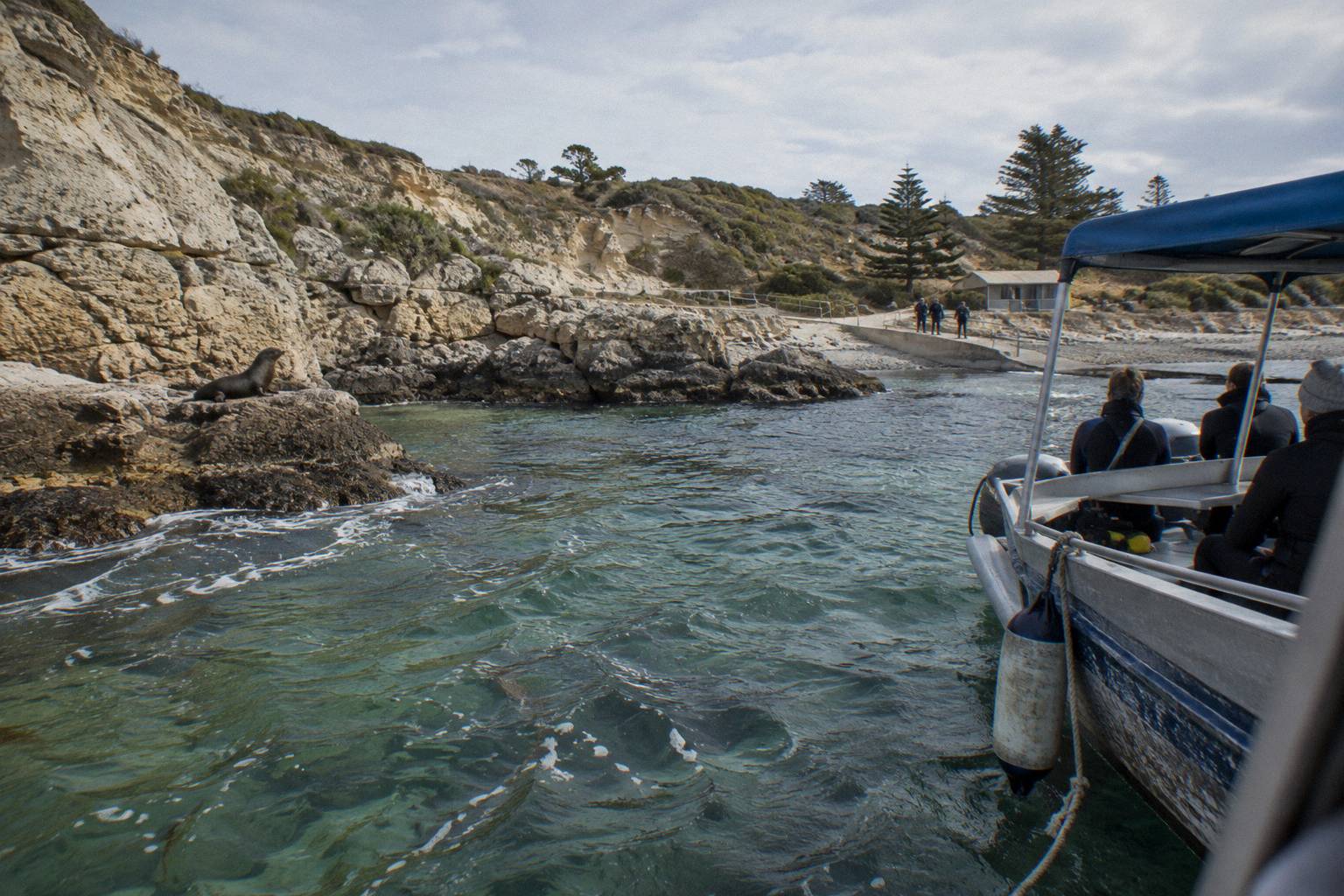
The operator's page is unusually blunt about what the law makes inevitable: wildlife interactions are not guaranteed, a trip may be dolphins only, seals only or a coastal snorkel, and once you are in the water at any stage there is no refund on that basis. Wetsuit, gloves, mask, snorkel and fins are provided, and the vessels are described as 28-seaters. Swimmers meet at the Kangaroo Island Information Stop, 43 Howard Drive, Penneshaw, 30 minutes before departure for fitting and the safety brief. Not suitable with a pacemaker or pregnancy, no wheelchair access, and reasonable swimming ability is recommended, with a life jacket or noodle available.
The swim-with-dolphins listing is rated 4.4 across 137 reviews and listed from USD 132 per person with free cancellation up to 24 hours on the booking page, though the operator's own cancellation tiers are stricter within 7 days. If your priority is seeing dolphins without getting in, the same operator's watch-only coastal safari is rated 4.8 across 640 reviews and listed from USD 61.74 per person, but note its booking page marks it non-refundable.
Planning a same-day visit from Adelaide involves ferry and timing questions rather than legal ones, and the Kangaroo Island dolphin swim day trip guide covers that separately. On rules, nothing changes across the Backstairs Passage: the 30 m swimmer distance, the 50 m vessel distance and the no-feeding, no-touching prohibitions follow the dolphins, not the postcode.
Watching And Paddling Options Under The Same Rules
Yes, the same rules bind paddlers and watchers: a kayak counts as a vessel under the regulations, held to the 50 m and 150 m limits and the 4-knot zone, while shore-based watchers face the fewest rules of all. Two Adelaide options need no swim ticket: a sanctuary kayak tour rated 4.8 across 300 reviews from USD 54.72, and a Port River dolphin cruise rated 4.5 across 481 reviews from USD 60.
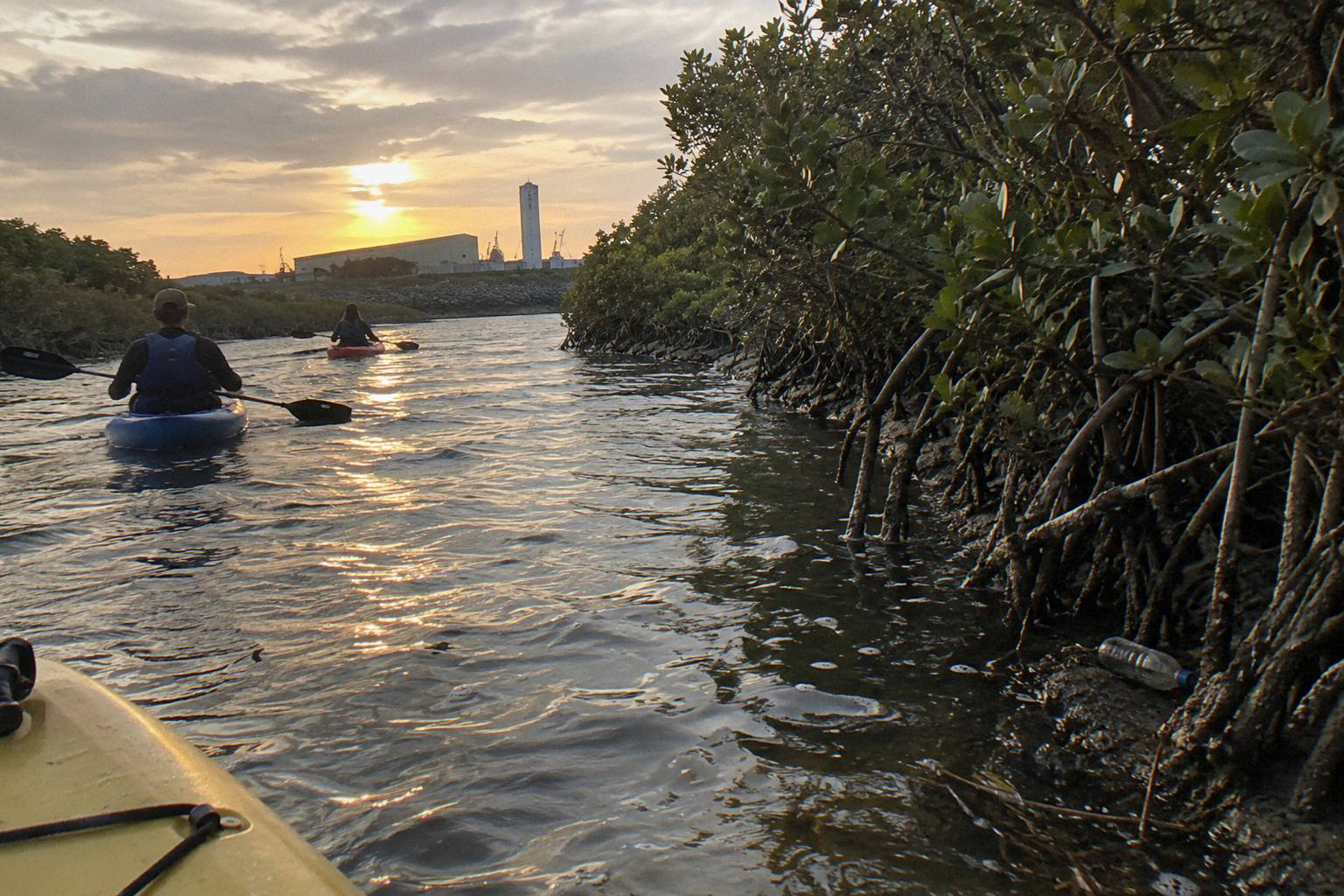
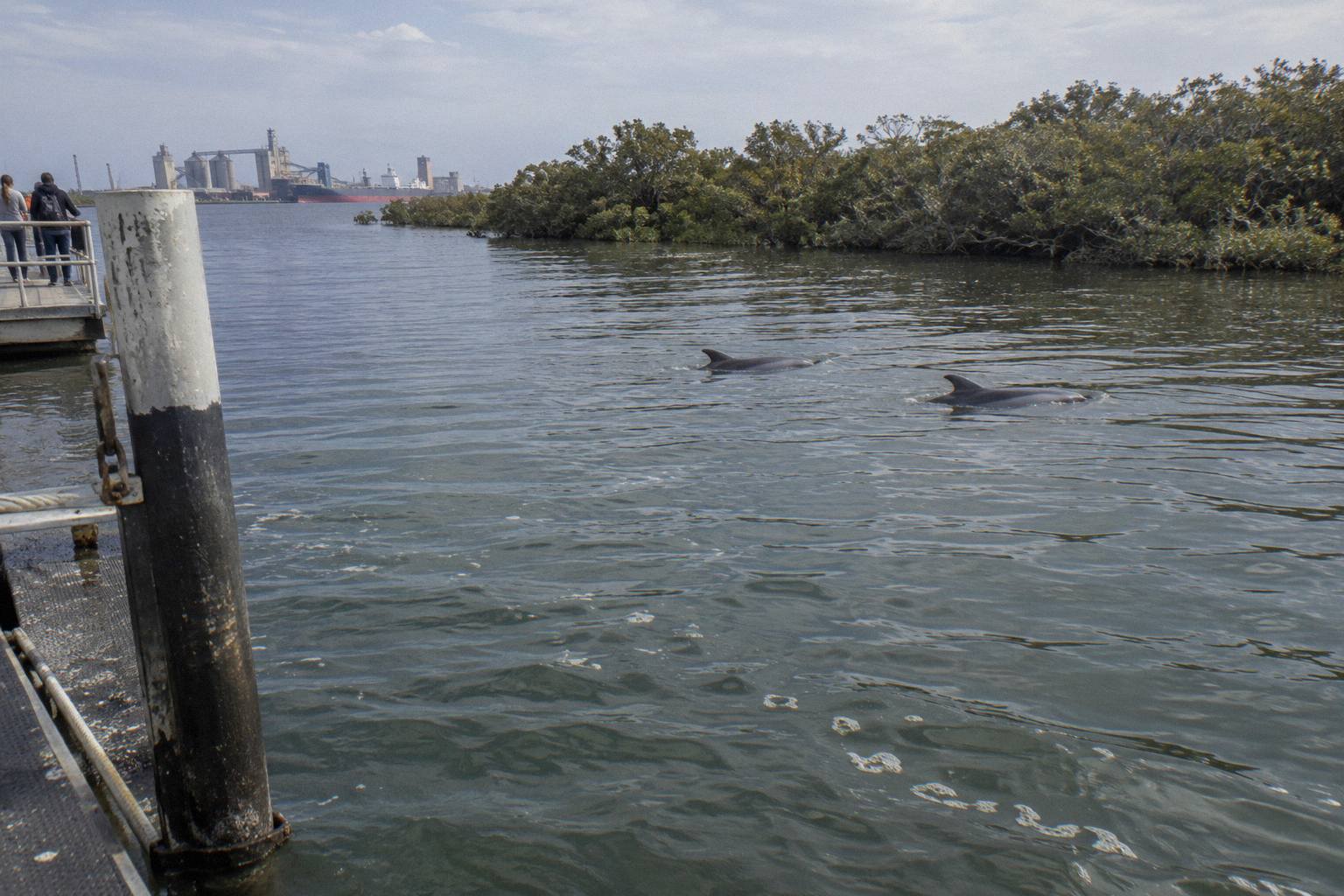
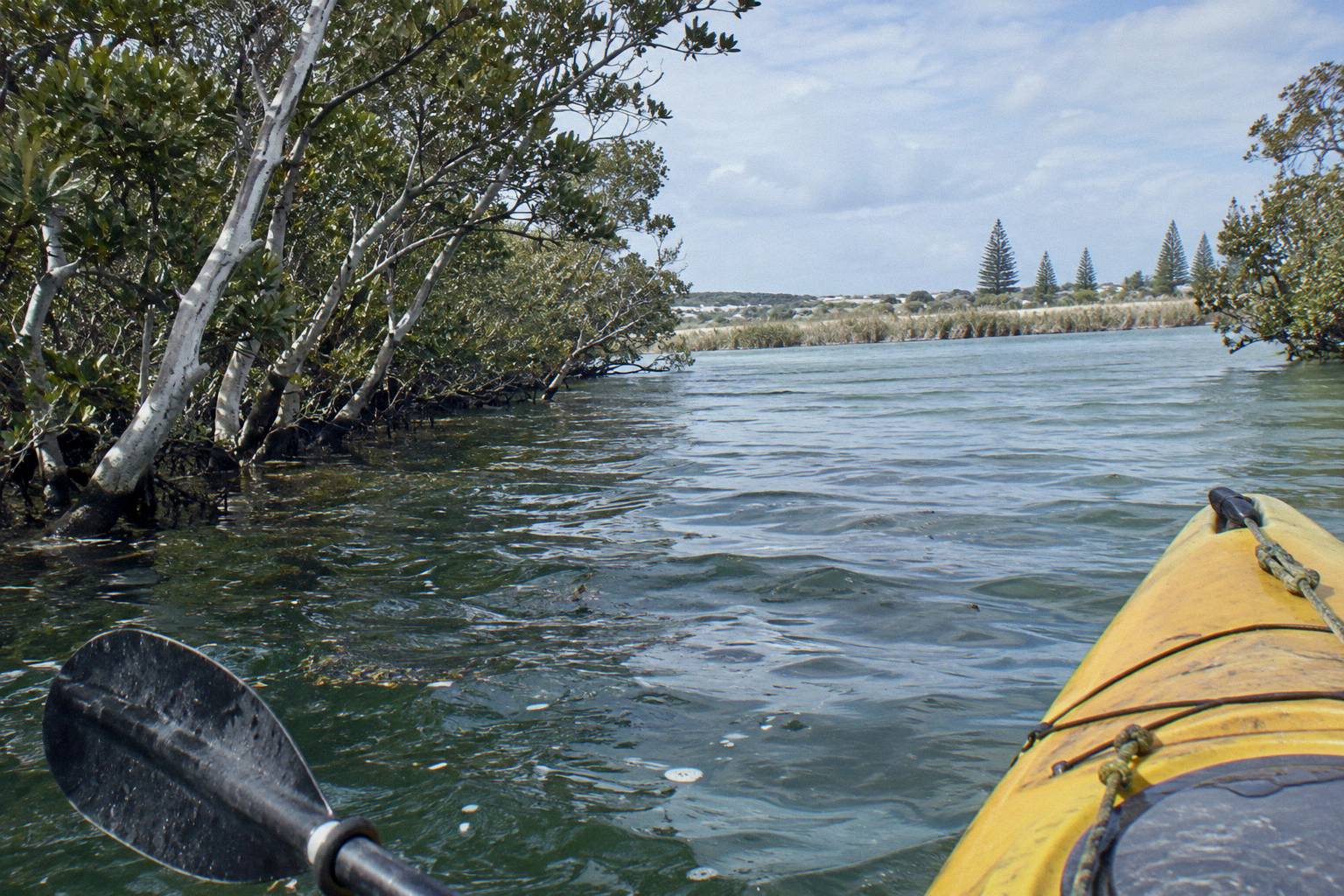
The Dolphin Sanctuary Kayak Tour, run by Adventure Kayaking SA, paddles the Adelaide Dolphin Sanctuary, the Port River and Barker Inlet estuary north of Port Adelaide, which is a different body of water entirely from the Glenelg swim area. The sanctuary covers 118 sq km of water, mangroves, saltmarsh, tidal flats and tidal creeks, and its near-shore dolphins are Indo-Pacific bottlenose dolphins, many of them year-round residents, according to the official South Australian page marking twenty years of the sanctuary. Paddling among resident dolphins at legal distances is about as low-impact as a marine mammal experience gets, and the tour is open to children from age 8.
The Port River Dolphin Cruise covers the same estuary from a deck rather than a cockpit, paired with the area's famous ships graveyard, over about 1.5 hours. It suits anyone whose knees have opinions about ladders, whose group mixes keen swimmers and firm non-swimmers, or who simply wants the sanctuary's resident pods explained by a crew that knows individual animals. Both listings show free cancellation up to 24 hours.
Across the whole roster this site tracks, each format intersects the distance rules differently, and the fastest way to see that is to compare them directly. The table below lists every current listing against the format, the minimum age where one applies, and the from-price on the live listing.
| Tour (listing) | Format | Min age | From price | Rating and reviews |
|---|---|---|---|---|
| Wild Dolphin Swim From Glenelg With Temptation Sailing | Swim, flotation line | 9 | USD 104 | 4.7, 493 reviews |
| Kangaroo Island Ocean Safari Swim | Swim or coastal snorkel | 9 | USD 132 | 4.4, 137 reviews |
| Wild Dolphin Watch From Glenelg | Watching only | Not stated | USD 62 | 4.8, 409 reviews |
| Port River Dolphin Cruise | Watching only | Not stated | USD 60 | 4.5, 481 reviews |
| Dolphin Sanctuary Kayak Tour | Paddling only | 8 | USD 54.72 | 4.8, 300 reviews |
| Kangaroo Island Dolphin Watch | Watching only | Not stated | USD 61.74 | 4.8, 640 reviews |
A note on geography, because the names invite confusion: the Adelaide Dolphin Sanctuary is not where the Glenelg swim happens, and whether you can swim in the sanctuary itself is a separate question with its own answer, covered in whether you can swim in the Adelaide Dolphin Sanctuary. The rules on distance and conduct are identical everywhere in the state; the permissions differ by operator and by area.
Do The Rules Change In Other States Or With The Algal Bloom?
The distance and permit rules above are South Australian law and apply statewide, from Glenelg to Kangaroo Island; other Australian states legislate marine mammal protection separately and are not covered here. The Karenia algal bloom is a separate matter from the rules: SA testing shows zero or low levels along the metropolitan coast and Kangaroo Island, and health advice is that clear water is fine to swim in, but check the operator before booking a swim.
Two things get conflated in online discussion, so it helps to split them cleanly. The regulations are stable, statewide and indifferent to water conditions; they say nothing about algae. The bloom, meanwhile, is a monitoring question, and the official state bloom site currently lists the Metropolitan Coast, Kangaroo Island, Southern Fleurieu and offshore Gulf St Vincent and Spencer Gulf sites at zero or low Karenia levels, with agencies continuing to monitor while remaining vigilant to the possibility of future blooms. Health advice from the same source is plain: beaches can still be enjoyed, avoid foamy or abnormally coloured water, rinse afterwards, and if the water is clear, it is fine to swim.
Operators respond to conditions under their own policies. Temptation's FAQ carries a standing notice that the bloom may affect its Wild Dolphin Tour, especially the swim product, with the algae concentration assessed a week before the season starts and a full refund if it cancels, and no cancellation tied to the bloom appears on its own pages for the current season. The season itself, per the operator, runs September to April, with no cruises in the cooler months from May to August. Water temperature is the other practical input, running roughly from around 14 °C in August to around 21 °C in February at Adelaide per seatemperature.org, with the 5 mm wetsuits provided on permitted swims doing most of the comfort work; the wetsuits and water temperature guide covers that in detail.
For the health advice itself, the state's bloom site is the primary source: current health guidance on swimming during the bloom. And for what the sanctuary actually protects, the official sanctuary facts page is worth a read: twenty facts for twenty years of the Adelaide Dolphin Sanctuary.
The short version of this whole page: the law sets the distances, permits decide who may sell the swim, and every licensed format on this site, swim, watch or paddle, is built around dolphins choosing to come to you. Book the format that matches your confidence in the water and let the animals handle the rest.
Common Questions About Dolphin Swim Rules
How Close Can You Get To Wild Dolphins In Australia?
Rules differ by state. In South Australia, swimmers and snorkellers must stay at least 30 m from a dolphin, or 150 m if the animal is a calf, disturbed, sick, injured, stranded or entangled, and no more than 30 minutes may be spent within 150 m. Vessels keep 50 m, or 150 m with a calf or visible disturbance, at 4 knots or less within 150 m.
Is Swimming With Wild Dolphins Legal In South Australia?
Yes, but only through an operator holding a Ministerial permit or other lawful authority. Regulation 19 of the 2025 marine mammal regulations prohibits taking people into the vicinity of marine mammals for a fee to swim near them without such authority. Swimming independently is legal but bound by the distance rules.
Can You Touch Or Feed A Wild Dolphin?
No. Touching and feeding marine mammals are prohibited outright under the regulations, for swimmers, kayakers and vessel passengers alike. Each alleged offence can attract a AUD 315 expiation fee.
What Happens If A Dolphin Swims Up To You?
The distance rules restrict your approach, not the dolphin's. Stay calm, stay still and let the animal control the encounter; do not reach out, chase or follow it. The rules exist to prevent pursuit and harassment, and a passive swimmer approached by a curious dolphin is not treated the same as one who swims at the pod.
Why Do Dolphin Swims Use A Flotation Line?
Permitted swims are controlled interactions, not free swimming. Swimmers hold a line connected to the stern while the boat moves slowly, so the dolphins choose whether and how closely to approach. On the Glenelg swim the crew puts swimmers in only once dolphins turn toward the boat and stops entries if the animals come too close.
Do The Distance Rules Apply To Kayaks?
Yes. A kayak is a vessel under the regulations, so the 50 m and 150 m vessel distances and the 4-knot speed limit within 150 m apply to paddlers. The Adelaide Dolphin Sanctuary kayak tours operate inside those limits around the Port River's resident dolphins.