What Happens On A Wild Dolphin Swim Cruise, Start To Finish
The whole arc of the morning, from boarding a sailing catamaran at Glenelg to climbing the ladder after a line swim, told in the operator's own order of events.
Short answer
A Glenelg dolphin swim cruise runs about 4 hours: board at Marina Pier 15 minutes before a morning departure, get a full-length 5 mm wetsuit, a roughly 15 minute crew briefing, then swim on a flotation line only once dolphins turn toward the boat, rotating through Front and Back Swim experiences, back between 11:30am and midday.
A wild dolphin swim is not a free swim in open ocean, and the fastest way to feel comfortable booking one is to know the sequence of the morning in advance. On the Glenelg cruise the day follows a fixed order, the operator controls every entry into the water, and swimmers hold a line the whole time they are in the sea. This guide walks through that order step by step, using the operator's own published statements, then covers the shorter Kangaroo Island version so the two can be compared honestly.
The featured trip here is the Wild Dolphin Swim From Glenelg With Temptation Sailing, from USD 104 per person, rated 4.7 across 493 reviews, listed as about 4 hours with a minimum age of 9 and wetsuit and swim gear included. Alongside it, the Kangaroo Island Ocean Safari Swim, from USD 132 per person, rated 4.4 across 137 reviews, runs a tighter 2-hour format. If you want the numbers before the narrative, the site's guide to wild dolphin swim prices and what they include breaks down every cost, and what to wear and bring for a wild dolphin swim covers the packing side.
What Happens On A Wild Dolphin Swim Cruise, Step By Step?
A Glenelg dolphin swim cruise follows a fixed sequence: you board at Marina Pier 15 minutes before a morning departure, get fitted with a full-length 5 mm wetsuit, and receive a roughly 15-minute crew briefing with a mask and snorkel demonstration. After the crew searches for dolphins from the boat, swimmers take controlled line swims only once dolphins turn toward the vessel, rotate through two swim experiences, and return to the marina between 11:30am and midday.
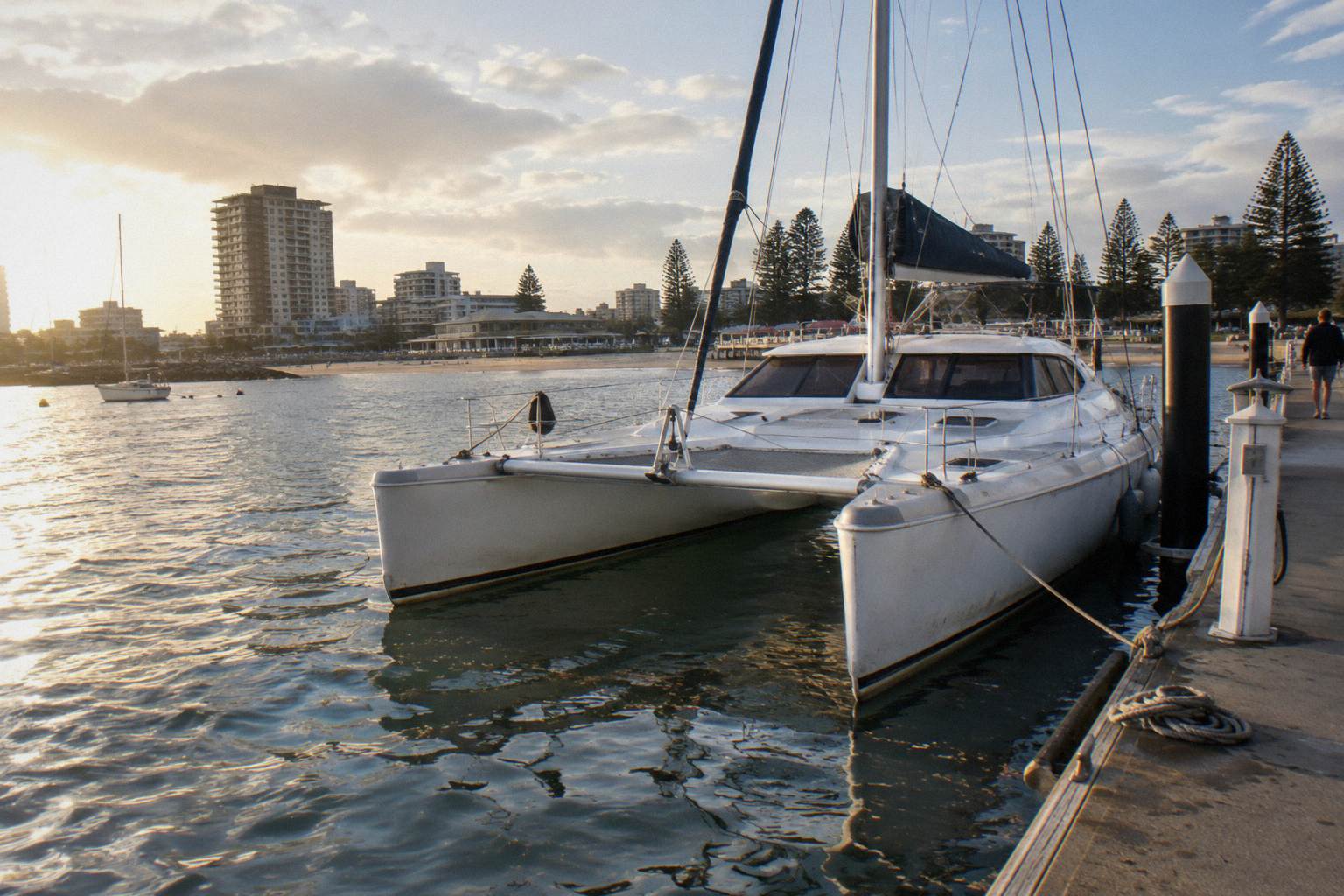
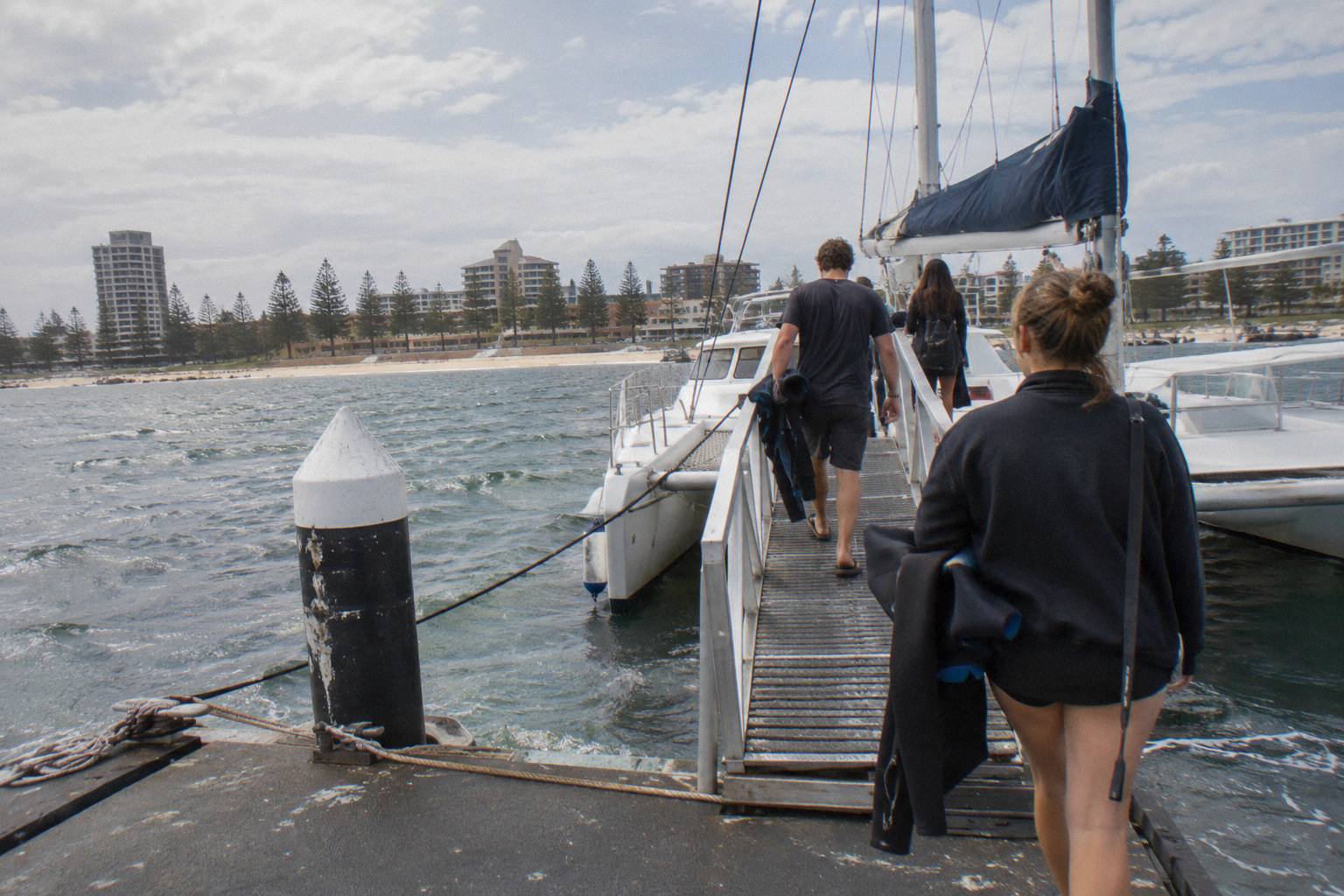
The tour runs from Marina Pier at Holdfast Shores Marina in Glenelg, with boarding "at the bottom of the stairs/ramp in front of the Oyster Bar" and boarding commencing 15 minutes before departure. The operator describes the vessel as a 58 ft sailing catamaran surveyed for up to 50 passengers. It is one boat for everyone: swim guests and watch guests ride together, booked together or separately, which is why a hesitant partner can hold a watch ticket on the same deck rather than being left ashore.
Two points of orientation before the detail. The operator says the season runs September to April, with no cruises at all in the cooler months of May to August, so the shape of the morning assumes a warm-season day. And although this is a dolphin swim, sea temperature still matters for comfort, roughly around 14 °C in August to around 21 °C in February off Adelaide according to seatemperature.org; the site's guide to wetsuits and water temperature on a dolphin swim covers that in depth.
The quick table below shows the order of the day; the sections that follow unpack each stage.
| Stage of the morning | What happens, per the operator |
|---|---|
| Boarding | Marina Pier, Glenelg; boarding starts 15 minutes before a morning departure |
| Gear fitting | Full-length 5 mm wetsuit per swimmer, doubling as a flotation device |
| Briefing | About 15 minutes with the crew; mask and snorkel demonstrated |
| The search | Dolphins sought from the boat, hosts include a marine biologist |
| The swim | Swimmers enter only once dolphins turn toward the boat; all hold the stern flotation line |
| Rotation | Front Swim and Back Swim experiences, swimmers rotated between them |
| Exit | Climb the three-rung ladder at the back of the boat |
| Return | Back in the marina between 11:30am and midday, roughly 4 hours after departure |
How Does Boarding And Wetsuit Fitting Work?
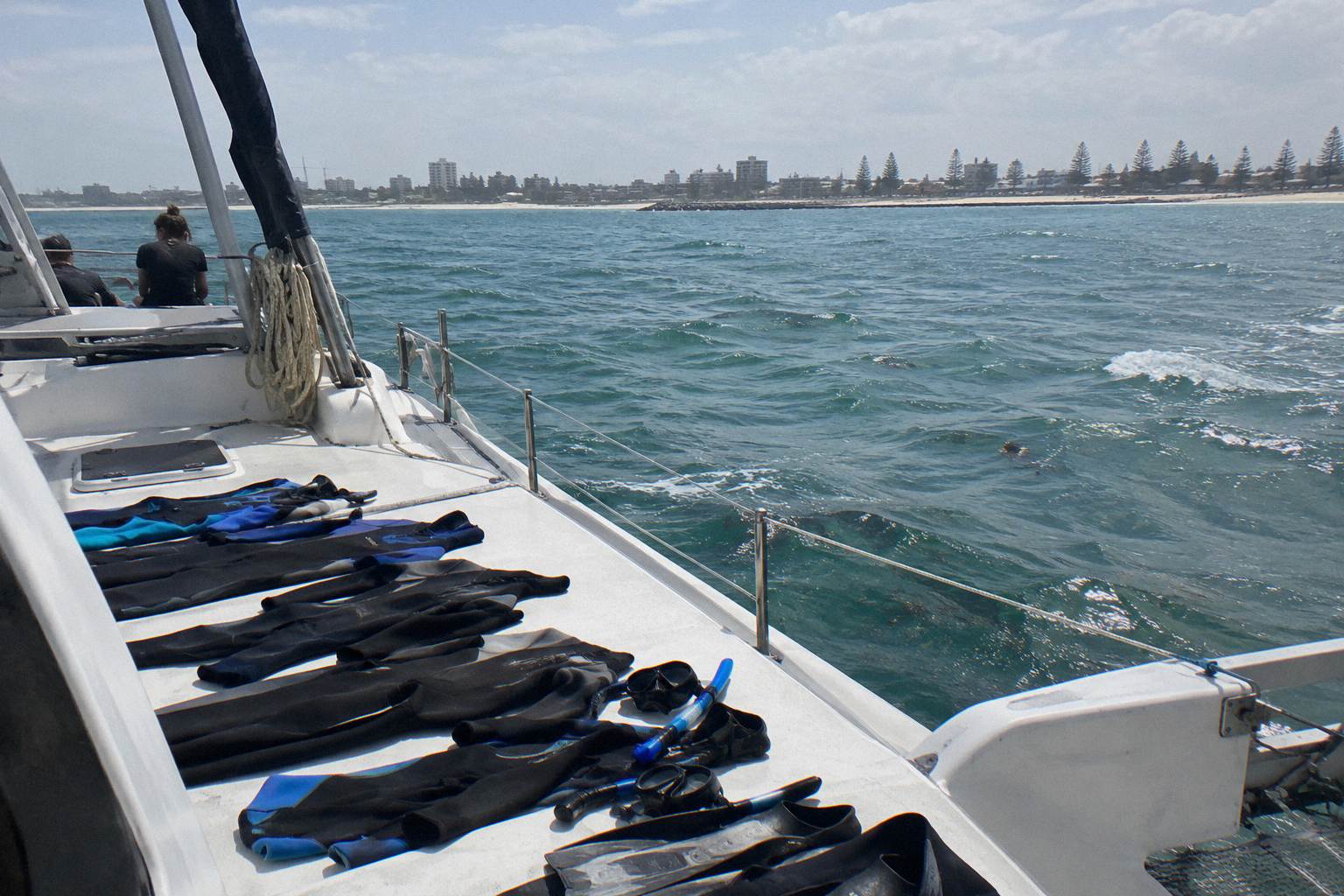
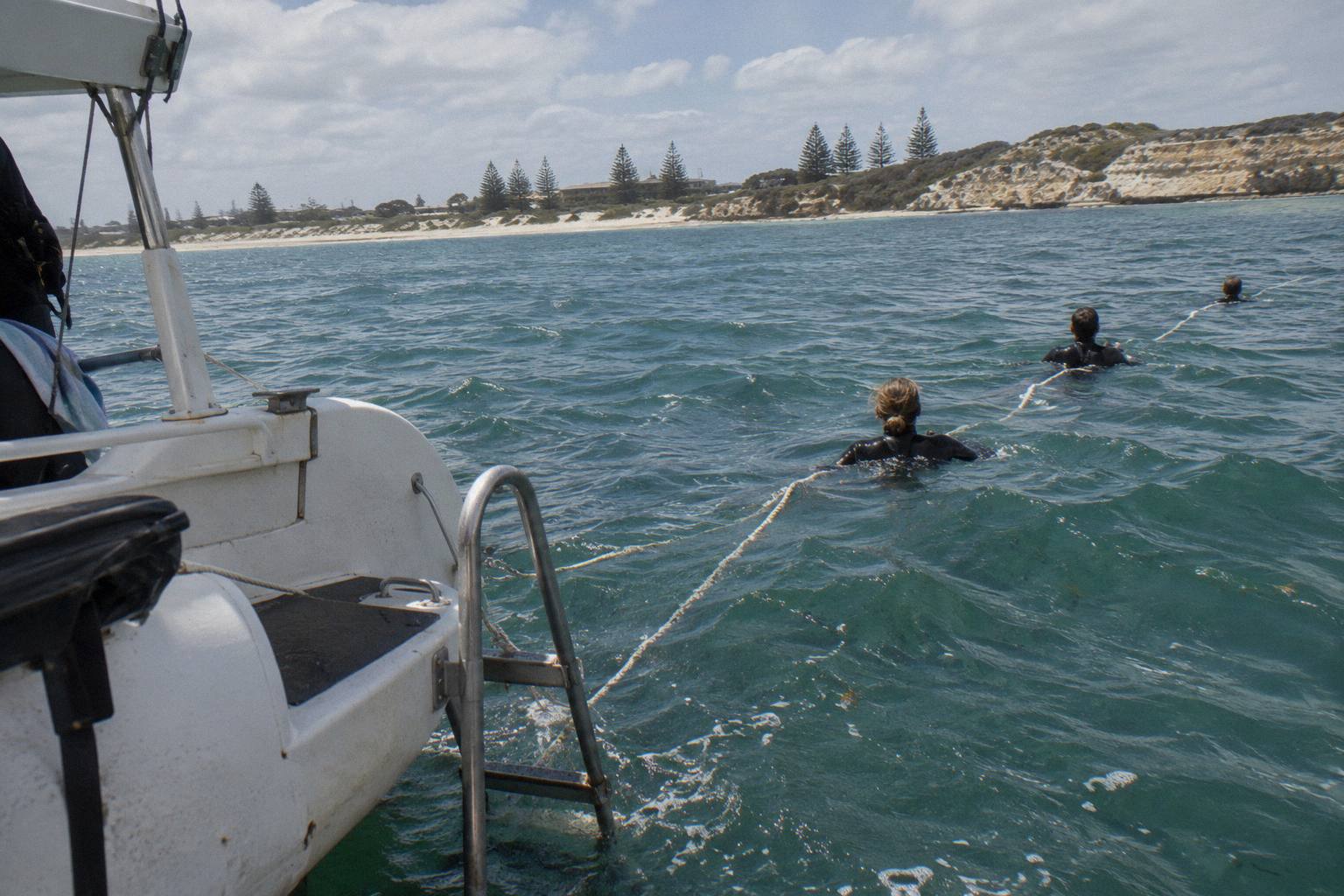
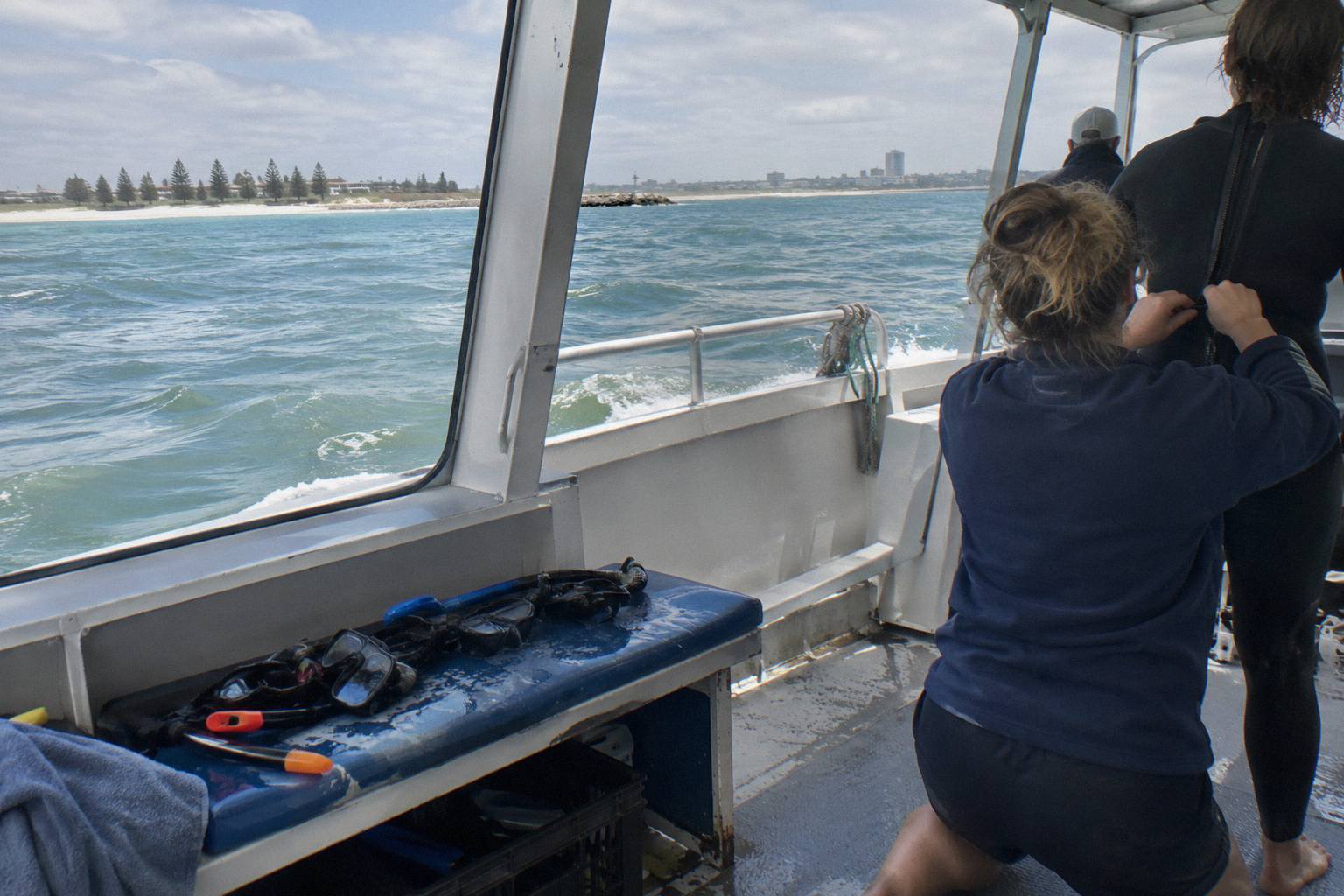
Boarding opens 15 minutes before a morning departure at Marina Pier in Glenelg, at the bottom of the stairs in front of the Oyster Bar, and the first job on deck is gear: every swimmer is handed a full-length 5 mm wetsuit that the operator says also acts as a full-body flotation device. Suits run to size 4XL, and prescription masks are carried on board in three strengths.
The operator's FAQ states that boarding commences 15 minutes before departure and that departure time appears on the booking confirmation, so the practical rule is to treat the confirmation, not a remembered clock time, as the authority. What can be said generally is that it is a morning departure, with the boat back in the marina between 11:30am and midday. The tour runs approximately 4 hours in the operator's words.
The wetsuit is not optional comfort gear, it is part of the safety system. Because it doubles as flotation, a swimmer in the water is buoyant even before reaching for the line, and the operator's briefing treats the suit that way. Masks and snorkels are demonstrated by the crew rather than assumed, which matters for anyone whose last snorkel experience was a resort lagoon. Prescription masks in -1.5, -3 and -4.5 strengths are on board for swimmers who wear glasses; the site's post on whether you can wear glasses or contacts on a dolphin swim goes further on that.
Life jackets are carried on board but are not used for the swim, since the wetsuit performs the flotation role in the water. If that raises questions about swimming ability, the honest answer is that this format is built around a held line rather than independent swimming, and the guide to dolphin swims for non-swimmers and weak swimmers deals with who it suits and who should buy a watch ticket instead.
What Happens During The Crew Briefing?
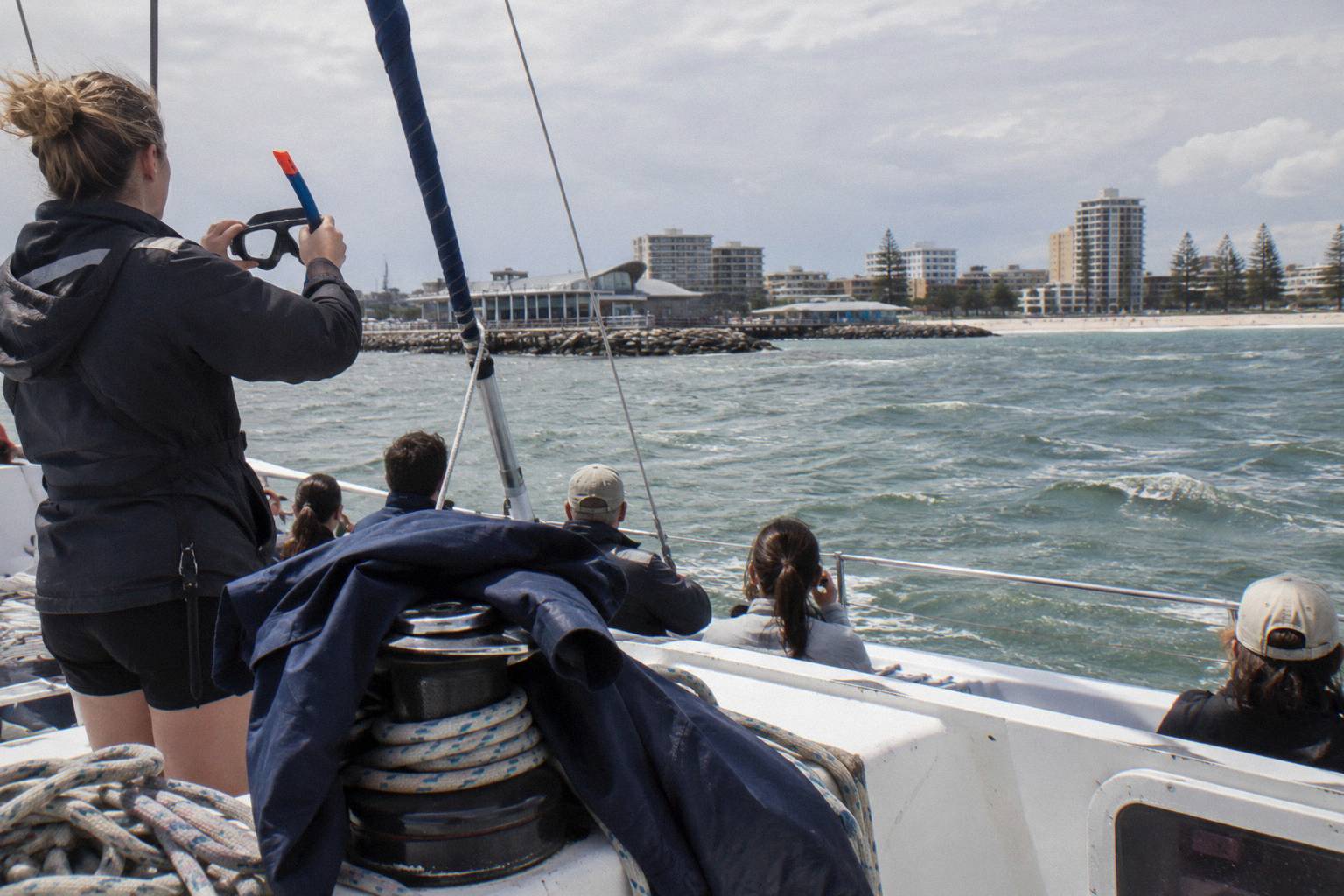
The briefing runs about 15 minutes and covers the mechanics of the swim before the boat leaves the dolphins behind: how to hold the stern flotation line while being towed slowly, how the mask and snorkel work, how swimmers rotate between the Front Swim and Back Swim experiences, and the ladder exit. The operator describes the day as fully controlled, with a marine biologist among the hosts.
This is where the shape of the swim becomes clear. Swimmers do not strike out toward dolphins, they hold a line connected to the stern while the boat moves slowly, and the crew decides every entry. The operator states that swimmers go in only once dolphins have turned toward the boat, and that entries stop when dolphins get too close. The direction of control runs from the crew to the animals to the swimmers, never the reverse, which is both an ethics position and a legal one. The rules are strict: swimmers may not go closer than 30 m to a marine mammal, vessels keep 50 m, or 150 m with a calf or if the dolphins show disturbance, under the South Australian marine mammal regulations in force since September 2025. The site's guide to dolphin swim rules and how close you can get sets out the full set.
The briefing is also the decision point for nervous swimmers. The operator's own terms say that a swimmer who does not feel confident after the briefing may stay aboard as a watcher, and for bookings made direct with the operator the swim-minus-watch difference is refunded. That is a direct-booking term only and should not be assumed on a reseller ticket.
One practical note the operator volunteers: seasickness tablets taken 30 minutes before the cruise, and no refund for seasickness on the day. The site's guide to seasickness and boat comfort on a dolphin swim covers preparation properly.
How Do You Actually Get In The Water With The Dolphins?
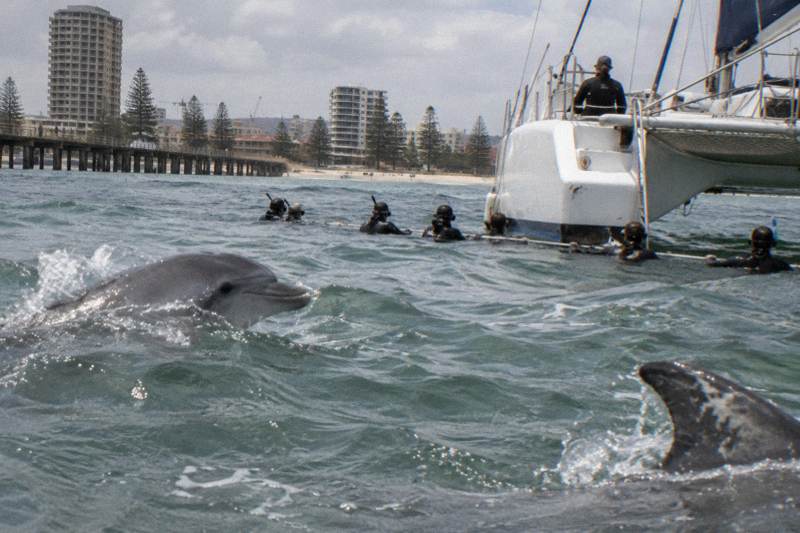
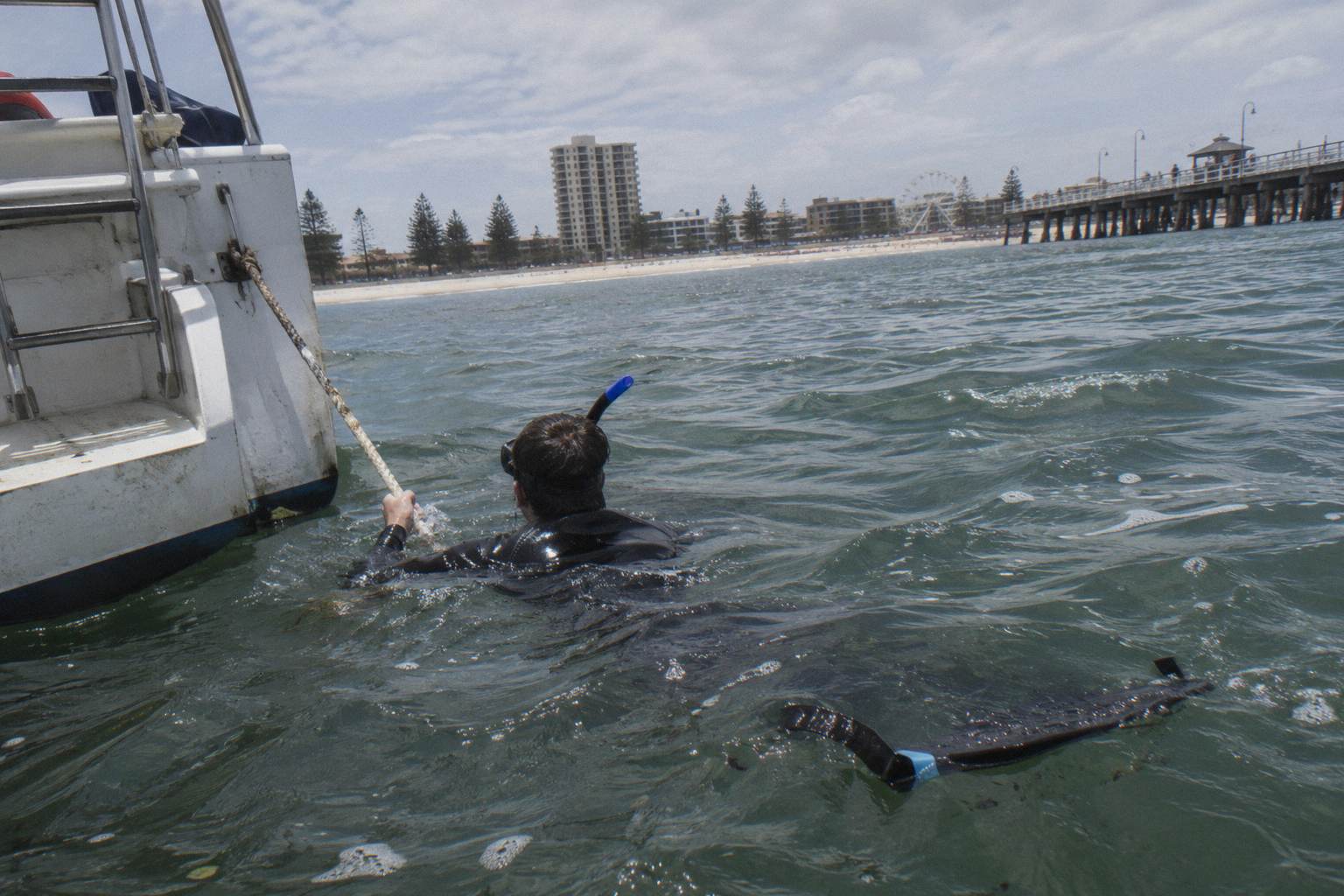
Swimmers enter only when the crew calls it, after dolphins have turned toward the boat, and every swimmer holds a flotation line connected to the stern while the vessel moves slowly forward. It is a controlled tow, not a chase: the operator stops entries when dolphins get too close, and no swimmer swims freely toward the animals at any point.
The line is the defining feature of the experience. Holding it while being towed slowly requires grip and some upper body readiness, and getting out requires climbing three rungs of a ladder at the back of the boat, which the operator lists among its physical requirements alongside the ability to hold the line. There is no moment where a swimmer floats alone in open water hoping a dolphin arrives; the platform, the crew and the line are always there.
What you actually look at underwater is a wild pod doing what it chooses. The operator says the tour watches Indo-Pacific bottlenose and short-beaked common dolphins off Glenelg, though it names no swim site, and no verified figure exists for group sizes or residency there. Nothing in the day promises an underwater encounter with a dolphin; the operator's own sighting language, quoted later in this guide, is carefully limited to dolphins seen from above the water.
The two swim experiences work as a rotation. The table below separates them as the operator describes them.
| Front Swim experience | Back Swim experience | |
|---|---|---|
| Position | Forward area of the catamaran | Stern, at the flotation line |
| Shark shields | None, per the operator | Two shields running during the swim |
| Who it can suit | The operator's FAQ answer allows pacemaker wearers to ask about the front swim | Not available with a pacemaker because of the shields |
| Rotation | Swimmers rotate between the two experiences | Same rotation, same trip |
Pacemaker wearers should ask the operator before booking, in the operator's own wording, and that is the correct level of detail to rely on rather than assuming either swim is open. Fitness questions more broadly are covered in the site's guide to fitness and medical conditions for a dolphin swim.
For anyone reading this and deciding the line swim is not for them, the same operator runs the Wild Dolphin Watch From Glenelg, from USD 62 per person, rated 4.8 across 409 reviews, watching only from the same catamaran, with Watch Only, No Swim on the live listing. It is the honest fallback for a mixed group: one boat, two ticket types.
What Happens After The Swim And On The Sail Home?
After each rotation swimmers climb the three-rung ladder at the stern, shed gear on deck, and the boat sails back into Holdfast Shores Marina, with the operator stating the return falls between 11:30am and midday on an approximately 4 hour tour. There is no second swim session promised, and the day ends where it started, at the pier.
The exit is the part worth knowing about in advance. Three ladder rungs sound trivial and are not, when a soaked 5 mm wetsuit and a slow tow are involved; the operator lists the climb among its requirements for a reason. Warm layers for after the swim are a good idea even on a warm-season day, and the operator notes that temperatures on the water are often 3 to 4 °C cooler than on land, which cuts both ways on hot afternoons when tours still run.
The sail home is also the part of the trip where the watch guests and the swim guests share the same stories. Since both ticket types ride the same catamaran, families split between swimming and watching rejoin each other immediately, and the marine biologist hosts remain on deck for questions about the pod just encountered. The site's guide to what to do if a dolphin swims up to you covers the rarer case of an encounter from a beach or jetty rather than a boat.
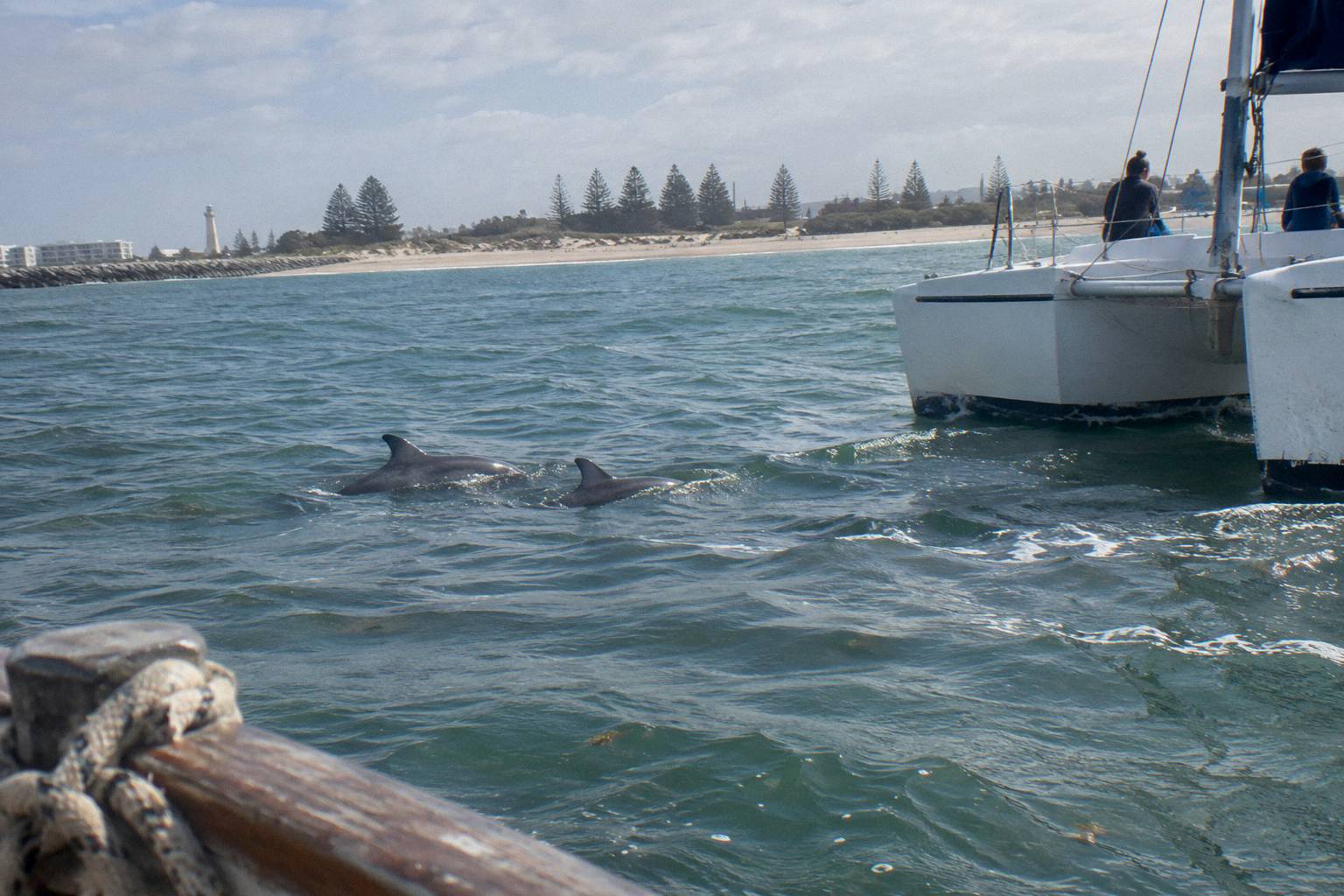
Photographers should plan around the rotation rather than the ride home: water time is crew-controlled, and cameras that need two hands are incompatible with a held line. The guide to underwater photos and cameras on a dolphin swim works through the options.
How Does The Kangaroo Island Swim Day Differ?
The Kangaroo Island Ocean Safari Swim compresses the same logic into 2 hours: meet at the Kangaroo Island Information Stop in Penneshaw 30 minutes before departure for fitting and a safety brief, then a Snorkelling Safari that the operator describes as swimming with wild dolphins or among seals, using a swimmer line with buoys at the back of the vessel, with wetsuit, gloves, mask, snorkel and fins all provided on 28-seater boats.
The format differences matter more than the scenery ones. First, the content of the trip is flexible by design: the operator's own page says the tour "is swim with dolphins or seals" and that a given day may be dolphins only, seals only or a coastal snorkel. Second, the sighting and refund stance is the opposite of soft: wildlife interactions are not guaranteed, and the operator states plainly that if you get in the water at any stage, you do not get any money refunded. Third, the physical demands are stated more bluntly, with the swimmer line requiring upper body strength and the ladder exit requiring lower body strength, and reasonable swimming ability recommended, with a life jacket and noodle available.
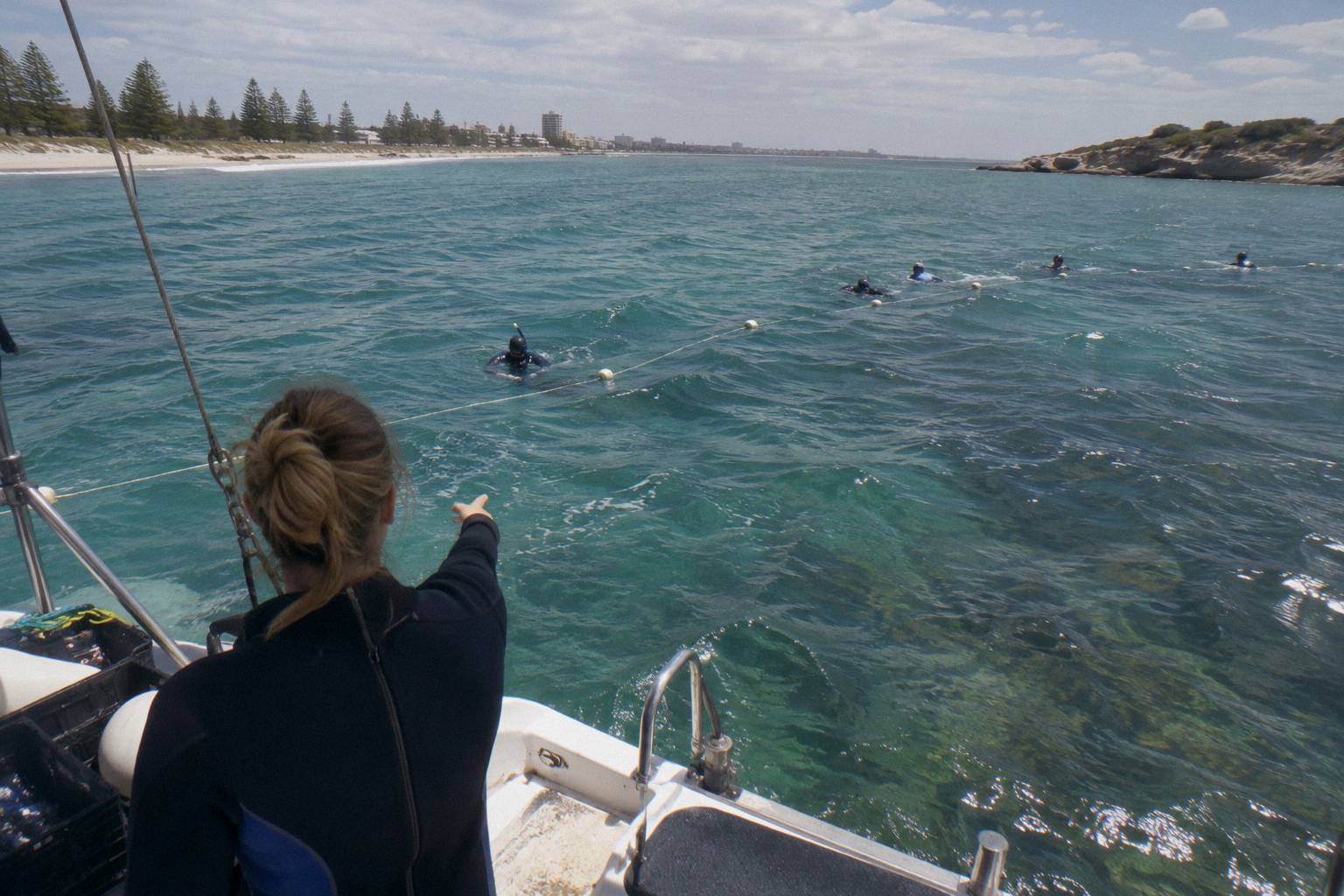
The operator says its water temperature sits between 14 and 15 degrees and that thick wetsuits allow the swim year round, unlike the Glenelg September-to-April season. Dolphins are present year-round around Kangaroo Island per the operator's FAQ, while seals peak in winter and are lowest November to January. The minimum age for the swim is again 9, with a coastal snorkel option from age 8, and the trip is not suitable with a pacemaker or in pregnancy. The booking page adds that the swim does not run when the pod has neonates.
| Glenelg swim cruise | Kangaroo Island Ocean Safari Swim | |
|---|---|---|
| Duration | About 4 hours, per the operator | 2 hours |
| Season | September to April, per the operator's FAQ | Year round, per the operator |
| Meeting point | Marina Pier, Glenelg, boarding 15 minutes early | Kangaroo Island Information Stop, Penneshaw, 30 minutes early |
| Vessel | 58 ft sailing catamaran, up to 50 passengers, per the operator | 28-seater vessels, per the operator |
| Swim format | Stern flotation line; Front and Back Swim rotation | Swimmer line with buoys at the stern, shark shields fore and aft |
| Content | Dolphin swim and watch on one boat | Dolphins, seals or coastal snorkel; content varies by day |
| Booking page price | From USD 104, rated 4.7 across 493 reviews | From USD 132, rated 4.4 across 137 reviews |
| Booking page cancellation | Free cancellation up to 24 hours | Free cancellation up to 24 hours |
Reaching Penneshaw is its own question: the operator says its base is close to the SeaLink ferry terminal and a 45 minute drive from Kingscote airport, in the operator's wording, and the site's guide to a Kangaroo Island dolphin swim day trip from Adelaide plans the whole crossing. For choosing between the two formats at all, the comparison guide on swimming with dolphins on Kangaroo Island or from Glenelg is the right page.
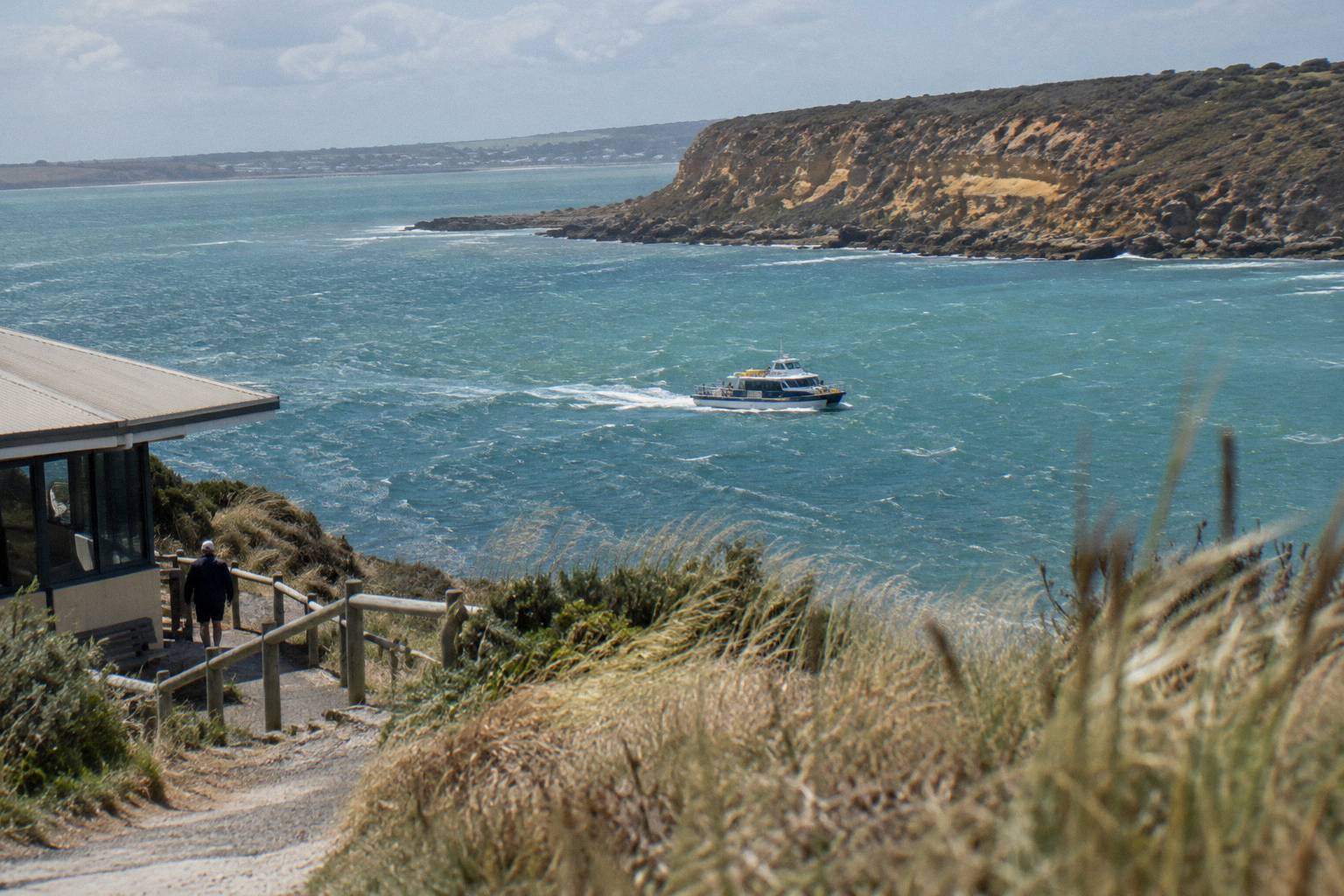
Who Can Swim And Who Should Ride As A Watcher?
On the Glenelg cruise the minimum swim age is 9, which the operator attributes to its insurance; anyone under 18 needs a parent or guardian on board, who may swim or hold a watch ticket; swimmers must manage the line and the three-rung ladder; pacemaker wearers should ask the operator before booking; and the boat is not wheelchair accessible, with stairs to board. Children under 9 may watch.
The watcher ticket is the piece families most often miss. Because swim and watch guests share one catamaran, a parent can ride as a watcher while a 12-year-old swims with the guardian requirement satisfied by being on board, and a nervous swimmer can downgrade after the briefing rather than before it. The operator's direct-booking terms even refund the difference for that nervous-swimmer case, though again, for bookings made direct with the operator only.
Age questions extend in both directions, and the site has a dedicated guide to dolphin swim age limits and kids. At the other end of the scale, there is no upper age limit stated by either operator, only the physical requirements, which is why the ladder and the line deserve to be read carefully rather than skimmed. Pregnancy rules differ between operators: the Kangaroo Island trip is listed as not suitable in pregnancy, while Glenelg's published restrictions do not say so; the guide on dolphin swims while pregnant addresses that gap honestly.
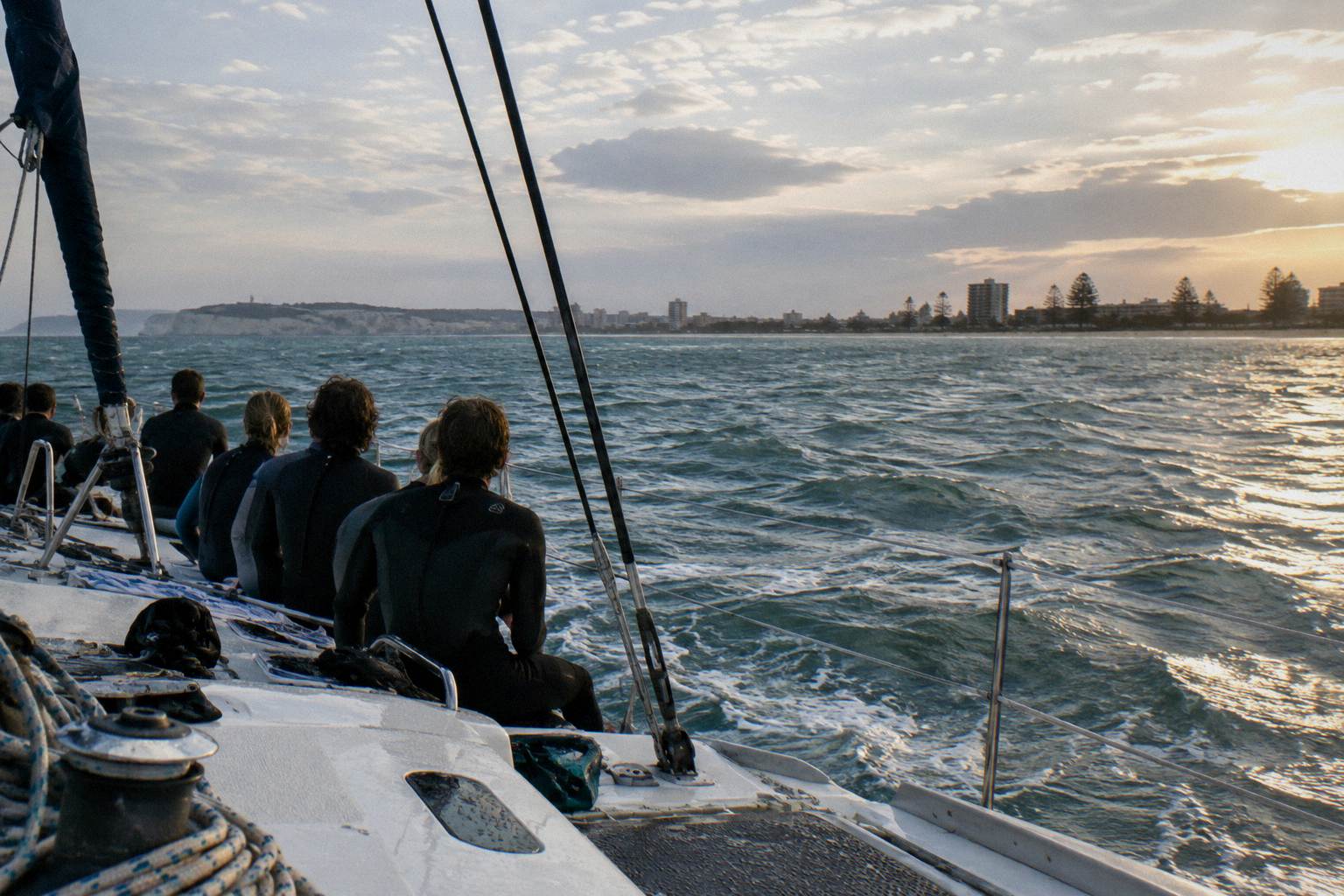
What Are The Sighting And Cancellation Terms On The Day?
The Glenelg operator reports never having had a day without dolphins seen from above the water and advertises a "100% success rate of seeing dolphins onboard since 2002", covering above-water sightings only. Direct bookers who see no above-water dolphins get a free return within one year or a 50% refund if they are interstate or overseas guests; the Kangaroo Island operator guarantees nothing, and once you enter the water at any stage, no refund applies.
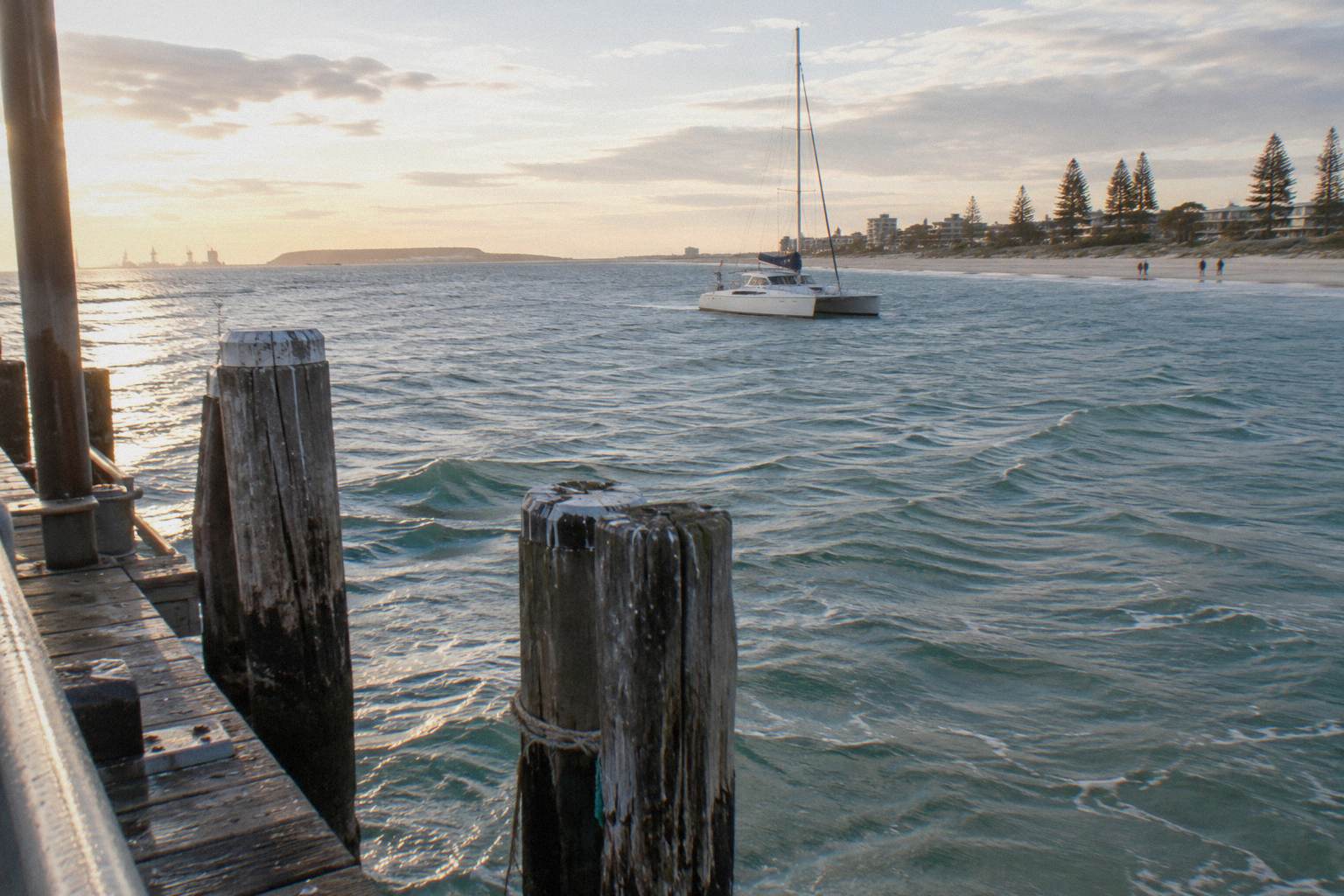
These two stances are the sharpest contrast between the trips and deserve to be read side by side. The Glenelg claim is an operator's own statement about its own record, not a promise of an underwater encounter; the operator's terms distinguish swimmers who did not see dolphins underwater, who may claim a refund of the swim-watch difference or a return within a year, again for direct bookings only. The booking page for the Glenelg swim shows free cancellation up to 24 hours, and the Kangaroo Island swim's booking page does too, but the operators' own cancellation tiers are stricter once inside those windows: Glenelg bookings of 5 or fewer get no refund or reschedule under 24 hours, and Kangaroo Island cancellations within 48 hours receive no refund with credit held 24 months, per each operator's own terms.
Weather is a live variable on any boat day. The Glenelg operator may cancel as late as immediately before departure for weather or mechanical reasons, with a full refund or reschedule at the booking holder's choice, and the site's post on whether a dolphin swim is cancelled if the weather turns covers what that means practically. For the deeper background on sightings themselves, the guide to dolphin swim sightings and what if none appear is the dedicated page.
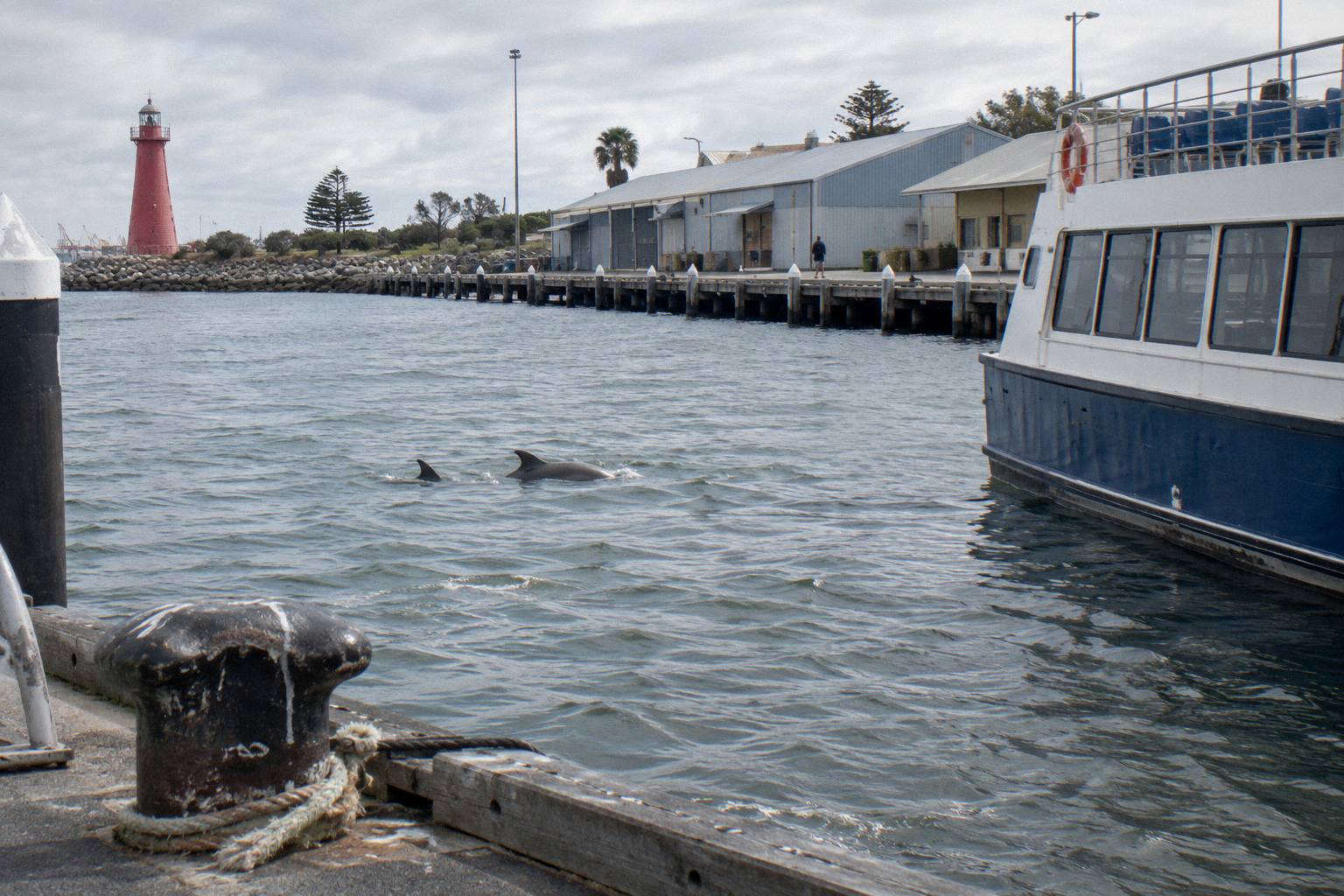
If even a watch ticket feels like too much commitment for the youngest members of a family, the Port River Dolphin Cruise, from USD 60 per person, rated 4.5 across 481 reviews, is a 1.5 hour watching-only trip through the sanctuary waters north of the city, and a gentle first exposure to wild dolphins without any open-ocean element.
What Should You Check Before Booking The Day?
Before booking, confirm the departure time on the confirmation rather than from memory, check that your date falls inside the September-to-April Glenelg season or accept Kangaroo Island's year-round calendar, ask the operator about the algal bloom notice if booking a swim, and read the ladder and line requirements against your own mobility. Everything else, wetsuit, mask, snorkel and briefing, is included in the ticket.
The full picture of what the money buys is on the prices guide linked above, and the timing question, how far ahead these trips fill, is handled in how far ahead to book a dolphin swim. For anyone weighing this against the other famous Australian swim towns, the site also compares dolphin swims at Rockingham or Adelaide.
Knowing the sequence of the morning is what makes the booking feel safe: nothing in the day is left to improvisation, from the wetsuit handed over at boarding to the ladder at the stern. That is the real story of a wild dolphin swim cruise, and it is why Adelaide Swimming With Dolphins exists: to report the day exactly as the operators describe it, in order, with every figure printed as it stands on the live listing.
Common Questions About A Wild Dolphin Swim Cruise
What Happens On A Dolphin Swim Cruise?
Boarding 15 minutes before a morning departure at Glenelg's Marina Pier, a 5 mm wetsuit fitting, an about 15 minute crew briefing with mask and snorkel demonstration, a search for dolphins from the boat, controlled swims on a stern flotation line only once dolphins turn toward the vessel, a rotation through two swim experiences, and a return to the marina between 11:30am and midday.
Do You Swim Freely With The Dolphins?
No. On the Glenelg cruise all swimmers hold a flotation line connected to the stern while the boat moves slowly, which the operator describes as a fully controlled swim rather than free swimming. The Kangaroo Island trip similarly uses a swimmer line with buoys at the back of the vessel.
How Long Is A Wild Dolphin Swim Cruise?
The Glenelg swim cruise is listed as about 4 hours, with the operator stating the boat returns between 11:30am and midday after a morning departure. The Kangaroo Island Ocean Safari Swim is a 2-hour trip. The site's post on how long a wild dolphin swim cruise is covers duration in detail.
What If No Dolphins Appear?
It depends on the operator. The Glenelg operator states it has never had a day without above-water dolphin sightings and offers, for bookings made direct with the operator, a free return within one year or a 50 per cent refund for interstate and overseas guests if none appear. The Kangaroo Island operator guarantees nothing and gives no refund once you have entered the water.
Can You Back Out After The Briefing?
On the Glenelg cruise, a swimmer who does not feel confident after the roughly 15 minute briefing may stay aboard as a watcher, and the operator refunds the swim-minus-watch difference for direct bookings. On the booking pages, both swims show free cancellation up to 24 hours before departure.
How Many Times Do You Get In The Water?
The Glenelg format rotates swimmers through two experiences, the Front Swim and the Back Swim, with entries controlled by the crew and stopped if dolphins come too close. The site's post on how many times you get in the water on a dolphin swim explains the rotation.