What To Wear And Bring For A Wild Dolphin Swim
The heavy gear is supplied. The small things, from swimwear to sunscreen to a towel, are mostly on you, and the operators leave several of them unstated.
Short answer
Both swim operators supply the big items: a full wetsuit, mask and snorkel, with fins and gloves added on Kangaroo Island. You bring swimwear to wear underneath, a towel, and sun protection. Towels, food, drink, shoes and changing arrangements are not stated by either operator, so confirm those before you travel. The Glenelg swim runs from USD 104 per person, the Kangaroo Island safari from USD 132.
Packing for a wild dolphin swim is mostly a packing-LESS exercise. The two operators that run swims in South Australian waters, Temptation Sailing from Glenelg and Kangaroo Island Ocean Safari from Penneshaw, supply the expensive and technical gear themselves: wetsuits, masks, snorkels, and on Kangaroo Island, gloves and fins as well. What is left for you is the everyday layer, swimwear, a towel, sun protection, and the small logistical questions that neither operator states outright on its public pages. This guide separates what is supplied, what you should bring, and what is genuinely unstated, so your bag is right the first time.
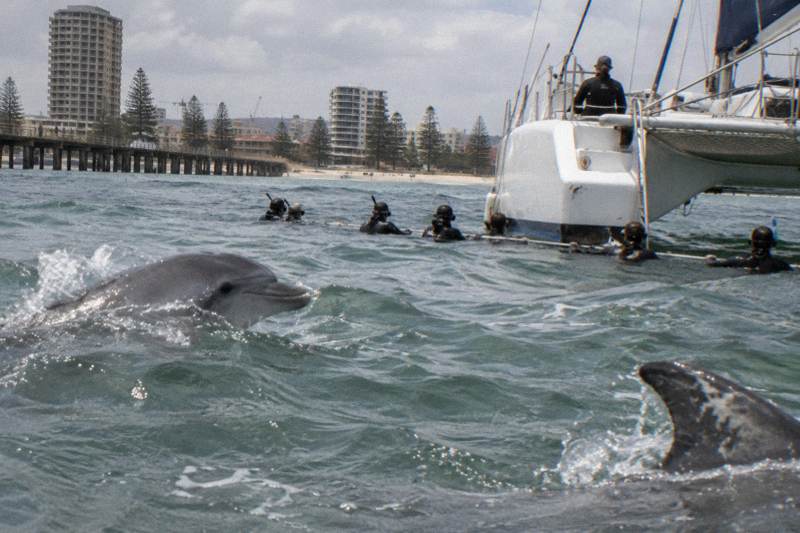
The distinction matters because the swim itself is a controlled one, not a free swim in open ocean. On the Adelaide Swimming With Dolphins featured trip, the Wild Dolphin Swim From Glenelg With Temptation Sailing, from USD 104 per person and rated 4.7 across 493 reviews, every swimmer holds a flotation line connected to the stern while the catamaran moves slowly, wearing a full-length 5 mm wetsuit that the operator describes as doubling as a flotation device. That means you are not dressing for a long independent swim. You are dressing for about 15 minutes of briefing, two or three short rotations at the line, and a boat ride of roughly four hours in the South Australian sun. If you want the fuller picture of the day itself, read what happens on a wild dolphin swim cruise, then come back to the packing list.
What Do You Actually Need To Wear For A Wild Dolphin Swim?
You need swimwear worn under your clothes, something warm and dry for the boat ride, and shoes you can slip off quickly at boarding. The operator supplies the wetsuit, which goes over your swimwear, so you never buy or rent one and sea temperature is not a factor, since the suit does that work; any other clothing detail is unstated, so ask when booking.
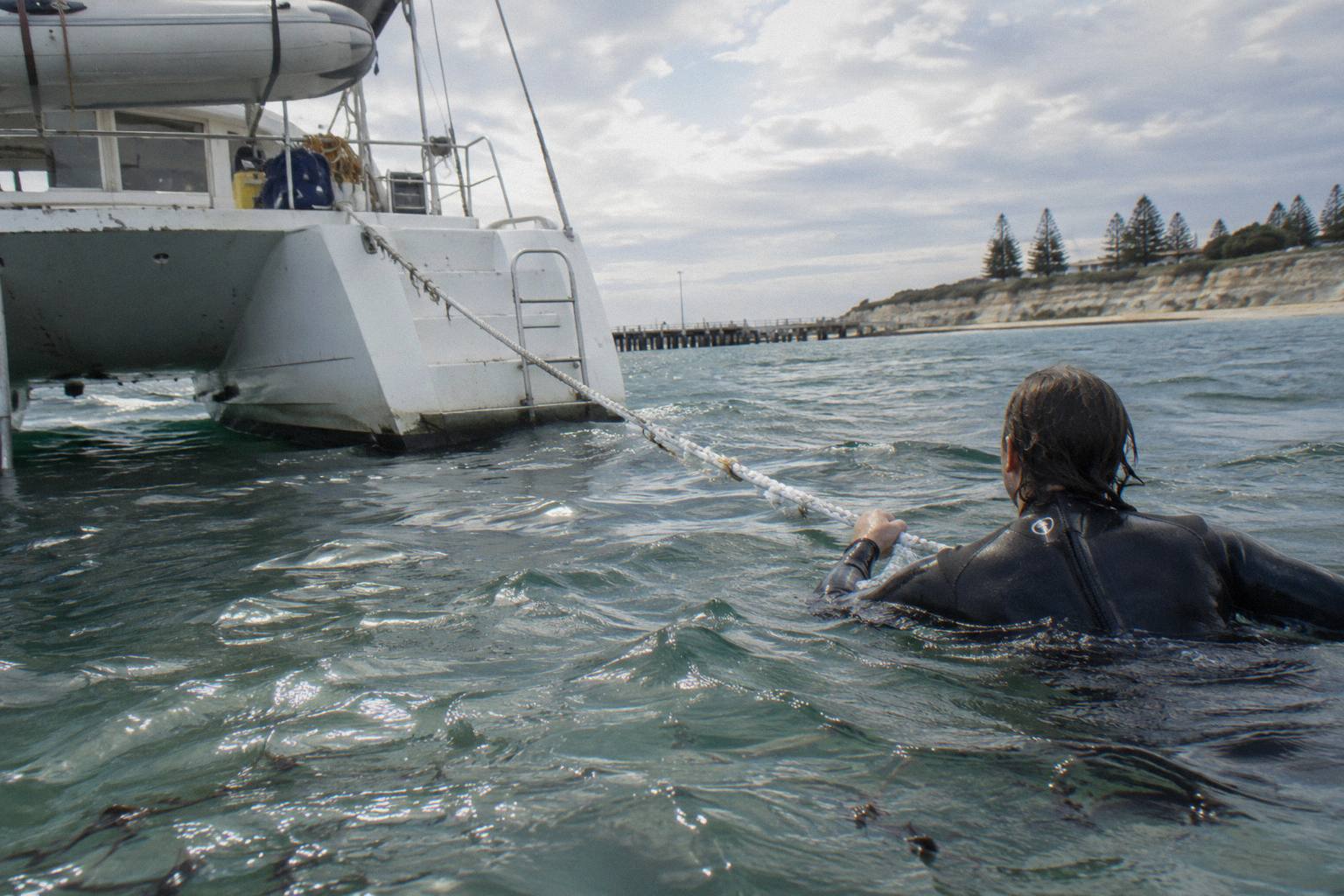
Start with the layer that touches your skin. A standard swimsuit or briefs under a wetsuit is the usual arrangement on any supplied-gear swim tour, and nothing in either operator's published material contradicts it, but note that neither operator explicitly states this either. Treat swimwear as the safe default and confirm anything unusual, such as rash-shirt preferences or two-piece concerns, directly with the crew.
The boat ride is where people get caught out, not the water. The Glenelg trip is listed at about 4 hours, with the operator saying the boat is back in the marina between 11:30am and midday after a morning departure, and the Kangaroo Island Snorkelling Safari runs 2 hours. On the water the Glenelg operator says temperatures are often 3 to 4 °C cooler than on land, so a warm layer for after the swim, a windproof jacket, and dry clothes for the trip home earn their space in your bag even on a warm morning. Adelaide's sea temperature runs from around 14 °C in August to around 21 °C in February (seatemperature.org), but the air on a moving boat can feel well below either figure; the full breakdown of suits and water warmth is in wetsuits and water temperature on a dolphin swim.
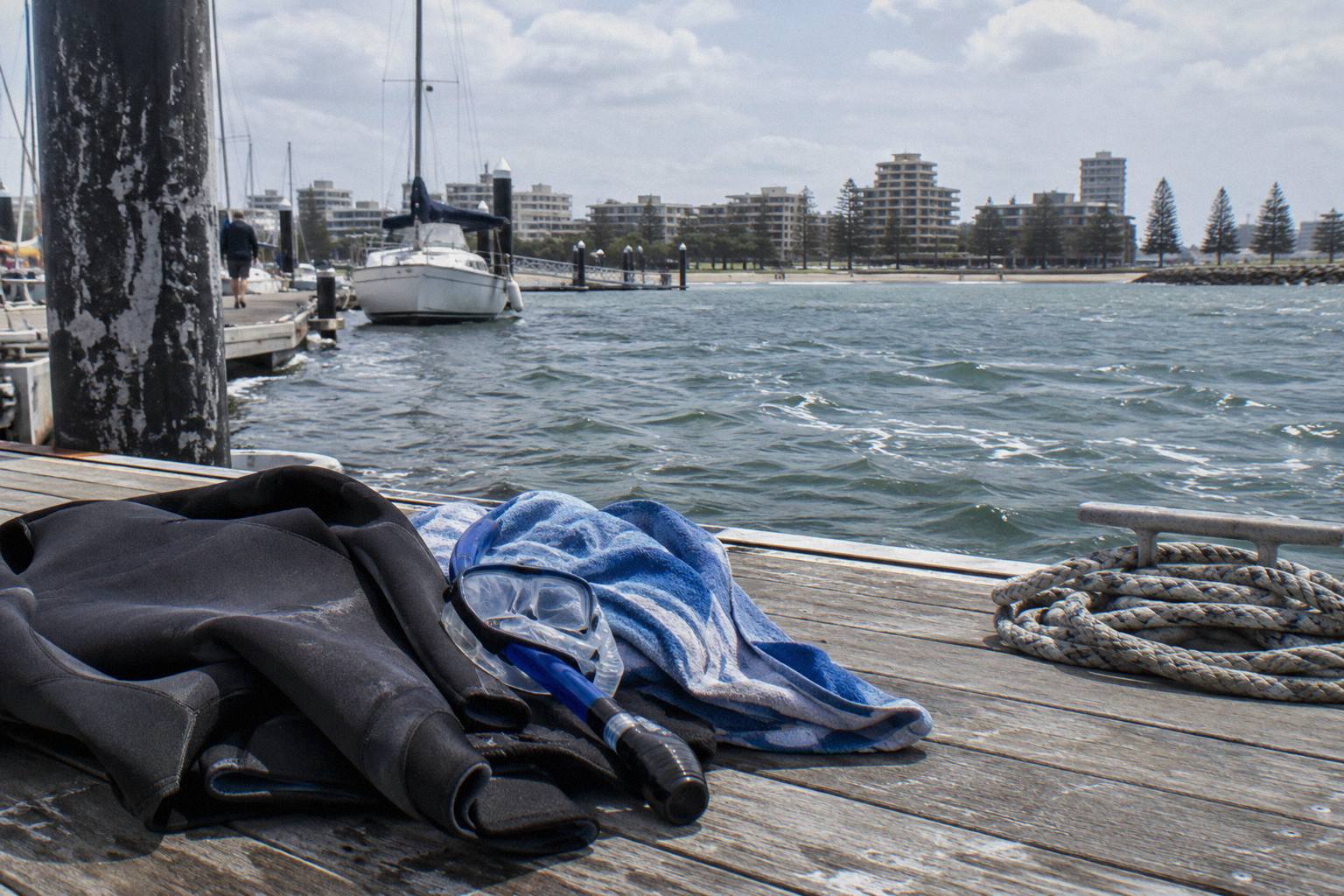
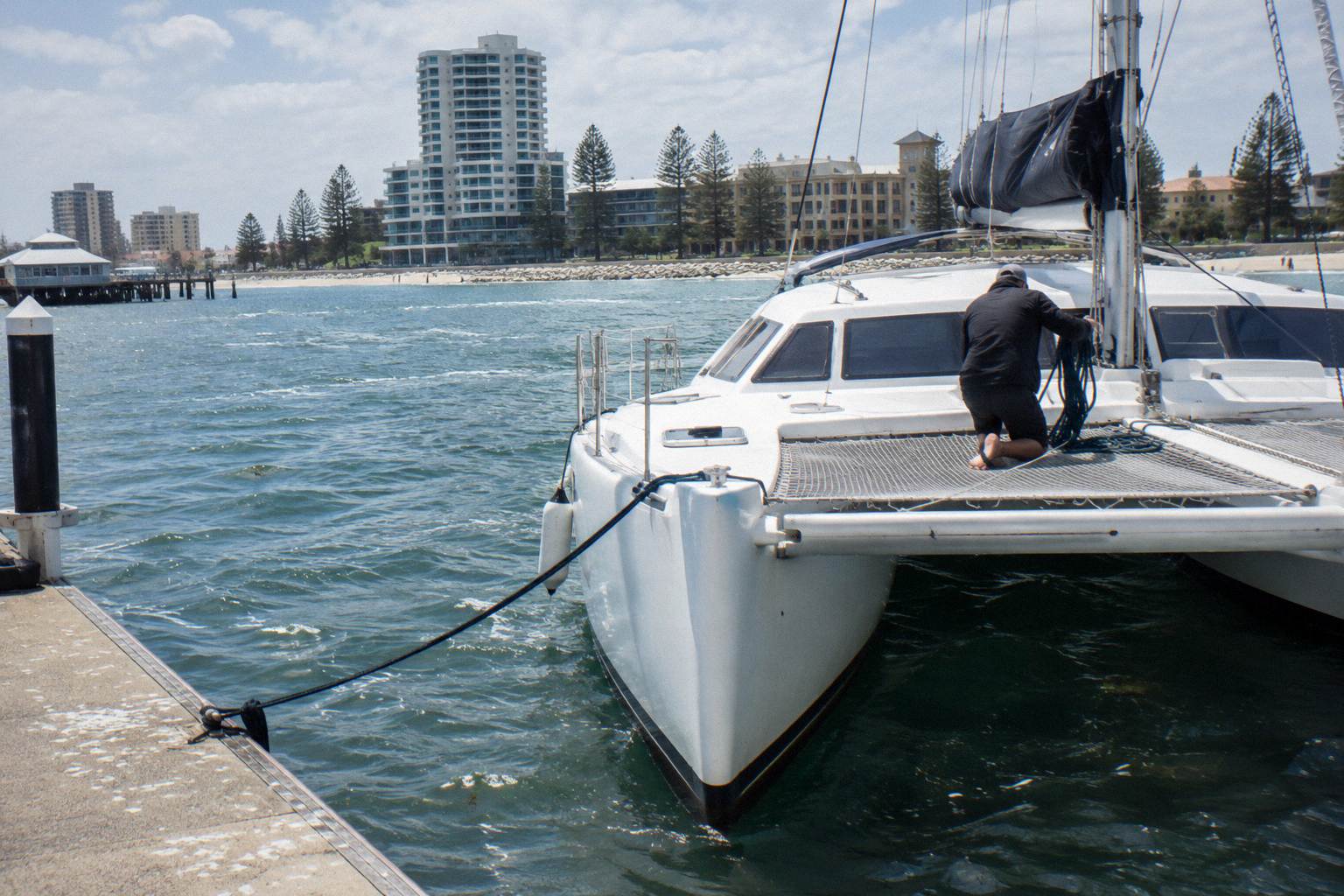
Footwear is simple: you will board a vessel with stairs, and the Glenelg operator specifies boarding at the bottom of the stairs and ramp at Marina Pier, Holdfast Shores Marina, in front of the Oyster Bar. Thongs, slides or reef shoes that come off in a second are the practical choice. Anything you would be upset to get wet, leather, suede, electronics without a case, should stay in secured storage; the Glenelg operator advertises secured underground parking at Marina Pier for those driving, roughly a 15 minute drive from the CBD by its own home page description.
| Item | Worn or carried | Why it matters |
|---|---|---|
| Swimsuit | Worn under clothes | Goes under the supplied wetsuit |
| Warm jumper or jacket | Carried | Operator says on-water air is often 3-4 °C cooler than land |
| Dry change of clothes | Carried | For after the swim and the ride home |
| Slip-off shoes | Worn | Boarding uses stairs and a ramp at the marina |
| Towel | Carried | Not stated as supplied by either operator |
What Gear Is Supplied On The Boat?
Both operators supply the core snorkelling kit: at Glenelg, Temptation Sailing provides a full-length 5 mm wetsuit that doubles as a flotation device, a mask and snorkel with a demonstration, prescription masks in three strengths, wetsuits up to size 4XL, and life jackets on board, while Kangaroo Island's Ocean Safari provides a wetsuit, gloves, mask, snorkel and fins. Towels, swimwear, sun protection, food, drink, bags and changing facilities go unmentioned, so bring or confirm those yourself.
The supplied list at Glenelg is unusually generous. Each swimmer is fitted with a full-length 5 mm wetsuit, which the operator describes as acting as a full body flotation device, before a crew briefing of about 15 minutes in which the mask and snorkel are demonstrated. Prescription masks are carried on board in -1.5, -3 and -4.5 strengths, which removes the usual contact-lens dilemma for many swimmers, and wetsuits run to size 4XL. Life jackets are on the boat but are not part of the swim itself, because swimmers hold a flotation line connected to the stern throughout. There are two swim experiences, the Front Swim and the Back Swim, and swimmers are rotated between them. The crew decides when swimmers enter the water: they go in only once dolphins have turned toward the boat, and entries stop when dolphins get too close. Marine biologist hosts are on board.
Kangaroo Island Ocean Safari's kit adds gloves and fins to the wetsuit, mask and snorkel, and its 28-seater vessels are boarded after meeting at the Kangaroo Island Information Stop, 43 Howard Drive, Penneshaw, 30 minutes before departure for fitting and a safety brief. That half hour exists precisely for gear, so arrive already wearing your swimwear underneath to make the most of it. A swimmer line with buoys is often used at the back of the vessel for the dolphin swim, which the operator notes requires upper body strength, and the ladder exit requires lower body strength, so the gear fits snugly and you work inside it.
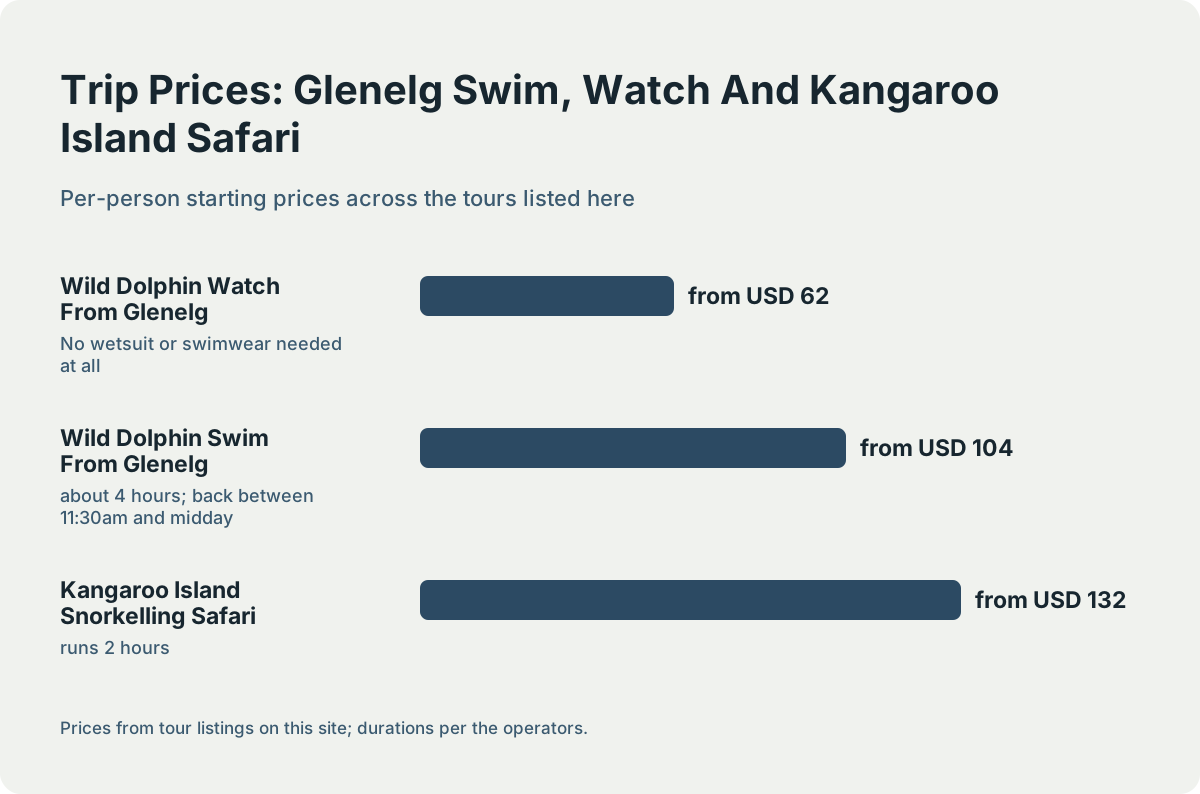
If you are still weighing which style of trip suits you, the watch-only options change the packing maths completely: the Wild Dolphin Watch From Glenelg is from USD 62 per person, rated 4.8 across 409 reviews, with no wetsuit or swimwear needed at all.
| Supplied item | Glenelg swim, per the operator | Kangaroo Island safari, per the operator |
|---|---|---|
| Wetsuit | Full-length 5 mm, sizes to 4XL, doubles as flotation | Wetsuit, described as thick, year-round use |
| Mask and snorkel | Yes, demonstrated during briefing | Yes |
| Prescription masks | On board: -1.5, -3, -4.5 | Not stated |
| Fins | Not stated | Yes |
| Gloves | Not stated | Yes |
| Flotation aid | 5 mm suit plus a stern flotation line | Swimmer line with buoys; life jacket and noodle available |
| Life jackets | On board, not used for the swim | Available |
The Glenelg operator's own FAQ, at dolphinboat.com.au/faqs, is where the gear details live, and it is worth reading before you pack. One practical note it carries: seasickness gets no refund, and the operator suggests tablets 30 minutes before departure, which means the tablets go in YOUR bag, not the boat's.
Do You Need To Bring Your Own Wetsuit, Mask Or Snorkel?
No, you do not need your own wetsuit, mask or snorkel: both swim operators include the full swim kit in the trip price, covering the Glenelg swim from USD 104 per person and the Kangaroo Island safari from USD 132 per person. Packing your own gear is a comfort choice, although spectacle wearers whose prescription falls outside the -1.5, -3 and -4.5 masks stocked at Glenelg should check with the operator first.
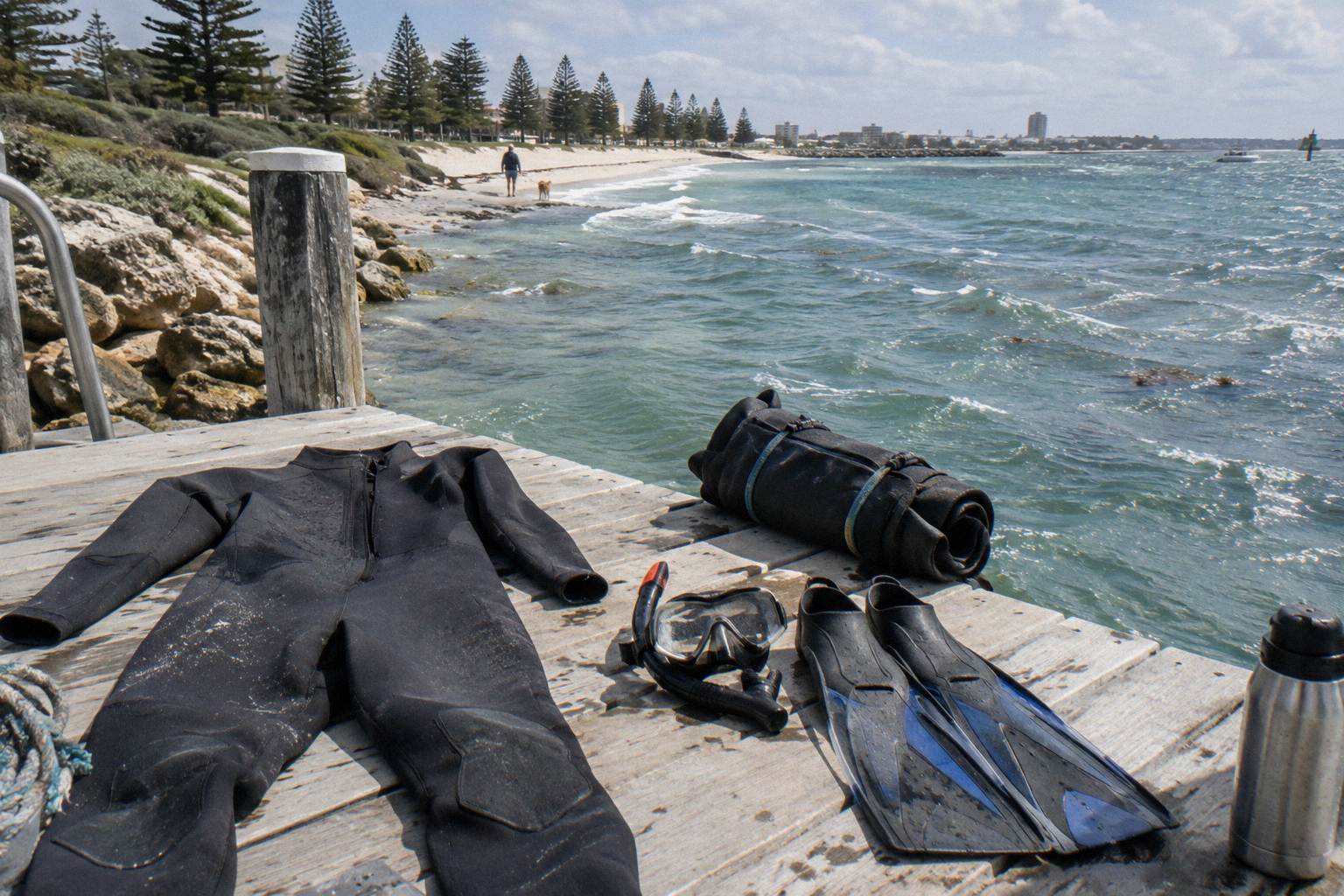
Bringing your own wetsuit only makes sense if fit is a genuine concern. The Glenelg suits run to size 4XL, and the Kangaroo Island suits are described by the operator as thick enough for year-round swimming in water it measures at between 14 and 15 degrees. A personally fitted suit will always seal better than a hire suit, but on a controlled line swim of short rotations, the supplied suit is designed for exactly this job, and at Glenelg it is doing flotation duty as well as thermal duty. If you do bring your own, ask the crew in advance whether they will allow it alongside their own safety equipment, since the suit is part of the safety system, not just comfort.
Masks follow the same logic with one exception. The Glenelg boat carries prescription masks at three strengths, so mildly short-sighted swimmers can leave contacts at home; the details on glasses and lenses generally are covered in whether you can wear glasses or contacts on a dolphin swim. On Kangaroo Island, prescription masks are not stated as supplied, so a contact-lens plan or a question to the operator is the safer path. A mask that floods ruins a swim faster than cold water ever will, so this is the single item worth an email rather than an assumption.
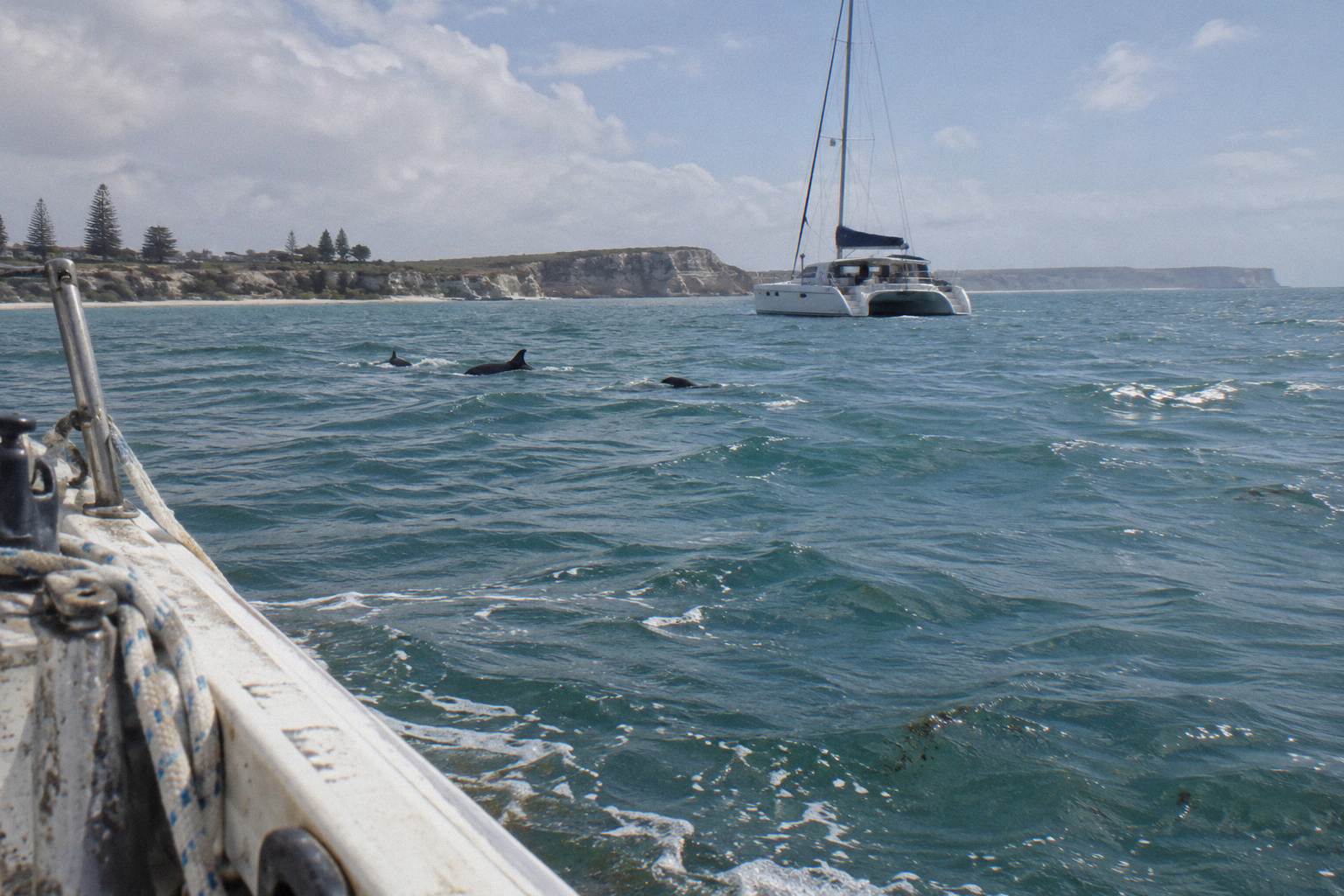
Snorkels and fins need no thought at all. Both operators supply them, Kangaroo Island includes fins as standard, and at Glenelg the crew demonstrates the mask and snorkel during the briefing. Packing your own fins into a bag for a ferry or a tram ride to Glenelg is extra weight for zero benefit, and a pair of rented-by-the-thousand fins is exactly what the swimmer line setup was designed around.
| Gear question | Glenelg swim | Kangaroo Island safari |
|---|---|---|
| Bring your own wetsuit? | Not needed, suits to 4XL supplied | Not needed, thick suits supplied |
| Bring your own mask? | Only if outside the three carried prescriptions | Contact-lens plan or ask the operator |
| Bring fins? | Not applicable, fins not stated as used | No, supplied |
| Towel supplied? | Not stated; ask the operator | Not stated; ask the operator |
What Should You Pack In Your Day Bag?
Pack light and wear your swimwear under your clothes: bring a towel, a warm layer, a dry change of clothes, sun protection, water, seasickness tablets taken 30 minutes before boarding, and a small dry bag for keys and phone. Keep the bag minimal, since deck space is shared aboard a 50-passenger catamaran or a 28-seater, and neither operator states that food, drink, or changing arrangements are provided.
The towel is the most commonly forgotten item and the most consistently unstated one. Neither operator lists towels among its supplied gear, and a 5 mm wetsuit peeled off on a windy deck demands one immediately. Sun protection comes next: a four-hour morning on the water off Glenelg, or two hours off Penneshaw, is a full sun exposure even at 9am, and reflection off the deck doubles it. A long morning means water too, since neither operator states that drinks are provided.
Seasickness tablets deserve their own sentence because the Glenelg operator's cancellation policy is explicit: no refund for seasickness, and tablets are suggested 30 minutes before departure. That timing is not a slogan, tablets taken at the first wobble do nothing, so the tablets go down before you board at the bottom of the marina stairs. Water temperature is not the comfort risk here; the boat motion is.
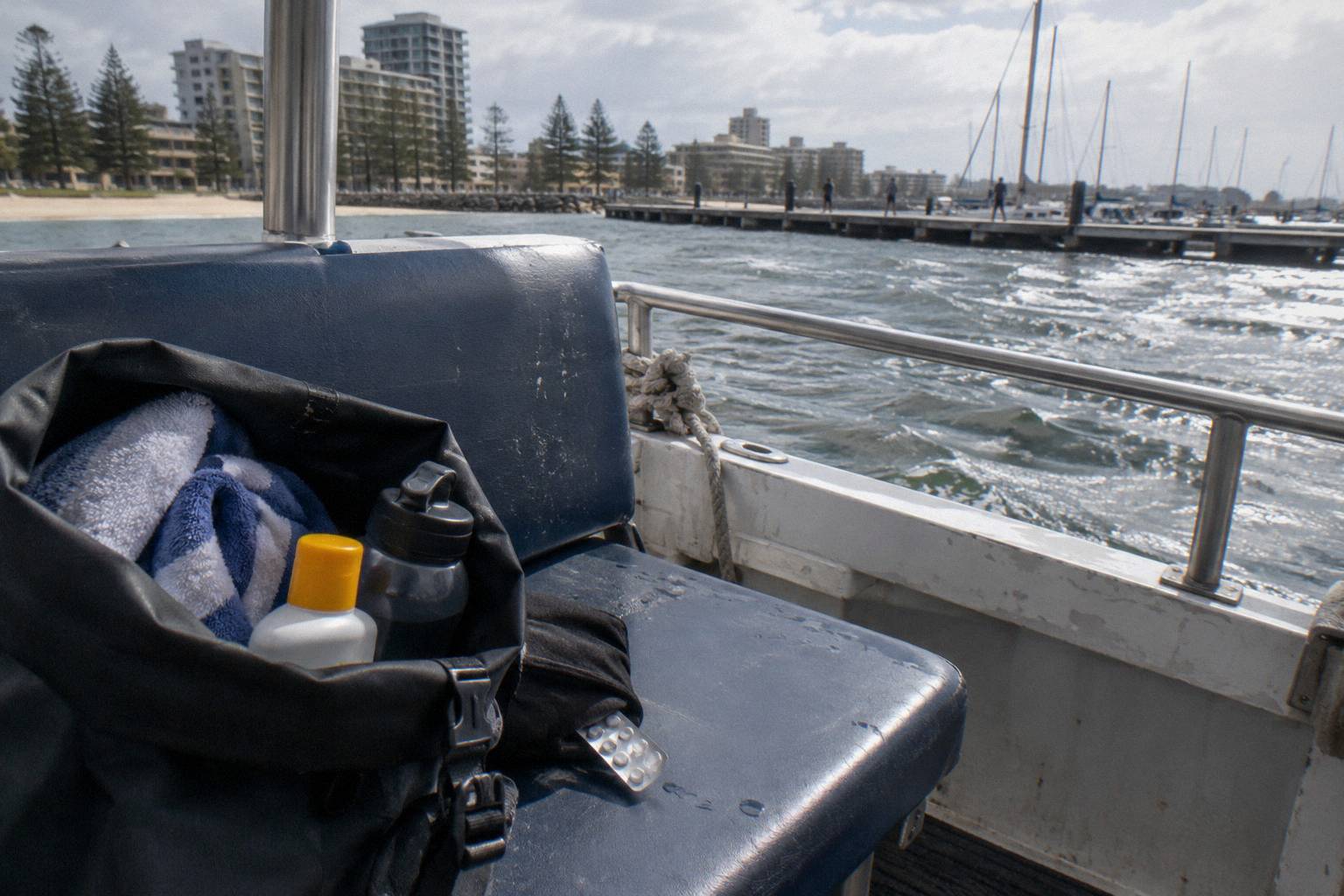
The honest gap in this section is changing and storage. Where you change, whether lockers exist, whether food can be brought aboard, and whether bags can be left on board during the swim are not stated by either operator: ask the operator. The one structural fact available is that Glenelg boarding commences 15 minutes before departure, and Kangaroo Island fitting starts 30 minutes before departure, so any changing you need to do comfortably happens before those windows, not inside them. For the on-board experience itself, including where you sit and what the rotation feels like, what happens on a wild dolphin swim cruise covers the sequence in detail.
| Pack item | Reason | Stated or assumed? |
|---|---|---|
| Towel | Wetsuit peel-off on a windy deck | Not stated as supplied, bring your own |
| Seasickness tablets | Operator suggests 30 minutes before, no refund | Operator stated |
| Sunscreen and hat | Hours of reflected sun on the water | Standard advice, not operator stated |
| Water and a snack | Nothing stated as supplied on either boat | Not stated; ask the operator |
| Dry bag or zip pocket | Keys, phone, glasses on a wet deck | Standard advice |
| Warm top layer | Operator says on-water air often 3-4 °C cooler | Operator stated |
If your group includes someone who will not swim, their bag is far simpler, and the same boats take watchers. Non-swimmers and nervous swimmers can ride as watchers on the Glenelg boat, booked together or separately, and the considerations are laid out in dolphin swims for non-swimmers and weak swimmers.
What About Sizes, Ages And Who The Supplied Gear Fits?
Supplied gear at Glenelg fits swimmers from age 9, the operator's stated insurance minimum, with wetsuits to size 4XL and prescription masks in three strengths; under-18s need a parent or guardian on board, who may swim or hold a watch ticket. Kangaroo Island also sets the swim minimum at 9, with a coastal snorkel option from age 8. Pacemaker wearers should ask the operator before booking, and neither boat is wheelchair accessible.
The size range is the quiet strength of the Glenelg setup. Wetsuits to 4XL mean most adult bodies are fitted without drama, and the suit's second job as a flotation device means a snug but not athletic fit is what the crew is aiming for. Children from 9 to 15 can swim, and children under 9 may watch, so a family packing list covers swimwear for some and warm boat clothes for all. The age rules, including how the watch ticket works for a guardian, are expanded in dolphin swim age limits and kids.
Kangaroo Island's fitting session, half an hour before departure at the Howard Drive information stop, handles sizes then and there, which is precisely why arriving in your swimwear matters: the time goes to suits and safety, not to finding a changing spot. Its child rate runs 3 to 12, infants 2 and under are not available for the swim, and the coastal snorkel is offered from age 8. The operator lists the trip as unsuitable with a pacemaker or pregnancy, and there is no wheelchair access.
The medical questions deserve the same caution as the packing ones. At Glenelg, pacemaker wearers should ask the operator before booking, and the same advice applies at Penneshaw, where the operator names pacemakers and pregnancy as exclusions outright. Swimmers must be able to hold the flotation line while towed slowly and climb three ladder rungs at the back, so any doubt about grip strength or shoulders belongs in a pre-booking question, not a dock-side decision. The broader medical picture is in fitness and medical conditions for a dolphin swim.
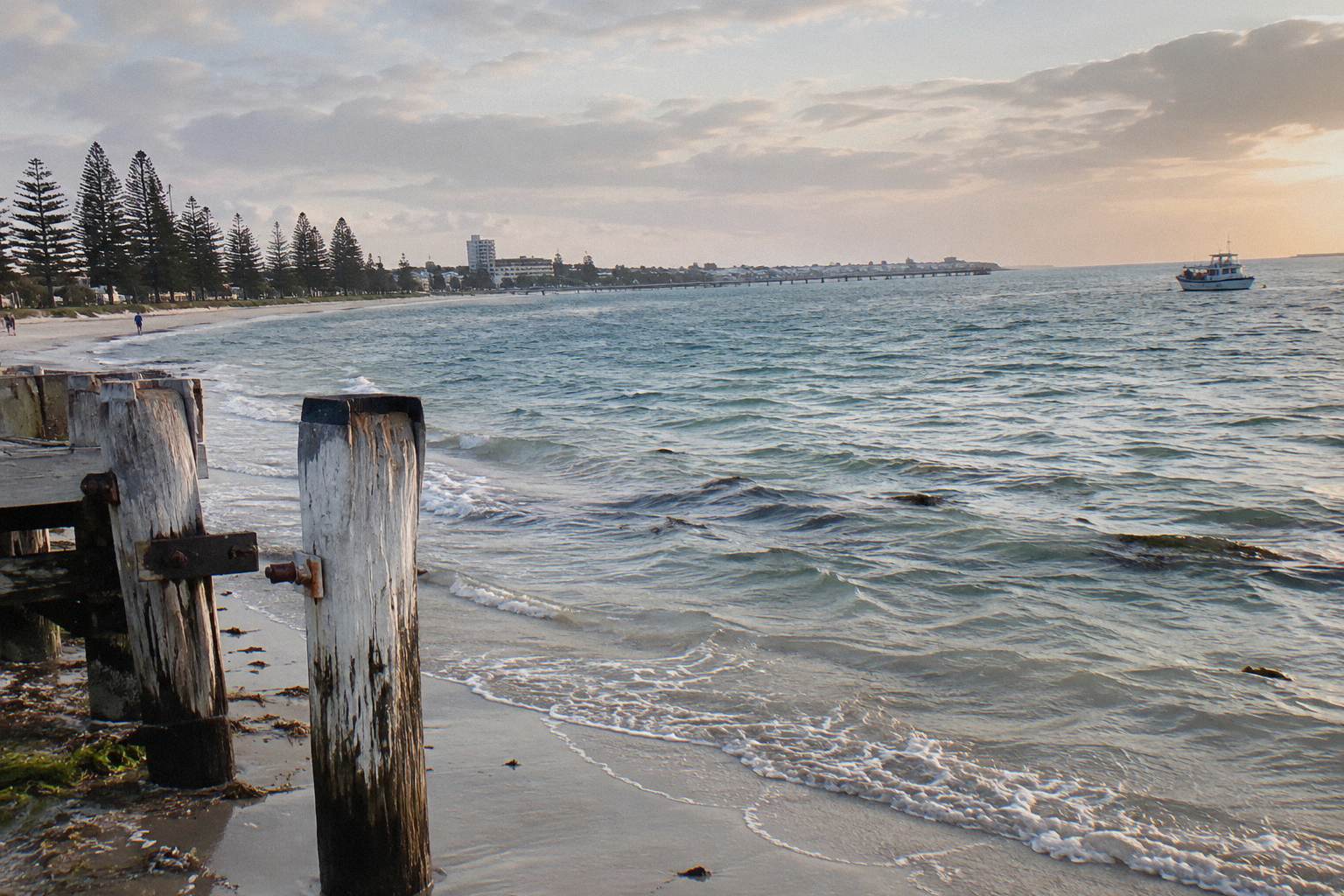
What Should Watchers And Non-Swimmers Wear And Bring?
Watchers need warm, windproof clothing, a hat, sunscreen, and nothing that touches the water, because no wetsuit, mask or swimwear is required. On the Glenelg boat, swimmers and watchers share one vessel, so a mixed group packs two lists: full swim kit for some, boat clothes for others. The Kangaroo Island safari also runs dolphin watch options where the same watcher packing logic applies, and the cheapest watch trips in the region start from USD 54.72 per person.
The watcher list is shorter but not automatic. Warm layers matter MORE for watchers than swimmers in one sense: swimmers spend the whole trip in an insulated suit, while watchers sit in the wind for the full duration in whatever they wore to the marina. The Glenelg operator's line about on-water air running 3 to 4 °C cooler than land is really advice for the person who stays dry. A waterproof outer layer earns its place too, since a catamaran under sail throws spray.
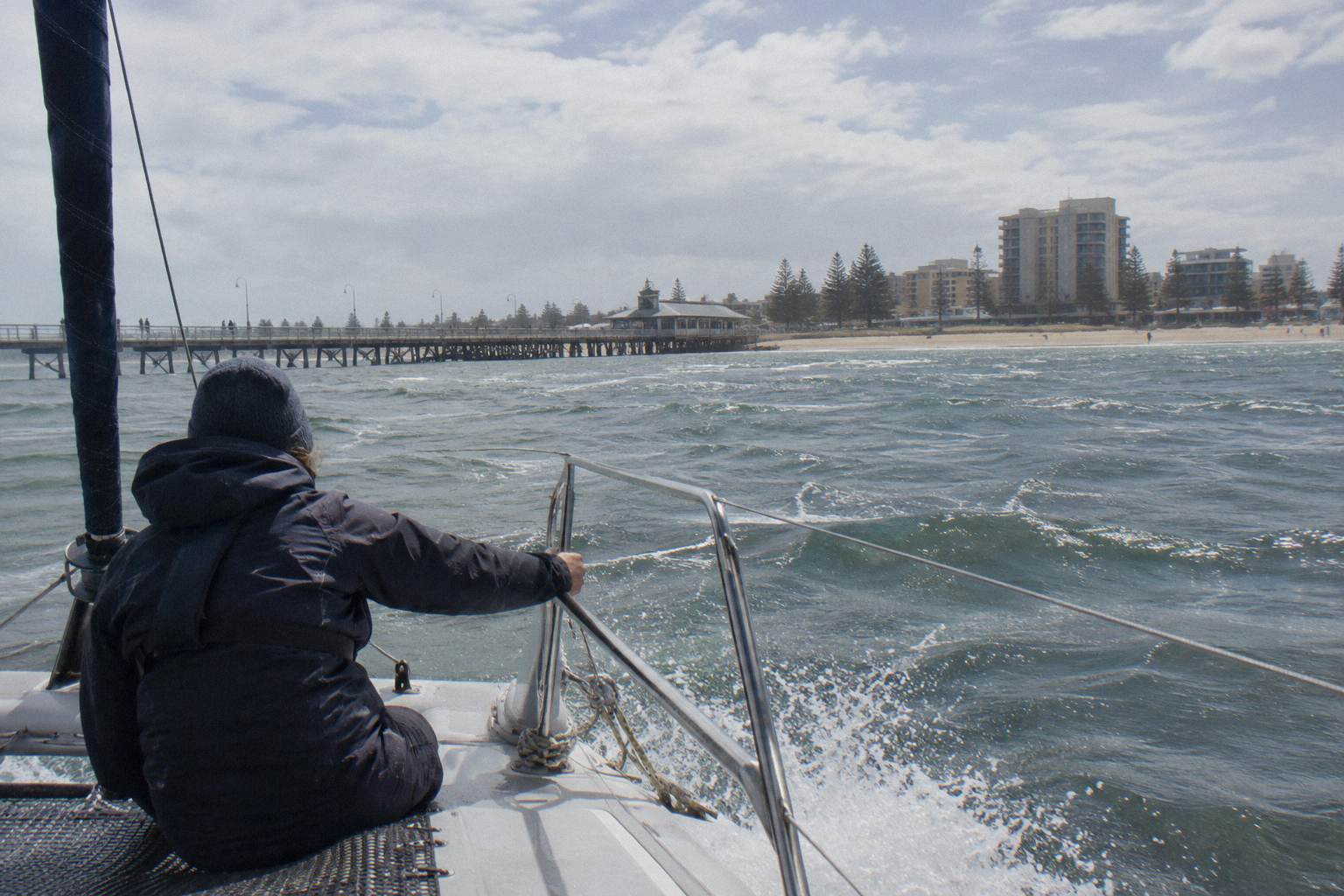
Wait, that figure needs a real scene description. The practical comparison for a mixed group looks like this:
| Who | Swim kit needed | Extra for the boat | Price anchor, booking page |
|---|---|---|---|
| Swimmer, Glenelg | None, all supplied | Towel, warm layer, tablets | From USD 104, 4.7 from 493 reviews |
| Watcher, Glenelg | None | Windproof layer, sun protection | From USD 62, 4.8 from 409 reviews |
| Swimmer, Kangaroo Island | None, all supplied incl. fins | Towel, warm layer | From USD 132, 4.4 from 137 reviews |
| Sanctuary paddler | None stated | Clothes that can get wet | From USD 54.72, 4.8 from 300 reviews |
For anyone whose group lands firmly on the watching side, the region has cheaper and shorter options that change the packing list again. The Port River Dolphin Cruise, from USD 60 per person and rated 4.5 across 481 reviews, runs 1.5 hours on sheltered water where a jumper suffices, and the Dolphin Sanctuary Kayak Tour with Adventure Kayaking SA, from USD 54.72 and rated 4.8 across 300 reviews, is paddling only from age 8, where quick-dry clothes replace swimwear entirely. The Kangaroo Island Dolphin Watch, from USD 61.74 per person and rated 4.8 across 640 reviews, is about 75 minutes and is the one trip in the roster listed without free cancellation, so its packing is easy but its booking terms deserve a closer read.
What Should You Ask The Operator Before You Pack?
Ask, in one message: whether towels are supplied, where you change, whether food, drink or bags are allowed on board, whether your prescription works with the supplied masks, and whether your own wetsuit is permitted. None of these are stated by either operator, and each one changes what goes in your bag. Send the question when you book, not the night before, because the answers arrive from crew, not from a FAQ page.
Every unstated item in this guide resolves the same way: a short, specific question to the operator. The Glenelg operator's FAQ answers the big gear questions but is silent on towels, food and changing; the Kangaroo Island page answers the fitting timing but not the extras. The official health guidance for swimming in South Australian waters, at algalbloom.sa.gov.au/health-advice, is a useful second check: if the water is clear it is fine to swim, stay away from foamy or abnormally coloured water, and rinse afterwards, which puts a rinse plan and a water bottle on the list for after the trip.
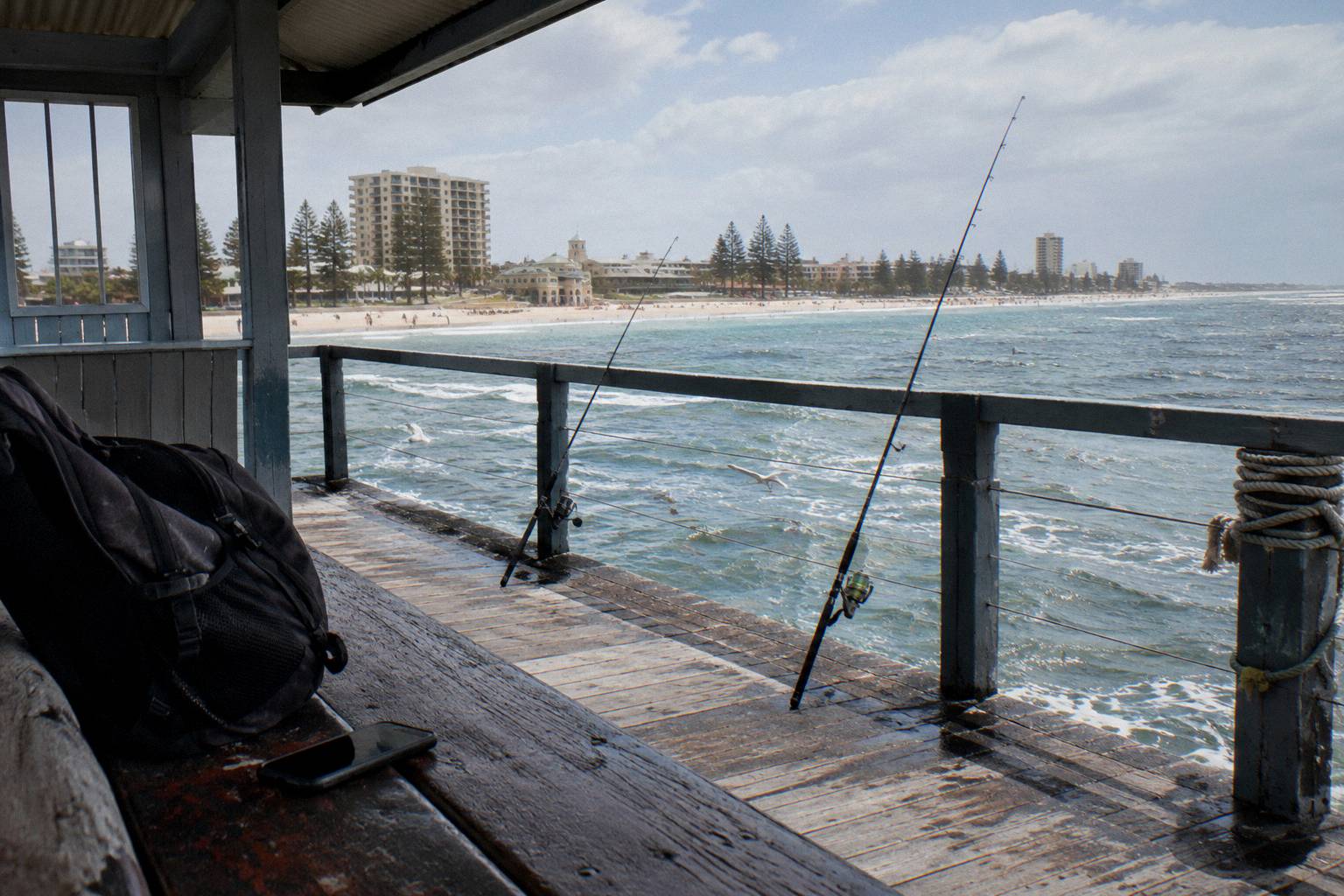
A workable pre-departure checklist:
| Ask the operator | Why it changes your packing |
|---|---|
| Are towels supplied? | Decides whether one goes in the bag |
| Where do we change, and when? | Glenelg boarding opens 15 minutes before departure, KI fitting 30 minutes |
| Can we bring food, drink or bags on board? | Decides the size of the day bag |
| Will my prescription work with the supplied masks? | Glenelg carries -1.5, -3, -4.5; KI not stated |
| Can I wear my own wetsuit? | The suit is part of the flotation system at Glenelg |
| Is the morning departure time on my confirmation? | The exact time is on the booking confirmation, not the operator's pages |
Two timing facts anchor the morning. Boarding at Glenelg commences 15 minutes before departure at Marina Pier, and the Kangaroo Island fitting and safety brief starts 30 minutes before departure at 43 Howard Drive, Penneshaw, a base the operator describes as close to the SeaLink ferry. Sea temperature in November sits around 18 °C (seatemperature.org), and the Kangaroo Island operator gives 14 to 15 degrees year round, but with thick supplied suits neither figure should drive your clothing choices; the wind and the sun should.
The Short Version: One Bag, Two Lists
Swimmers pack a towel, swimwear worn underneath, a warm layer, dry clothes, sun protection, water and seasickness tablets, and bring nothing technical because every wetsuit, mask, snorkel, fin and glove is supplied. Watchers drop the swimwear and keep everything warm and waterproof, while one message at booking settles any unstated detail like towels, changing, food or storage.
That final point is worth dwelling on, because it interacts with packing. Five of the six trips in the region's roster show free cancellation up to 24 hours on their booking pages, so a weather doubt the night before can be resolved without penalty on those, and the packing can wait for the forecast. The exception is the Kangaroo Island Dolphin Watch, which is listed as non-refundable, a reminder to separate what you pack from how you book.
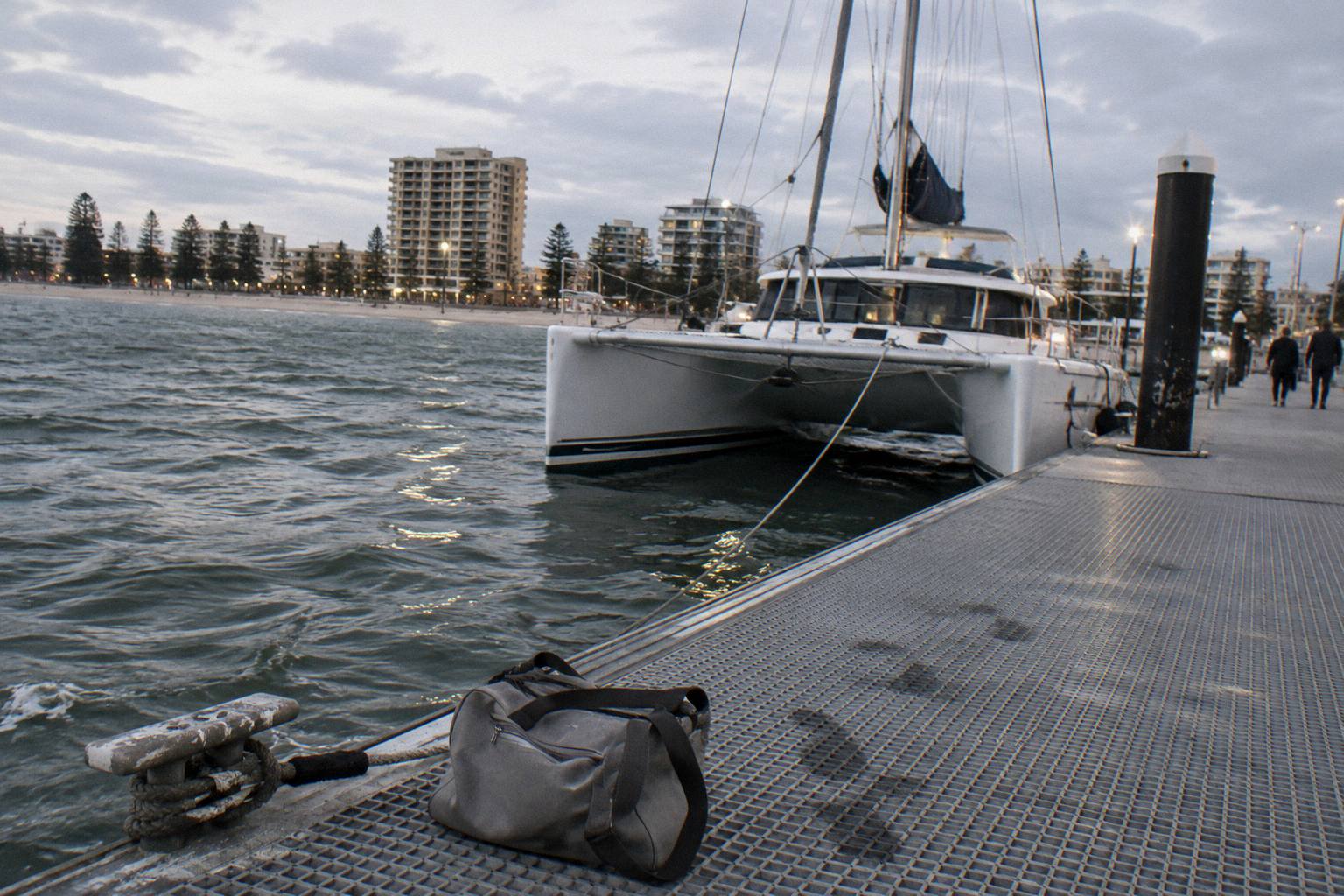
The packing list for a controlled line swim is genuinely short, and that is the point of the supplied-gear model. You are not outfitting an expedition. You are outfitting a morning on a boat with a warm, buoyant suit handed to you at the top of the stairs, a mask chosen from a rack that even carries three prescription strengths, and a rotation at the stern line when the crew calls it. Bring the towel, take the tablet, ask the two questions, and the rest of the bag is just the ride home.
If you are still choosing between the two swim destinations rather than packing for one, the comparison of swimming with dolphins on Kangaroo Island or from Glenelg walks through the differences, and the season question is covered separately in the best time of year for a wild dolphin swim, since the Glenelg season runs September to April while Kangaroo Island operates year round. For the trip that anchors this packing list, Check availability for the Glenelg swim alongside the details in the featured Glenelg dolphin swim experience.
Common Questions About What To Wear And Bring For A Wild Dolphin Swim
Do I Need To Bring A Wetsuit For A Wild Dolphin Swim?
No. The Glenelg operator supplies a full-length 5 mm wetsuit in sizes to 4XL, and the Kangaroo Island operator supplies a thick wetsuit plus gloves and fins. If you want to wear your own suit, ask the operator first, because at Glenelg the suit is part of the flotation system.
What Do You Actually Need To Wear For A Swim With Dolphins?
Swimwear worn underneath your clothes, a warm layer for the boat, and shoes that slip off at boarding. Everything technical, the wetsuit, mask and snorkel, is handed to you on board.
Are Towels Provided On Dolphin Swim Tours?
Not stated by either swim operator. Bring your own towel; a 5 mm wetsuit comes off on a windy deck and you will want one immediately.
Can I Wear Glasses Or Contact Lenses On A Dolphin Swim?
The Glenelg boat carries prescription masks in -1.5, -3 and -4.5 strengths, so many swimmers can skip contacts. Kangaroo Island does not state prescription masks, so a contact-lens plan or a question to the operator is the safer path.
What Should Watchers And Non-Swimmers Bring?
Warm, windproof clothing, sun protection and a hat. Watchers share the same boat at Glenelg and need no swimwear or wetsuit; the operator notes on-water air is often 3 to 4 °C cooler than on land.
Is Food Or Drink Provided On The Boat?
Not stated by either operator. Bring water and a snack unless the operator confirms otherwise when you book, and take seasickness tablets 30 minutes before boarding, as the Glenelg operator suggests.