Wetsuits And Water Temperature On A Dolphin Swim
Cold water is the single biggest hesitation for first-time dolphin swimmers in South Australia. The numbers are gentler than most people expect, and both swim operators provide thick wetsuits as part of the ticket.
Short answer
Adelaide sea temperature runs from around 14 °C in August to around 21 °C in February, per seatemperature.org, with November around 18 °C. The Glenelg swim operator supplies a full-length 5 mm wetsuit that also acts as a flotation device, and Kangaroo Island Ocean Safari says its thick suits allow year-round swims.
Cold water stops more people from booking a dolphin swim than sharks or seasickness ever do. It is usually the first question in the operator's inbox and the last hesitation before checkout. The honest answer has two parts: Adelaide's sea temperatures are milder than most visitors assume, and both swim operators in this state hand you a thick wetsuit as part of the fare, so you are not buying gear to try the experience once.
This guide puts the two halves together. First the numbers, month by month, from a single consistent source. Then exactly what each operator provides on board, in its own words, because the wetsuit situation at Glenelg and at Penneshaw on Kangaroo Island is not the same as a generic "bring a wetsuit" tip. Finally it covers the seasonal picture, because one of the two swim products simply does not run in the coldest months, which changes when each option is available to you at all. If you are weighing up the broader timing question, the best time of year for a wild dolphin swim covers seasonality beyond water temperature alone.
How Cold Is The Water Off Adelaide?
Adelaide sea temperature moves between roughly 14 °C and 21 °C across the year, per seatemperature.org: the coldest month is August at 13.7 °C on average and the warmest is February at 21.2 °C, with November sitting around 18 °C. Those figures are for generic Adelaide water, not a specific swim site, and they are averages rather than a reading on any given day.
The source matters here. Sea temperature figures float around the internet with no attribution, and plenty of them are beach-specific readings taken on one afternoon. This site uses one source consistently: seatemperature.org lists monthly averages for Adelaide, and those are the numbers in the table below. They describe Adelaide water generally, not Glenelg's Holdfast Bay and not the Kangaroo Island coast, both of which can run a little different on any given morning.
| Month | Average sea temperature (C) |
|---|---|
| January | 21.1 |
| February | 21.2 |
| March | 20.7 |
| April | 19.4 |
| May | 17.6 |
| June | 15.3 |
| July | 13.9 |
| August | 13.7 |
| September | 14.4 |
| October | 15.7 |
| November | 18.0 |
| December | 19.7 |
Read the shape of the curve rather than any single cell. The water peaks in late summer, holds its warmth through March, then slides down through winter to the August floor before climbing again. A November swim, which sits inside the Glenelg operator's September-to-April season, happens in water that seatemperature.org puts around 18 °C. A March booking is warmer still. The pattern, not the decimal places, is what should drive your timing.
It also helps to know what the numbers exclude. These are monthly averages for the sea surface, not the temperature you feel on your face when you duck under, and not a forecast for the morning you sail. Averages smooth out cold current pulses and warm calm spells alike. What they do tell you, reliably, is the order of the months: if you can choose between an October trip and a February trip, the February water is several degrees warmer on average, and no single-day reading is going to reverse that gap.
Do You Need A Wetsuit For A Dolphin Swim?
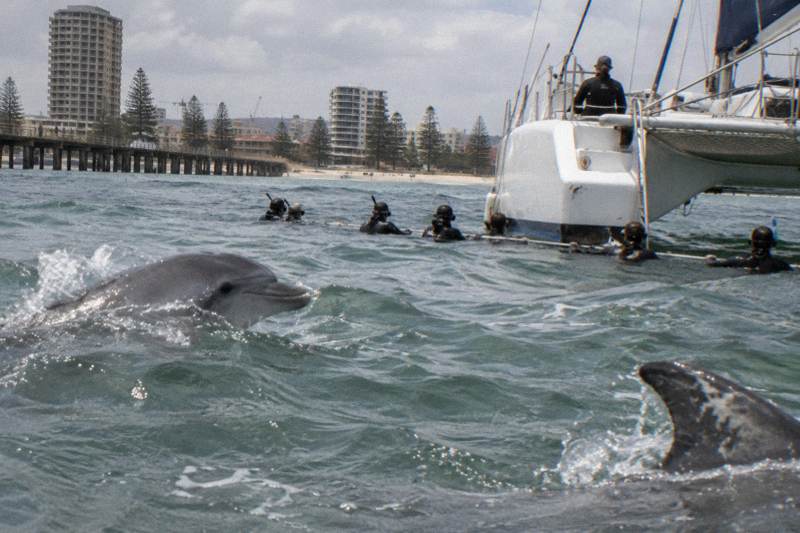
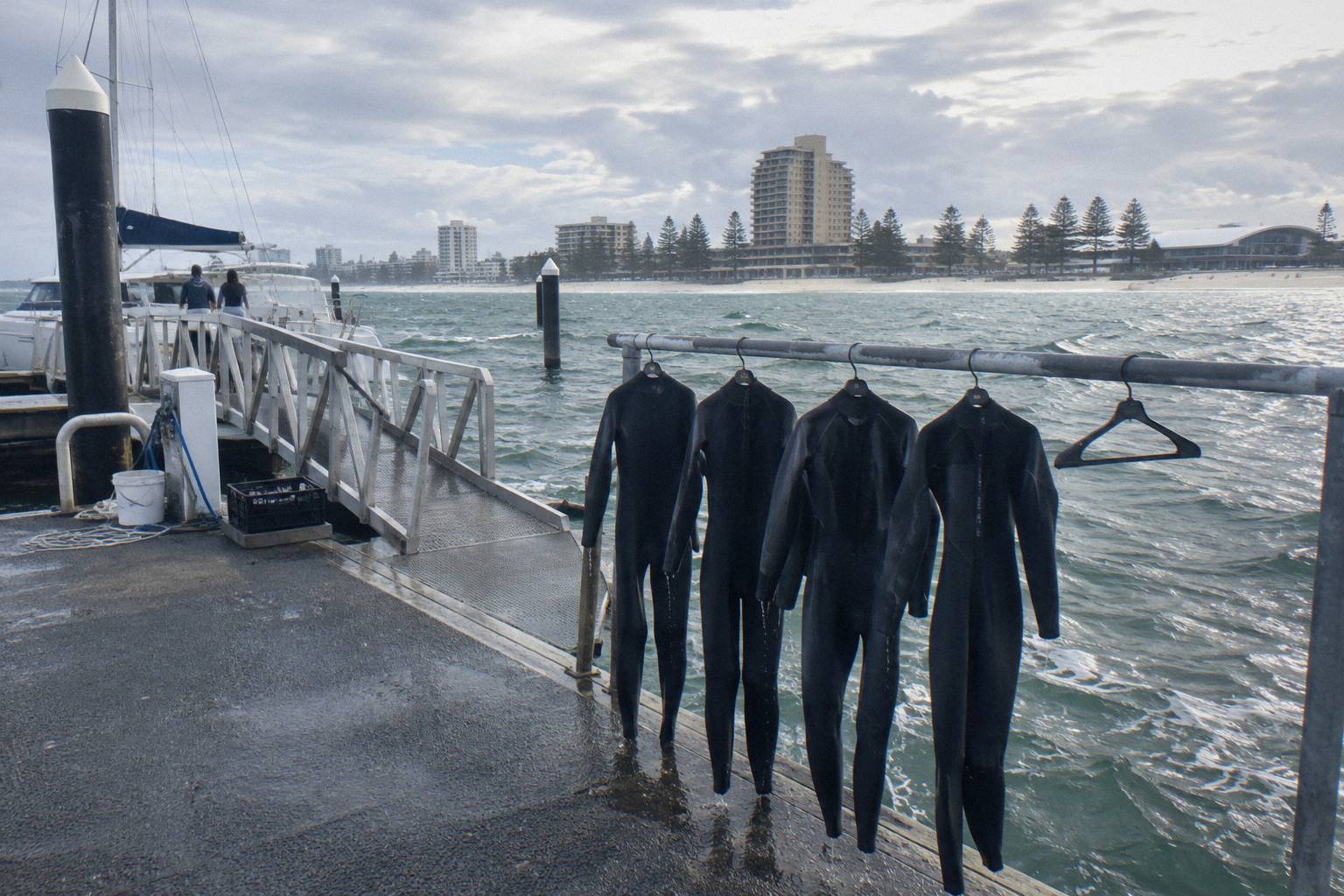
Yes, on both South Australian swim tours the wetsuit is provided and is not optional in practice: the Glenelg operator fits every swimmer with a full-length 5 mm wetsuit on boarding, and Kangaroo Island Ocean Safari supplies wetsuit, gloves, mask, snorkel and fins for its two-hour Snorkelling Safari. You do not need to own, rent or pack a wetsuit for either trip.
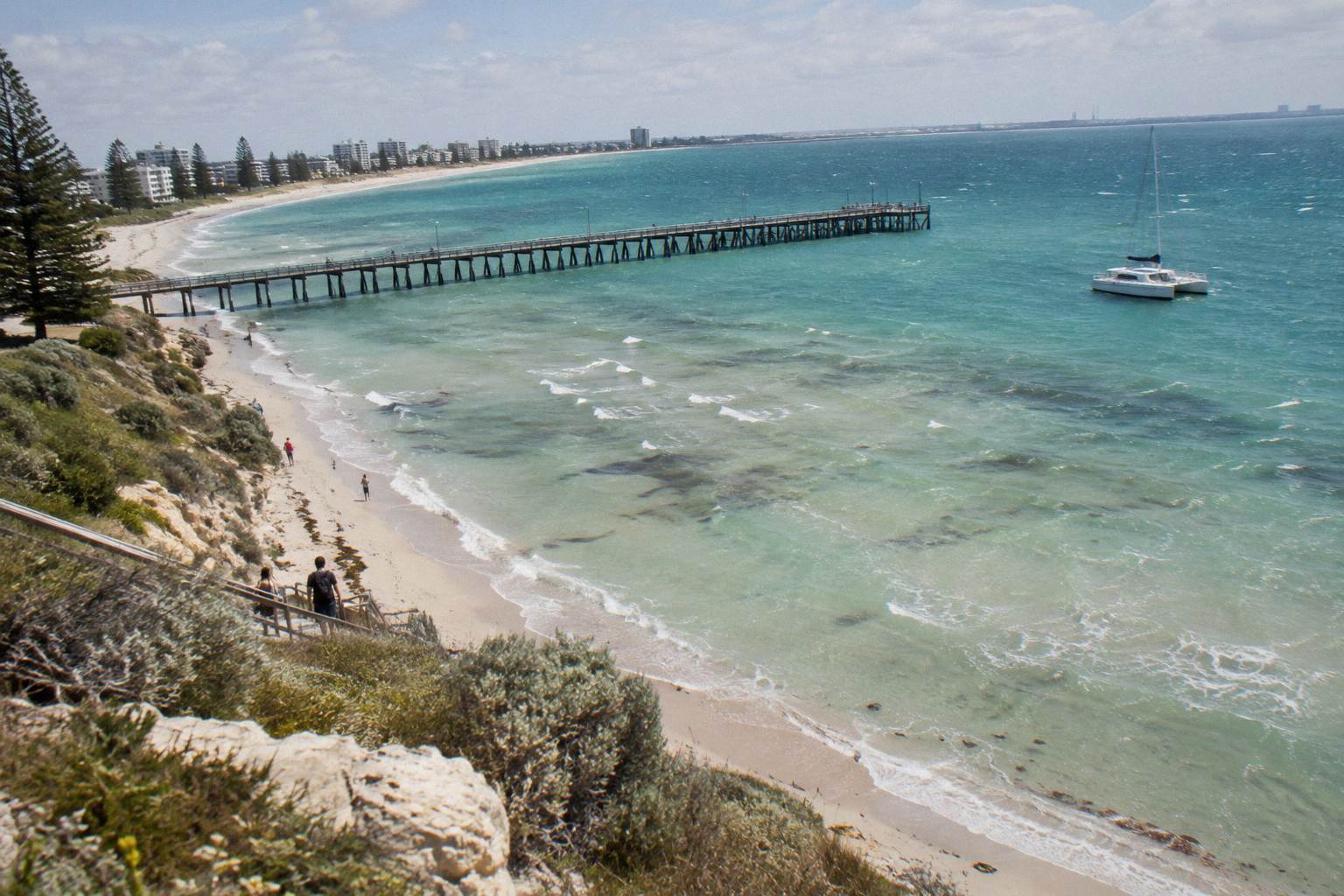
The reason is not just comfort. A thick wetsuit is neutral-to-positive buoyancy, and the Glenelg operator leans into that deliberately: it describes its full-length 5 mm suits as doubling as full-body flotation devices. That matters because the swim there is a controlled one. Swimmers hold a flotation line connected to the stern while the boat moves slowly, so the suit does part of the floating work while you hold on and look down. If the line-and-suit arrangement sounds like it changes who can take part, the guide on dolphin swims for non-swimmers and weak swimmers works through that question in detail.
On Kangaroo Island the provision is even broader on paper. The operator lists wetsuit, gloves, mask, snorkel and fins as included, and its vessels are 28-seaters, so fitting happens on a smaller scale. Its dolphin swim uses a swimmer line with buoys at the back of the vessel when the dolphins cooperate, which the operator says needs upper body strength, and the ladder exit needs lower body strength. The suit keeps you afloat; you still do the holding and the climbing.
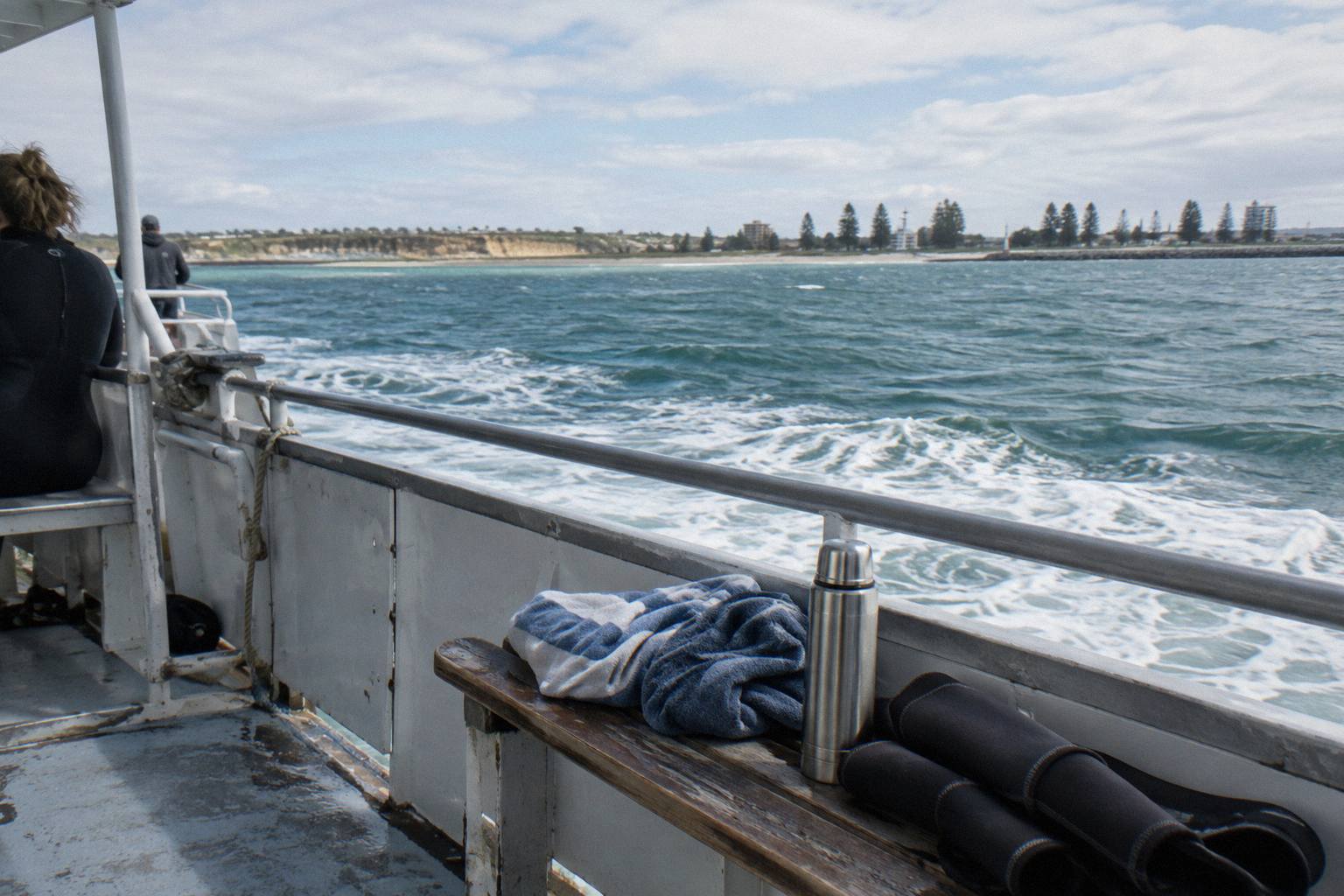
One practical note on sizing, because it is the question the operators answer most often on this topic. The Glenelg operator carries wetsuits up to size 4XL and prescription masks in three strengths, so most body shapes and short-sighted swimmers are covered from the boat's own stock. Fitting happens before departure: at Glenelg boarding starts 15 minutes before the boat leaves, and at Penneshaw you meet 30 minutes before departure for fitting and the safety brief. Turn up at the stated time and the suit fitting is part of the process, not something to rush.
What you wear under and over the suit is a smaller question, but it comes up constantly. Swimwear under the wetsuit, a towel and dry clothes for the ride home, and something warm for the deck, because the sailing back to the marina happens with wet hair and a cooling suit. The what to wear and bring guide itemises the full packing list, including the camera question, so this page stays on temperature.
Wetsuit Thickness: What 5 Mm Actually Means In The Water
A 5 mm wetsuit is a thick, full-length winter-grade suit, the kind used for temperate-water diving, and the Glenelg operator provides exactly that to every swimmer, describing it as a flotation aid as well as insulation. Kangaroo Island Ocean Safari does not publish a thickness figure; it says only that its suits are thick enough for its stated 14 to 15 degree water and year-round swimming.
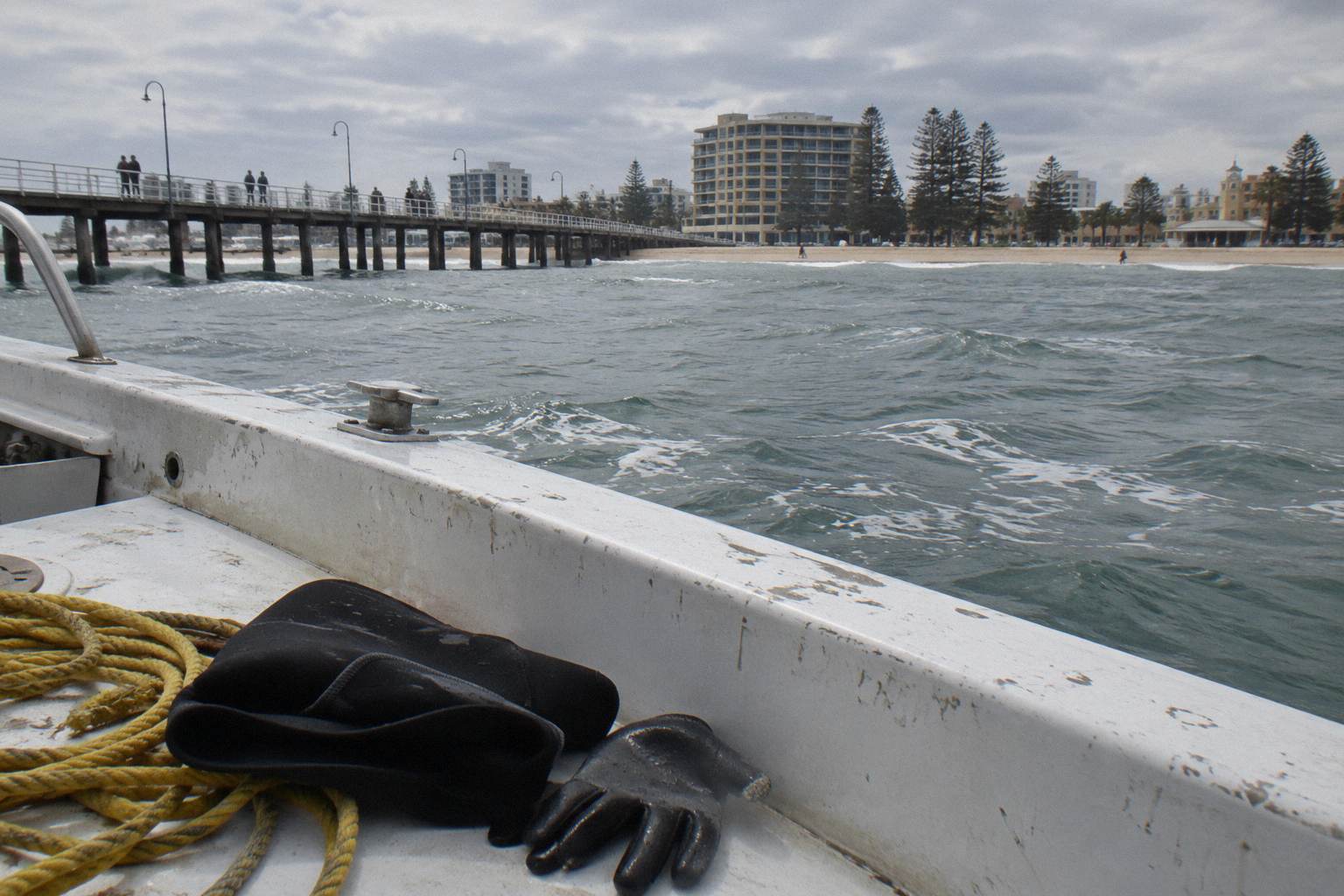
Thickness is measured through the neoprene on the torso, and 5 mm sits at the heavy end of what recreational swim operators use anywhere in Australia. For context, tropical snorkel tours often hand out 2 or 3 mm shorties, suits that would feel thin in South Australian water even at the February peak. The difference between suit classes is easiest to see side by side:
| Glenelg swim (Temptation Sailing) | Kangaroo Island Ocean Safari | |
|---|---|---|
| Suit provided | Full-length 5 mm wetsuit per swimmer | Wetsuit plus gloves, mask, snorkel and fins |
| Flotation role | Operator calls the suit a full-body flotation device | Life jacket and noodle available; swimmer line with buoys |
| Sizing stated | Up to size 4XL | Not stated beyond standard fitting at check-in |
| Operator's water figure | Not stated as a number | "Between 14 and 15 degrees", no month given |
| Season | September to April | Year round, per the operator |
The Glenelg details come from the operator's own FAQ page, which is where the 5 mm, the 4XL and the flotation description all live. The Kangaroo Island statements, including the 14 to 15 degree figure and the year-round claim, come from the operator's Snorkelling Safari page. Treat both as operator statements about their own trips, which is what they are: no regulator certifies water temperature claims or suit thicknesses.
What the numbers let you conclude is modest but real. Even in August, the coldest month in the seatemperature.org table, the Glenelg season is closed, so a 5 mm suit never has to fight the annual minimum. Within the September-to-April window the worst water you are likely to meet is around 14 to 16 °C, which is exactly the band Kangaroo Island Ocean Safari says its suits handle all year.
A note on hands, feet and head, the three places swimmers feel cold first. At Glenelg the operator's kit list names the suit, mask and snorkel; gloves and hoods are not listed, so assume bare hands and no hood on that trip. Kangaroo Island Ocean Safari includes gloves in its kit, alongside mask, snorkel and fins. Neither operator promises boots or hoods, so if you run cold at the extremities, a pair of thin neoprene gloves of your own is the one piece of kit worth considering bringing, and it is cheap insurance that fits in a day bag.
Prefer to stay dry altogether? The watching option runs on the same boat at Glenelg, swim and watch guests share the catamaran, and a dedicated watch cruise from USD 62 per person, rated 4.8 across 409 reviews, covers the dolphin encounter without the wetsuit. The Glenelg wild dolphin swim experience is the in-water version, from USD 104 per person with the suit included, rated 4.7 across 493 reviews.
Glenelg Versus Kangaroo Island: Two Seasons, Two Water Stories
The Glenelg operator runs its swim season from September to April and does not operate cruises at all between May and August, while Kangaroo Island Ocean Safari says its thick wetsuits allow the swim year round. That means the coldest months of the seatemperature.org table, June through August, are months when only the Kangaroo Island product is on the water.
The seasonal split is the single biggest difference between the two experiences and it follows the water. Glenelg's season opens in September, when the seatemperature.org average has just turned the corner at 14.4 °C, and runs into April at 19.4 °C, covering the warmest stretch of the South Australian sea year. Kangaroo Island's operator, swimming in water it describes as 14 to 15 degrees, simply stays open, which suits travellers whose dates are locked to winter school holidays or a July trip.
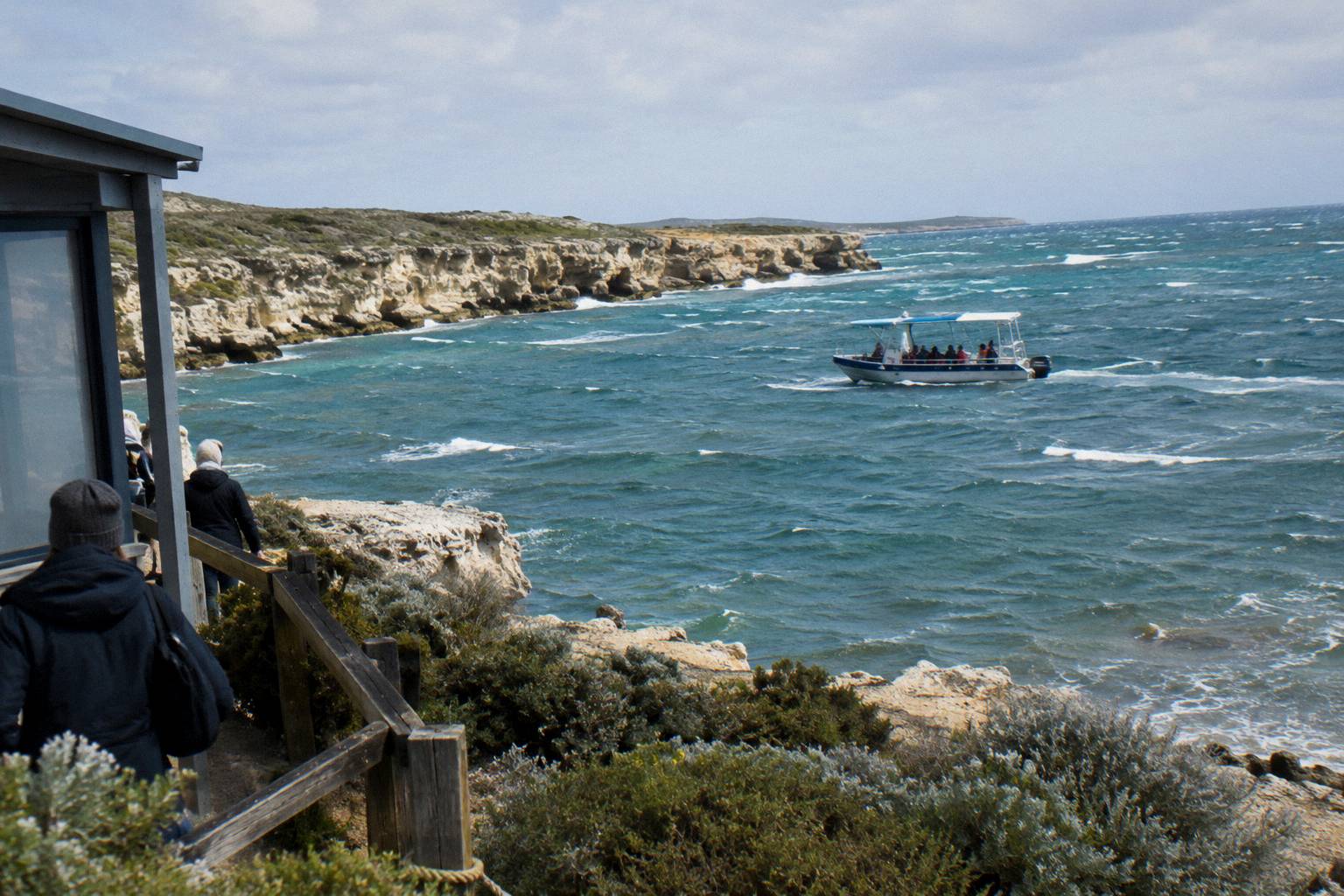
There is a trade-off beyond temperature, and it is worth naming. The Kangaroo Island product is a two-hour Snorkelling Safari marketed as "swim with wild dolphins OR among seals", and the operator's page is candid that a given trip may be dolphins only, seals only or a coastal snorkel, with wildlife interactions not guaranteed and no refund once you have entered the water. The Glenelg product is about four hours on a 58 ft sailing catamaran, with the operator stating it has never had a day without dolphins seen from above the water since it began in 2002, an operator claim about above-water sightings, not an underwater promise. The dolphin sightings and what-if-none-appear guide unpacks both policies.
| Month band | Adelaide sea average | Glenelg swim | Kangaroo Island swim |
|---|---|---|---|
| Dec to Feb (summer) | 19.7 to 21.2 °C | Running, warmest water | Running, seals at their lowest |
| Mar to May (autumn) | 17.6 to 19.4 °C | Running through April, then closed | Running; seals peak in winter |
| Jun to Aug (winter) | 13.7 to 15.3 °C | Closed for the season | Running year round per the operator |
| Sep to Nov (spring) | 14.4 to 18.0 °C | Season opens September | Running; November around 18 °C in Adelaide water |
The seal line deserves its own sentence before anyone plans around it: Kangaroo Island Ocean Safari says seals peak in winter and are at their lowest from November to January, so a summer trip weighted toward dolphins rather than seals is the likely shape of the water session. The booking page for that swim also notes the trip does not run when the pod has neonates, a term for very young calves, which is one more reason summer bookings there carry a little more scheduling uncertainty than the Glenelg equivalent.
Does The Water Temperature Change With The Weather?
Yes, but less than the land does: the Glenelg operator notes that on hot days the water is often 3 to 4 °C cooler than the air on shore, and tours still run in the heat with rescheduling only on 24 hours or more notice. Weather drives comfort on deck more than it drives the sea temperature itself, which shifts slowly across weeks.
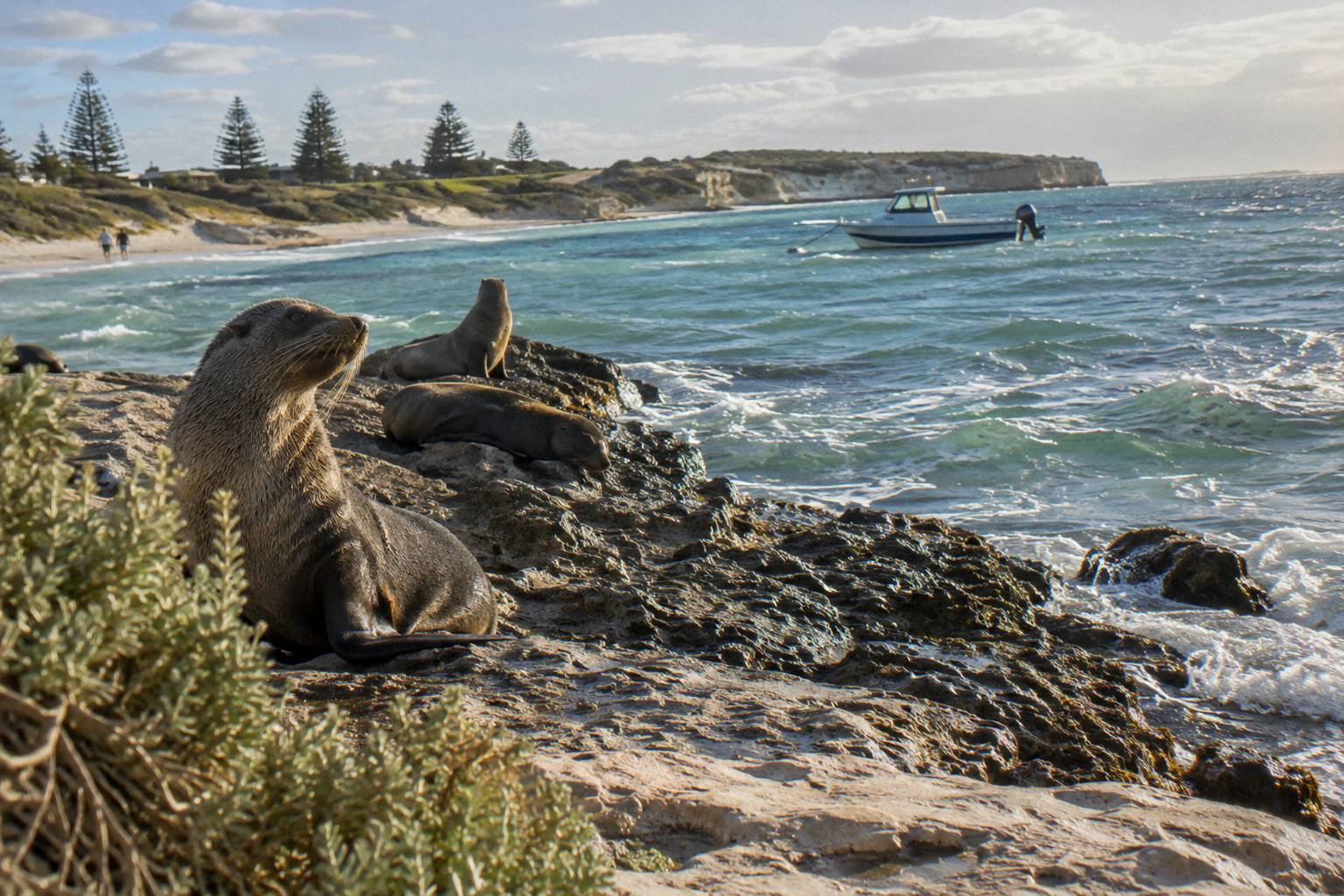
The hot-day note is the operator's own, and it cuts both ways. An Adelaide heatwave afternoon is noticeably cooler out on the water, which is why the operator keeps sailing through hot days rather than cancelling. The reverse also holds in spirit: a cool, grey morning in November does not mean the sea has dropped degrees overnight. Monthly averages move gradually, and seatemperature.org's November figure of around 18 °C describes the whole month, not the day you happen to be standing on Marina Pier.
Weather cancellation is a separate mechanism from temperature. The Glenelg operator may cancel as late as immediately before departure for weather or mechanical reasons, and in that case offers a full refund or reschedule at the booking holder's choice. The guide to weather cancellations on a dolphin swim covers that machinery in full, including what it means for the state's algal bloom monitoring, where SA testing currently shows zero or low Karenia along the metropolitan coast and Kangaroo Island, and the health advice is simple: if the water is clear, it's fine to swim, and check the operator before booking.
One comfort detail that belongs here rather than anywhere else: seasickness tablets. The Glenelg operator suggests taking them 30 minutes before departure, and seasickness carries no refund. Cold water and queasiness are different problems, but both are solved before the boat leaves the marina, and both are cheaper to prevent than to endure. The seasickness and boat comfort guide treats that topic at full length.
What If You Get Cold Or Lose Your Nerve On The Boat?
At Glenelg, a swimmer who does not feel confident after the briefing can stay aboard as a watcher, and for bookings made direct with the operator the swim-minus-watch difference is refunded; the same boat carries both, so nobody in your group is split up. The operator does not publish a mid-trip warming policy beyond the suit it provides.
The nervous-swimmer clause is one of the most practical terms in South Australian dolphin swimming and it exists precisely because cold-water hesitation hits on the boat, not at checkout. The crew briefing runs about 15 minutes, masks and snorkels are demonstrated, and after that the choice is real: hold the line at the stern or watch from the deck. Under 18s need a parent or guardian on board anyway, who may swim or hold a watch ticket, and children under 9 ride as watchers by design, since the minimum swim age is 9 on insurance grounds at Glenelg and at Kangaroo Island alike.
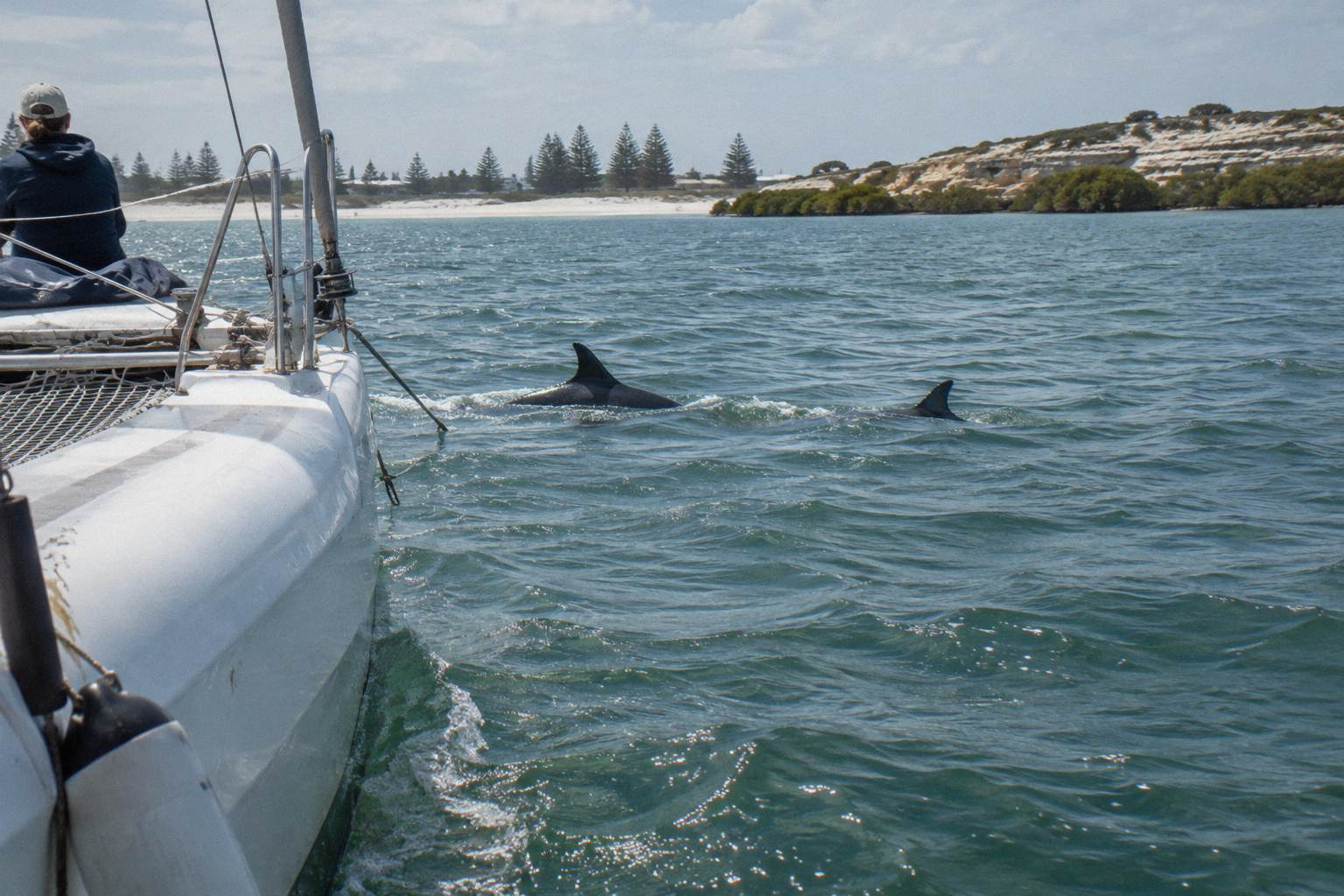
If the whole family is weighing the swim-versus-watch decision, the dolphin swim age limits and kids guide runs the numbers by age bracket. And if the objection is not cold but fitness, the medical and mobility requirements, including the three-rung ladder climb at the stern and the pacemaker question, are laid out in the fitness and medical conditions guide; pacemaker wearers should ask the operator before booking, and the Kangaroo Island swim is not suitable with a pacemaker or in pregnancy.
For a dry-water option altogether, the Port River dolphin cruise, from USD 60 per person and rated 4.5 across 481 reviews, runs 1.5 hours through the Adelaide Dolphin Sanctuary with no wetsuit, no ladder and no swim at all. On cold-water logic it is the pure spectator play: you get the sanctuary's Indo-Pacific bottlenose dolphins, year-round residents of an 118 sq km stretch of the Port River and Barker Inlet estuary, without so much as wetting a toe.
Which Months Give You The Warmest Swim?
By the numbers, February is the warmest month for Adelaide water at 21.2 °C average, with January and March close behind, and the Glenelg season's sweet spot runs from December through March, when seatemperature.org averages sit at 19.7 °C or higher. November and April, the shoulder months of that season, sit around 18 °C, still comfortably inside the range a 5 mm suit handles.
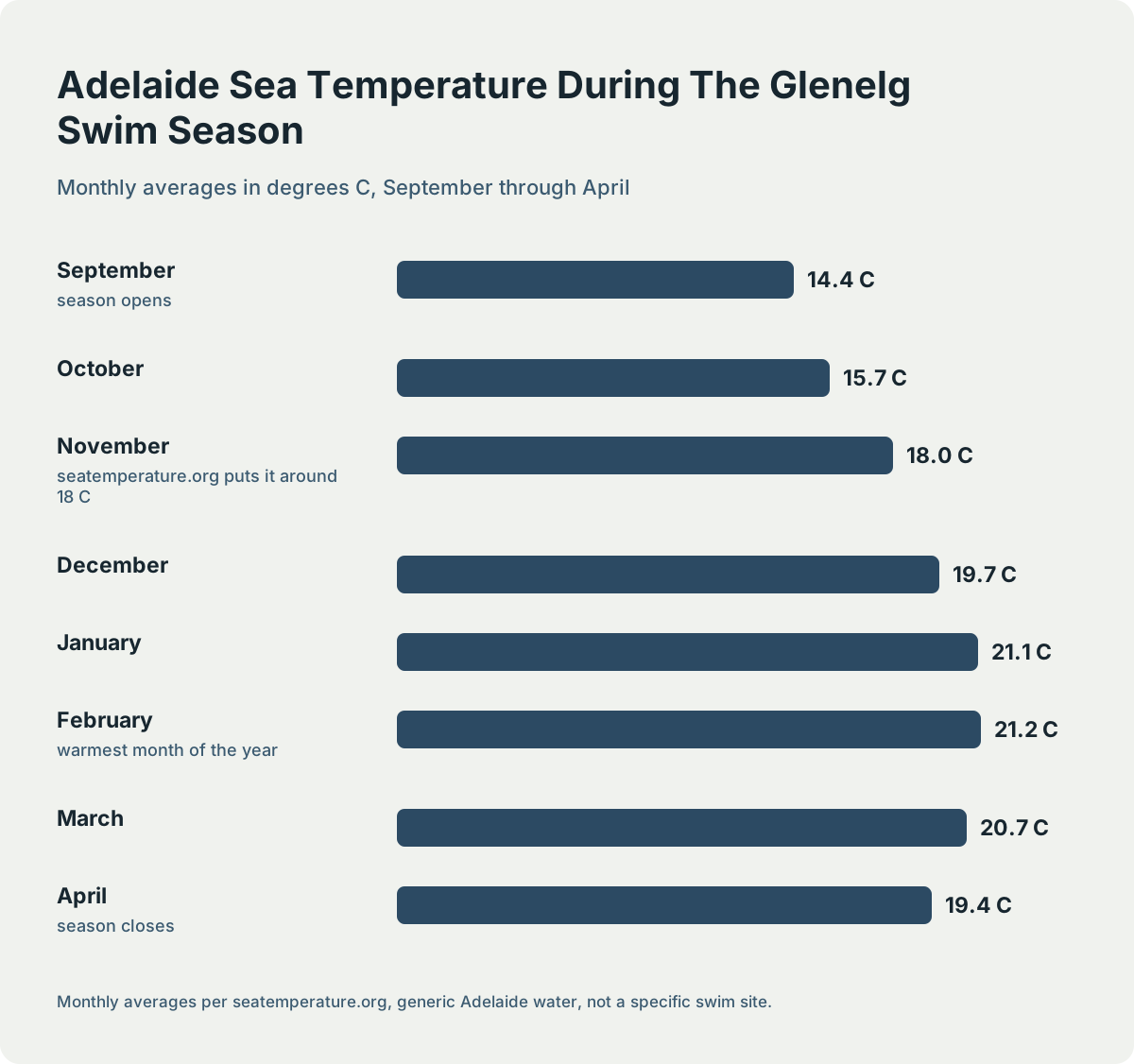
The chart makes the planning logic visible: the Glenelg season brackets the entire warm half of the sea-temperature curve, opening as the water turns in September and closing in April before the slide to the August floor. There is no month in that window where the Adelaide average drops below 14.4 °C, and no month of the year where Kangaroo Island's operator considers its own water, at 14 to 15 degrees by its statement, out of bounds for a thick-suited swim.
Timing within the season is a softer question. Warmer water and calmer mornings tend to overlap in late summer, while spring trips carry more chance of breeze and a fresher suit-up on the pontoon. Neither operator promises conditions, and the Glenelg operator may cancel as late as immediately before departure for weather, with a full refund or reschedule at your choice when it does. Book the month that suits your itinerary; the suit handles the rest, which is exactly why both operators include it in the fare rather than renting it as an extra.
A final word on how far to read into any of this. Water temperature is the objection that dissolves fastest once you know the suit is included, the season avoids the coldest months, and the numbers themselves sit in a band the equipment is built for. Every figure on this page traces back to one of two places: the seatemperature.org monthly table for Adelaide water, or the operators' own published statements about their own trips. Where a number is not stated, this page does not invent one, and any promise about a specific day's conditions belongs to the operator on the day, not to a planning guide. For everything else about the morning itself, Adelaide Swimming With Dolphins carries the full range of on-the-day guides, from boarding to what happens when the dolphins arrive.
Common Questions About Wetsuits And Water Temperature
How Cold Is The Water For A Dolphin Swim In Adelaide?
seatemperature.org lists Adelaide's average sea temperature from about 14 °C in August to about 21 °C in February, with November around 18 °C. The figures are for generic Adelaide water, not a specific swim site.
Do I Need To Bring My Own Wetsuit?
No. The Glenelg operator provides every swimmer a full-length 5 mm wetsuit on boarding, and Kangaroo Island Ocean Safari provides wetsuit, gloves, mask, snorkel and fins.
What Thickness Wetsuit Is Provided On The Glenelg Swim?
The operator provides a full-length 5 mm wetsuit, which it describes as also acting as a full-body flotation device, in sizes up to 4XL.
Can You Swim With Dolphins In Winter In South Australia?
The Glenelg operator's season runs September to April and it does not operate in the cooler months. Kangaroo Island Ocean Safari says its thick wetsuits allow the swim year round in water it describes as 14 to 15 degrees.
Is The Water Warmer Than The Land On Hot Days?
No. The Glenelg operator notes the water is often 3 to 4 °C cooler than the land temperature on hot days, and tours still run in the heat.
What If I Get In And Find The Water Too Cold?
The suit is fitted before departure and sized up to 4XL at Glenelg. A swimmer who is not confident after the briefing may stay aboard as a watcher, and for bookings made direct with the operator the swim-minus-watch difference is refunded.