Dolphin Swim For Non-Swimmers And Weak Swimmers
Swimming ability is the single commonest reason people hesitate to book a dolphin swim in South Australia. Here is what the two swim operators state about weak swimmers, what the physical demands really are, and what the fallback options cost.
Short answer
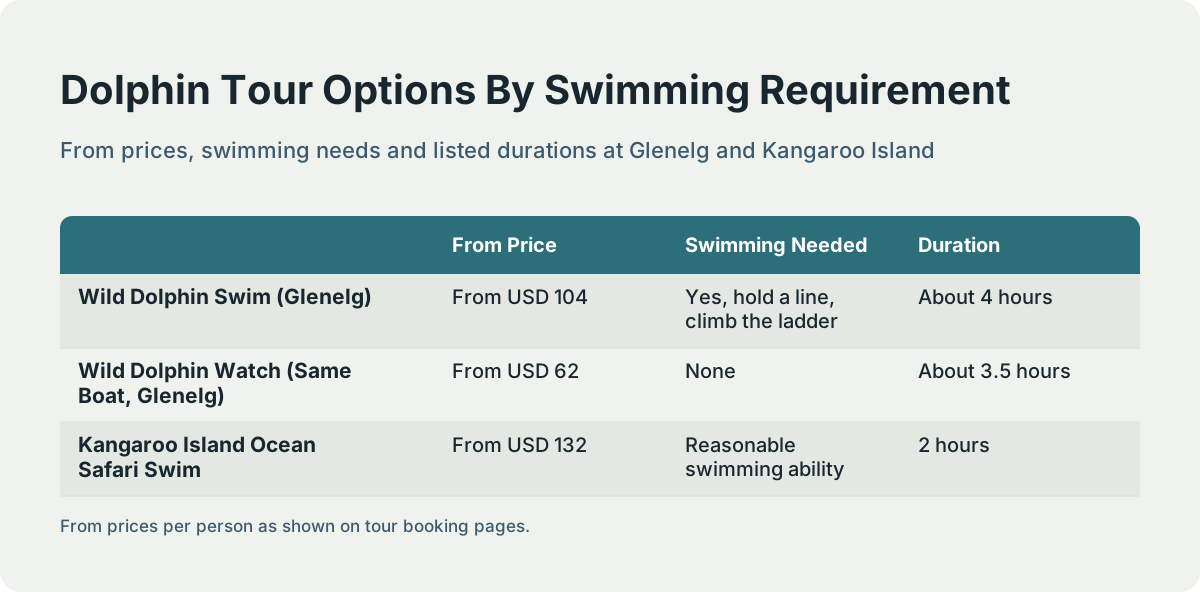
Neither swim operator sets a formal swimming standard, but both state real physical requirements. The Glenelg swim from USD 104 keeps every swimmer on a flotation line in a 5 mm wetsuit, and lets a nervous swimmer ride as a watcher on the same boat. The Kangaroo Island swim from USD 132 recommends reasonable swimming ability. A watch-only cruise from USD 62 needs no swimming at all.
Swimming ability stops more bookings than price does. The two operators that run fee-based dolphin swims in South Australia, Temptation Sailing from Glenelg and Kangaroo Island Ocean Safari from Penneshaw, both publish plain statements about who their swims suit, and neither says "anyone can do it". This guide sets out exactly what each operator states for less confident swimmers, what the physical barriers actually are, and what a non-swimmer in the same group can do instead.
The short version: the Glenelg swim is a controlled swim on a flotation line, not free swimming in open ocean, and the operator says a nervous swimmer can stay aboard as a watcher. The Kangaroo Island operator recommends reasonable swimming ability outright. And a watch-only ticket, from USD 62 per person, needs no swimming whatsoever.
Can You Do A Dolphin Swim If You Cannot Swim?
If you genuinely cannot swim, no: neither South Australian operator tests swimming ability, but both set physical demands that a non-swimmer cannot meet. The Glenelg swim requires you to hold a flotation line as the boat tows you slowly and to climb three ladder rungs at the stern, while the Kangaroo Island operator recommends reasonable swimming ability and says its swimmer line needs upper body strength.
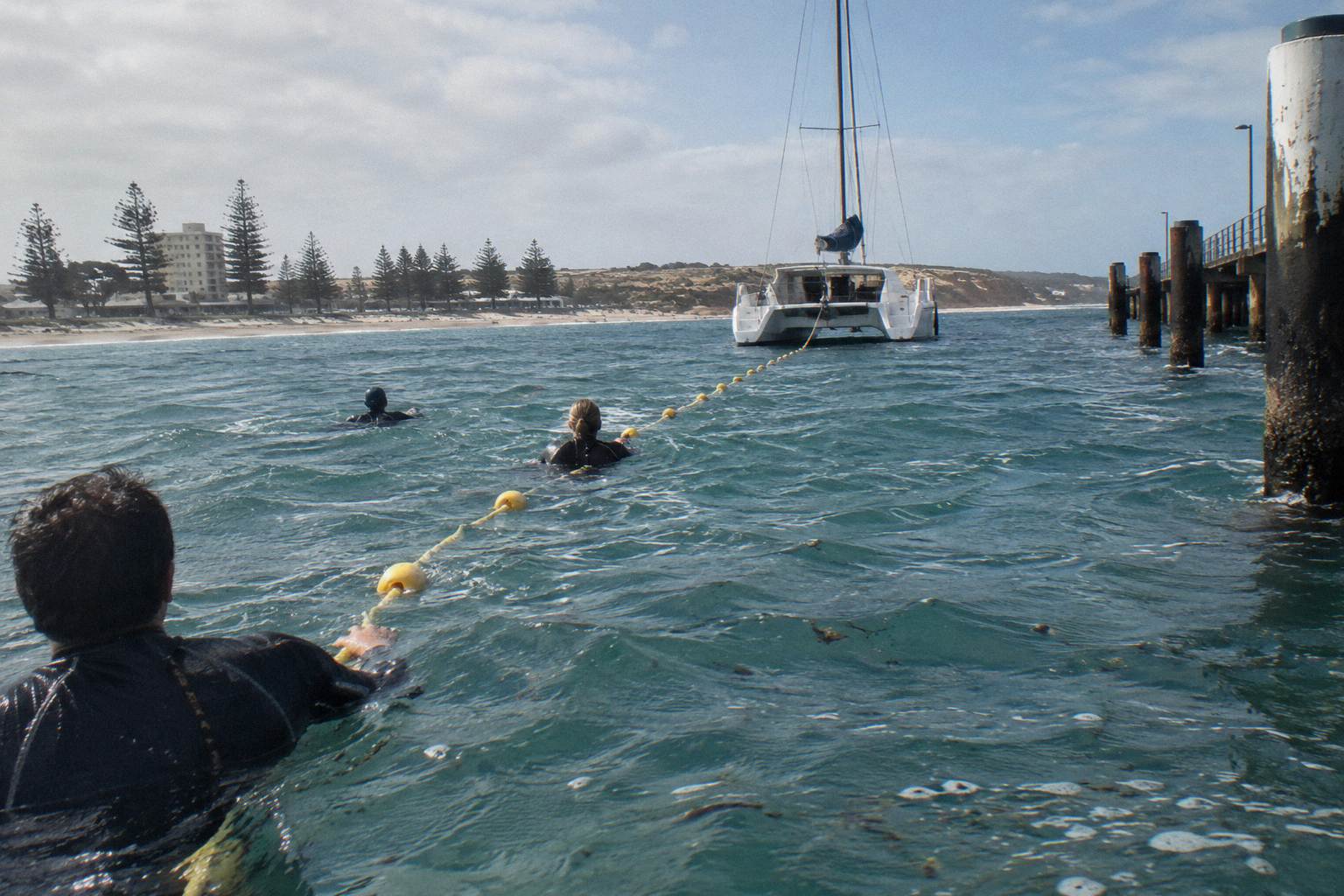
The distinction matters because the word "swim" oversells what happens in the water at Glenelg. Per the operator's own FAQ, every swimmer wears a full-length 5 mm wetsuit that the operator describes as also acting as a full body flotation device, and every swimmer holds a flotation line connected to the stern while the boat moves slowly. You are not swimming across a bay. You are hanging on, being towed, and watching what passes beneath you.
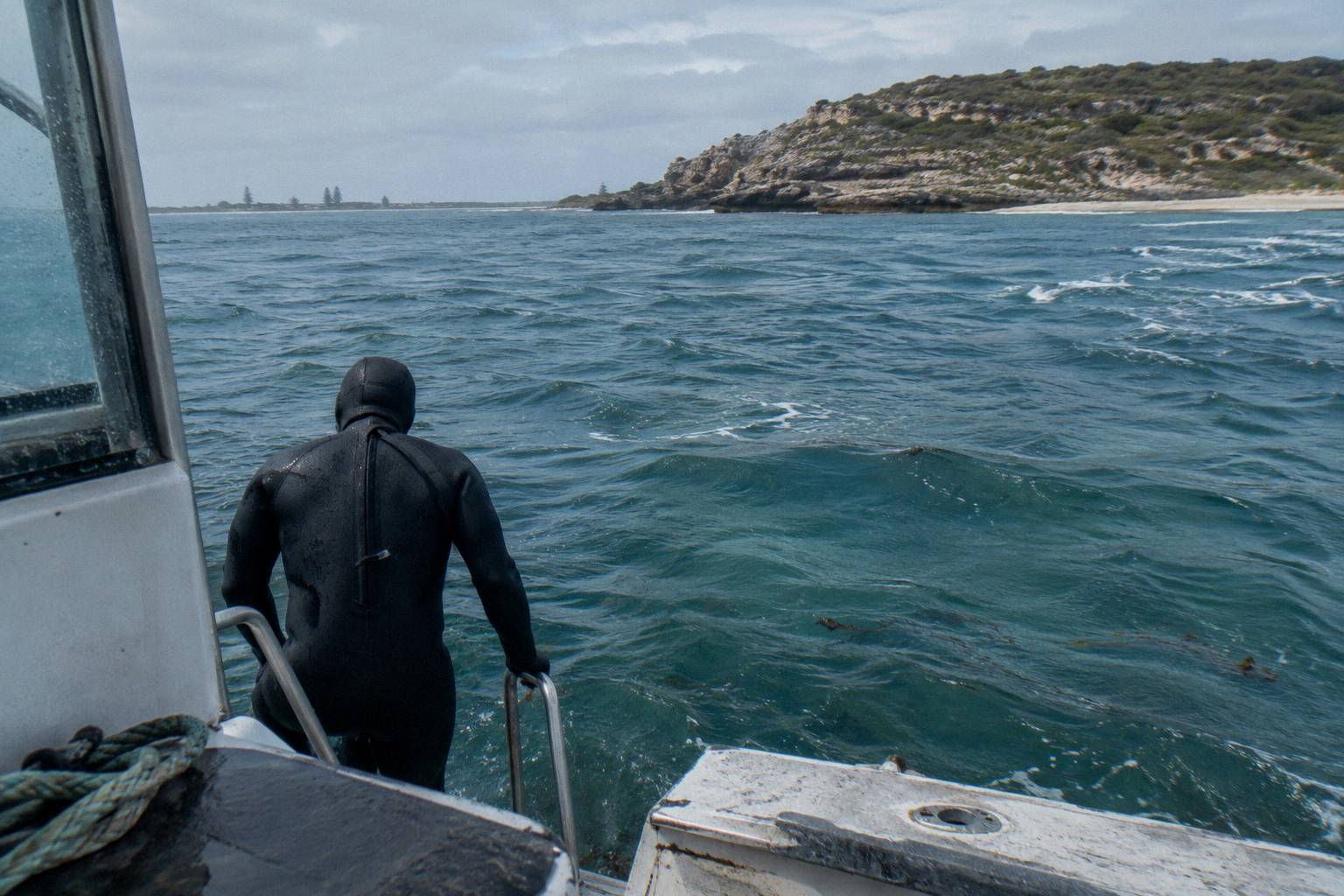
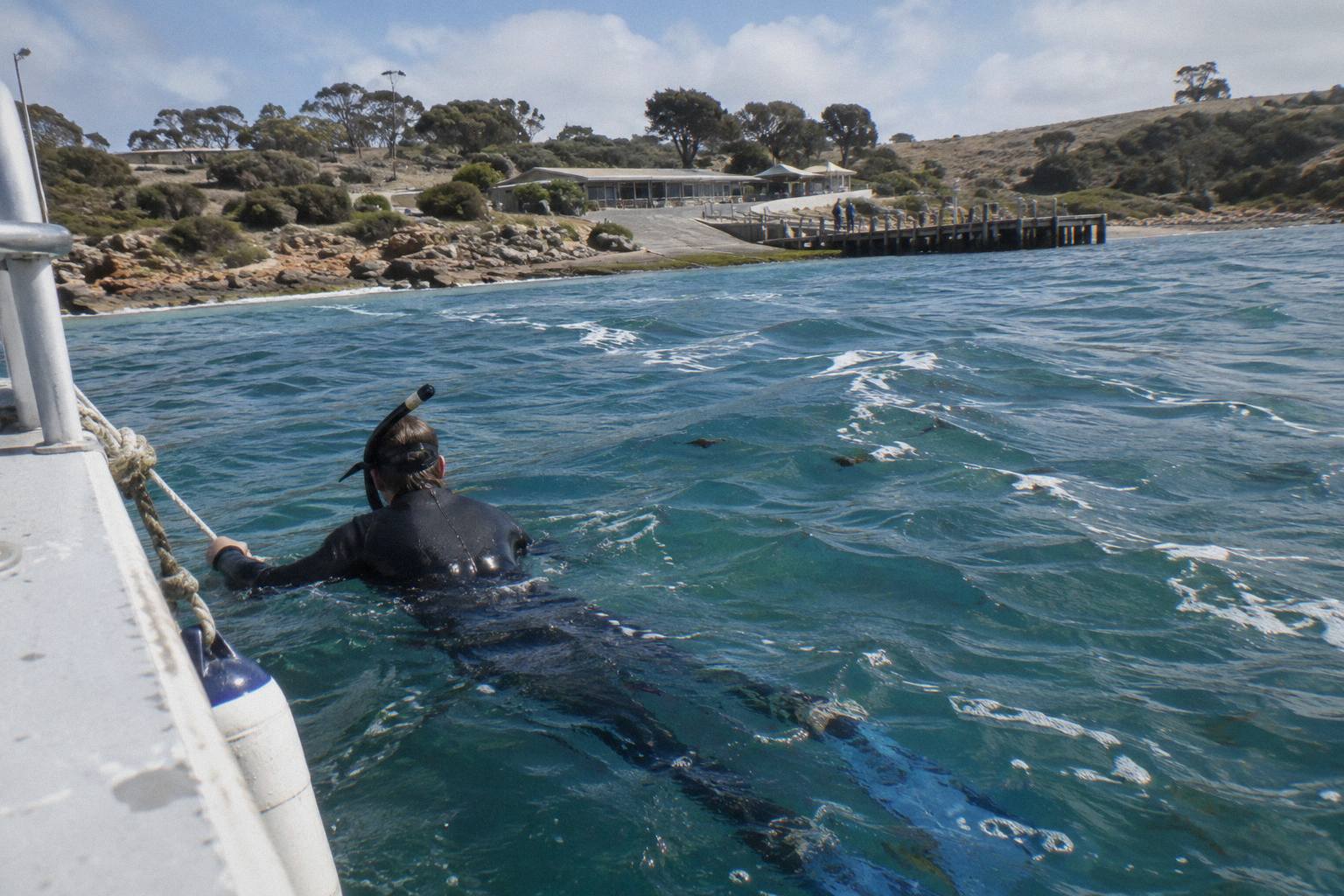
That is still not nothing. You are in open sea, in swell, wearing unfamiliar gear, and you need enough grip and arm strength to stay on the line. The Kangaroo Island product is more demanding on paper: its page says a swimmer line with buoys is often used at the back of the vessel and needs upper body strength, and the ladder exit needs lower body strength. If you tire quickly in deep water, that tour is the harder sell.
For anyone whose concern is medical rather than confidence-based, the honest instruction is simple: check with your doctor and tell the operator when you book. Neither operator screens for fitness at the pontoon, and both expect you to self-assess honestly before you pay. Our page on fitness and medical conditions for a dolphin swim goes through the stated restrictions in more detail.
How The Glenelg Swim Works For A Nervous Swimmer
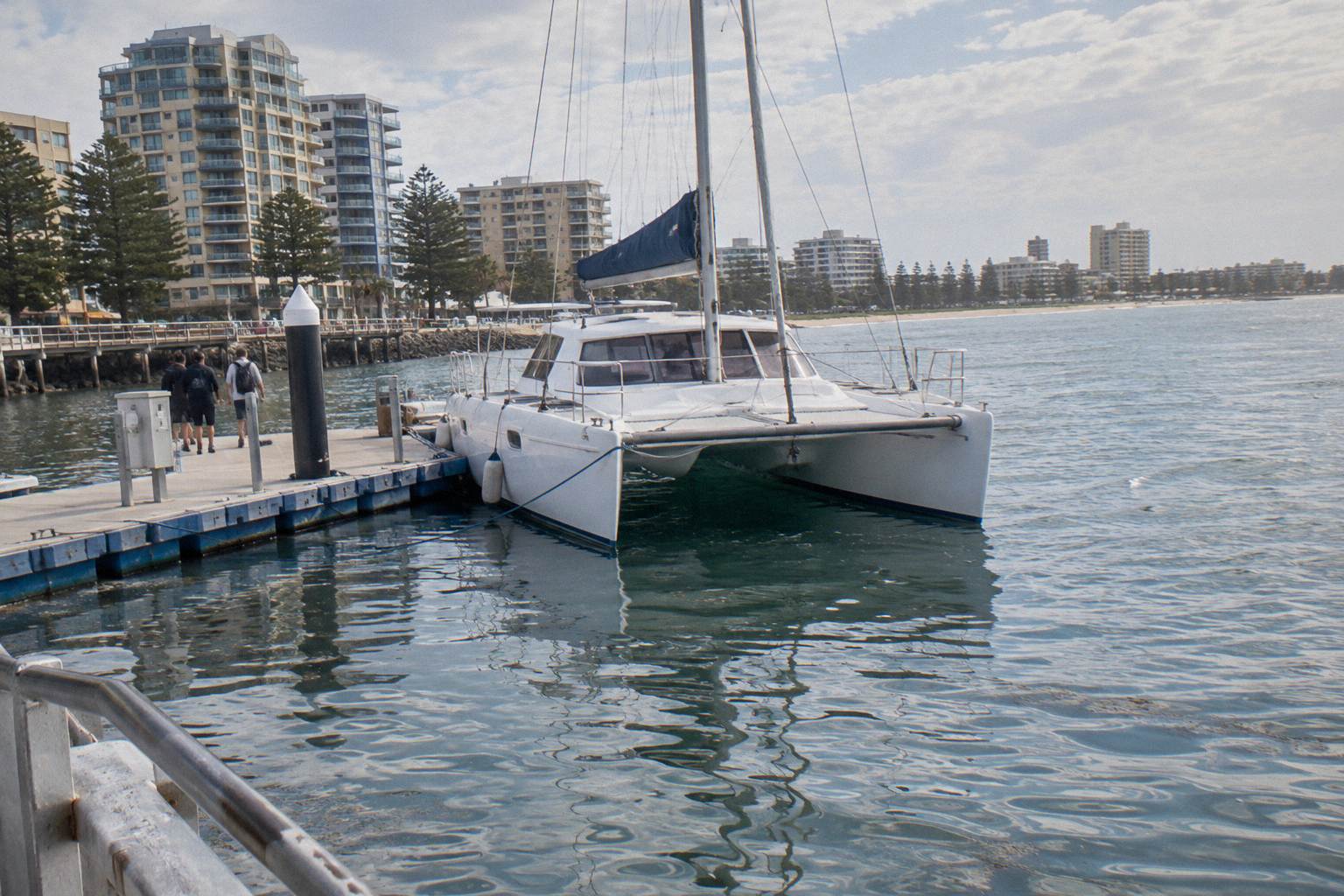
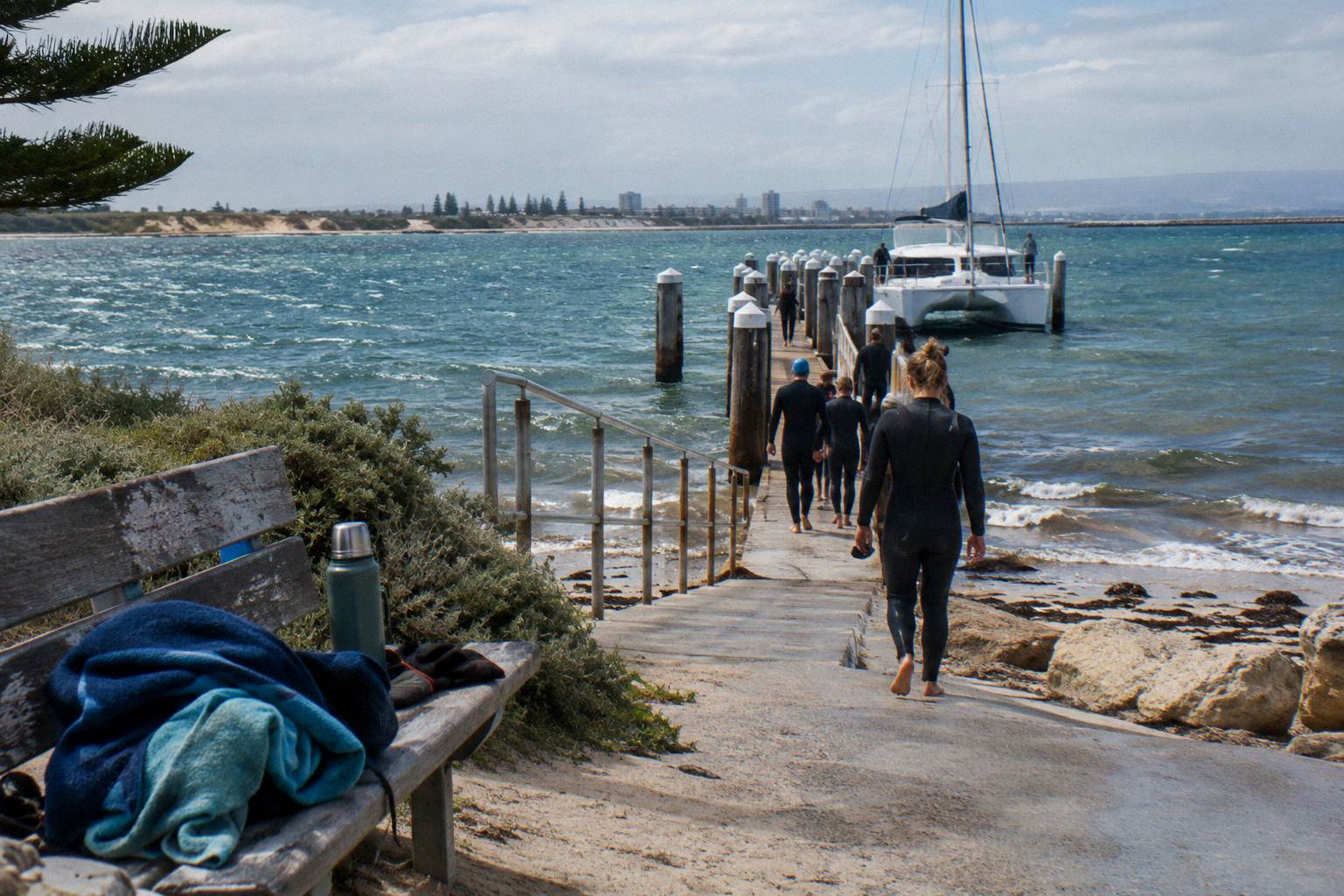
Temptation Sailing runs the Glenelg swim from Marina Pier: swimmers get a 5 mm full-length wetsuit, a roughly 15 minute crew briefing, and a flotation line to hold at the stern. If you lose confidence after the briefing, you can stay aboard as a watcher, and the operator refunds the difference between swim and watch fares on direct bookings.
The build-up is deliberately gradual, which is what makes this trip workable for an anxious but competent swimmer. Boarding starts 15 minutes before departure at the bottom of the stairs in front of the Oyster Bar at Holdfast Shores Marina. Once underway, the crew hands out wetsuits in sizes up to 4XL, demonstrates masks and snorkels, and runs a briefing of about 15 minutes. Prescription masks are on board in three strengths, -1.5, -3 and -4.5, so blurry underwater vision is not a barrier.
Two swim experiences run on each trip, the Front Swim and the Back Swim, and swimmers are rotated between them. The crew puts swimmers in the water only once dolphins have turned toward the boat, and stops entries when the dolphins come too close. This is the operator's stated method, and it means nobody is dumped overboard on a countdown: entries are timed to the animals' behaviour. A marine biologist hosts the trip.
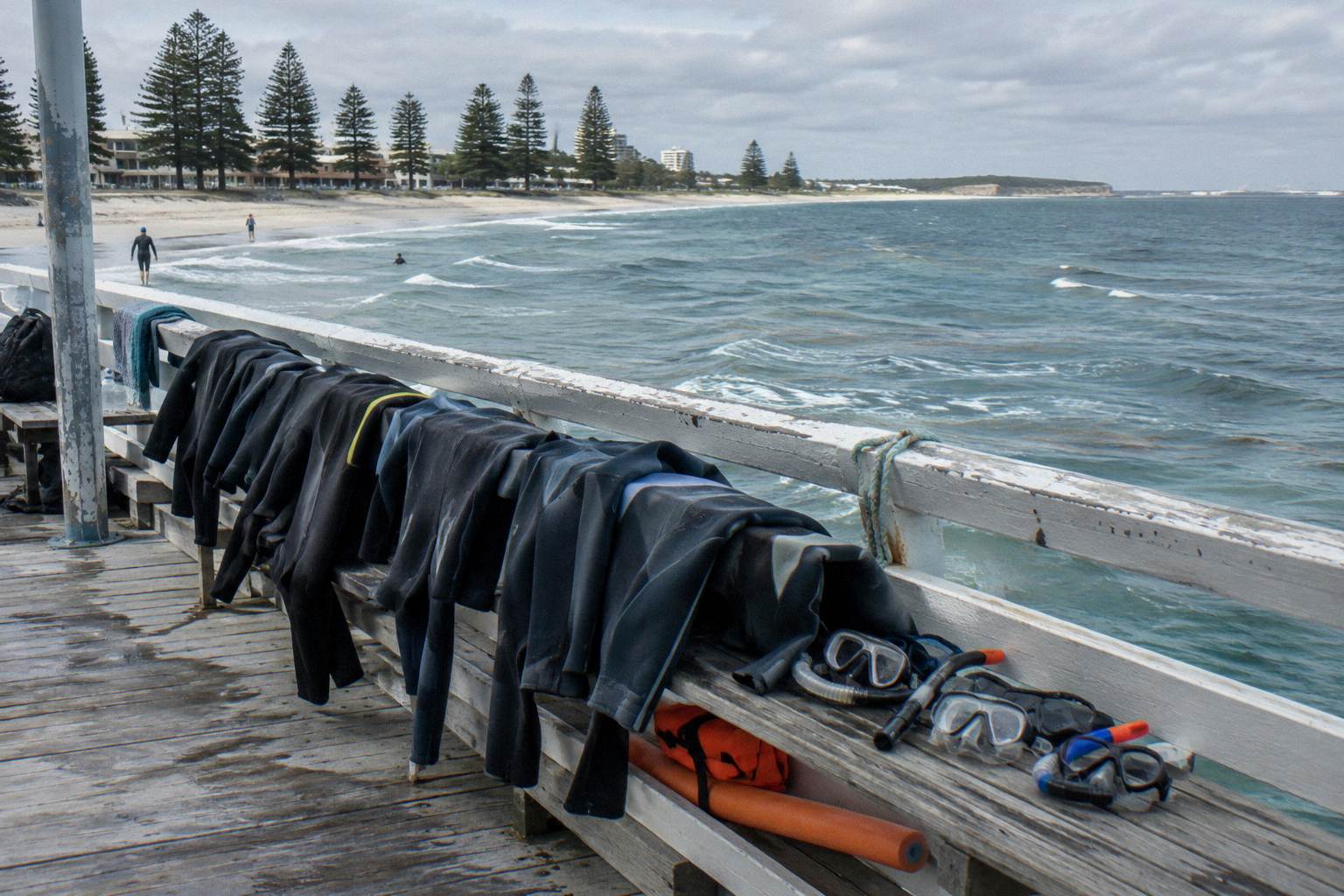
The critical clause for this article is the operator's own: if you are not confident after the briefing, you may stay aboard as a watcher. For bookings made direct with the operator, the operator refunds the swim-minus-watch difference for a nervous swimmer. The booking page for the Wild Dolphin Swim From Glenelg With Temptation Sailing shows free cancellation up to 24 hours, so the decision does not have to be final at the point of payment. Check availability
Two constraints to weigh honestly. Swimmers must be able to climb the three rungs of the stern ladder, and the trip is not wheelchair accessible, with stairs to board. Pacemaker wearers should ask the operator before booking. Neither of those is about swimming ability, but both disqualify some people who can swim perfectly well, which is why the operator's suitability list deserves a read before the booking page does.
The Watch Ticket: The Non-Swimmer's Fallback
A non-swimmer can still join the trip by booking a watch ticket, since swim and watch guests ride the same boat at Glenelg and can be booked together or separately. The Wild Dolphin Watch From Glenelg runs about 3.5 hours, watching only, from USD 62 per person, rated 4.8 across 409 reviews, with free cancellation up to 24 hours on its booking page.
This is the single most useful fact on the page for mixed groups. The same catamaran, the same departure, the same dolphins. A parent who cannot swim, a partner who gets seasick in the water, a child under the minimum age of 9 for the swim: all of them can buy a watch fare and be part of the same morning. Children under 9 may watch, and under-18s on the swim need a parent or guardian on board anyway, who may swim or hold a watch ticket.
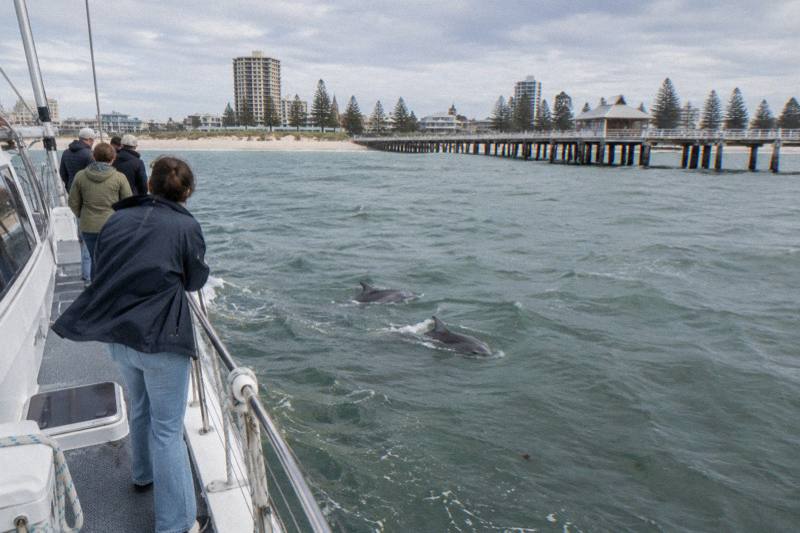
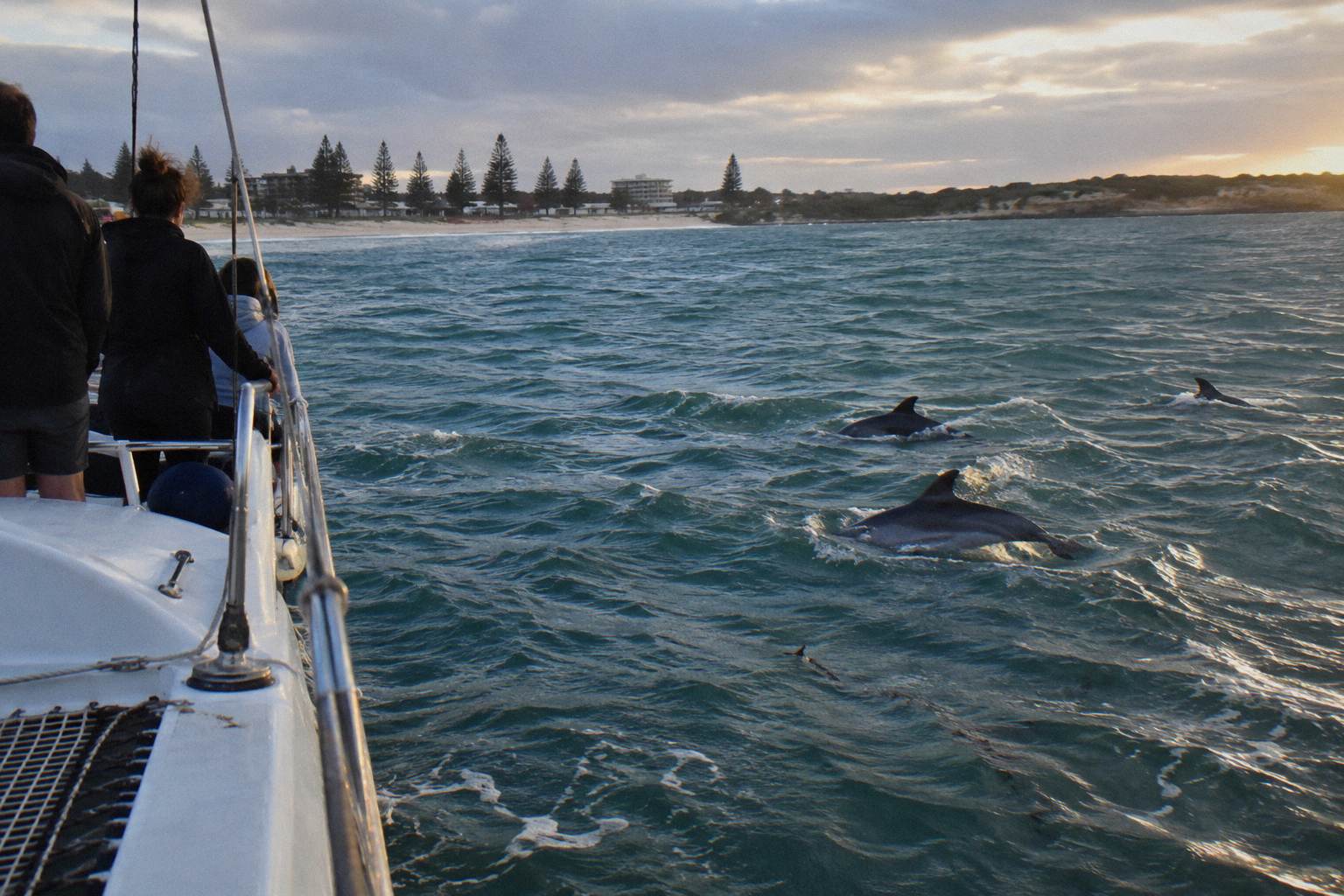
The operator's sighting record, which is its own claim and covers above-water sightings only, is that it has never had a day without seeing dolphins from above the water, and its tour page states a "100% success rate of seeing dolphins onboard since 2002". Watchers see the animals from the surface, and at Glenelg the dolphins frequently ride the bow. Underwater views are the swimmer's privilege, but a watcher on a good day sees plenty.
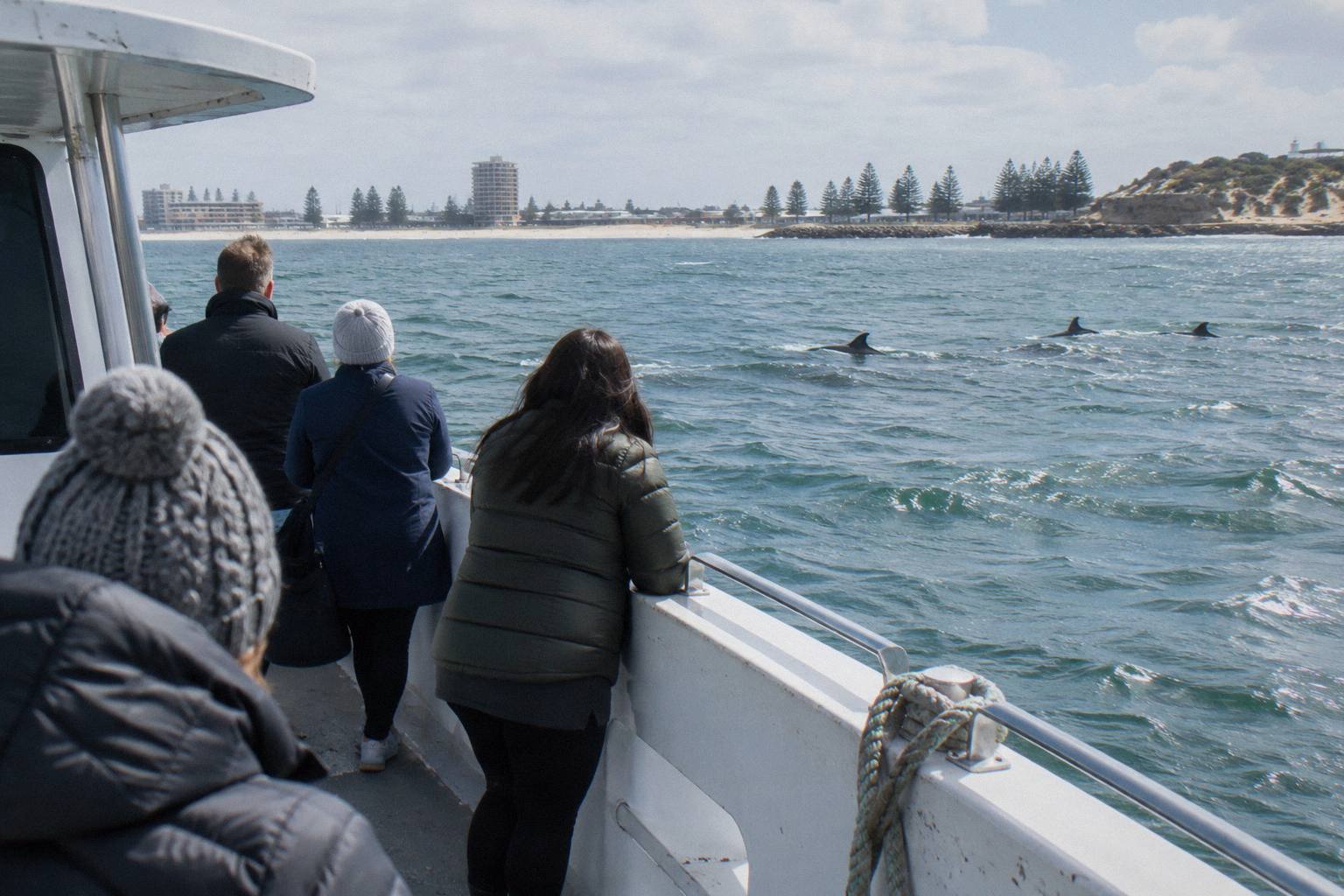
One term to print carefully. For bookings made direct with the operator, if no dolphins are seen from above the water, passengers may return free within one year (non-transferable) or take a 50% refund if they are interstate or overseas guests. That is the operator's own direct-booking policy, not a term of every booking page, and reseller listings may carry their own terms. Treat it as the operator's stated position, not a guarantee.
| Option at Glenelg | Swimming needed | Listed duration | Booking page price | Rating and reviews |
|---|---|---|---|---|
| Wild Dolphin Swim | Yes, hold a line and climb the ladder | About 4 hours | From USD 104 | 4.7 across 493 reviews |
| Wild Dolphin Watch (same boat) | None | About 3.5 hours (title says 4) | From USD 62 | 4.8 across 409 reviews |
The Kangaroo Island Swim And Its Higher Bar
The Kangaroo Island Ocean Safari Swim is blunter about swimming ability: the operator recommends reasonable swimming ability, says the swimmer line needs upper body strength and the ladder exit needs lower body strength, and lists the swim as unsuitable with a pacemaker or pregnancy. The trip is 2 hours from Penneshaw, from USD 132 per person, rated 4.4 across 137 reviews, with wetsuit, gloves, mask, snorkel and fins provided and a life jacket and noodle available on board.
There is flexibility in the product, just less of it. The operator's page describes a Snorkelling Safari that is "swim with wild dolphins OR among seals", and says a given trip may be dolphins only, seals only or a coastal snorkel. Meeting point is the Kangaroo Island Information Stop, 43 Howard Drive, Penneshaw, 30 minutes before departure for wetsuit fitting and a safety brief. The operator describes its vessels as 28-seaters, a smaller platform than the Glenelg catamaran's stated 50-passenger survey.
The stated water conditions are part of the difficulty. The operator says water temperature sits between 14 and 15 degrees and that thick wetsuits allow participation year round. That is colder than it sounds to anyone whose swimming has been done in a heated pool, and a thick wetsuit changes how your arms and legs move. Combined with the line and the ladder, the physical load is real even before any dolphin appears.
The refund position is also starker, and it deserves plain language. The operator states that wildlife interactions are not guaranteed, and that if you get in the water at any stage you do not get any money refunded. In other words, entering the water is the point of no return on that tour, whatever happens next. The booking page shows free cancellation up to 24 hours, and the operator's own terms are a separate ladder: full refund if the operator cancels with no alternative time, rescheduling with more than 48 hours' notice, and credit or partial charges inside 7 days.
For a weak swimmer, the honest summary is that this trip suits someone who can swim steadily in open water for short bursts and simply lacks ocean experience, not someone who cannot complete a length. If that is you, read our comparison of swimming with dolphins on Kangaroo Island or from Glenelg before choosing, and see the Kangaroo Island Ocean Safari Swim listing for live dates. Check availability
What To Tell The Operator When You Book
Tell the operator three things at booking time: your honest swimming ability, any medical condition including a pacemaker, and whether anyone in your group is watching rather than swimming. The operators ask for self-assessment rather than testing you, so the disclosure has to come from you. Neither operator prints a swimming standard, which means a conversation before payment is the only screening that happens, and both operators have channels for it through their booking and enquiry processes.
A short checklist, built only from the operators' own stated terms:
| Tell them | Why | Which operator states it |
|---|---|---|
| Your real swimming ability | Reasonable swimming ability is recommended; the line and ladder need strength | Kangaroo Island |
| You may want to stay aboard as a watcher | Nervous swimmers can ride as watchers; direct bookings get the fare difference back | Glenelg (Temptation) |
| Pacemaker | Pacemaker wearers should ask the operator before booking; not suitable with a pacemaker at all on KI | Both |
| Pregnancy | Listed as not suitable for the KI swim | Kangaroo Island |
| Ages of everyone in the group | Swim minimum age 9 at both; under 18s need a guardian on board at Glenelg | Both |
| Mobility and stairs | Neither boat is wheelchair accessible; stairs to board, three ladder rungs to re-board | Both |
The medical row deserves emphasis because nobody checks at the pontoon. The Glenelg trip runs shark shields during the back swim, which is why the operator flags pacemakers in its restrictions, and pacemaker wearers should ask the operator before booking rather than working it out on the day. Our guide to dolphin swim age limits and kids covers the age rules in full if you are booking for a family.
It is also worth telling the operator if anyone in your group has never snorkelled. At Glenelg the crew demonstrates masks and snorkels during the briefing, and prescription masks are carried on board, but a heads-up lets the crew spend time where it is needed. On the water, temperatures are often 3 to 4 degrees cooler than on land, per the operator, so mention any history of getting cold quickly too.
Strength, Ladders And Flotation: The Real Physical Barriers
The real physical barriers come down to grip strength and comfort in deep water rather than swimming skill: you must hold a flotation line while being towed slowly, hold a swimmer line with buoys in colder water, and climb stern ladder rungs in a soaked wetsuit. Neither operator sets a weight limit, distance requirement, or timed test, so you can honestly judge yourself against these demands before booking.
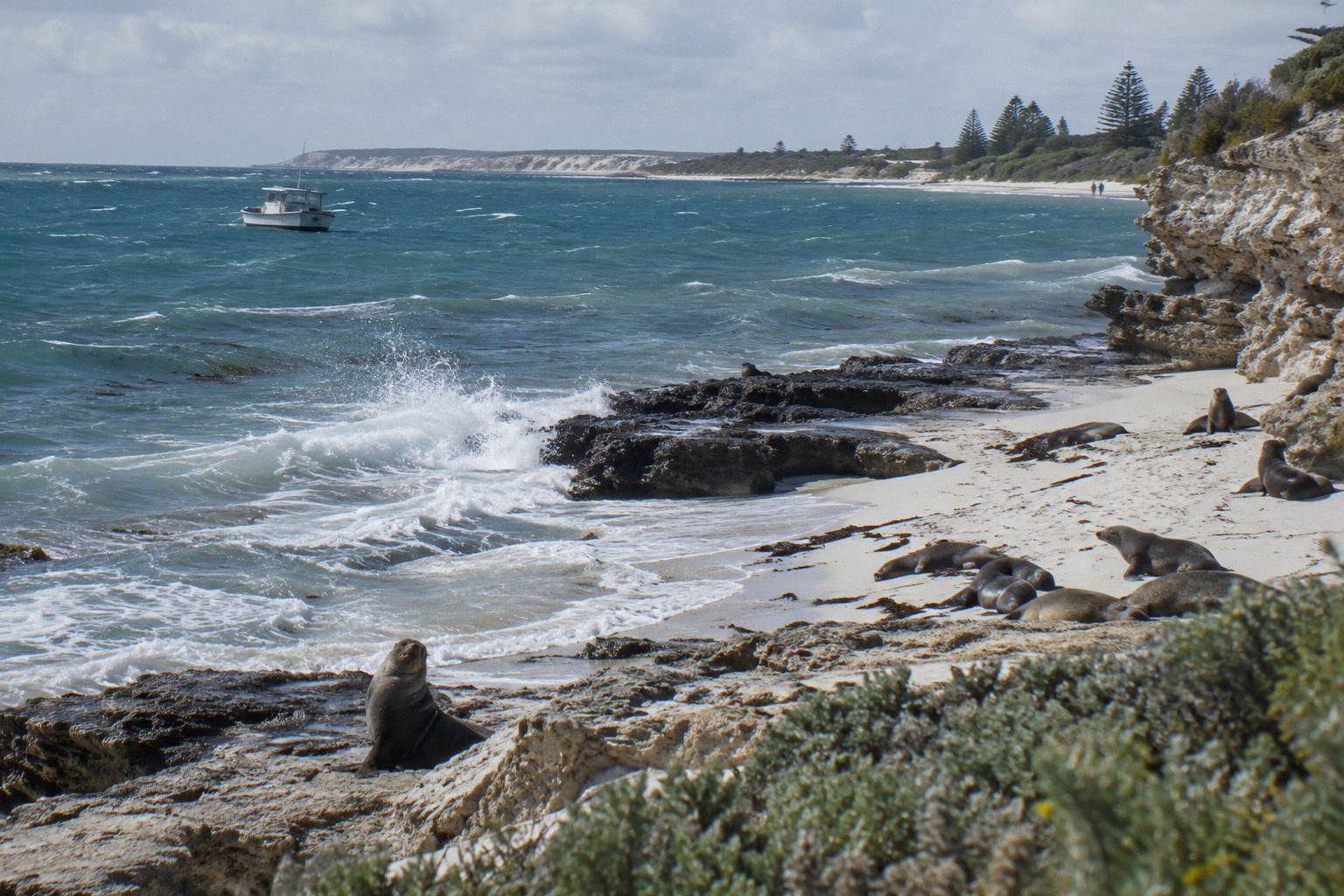
The ladder deserves more attention than it gets. Three rungs sounds trivial on land, and it is not trivial in a wetsuit that has taken on water, in swell, with tired arms after time on the line. The Kangaroo Island operator splits the demand explicitly: upper body for the line, lower body for the ladder. A weak swimmer who has strong legs and a good grip may manage both; a strong swimmer with a bad shoulder may not. The self-assessment is about your own body, not your swimming certificate.
Flotation is the reassuring half of the picture. At Glenelg, the operator describes the 5 mm wetsuit as a full body flotation device in itself, and every swimmer is on a line connected to the boat. Life jackets are carried on board but are not used for the swim. At Kangaroo Island, a life jacket and a noodle are available. Nobody is expected to tread water unaided for the duration. The failure mode for a weak swimmer is not sinking, it is exhaustion or panic, and both are reasons to choose the shorter exposure or the watch ticket instead.
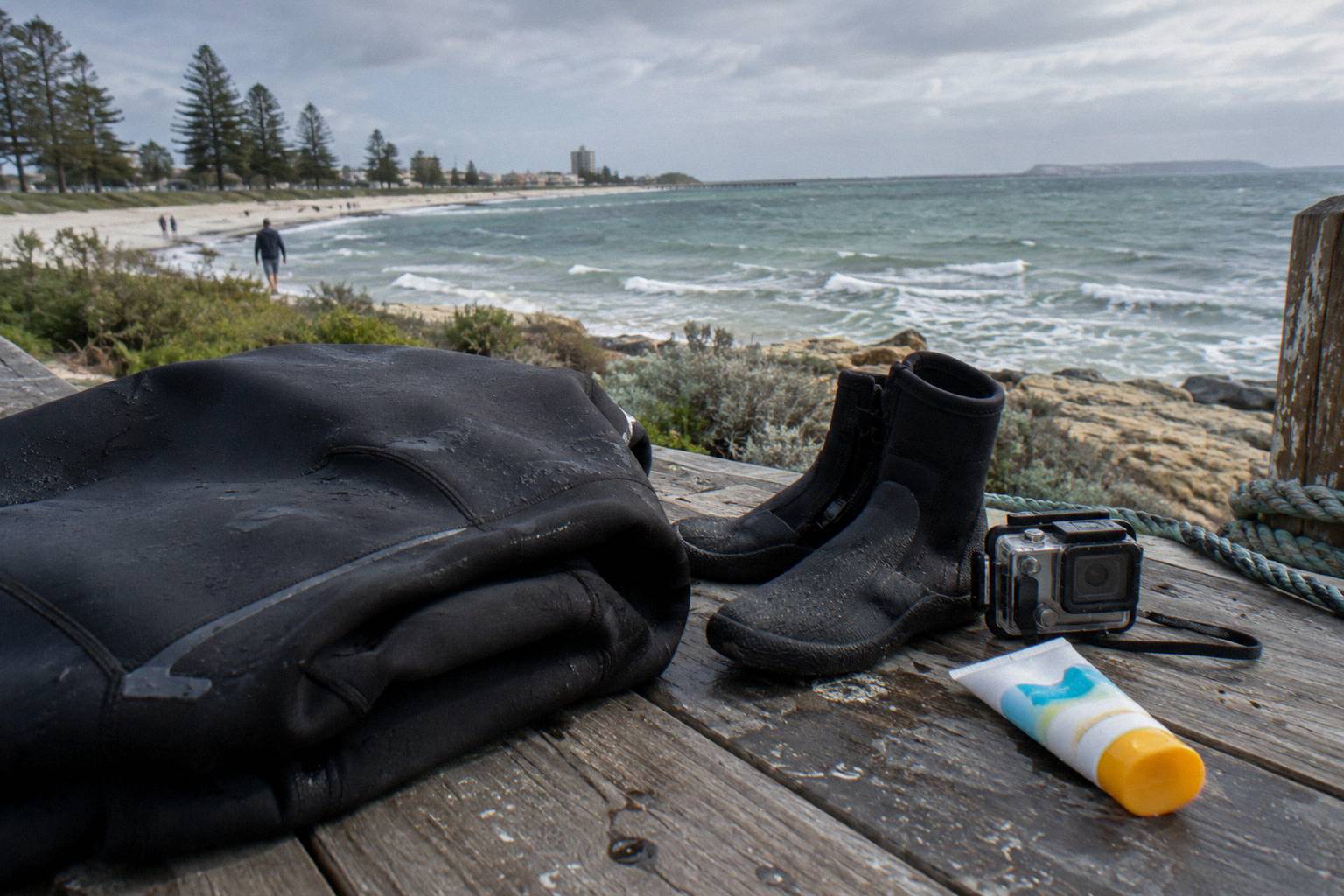
The water itself is the third factor. Around Adelaide, sea temperature runs from about 14 degrees in August to about 21 degrees in February, per seatemperature.org's Adelaide figures, with November around 18 degrees. The Glenelg season runs September to April, so most swimmers get the warmer half of that range in a 5 mm suit. Our page on wetsuits and water temperature on a wild dolphin swim works through what that feels like in the water.
One more operator statement worth knowing: SA testing shows zero or low Karenia algae along the metropolitan coast and Kangaroo Island, and the official health advice is that if the water is clear it is fine to swim. The Glenelg operator still carries a notice that a bloom may affect its swim product and says it assesses conditions before the season starts, so check the operator before booking a swim if you have concerns.
Watching And Paddling: Options That Need No Swimming At All
Yes, you can still see South Australia's dolphins with no swimming required at all, thanks to four tours: the Glenelg watch cruise from USD 62, the Port River Dolphin Cruise from USD 60 (4.5 from 481 reviews), the Kangaroo Island Dolphin Watch from USD 61.74 (4.8 from 640 reviews), and the paddling-only Dolphin Sanctuary Kayak Tour from USD 54.72 (4.8 from 300 reviews, minimum age 8).
The Port River cruise is the easiest physical proposition of all: 1.5 hours on calm estuary water inside the Adelaide Dolphin Sanctuary, a 118 square kilometre zone of water, mangroves, saltmarsh, tidal flats and tidal creeks that is home to Indo-Pacific bottlenose dolphins, many of them year-round residents. You sit, you watch, you come home. For a nervous traveller, an enclosed estuary is a different proposition from the open Gulf.
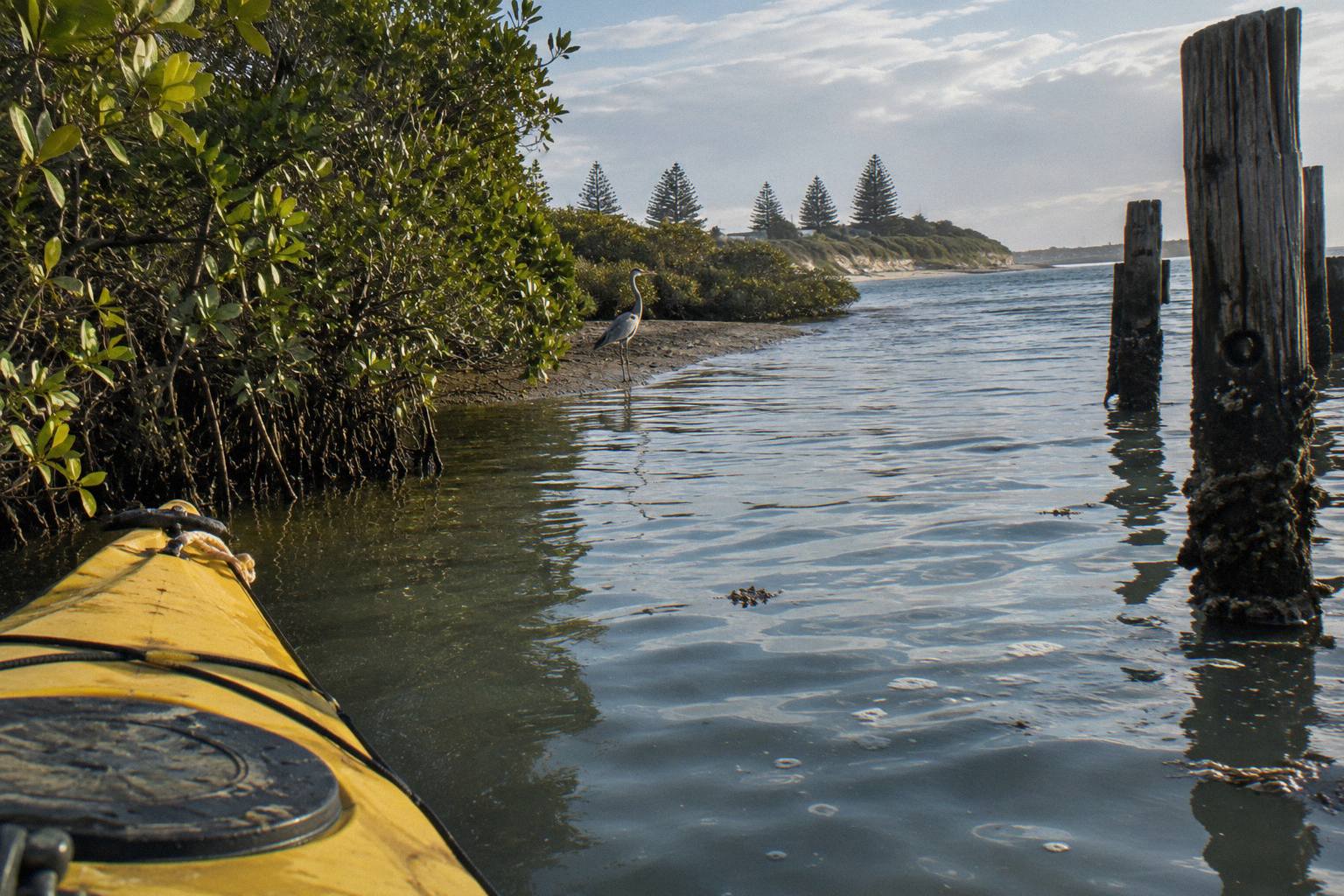
The kayak tour sits between watching and swimming. It is paddling only, run by Adventure Kayaking SA inside the same sanctuary waters, minimum age 8, from USD 54.72. You are on the water rather than in it, close to the surface, and dolphins do approach kayaks in the Port River. It asks more of your arms and your balance than a cruise does, and nothing of your swimming. It is a fair compromise for someone whose hesitation is specifically about deep water.
A comparison of every non-swimming option, prices from the booking pages:
| Tour | What you do | Listed duration | From price | Rating and reviews |
|---|---|---|---|---|
| Wild Dolphin Watch From Glenelg | Watch from the swim boat's deck | About 3.5 hours | USD 62 | 4.8 across 409 reviews |
| Port River Dolphin Cruise | Watch from a cruise vessel | 1.5 hours | USD 60 | 4.5 across 481 reviews |
| Kangaroo Island Dolphin Watch | Watch from a safari vessel | About 1 hour 15 minutes | USD 61.74 | 4.8 across 640 reviews |
| Dolphin Sanctuary Kayak Tour | Paddle in sanctuary waters | Duration not confirmed | USD 54.72 | 4.8 across 300 reviews |
One flag on that table: the Kangaroo Island Dolphin Watch is listed as non-refundable on its booking page, unlike the first four tours in this article's roster which all show free cancellation up to 24 hours. The others let you change your mind the day before, which is exactly the flexibility a hesitant swimmer's family wants.
Booking Terms A Hesitant Swimmer Should Read First
Free cancellation up to 24 hours on the Glenelg swim and watch, Kangaroo Island swim, Port River cruise and kayak tour pages is the first term to check, covering a switch from swim to watch ticket the day before. The Kangaroo Island Dolphin Watch is non-refundable; the Glenelg operator's direct terms add a nervous-swimmer refund of the swim-minus-watch difference and a free return within a year if no dolphins are seen from above the water.
The 24 hour window is the practical safety net. It means a weak swimmer can book the swim, read the confirmation, check the weather, and downgrade to a watch ticket up to a day out without penalty on the five tours that carry it. What it does not cover is the day itself: at Glenelg, for bookings of 5 or fewer made direct with the operator, cancelling under 24 hours or a no-show means no refund or reschedule. Bookings of 6 or more carry per-person charges for cancellations 24 hours to 7 days out, per the operator's direct terms.
On the water, seasickness is treated firmly: no refund at the Glenelg operator, which suggests tablets 30 minutes before departure. Weather or mechanical cancellation by the operator means a full refund or reschedule at the booking holder's choice, and the operator states it may cancel as late as immediately before departure. Our page on seasickness and boat comfort on a dolphin swim covers prevention in detail, and it matters more for watchers than swimmers in practice.
The sighting policies are worth reading side by side before you spend swim money. Glenelg's operator claims a perfect above-water sighting record since 2002 and backs it with the return-or-refund clause for direct bookings. Kangaroo Island's operator promises nothing: interactions are not guaranteed and entering the water ends any refund claim. Neither operator promises an underwater encounter on any trip, and no honest summary of either should. See our guide to dolphin swim sightings and what if none appear for how each policy plays out.
Common Questions About Dolphin Swims For Non-Swimmers
Can You Swim With Dolphins If You Can't Swim?
Not as a genuine non-swimmer, no. The Glenelg swim keeps you on a flotation line in a wetsuit that the operator describes as a flotation device, but you must hold the line while towed and climb three ladder rungs. Kangaroo Island recommends reasonable swimming ability. A non-swimmer can ride the same Glenelg boat on a watch ticket from USD 62.
Is The Dolphin Swim From Glenelg Suitable For Weak Swimmers?
A weak but confident swimmer can manage it: the swim is controlled, on a line, in a 5 mm wetsuit, not free swimming in open ocean. The operator states that a swimmer who loses confidence after the briefing can stay aboard as a watcher, with the fare difference refunded for bookings made direct with the operator.
Do You Have To Be A Strong Swimmer For The Kangaroo Island Dolphin Swim?
The operator recommends reasonable swimming ability rather than strength. Its stated demands are upper body strength for the swimmer line with buoys and lower body strength for the ladder exit, in water it describes as 14 to 15 degrees. It also lists the swim as unsuitable with a pacemaker or pregnancy.
Can A Non-Swimmer Ride The Same Boat As The Swimmers?
Yes, at Glenelg. Swim and watch guests travel on the same catamaran, booked together or separately, so a non-swimmer can hold a watch ticket while the rest of the group swims. Children under the swim minimum age of 9 may also watch.
Is There A Flotation Device During The Swim?
At Glenelg, the full-length 5 mm wetsuit is described by the operator as a full body flotation device, and all swimmers hold a flotation line connected to the stern. Life jackets are on board but not used for the swim. At Kangaroo Island a life jacket and noodle are available.
What Is The Cheapest Way To See Dolphins In Adelaide Without Swimming?
From the booking pages, the Dolphin Sanctuary Kayak Tour starts from USD 54.72 (paddling, not swimming), the Port River Dolphin Cruise from USD 60, the Kangaroo Island Dolphin Watch from USD 61.74, and the Glenelg watch cruise from USD 62. All but the Kangaroo Island Dolphin Watch show free cancellation up to 24 hours.
The honest closing note from Adelaide Swimming With Dolphins: the operators have written down everything a hesitant swimmer needs to know, and none of it says the swim is for everyone. Read your own body against the line, the ladder and the water temperature, tell the operator before you pay, and keep the watch ticket in your back pocket. That is not a compromise plan, it is how these trips are designed to be booked.