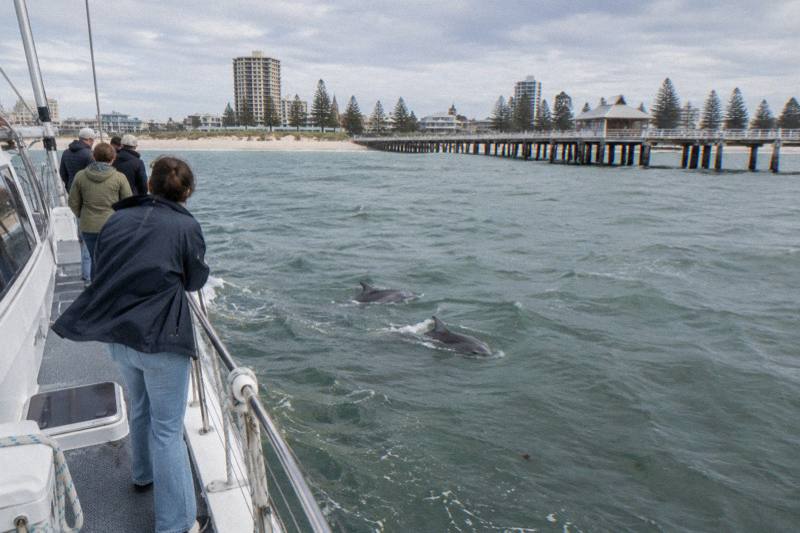
Fitness And Medical Conditions For A Dolphin Swim
No dolphin swim operator in South Australia runs a fitness test, but every swim has physical demands the operators state plainly: holding a line under tow, climbing a ladder, and medical conditions that rule some swimmers out. Here is what each operator actually says.
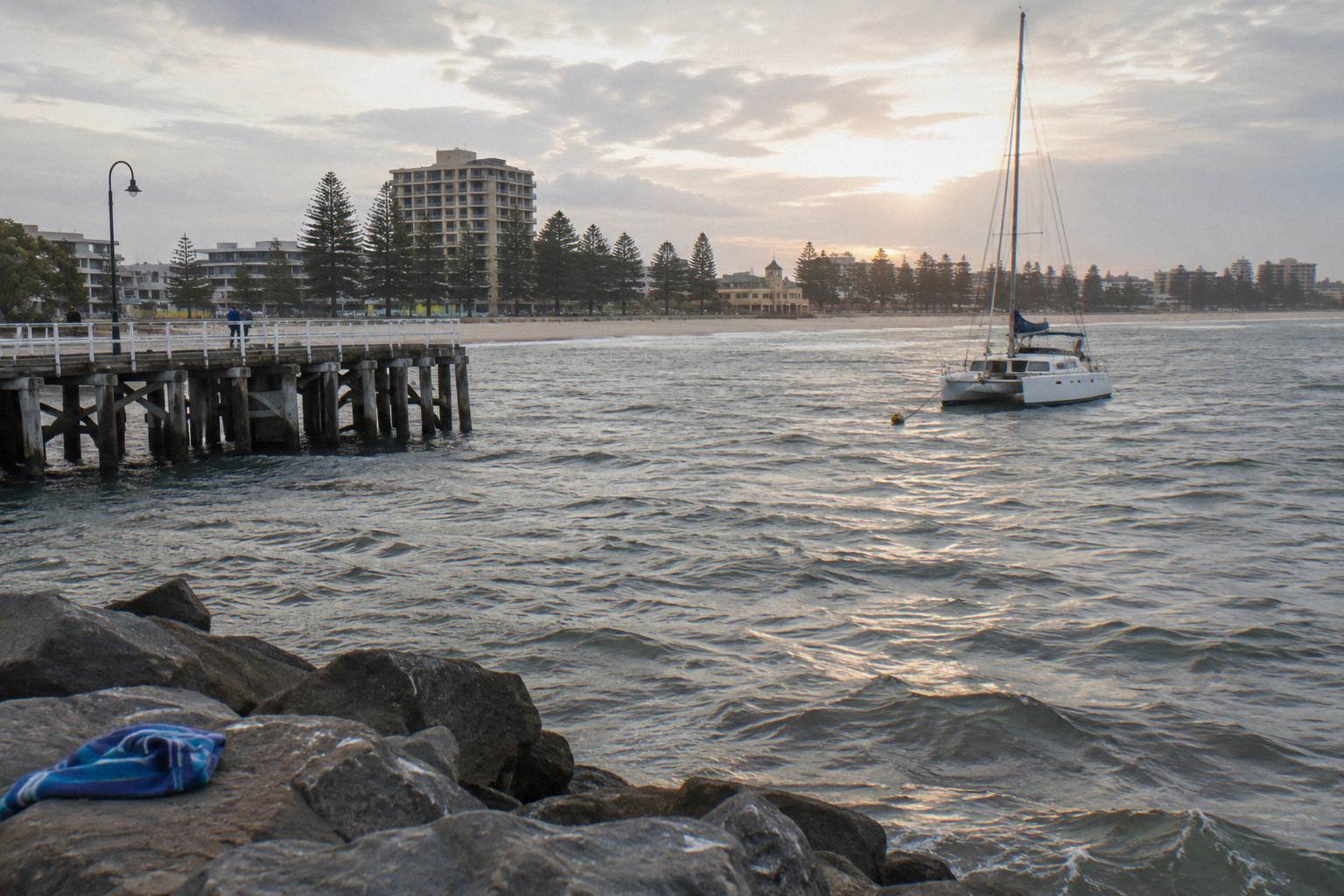
Short answer
The Glenelg swim asks swimmers to hold a flotation line while towed slowly and climb three ladder rungs; the Kangaroo Island swim needs upper and lower body strength. Pacemaker wearers must ask the Glenelg operator and are told not suitable at Kangaroo Island, where pregnancy is also excluded. Neither swim is wheelchair accessible. Check with your doctor and tell the operator when you book.
A wild dolphin swim is not free swimming in open ocean, and that changes what fitness actually means here. Both swim operators in this state run controlled experiences: swimmers hold a line connected to the boat and get out via a ladder. The physical demands are specific and printed by the operators themselves. So are the exclusions, which are few, narrow and stated.
What no operator states is a fitness test, a weight limit, a height limit or a required swimming standard. Those pages simply do not exist. What you get instead are clear statements about holding a line, climbing a ladder, and two medical conditions named outright: pacemakers at Kangaroo Island, where pregnancy is also excluded. Everything beyond that is a conversation, not a published rule, and the right order of that conversation matters: doctor first, operator when you book, listing last.
This page gathers every operator-stated requirement for the two swims, the Glenelg trip run by Temptation Sailing and the Kangaroo Island Ocean Safari Snorkelling Safari, plus the age floors on the paddle and watch options that sit beside them. Where something is not stated, it says so. It does not offer medical advice and makes no claim about what is safe for any individual; that judgement belongs to your doctor and the operator.
What Fitness Does A Dolphin Swim Actually Require?
The stated demands are narrow: at Glenelg, swimmers must hold a flotation line while the boat tows them slowly, then climb three rungs of a stern ladder; at Kangaroo Island, the operator recommends reasonable swimming ability and says the line needs upper body strength, the ladder exit lower body strength. No operator publishes a fitness test, weight limit or swimming standard, so 'check with your doctor, tell the operator when you book' is the whole published rule.
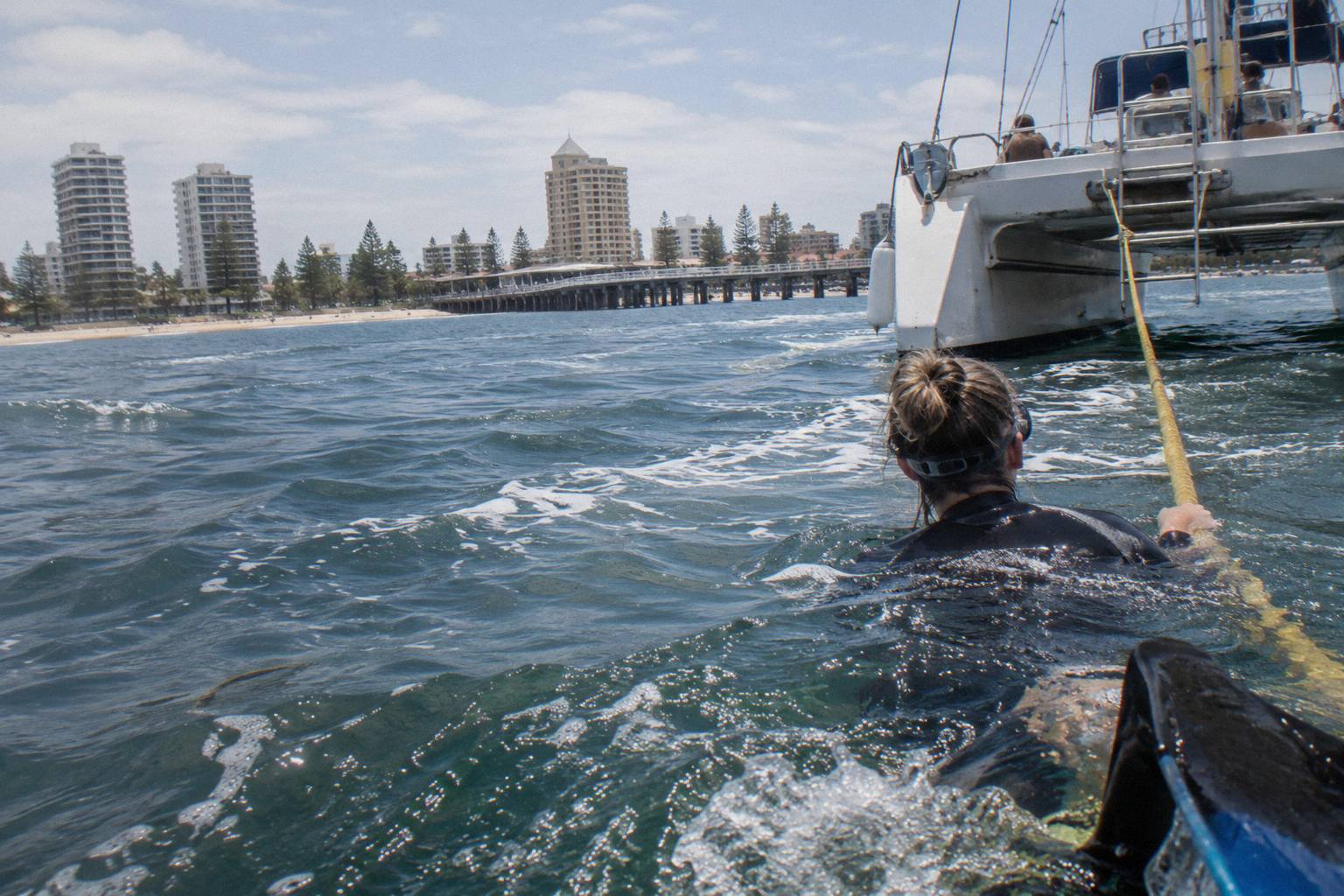
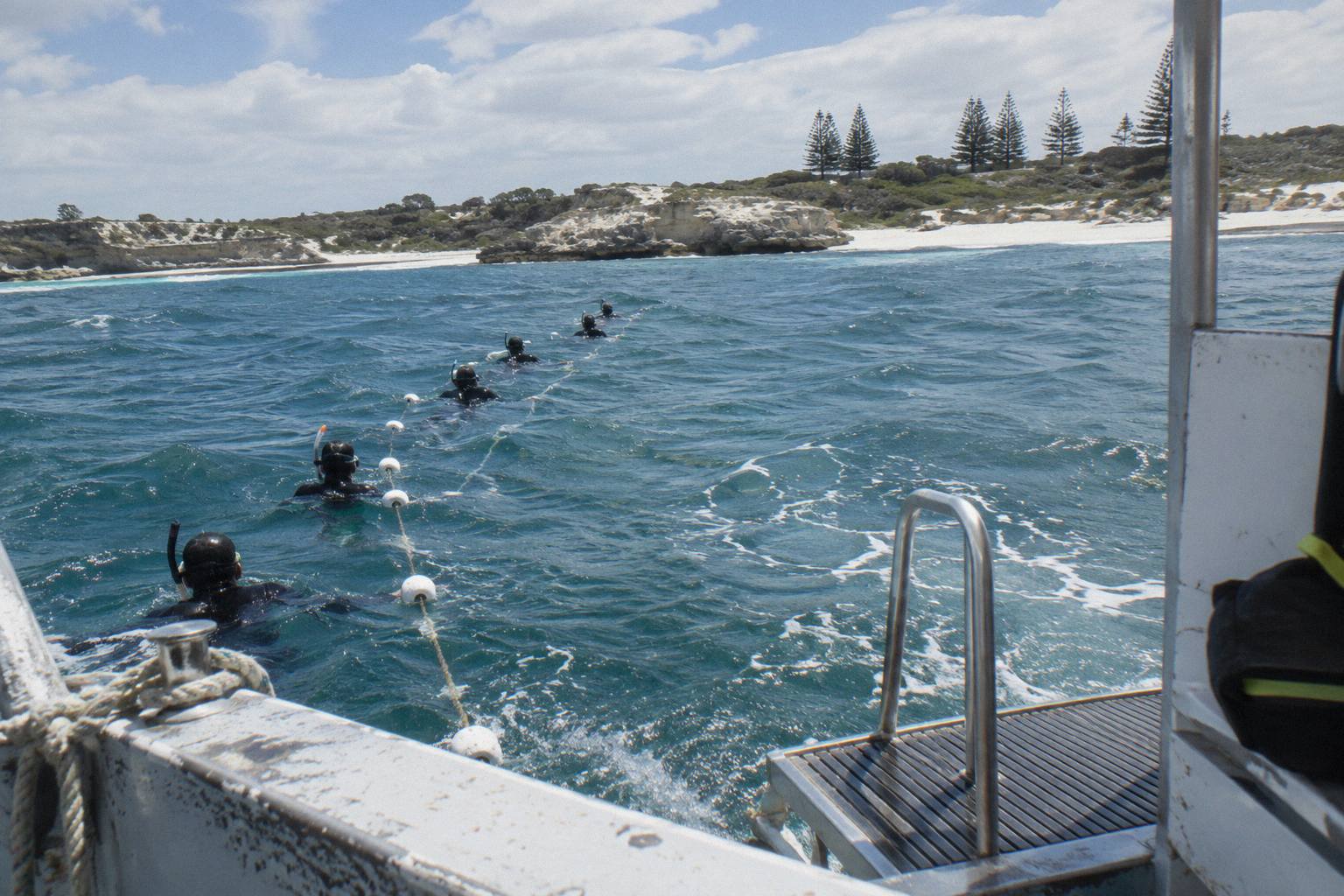
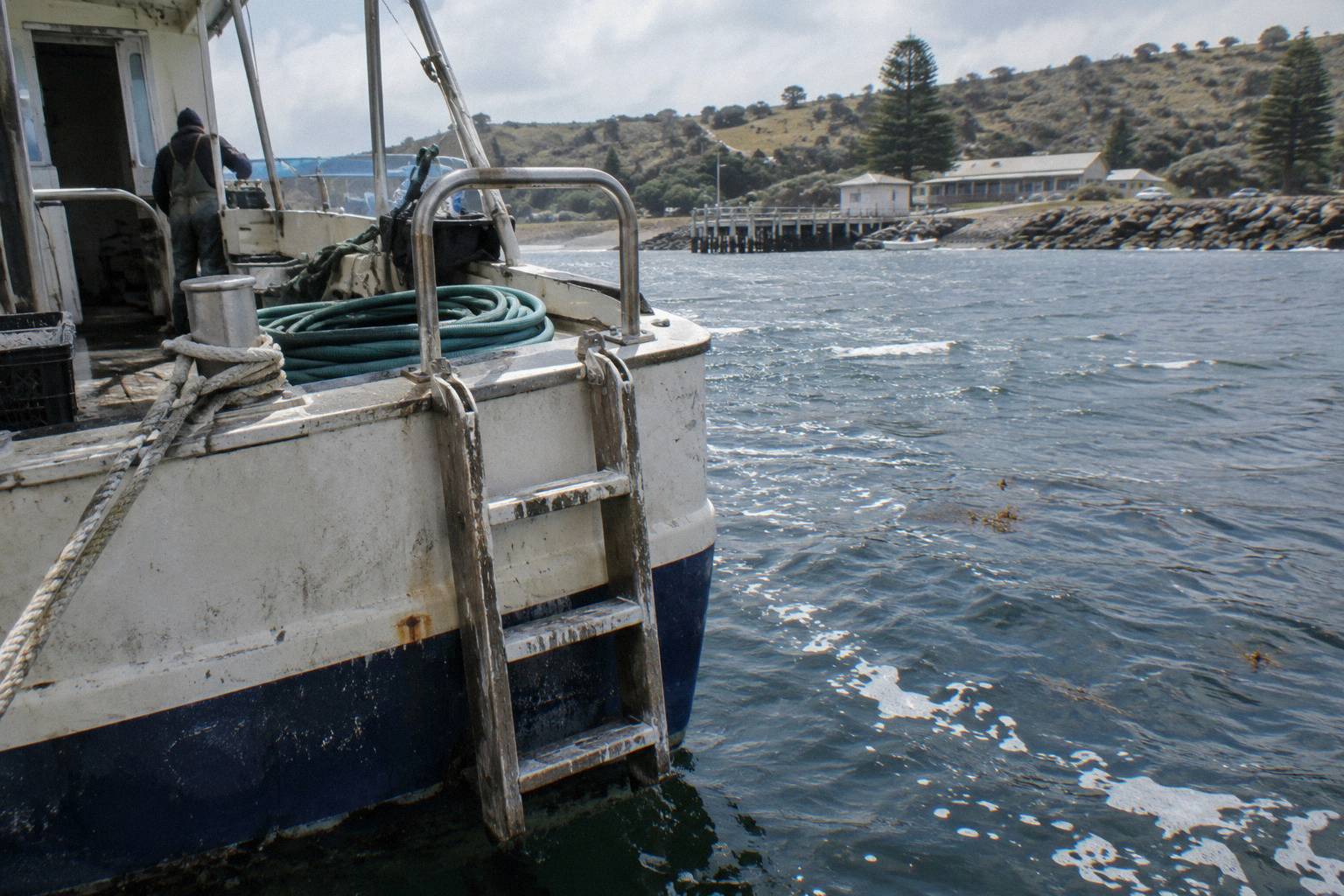
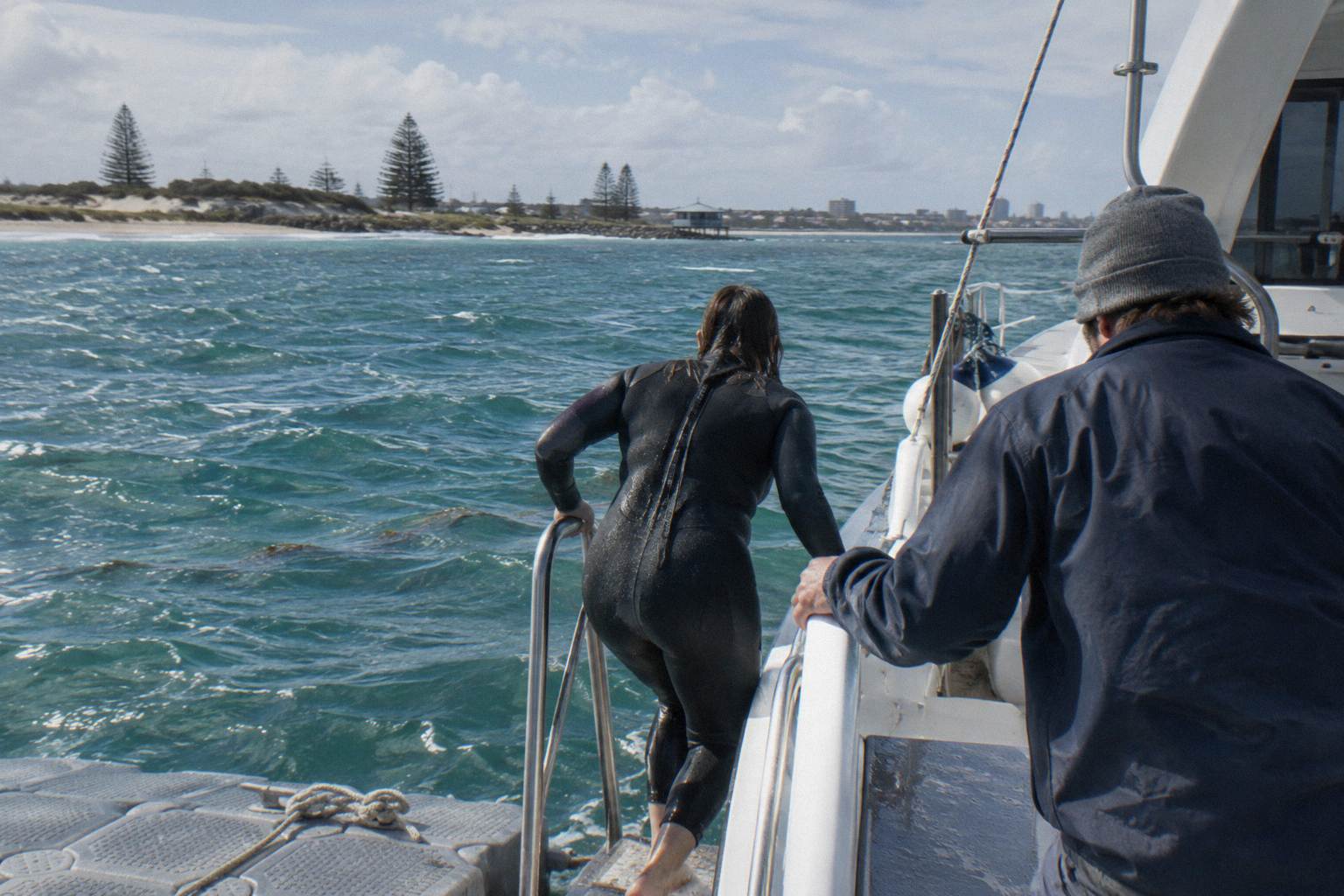
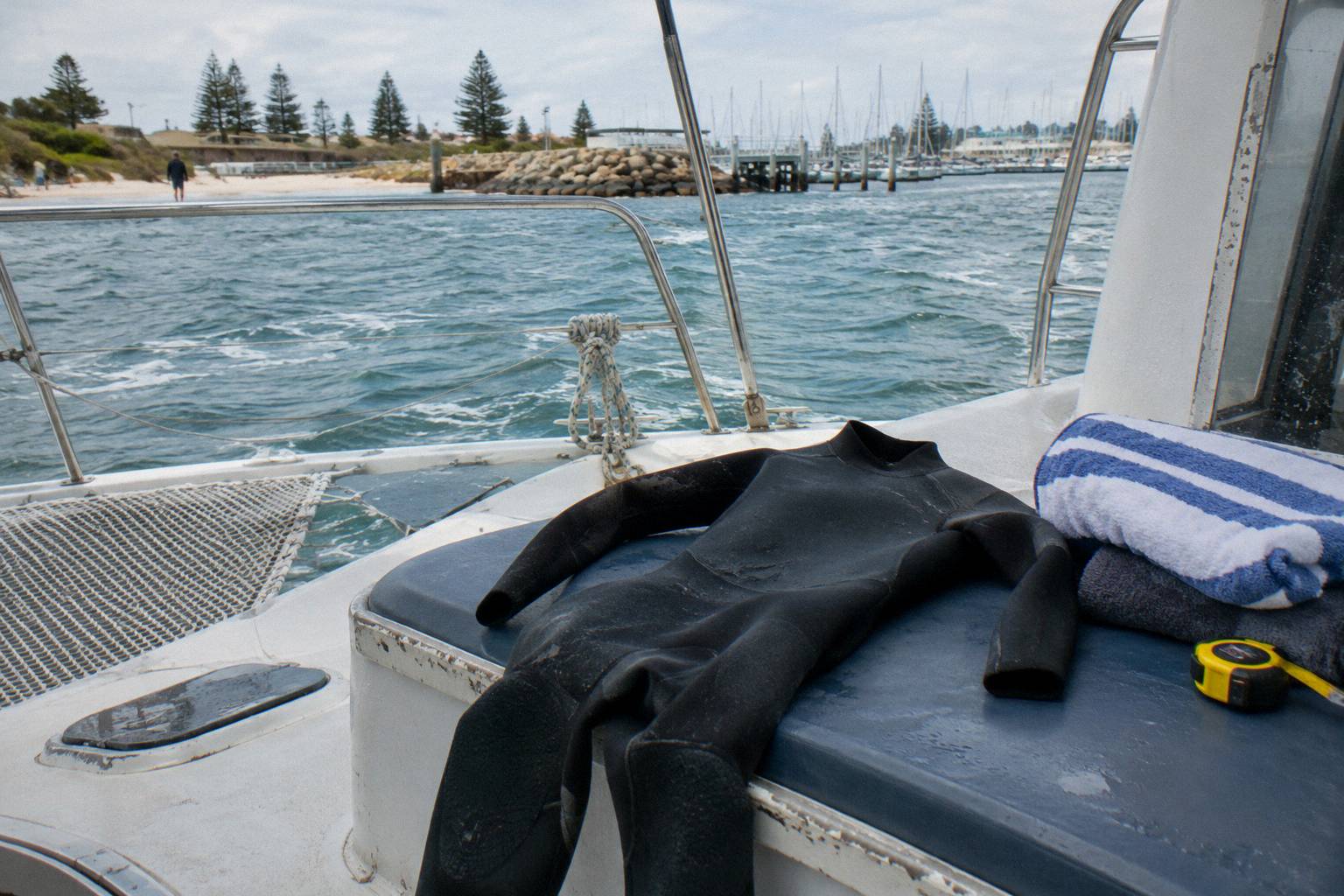
Start with the Glenelg trip, because the operator's own FAQ describes the mechanics precisely. Every swimmer gets a full-length 5 mm wetsuit, which the operator says also acts as a full-body flotation device, so staying at the surface is not left to your own effort. After a crew briefing of about 15 minutes, swimmers hold a flotation line connected to the stern while the catamaran moves slowly forward. The operator's wording is that swimmers must be able to hold that line while towed slowly, and to climb the three rungs of the ladder at the back to re-board. That is the entire stated physical requirement: grip and hang on, then three steps up.
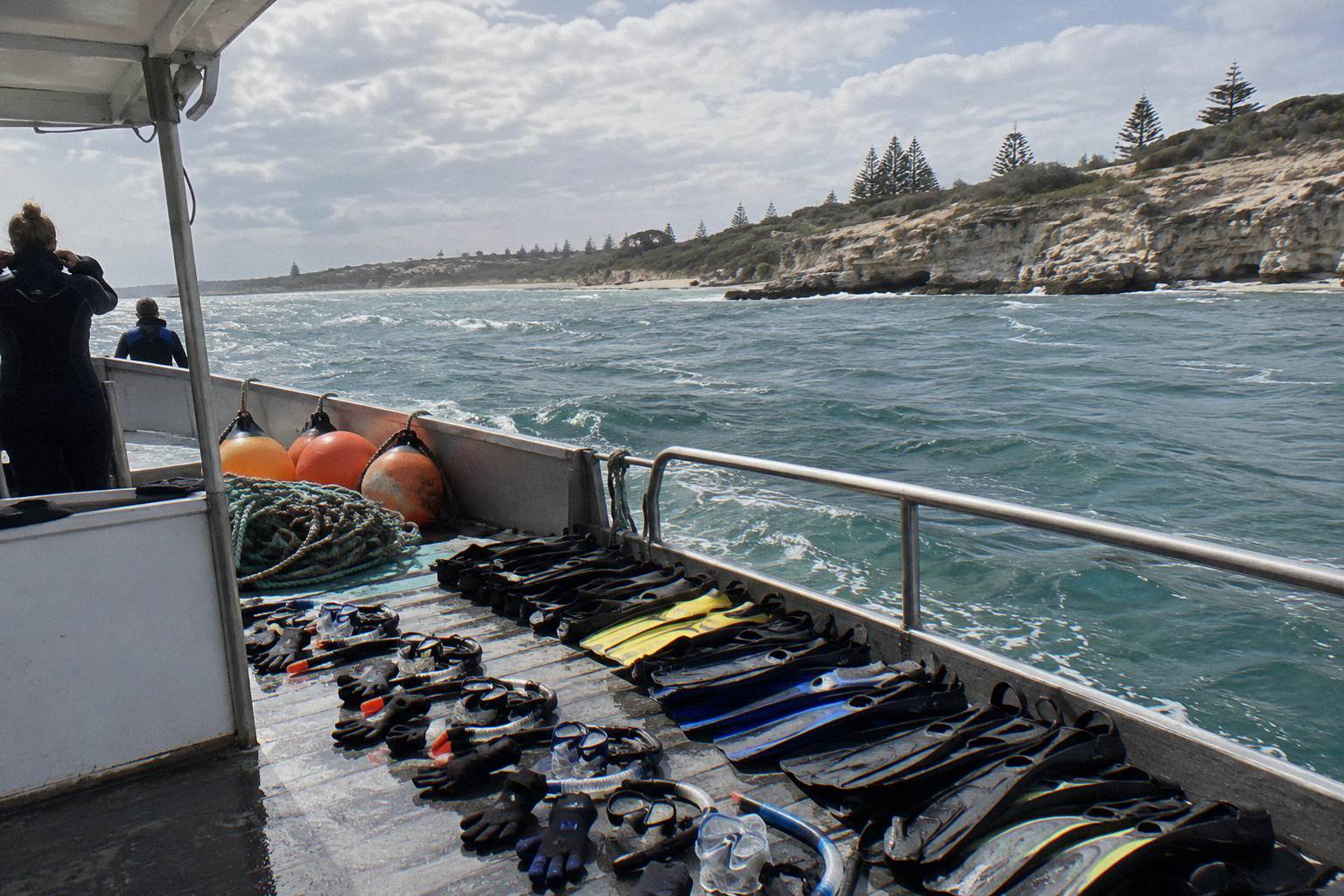
The Kangaroo Island wording is similar in spirit, different in detail. The operator recommends reasonable swimming ability for the Snorkelling Safari, and describes a swimmer line with buoys that is often used at the back of the vessel for the dolphin swim, which it says requires upper body strength; the ladder exit, in turn, needs lower body strength. A life jacket and a noodle are available, and full gear is provided: wetsuit, gloves, mask, snorkel and fins.
Two things are worth noticing in both sets of statements. First, neither operator asks you to swim distance unaided, race anyone, or demonstrate a stroke; the flotation line and the wetsuit do most of the surface work at Glenelg, and the line with buoys does comparable work at Kangaroo Island. Second, neither operator states a weight limit, a height limit or a fitness benchmark of any kind. Not stated means not stated: do not assume one exists, and do not assume one does not. Ask the operator, and read the listing's terms before you pay.
For readers who want the fuller picture of how these trips unfold from boarding to ladder, the what happens on a wild dolphin swim cruise guide walks through the whole sequence, and the dolphin swim for non-swimmers and weak swimmers guide covers the watch-and-ride alternatives on the same boats.
Is There A Weight Limit Or Fitness Test For A Dolphin Swim?
No. Neither the Glenelg operator nor the Kangaroo Island operator states a weight limit, a height limit, a fitness test or a required swimming standard anywhere on its published pages. 'Not stated' is the honest answer, and the right follow-up is a direct question to the operator when you book, not an assumption. The only equipment-related facts on record are practical: Glenelg wetsuits run to size 4XL.
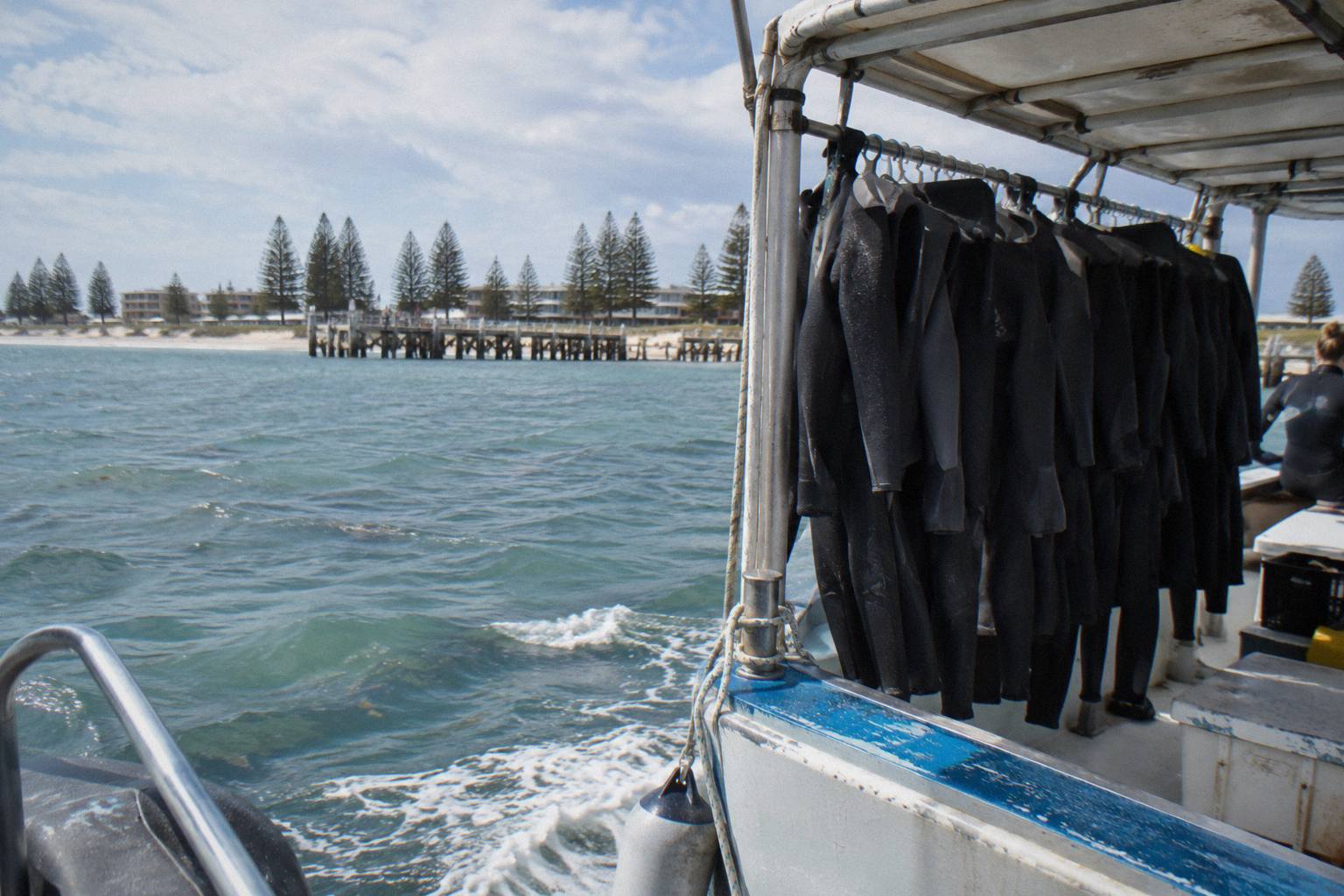
This question comes up constantly, and the temptation among travel write-ups is to invent a reassuring number. There isn't one. The Glenelg operator's FAQ, its tour pages and its restrictions list name age, the line-and-ladder demand, wheelchair access and the pacemaker question, and stop there. Its only sizing statement is equipment-based: wetsuits are carried up to size 4XL, and prescription masks are on board in three strengths, -1.5, -3 and -4.5, which matters for swimmers who wear glasses. The Kangaroo Island operator's page names reasonable swimming ability, the strength demands of line and ladder, age, pacemakers, pregnancy and wheelchair access, and stops there too.
What this means in practice is that suitability is decided by conversation. If you have a question about size, strength, stamina or anything else not printed, ask before you book, because both operators answer pre-booking questions for exactly this reason, and both swim products run free cancellation up to 24 hours on the booking page, which gives you room to sort details first. The site's is there a weight limit for a dolphin swim post covers this exact question in more depth, including how to phrase the question so you get a real answer rather than a shrug.
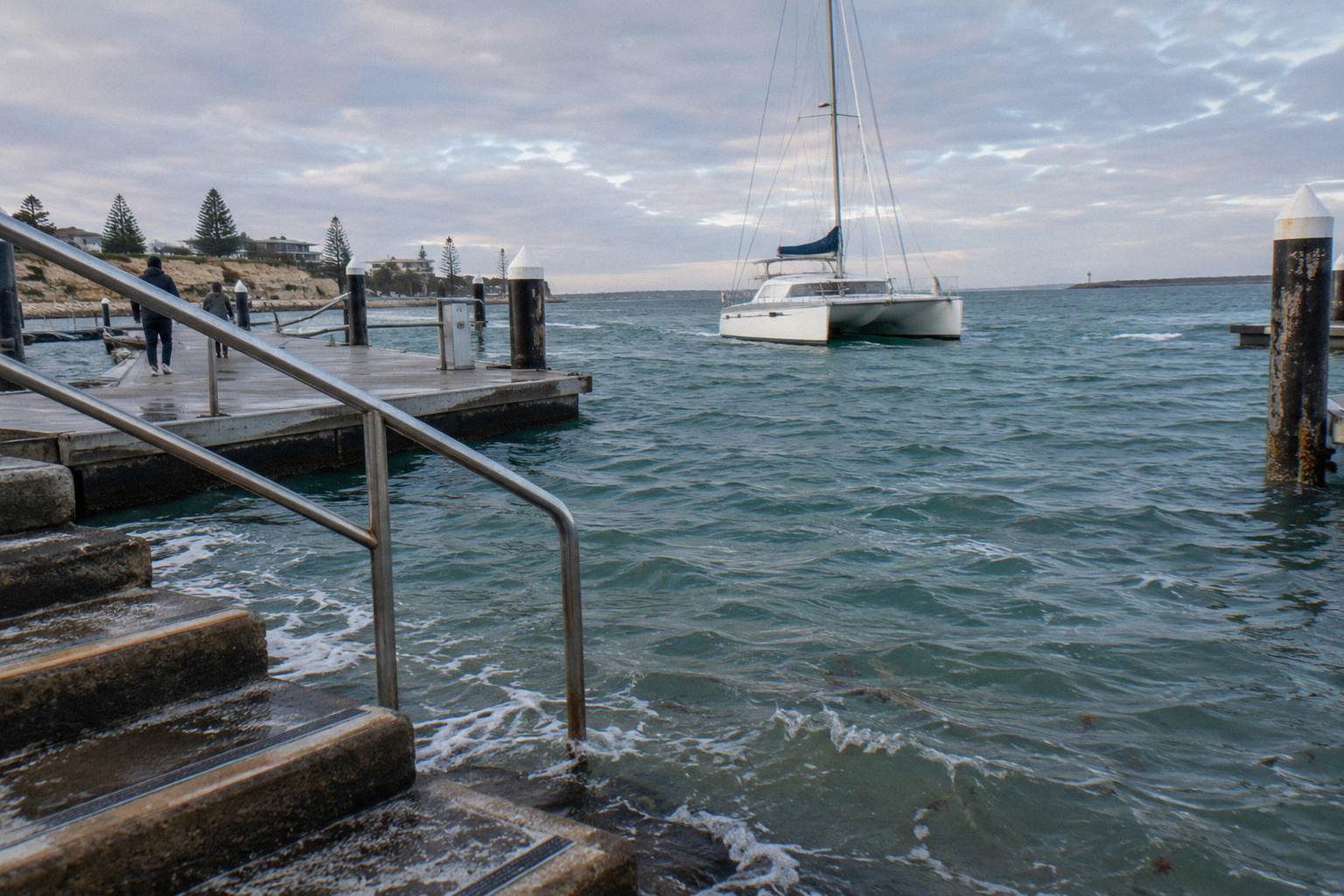
A practical framing helps here. The demands of the Glenelg swim reduce to three moments: boarding via stairs at the marina, holding the line while towed slowly, and climbing three rungs of the stern ladder while wet. If you can honestly picture yourself doing those three things in a wetsuit that floats you, you have answered the operator's stated requirements. The Kangaroo Island swim adds a genuinely stronger current of effort: the operator itself flags upper and lower body strength, so a reasonable level of comfort in the water matters more there.
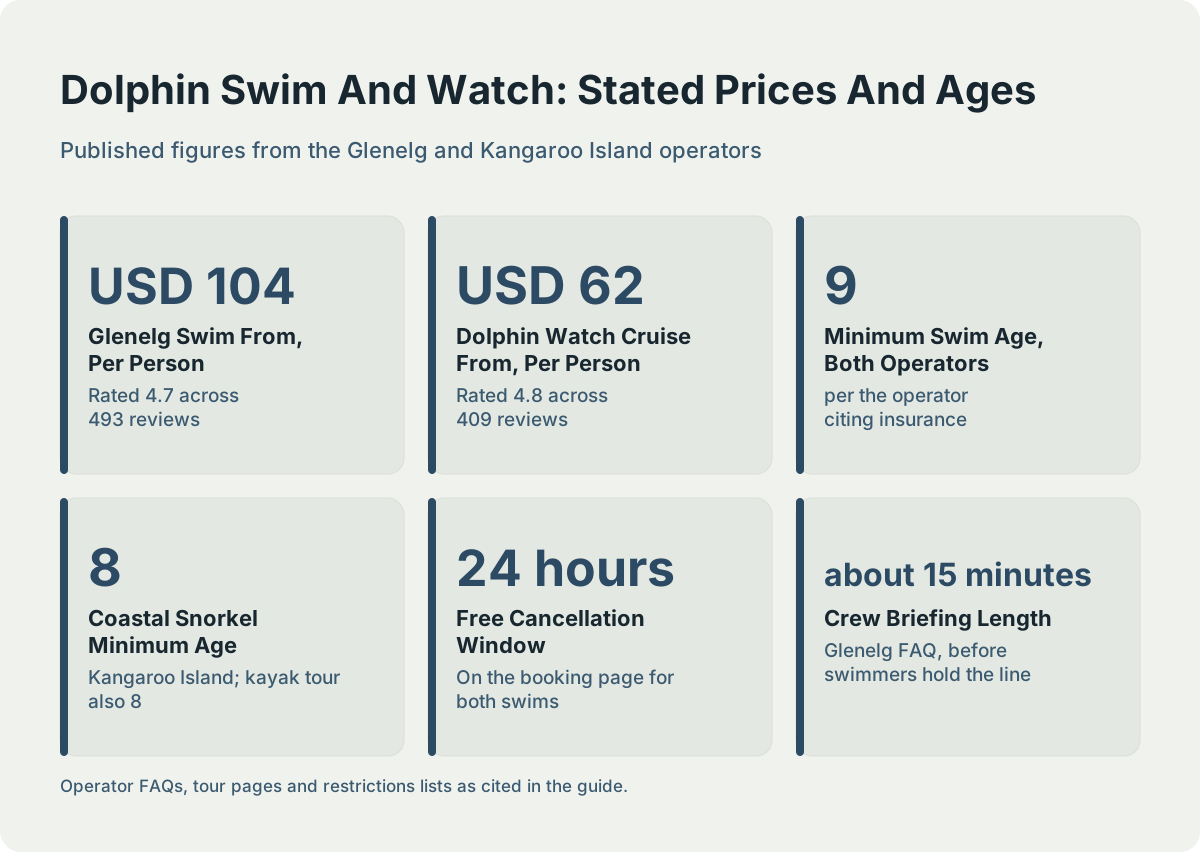
The featured Glenelg swim carries the lowest stated physical bar of the two, from USD 104 per person, rated 4.7 across 493 reviews, with free cancellation up to 24 hours on the booking page. Before you settle on it, or on any swim, one more comparison is worth making in full: how the two operators' published restrictions differ, condition by condition, which is the next section.
Which Medical Conditions Do The Operators Name?
Exactly two are named outright. Kangaroo Island Ocean Safari states its swim is not suitable with a pacemaker or with pregnancy. The Glenelg operator's restrictions list names pacemakers, and its FAQ says pacemaker wearers may do the front swim only, not the back swim; because the two statements differ in detail, the advice here is that pacemaker wearers should ask the operator before booking. On pregnancy it states nothing either way. No other condition appears on any page read, and no operator page offers medical advice: check with your doctor and tell the operator when you book.
The pacemaker wording deserves care, because it is easy to over-read. The Glenelg operator's FAQ does discuss pacemakers in the context of one of its two swim experiences, but the advice here, and the safest reading, is for pacemaker wearers to ask the operator before booking. Which swim is available to whom is a question for the operator, not for a travel article, and the answer may depend on details of your device. Kangaroo Island's statement is blunter: its swim is listed as not suitable with a pacemaker, and also not suitable with pregnancy.
Pregnancy at Glenelg is genuinely unstated. The operator's restrictions list does not mention it, its FAQ does not mention it, and nothing on its pages read suggests either a welcome or a bar. Print nothing beyond that: an absence is not a permission. The site keeps a dedicated page, dolphin swim while pregnant, which collects what each operator states, and the same honest-absence approach applies there.
| Stated restriction | Glenelg swim (Temptation Sailing) | Kangaroo Island Ocean Safari swim |
|---|---|---|
| Swimming ability | Hold flotation line under slow tow; climb three ladder rungs | Reasonable swimming ability recommended |
| Strength demands | Line-holding and ladder climbing named | Upper body strength for the line, lower body for the ladder |
| Pacemaker | Ask the operator before booking | Not suitable |
| Pregnancy | Not stated | Not suitable |
| Minimum swim age | 9, per the operator citing insurance | 9 for the swim; coastal snorkel from 8 |
| Wheelchair access | Not wheelchair accessible; stairs to board | No wheelchair access |
| Weight or height limit | Not stated | Not stated |
| Fitness test | Not stated | Not stated |
Every row in that table is an operator's own published statement, nothing more. Where a cell says not stated, that is the finding, not an oversight of this page. And beyond the table, one legal point is worth knowing: the regulations that govern swimmers near marine mammals in this state, the National Parks and Wildlife (Protected Animals, Marine Mammals) Regulations 2025, are about distance from the animals, 30 m for swimmers, and about licensed operators, not about your health. The full text is published by the South Australian legislation register. Your medical clearance is a matter for your doctor and the operator, and no one else's.
Can You Do A Dolphin Swim With Limited Mobility?
Neither swim is wheelchair accessible, and the Glenelg boat is boarded via stairs, both operators state that plainly. Beyond those two facts nothing is published about mobility adaptations on the swim boats. The watching options carry no stated mobility terms at all, so the workable path for a swimmer with limited mobility is a direct question to the operator, and for a non-swimmer, the watch products on calmer, shorter cruises.
Boarding is the first physical act of any boat trip, and it is where the stated limits sit. At Glenelg, the operator's FAQ says boarding is at the bottom of the stairs and ramp in front of the marina's oyster bar, with boarding starting 15 minutes before a morning departure; the vessel itself is a 58 ft sailing catamaran surveyed for up to 50 passengers, reached by stairs. Kangaroo Island's meeting point is on land, the information stop at 43 Howard Drive, Penneshaw, 30 minutes before departure for wetsuit fitting and a safety brief, followed by boarding its 28-seater vessels; the operator states no wheelchair access.
If the swim boats' stated limits rule a trip out, the site's roster still has three watching and paddling products with their own profiles, and their pages carry no stated mobility terms, which is a question for each operator rather than a yes or no. The Wild Dolphin Watch From Glenelg sailing runs from USD 62 per person, rated 4.8 across 409 reviews, about 3.5 hours, free cancellation up to 24 hours. See the live listing and Check availability.
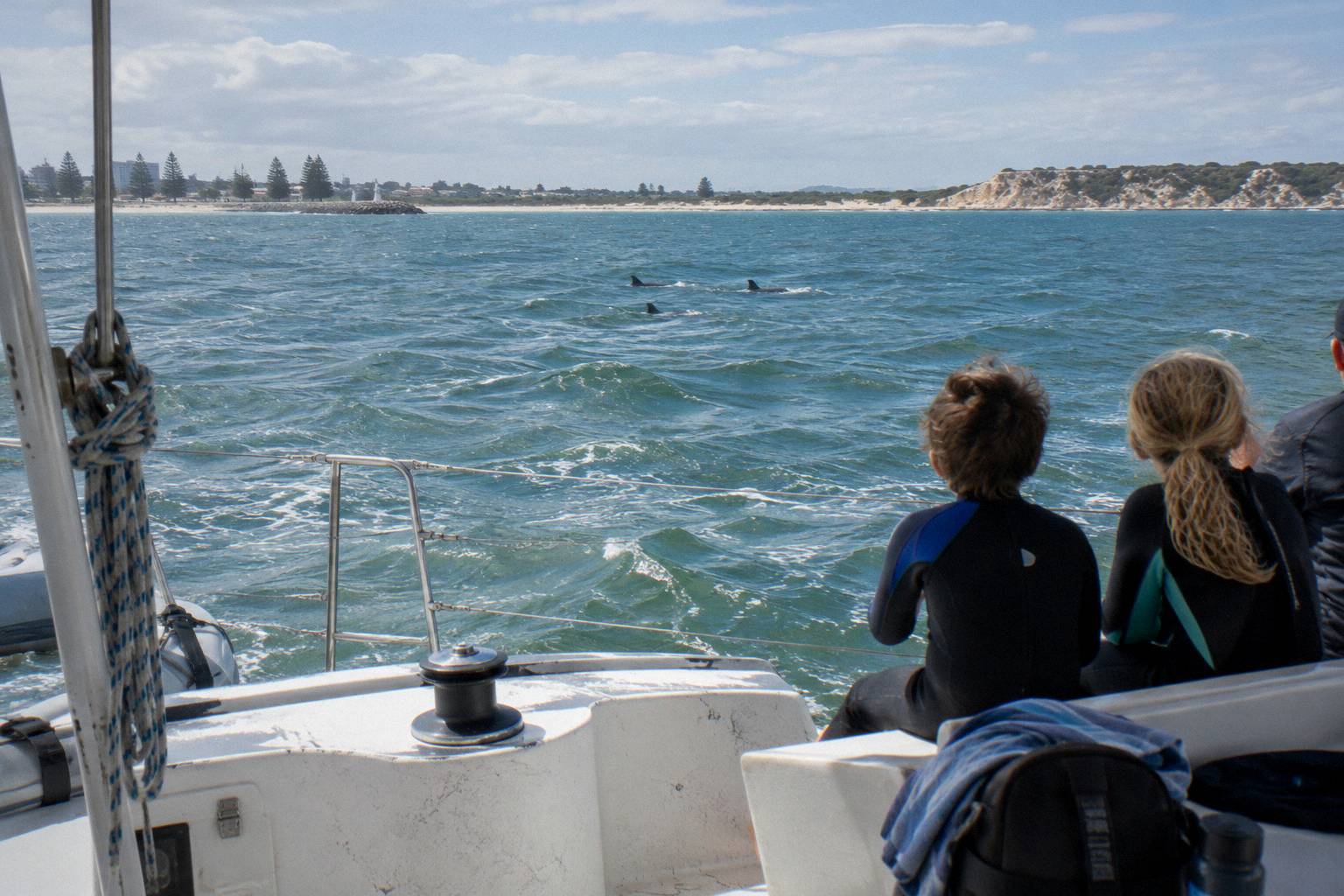
The Glenelg watch product has a specific advantage for mixed groups: the operator runs swim and watch guests on one boat, booked together or separately, so a group member who cannot or prefers not to swim still shares the same four hours on the water. That fact is stated by the operator and is one of the more practical bits of trip design on this whole topic. For gentler options still, the Dolphin Sanctuary Kayak Tour, from USD 54.72 per person with a minimum age of 8, paddles the sheltered Port River, and the Port River Dolphin Cruise is a 1.5-hour watching cruise from USD 60.
A word on the paddle option before moving on: the kayak tour is run by Adventure Kayaking SA inside the Adelaide Dolphin Sanctuary, the 118 sq km Port River and Barker Inlet estuary north of Port Adelaide that the state's environment agency describes in its twenty facts for 20 years of the sanctuary. It is a different kind of demand again: sitting balance and paddle strokes rather than line-holding and ladders, in water that is typically flatter than the open gulf.
What Ages Can Swim, Watch Or Paddle?
The Glenelg swim minimum is 9, set by the operator on insurance grounds, with under-18s needing a parent or guardian on board who may swim or hold a watch ticket. The Kangaroo Island swim minimum is also 9, with a coastal snorkel offered from 8. The Dolphin Sanctuary Kayak Tour minimum is 8. No minimum age is stated for the watching cruises: ask the operator.
The two age-9 floors line up neatly, but the detail around them differs. At Glenelg, children under 9 may ride as watchers on the same boat, and the under-18 rule is about supervision on board, not about who may enter the water: the guardian may swim or may buy a watch ticket, whichever suits the family. At Kangaroo Island, children aged 3 to 12 pay a child rate for the safari, infants 2 and under are not available for the swim, and the operator runs a coastal snorkel variant from age 8, which is the gentlest in-water product on the roster.
The full age picture, including what is not stated, is on the site's dolphin swim age limits and kids page. What belongs here is the fitness angle: for a child near the age floor, the same stated demands apply in full, holding the line under tow and climbing the ladder at Glenelg, the strength demands at Kangaroo Island, and the crew briefing and safety talk are delivered to children and adults alike.
| Product | Type | Stated minimum age | Stated medical or mobility terms |
|---|---|---|---|
| Wild Dolphin Swim From Glenelg With Temptation Sailing | Swim | 9; under 18 needs a guardian on board | Ask about pacemakers; stairs to board; not wheelchair accessible |
| Kangaroo Island Ocean Safari Swim | Swim or coastal snorkel | 9 to swim; 8 for coastal snorkel | Not suitable with pacemaker or pregnancy; no wheelchair access |
| Wild Dolphin Watch From Glenelg | Watching only | Not stated | Not stated |
| Port River Dolphin Cruise | Watching only | Not stated | Not stated |
| Dolphin Sanctuary Kayak Tour | Paddling only | 8 | Not stated on the pages read |
| Kangaroo Island Dolphin Watch | Watching only | Not stated | Not stated |
What If You Are A Nervous Or Cautious Swimmer?
The Glenelg operator states that a swimmer who does not feel confident after the briefing may stay aboard as a watcher, with a refund of the swim-minus-watch difference for bookings made direct with the operator. The Kangaroo Island operator makes no equivalent offer and states plainly that once you get in the water at any stage, no money is refunded. Knowing which policy you are booking under is part of deciding to book at all.
The Glenelg nervous-swimmer provision is one of the most useful operator statements on record for this topic, and it deserves exact handling. The refund of the difference between swim and watch tickets applies for direct bookings only; the booking page carries its own terms, and free cancellation there runs up to 24 hours before. The operator also states, as its own claim about its own record, that it has never had a day without seeing dolphins from above the water, and its tour page cites a 100% success rate of seeing dolphins onboard since 2002; that is an above-water sighting claim by the operator, never a promise of dolphins underwater beside swimmers.
Kangaroo Island's stance is the opposite pole. Its page states that wildlife interactions are not guaranteed, that if you get in the water at any stage you do not get any money refunded, and that it does not promise a sighting on every trip. None of that is a fitness rule, but it changes the psychology of standing at the stern holding a line with buoys: you are committed once you enter. The site's dolphin swim sightings and what if none appear page collects both operators' sighting and refund terms in full, including the operator's own cancellation tiers at Kangaroo Island, which differ from the booking page's 24-hour window.
One more cautious-swimmer fact belongs here: the Glenelg front swim has no shark shields, while two shields run during the back swim, and Kangaroo Island Ocean Safari states its swim is not suitable with a pacemaker or pregnancy. That is equipment detail plus a stated restriction, not a safety promise, and the is a wild dolphin swim safe guide treats it properly. This page's job is only to point pacemaker wearers to the operator before booking, partly because the two Glenelg statements differ in detail; that ask-first advice comes from this site, and no article should answer for the operator.
Should You Talk To A Doctor Before Booking A Dolphin Swim?
If you have any heart condition, are pregnant, take medication, have limited strength or mobility, or are booking for a child near the age floor, yes, talk to your doctor first, then tell the operator when you book. The operators themselves point medical questions to that sequence, and the booking pages' 24-hour free cancellation windows leave room to have both conversations before the deadline. No page on this site is medical advice.
The order matters more than people expect. A doctor can clear you in general terms but will not know what a mermaid line at the stern of a catamaran involves; the operator knows its equipment and its two swim configurations but will not, and should not, assess your health. Bring the operator's own stated demands to the doctor: hold a line under slow tow, climb three ladder rungs, wear a full-length 5 mm wetsuit that acts as flotation, board via stairs. At Kangaroo Island, add the operator's own strength wording and its colder-water framing, with the operator stating water temperature between 14 and 15 degrees and thick wetsuits allowing year-round participation; Adelaide sea temperature more generally runs around 14 °C in August to around 21 °C in February, per seatemperature.org, and the site's wetsuits and water temperature on a dolphin swim guide covers what that means for comfort.
Then tell the operator when you book, not at the dock. Every condition discussed on this page, pacemakers, pregnancy, size, strength, mobility, is handled better in a booking conversation than in a boarding-line negotiation, and both swim operators field pre-booking questions as routine business. If a swimmer in your group cannot clear a question in time, the watch products ride the same or nearby waters: the Kangaroo Island Dolphin Watch runs about 75 minutes from USD 61.74, rated 4.8 across 640 reviews, though note its booking page is non-refundable, unlike every other product on the roster. Check availability
There is one environmental check worth folding into any booking conversation, because the operators themselves flag it. SA testing shows zero or low Karenia along the metropolitan coast and Kangaroo Island, and the state's official advice is that clear water is fine to swim in, with the standing guidance on the algal bloom health advice page. The Glenelg operator's FAQ carries a notice that the bloom may affect its swim product and that concentrations are assessed before the season starts; the practical instruction is simply to check the operator before booking a swim, and this site keeps the current testing summary for exactly that purpose.
| Question to settle | Who to ask | What is actually published |
|---|---|---|
| Can I hold a line under tow and climb a ladder? | Yourself, and your doctor | Both operators state these demands; neither sets a test |
| Pacemaker and swim equipment | The operator, before booking | Glenelg: ask the operator. Kangaroo Island: not suitable |
| Pregnancy | Your doctor, then the operator | Kangaroo Island: not suitable. Glenelg: not stated |
| Weight or height limits | The operator, before booking | Not stated by either operator |
| Wheelchair access or boarding help | The operator, before booking | Neither swim is wheelchair accessible; Glenelg boards via stairs |
| Child near the age floor | The operator, before booking | Swim minimum 9 on both; kayak 8; coastal snorkel 8 |
The honest summary of this whole topic is short. The operators have done their part by publishing narrow, specific demands instead of vague fitness hurdles. Your part is the two conversations, doctor and operator, before money changes hands. This site, Adelaide Swimming With Dolphins, will keep the operator statements and the testing summary current so the conversation starts from facts.
Common Questions About Fitness And Medical Conditions For A Dolphin Swim
What Fitness Do You Need For A Dolphin Swim In Adelaide?
The Glenelg operator states swimmers must hold a flotation line while towed slowly and climb three rungs of a stern ladder; the 5 mm wetsuit doubles as flotation. Kangaroo Island's operator recommends reasonable swimming ability and names upper body strength for its line and lower body strength for its ladder. No operator publishes a fitness test, weight limit or swimming standard.
Can You Do A Dolphin Swim With A Pacemaker?
The Glenelg operator's restrictions list names pacemakers. Kangaroo Island Ocean Safari states its swim is not suitable with a pacemaker. Because the statements differ in detail, our advice is that pacemaker wearers should ask the operator before booking and mention their device; the operators, not a travel article, can answer for their equipment.
Can You Swim With Dolphins While Pregnant?
Kangaroo Island Ocean Safari states its swim is not suitable with pregnancy. The Glenelg operator states nothing either way on its published pages, which is an absence, not a permission. Check with your doctor and tell the operator when you book; the site's dolphin swim while pregnant guide collects every stated term.
Is There A Weight Limit For A Dolphin Swim?
Not stated by either operator. No weight limit, height limit or fitness benchmark appears on any operator page read for this site. The only sizing fact on record is that the Glenelg boat carries wetsuits up to size 4XL. Ask the operator before booking.
Are Dolphin Swim Boats Wheelchair Accessible?
No. The Glenelg operator states its trip is not wheelchair accessible and that the boat is boarded via stairs; Kangaroo Island Ocean Safari states no wheelchair access. The watching cruises publish no mobility terms, so ask those operators directly about boarding assistance.
What If You Are Not A Confident Swimmer?
At Glenelg, the operator states that a swimmer who does not feel confident after the briefing may stay aboard as a watcher, with a refund of the swim-minus-watch difference for bookings made direct with the operator. At Kangaroo Island, once you enter the water at any stage there is no refund. Watch tickets on the same Glenelg boat are the low-commitment alternative.