Is There A Weight Limit For A Dolphin Swim?
No weight limit is stated for the Adelaide dolphin swim tours. What actually decides whether you can join: wetsuit sizing, the flotation line and the ladder, plus a checklist of what to ask.
No weight limit is stated for either of South Australia's dolphin swim tours. The Wild Dolphin Swim From Glenelg With Temptation Sailing and the Kangaroo Island Ocean Safari Swim publish no maximum weight, no minimum fitness standard and no body-size requirement on their pages. What they do state is practical: wetsuits up to size 4XL at Glenelg, the ability to hold a flotation line while towed slowly, and the strength to climb a ladder out of the water.
That answer surprises a lot of readers, and it is worth unpacking, because the absence of a number is not the same as the absence of conditions. Both operators describe their swims as controlled experiences with gear, lines and ladders involved, and those are the real gates you will meet on the day. This article walks through every stated requirement for both South Australian swim tours, explains what each one actually asks of your body, and closes with a short checklist of questions to put to the operator before you pay.
Why No Operator Publishes A Weight Limit
Neither operator's official page mentions weight at all, in either direction, and that silence is likely deliberate. Publishing a fixed number risks embarrassing guests and inviting complaints, so both operators leave the topic off their pages entirely and deal with weight privately only if it ever becomes an issue. The Glenelg operator's FAQ and restrictions list covers age, pacemakers, mobility and ladder access, and stops there. The Kangaroo Island operator's page covers age, pregnancy, pacemakers and swimming ability. Neither states a maximum weight, a wetsuit size ceiling expressed in kilograms, or any scale-based rule, so no number can honestly be printed here, and any figure you find on a third-party site should be treated as invented.
There are sensible reasons the operators frame it this way. A swim tour's real constraints are functional rather than numeric. Can the supplied wetsuit fit you, does it come in your size, can you grip a rope and hold on while a catamaran moves slowly forward, and can you pull yourself up three rungs of a ladder at the stern? Two people at the same weight can answer those four questions completely differently, so a weight cut-off would exclude people who would cope fine and reassure people who would struggle.
What replaces the number is a set of stated physical requirements, and each one is attributed to the operator that states it. The Glenelg swim, listed at from USD 104 per person and rated 4.7 across 493 reviews, is the one most readers asking this question are considering, and the operator is specific about what it asks of swimmers rather than what they weigh.
This is also where honesty matters most. A reader searching for a weight limit is often worried about embarrassment on the day, and the worst outcome is arriving at the marina to discover a mismatch nobody flagged. The fix is simple and costs nothing: tell the operator when you book, describe your situation plainly, and let the crew who run the trip every day make the call. Every requirement below is operator-stated, not this site's judgement, and none of it is medical advice.
Wetsuit Sizing: The Closest Thing To A Size Limit
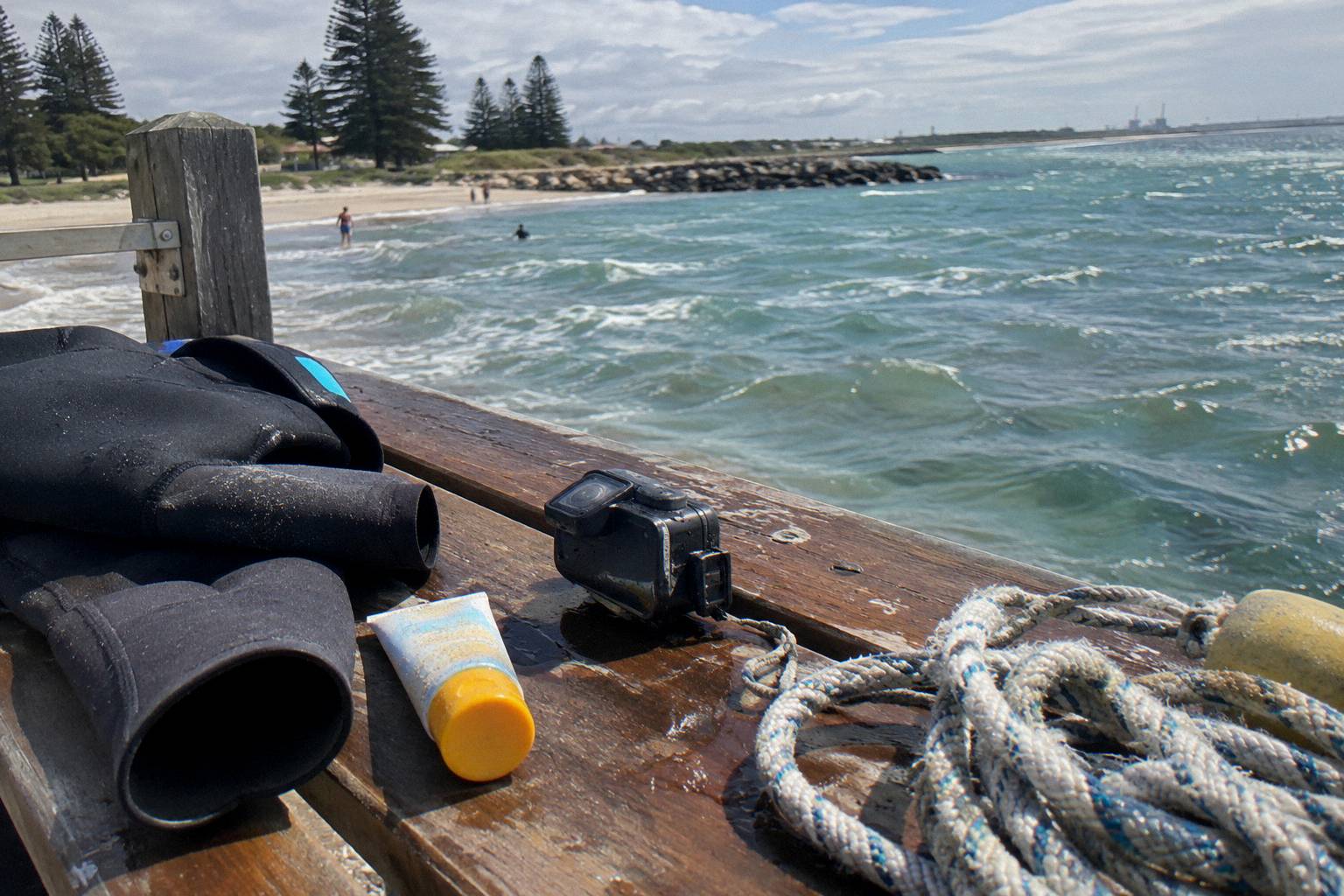
Neither swim lists a formal size limit for participants, so the closest thing to one is wetsuit sizing: the Glenelg operator supplies full-length 5 mm wetsuits in sizes up to 4XL, and that supply cap stands as the only stated size boundary on either swim. The Kangaroo Island operator supplies wetsuits, gloves, masks, snorkels and fins but does not publish a size range for them. A wetsuit is mandatory on both swims, so if the largest supplied suit does not fit, that is a practical blocker no different from a written limit, and it is exactly the kind of thing to raise before booking.
At Glenelg the wetsuit does more than keep you warm. The operator describes it as acting as a full-body flotation device, which means fit is a safety matter, not a comfort one. A suit that is too loose floods and loses buoyancy; one that is too tight restricts breathing and movement. The operator states the suits run to size 4XL, and if you are unsure whether that range covers you, the answer is one email away rather than a guess.
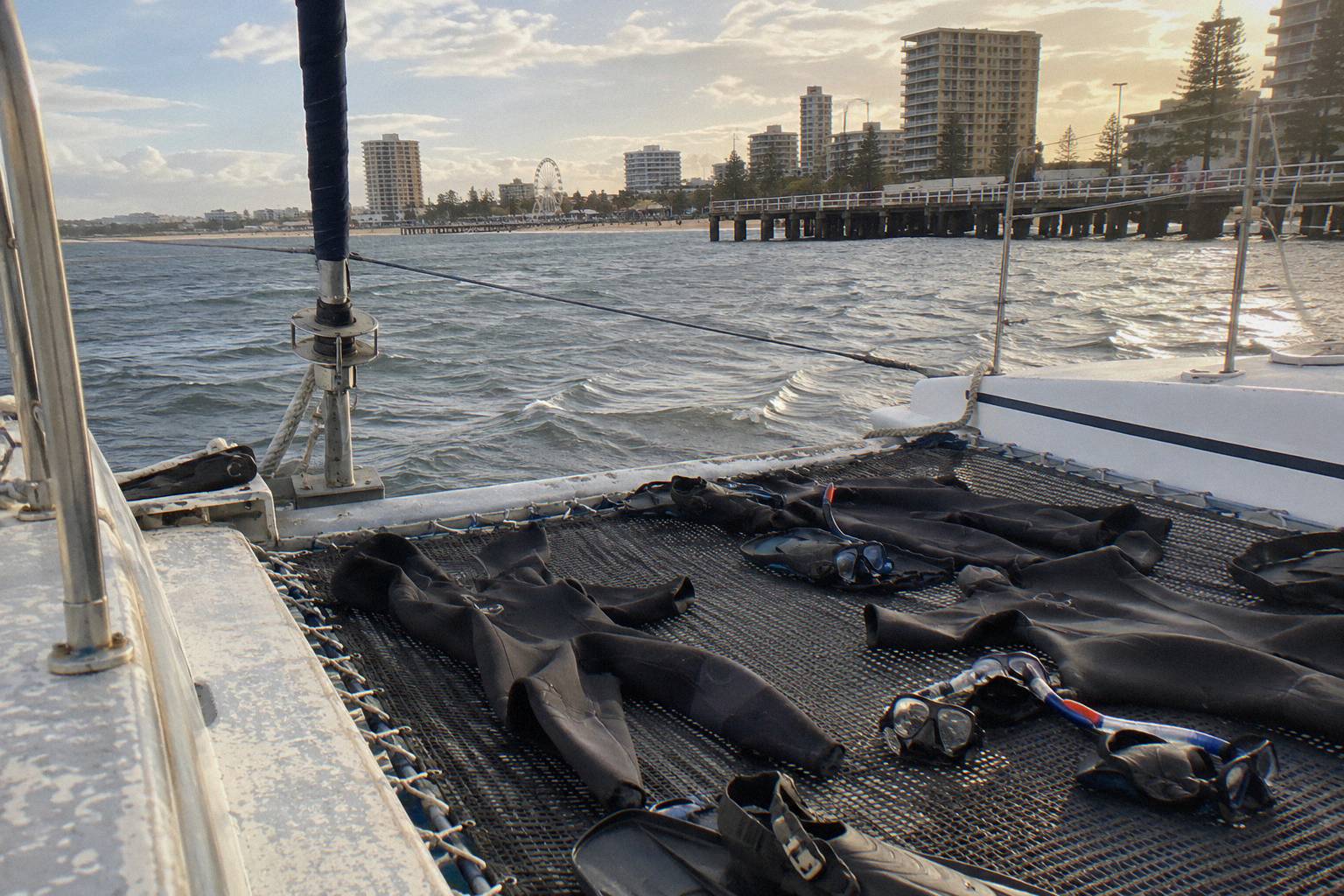
The Kangaroo Island operator meets swimmers 30 minutes before departure at the Kangaroo Island Information Stop, 43 Howard Drive, Penneshaw, partly so that fitting happens before the boat leaves. That half hour exists precisely so gear problems surface on land rather than on the water. Wetsuits there are described as thick, with the operator stating water temperature sits between 14 and 15 degrees and that the suits allow participation year round.
| Requirement | Glenelg swim (operator-stated) | Kangaroo Island swim (operator-stated) |
|---|---|---|
| Weight limit | Not stated | Not stated |
| Wetsuit supplied | Yes, full-length 5 mm, to size 4XL | Yes, thick suits, plus gloves, mask, snorkel, fins |
| Stated age minimum | 9 for the swim | 9 for the swim, coastal snorkel from 8 |
| Stated physical asks | Hold the flotation line while towed slowly; climb three ladder rungs | Upper body strength for the swimmer line; lower body strength for the ladder |
| Extra flotation | Life jackets on board, not used for the swim | Life jacket and noodle available |
| Stated exclusions | Pacemaker wearers should ask the operator before booking; not wheelchair accessible | Not suitable with a pacemaker or pregnancy; no wheelchair access |
The pattern across both operators is consistent: gear and function, never a number on a scale. If a booking page or review summary you read elsewhere quotes a kilogram ceiling, it did not come from the operators' own pages.
Holding The Flotation Line While Being Towed
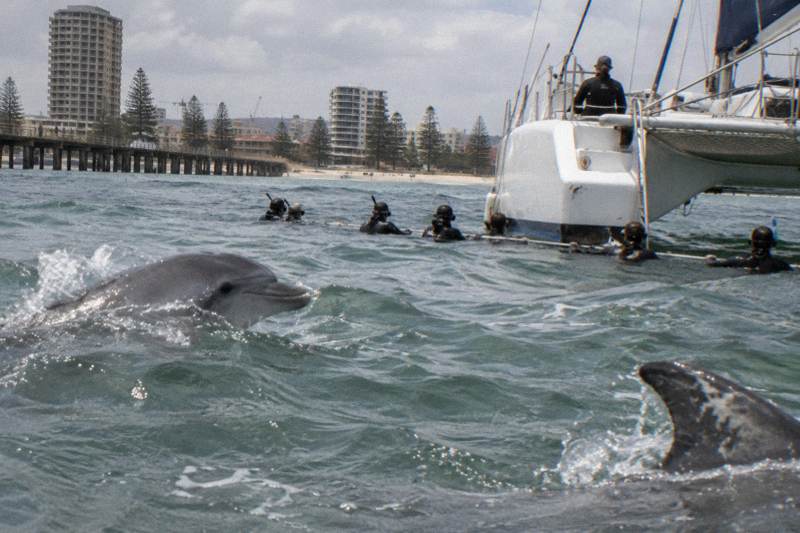
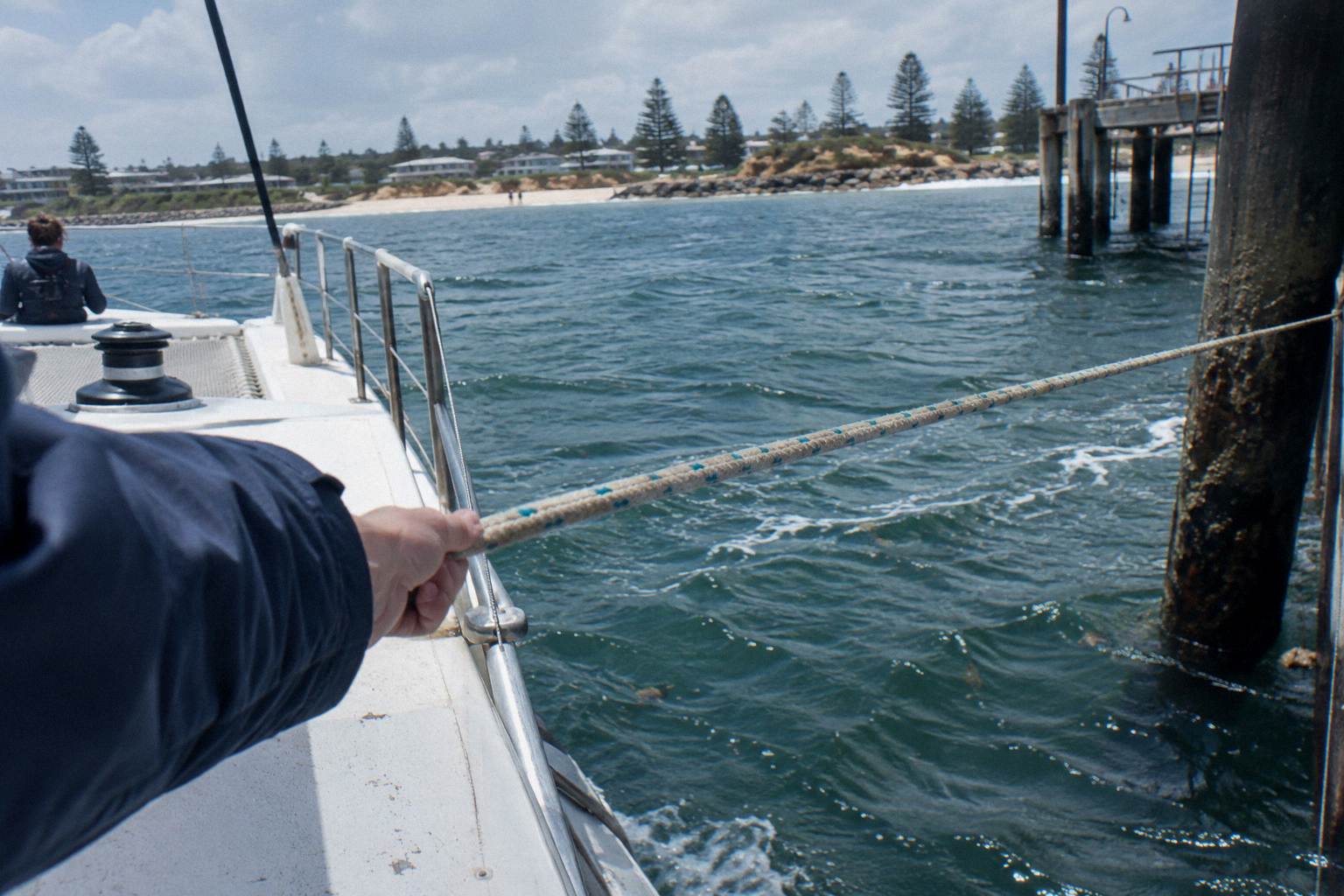
Yes, you will be holding the flotation line the entire time, because both of these swims are line swims rather than free swims, and both operators state that holding the line while you are being towed takes real grip strength, so this is not a relaxed float where you can simply drift along behind the boat. At Glenelg every swimmer holds a flotation line connected to the stern while the boat moves slowly, which the operator calls a fully controlled swim rather than free swimming in open ocean. Kangaroo Island uses a swimmer line with buoys, often at the back of the vessel, and states plainly that it requires upper body strength.
Picture the mechanics. You are in the sea, in a wetsuit that floats you, gripping a rope while a vessel maintains slow forward motion. Your legs trail behind; your arms and hands do the work of staying connected. The Glenelg operator's phrasing is "hold the flotation line while towed slowly", and the emphasis is on the word hold, because letting go means the swim rotation stops for you. It is sustained isometric effort rather than athletic performance, and the operators describe it in those terms.
Neither operator states a swimming standard, and this site will not invent one. Kangaroo Island recommends "reasonable swimming ability" in the water rather than a distance or a certificate. If you swim casually but comfortably, the line format is arguably easier than open swimming because the suit floats you and the rope keeps you oriented. If your arms tire quickly from sustained gripping, that is the specific thing to mention when you book.
Two details from the Glenelg trip affect comfort here. Swimmers are rotated between two experiences, the Front Swim and the Back Swim, with a mermaid line on the back swim, so your time on the line is portioned rather than one long block. And the crew puts swimmers in only once dolphins have turned toward the boat, and stops entries when dolphins get too close, which caps how long anyone is in the water at a stretch.
The site's guide on fitness and medical conditions for a dolphin swim covers the strength and health questions in more depth, including the pacemaker question, where the Glenelg operator's advice is simply to ask before booking.
The Ladder: Three Rungs Between You And The Deck
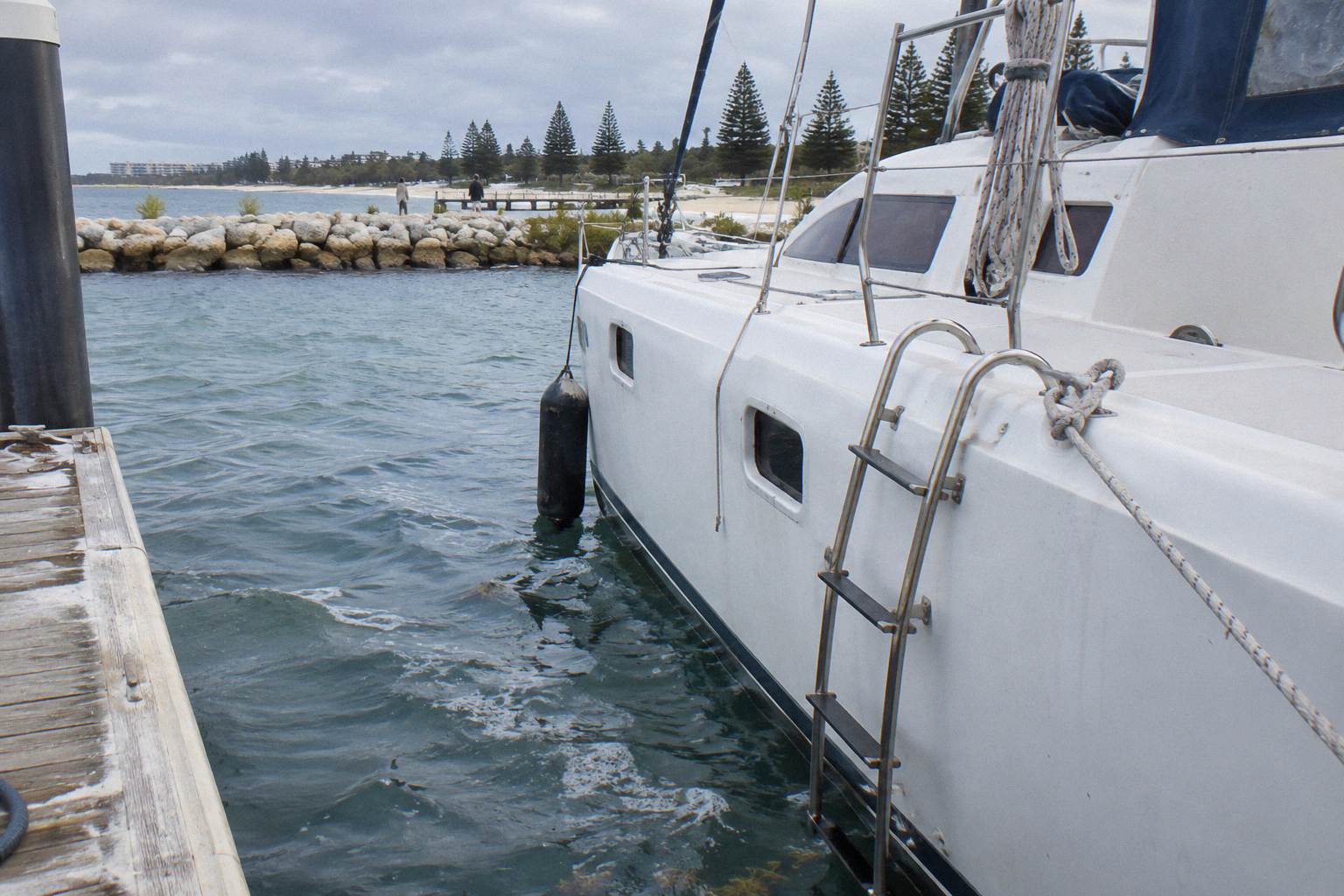
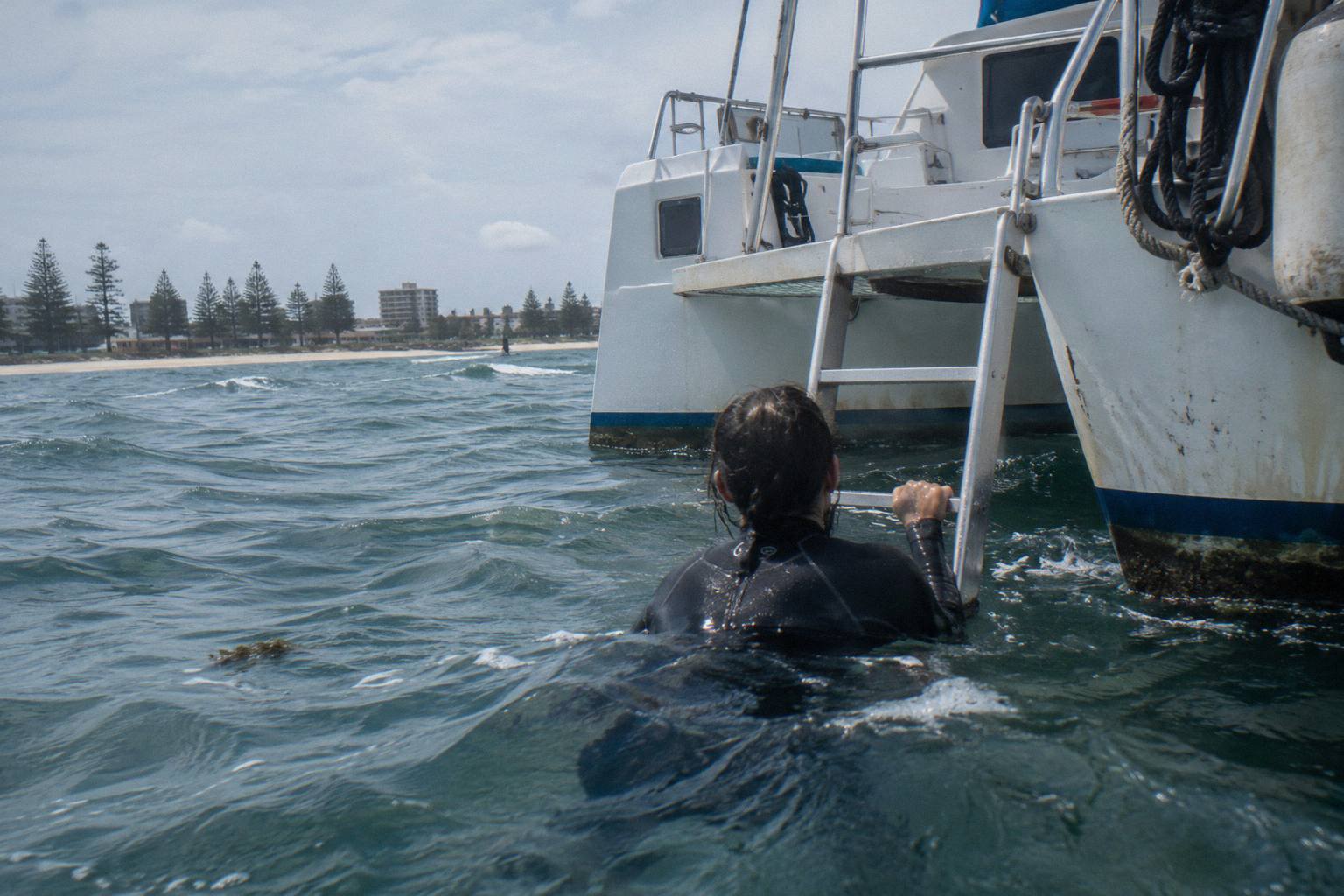
Yes, you will need to climb a ladder to get back on the boat after your swim. The Glenelg operator states swimmers must be able to climb three rungs of a ladder at the back of the boat, and Kangaroo Island states its ladder exit needs lower body strength. This is the requirement most likely to matter in practice, because it is the one part of the swim with no workaround once you are in the water. Getting in is a step or a slide; getting out is a climb, wet, in fins or bare feet, with the boat rocking under you.
Three rungs sounds trivially few, and for many people it is. But a boat ladder is not a staircase. There is no handrail arrangement like a fixed ladder on land, the rungs are close to the hull, and you are lifting your own body weight plus a waterlogged wetsuit that has absorbed some sea. The Glenelg operator lists it as a stated requirement rather than a courtesy hint, which tells you the crew takes it seriously at boarding time.
Kangaroo Island frames the same moment as leg strength: the operator states the ladder exit needs lower body strength, pairing it with the upper body demand of the swimmer line. The practical takeaway is identical on both trips. If deep knee bends, step-ups or rising from a low chair are hard for you, raise it with the operator before booking rather than discovering it at the stern.
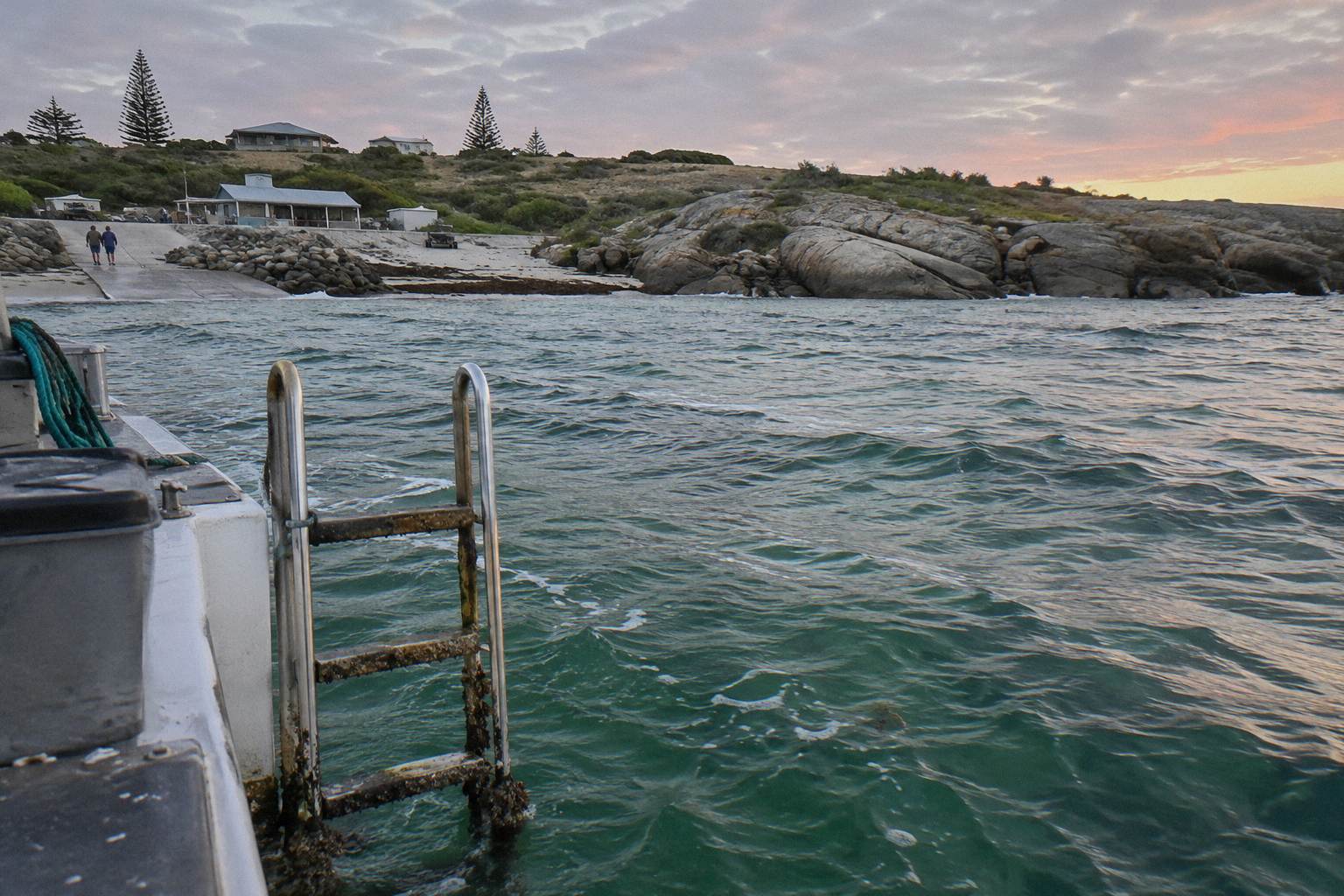
Crews handle this every day and, on both trips, swimmers reboard one at a time with crew at the stern. Nothing on either operator's page suggests hurry or judgement. But no crew member can climb the ladder for you, so the requirement is a genuine one, and it is the item most worth a phone call if you are at all unsure.
If You Are Unsure: The Watcher Option On The Same Boat
At Glenelg, swim and watch guests travel together on the same boat, so the watcher option is there if you are unsure about getting in the water. A hesitant swimmer can ride as a watcher, and a nervous swimmer can drop back to watching after the briefing. The operator states that the two tickets are bookable together or separately, that children under 9 can join as watchers, and that a parent or guardian on board can hold a watch ticket while a child swims. For bookings made direct with the operator, a nervous swimmer who stays aboard can get a refund of the swim-minus-watch difference.
This changes the psychology of the decision completely. You are not choosing between a full swim and staying home; you are choosing between a swim ticket and a watch ticket on the same vessel. The Glenelg watch product, the Wild Dolphin Watch From Glenelg, is listed at from USD 62 per person and rated 4.8 across 409 reviews, so the fallback is not a consolation prize. It is the same catamaran, the same dolphins from above the water, and the same roughly four hours at sea.
The operator's sighting record, on its own statement, is that it has never had a day without seeing dolphins from above the water, and its tour page claims a 100% success rate of seeing dolphins on board since 2002. Those are the operator's claims about above-water sightings only, not a promise of dolphins underwater beside swimmers. For direct bookings, if no dolphins are seen from above the water, passengers may return free within one year, non-transferable, or take a 50% refund for interstate or overseas guests.
Kangaroo Island is stricter on this point and it matters for anyone weighing their options: the operator states that wildlife interactions are not guaranteed and that if you get in the water at any stage, you do not get any money refunded. The booking page for that tour does show free cancellation up to 24 hours before departure, which is a different thing from a sighting promise. Readers torn between the formats can compare the two directly in the site's guide to swimming with dolphins on Kangaroo Island or from Glenelg.
What To Ask The Operator Before You Book
Email the operator before you book and ask about wetsuit sizing, the ladder, and how much time you will actually get on the line. Any concern you would rather raise in an email than at the marina deserves an answer in writing before you commit. Operators can only accommodate what they know about, and both South Australian operators invite direct questions: the Glenelg crew briefs swimmers for about 15 minutes on board, which is too late to solve a suit that does not fit. Every question below maps to a stated requirement above, so nothing here is speculative.
| Question to ask | Why it matters | Which operator it applies to |
|---|---|---|
| Do your wetsuit sizes cover me? | Suits are mandatory and double as flotation at Glenelg | Both |
| How many rungs is the ladder, and can crew assist? | Stated exit requirement, three rungs at Glenelg | Both |
| How long is each turn on the line? | Grip endurance, not weight, is the stated demand | Both |
| Is a life jacket or noodle available in the water? | Stated available at Kangaroo Island; at Glenelg jackets are aboard but not used for the swim | Both |
| Can I switch to a watch ticket on the day? | Stated option at Glenelg; direct-booking terms differ from listing terms | Glenelg |
| Should I check anything with my doctor first? | Neither operator gives medical advice, and this site gives none either | Both |
Add the medical question to whatever the operator says, not instead of it. Pacemaker wearers should ask the Glenelg operator before booking, in the operator's own framing, and Kangaroo Island states its swim is not suitable with a pacemaker or pregnancy. Neither statement is a medical opinion, and none of this replaces a conversation with your own doctor, which is the standard advice for any cold-water swimming activity.
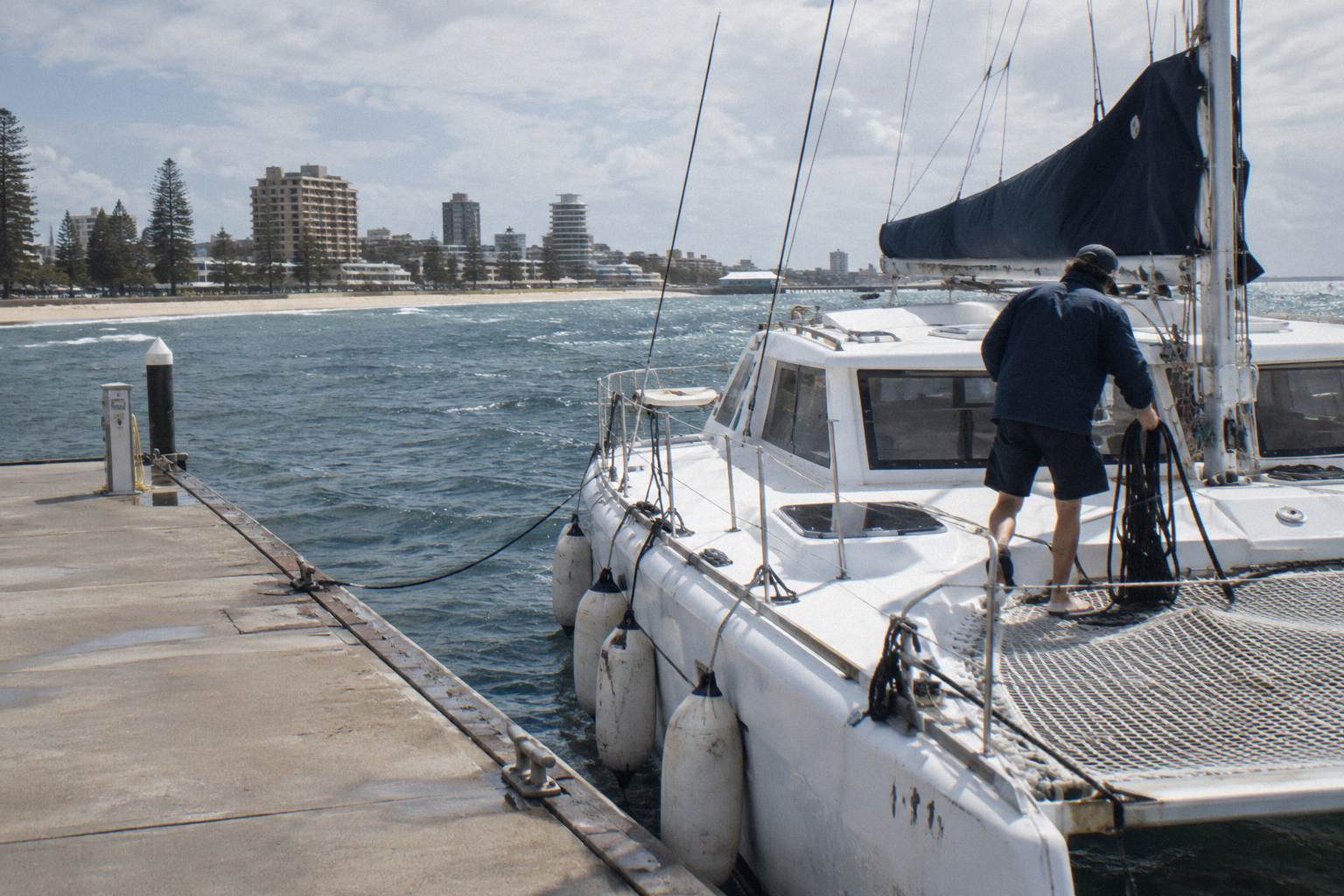
One more practical note from the operator's own pages: boarding at Glenelg starts 15 minutes before departure at Marina Pier, Holdfast Shores Marina, at the bottom of the stairs in front of the Oyster Bar, and the vessel is not wheelchair accessible, with stairs to board. The boat itself is described by the operator as a 58 ft sailing catamaran surveyed for up to 50 passengers.
The Legal Frame: Permits, Not Pounds
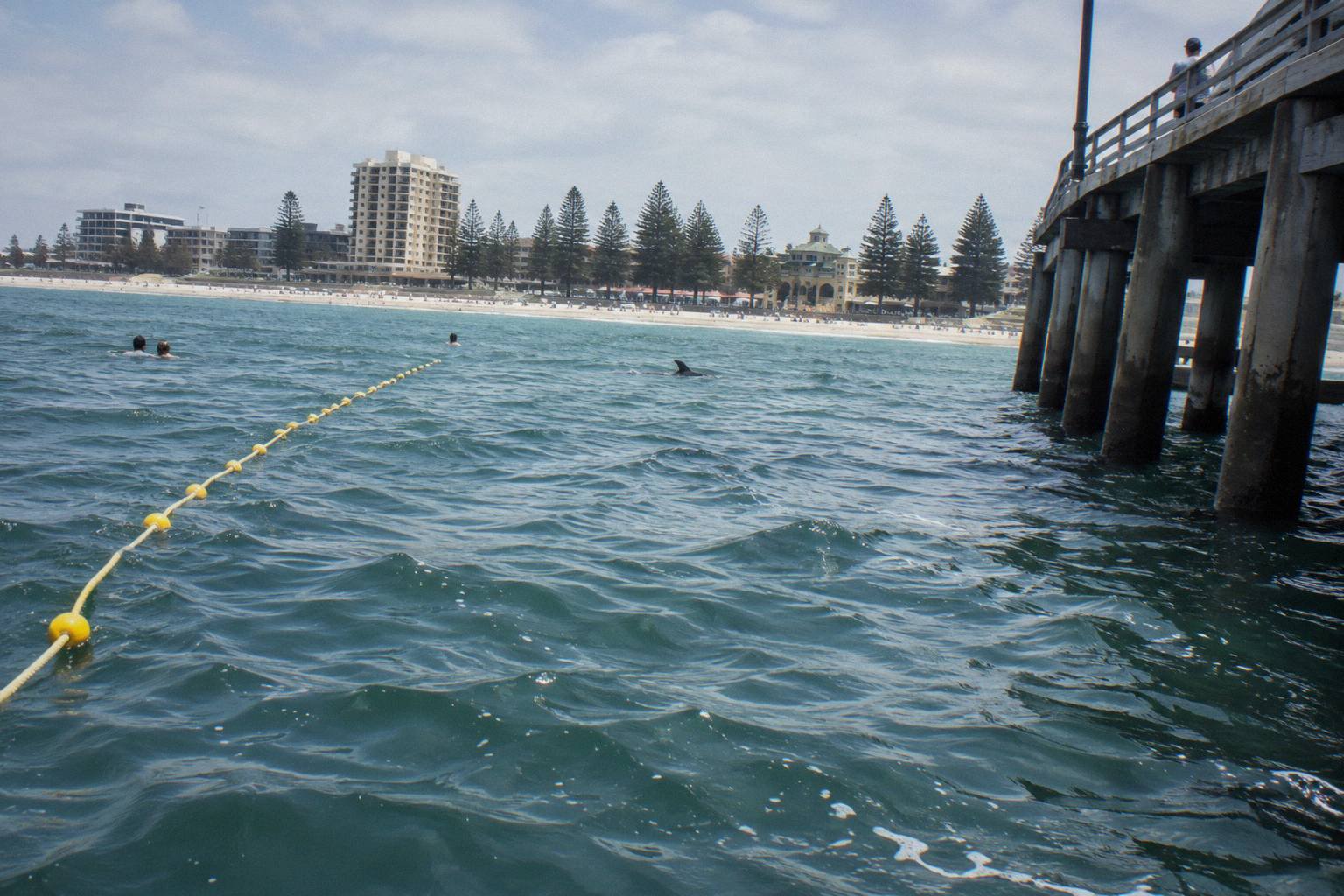
No pound threshold appears anywhere in South Australia's dolphin swim rules; the law instead sets how close swimmers and boats may approach dolphins, and it places its real demands on licensed operators holding the proper permits rather than on any swimmer's body size or weight. The National Parks and Wildlife (Protected Animals - Marine Mammals) Regulations 2025, in operation since 1 September 2025, make it an offence to take people into the vicinity of marine mammals for fee or reward without a permit, which is why a lawful dolphin swim in this state only happens on a licensed tour. The regulations themselves set swimmer distances at no closer than 30 m to a marine mammal, 150 m from a calf or a dolphin showing disturbance, and no more than 30 minutes within 150 m.
Notice what is absent: any rule about the swimmer's weight, age or build. The law polices the operator's permit and the animal's space, and leaves the physical screening of guests to the operator's own stated requirements, the line, the ladder, the wetsuit, the age minimum. The expiation fee for a swimmer breach is AUD 315 per alleged offence under reg 20, which is one reason tours are run the way they are: crews keep interactions short, controlled and on their own terms.
That controlled format is the direct answer to most weight-limit anxiety. You are not being asked to swim kilometres, tread water unaided, or exit over a gunwale. At Glenelg the suit floats you, the line holds you, two shark shields run during the back swim, and a marine biologist hosts the trip. The site's longer piece on whether it is illegal to swim up to wild dolphins in South Australia unpacks the permit rules in full, and the guide on dolphin swim rules and how close you can get covers the distance limits from a swimmer's point of view.
The same reasoning explains why the Glenelg season runs September to April, in the operator's own FAQ wording, with no cruises in the cooler months of May to August: the constraints are seasonal and regulatory, not anthropometric. For more on timing, see the site's guide to the best time of year for a wild dolphin swim.
Making The Call Without A Number
There is no official number to consult, because no weight limit exists on paper for either swim, and the real gate is a fit test you can mostly predict from an armchair. To make the call, treat that predictable fit test as your decision point rather than searching for a cutoff that was never published. Ask yourself three questions the operators themselves ask. Will the largest supplied wetsuit fit, with Glenelg's range stated to 4XL? Can you grip a rope and hold it for a few minutes of slow towing? Can you climb three ladder rungs wearing a soaked suit? If all three answers are comfortable, the operators' own stated requirements are satisfied, and nothing on their pages stands between you and the water.
If any answer is uncertain, the move is disclosure, not avoidance. Email the operator, describe your situation in plain words, and ask the questions in the table above. The Glenelg crew answers sizing and pacemaker questions routinely, per its own FAQ, and the Kangaroo Island operator builds 30 minutes of fitting time into every departure. Neither operator publishes a weight limit because neither wants one; they publish requirements instead, and requirements can be discussed.
Then hold the fallback in your pocket. On the Glenelg trip the watch ticket is the same boat, the same morning, the same dolphins from the deck, and nervous swimmers can step back to it after the briefing. Booking through the live listing carries free cancellation up to 24 hours before departure on the Glenelg, Kangaroo Island swim and watch products, which gives you a final out that no direct-scale-weighing check-in ever could.
Whatever you decide, deciding early beats deciding at the stern. This Adelaide Swimming With Dolphins page exists precisely because these questions are easier answered on land, and the Wild Dolphin Swim From Glenelg listing carries the operator's current dates and the 24-hour cancellation window alongside its from USD 104 price. Check availability, ask your question, and let the crew who have run these trips since 2002 make the final, informed call.
Common Questions About A Dolphin Swim And Weight Limits
Is There A Weight Limit For A Dolphin Swim?
No. Neither the Glenelg operator nor the Kangaroo Island operator states a weight limit on its own pages. The stated requirements are functional: a supplied wetsuit that fits, the grip to hold a flotation line while towed slowly, and the strength to climb the ladder out of the water.
Do The Wetsuits Come In Large Sizes?
The Glenelg operator supplies full-length 5 mm wetsuits in sizes up to 4XL and states the suit also acts as a full-body flotation device. The Kangaroo Island operator supplies thick wetsuits plus gloves, mask, snorkel and fins but does not publish a size range, so ask before booking.
What If I Cannot Climb The Ladder?
The Glenelg operator states swimmers must be able to climb three rungs of the ladder at the back of the boat, and Kangaroo Island states its ladder exit needs lower body strength. If climbing is a concern, raise it with the operator before booking rather than on the day.
Can I Still Go On The Boat If I Do Not Swim?
Yes, on the Glenelg trip. Swim and watch guests travel on the same boat, booked together or separately, and a nervous swimmer can stay aboard as a watcher after the briefing. For direct bookings, the operator refunds the swim-minus-watch difference.
Should I Ask My Doctor Before A Dolphin Swim?
Neither operator gives medical advice and neither does this site. Pacemaker wearers should ask the Glenelg operator before booking, and Kangaroo Island states its swim is not suitable with a pacemaker or pregnancy. A conversation with your own doctor is the standard advice for any cold-water swimming activity.
Is A Life Jacket Available During The Swim?
At Kangaroo Island, yes: the operator states a life jacket and noodle are available. At Glenelg, life jackets are on board but are not used for the swim; the full-length 5 mm wetsuit itself acts as flotation, and all swimmers hold a line connected to the stern.