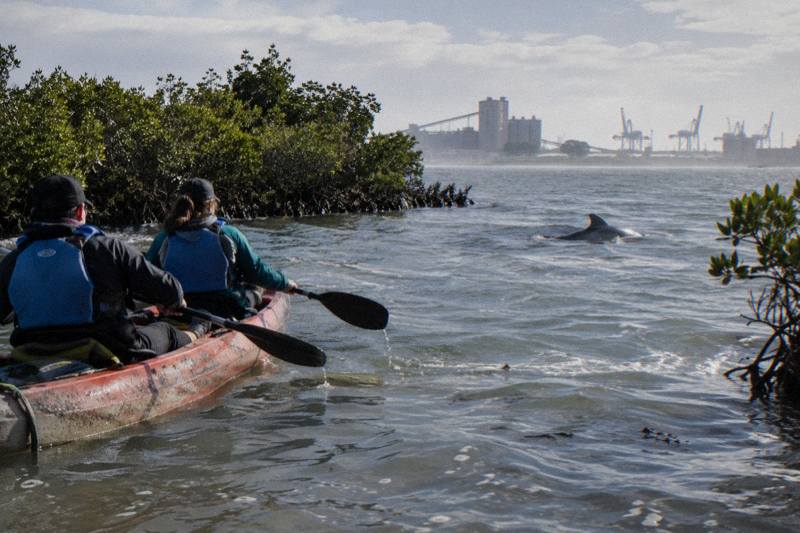
Can You Swim In The Adelaide Dolphin Sanctuary?
The Adelaide Dolphin Sanctuary is a real place with real resident dolphins, 118 square kilometres of it, and the honest answer to whether you can swim there is more layered than a yes or a no.
Short answer
No tour on this site's roster sells a swim inside the Adelaide Dolphin Sanctuary; the sanctuary experiences are a watching cruise from USD 60 and a kayak tour from USD 54.72. Actual dolphin swims depart from Glenelg, from USD 104, and Kangaroo Island, from USD 132. Swimmer distance rules in the regulations apply near any dolphin.
The Adelaide Dolphin Sanctuary sits on Adelaide's doorstep, 118 square kilometres of water, mangroves, saltmarsh, tidal flats and tidal creeks where the Port River meets the Barker Inlet, north of Port Adelaide. People search its name in enormous numbers because they have heard there are dolphins in a city river and they reasonably assume that where there are dolphins, there is a swim. The assumption deserves a straight answer, and the straight answer is that the swim sold in South Australia does not happen here, while the sanctuary itself offers two other ways to be on the water with its resident pod.
This guide sets out what the sanctuary is, what the law actually says about swimming near dolphins in South Australia, and which booked experiences run where. It draws on the state's marine mammal regulations, the sanctuary's own government pages and the verified booking-page details of the six tours in this site's roster, so every figure printed here can be traced to one of those sources.
What The Adelaide Dolphin Sanctuary Actually Is
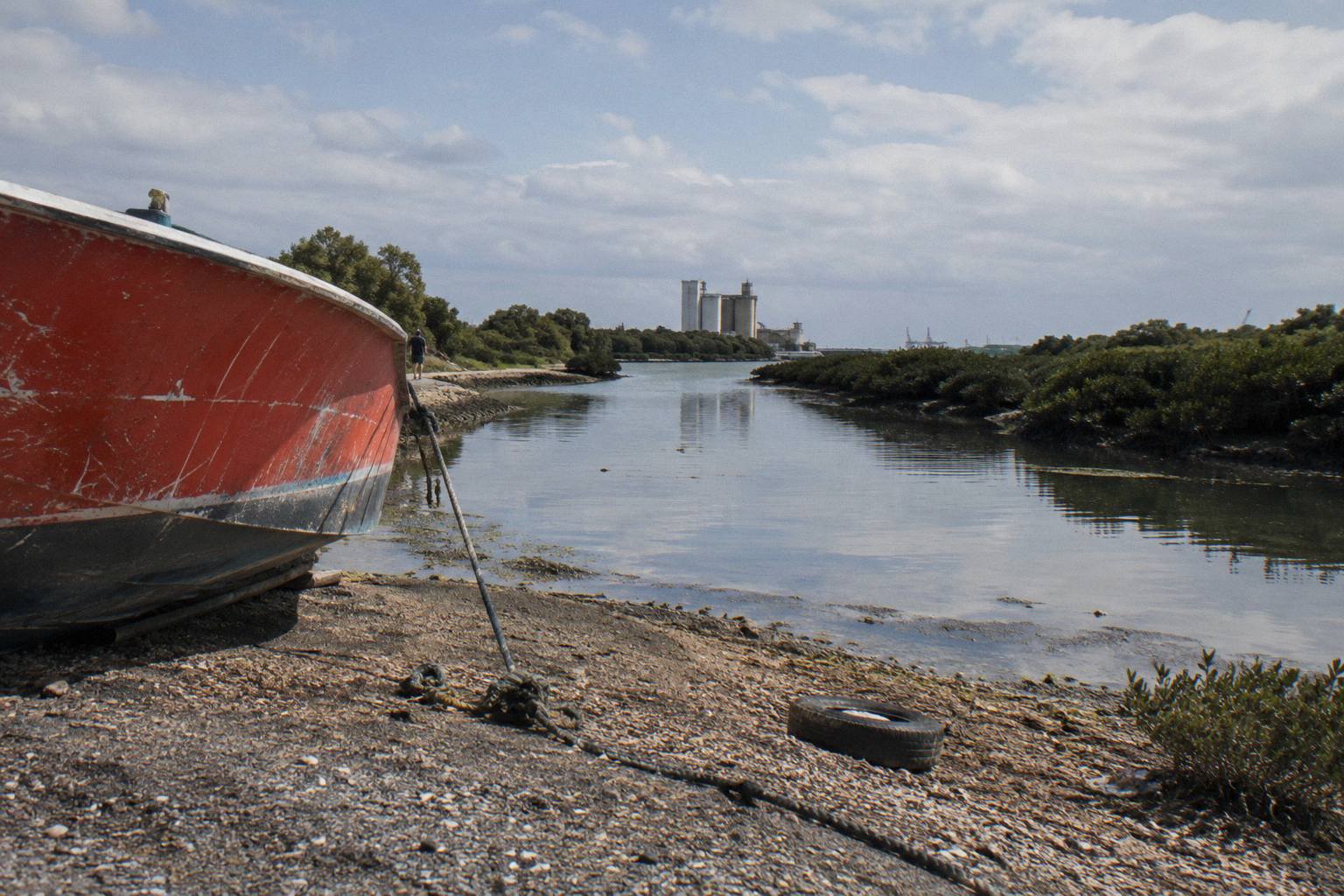
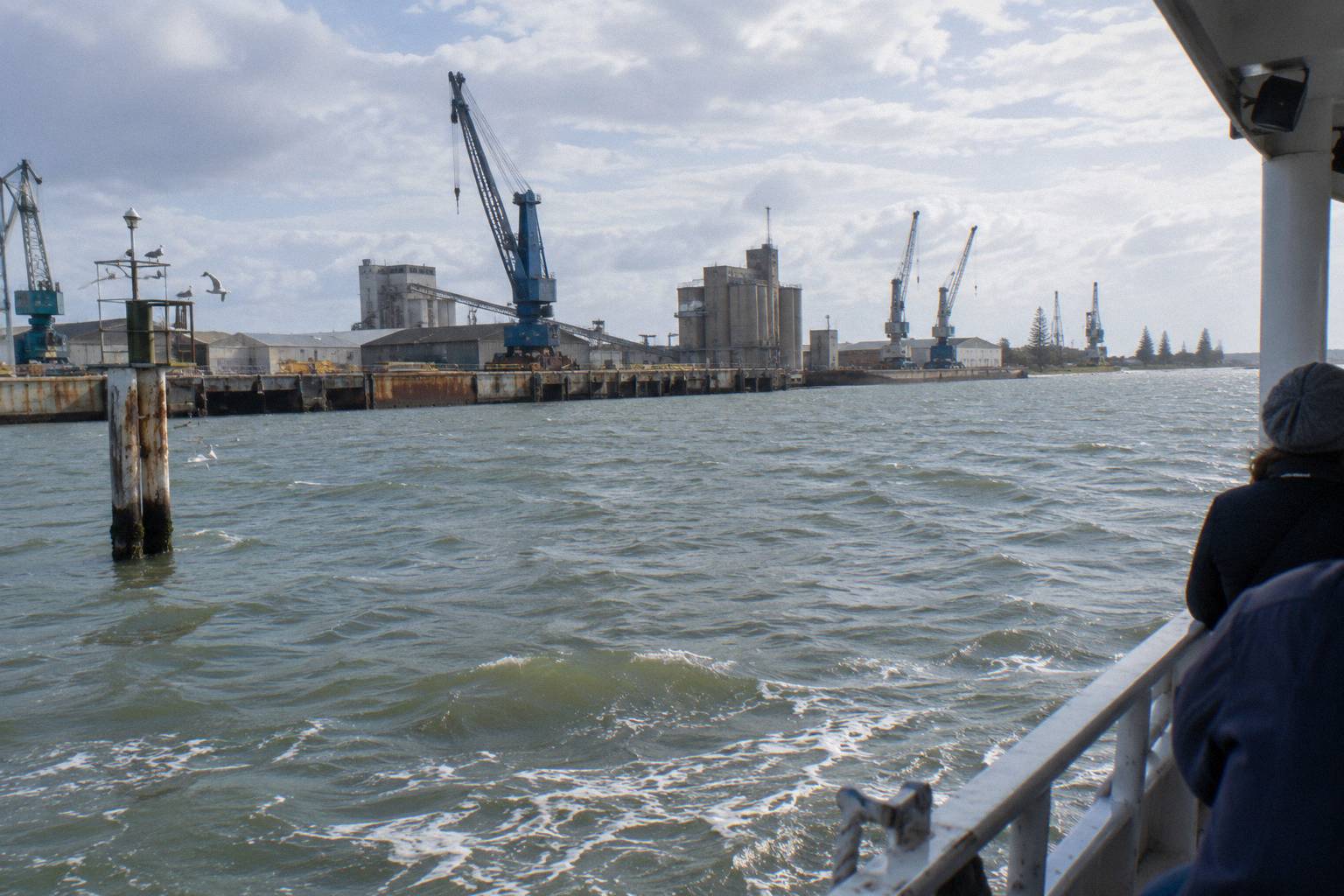
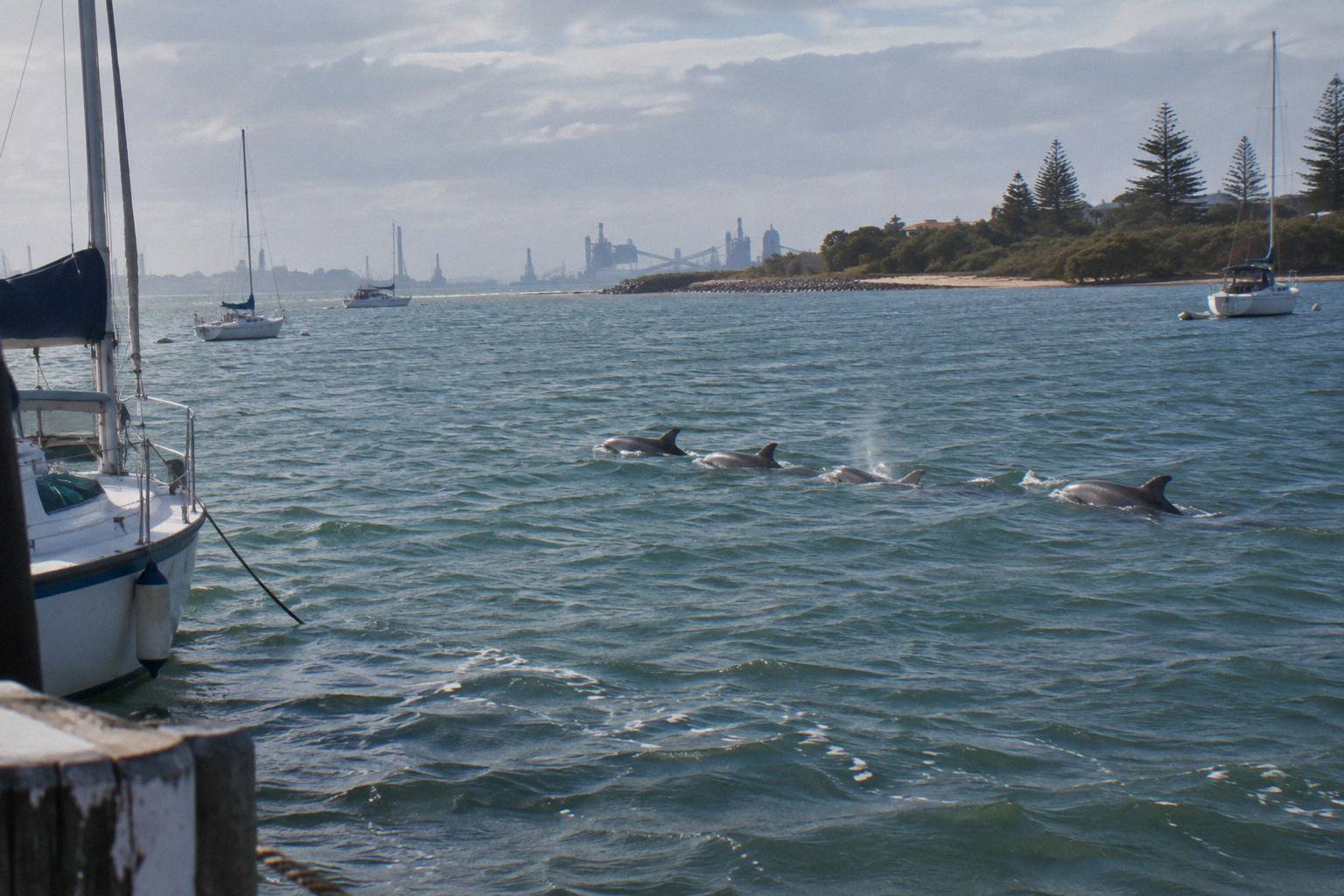
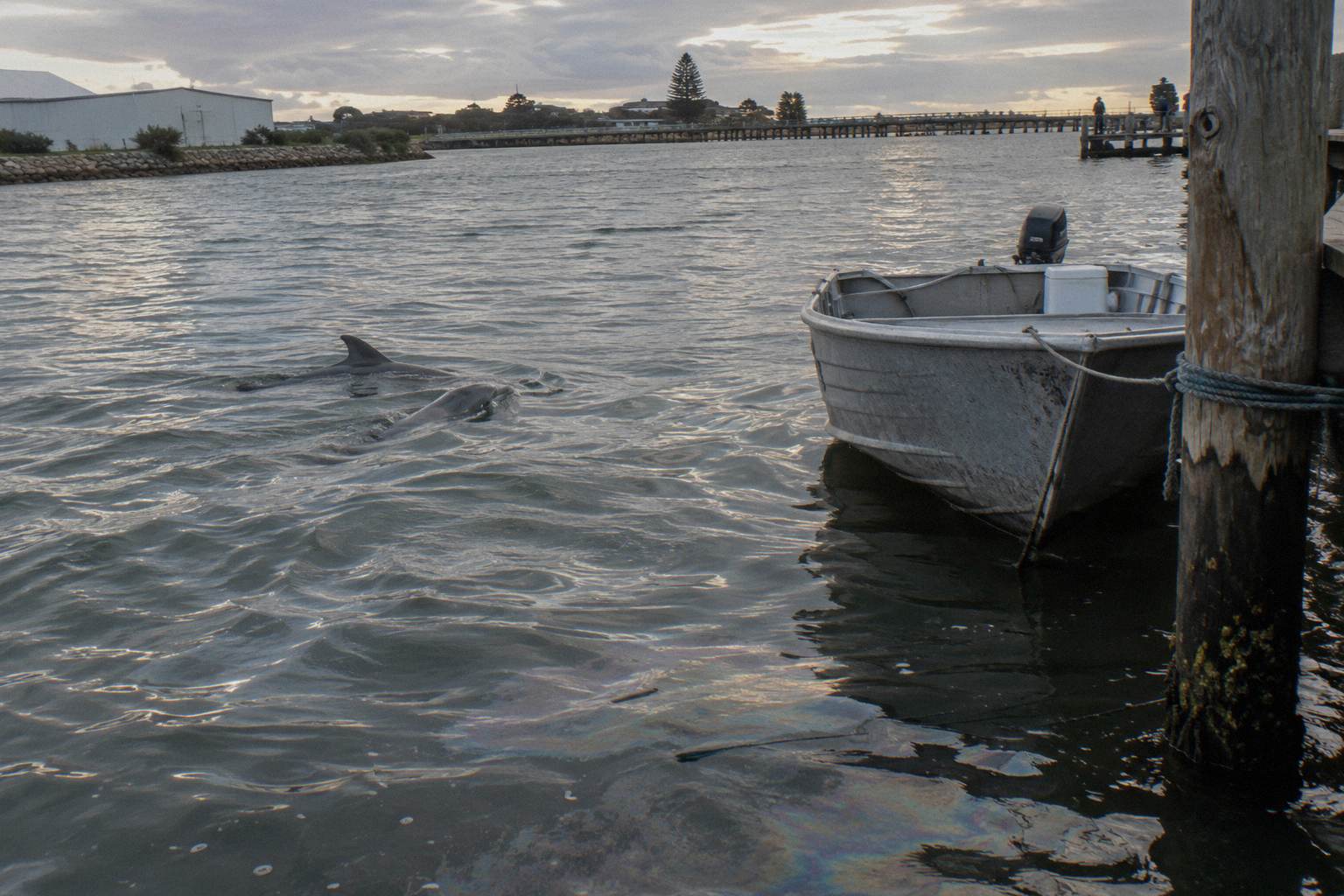
The Adelaide Dolphin Sanctuary is a 118 sq km protected area of water, mangroves, saltmarsh, tidal flats and tidal creeks covering the Port River and Barker Inlet estuary, north of Port Adelaide. It is home to Indo-Pacific bottlenose dolphins, many of them year-round residents, and a fully grown bottlenose here can run 120 to 160 kg and more than two metres long.
The sanctuary was established to protect the dolphins and the habitat they depend on, and the state's own twenty-facts page for its anniversary notes that many of the dolphins found near shore are year-round residents, while transient individuals also use the wider Adelaide coast and Gulf St Vincent. That mix of residents and passers-through is what makes the Port River unusual among urban dolphin populations: you are not looking at a pod that wanders in from far offshore, but at animals that live in and around this estuary through the year.
Two population figures circulate about the sanctuary and they measure different things, so they are printed here separately and never merged. The Adelaide Dolphin Sanctuary Management Plan speaks of around 20 resident dolphins, with some 400 individuals observed over time. Separately, a long-term dataset running from 1993 to 2020 recorded seasonal averages of about 85 dolphins in summer and about 69 in winter across the study area. Neither number is a "current population", and no such number is stated on any official page read for this guide.
Geography matters for the swim question. The sanctuary is the estuary north of Port Adelaide. The dolphin swim sold from Glenelg, on the metropolitan beachfront roughly 15 minutes' drive from the Adelaide CBD by the operator's own description, departs from Marina Pier into Gulf St Vincent and is a different body of water entirely. The Glenelg operator does not name its swim site, and no page read here states one.
Can You Legally Swim In The Sanctuary?
No tour in this site's roster sells a swim inside the sanctuary, and the pages read here state no sanctuary-specific rule on swimming; the swimmer distances in the state regulations apply near dolphins. A fee-based swim near any marine mammal in South Australia is lawful only under a Ministerial permit or other lawful authority, and no permit register or permit conditions could be found on any official page.
The governing law is the National Parks and Wildlife (Protected Animals, Marine Mammals) Regulations 2025, in operation since 1 September 2025. Regulation 19 says a person must not, for fee or reward, use an aircraft, vessel or other means to take another person into the vicinity of a marine mammal to enable that person to observe the animal or swim near it, or assist such a person, with an exception for viewing from a prescribed viewing structure. Under section 68 of the National Parks and Wildlife Act 1972, acting contrary to the regulations is allowed with a Ministerial permit or other lawful authority. The practical effect: commercial dolphin swims in this state operate under permit, and the two swims in this roster, from Glenelg and from Penneshaw on Kangaroo Island, are the ones with booking pages live today.
What that means for a private swimmer in the sanctuary is narrower than most people expect. The pages read here state no sanctuary-specific rule banning or permitting swimming as such. What the regulations do set are distances that bind any swimmer near a marine mammal, and those are set out fully in the section on distance rules below. The expiation fee for an alleged offence against these regulations is AUD 315, a legal figure worth knowing before anyone decides to freestyle their own encounter.
For readers weighing the ethics as well as the law, the is a wild dolphin swim ethical guide works through the welfare arguments, and the blog post on whether it is illegal to swim up to wild dolphins in South Australia takes the regulations apart line by line. The short version for the sanctuary: watching from a boat or paddling a kayak beside the resident pod are the experiences actually sold on this water.
What Tours Actually Run On Sanctuary Waters?
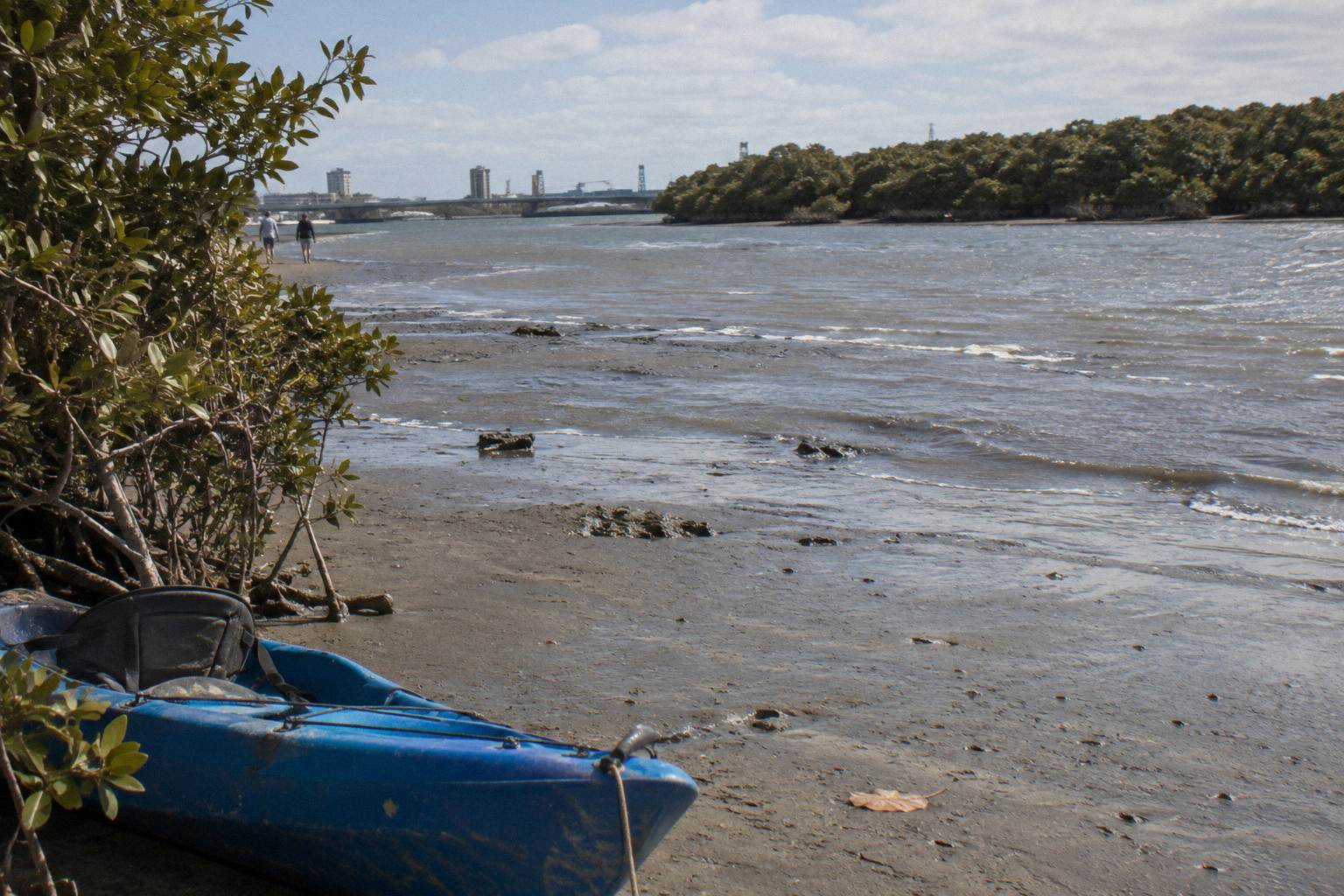
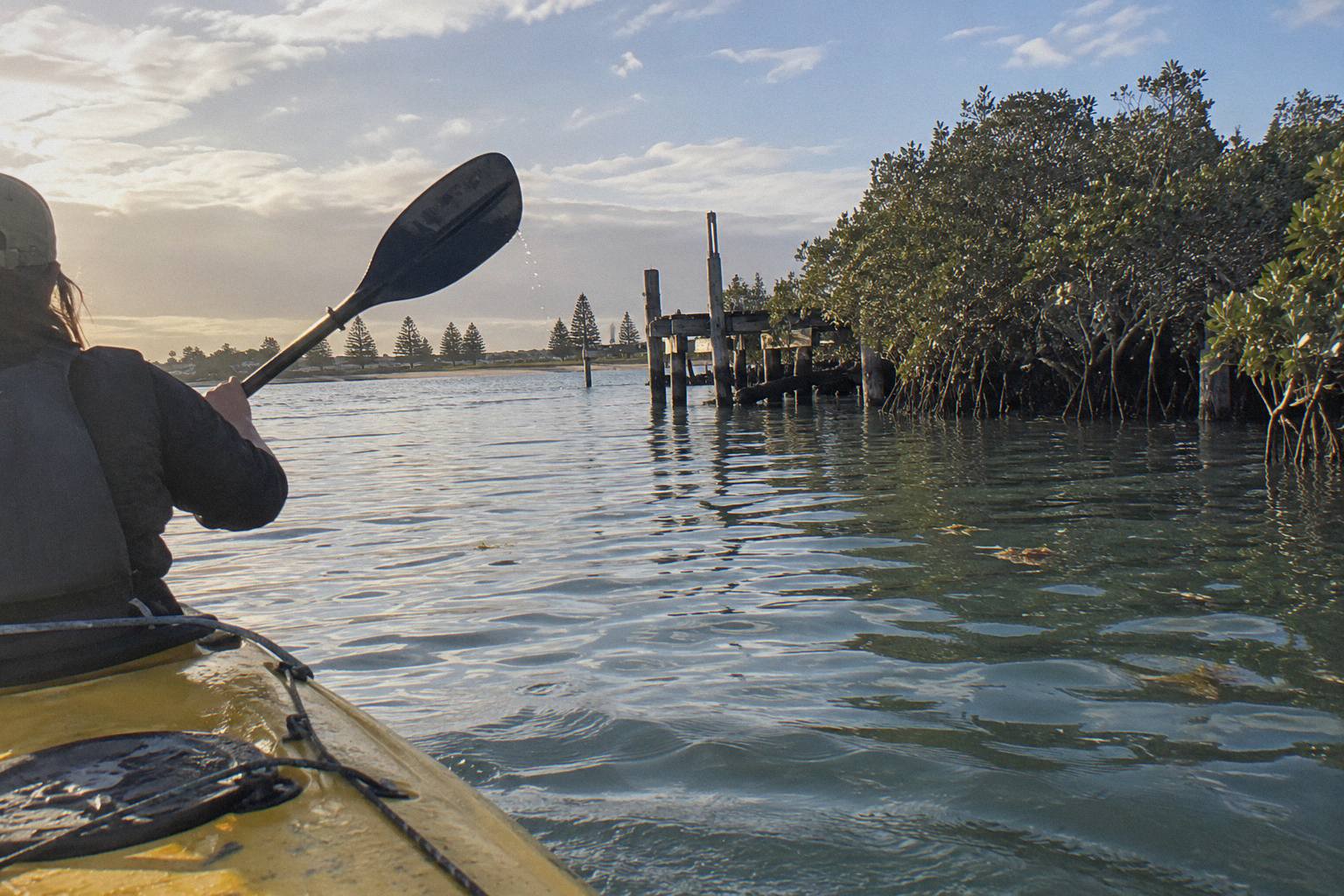
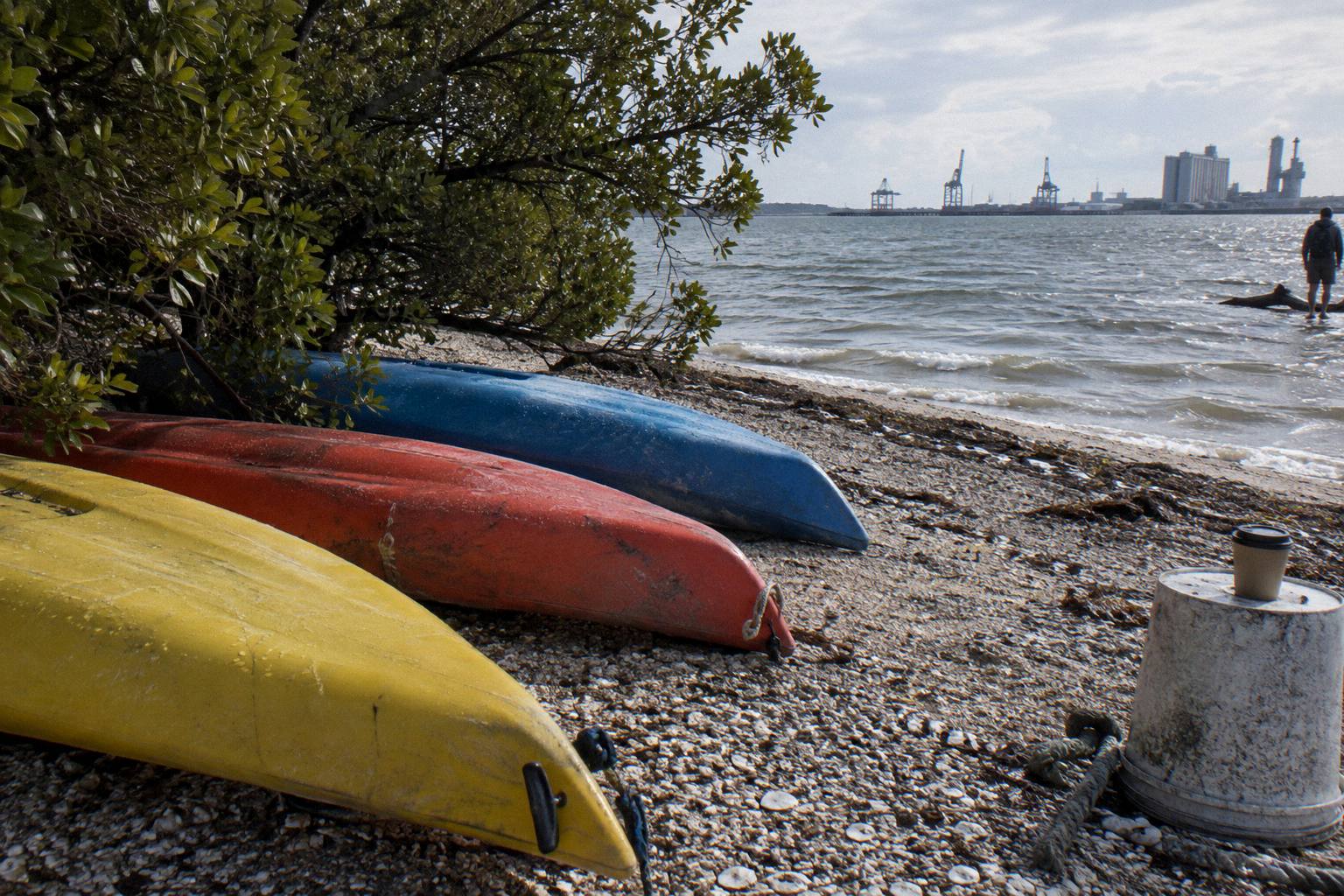
The Port River Dolphin Cruise runs 1.5 hours of watching from a boat, with no sighting guarantee stated on its listing. The Dolphin Sanctuary Kayak Tour, run by Adventure Kayaking SA, puts you on the water itself at paddle level, minimum age 8, with free cancellation up to 24 hours on its booking page. Between the two, the kayak tour is the closest a booked experience gets to sharing the water with the sanctuary's dolphins, short of a swim, and this site's Adelaide Swimming With Dolphins coverage treats it as the sanctuary's signature on-water experience.
The kayak tour also earns its place on practical grounds. Paddling is quiet, low to the water and unhurried, which suits an estuary defined by mangroves and tidal creeks rather than open sea swell. Families with children under 9, the minimum age for both swims in the roster, still have an on-water option here because the kayak minimum is 8.
Neither sanctuary tour involves gear beyond what its operator provides, and neither listing states inclusions, vessel type, group size, pickup or commentary. Where a detail is not stated, this guide prints nothing rather than guessing.
How Close Can A Swimmer Get To A Dolphin In South Australia?
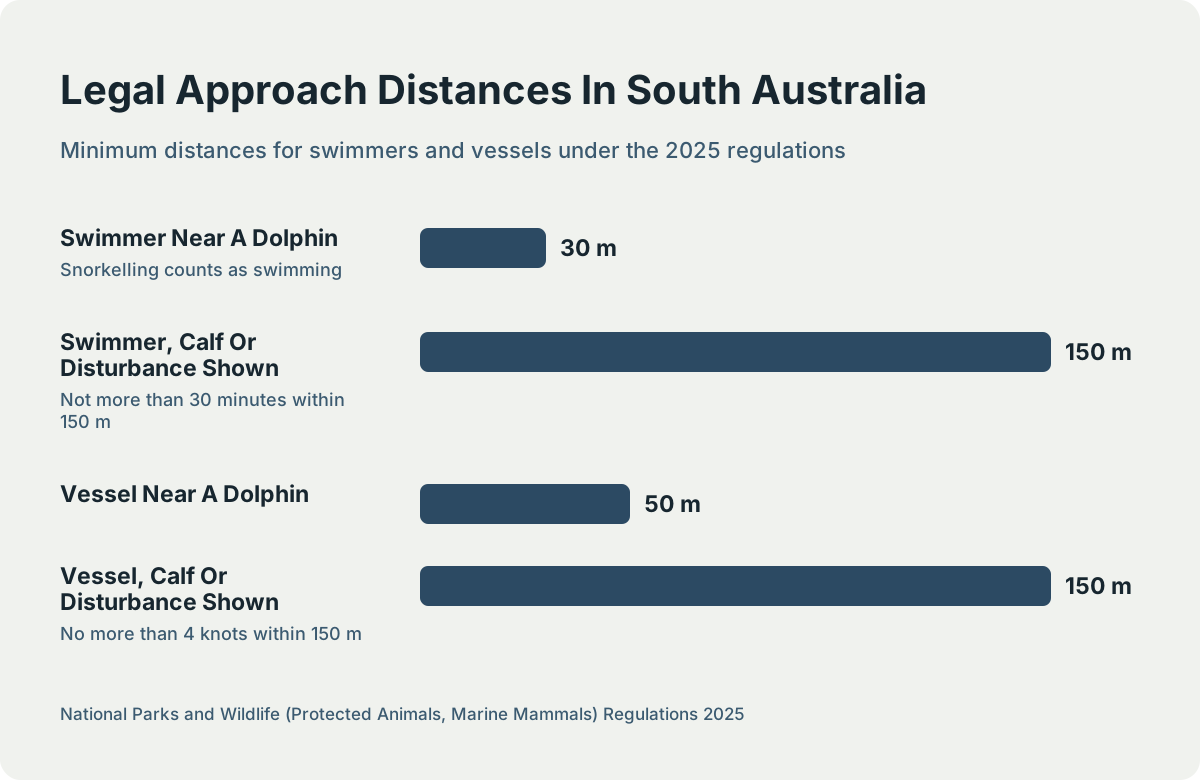
A swimmer, and snorkelling counts as swimming under the regulations, may not come closer than 30 m to a marine mammal, must stay at least 150 m from a dolphin that shows disturbance, appears sick or injured, is stranded or entangled, or is a calf, and may not spend more than 30 minutes within 150 m of a non-whale marine mammal. The expiation fee is AUD 315 per alleged offence.
Those distances come from regulation 14 of the 2025 regulations, and the 30-minute cap is a regulation on swimmers, not an operator or permit condition. Vessels have their own set: a boat keeps at least 50 m from a non-whale marine mammal, and at least 150 m if there is a calf or the dolphins show disturbance, travelling no more than 4 knots within 150 m. The full legal text is published as a PDF on the South Australian legislation site, and it is the document to read if the exact wording matters to you.
| Rule in the regulations | Who it binds | The distance or limit |
|---|---|---|
| Swimming near a marine mammal | Any swimmer, snorkelling included | No closer than 30 m |
| Dolphin showing disturbance, sick, injured, stranded, entangled, or a calf | Any swimmer | No closer than 150 m |
| Time within 150 m of a non-whale | Any swimmer | Not more than 30 minutes |
| Vessel near a non-whale marine mammal | Any vessel | At least 50 m |
| Vessel with a calf present or disturbance shown | Any vessel | At least 150 m, 4 knots within 150 m |
Feeding and touching are prohibited outright under the regulations. The blog posts on whether you can touch wild dolphins during a swim and whether you can feed a wild dolphin cover those rules and the behaviour behind them in detail. None of this says swimming in the sanctuary is banned; it says that once you are in the water near dolphins anywhere in South Australia, the distance rules apply, and in a narrow tidal creek with resident animals and calves around, staying 30 m from a dolphin is harder than it sounds.
Where Do Actual Dolphin Swims Depart From?
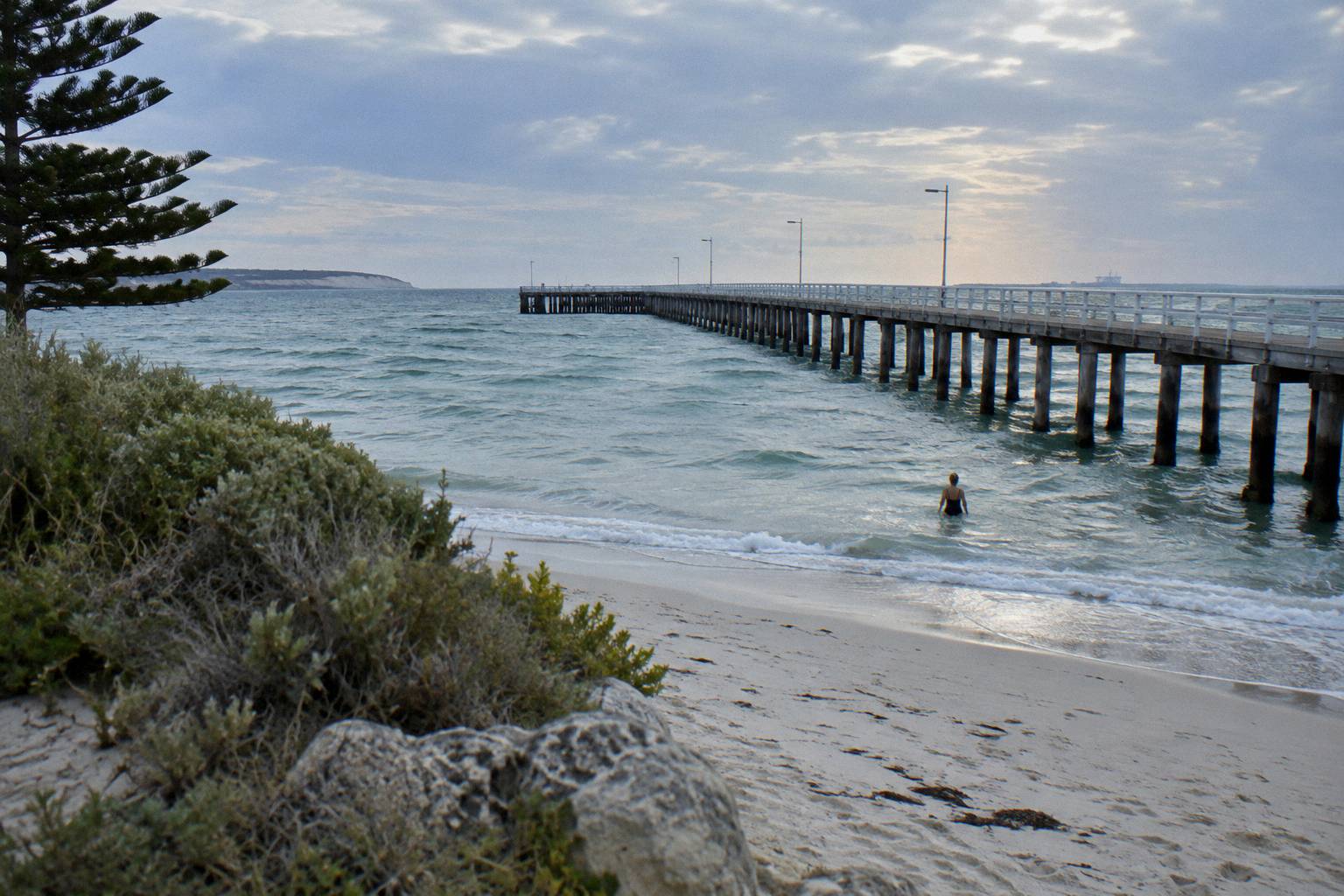
Both swims in this roster depart well outside the sanctuary: the Wild Dolphin Swim From Glenelg With Temptation Sailing, from USD 104, rated 4.7 across 493 reviews, about 4 hours, minimum age 9, and the Kangaroo Island Ocean Safari Swim from Penneshaw, from USD 132, rated 4.4 across 137 reviews, 2 hours, minimum age 9. Both include wetsuits and swim gear.
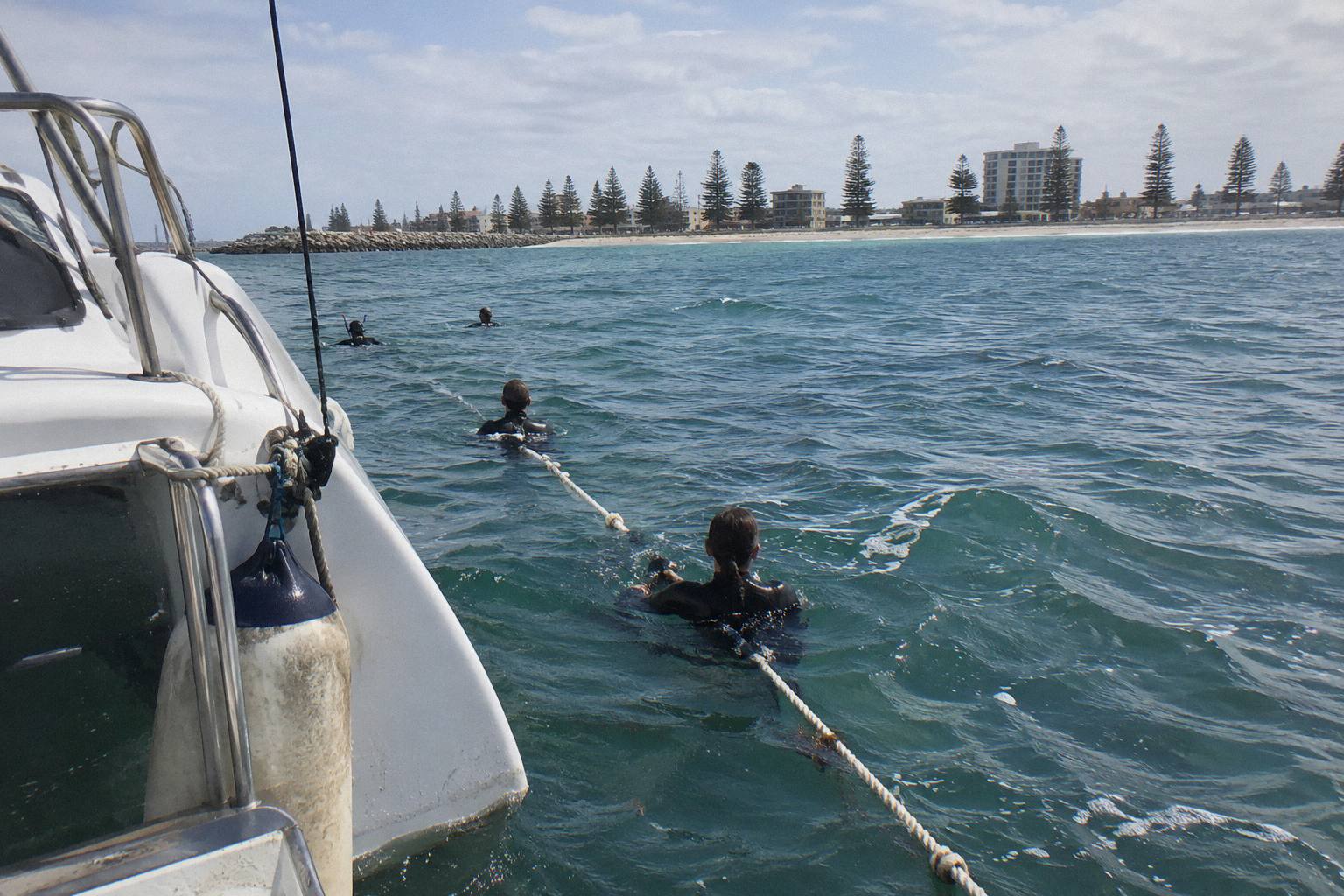
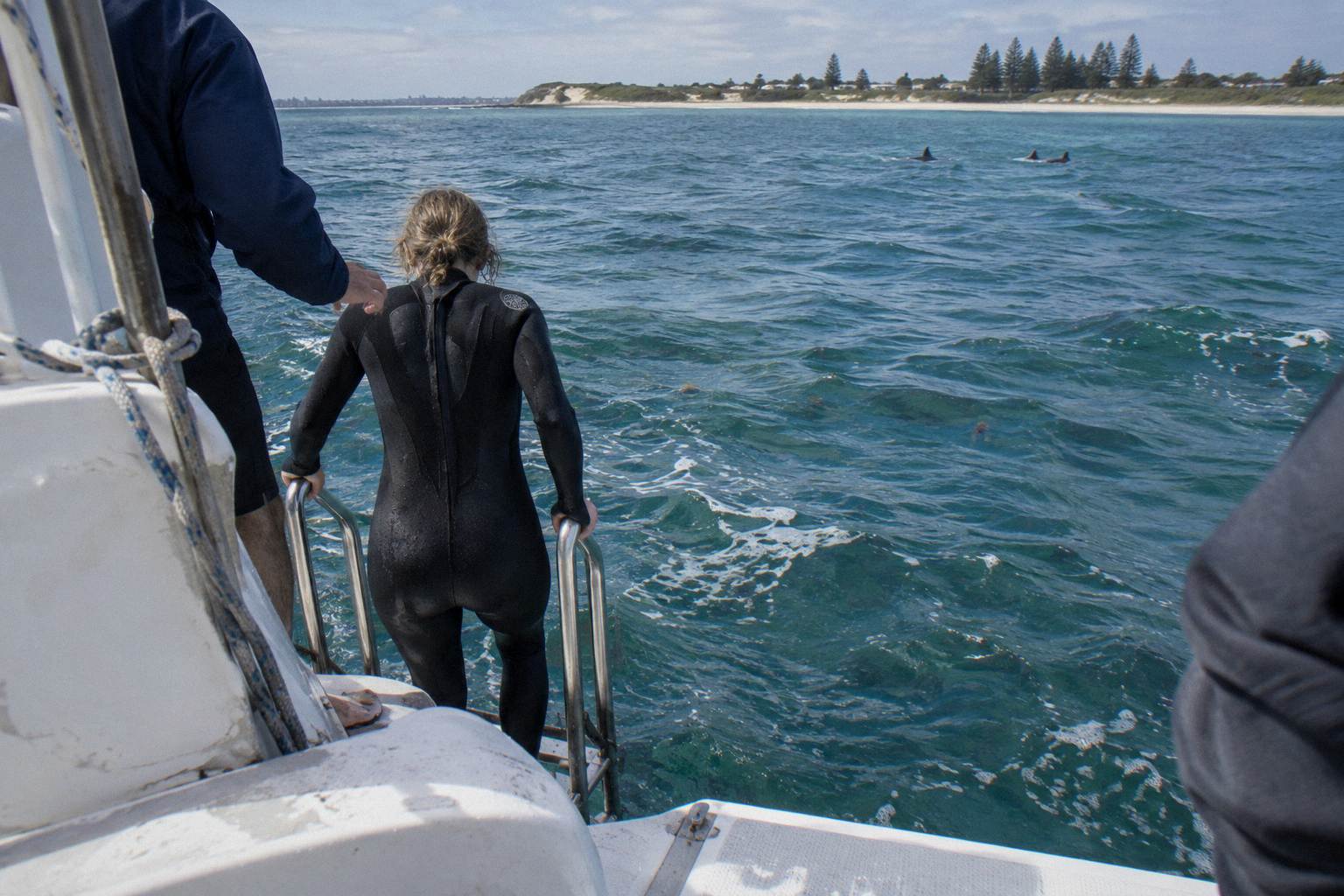
The Glenelg swim runs on a 58 ft sailing catamaran surveyed for up to 50 passengers, and the operator states it has run dolphin swim and watch tours from Glenelg since January 2002, describing itself as the first vessel in South Australia given a licence to swim with these mammals, an operator claim printed here as the operator's own wording. Swimmers hold a flotation line connected to the stern rather than free swimming, which is why this site's guide for dolphin swims for non-swimmers and weak swimmers treats it as manageable for cautious swimmers. The full mechanics are in what happens on a wild dolphin swim cruise.
The Kangaroo Island swim is a different animal: a 2-hour snorkelling safari that may turn out to be dolphins only, seals only or a coastal snorkel, with dolphins present year-round in the island's waters by the operator's account. Water there sits around 14-15 degrees by the operator's statement, with thick wetsuits provided so the swim runs year round. The comparison of the two is worked through in swimming with dolphins on Kangaroo Island or from Glenelg.
Neither operator names a swim site inside the Port River estuary, because neither swims there. If your heart is set on getting in the water, the sanctuary is the wrong postcode, and Glenelg or Penneshaw is the decision to make.
Comparing Every Sanctuary And Swim Option
Six tours cover the sanctuary and the two swim ports, spanning from USD 54.72 to USD 132 per person. Two run on sanctuary waters as watch or paddle experiences, two are dolphin swims, and two are watch-only trips from Glenelg and Kangaroo Island. Five carry free cancellation up to 24 hours; the Kangaroo Island Dolphin Watch is non-refundable per its booking page.
The table below holds every printed figure this site has verified. Ratings are shown with their review counts because a rating without its pool invites assumptions. Prices are booking-page USD from-prices per person; they move with date and group size, so treat them as the floor, not the quote.
| Tour | Experience | From (USD) | Rating | Duration | Cancellation |
|---|---|---|---|---|---|
| Dolphin Sanctuary Kayak Tour | Paddling only, min age 8 | 54.72 | 4.8, 300 reviews | Not stated | Free, 24 hours |
| Port River Dolphin Cruise | Watching only | 60 | 4.5, 481 reviews | 1.5 hours | Free, 24 hours |
| Kangaroo Island Dolphin Watch | Watching only | 61.74 | 4.8, 640 reviews | About 1 hr 15 min | Non-refundable |
| Wild Dolphin Watch From Glenelg | Watching only | 62 | 4.8, 409 reviews | About 3.5 hours | Free, 24 hours |
| Wild Dolphin Swim From Glenelg | Swim, min age 9 | 104 | 4.7, 493 reviews | About 4 hours | Free, 24 hours |
| Kangaroo Island Ocean Safari Swim | Swim, min age 9 | 132 | 4.4, 137 reviews | 2 hours | Free, 24 hours |
Two distinctions do most of the work in that table. First, swim versus see: the sanctuary rows give you the resident pod from a boat or a kayak, while the Glenelg and Kangaroo Island rows put you in the water with masks on. Second, refund posture: five of the six hold a 24-hour free-cancellation line on their booking pages, and the Kangaroo Island Dolphin Watch does not, which matters if your plans depend on a ferry or a flight.
The Glenelg watch cruise's own booking-page title carries the word "Guaranteed"; that is the tour page's wording, quoted as such, and not a promise from this site or a refund term. Its operator, Temptation Sailing, states on its own pages a 100% record of seeing dolphins from above the water since 2002, with return-or-partial-refund terms for direct bookings only; reseller terms, including the listing this site links to, may differ.
The Sanctuary's Dolphins: Residents And Transients
The sanctuary's near-shore dolphins are Indo-Pacific bottlenose dolphins, Tursiops aduncus, many of them year-round residents, with transient individuals also passing through the wider Adelaide coast and Gulf St Vincent. Off Glenelg, the swim operator reports watching both Indo-Pacific bottlenose and short-beaked common dolphins, an operator claim. Group sizes and residency off Glenelg are unconfirmed and printed nowhere here.
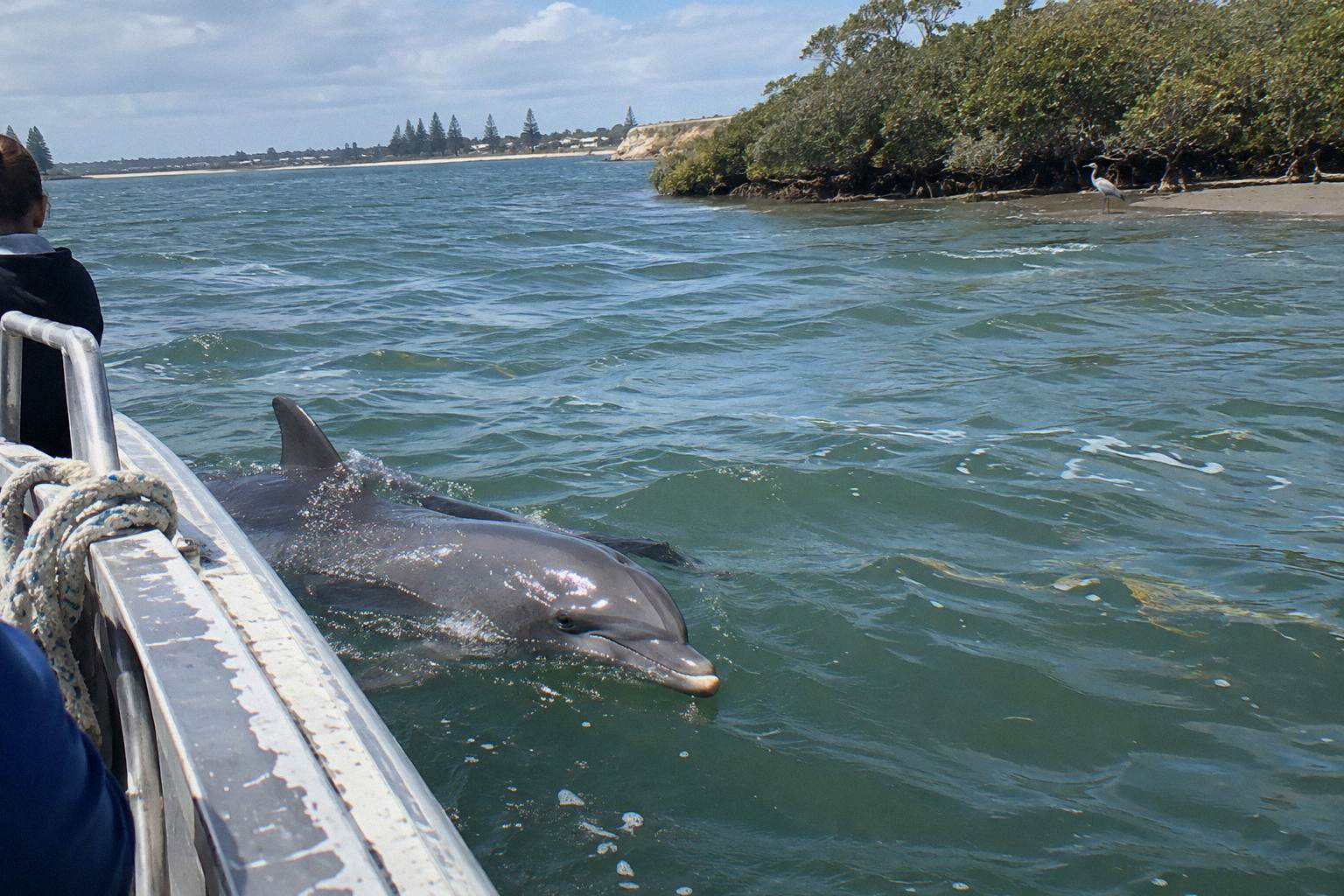
Keeping the population lines straight is the one genuinely non-obvious piece of information on this page. The Management Plan's around 20 residents and some 400 observed over time, and the 1993-2020 dataset's seasonal averages of roughly 85 in summer and 69 in winter, are separate measurements of separate things. Anyone who tells you the sanctuary has "a population of about 85" is mashing two datasets together, and the difference matters if you care whether the dolphin you saw from the kayak is one of the roughly 20 that live here or one of the hundreds that have ever passed through.
The state's anniversary page of twenty sanctuary facts, published at weare.sa.gov.au, is the primary source for the species and residency statements above. A fully grown bottlenose in these waters can weigh 120 to 160 kg and stretch past two metres, which recalibrates what "close encounter" means: an animal the size of a small piano, in a creek you could almost shout across.
For swimmers elsewhere on the coast, behaviour questions have their own pages: what to do if a dolphin swims up to you and what it means if a dolphin circles you cover the encounter side without inventing sanctuary-specific rules.
Is The Sanctuary Water Safe To Swim In?
State testing shows zero or low Karenia algae along the metropolitan coast and Kangaroo Island, and official health advice says that if the water is clear, it is fine to swim, while staying away from foamy or abnormally coloured water. The algal bloom has had a significant impact on South Australia's marine environment, and agencies continue monitoring while remaining vigilant to future blooms, so check the operator before booking a swim.
That wording is chosen carefully. This guide never says the bloom is over, because no official page says that. The state's bloom site summarises onshore testing across the metropolitan coast, Kangaroo Island, the Southern Fleurieu and offshore Gulf St Vincent and Spencer Gulf sites as zero or low, and its health advice page gives the clear-water rule quoted above. The Glenelg swim operator still carries an undated notice on its own FAQ that the bloom may affect its tour, especially the swim product, with the algae concentration assessed a week before the season starts and a full refund if the operator cancels.
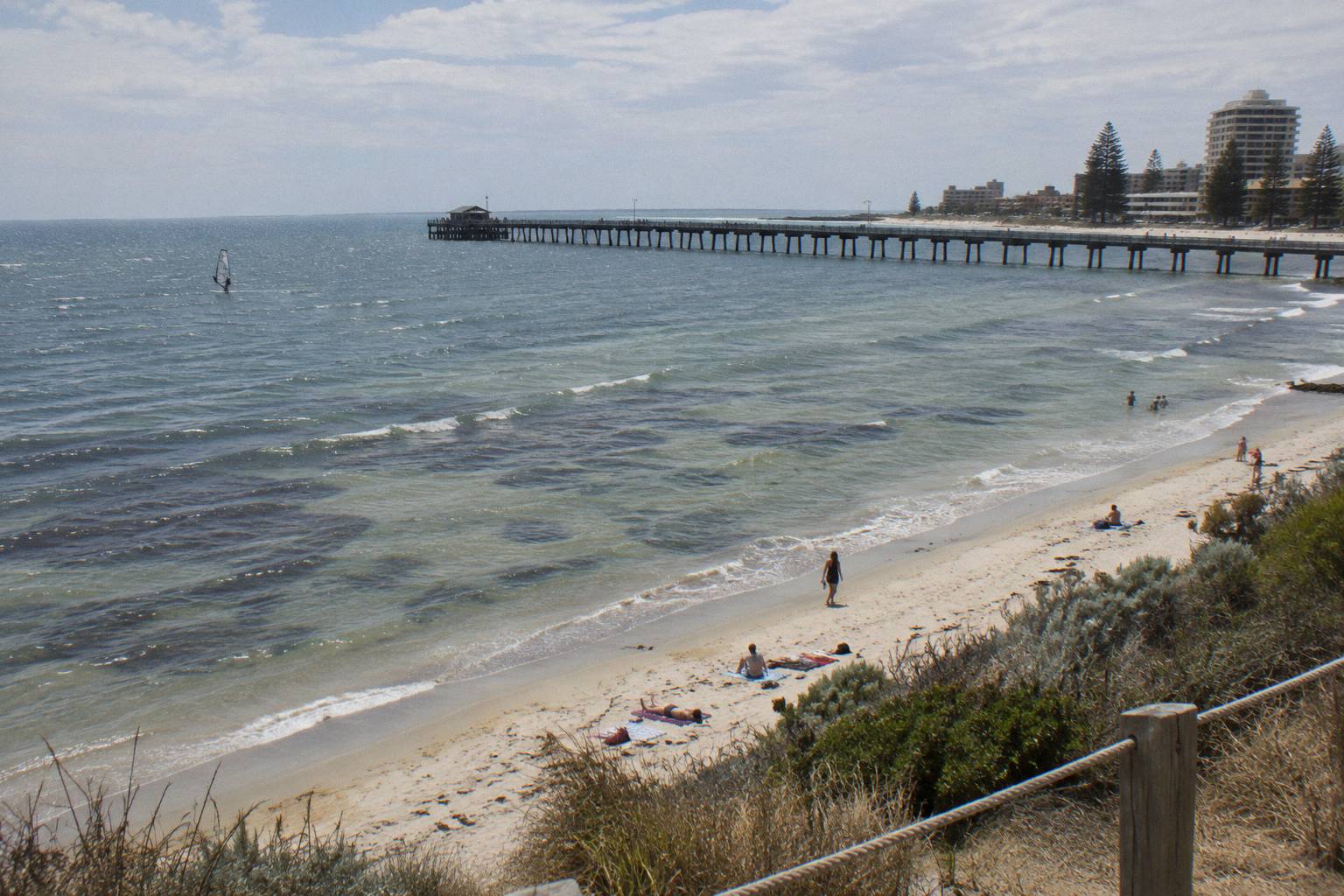
Temperature is the other comfort question. Generic Adelaide sea temperature runs from around 14 °C in August to around 21 °C in February according to seatemperature.org, with November sitting around 18 °C. The Kangaroo Island operator puts its own water at 14-15 degrees year round, with thick wetsuits supplied so the swim operates in every month. The Glenelg swim hands every swimmer a full-length 5 mm wetsuit that doubles as a flotation device. The wetsuits and water temperature guide works through what that means for comfort, and whether you get cold after a dolphin swim handles the after-effects.
None of that changes the sanctuary answer. An estuary with shipping channels, tidal creeks and working wharves is not where any operator in this state has chosen to run a permitted swim, and the experiences sold on it keep you in a boat or a kayak.
Planning Your Day: Which Experience Fits?
Choose the kayak tour, from USD 54.72, to be low on the water among the residents with children as young as 8; the Port River cruise, from USD 60, for a seated 1.5-hour watch; or a Glenelg swim, from USD 104, if being in the water is the point. Book the sanctuary tours for their own sake, not as a substitute for a swim.
A useful framing: the sanctuary trips are a half-day Port Adelaide experience, while the swims are a half-day commitment at Glenelg or a full Kangaroo Island day. The Kangaroo Island dolphin swim day trip from Adelaide guide covers the island logistics, and how far ahead to book a dolphin swim covers timing for the in-water options. Booking-page prices shift with date and group size, so each figure here is a from-price, and the live listing shows your date's real number.
| If you want... | Best-fit tour | Why |
|---|---|---|
| To be on sanctuary water, low and quiet | Dolphin Sanctuary Kayak Tour | Paddle-level view of the resident pod, min age 8 |
| A short, seated sanctuary watch | Port River Dolphin Cruise | 1.5 hours from Port Adelaide |
| To get in the water with dolphins | Wild Dolphin Swim From Glenelg | Controlled line swim, about 4 hours, min age 9 |
| The island version, seals possible | Kangaroo Island Ocean Safari Swim | 2-hour snorkel safari, dolphins or seals |
| To watch without swimming, from the city beach | Wild Dolphin Watch From Glenelg | About 3.5 hours, same waters as the swim |
| A short island watch on a tight schedule | Kangaroo Island Dolphin Watch | About 1 hr 15 min, non-refundable |
Medical and fitness notes differ by product and are stated per operator: the Glenelg back swim is unsuitable with a pacemaker, the Kangaroo Island swim is unsuitable with a pacemaker or pregnancy, and the details sit in fitness and medical conditions for a dolphin swim. Ages and family questions are covered in dolphin swim age limits and kids.
Common Questions About Swimming In The Adelaide Dolphin Sanctuary
Can You Swim In The Adelaide Dolphin Sanctuary?
No tour in this site's roster sells a swim inside the sanctuary. The pages read here state no sanctuary-specific rule on swimming; the swimmer distances in the state regulations apply near dolphins, and a fee-based swim near marine mammals is lawful only under permit. The booked sanctuary experiences are a watching cruise from USD 60 and a kayak tour from USD 54.72.
Are The Dolphins In The Adelaide Dolphin Sanctuary Resident?
Many near-shore dolphins in the sanctuary are year-round residents, Indo-Pacific bottlenose dolphins, while transient individuals also use the wider Adelaide coast and Gulf St Vincent. The Management Plan speaks of around 20 residents and some 400 observed over time; a separate 1993-2020 dataset averaged about 85 in summer and 69 in winter. The two figures are never merged.
How Close Can You Swim To A Dolphin In South Australia?
A swimmer may not come closer than 30 m to a marine mammal, must stay at least 150 m from a dolphin that shows disturbance, appears sick or injured, is stranded or entangled, or is a calf, and may not spend more than 30 minutes within 150 m of a non-whale marine mammal. The expiation fee is AUD 315 per alleged offence.
Where Do The Actual Dolphin Swims Leave From?
The two swims in this roster depart from Glenelg, from USD 104 with Temptation Sailing, and from Penneshaw on Kangaroo Island, from USD 132. The Glenelg swim does not happen in the sanctuary; the sanctuary is the Port River and Barker Inlet estuary north of Port Adelaide, a separate body of water.
Is It Safe To Be In The Water After The Algal Bloom?
State testing shows zero or low Karenia along the metropolitan coast and Kangaroo Island, and official health advice says that if the water is clear, it is fine to swim, while avoiding foamy or abnormally coloured water. Agencies continue monitoring and remain vigilant to future blooms, so check the operator before booking a swim.
Which Sanctuary Tour Is Best For Families?
The Dolphin Sanctuary Kayak Tour, from USD 54.72 and rated 4.8 across 300 reviews, takes children from age 8, a year younger than both swims' minimum of 9. The Port River Dolphin Cruise, from USD 60, has no age minimum stated on its listing. Neither is a swim.