Can You Touch Wild Dolphins During A Swim?
No, touching wild dolphins is prohibited under South Australian law. Here is what the rules say, how permitted swim tours keep swimmers apart from the animals, and which tours are watching only.
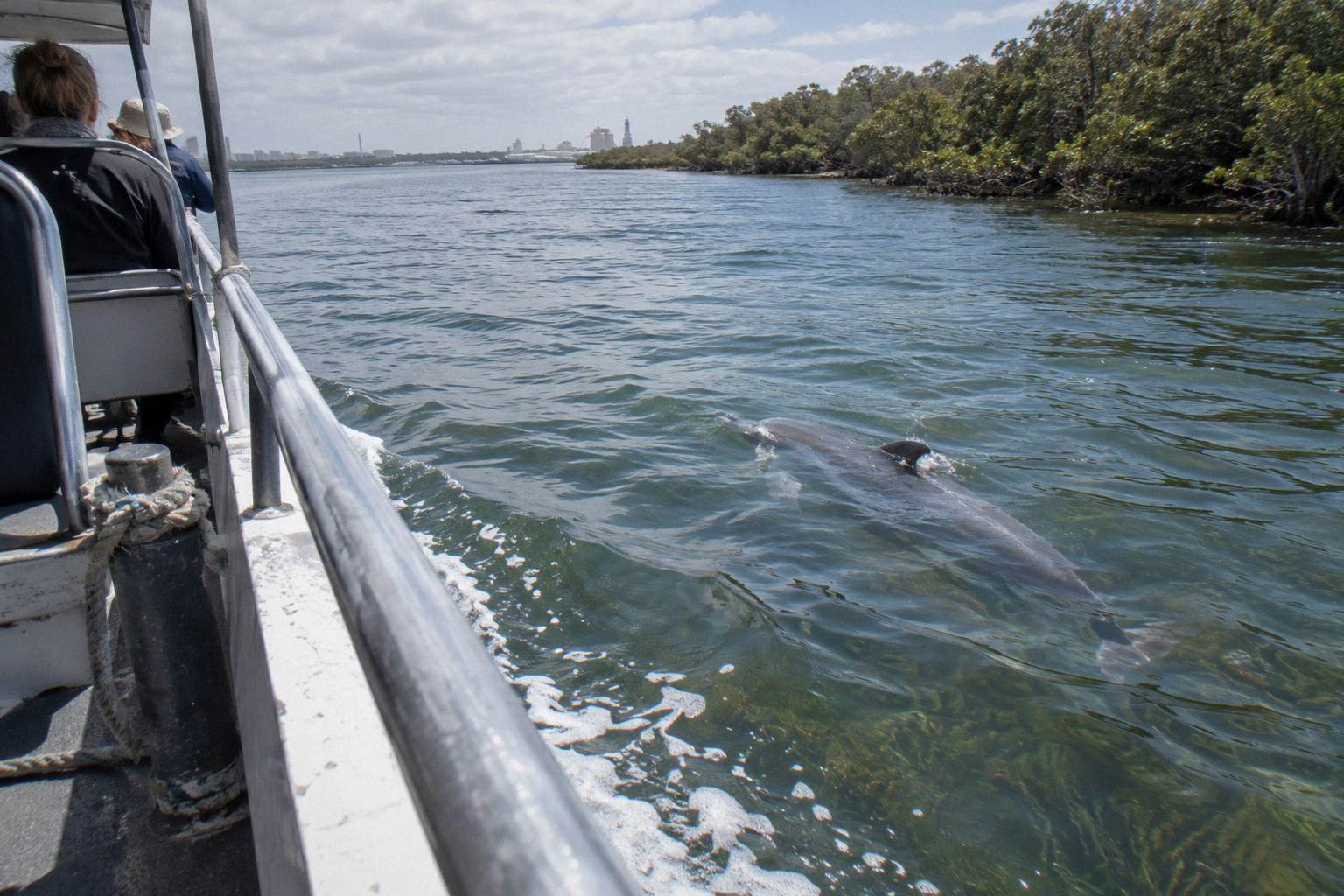
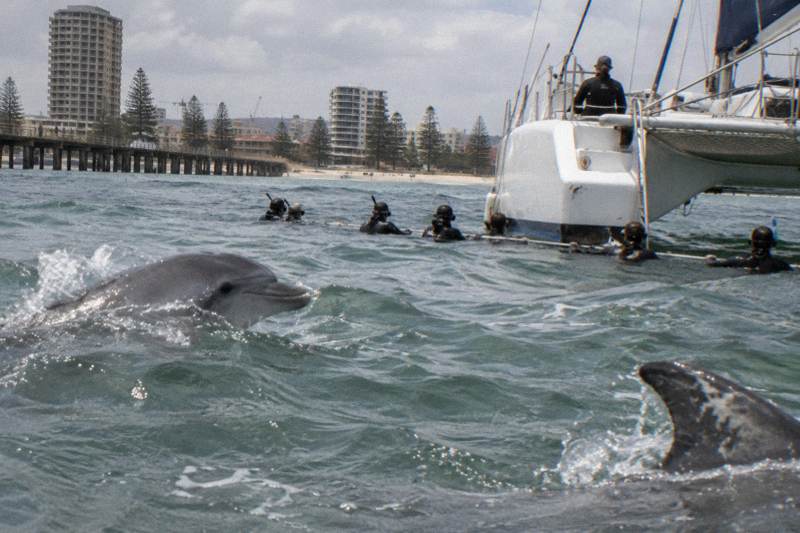
No. Touching wild dolphins is prohibited in South Australia, and so is feeding them. Under the state's marine mammal regulations, a swimmer must not come closer than 30 metres to a marine mammal on their own, and every commercial swim operates under a permit with swimmers held on a controlled flotation line beside the boat. Reaching toward a dolphin is not part of any legal swim, and the regulations carry a AUD 315 expiation fee per alleged offence.
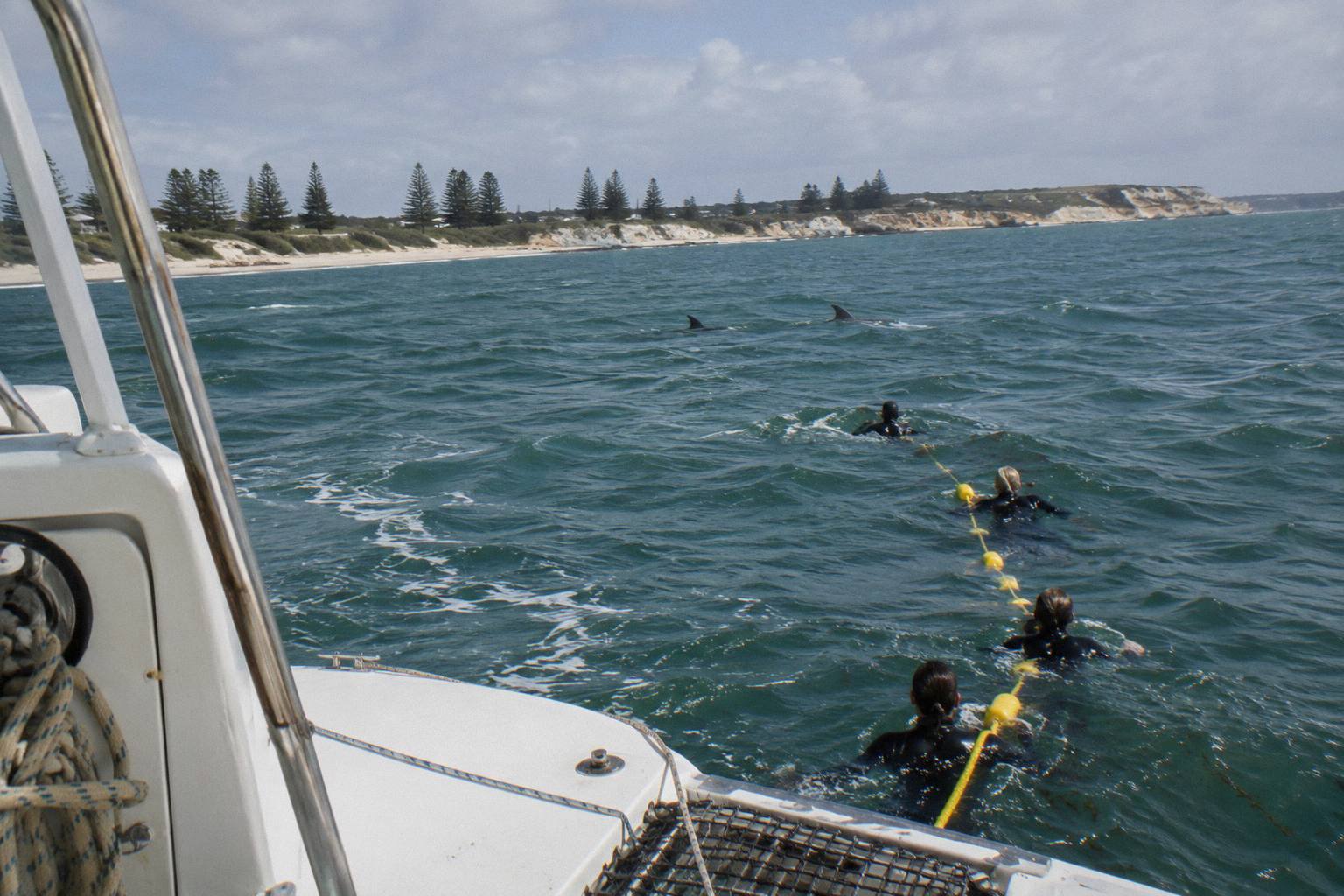
The question comes up more often than almost any other on dolphin swim listings, and the gap between the expectation and the reality is worth spelling out clearly. A wild dolphin swim in South Australia is not a petting encounter and not a free swim across open ocean. It is a controlled, permitted activity in which you float on a line at the stern of a boat while dolphins choose whether to swim past in the water around you. Your hands stay on the line.
That structure is not an operator being overly cautious. It follows from the National Parks and Wildlife (Protected Animals - Marine Mammals) Regulations 2025, which govern both who may run a fee-based swim and how close any individual swimmer may get to a marine mammal. The regulations treat dolphins as protected wild animals, not as attraction animals, and the rules apply to everyone in the water, whether or not they paid for a tour. They apply equally to someone snorkelling off a metropolitan beach and to a ticketed guest on a licensed catamaran, which surprises people who assume a purchased seat suspends the distance rules.
The practical payoff is that the tours built around these rules are the ones worth booking. A licensed operator keeps you inside the law, briefs you before you enter the water, and manages every moment of the swim so that the dolphins' behaviour, not a paying guest's reach, decides what happens.
If you want the fuller picture of how a permitted swim works before deciding, the site's guide to what happens on a wild dolphin swim cruise walks through the whole sequence from boarding to the last water entry. It covers the same ground as a crew briefing, from wetsuit fitting to the moment the crew calls swimmers back on board.
What South Australian Law Says About Touching And Swimming Near Dolphins
South Australia's marine mammal regulations, in operation since 1 September 2025, prohibit touching and feeding marine mammals outright. An unpermitted swimmer must stay at least 30 metres from a dolphin, and no closer than 150 metres if the animal shows disturbance, appears sick or injured, is stranded or entangled, or is a calf. Vessels must keep at least 50 metres, or 150 metres with a calf or disturbance.
The full text of the regulations is published by the state at the legislation.sa.gov.au consolidated PDF, and two layers of it matter here. The first layer is about operators: a person must not, for fee or reward, use a vessel or other means to take another person into the vicinity of a marine mammal to observe it or swim near it, unless they hold a Ministerial permit or other lawful authority. A fee-based dolphin swim is lawful only under a permit, which is why a licensed operator's controlled swim sits inside the rules while a stranger with a boat and snorkels does not.
The second layer applies to you, the swimmer, and it does not pause because you bought a ticket. Snorkelling counts as swimming under the regulations. The distance rules and the prohibition on touching and feeding apply in the water at all times, and regulation 20 sets the expiation fee at AUD 315 per alleged offence. No permit conditions such as swimmer numbers or time in the water have been published anywhere official, so no operator can honestly quote you a legal limit on those, and neither will this page. If a listing promises a specific number of minutes in the water as a regulatory entitlement, treat that as the operator's own choice rather than a legal fact.
| Rule | Who it applies to | Distance or limit |
|---|---|---|
| No touching a marine mammal | Everyone, always | Total prohibition |
| No feeding a marine mammal | Everyone, always | Total prohibition |
| Swimmer distance (general) | Any swimmer or snorkeller | At least 30 m from a marine mammal |
| Swimmer distance (special cases) | Any swimmer or snorkeller | At least 150 m if the animal is disturbed, sick, injured, stranded, entangled, or a calf |
| Time limit near a non-whale | Any swimmer or snorkeller | No more than 30 minutes within 150 m |
| Vessel distance | Any boat or jet ski | At least 50 m from a non-whale marine mammal, 150 m with a calf or disturbance |
| Speed near marine mammals | Vessels | 4 knots within 150 m |
One clarification that trips up a lot of readers: the 30-minute figure is a regulation on swimmers, not an operator's in-water time limit, and the 300-metre figure sometimes quoted online belongs to jet-ski rules, not to dolphin swim boats. The numbers in the table above are the ones the regulations actually state. Note also what the table does not contain: an exception for tour guests. The permit covers the operator taking you into the vicinity of the animals; it does not license you to touch one once you are there.
How Permitted Swim Tours Keep You Apart From The Dolphins
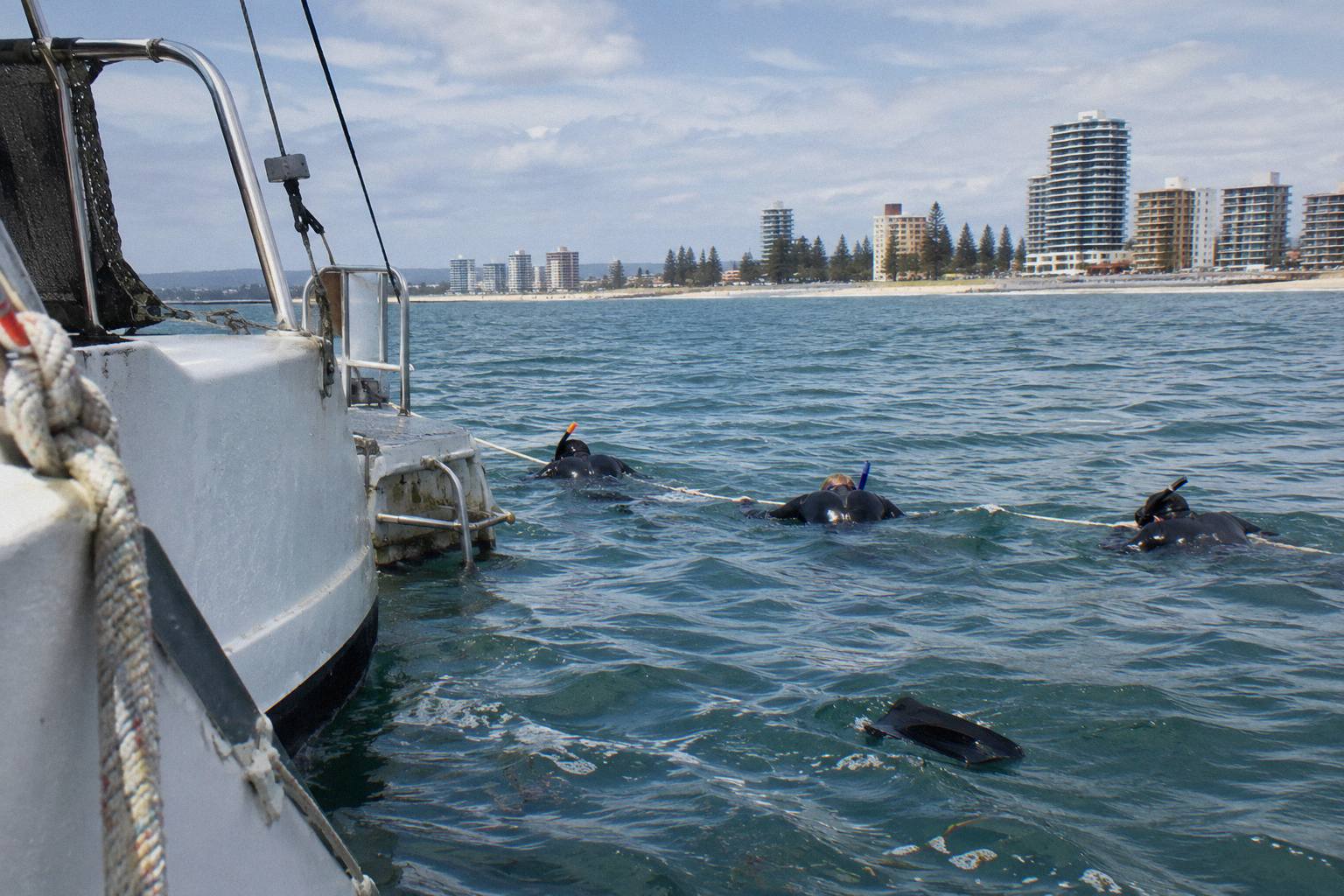
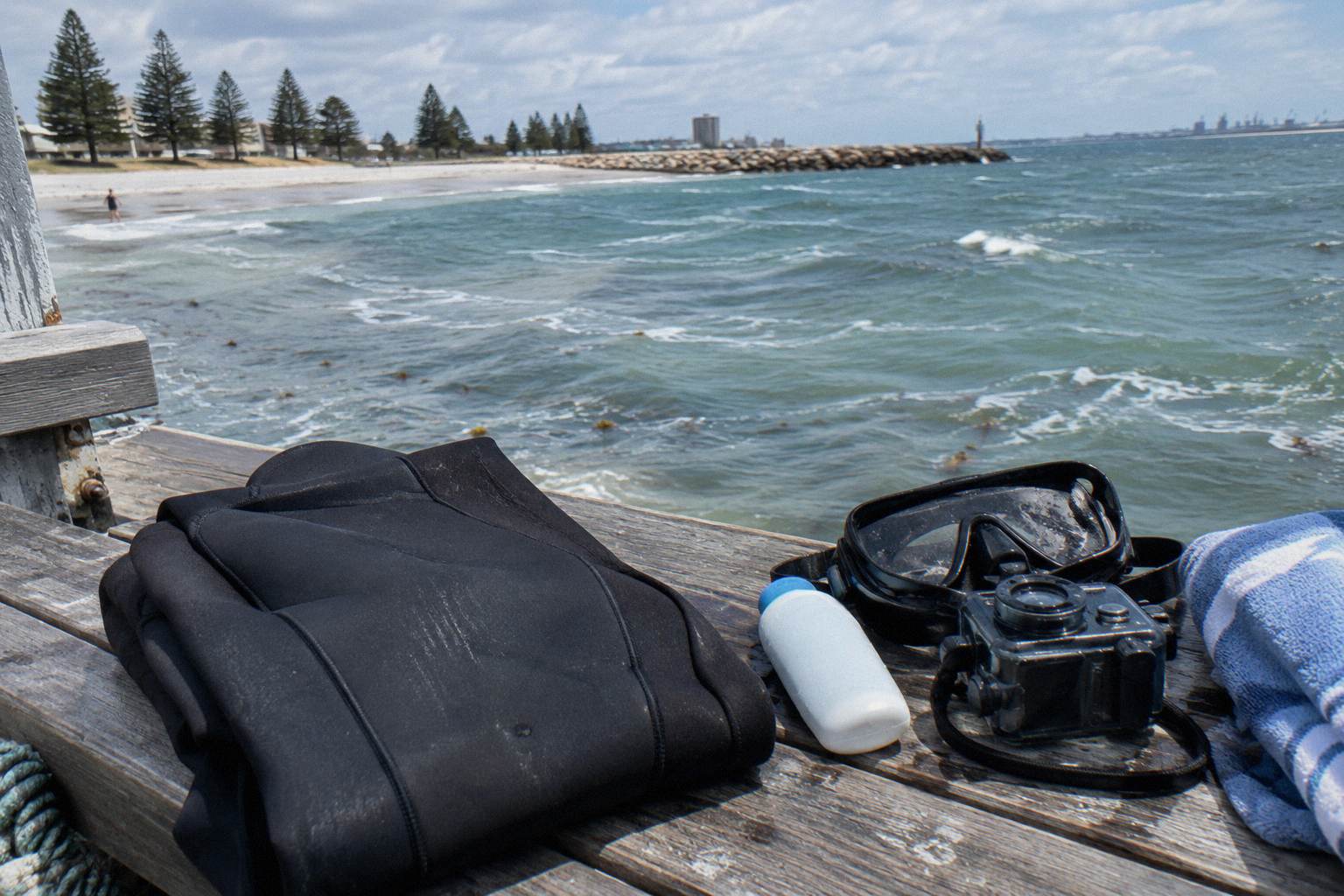
The mechanics matter, because they explain why the no-touch rule rarely creates an awkward moment in the water. On the wild dolphin swim from Glenelg, run by Temptation Sailing, each swimmer is fitted with a full-length 5 mm wetsuit that the operator describes as also acting as a full-body flotation device. After a crew briefing of about 15 minutes, all swimmers hold a flotation line connected to the stern while the catamaran moves slowly forward. The operator describes the experience as fully controlled rather than free swimming, with two swim positions, a Front Swim and a Back Swim, and swimmers rotated between them. The crew enters swimmers only once dolphins have turned toward the boat, and stops entries when the dolphins come too close, which is the rule working in the animals' favour. A marine biologist hosts, and two shark shields run during the back swim.
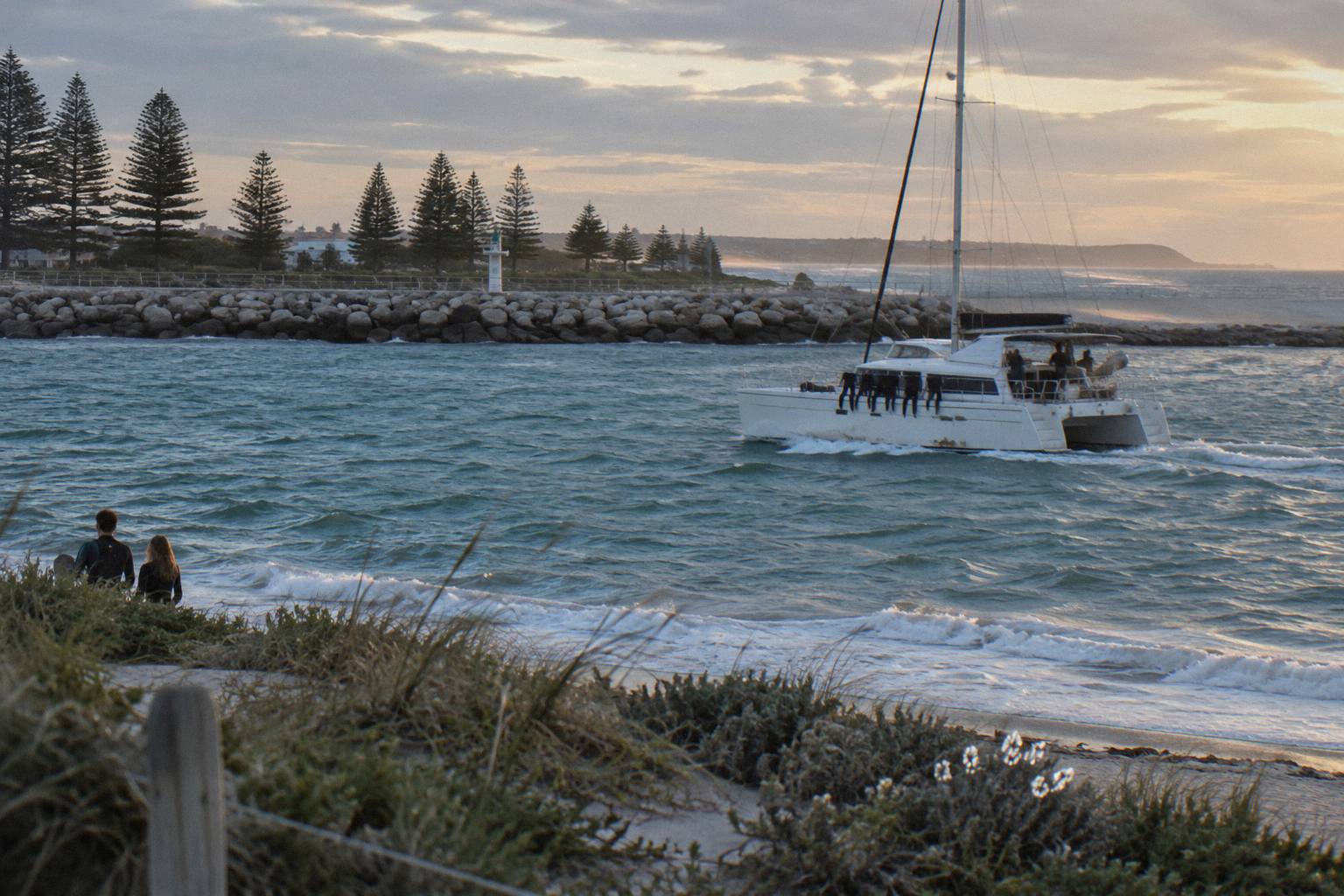
Kangaroo Island Ocean Safari runs its swim on similar principles from Penneshaw. Its 2-hour Snorkelling Safari is described by the operator as a swim with wild dolphins or among seals, and the trip may turn out to be dolphins only, seals only, or a coastal snorkel. A swimmer line with buoys is often used at the back of the vessel for the dolphin swim, which the operator notes needs upper body strength, and the ladder exit needs lower body strength. Wetsuit, gloves, mask, snorkel and fins are provided, and the operator says its thick wetsuits allow the swim year round. The booking page adds that the swim does not run when the pod has neonates, which is another way the animals' condition governs the schedule.
In both cases the line is the point. It keeps every swimmer at a fixed position relative to the boat, so the distance between people and dolphins is managed by the crew, and the dolphins retain full freedom to approach, pass, or stay away. Nothing about your hands is required, and nothing about your hands is allowed. Guests who imagine themselves gliding alongside a dolphin, arm's length away, are imagining a different activity entirely: what actually happens is a slow drift at the stern while the ocean's residents make their own arrangements.
If you are weighing whether the format suits you, the guide to a dolphin swim for non-swimmers and weak swimmers explains how the line and the wetsuit change the experience for people who are not confident in open water. It also covers the option of riding as a watcher on the same boat, which Temptation Sailing offers for nervous swimmers in a mixed group.
Which Dolphin Tours Are Watching Only?
Four of the six tours on this site's roster are watching-only: the Wild Dolphin Watch From Glenelg, the Port River Dolphin Cruise, the Dolphin Sanctuary Kayak Tour and the Kangaroo Island Dolphin Watch. Only two are swims, the Glenelg swim from USD 104 and the Kangaroo Island Ocean Safari swim from USD 132. Watching tours involve no water entry at all, so the touch question never arises.
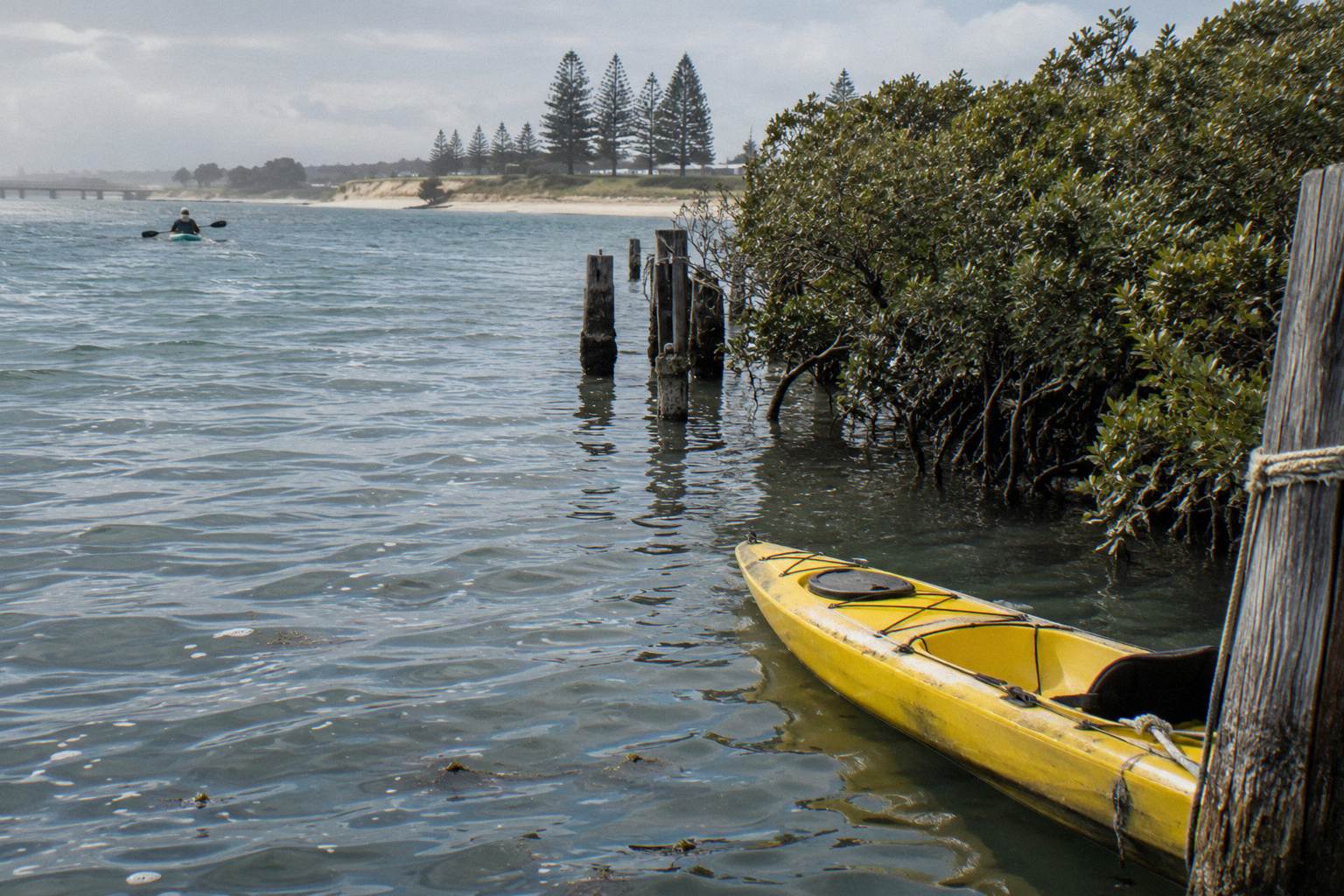
This distinction is worth checking before you book, because listings group swims and watches together under similar names. The watching-only options carry their own strengths: the Wild Dolphin Watch From Glenelg is rated 4.8 across 409 reviews from USD 62 per person, the Port River Dolphin Cruise is rated 4.5 across 481 reviews from USD 60, the Dolphin Sanctuary Kayak Tour is paddling only at 4.8 across 300 reviews from USD 54.72, and the Kangaroo Island Dolphin Watch is 4.8 across 640 reviews from USD 61.74. That is a wide range of ways to see the same animals, and none of them involves sharing their water.
| Tour | Type | From (USD) | Rating and reviews |
|---|---|---|---|
| Wild Dolphin Swim From Glenelg With Temptation Sailing | Swim | 104 | 4.7 across 493 reviews |
| Kangaroo Island Ocean Safari Swim | Swim | 132 | 4.4 across 137 reviews |
| Wild Dolphin Watch From Glenelg | Watching only | 62 | 4.8 across 409 reviews |
| Port River Dolphin Cruise | Watching only | 60 | 4.5 across 481 reviews |
| Dolphin Sanctuary Kayak Tour | Paddling only | 54.72 | 4.8 across 300 reviews |
| Kangaroo Island Dolphin Watch | Watching only | 61.74 | 4.8 across 640 reviews |
For families with children under the swim age of 9, or for anyone whose real interest is seeing dolphins rather than being in their water, a watching cruise is the honest answer to this page's question: you cannot touch a dolphin from any of these tours, and on a watch trip you are never tempted to try. The Glenelg watch cruise runs on the same boat as the swim, so a mixed group can split between swim and watch tickets, and the paddle option in the sanctuary puts you at water level without entering the dolphins' space uninvited.
What If A Dolphin Swims Close To You?
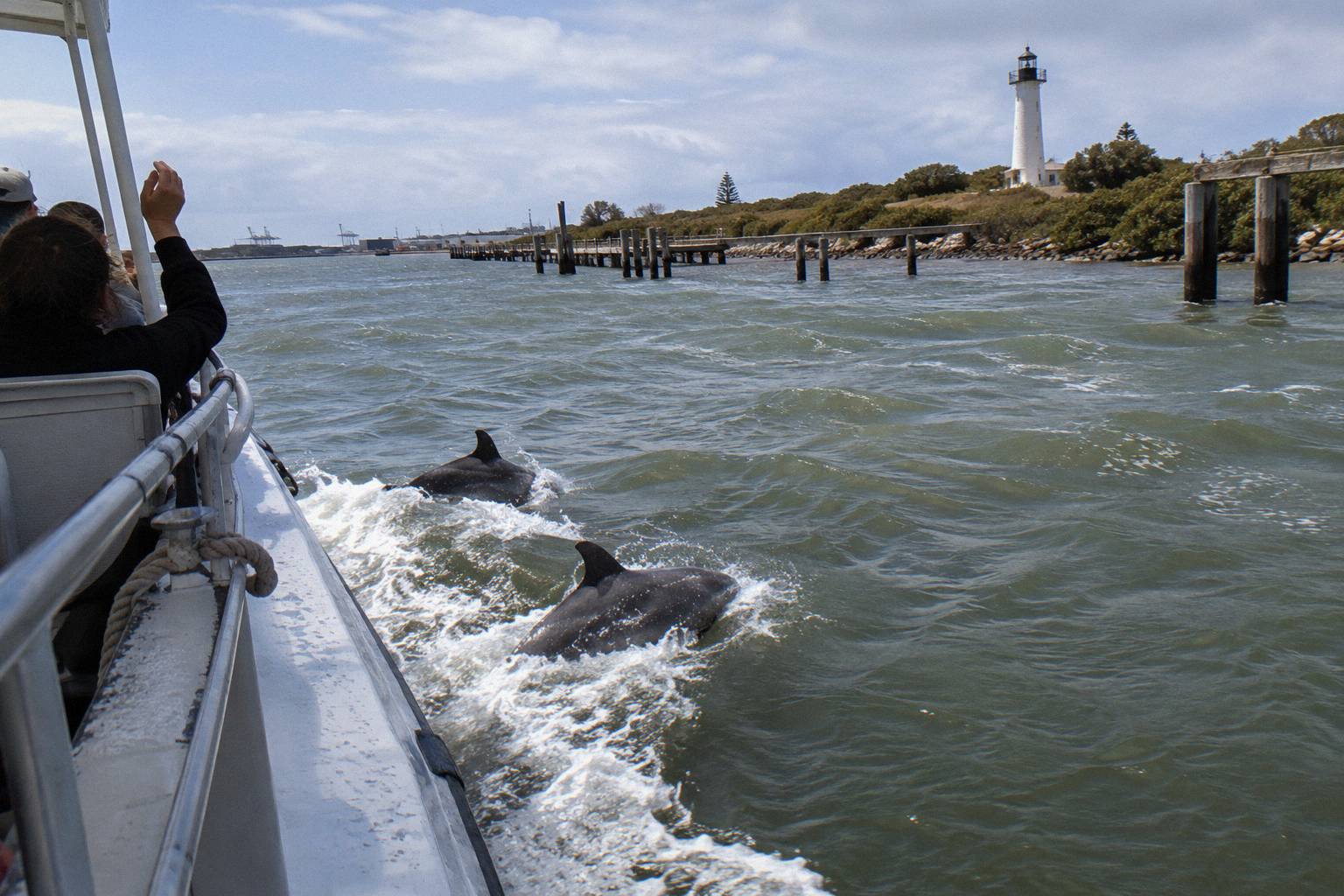
If a dolphin comes near, your job is to hold the line and stay still, and the crew's job is to end the interaction. Temptation Sailing states that its crew stops water entries when dolphins get too close, which is the permitted operator's way of keeping the encounter on the dolphins' terms. Reaching out, swimming toward the animal, or chasing it would breach the regulations and would end your swim.
Dolphins are curious animals, and on a permitted swim the geometry usually means they pass close by the line on their own initiative. The law still draws a hard line: the prohibitions on touching and feeding are absolute, and the 30-metre swimmer rule applies whenever you are in the water without the framework of a permitted tour. The crew's decision to stop entries when dolphins come too close is not a buzzkill, it is the mechanism that keeps the swim lawful and repeatable. It is also the reason the activity has survived as a commercial offering at all, since a regulatory regime that produced harassed animals would have ended it years ago.
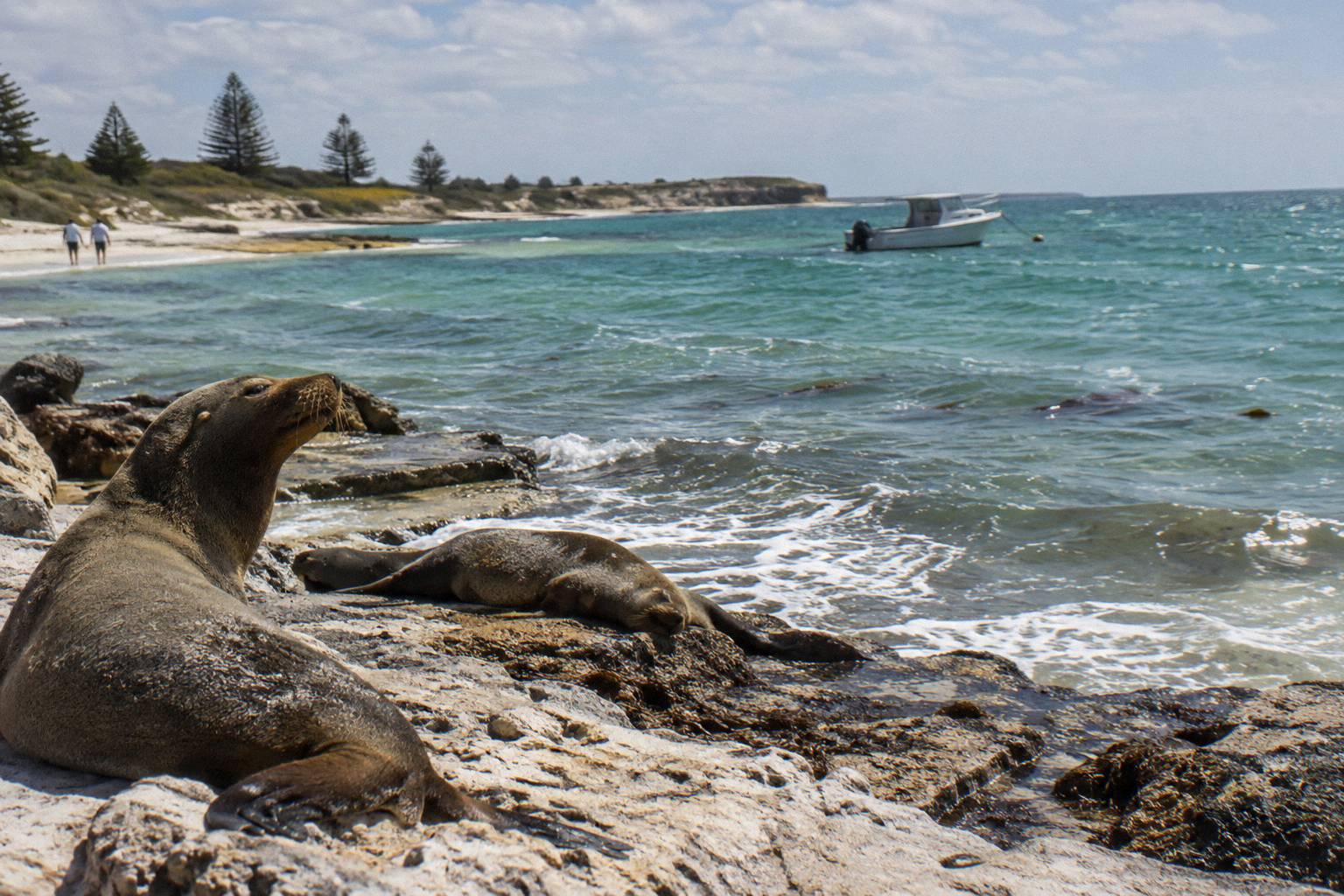
For the scenarios beyond a tour, including shore encounters and dolphins that approach swimmers on their own, the site's piece on what to do if a dolphin swims up to you covers the practical responses. The short version is the same one the regulations imply: the animal decides the distance, and you decide to respect it. Guests sometimes worry a dolphin might bump or brush past them; the separate article on whether dolphins bite swimmers addresses what the animals themselves might do, which is a different question from what you are allowed to do.
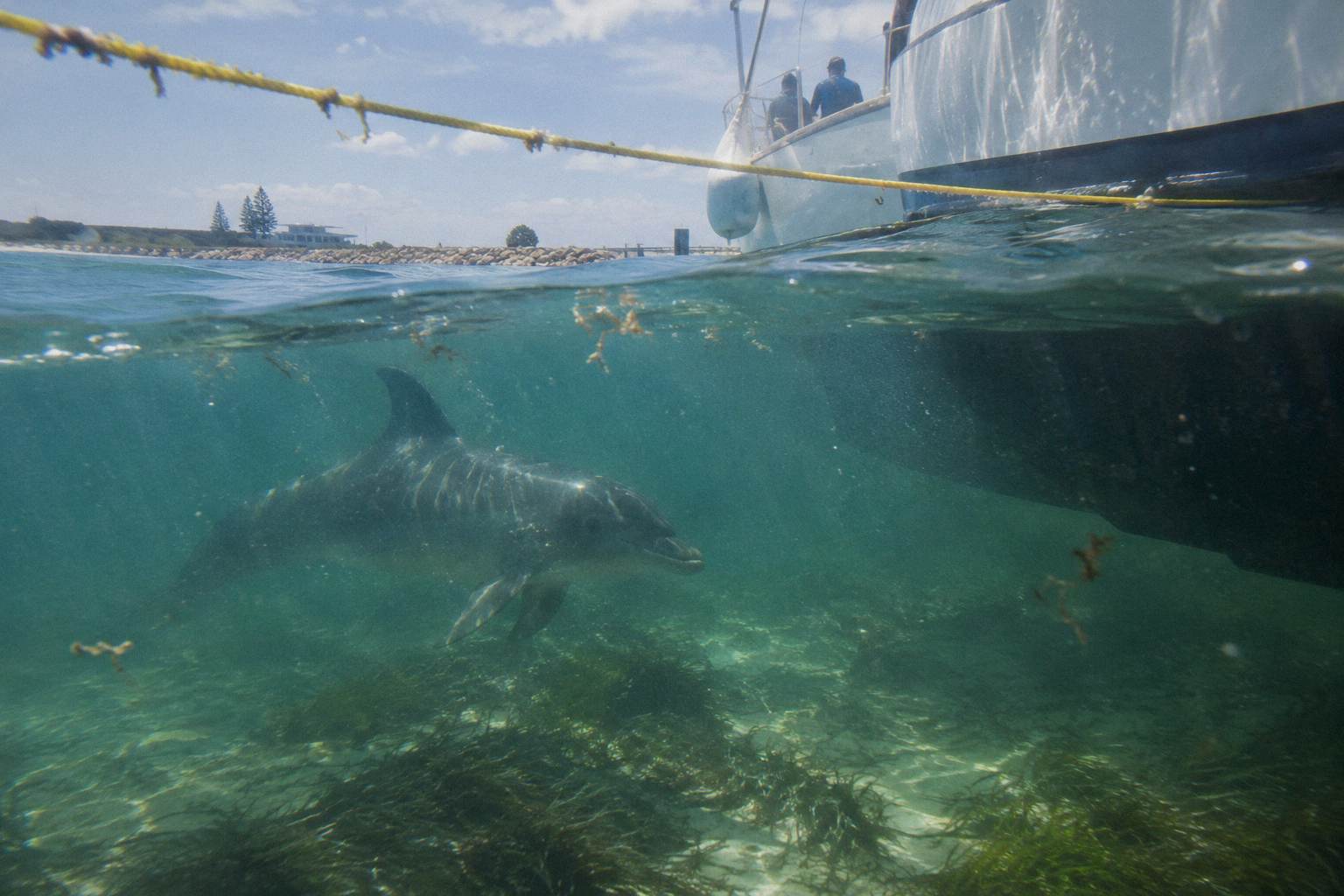
Why The No-Touch Rule Exists
The rules protect wild animals from cumulative human pressure: a dolphin that learns to associate people with touch or food changes its behaviour, its feeding and its vulnerability to propellers. The stricter 150-metre buffer for calves, sick or entangled animals exists precisely because contact and proximity carry real welfare costs, and a fully grown bottlenose dolphin can weigh 120 to 160 kg and exceed two metres.
The welfare argument is set out plainly in the state's own material. The Adelaide Dolphin Sanctuary, which covers 118 square kilometres of the Port River and Barker Inlet estuary north of Port Adelaide, is home to Indo-Pacific bottlenose dolphins that the official state page describes as including year-round residents, with transient individuals also using the wider coast. Those resident animals meet boats, kayakers and swimmers constantly, which is exactly why the regulations treat every single interaction as part of a cumulative load rather than an isolated moment of fun. A dolphin that approaches one boat because it was fed there will approach the next one too, including boats that are not staffed by people who know how to read its behaviour.
Permit-based swims, in that light, are the compromise that keeps the activity possible. A licensed operator controls numbers, holds swimmers on a line, stops entries when dolphins come too close, and never feeds or lures the animals. The operator's own FAQ pages describe the briefing, the wetsuits and the rotation between swim positions in detail, and none of it involves contact. The Kangaroo Island operator's safari page likewise describes a buoyed swimmer line and provided gear rather than any promise of proximity. If you want to dig into the ethics further, the guide examining whether a wild dolphin swim is ethical works through the arguments on both sides.
Where This Leaves Your Booking
Book a permitted swim if you want to be in the dolphins' water on their terms, and a watch cruise if you want the sighting without the wetsuit. Expect to hold a flotation line, keep your hands to yourself, and let the crew decide when swimmers enter the water. Touching and feeding are prohibited in every case, on every tour, without exception.
The Adelaide Swimming With Dolphins roster splits cleanly along that line. The swim from Glenelg, rated 4.7 across 493 reviews and listed from USD 104 per person, and the Kangaroo Island Ocean Safari swim, rated 4.4 across 137 reviews from USD 132, are the two in-water options. Both hold free cancellation up to 24 hours on their booking pages, though the Kangaroo Island operator's own terms tier cancellations differently, from a full refund if it cancels to no refund within 48 hours with credit held 24 months. The watch cruises, from USD 54.72 to USD 62, put you above the water with the same animals, often close enough to see them clearly without ever sharing their element.
Whichever you choose, the honest summary of this page is short: the question of touching wild dolphins has a firm legal answer, and the tours that operate within the law are built so that the question never has to be asked in the water. The dolphins of Gulf St Vincent and the Kangaroo Island coast are wild residents, not performers, and the best dolphin experiences are the ones designed around that fact from the first briefing to the last climb up the ladder.
Common Questions About Touching Wild Dolphins
Can You Touch Wild Dolphins During A Swim?
No. Touching wild dolphins is prohibited under South Australia's marine mammal regulations, on a tour or off one. Swimmers on permitted tours hold a flotation line beside the boat and keep their hands on it; the crew controls every entry and exit.
How Close Can A Swimmer Legally Get To A Dolphin?
An unpermitted swimmer must stay at least 30 metres from a marine mammal, and at least 150 metres if the animal shows disturbance, appears sick or injured, is stranded or entangled, or is a calf. Snorkelling counts as swimming under the regulations.
Can You Feed A Wild Dolphin To Bring It Closer?
No. Feeding marine mammals is prohibited outright, alongside touching. Operators do not chum, feed or lure dolphins; the dolphins on a permitted swim approach on their own initiative or not at all.
What Happens If A Dolphin Comes Right Up To You?
Hold the line, stay still and let the animal pass. Temptation Sailing states that its crew stops water entries when dolphins get too close, so the encounter always ends on the dolphins' terms rather than the swimmers'.
What Is The Penalty For Touching A Wild Dolphin?
The regulations set an expiation fee of AUD 315 per alleged offence. The same framework governs distance breaches by swimmers and vessels, so a moment of reaching out carries real consequences.
Are Any Dolphin Tours In South Australia Touch Experiences?
No. Every tour on this site's roster is a permitted swim, a watching cruise or a paddle. None offers contact with the animals, and the two swim tours hold swimmers on flotation lines beside the boat throughout.