What To Do If A Dolphin Swims Up To You
The distance, touching and feeding rules that apply the moment a wild dolphin approaches you in South Australian water, and how crewed swims manage the encounter.
A dolphin choosing to come to you is the moment the whole trip is built around, and it is also the moment the law stops being abstract. In South Australia the rules for swimmers near marine mammals are written down, they carry an expiation fee of AUD 315 per alleged offence, and they apply to you personally, not only to the boat. On a crewed swim from Glenelg or Kangaroo Island the crew manages most of it for you; on your own in the water, the distances and the prohibitions are yours to hold.
If a wild dolphin swims up to you in South Australian water, hold the legal distance and do not initiate contact: a swimmer must stay at least 30 m from a marine mammal, at least 150 m if the animal is a calf or shows disturbance, injury or entanglement, and must not stay within 150 m for more than 30 minutes. Touching and feeding are prohibited. On a crewed swim, follow the crew and stay on the line.
The 30 m rule surprises people because it seems to make the close encounter impossible. Read it carefully: the regulation sets the minimum distance you must maintain, and the dolphin is free to close that distance itself. What the law does not permit is you swimming toward the animal, reaching out as it passes, or lingering inside its space once it has moved on. The rules sit in the National Parks and Wildlife (Protected Animals, Marine Mammals) Regulations 2025, in operation since 1 September 2025, and the official text is published as a PDF on the South Australian legislation site.
Two prohibitions in that same set of regulations matter more than any distance figure. Feeding a marine mammal is prohibited. Touching a marine mammal is prohibited. Neither has a "but it came right to me" exception, and both are the fastest way to turn a good encounter into an alleged offence. The site's longer piece on whether you can touch wild dolphins during a swim covers the reasoning in detail.
The Distance Rules That Apply To You, Not The Boat
A private swimmer in South Australia must keep at least 30 m from any marine mammal, and at least 150 m from a dolphin that shows disturbance, appears sick or injured, is stranded or entangled, or is a calf or pup. Snorkelling counts as swimming under the regulations. No swimmer may remain within 150 m of a dolphin for more than 30 minutes, and the expiation fee is AUD 315 per alleged offence.
Those numbers come from regulation 14 of the 2025 regulations, and they are worth breaking apart because each one covers a different situation. The 30 m figure is the everyday rule. The 150 m figure applies to vulnerable animals: a calf sticking close to its mother, a dolphin logging oddly at the surface, an animal that changes behaviour when you arrive. The 30-minute figure is a time cap, not a distance, and it exists so a curious dolphin is not followed around for an entire afternoon.
| Rule | What it means for you | Where it applies |
|---|---|---|
| 30 m minimum | Do not swim toward a dolphin to close the gap; let the animal decide | All swimmers and snorkellers |
| 150 m for calves and disturbed animals | Back away from any dolphin that is a pup, sick, injured, stranded or entangled | All swimmers and snorkellers |
| 30 minutes within 150 m | Do not shadow a pod for an extended period | All swimmers and snorkellers |
| No touching | Keep hands to yourself even at arm's length | Everyone in or on the water |
| No feeding | Never offer bait, fish or anything else | Everyone in or on the water |
Vessels carry their own set of numbers, and they are different from the swimmer numbers, which is where confusion creeps in. A boat must keep at least 50 m from a non-whale marine mammal, and at least 150 m where there is a calf or the animals show disturbance. The 300 m figure you sometimes see quoted belongs to jet-skis and to whales, not to dolphin boats and not to swimmers, so ignore it for this situation. The site's guide to dolphin swim rules and how close you can get works through the full ladder of distances.
If you are swimming from a licensed tour, the crew carries this burden for you: the skipper holds the vessel distances, and the swim format itself keeps you inside the swimmer rules. That is not an accident of design. A fee-based swim near dolphins is lawful in South Australia only under a permit, because regulation 19 of the 2025 regulations prohibits taking another person into the vicinity of a marine mammal, for fee or reward, to observe or swim near it, without a Ministerial permit or other lawful authority. No public permit register or permit conditions could be found on any official source, so none can be printed here.
How The Glenelg Swim Controls The Encounter For You
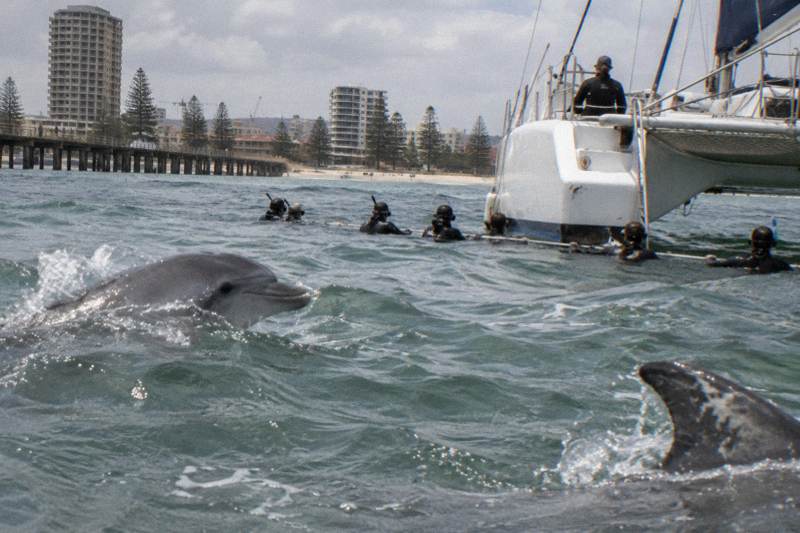
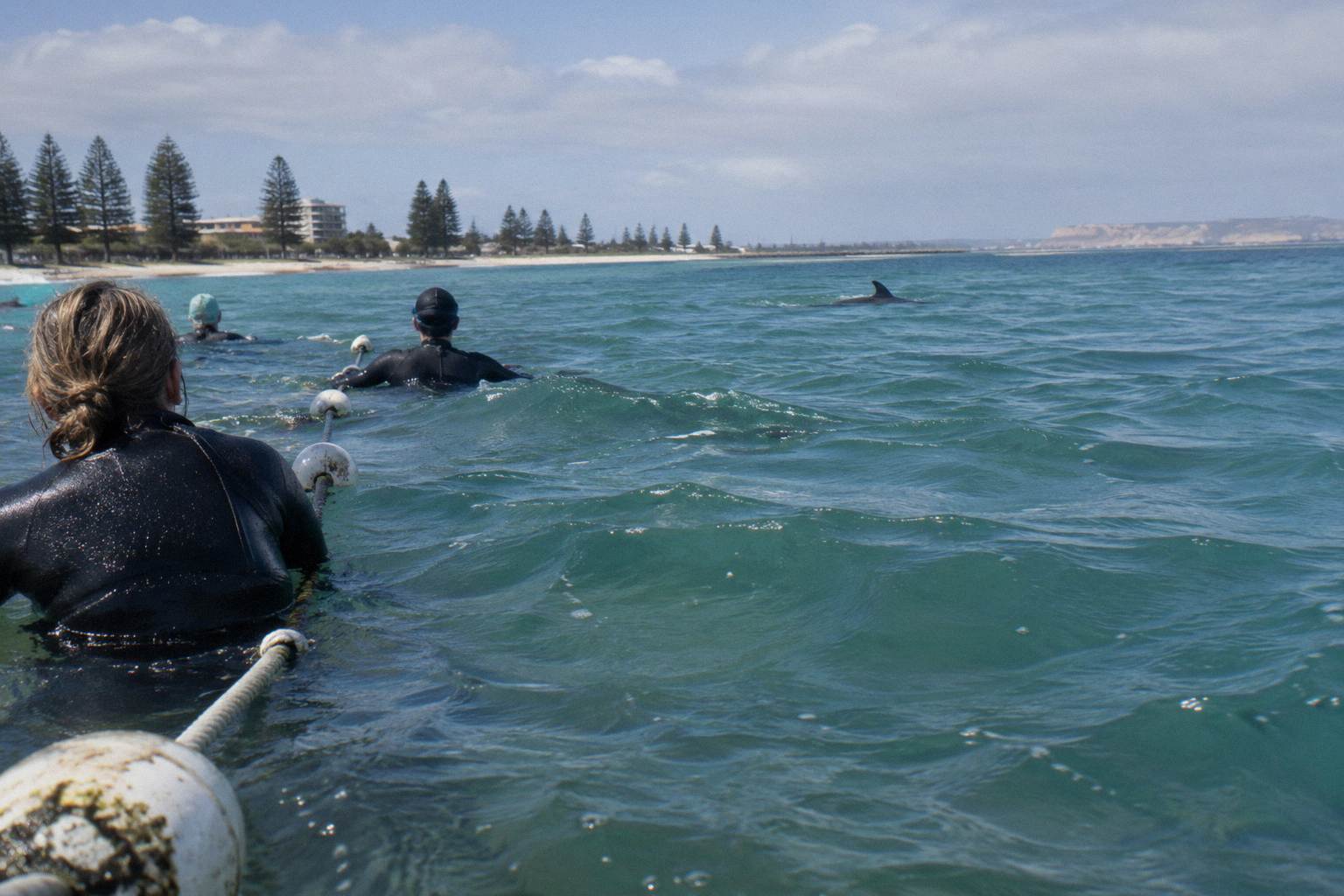
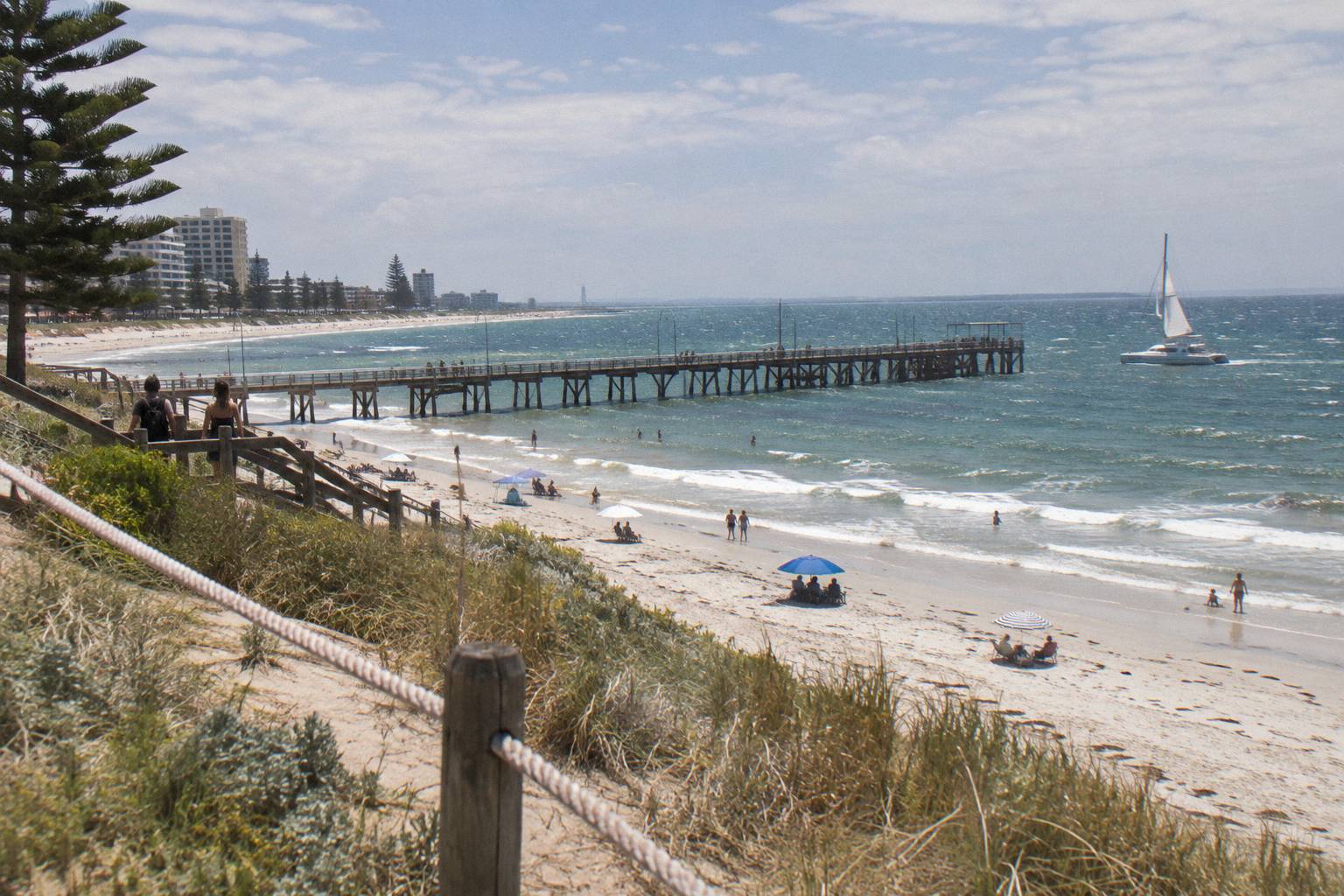
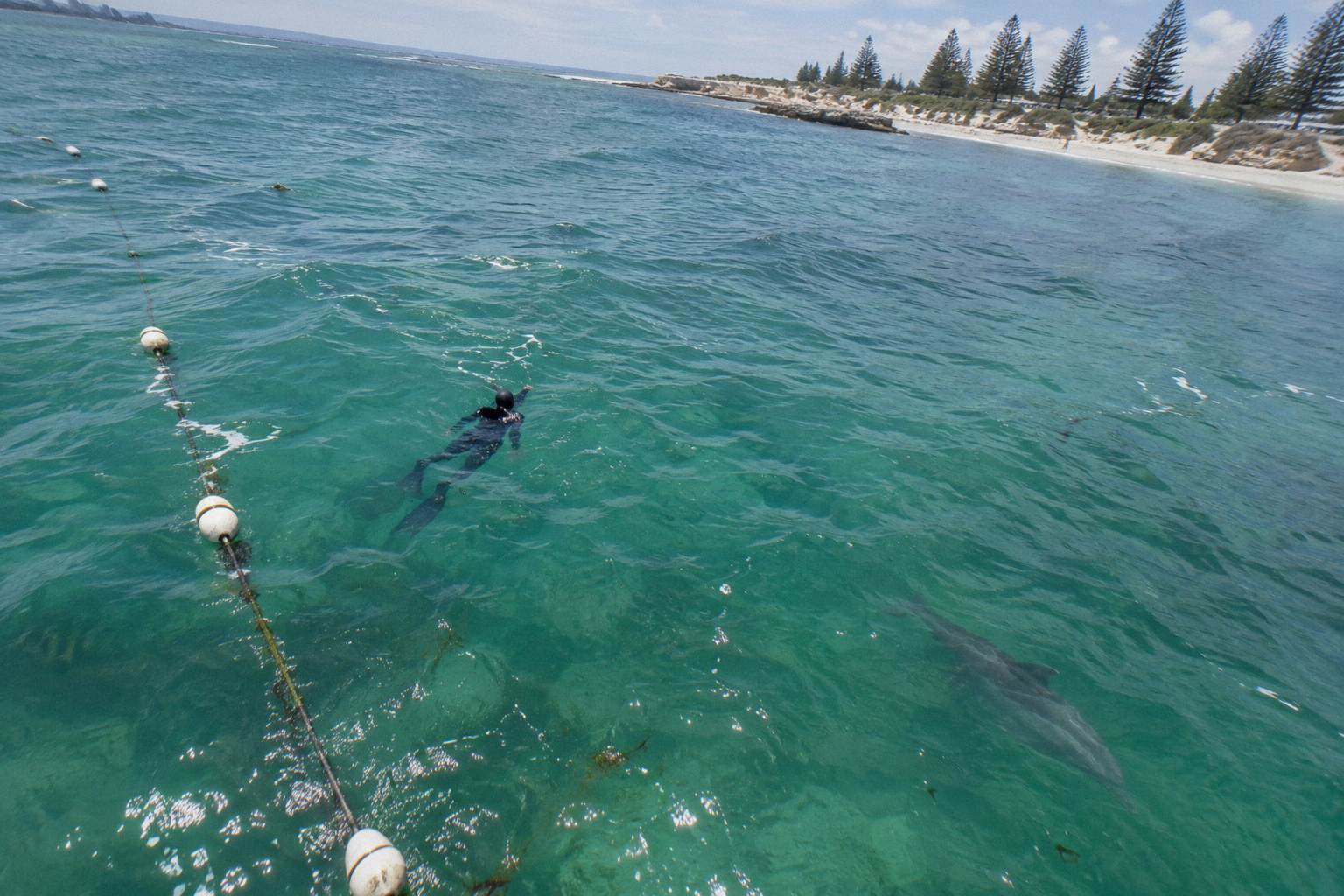
On the Glenelg dolphin swim, swimmers hold a flotation line connected to the stern while the boat moves slowly, the crew runs a briefing of about 15 minutes before anyone enters the water, and the crew alone decides when swimmers go in and when they come out. The crew puts swimmers in only once dolphins have turned toward the boat and stops entries when dolphins get too close.
That sequence is the operator's own description of the trip, published on its FAQ page, and it is worth reading as a safety system rather than a marketing line. You are not free swimming in open ocean. Every swimmer on the Wild Dolphin Swim From Glenelg holds the line, so the distance between you and the boat is fixed, and the distance between the boat and the dolphins is the crew's to manage within the vessel rules. Your only real decision in the water is to keep holding on.
The boat itself is, per the operator, a 58 ft sailing catamaran surveyed for up to 50 passengers, boarding at Marina Pier, Holdfast Shores Marina in Glenelg, with boarding starting 15 minutes before a morning departure. Each swimmer is fitted with a full-length 5 mm wetsuit that the operator says also works as a flotation device, masks and snorkels are demonstrated, and prescription masks are carried in -1.5, -3 and -4.5 strengths. There are two swim experiences, the Front Swim and the Back Swim, and swimmers are rotated between them. Two shark shields run during the back swim; the front swim has none. A full walkthrough of the day is in the guide to what happens on a wild dolphin swim cruise.
The crew's control over entries is the part that answers this page's question directly. The operator's FAQ page describes entries beginning only when dolphins turn toward the boat, and entries stopping when dolphins get too close. In other words the close approach is managed by people who watch dolphin behaviour all day, every day, from September to April, which is the season the operator states on that same page. The tour is listed at about 4 hours, rated 4.7 across 493 reviews, from USD 104 per person, minimum age 9, with free cancellation up to 24 hours on the listing.
What Happens When You Join The Wrong End Of The Encounter
Not every close approach is a good one, and the regulations draw a hard line at the vulnerable cases: if the dolphin approaching you is a calf, appears sick or injured, is stranded or entangled, or shows disturbance, the required swimmer distance rises from 30 m to 150 m. Touching and feeding remain prohibited regardless of how the animal behaves, and an alleged offence carries an expiation fee of AUD 315.
The calf rule is the one most likely to bite an otherwise careful swimmer, because a mother and calf pair often draws the most attention. The regulation does not ask whether you meant well. A pup close to its mother, an animal behaving erratically at the surface, or a dolphin that visibly reacts to your presence all shift you into the 150 m band, and staying to watch shifts you toward the 30-minute cap.
Feeding deserves its own paragraph because it is the prohibition people break by accident, tossing a fish or bait to bring an animal closer. It is prohibited outright, and the reason is not bureaucratic: fed dolphins change their behaviour around boats and swimmers, which endangers the animal first and the people second. The same logic sits behind the touching ban, which the site covers in is a wild dolphin swim ethical.
How The Kangaroo Island Swim Handles The Same Moment
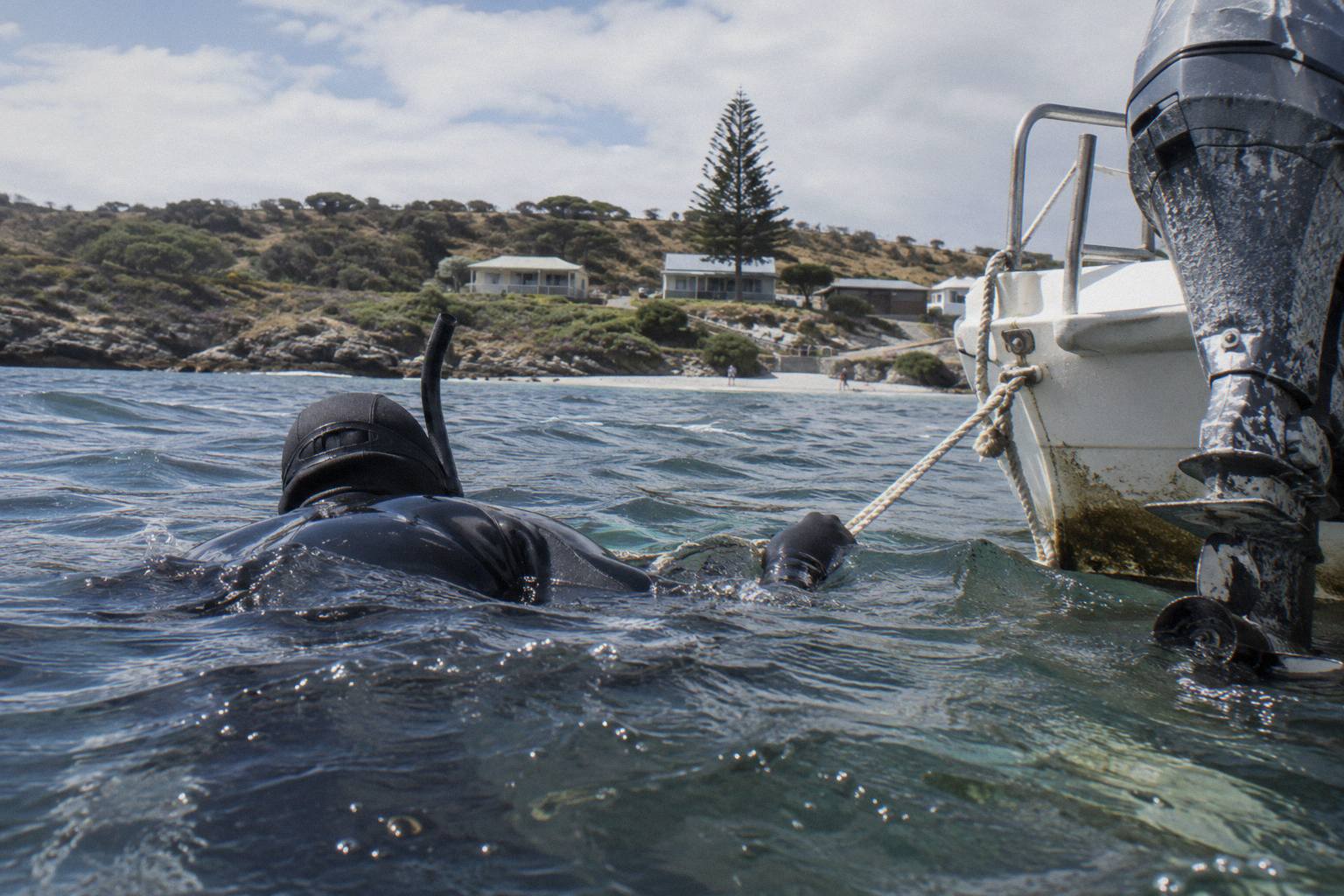
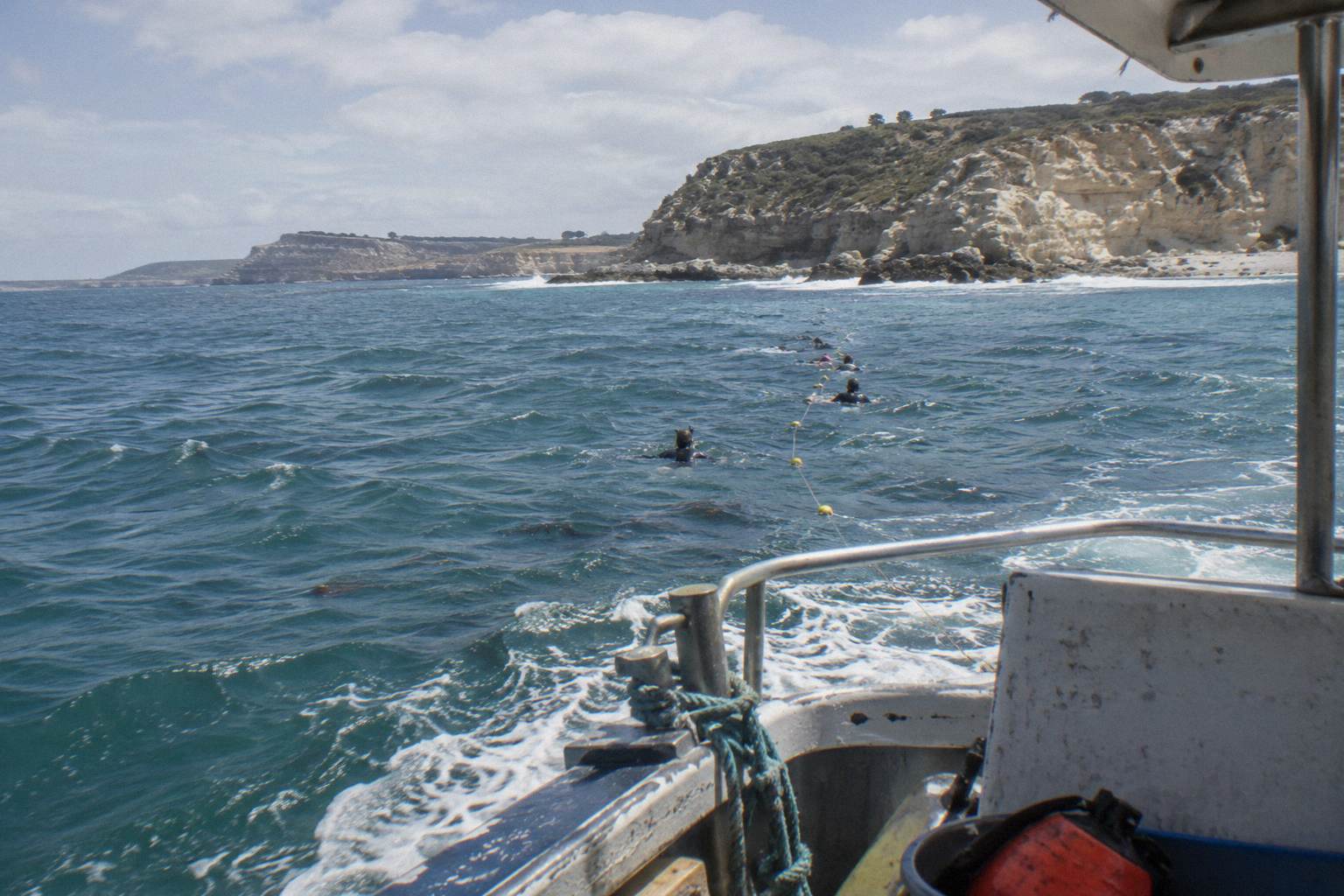
On Kangaroo Island, the Ocean Safari Snorkelling Safari is crew-led the same way: the operator says a swimmer line with buoys is often used at the back of the vessel for the dolphin swim, wildlife interactions are not guaranteed, and if you get in the water at any stage there is no refund. The swim is open to ages 9 and up, wetsuits, gloves, mask, snorkel and fins are provided, and the trip runs about 2 hours from Penneshaw.
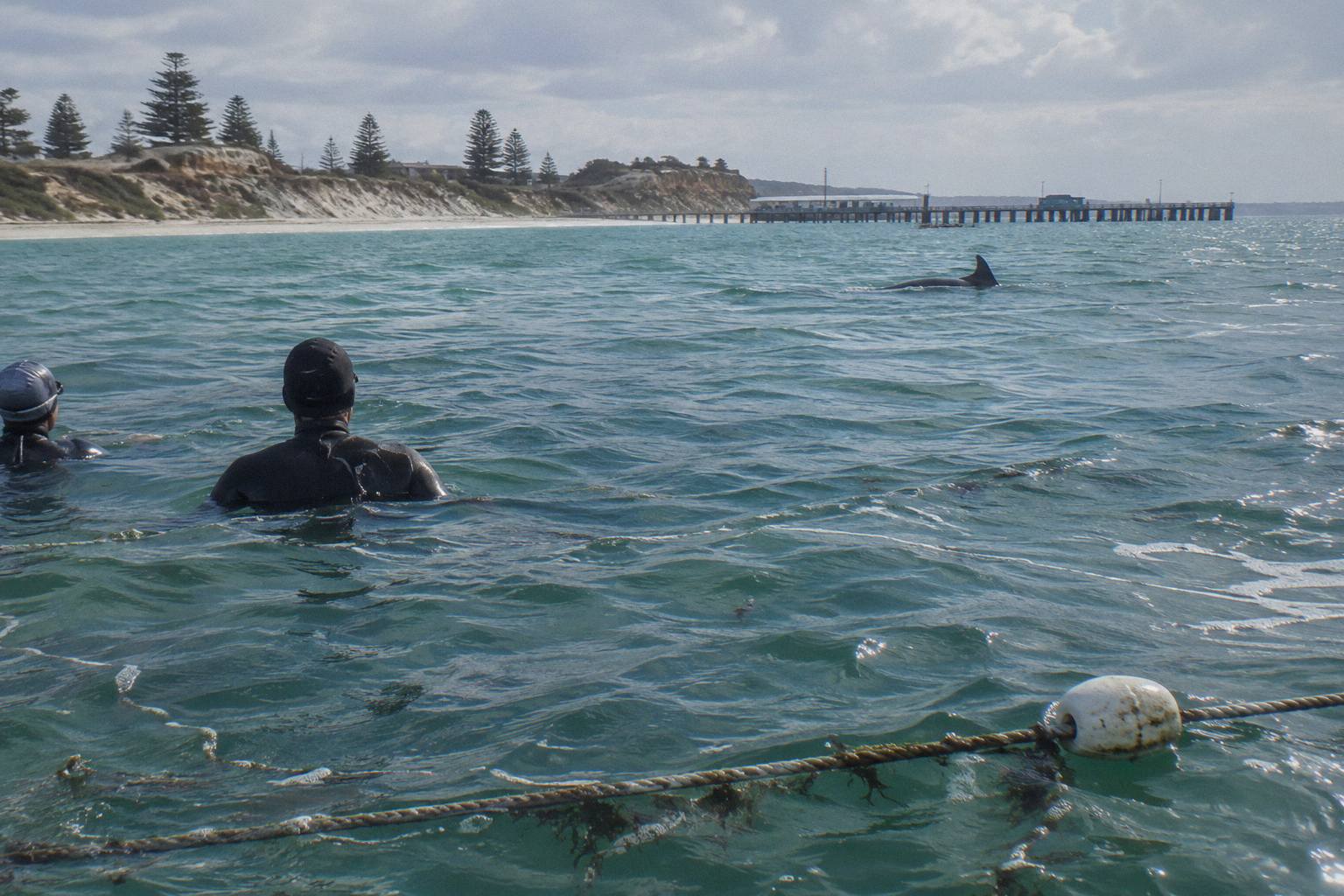
The Kangaroo Island product answers the same question with the same architecture: you are on a line, behind a boat, with a crew that decides when the water is worth entering. The operator's own page is blunt about the encounter itself. The trip is a swim with wild dolphins or among seals, and it may turn out to be dolphins only, seals only, or a coastal snorkel, depending on what the day gives. Meeting point is the Kangaroo Island Information Stop, 43 Howard Drive, Penneshaw, 30 minutes before departure for fitting and a safety brief, on vessels the operator describes as 28-seaters.
The physical demands are stated plainly too. The swimmer line with buoys needs upper body strength to hold, the ladder exit needs lower body strength, shark shields run fore and aft, and reasonable swimming ability is recommended, with a life jacket and noodle available. Not suitable with a pacemaker or pregnancy, per the operator, and no wheelchair access. The listing shows the swim from USD 132 per person, rated 4.4 across 137 reviews, with free cancellation up to 24 hours on the listing, while the operator's own terms run on a different tiered schedule.
| Glenelg swim | Kangaroo Island swim | |
|---|---|---|
| Duration | About 4 hours | 2 hours |
| Listed price | From USD 104 | From USD 132 |
| Rating | 4.7 across 493 reviews | 4.4 across 137 reviews |
| Minimum age | 9 | 9 for the swim |
| Format | Flotation line at the stern, Front and Back Swim rotation | Swimmer line with buoys, dolphins or seals |
| Sighting terms (operator's own, direct bookings) | Never a day without dolphins seen from above water, per the operator | Interactions not guaranteed, no refund once in the water |
Why You Never Have To Make The Call On A Tour
On a permitted tour, the decisions that matter are not yours: the skipper holds the vessel at its legal distance, the crew times every entry against the dolphins' behaviour, and your job is to stay on the line and keep your hands still. The swimmer regulations still apply, but the tour is structured so that following instructions satisfies them. Swimming up to a dolphin alone puts every prohibition on your shoulders.
That division of labour is the strongest practical argument for a crewed swim if the close encounter is what you came for. A dolphin that approaches the stern of a slow-moving boat is approaching on its own terms, inside a format the operator has run from Glenelg since 2002, per the operator's own statement that it was the first vessel in South Australia given a licence to swim with dolphins. A dolphin that approaches a random swimmer at a beach is doing the same thing, but there is no crew to read the animal, no line to hold, and no buffer between your enthusiasm and the regulations.
The species involved are worth knowing. The official sanctuary facts page records that the near-shore dolphins around Adelaide are Indo-Pacific bottlenose dolphins, many of them year-round residents, with a fully grown animal around 120 to 160 kg and more than 2 m long. Off Glenelg the operator reports watching both Indo-Pacific bottlenose and short-beaked common dolphins. An animal that size, curious and fast, is exactly why the touching prohibition exists: even a gentle pass by a dolphin carries more force than a swimmer expects.
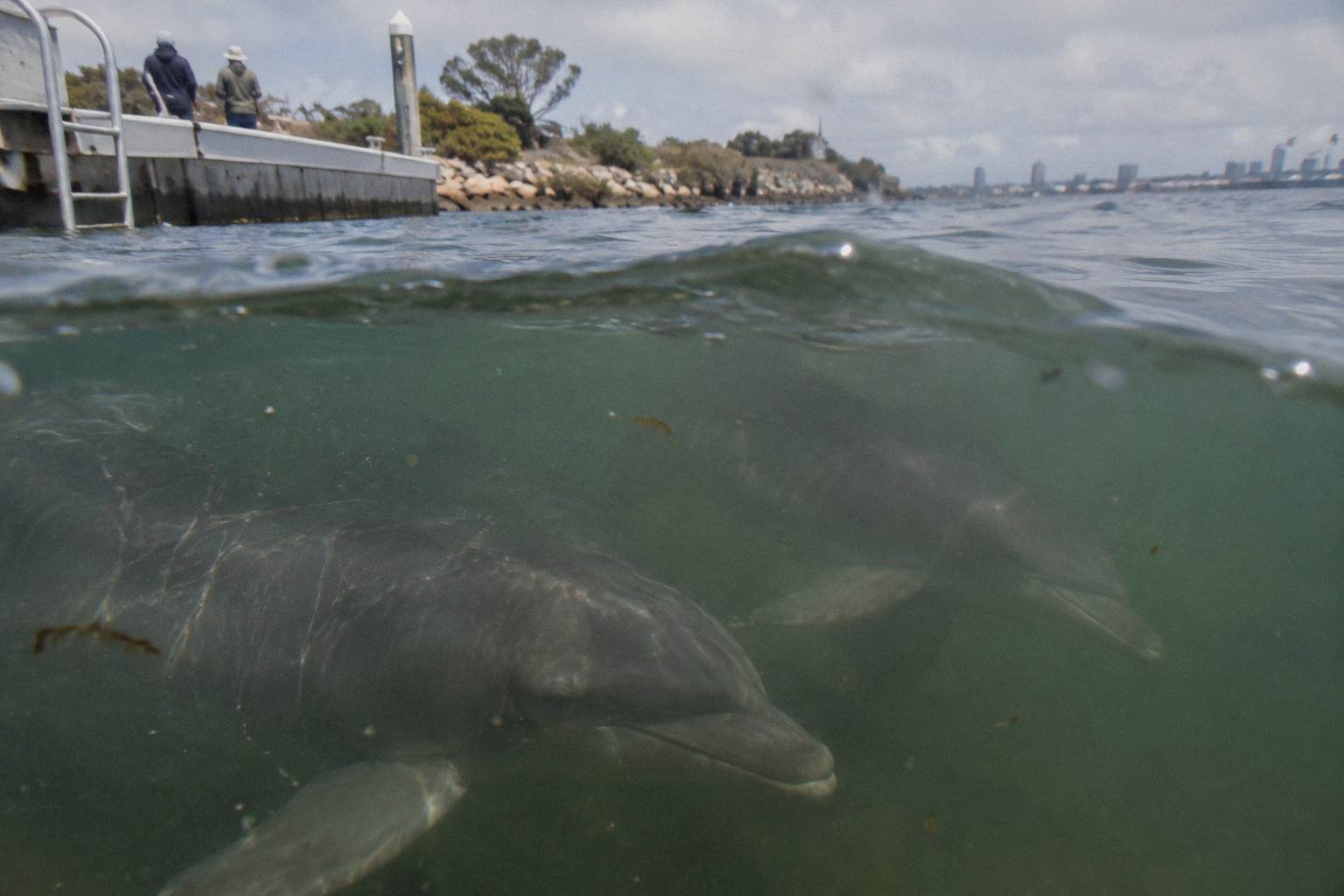
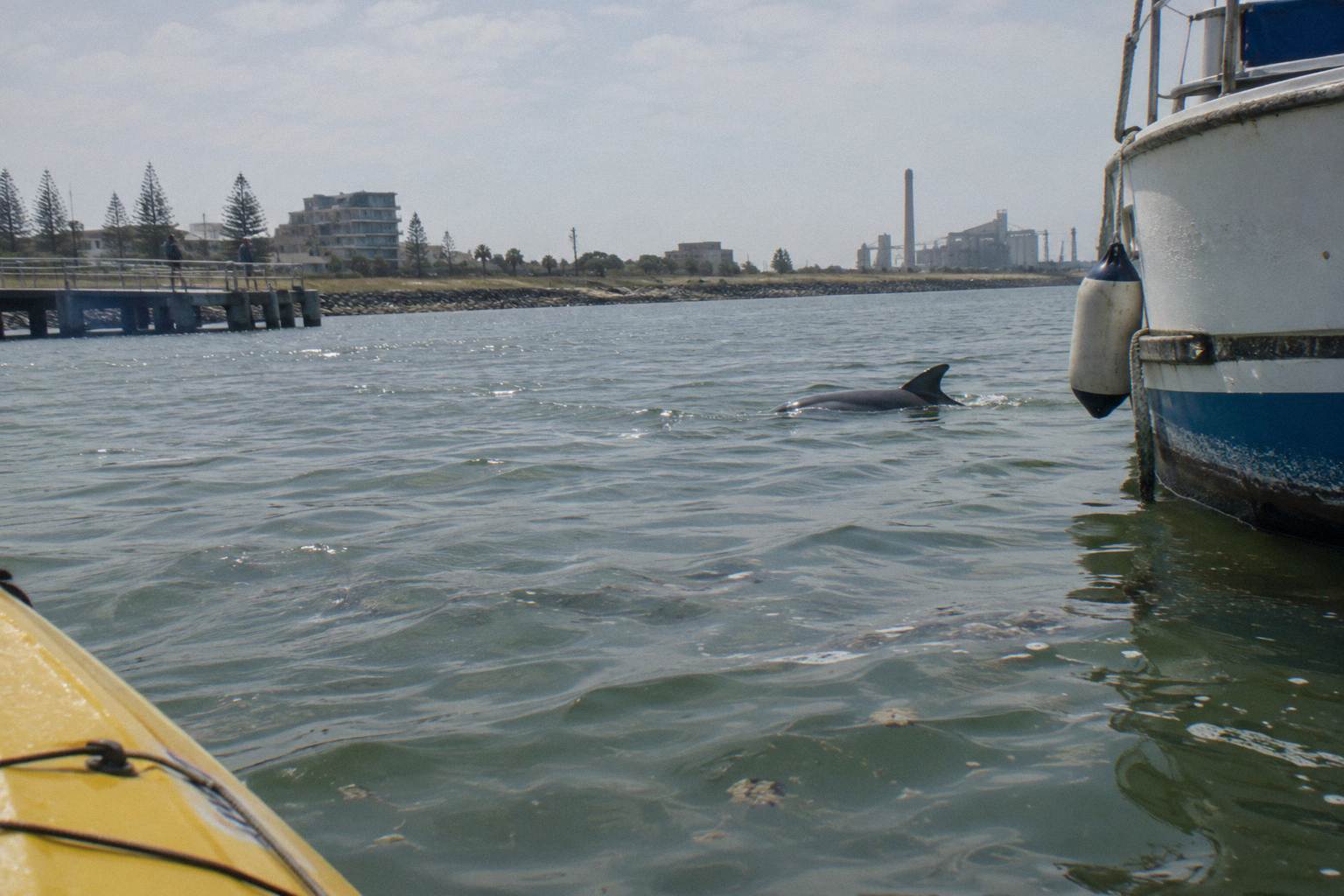
For readers who would rather not be in the water at all, the encounter question mostly disappears. Watching from the deck keeps you under the vessel rules rather than the swimmer rules, and the Wild Dolphin Watch From Glenelg runs on the same catamaran as the swim, rated 4.8 across 409 reviews and listed from USD 62 per person, so a nervous swimmer in a group can ride as a watcher on the same trip. The operator says swimmers who lose confidence after the briefing may stay aboard as watchers, with a refund of the difference for bookings made direct with the operator. The Adelaide Dolphin Sanctuary, the Port River and Barker Inlet estuary north of Port Adelaide, is the other place near the city where dolphins reliably come close to a boat, and the site behind this article, Adelaide Swimming With Dolphins, covers both in its guides.
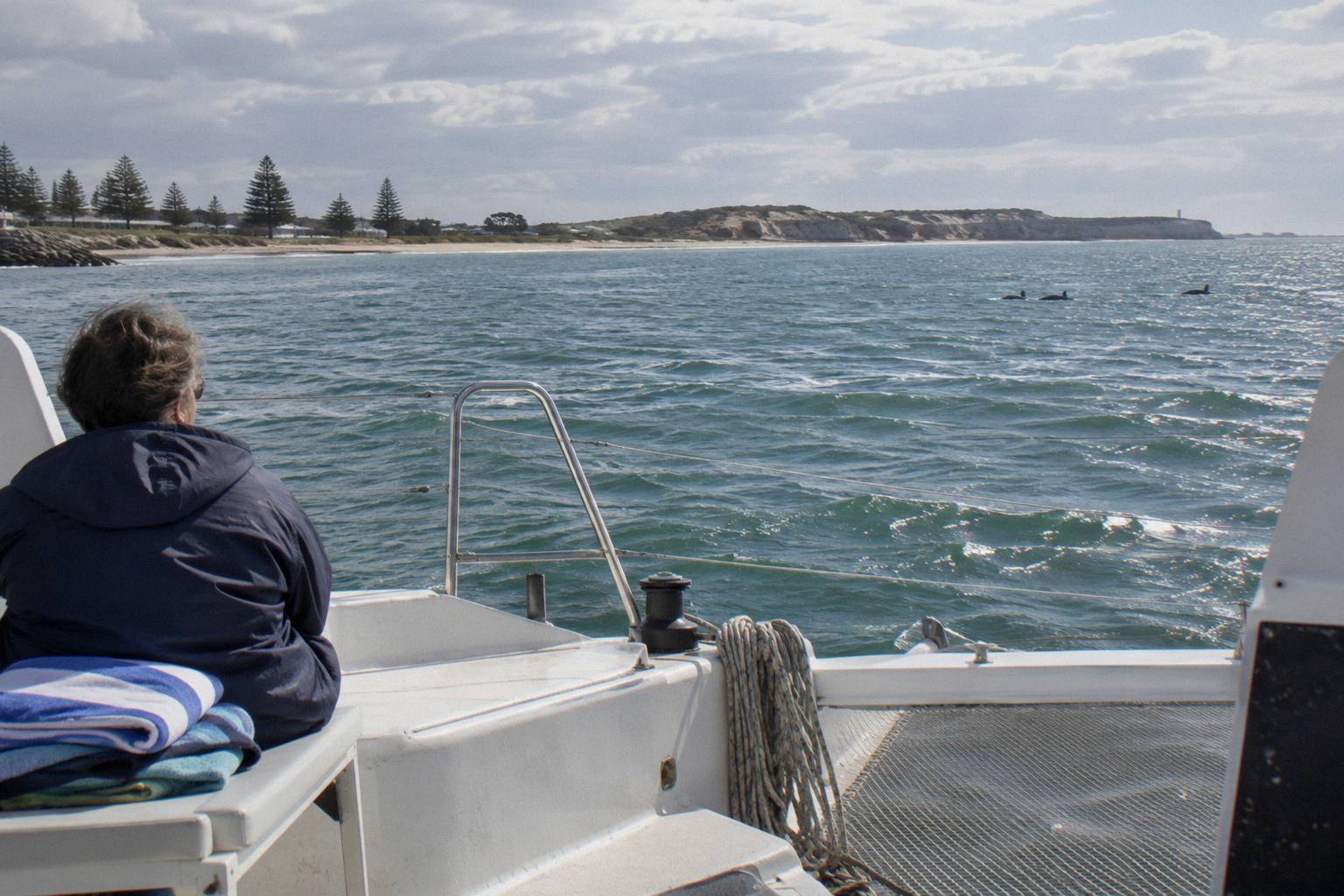
For planning purposes, the two near-city options answer different questions. Glenelg answers the swim question, since it is the one running the permitted, crewed swim format, with the deck available for anyone in the party who would rather stay dry. The sanctuary answers the watching question, an estuary where the encounter happens at the boat, and it suits travellers who never intended to get into the water at all. Choosing between them is really choosing which set of rules you want to operate under: swimmer rules managed by a crew, or vessel rules observed from a deck.
Readers who fall on the watching side of that line have a direct match in the four-hour guaranteed wild dolphin watching cruise, which keeps the entire day on the vessel side of the regulations and asks nothing of you but a rail to lean on. It is also the low-stakes way to test the idea before committing to a swim, because it delivers the sighting without the briefing, the line, or the judgement calls. In every format the pattern of this section holds: the closer you get to the water, the more of the decision you inherit, and the more a crew is worth having.
The Short Version, On The Water
Hold your distance, hold the line, and never reach out: 30 m is the everyday swimmer minimum, 150 m applies to calves and distressed animals, 30 minutes is the cap inside 150 m, and touching and feeding are prohibited without exception. On a permitted tour, the crew makes every entry and exit decision, so the compliant response to an approaching dolphin is simply to stay put and let it happen.
Print that on the inside of your mask if it helps. The regulations are short, the penalties are real, and the encounter works best when the dolphin writes the script anyway. If you are weighing whether a crewed format suits your swimming, the guide to dolphin swims for non-swimmers and weak swimmers is the honest starting point, because the line, the ladder and the briefing all assume a base level of ability.
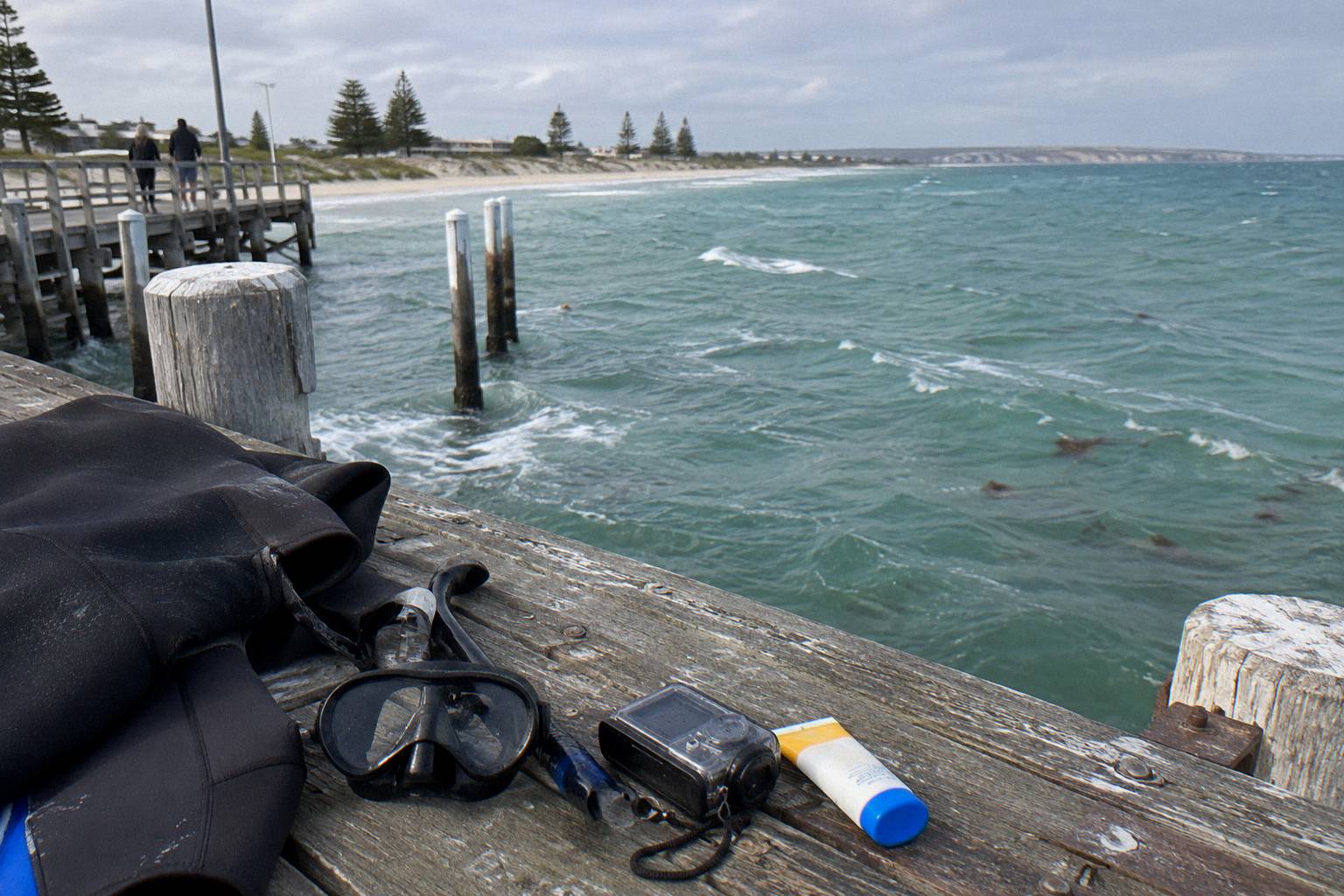
There is one last distinction worth carrying onto the boat. The distances that feel restrictive in print are almost invisible in practice on a tour, because the dolphin that wants to be near you will be near you regardless of what the paperwork says, and the rules only bite when a person tries to force the closeness. Every element of the crewed format, the line, the rotation between Front and Back Swim experiences, the crew's call on when to stop entries, exists to keep the encounter on the dolphin's terms. Your part is the smallest and the easiest: hold on, look down, and keep your hands still.
Common Questions About A Dolphin Swimming Up To You
What To Do If A Dolphin Swims Up To You?
Stay where you are, keep at least 30 m where you control the distance, do not touch or feed the animal, and never pursue it. On a crewed swim, hold the flotation line and follow the crew's instructions; the crew stops entries when dolphins get too close.
How Close Can You Legally Swim To A Dolphin In South Australia?
A swimmer or snorkeller must stay at least 30 m from a marine mammal, and at least 150 m if the animal is a calf or pup, shows disturbance, appears sick or injured, or is stranded or entangled. No swimmer may remain within 150 m of a dolphin for more than 30 minutes.
Can You Touch A Dolphin If It Comes To You?
No. Touching a marine mammal is prohibited under the 2025 South Australian regulations, with no exception for an animal that approaches you. The expiation fee is AUD 315 per alleged offence.
Do The Rules Change On A Tour?
The regulations still apply to you, but a permitted tour is structured around them: the skipper holds the vessel distances, swimmers stay on a flotation or swimmer line, and the crew decides every entry and exit. Following the crew's instructions satisfies the swimmer rules.
What Is The Penalty For Breaking The Dolphin Swim Rules?
The regulations set an expiation fee of AUD 315 per alleged offence. Separate offences can arise from breaching distance rules, touching and feeding, so a single encounter can generate more than one alleged breach.