Is A Wild Dolphin Swim Ethical?
There is no clean yes or no to this question, and any page that hands you one is guessing. What exists instead is a legal framework, a set of operator statements you can check, and watching alternatives if the swim itself does not sit right with you.
Short answer
A fee-based dolphin swim in South Australia is lawful only under a government permit, and swimmers must stay at least 30 m from dolphins, 150 m from calves or disturbed animals, with no feeding and no touching. Operators state they enter swimmers only when dolphins approach voluntarily. Watching tours exist from USD 54.72.
Plenty of people arrive at a booking page already half decided, then stall on one word: ethical. The hesitation is reasonable. Dolphins are wild animals, the water is their home, and a swim is sold as a product. Rather than issue a verdict this page sets out what can actually be verified: what South Australian law requires of anyone who takes paying customers near dolphins for a swim, what the two swim operators in this state publicly say about how they run their trips, and what the alternatives look like if you would rather not get in the water at all. The team behind Adelaide Swimming With Dolphins publish verified facts rather than welfare opinions, and that is deliberate: no study of dolphin welfare in Gulf St Vincent appears in the verified research, so none is claimed here.
What Does South Australian Law Say About Swimming With Dolphins?
Under the National Parks and Wildlife (Protected Animals, Marine Mammals) Regulations 2025, which came into operation on 1 September 2025, nobody may take another person, for fee or reward, into the vicinity of a marine mammal to observe it or swim near it without a Ministerial permit or other lawful authority, and swimmers themselves must keep 30 m from dolphins, 150 m from calves or disturbed animals, and no more than 30 minutes within 150 m.
That first clause is the one that matters ethically. A commercial swim is not a free-for-all in this state: it is lawful only under a permit, which means a government department has authorised the activity. What that permit itself says, how many swimmers it allows or how long they may stay in the water, is not published anywhere official, and this page will not invent it. The swimmers' distances, by contrast, are regulation, not operator policy, and they apply to everyone in the water. Snorkelling counts as swimming under the same regulations.
The rules extend beyond distance. Feeding and touching are prohibited outright. Vessels must keep at least 50 m from a dolphin, or at least 150 m if there is a calf or the animal shows disturbance, and travel no faster than 4 knots within 150 m. Breaking these rules carries an expiation fee of AUD 315 per alleged offence. If you want the fuller distance rules and the interaction detail, the companion guide on dolphin swim rules and how close you can get works through them, and the blog post on whether it is illegal to swim up to wild dolphins covers the solo-swimmer side of the same law.
| Rule | Who it binds | The requirement |
|---|---|---|
| Permit for fee-based swims | Commercial operators | Unlawful to take paying customers near a marine mammal to swim without a permit |
| Swimmer distance | Anyone in the water | Not closer than 30 m to a marine mammal |
| Swimmer distance, special cases | Anyone in the water | Not closer than 150 m to a calf, pup, or a dolphin showing disturbance, sickness, injury, stranding or entanglement |
| Time limit | Swimmers | Not more than 30 minutes within 150 m of a non-whale marine mammal |
| Vessel distance | Boat operators | At least 50 m from a dolphin, 150 m with a calf or if the dolphins show disturbance |
| Feeding and touching | Everyone | Prohibited |
The full regulatory text is published by the South Australian legislation office, and the official PDF of the 2025 regulations is the primary source for every figure in the table above.
How Does The Glenelg Swim Actually Work?
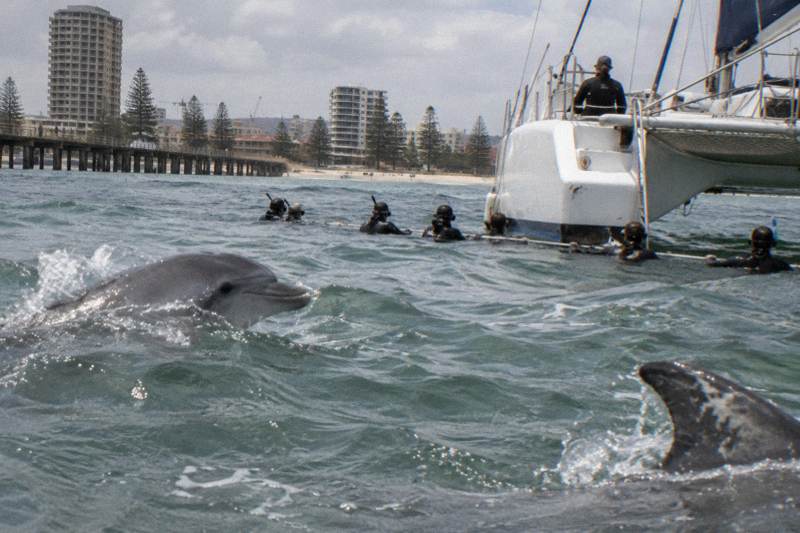
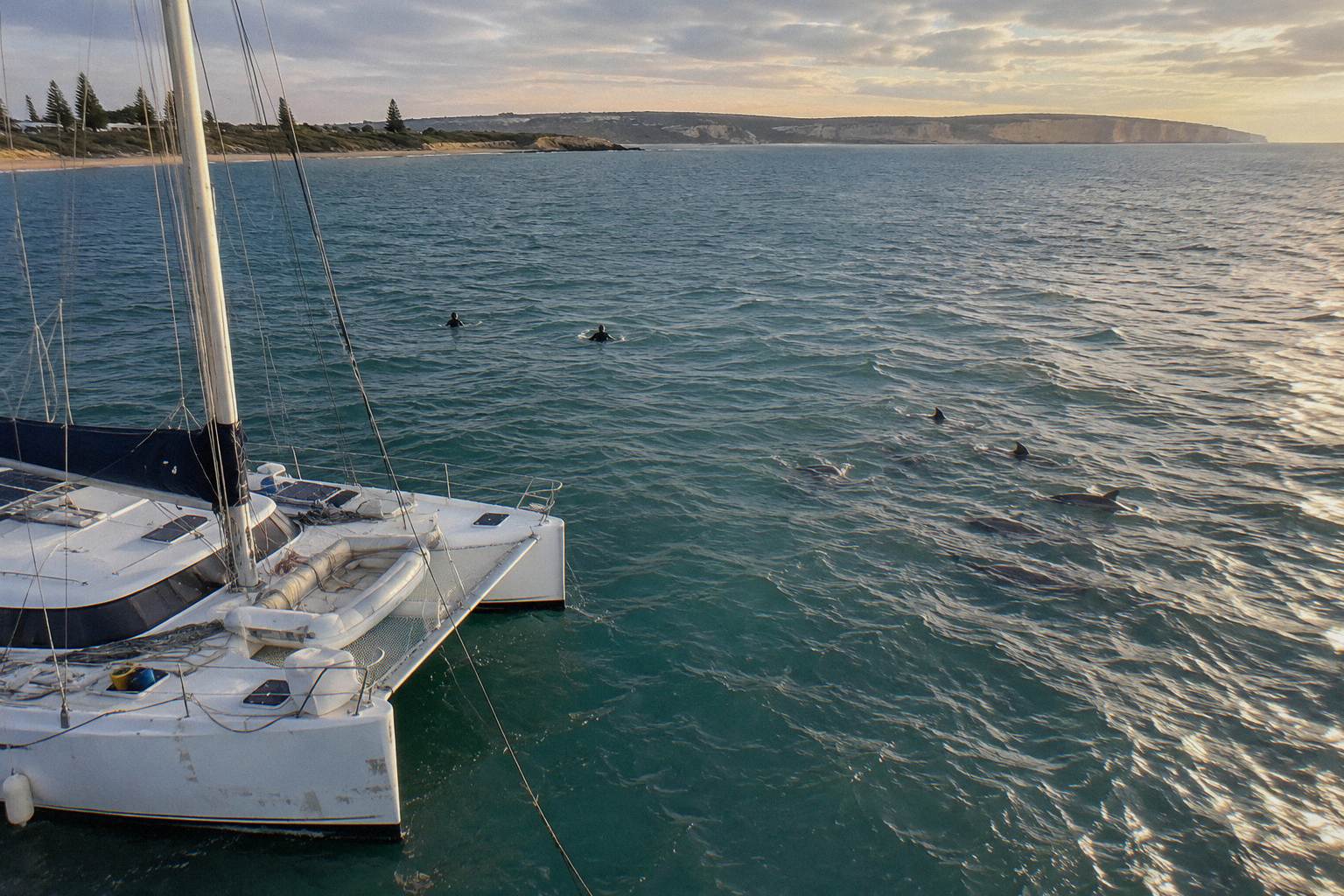
According to the operator, Temptation Sailing runs the swim as a controlled experience rather than free swimming: every swimmer holds a flotation line connected to the stern of a moving catamaran, swimmers enter only once dolphins have turned toward the boat, entries stop when dolphins get too close, and the crew rotates guests through two swim positions with marine biologist hosts on board.
Those operational details are where an ethical judgement actually gets its substance. A swim in which the boat chases dolphins down and dumps swimmers in their path reads very differently from one in which the animals approach the vessel and the crew decides, entry by entry, whether to put people in the water. The operator's stated method is the second of those: entries happen only after the dolphins turn toward the boat, and stop when they come too close. Holding a line means swimmers are towed slowly rather than swimming at the animals, which is also what keeps the experience inside the swimmers' distance rules described above.
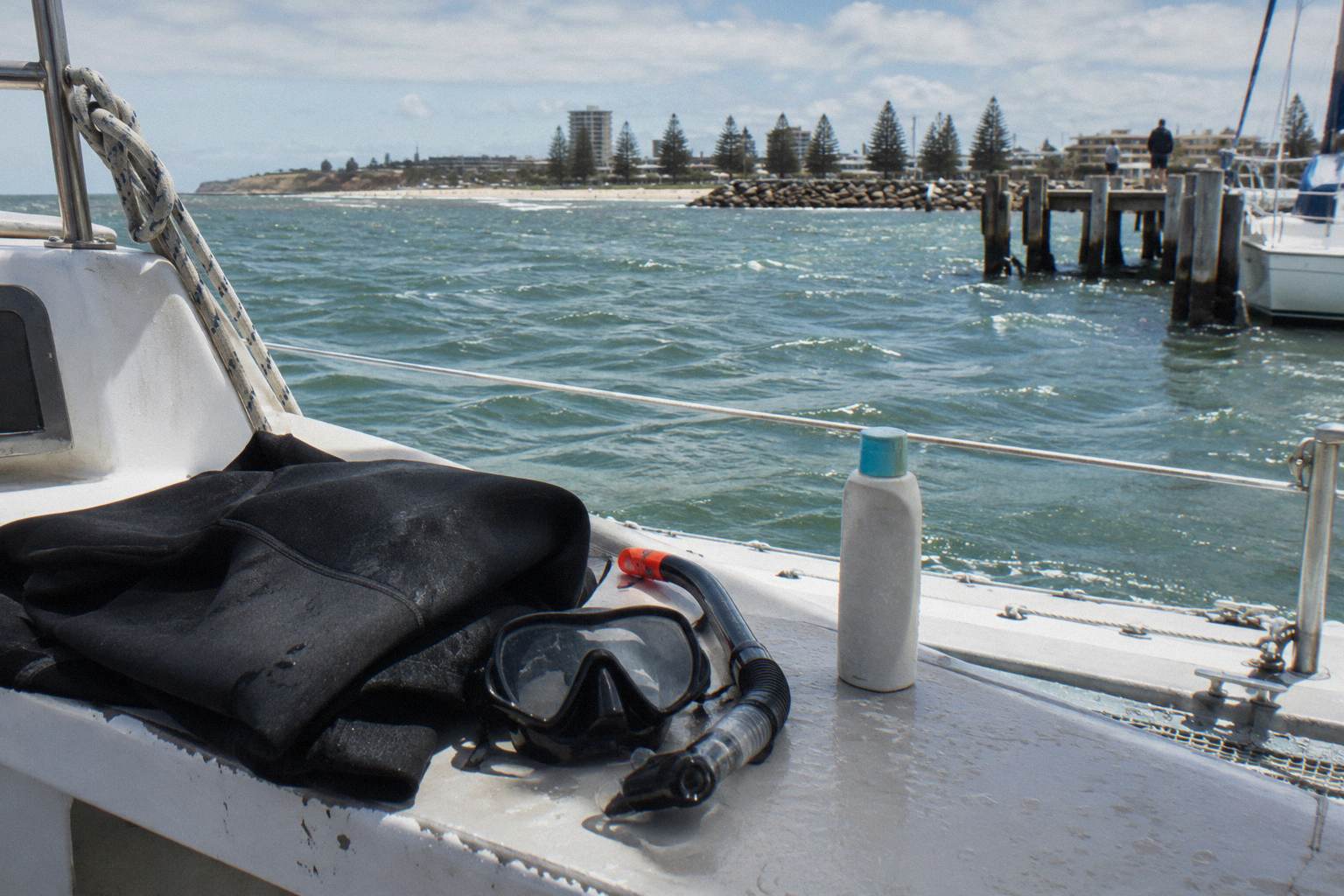
The operator describes the vessel as a 58 ft sailing catamaran surveyed for up to 50 passengers, and says it has run dolphin swim and watch tours from Glenelg since 2002, calling itself the first vessel in South Australia given a licence to swim with dolphins. That history is the operator's own statement, printed here as exactly that. Season runs September to April per its FAQ, with no cruises in the cooler months. Every swimmer gets a full-length 5 mm wetsuit that also acts as flotation, a roughly 15 minute briefing, and demonstrated mask and snorkel use, with prescription masks on board and wetsuits to size 4XL. Minimum age is 9, under 18s need a guardian on board, and pacemaker wearers should ask the operator before booking.
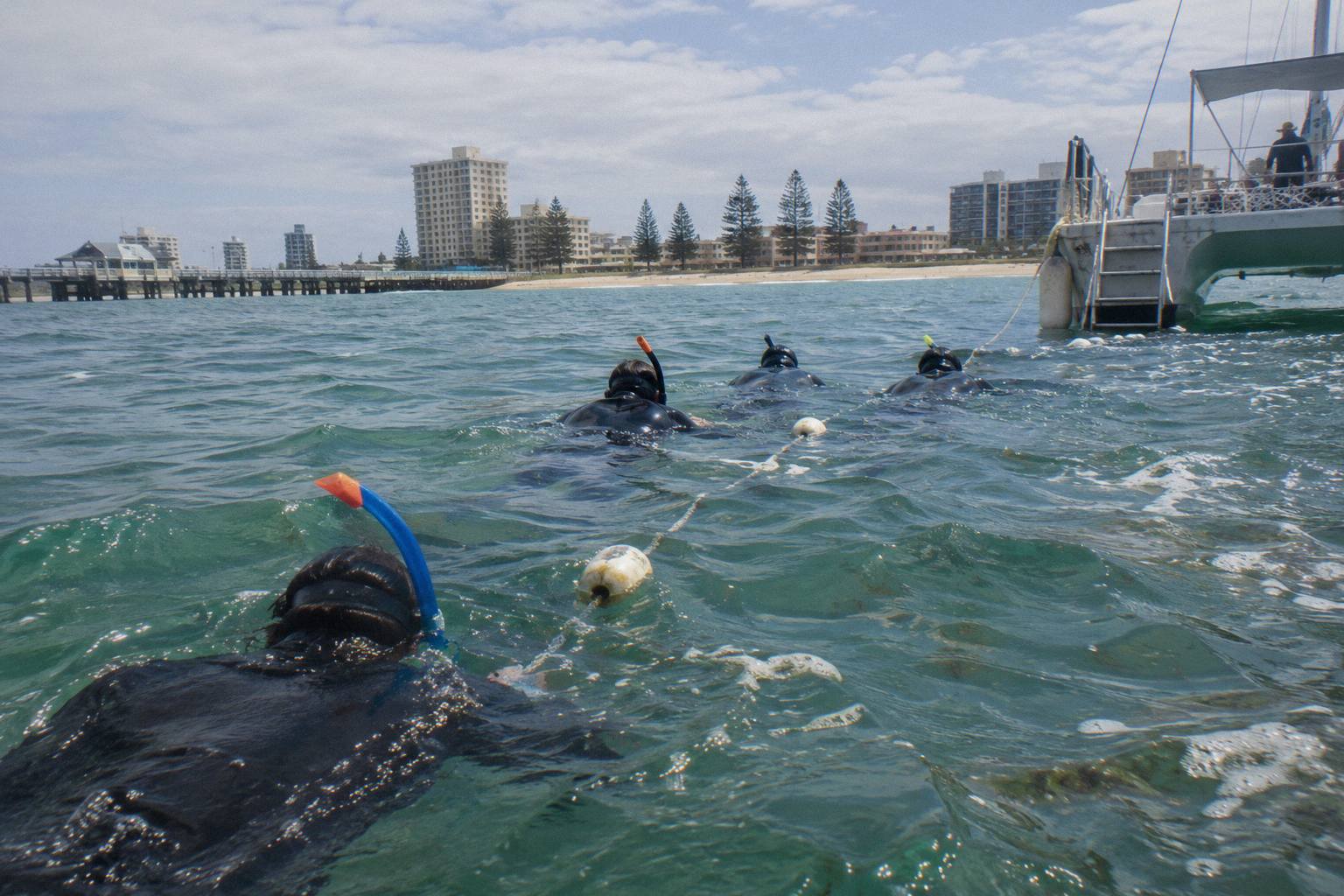
The practical ethics extend to the people on board, too. A nervous swimmer can stay aboard as a watcher after the briefing, and for bookings made direct with the operator the swim-minus-watch difference is refunded. Swimmers and watchers share one boat, booked together or separately, so a mixed group does not have to split its day. If the wider safety picture is part of your hesitation, the guide on whether a wild dolphin swim is safe covers sharks, shields and the water itself.
The swim experience from Glenelg is rated 4.7 across 493 reviews on its live listing, from USD 104 per person with free cancellation up to 24 hours, and the same operator runs a watch-only cruise from the same marina.
What About The Kangaroo Island Swim?
Kangaroo Island Ocean Safari runs a 2-hour Snorkelling Safari described as swim with wild dolphins or among seals, and the operator is explicit that the trip may turn out to be dolphins only, seals only or a coastal snorkel, that wildlife interactions are not guaranteed, and that once you have been in the water at any stage there is no refund.
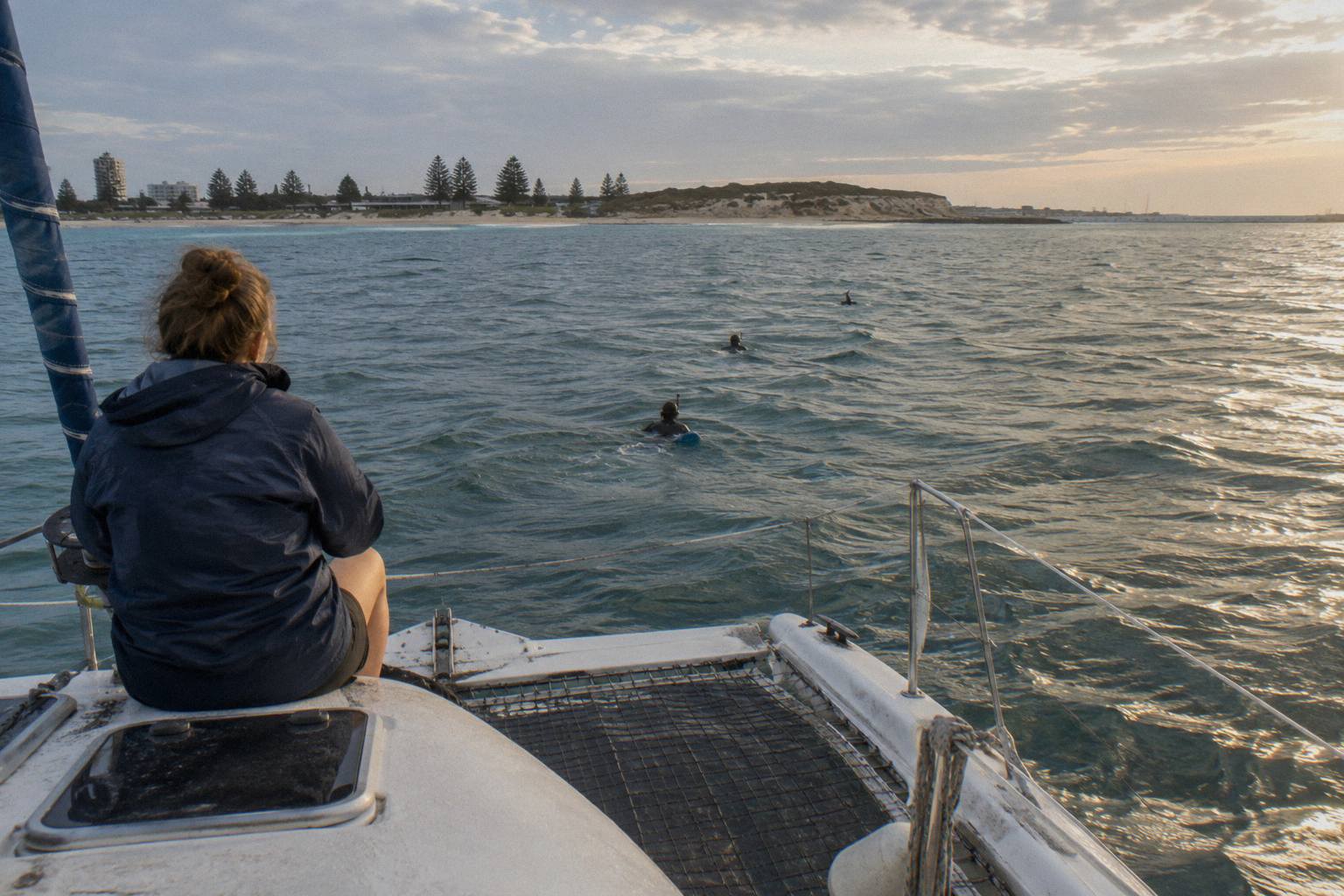
That candour is itself worth weighing. An operator that states plainly it cannot promise a sighting, and that the trip's content depends on what the animals are doing, is structuring a product around the wildlife rather than around a guarantee. The operator says dolphins are present year-round in the waters around Kangaroo Island, while seals peak in winter and are at their lowest from November to January, so what a given trip becomes depends heavily on the season.
Mechanically it is closer to the Glenelg model than it first appears: a swimmer line with buoys is often used at the back of the vessel for the dolphin swim, which the operator says needs upper body strength, while the ladder exit needs lower body strength. Wetsuit, gloves, mask, snorkel and fins are provided, and the operator describes thick wetsuits that allow the swim year round, with water temperature it puts between 14 and 15 degrees. Vessels are described as 28-seaters. Shark shields run fore and aft. The swim is from age 9, is not suitable with a pacemaker or pregnancy, and there is no wheelchair access. Guests meet at the Kangaroo Island Information Stop, 43 Howard Drive, Penneshaw, 30 minutes before departure. If you are weighing the two locations against each other, the guide on swimming with dolphins on Kangaroo Island or from Glenelg compares them directly.
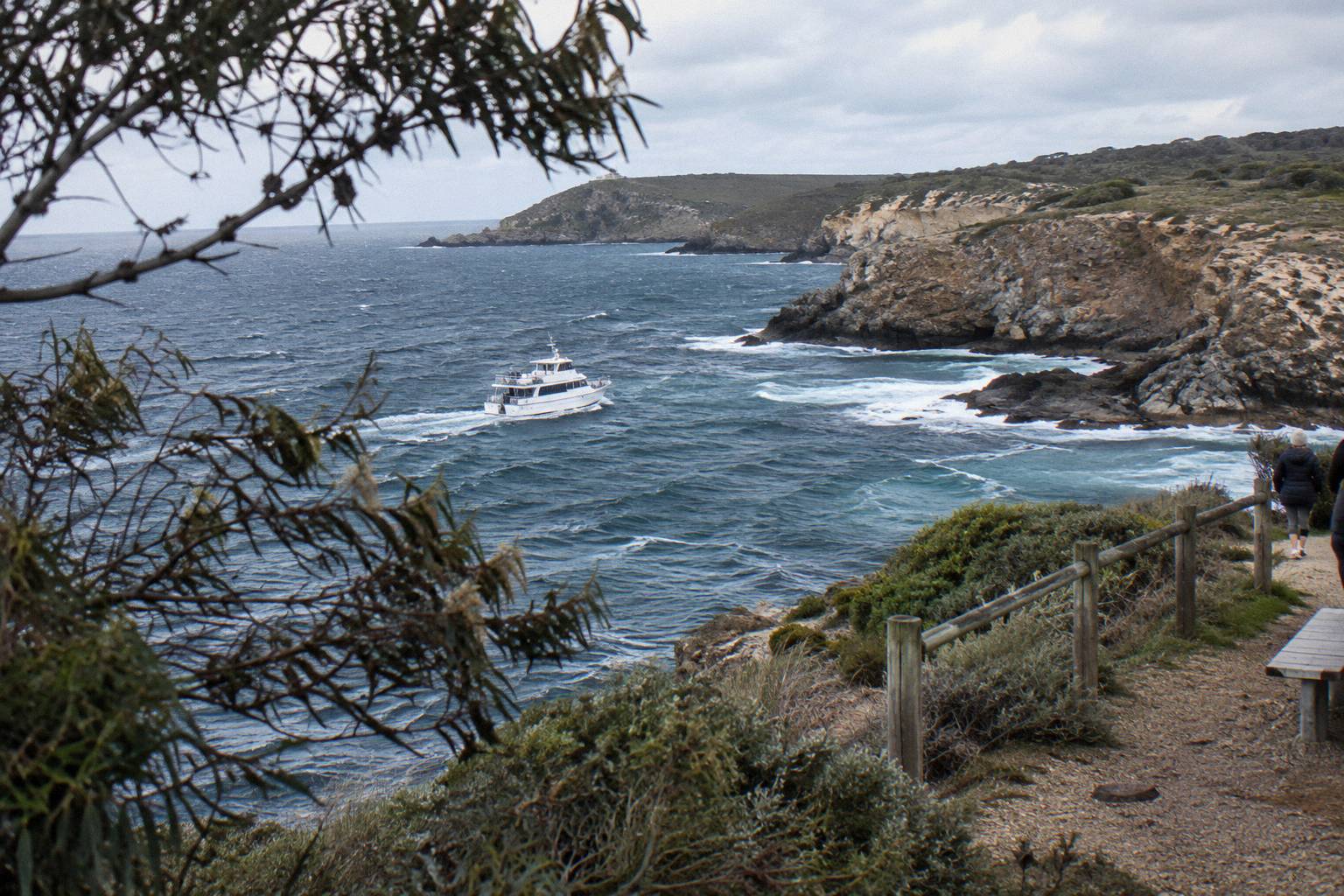
One detail deserves its own line: the booking page states the swim does not run when the pod has neonates, newborn calves. That is an operator restriction beyond the legal minimum, and for many readers it is exactly the kind of measure they are asking about when they ask whether a swim is ethical. The listing shows 4.4 across 137 reviews, from USD 132 per person with free cancellation up to 24 hours on the booking page; the operator's own terms, including a 50% charge or 24-month credit for cancellations within 7 days, sit behind the direct booking.
Still deciding between getting in and staying dry? Both can happen on the same Glenelg boat: book the swim and fall back to watching after the briefing, or book a watch ticket outright, with free cancellation up to 24 hours on the live listing.
Can You See Dolphins Without Swimming At All?
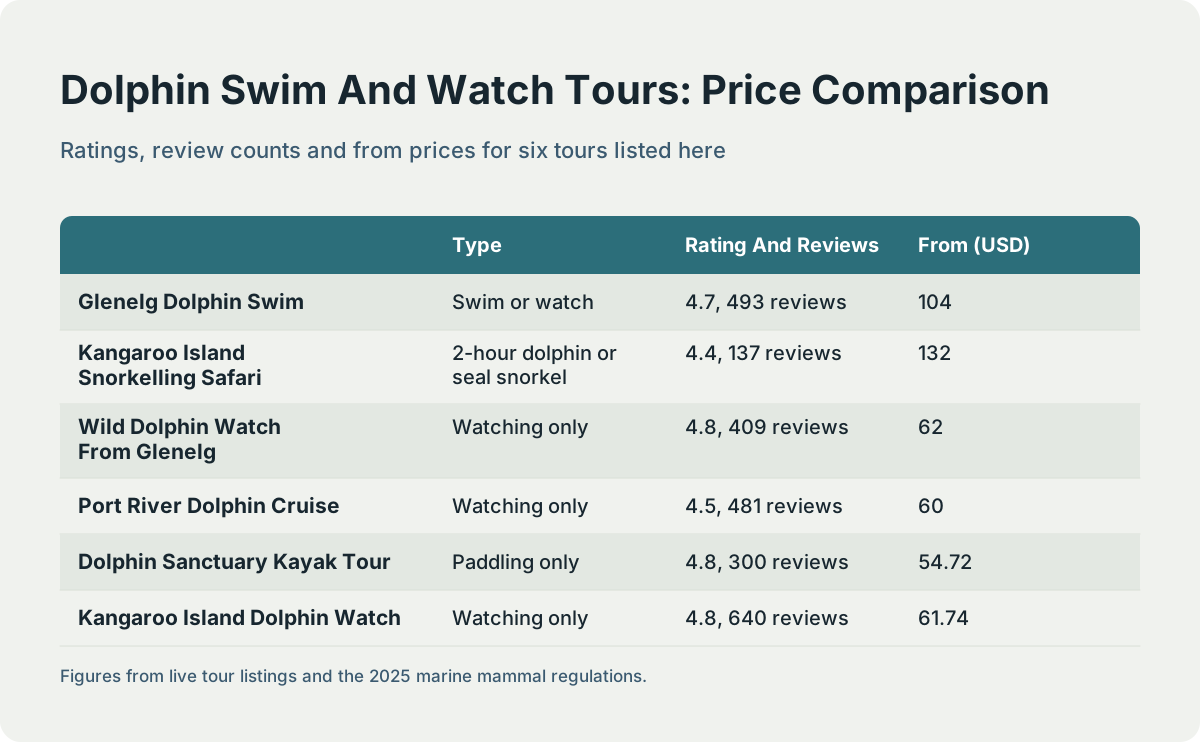
Yes, and in South Australia the watching options are extensive: Wild Dolphin Watch From Glenelg is rated 4.8 across 409 reviews from USD 62, the Port River Dolphin Cruise is rated 4.5 across 481 reviews from USD 60, the Dolphin Sanctuary Kayak Tour is rated 4.8 across 300 reviews from USD 54.72, and Kangaroo Island Dolphin Watch is rated 4.8 across 640 reviews from USD 61.74.
If your ethical hesitation is specifically about being in the water with the animals, the vessel-distance rules do the rest of the work: a boat keeps at least 50 m, or 150 m with a calf or visible disturbance, and travels at 4 knots or less within 150 m. Watching from a vessel is a regulated, permitted activity in its own right, and it removes the swimmer from the interaction entirely.
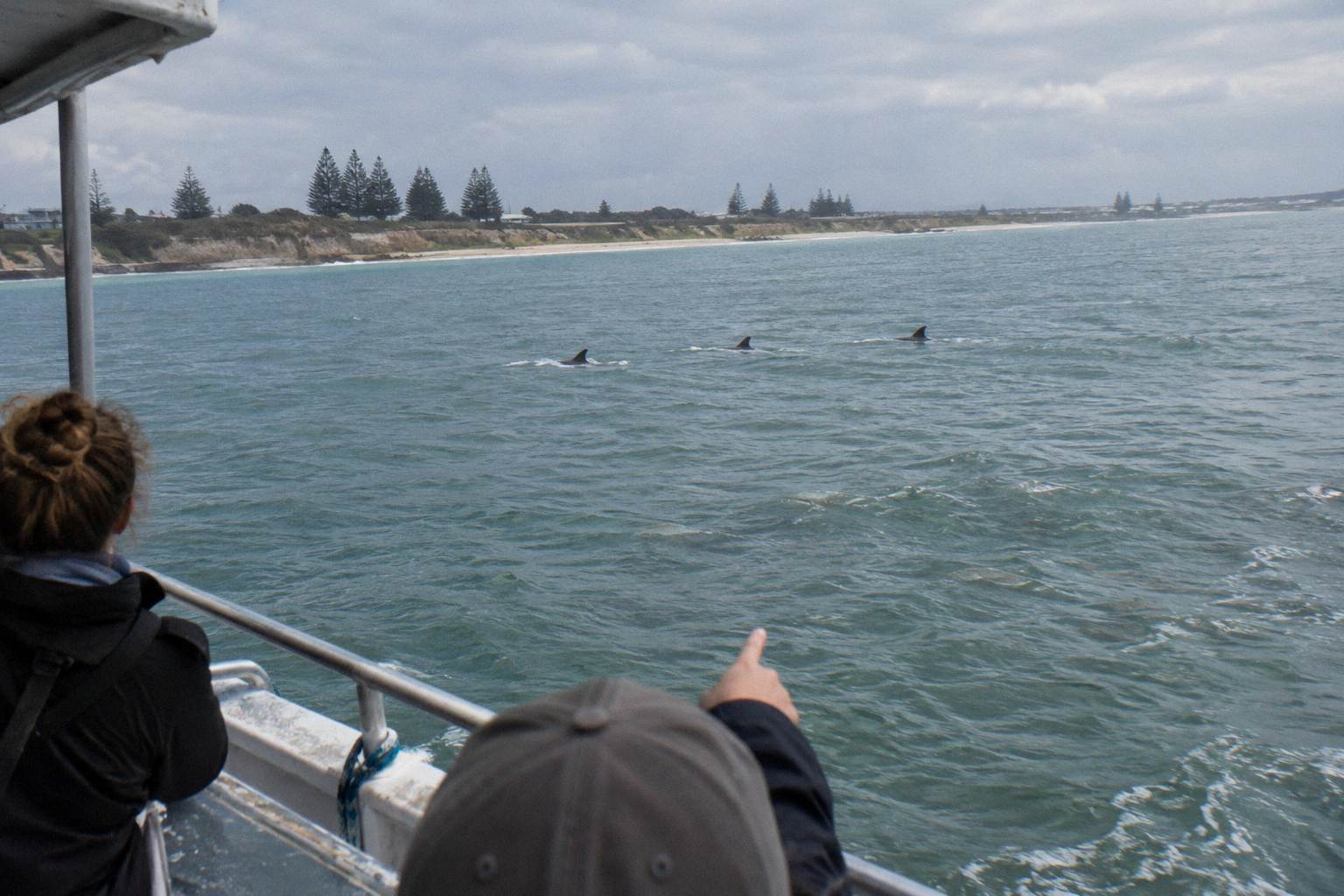
The Glenelg watch cruise shares its boat with the swim, which makes it the natural compromise for a mixed group or a wavering swimmer: same catamaran, same dolphins, same morning on the water. Its booking-page title carries the word "Guaranteed", and that word is the tour page's own wording, not a promise from this site and not a refund term. For the operator's sighting terms, including its claim of never having had a day without dolphins seen from above the water, see the section on sightings below. The Port River cruise and the kayak tour run from Port Adelaide inside the Adelaide Dolphin Sanctuary, and both are watching and paddling only, never swims.
The Port River Dolphin Cruise is the cheapest way onto dolphin water from the city, rated 4.5 across 481 reviews and from USD 60 per person, with free cancellation up to 24 hours on the booking page.
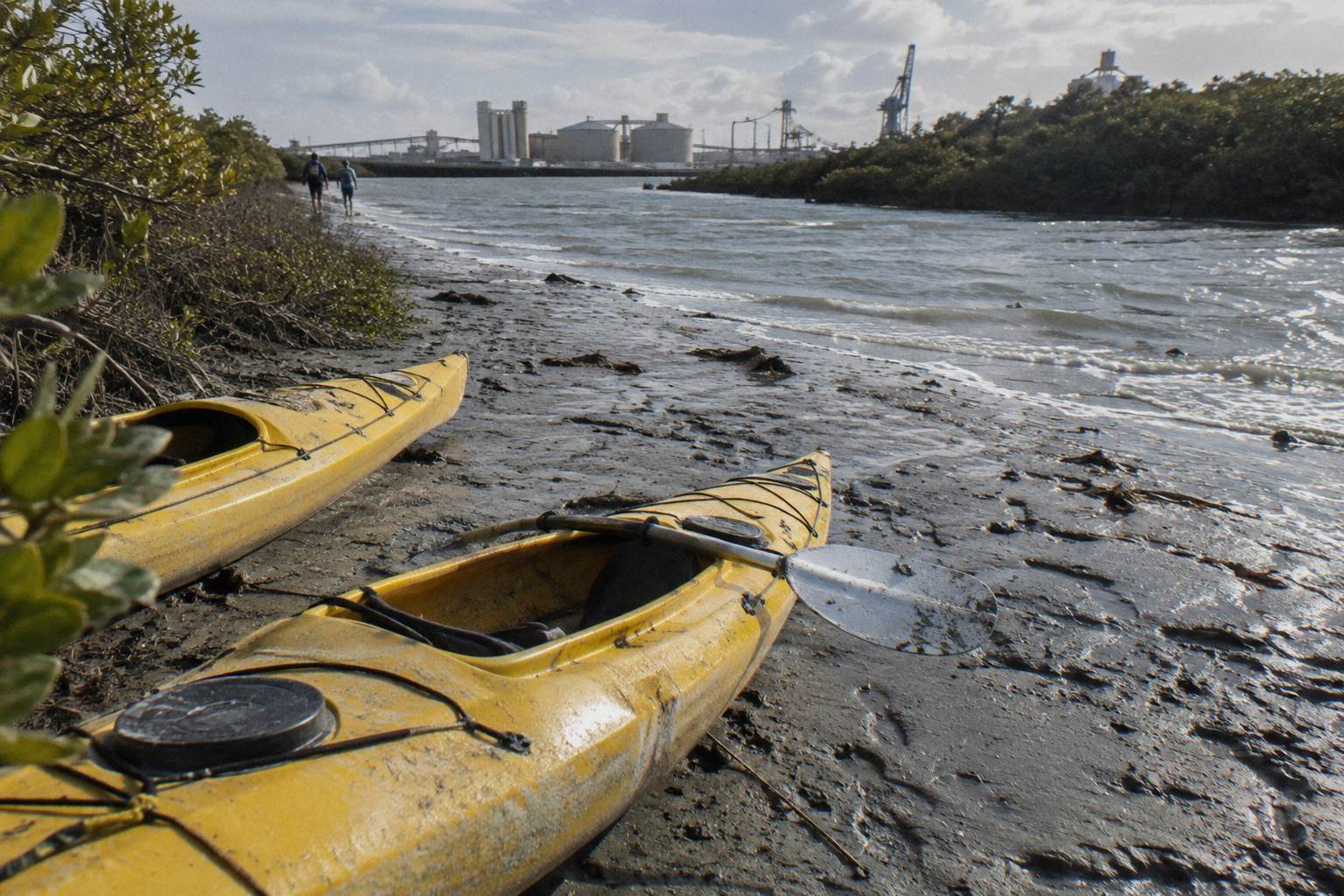
The kayak option adds a layer the powered boats cannot offer: paddling the sanctuary's tidal creeks in near silence, minimum age 8, from USD 54.72 per person with free cancellation up to 24 hours.
| Tour | Type | Rating and reviews | From (USD) | Notes |
|---|---|---|---|---|
| Wild Dolphin Watch From Glenelg | Watching only | 4.8, 409 reviews | 62 | Same boat as the swim; title carries the word "Guaranteed" |
| Port River Dolphin Cruise | Watching only | 4.5, 481 reviews | 60 | Departs Port Adelaide; no sighting guarantee |
| Dolphin Sanctuary Kayak Tour | Paddling only | 4.8, 300 reviews | 54.72 | Operator Adventure Kayaking SA; minimum age 8 |
| Kangaroo Island Dolphin Watch | Watching only | 4.8, 640 reviews | 61.74 | Non-refundable per its booking page |
Where Do These Dolphins Actually Live?
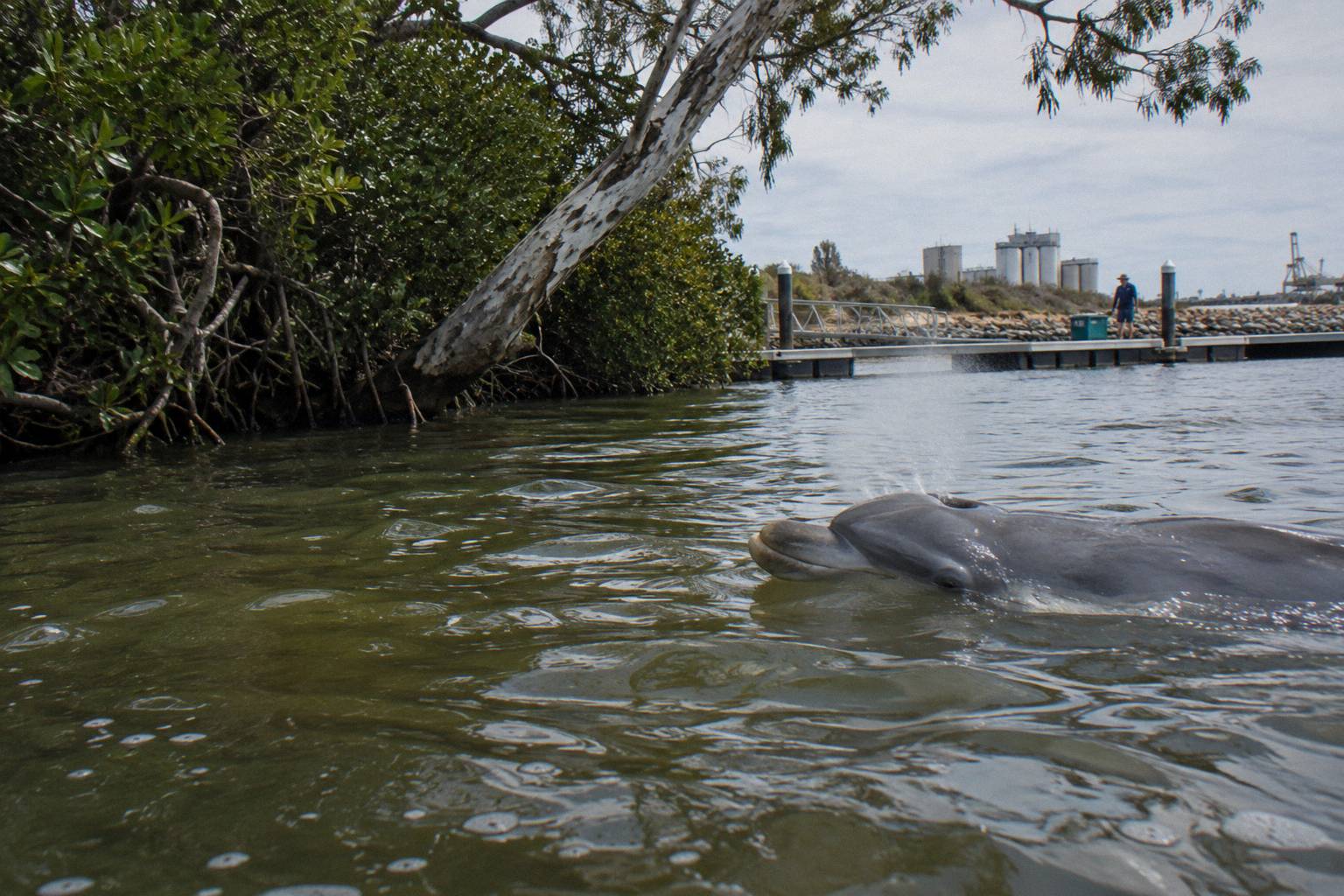
The Glenelg swim does not happen in the Adelaide Dolphin Sanctuary, which is the Port River and Barker Inlet estuary north of Port Adelaide covering 118 sq km of water, mangroves, saltmarsh, tidal flats and tidal creeks, home to Indo-Pacific bottlenose dolphins that government pages describe as including year-round residents and transient individuals.
The distinction matters because the two get conflated constantly. The Glenelg swim does not happen in the sanctuary, and the operator does not name its swim site, so this page does not either. Temptation says it watches Indo-Pacific bottlenose and short-beaked common dolphins, the first an operator claim about species rather than a census. The sanctuary's own dolphins are the better studied population: government pages note a fully grown bottlenose dolphin can be around 120 to 160 kg and more than 2 m long, which is a useful corrective for anyone picturing something the size of a large dog. The wider set of guides lives on Adelaide Swimming With Dolphins.
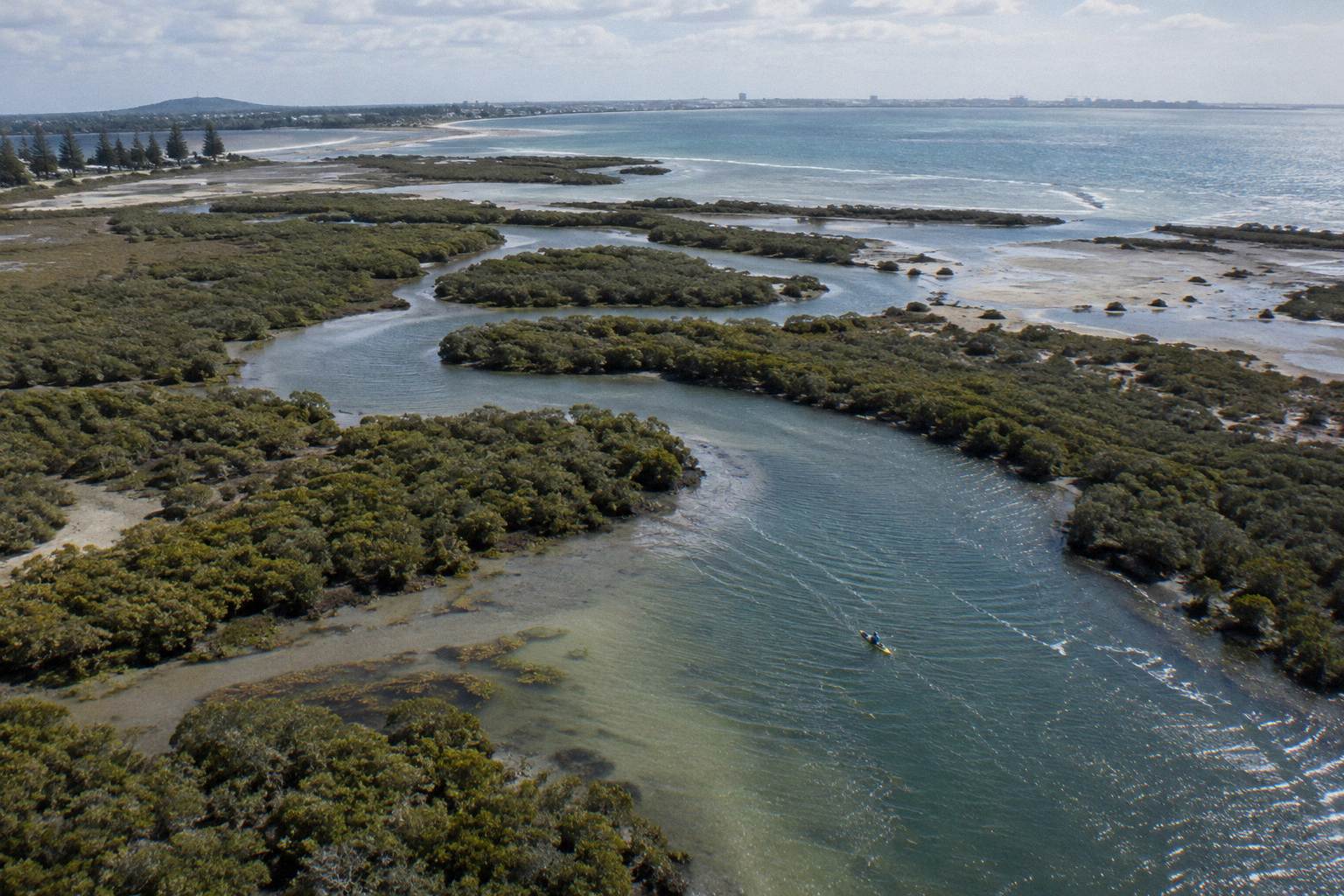
Population figures exist in two forms that must never be merged. The sanctuary's management plan speaks of around 20 residents, with some 400 observed over time. Separately, a long-term dataset running 1993 to 2020 records seasonal averages of about 85 dolphins in summer and about 69 in winter. Those are different measures of different things, and neither is a "current population". The state's own twenty facts for 20 years of the Adelaide Dolphin Sanctuary page is the source for the sanctuary's area and species detail.
What Happens If No Dolphins Appear?
The two swim operators take opposite positions: Temptation says it has never had a day without seeing dolphins from above the water and offers direct bookers a free return within a year if none are seen, while Kangaroo Island Ocean Safari states plainly that wildlife interactions are not guaranteed and that no refund is given once you have entered the water at any stage.
Neither position is a welfare claim, but both are honesty claims, and honesty is a fair proxy when you are deciding who to hand money to. The Glenelg operator's "100% success rate of seeing dolphins onboard since 2002" is its own tour-page wording, refers to above-water sightings only, and is never a promise that a swimmer in the water will see dolphins underwater. For direct bookings, swimmers who did not see dolphins underwater get the swim-minus-watch difference refunded or a return trip within a year. The Kangaroo Island operator's blunter framing, that it does not promise a sighting on every trip, sets expectations low and holds them there.
The booking pages layer their own cancellation terms on top, and the two are not the same thing. Both swim listings show free cancellation up to 24 hours, while the Kangaroo Island Dolphin Watch tour is non-refundable per its booking page. The fuller picture, including what a weather cancellation means, is in the guide on dolphin swim sightings and what happens if none appear.
Is The Water Itself A Concern?
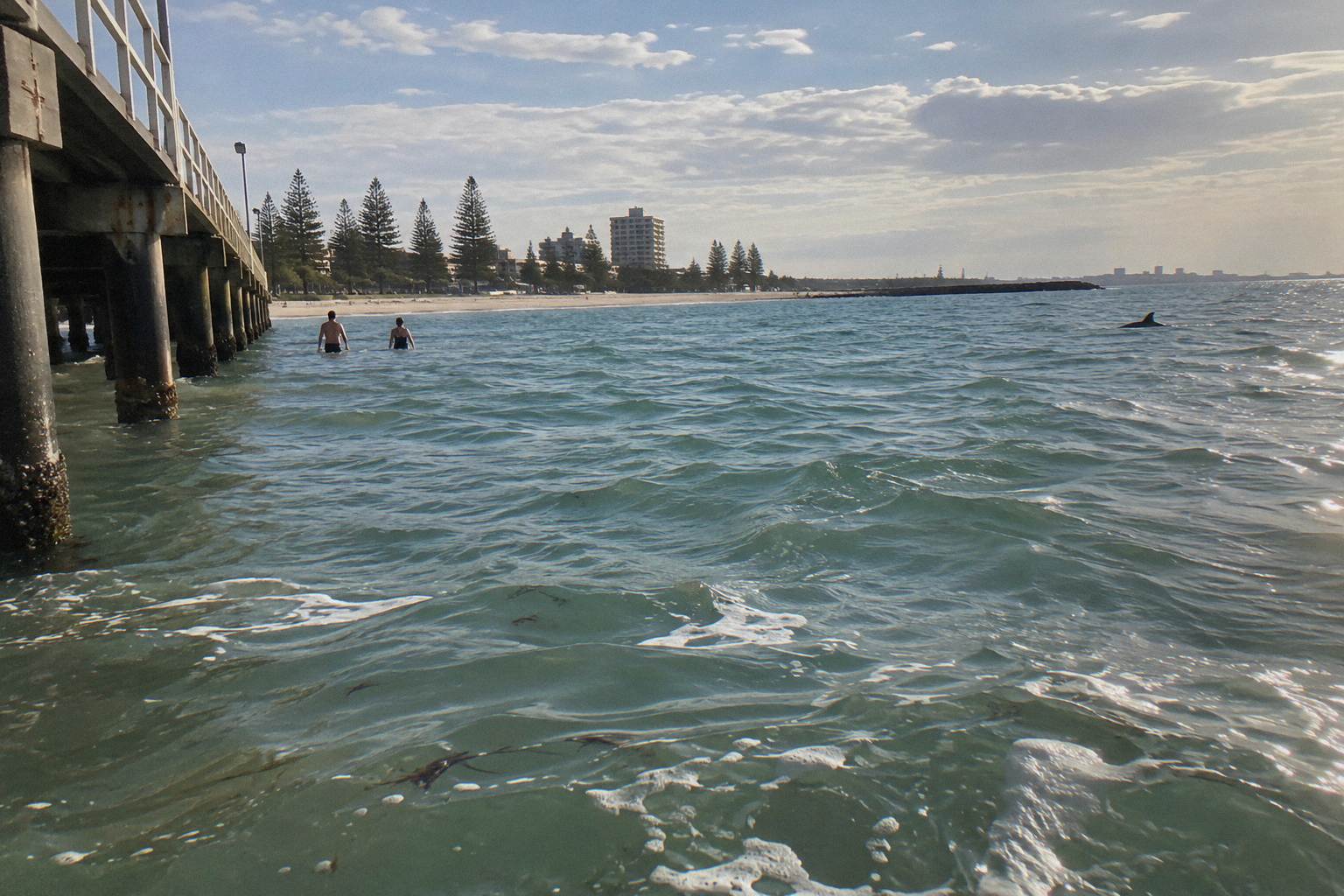
SA government testing shows zero or low levels of Karenia algae along the metropolitan coast, Kangaroo Island and the Southern Fleurieu, official health advice says beaches can still be enjoyed and that if the water is clear it is fine to swim, though swimmers should avoid foamy or abnormally coloured water and rinse afterwards.
The Karenia bloom that affected South Australian waters is a real background fact for anyone booking a swim, and the official position is more measured than either reassurance or alarm: the state records zero or low levels along the vast majority of the coastline, while agencies continue monitoring and remain vigilant about the possibility of future blooms. The Glenelg operator's FAQ still carries an undated notice that the bloom may affect its wild dolphin tour, especially the swim product, and says the algae concentration is assessed a week before the season starts, with a full refund if a tour is cancelled on that basis. The practical step is simple: check the operator before booking a swim. The official health advice page carries the state's current guidance.
Temperature is a smaller question. Adelaide's sea temperature runs from around 14 °C in August to around 21 °C in February (seatemperature.org), and every swim tour listed here provides a thick wetsuit, with the Glenelg operator's own statement that its 5 mm suits act as full-body flotation.
What Should You Ask An Operator Before Booking?
Ask whether they hold a permit for fee-based swims, at what point the crew decides to put swimmers in the water and when they stop entries, whether swimmers hold a line or swim freely, what happens if dolphins do not appear, and what the cancellation terms are on the specific page you are booking through.
An operator with clean answers will give them quickly, because the answers already exist in their FAQs. The table below turns the verified facts on this page into questions you can copy. None of them is a trick: each one maps to something the regulations require or something a specific operator has already published, so a hesitant or vague answer is itself information.
| Question to ask | What a good answer looks like | Why it matters |
|---|---|---|
| Do you hold a permit for fee-based swims? | A clear yes, without deflection | A commercial swim is unlawful without one under the 2025 regulations |
| When do swimmers enter the water? | Only once dolphins have turned toward the boat | Chasing pods and dropping swimmers in their path is the practice most people object to |
| When do entries stop? | When dolphins get too close, or show any change in behaviour | The 150 m rule for calves and disturbed animals applies to swimmers too |
| Do swimmers hold a line or swim freely? | A flotation line off the stern, swimmers towed slowly | Keeps the interaction controlled and inside the distance rules |
| What if we see no dolphins? | Stated terms, in writing, for the booking channel you are using | Direct-booking terms and listing terms are not always the same |
| Are there trip types you cancel or modify? | For example, no swim when neonates are present | Shows the animals' condition drives the operation, not the schedule |
Age and medical limits are worth confirming too. The Glenelg swim has a minimum age of 9 and asks that pacemaker wearers contact the operator before booking; the Kangaroo Island swim is also from age 9 and is not suitable with a pacemaker or pregnancy. Neither swim is wheelchair accessible. If a child in your group is under the limit, the guide on dolphin swim age limits and kids works through the watching options instead.
So Is A Swim Or A Watch The Right Choice For You?
That is a personal call this page will not make for you: the legal framework, the operators' stated practices and the honest uncertainty around sightings are all set out above, the swim starts from USD 104 at Glenelg or USD 132 at Kangaroo Island, the watch alternatives start from USD 54.72, and every option except Kangaroo Island Dolphin Watch carries free cancellation up to 24 hours.
What can be said without overreaching is that the decision is better informed than most people expect it to be. This is not an unregulated activity in a lawless bay: it is permitted, distance-bound, time-limited and policed with a named expiation fee. The operators publish their methods, including the two facts most relevant to an ethical judgement, that swimmers enter only when dolphins approach and that entries stop when the animals get too close. And the alternative of watching or paddling is not a consolation prize; it is cheaper, it runs more often across more locations, and on the Glenelg boat it is literally the same trip.
The featured swim experience, Wild Dolphin Swim From Glenelg With Temptation Sailing, is the site's featured tour: 4.7 across 493 reviews, from USD 104 per person, about 4 hours, minimum age 9, free cancellation up to 24 hours. If the honest answer to "is this ethical" for you is "yes, as long as it is run the way they say it is run", then the checklist in the previous section is your final step before booking.
Common Questions About Whether A Wild Dolphin Swim Is Ethical
Is Swimming With Dolphins Ethical?
There is no official ruling, and no welfare study for these waters appears in the verified research. What can be verified: commercial swims are lawful only under a government permit, swimmers must keep 30 m from dolphins and 150 m from calves or disturbed animals, feeding and touching are prohibited, and the operators state swimmers enter only once dolphins have turned toward the boat.
Is It Illegal To Swim With Dolphins In South Australia?
Swimming near dolphins is not illegal for a solo swimmer, but distance rules apply: 30 m minimum, 150 m from calves or disturbed animals, and no more than 30 minutes within 150 m. Taking paying customers out to swim near dolphins for a fee requires a Ministerial permit or other lawful authority.
Do Dolphin Swim Operators Chase The Dolphins?
Neither operator describes chasing. The Glenelg operator states the crew puts swimmers in only once dolphins have turned toward the boat and stops entries when dolphins get too close; the Kangaroo Island operator states wildlife interactions cannot be guaranteed and the trip may be dolphins, seals or a coastal snorkel depending on what the animals are doing.
Can You See Dolphins Without Swimming?
Yes. Wild Dolphin Watch From Glenelg runs on the same boat as the swim from USD 62, the Port River Dolphin Cruise runs from USD 60, the Dolphin Sanctuary Kayak Tour from USD 54.72, and Kangaroo Island Dolphin Watch from USD 61.74. All are watching or paddling only.
Are Dolphins Guaranteed On A Swim Tour?
No. Kangaroo Island Ocean Safari states plainly that wildlife interactions are not guaranteed and there is no refund once you have entered the water. The Glenelg operator claims it has never had a day without dolphins seen from above the water, which is its own statement about above-water sightings only, and offers direct bookers a free return within a year if none appear.
What Rules Protect The Dolphins During A Swim?
The 2025 marine mammal regulations set swimmer distances of 30 m and 150 m, a 30-minute time limit within 150 m, vessel distances of 50 m and 150 m, a 4-knot speed limit within 150 m, and outright bans on feeding and touching, with an expiation fee of AUD 315 per alleged offence.