How Many Times Do You Get In The Water On A Dolphin Swim?
Neither Adelaide-area dolphin swim operator publishes a fixed number of water entries. Here is what each operator does state about how the swims work, what the law allows, and what to ask before booking.
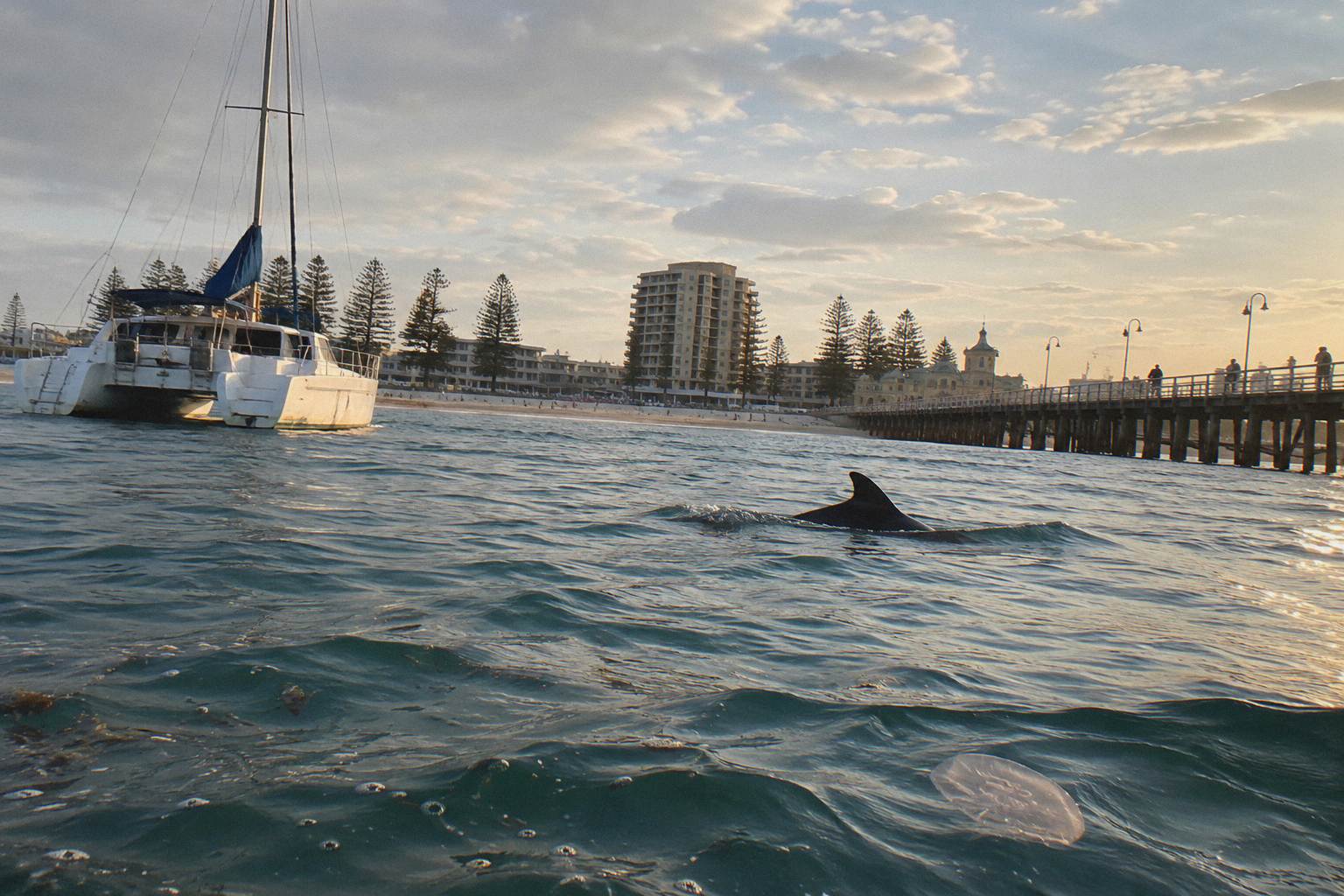
Neither major South Australian dolphin swim operator states a fixed number of water entries, and neither publishes how long each entry lasts. Temptation Sailing's Glenelg trip rotates swimmers between two experiences, a front swim and a back swim, and puts people in only when dolphins turn toward the boat. Kangaroo Island's safari may turn out to be dolphins, seals, or a coastal snorkel. The honest answer is that entries depend entirely on what the dolphins do that morning.
That is not an evasion, it is how permitted wild dolphin swims have to work. Under South Australia's marine mammal regulations a commercial operator may not put paying swimmers near dolphins without a Ministerial permit or other lawful authority, and the permit conditions themselves, swimmer numbers, time in the water, entry counts, are not published anywhere official. So when a reader asks how many times they will get in the water, the truthful answer has two layers: what the operator's own pages say about the structure of the swim, and what no operator can honestly promise about a wild animal's behaviour.
The practical difference between the two swim products on this site is worth naming up front. The Glenelg trip, the Temptation Sailing swim, is built around rotation: the crew moves swimmers between two distinct swim positions on the same boat, and entries are gated by dolphin behaviour. The Kangaroo Island Ocean Safari trip is a two-hour snorkelling safari where the water component may be with dolphins, with seals, or a coastal snorkel, depending on the day. If a guaranteed count of water entries is what you are shopping for, stop reading now, because no lawful wild dolphin swim in South Australia sells one.
What you can do is compare what each operator has actually put in writing. The sections below lay out the Glenelg swim's rotation system as the operator describes it, the Kangaroo Island safari's three possible outcomes, the specific numbers neither operator states, the legal limits that do exist on paper, and the questions worth asking before you hand over money. The distinction matters most at refund time: one operator ties its refund terms to whether dolphins were seen from the boat, the other states plainly that once you get in the water at any stage, no refund follows.
How The Glenelg Swim Entries Actually Work
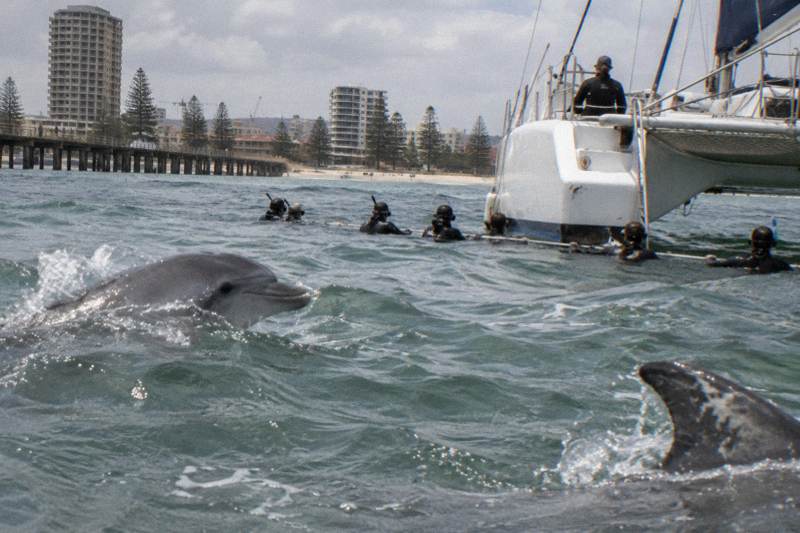
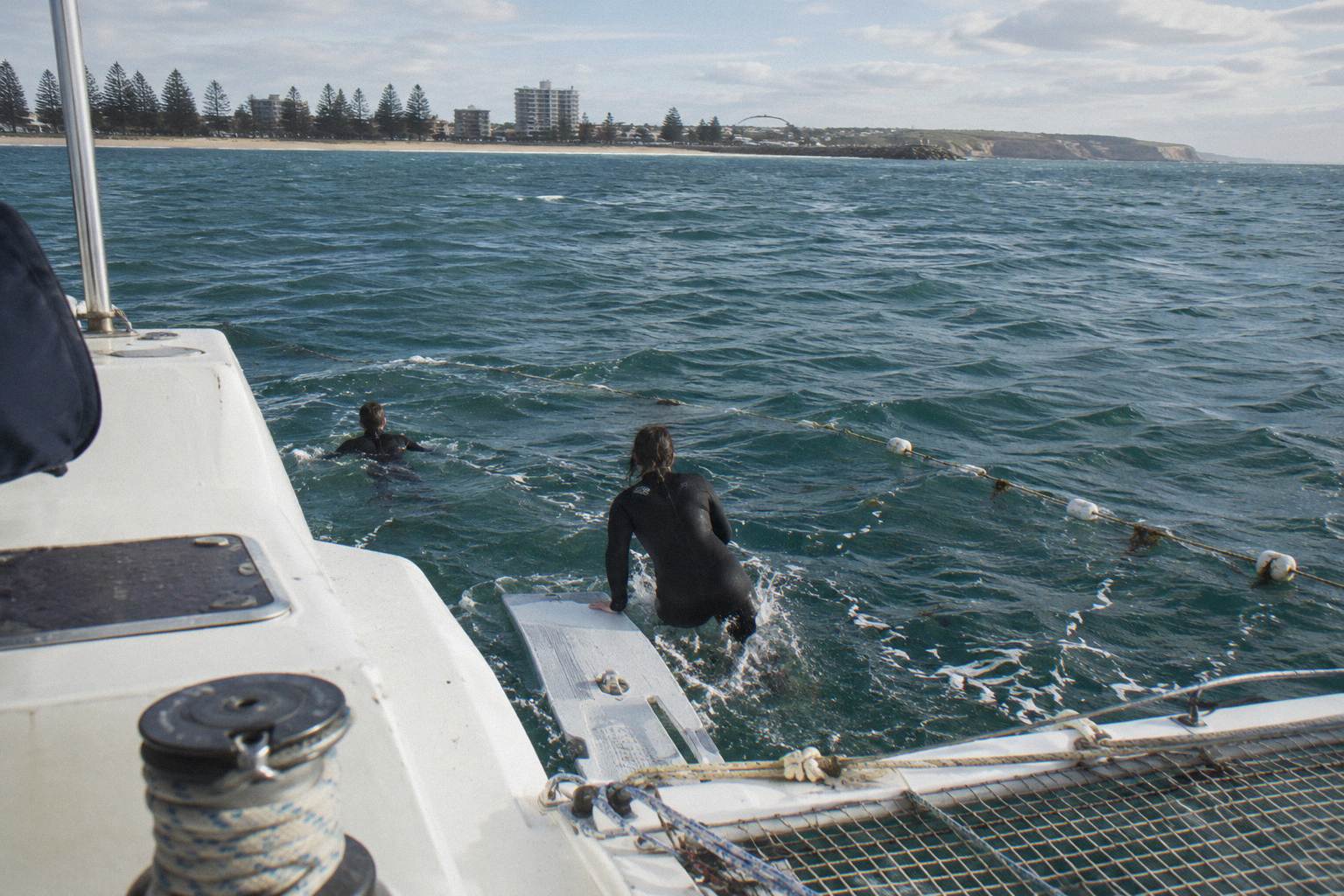
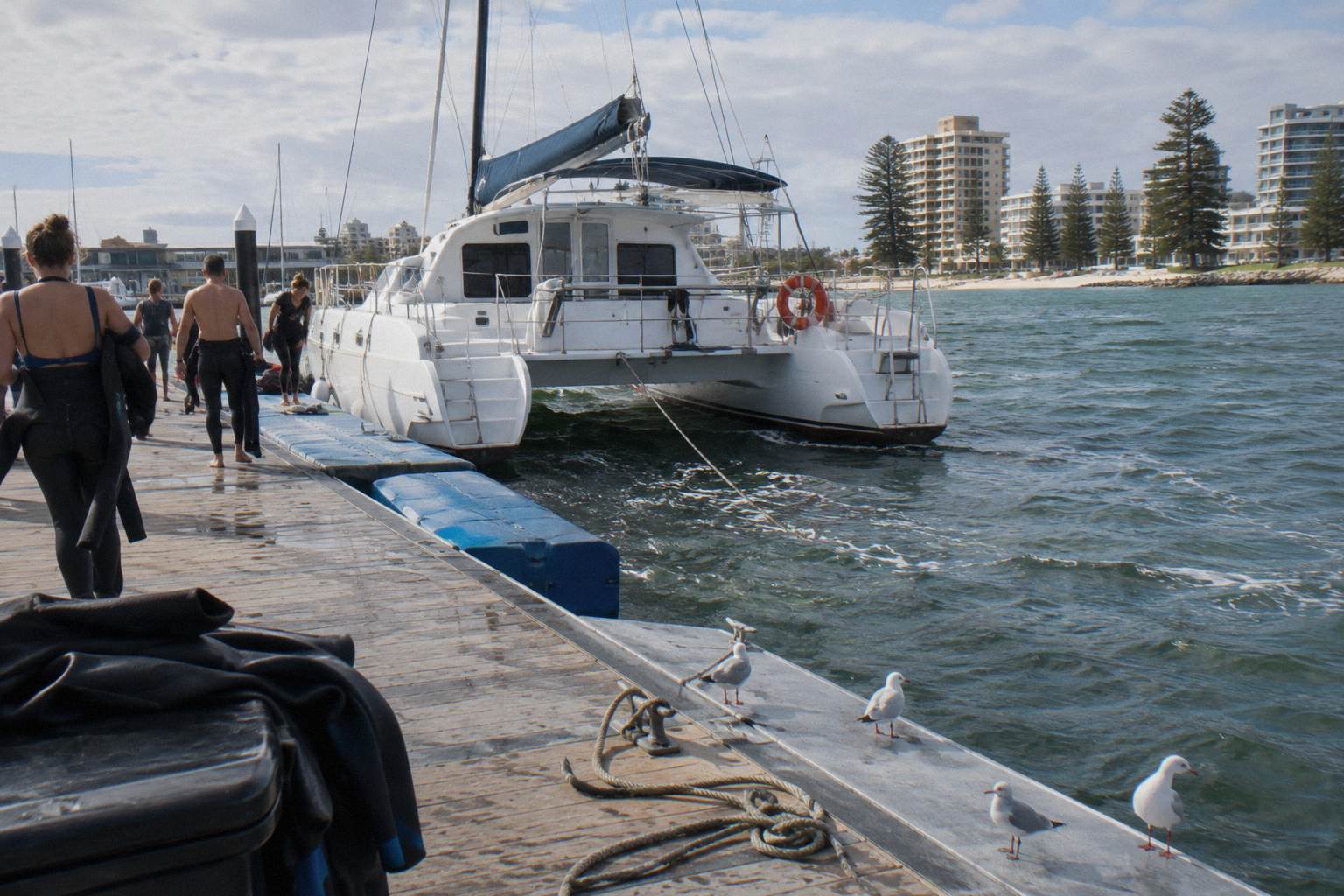
Temptation Sailing's Glenelg trip splits the swim into two experiences, a front swim and a back swim, and rotates swimmers between them. Swimmers hold a flotation line connected to the stern while the boat moves slowly, the crew puts people in only once dolphins have turned toward the boat, and entries stop when dolphins get too close. The operator publishes no entry count and no minutes-per-entry figure, so any specific number you read elsewhere is an invention.
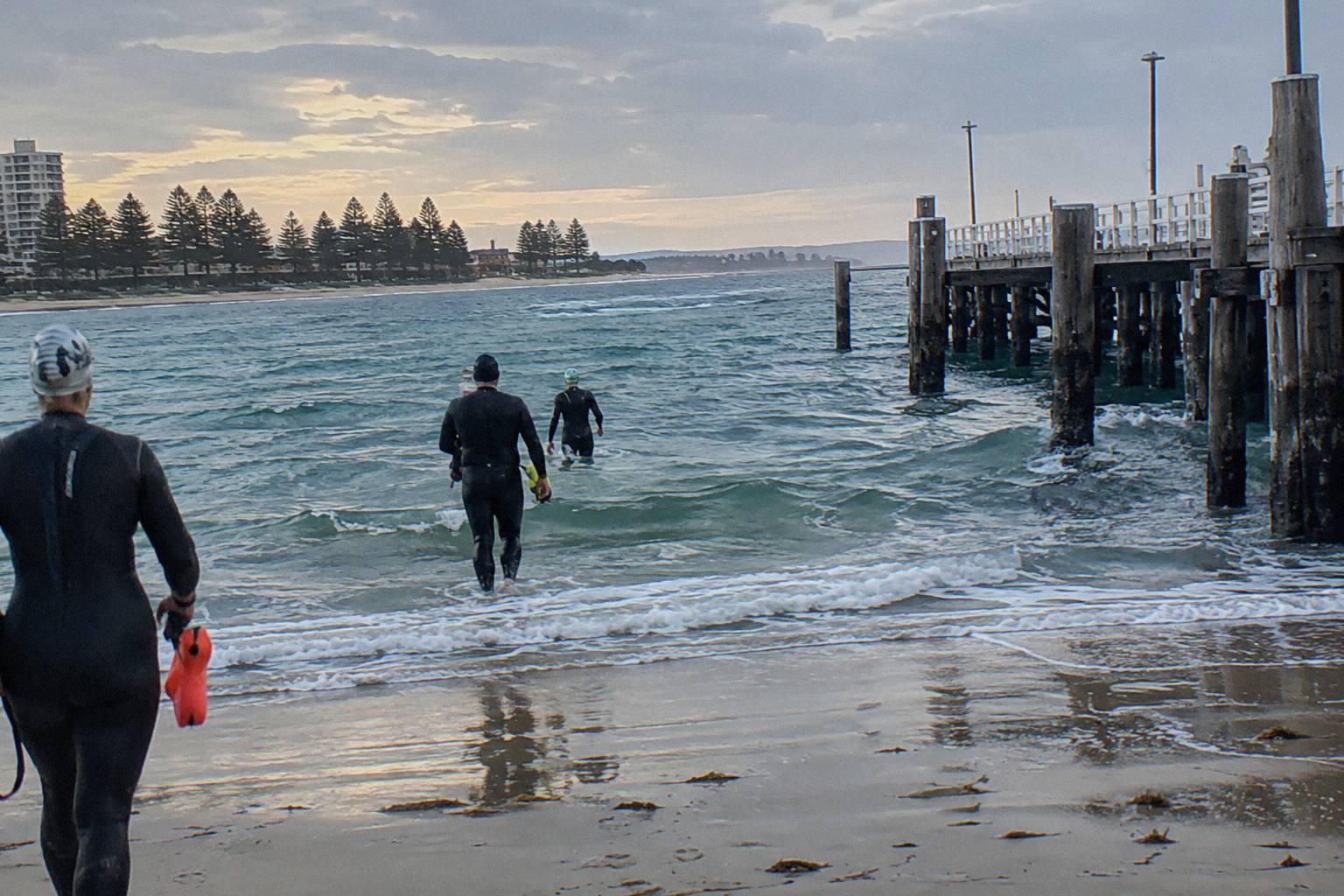
The operator's own FAQ is the primary source here, and it is refreshingly concrete about the mechanics. Boarding is at Marina Pier, Holdfast Shores Marina at Glenelg, at the bottom of the stairs in front of the Oyster Bar, starting 15 minutes before departure. The tour runs approximately 4 hours, back in the marina between 11:30am and midday, so it is a morning departure, with the exact time on your booking confirmation. Each swimmer is fitted with a full-length 5 mm wetsuit that the operator says also acts as a full-body flotation device, and there is a crew briefing of about 15 minutes before anyone gets wet. Masks and snorkels are demonstrated on board, prescription masks are available in three strengths, and wetsuits run to size 4XL.
The rotation system is the part that answers this article's question most directly. There is not one swim slot, there are two: the front swim, with no shark shields, and the back swim, where two shark shields run and swimmers hold what the operator calls a mermaid line. Customers are rotated between them. That structure strongly implies multiple water entries across a 4-hour trip, but the operator has not printed a count, and the crew's stated trigger conditions, dolphins turning toward the boat before entry, entries stopped when dolphins get too close, mean the number flexes with the pod's mood on the day. Marine biologist hosts are on board, which gives the trip a research-adjacent character rather than a theme-park queue.
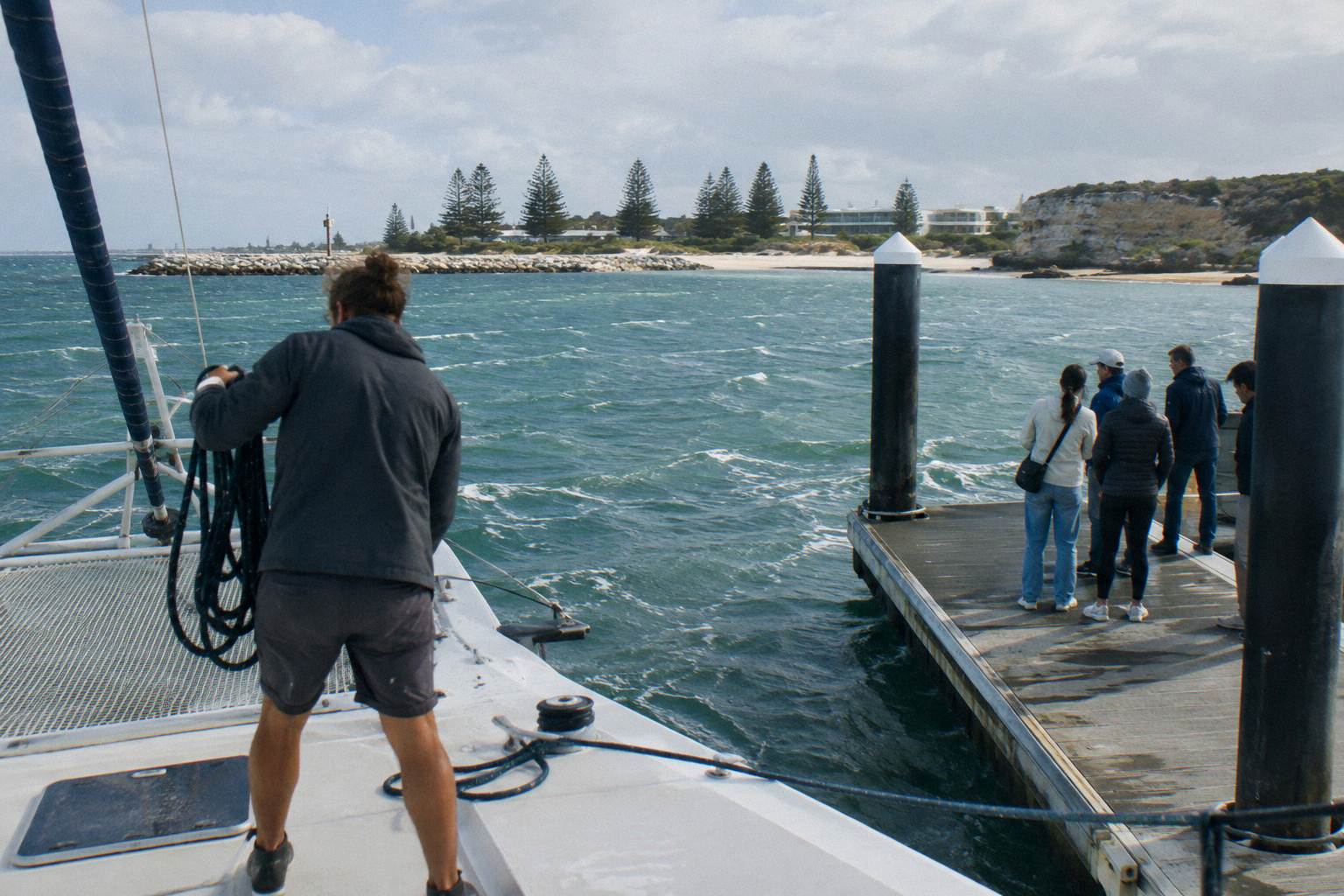
Who gets in at all is also bounded. The minimum swim age is 9, which the operator attributes to its insurance, and anyone under 18 needs a parent or guardian on board, who may swim or buy a watch ticket. Swimmers must be able to hold the flotation line while towed slowly and climb three ladder rungs at the back of the boat. Pacemaker wearers should ask the operator before booking. A nervous swimmer who decides after the briefing not to enter can stay aboard as a watcher, and for bookings made direct with the operator the difference between the swim and watch fare is refunded. Non-swimmers in a group can simply ride as watchers on the same boat.
The listing price for this trip is from USD 104 per person, rated 4.7 across 493 reviews, with free cancellation up to 24 hours on the booking page. If entries and value are what you are weighing, the four-hour format, two swim positions, and one-boat swim-and-watch setup make it the most structured of the local options, and you can read the details on the Glenelg wild dolphin swim listing before committing.
What Kangaroo Island Means By Getting In The Water
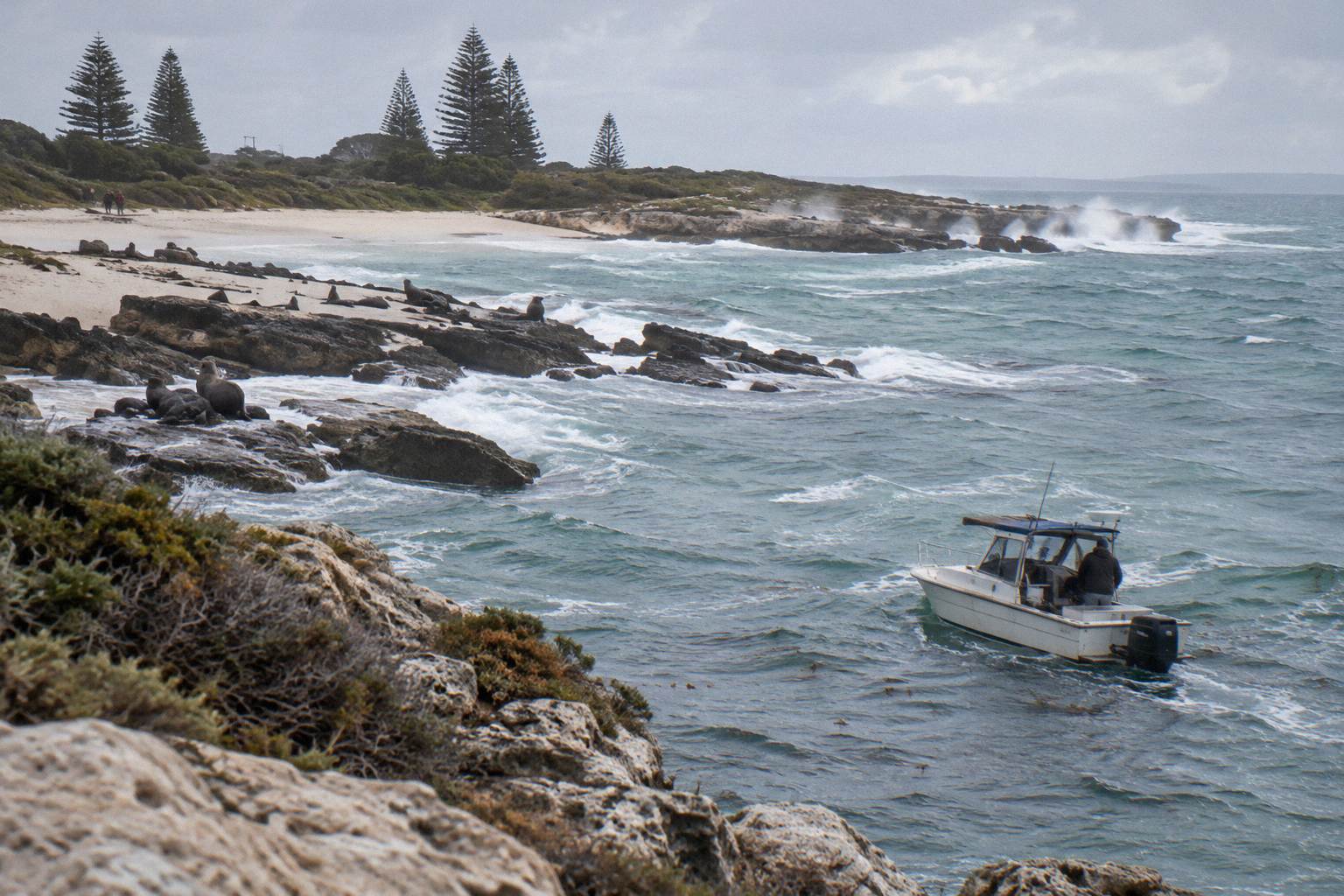
Kangaroo Island Ocean Safari's two-hour Snorkelling Safari is sold as a swim with wild dolphins or among seals, and the operator states the trip may be dolphins only, seals only, or a coastal snorkel. There is no stated number of water entries, and the refund terms state that if you get in the water at any stage, no refund follows. The water time you get is whatever the day delivers.
The operator's own page frames the product honestly as a menu of outcomes rather than a single promise. Gear is provided in full: wetsuit, gloves, mask, snorkel and fins, on vessels the operator describes as 28-seaters. Guests meet at the Kangaroo Island Information Stop, 43 Howard Drive, Penneshaw, 30 minutes before departure for fitting and a safety brief. For the dolphin component, a swimmer line with buoys is often used at the back of the vessel, which the operator says needs upper body strength, and the ladder exit needs lower body strength, so the physical demands differ from the Glenelg mermaid-line setup. Shark shields run fore and aft. Reasonable swimming ability is recommended, with a life jacket and noodle available.
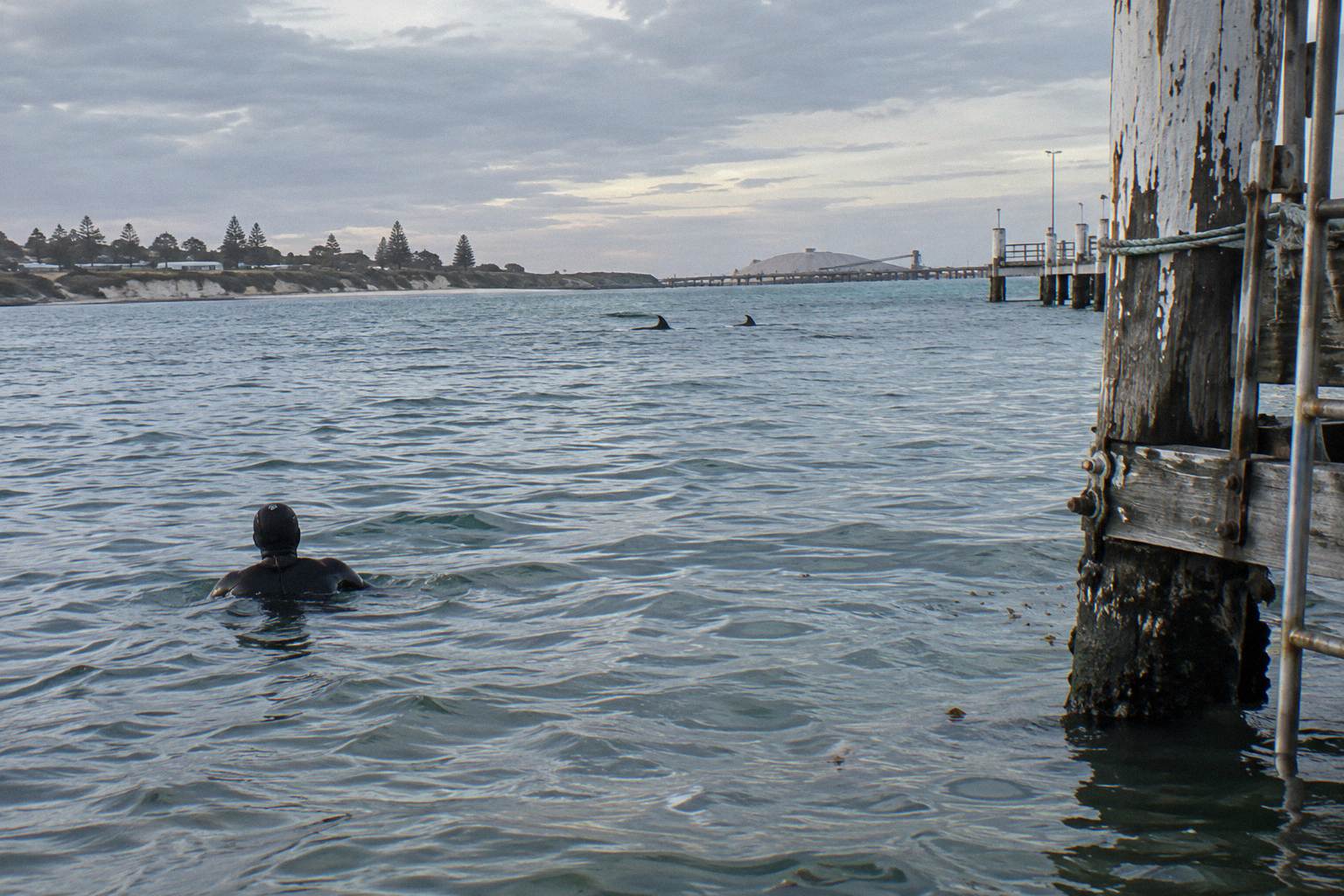
The entry conditions mirror the Glenelg trip in outline but differ in the fine print. The swim is open from age 9, children 3 to 12 pay a child rate, and a coastal snorkel is offered from age 8. The operator says the trip is not suitable with a pacemaker or pregnancy, and there is no wheelchair access. Water temperature is stated by the operator as between 14 and 15 degrees, with no month attached, and thick wetsuits are described as allowing participation year round. The booking page adds that the swim does not run when the pod has neonates, young calves, which is a responsible restriction worth knowing about if you travel in breeding season.
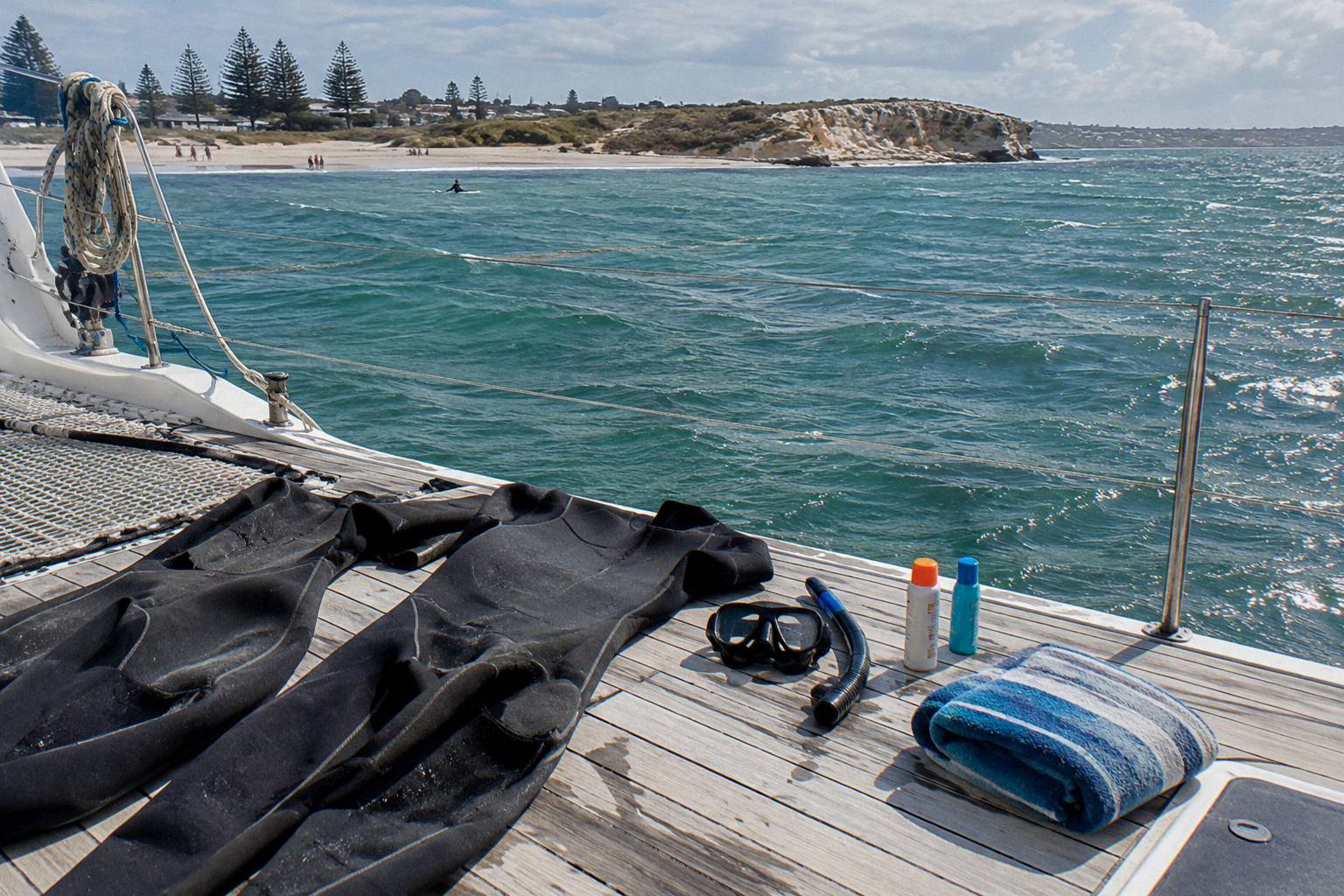
The refund language is where this operator differs most sharply from Glenelg, and it bears directly on anyone counting water entries as a measure of value. The operator's page states that wildlife interactions are NOT guaranteed, that sightings can't be guaranteed, and that it does not promise a sighting on every trip. Crucially: if you get in the water at any stage, you do not get any money refunded. So even a single brief entry, whatever it contains, closes off a refund under the operator's own terms. The booking page separately shows free cancellation up to 24 hours before the trip, which governs cancelling the booking, not the content of the water time. The operator's own cancellation tiers, 48 hours, 7 days, and credit held 24 months, sit behind that.
Dolphins are present year-round around Kangaroo Island according to the operator's FAQ, while seals peak in winter and are at their lowest from November to January, which makes the dolphins-or-seals menu genuinely seasonal. The listing price is from USD 132 per person, rated 4.4 across 137 reviews. For the planning side of pairing the island swim with a day trip from Adelaide, the Kangaroo Island dolphin swim day trip guide covers the logistics without inventing ferry times this page has no verified basis to print.
What Neither Operator Will Tell You Before You Book
No operator on this site publishes the number of water entries, the total time swimmers spend in the water, the permit conditions they operate under, or the swimmer numbers allowed per entry. These figures are not stated anywhere official, and any article quoting them is guessing. The table below separates what each operator does state from what it leaves unsaid.
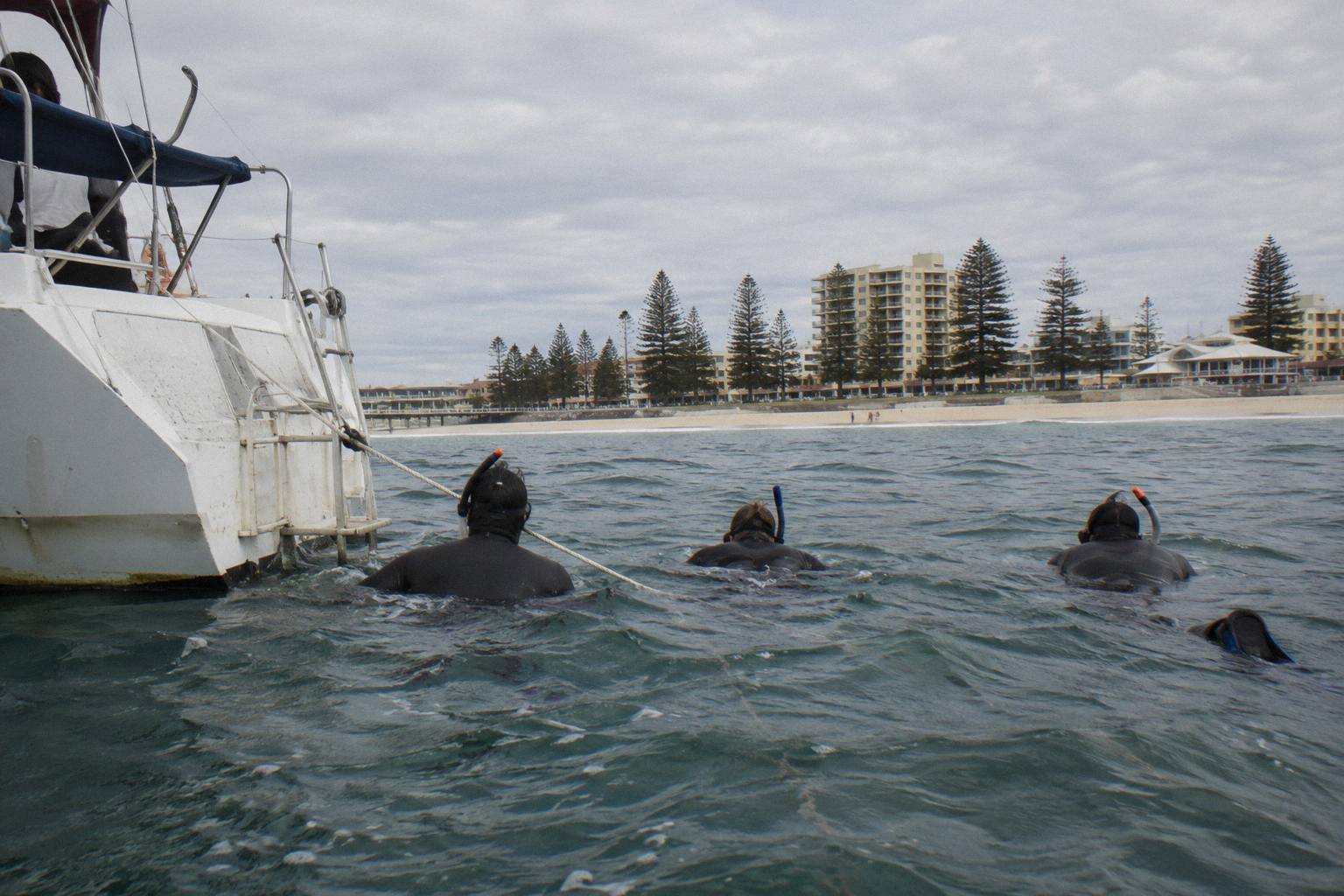
This gap is worth dwelling on because it is structural, not careless. The marine mammal regulations make a fee-based swim lawful only under a Ministerial permit, and the permit register and any permit conditions, swimmer numbers, time in the water, were not found in any official source. Operators may be constrained by conditions they are not required to publish, and the dolphins impose their own schedule regardless. The result is a market where every honest answer to "how many times" is a description of process rather than a number, and the most useful thing a buyer can do is compare the processes.
| Question before booking | Temptation Sailing (Glenelg) | Kangaroo Island Ocean Safari |
|---|---|---|
| Number of water entries | Not stated; front and back swim with rotation | Not stated; dolphins, seals or coastal snorkel |
| Time spent in the water | Not stated | Not stated |
| Who decides when you enter | Crew, once dolphins turn toward the boat | Crew, subject to conditions on the day |
| Swimsuits and gear | 5 mm full-length wetsuit, mask and snorkel, prescription masks | Wetsuit, gloves, mask, snorkel and fins |
| Minimum swim age | 9 | 9, coastal snorkel from 8 |
| Refund if you enter but see nothing | Swim-minus-watch difference, direct bookings only | No refund once you enter the water |
| Free cancellation on the booking page | Yes, up to 24 hours | Yes, up to 24 hours |
Notice the pattern across the two right-hand columns: every row about counts and durations is a blank, and every row about process and safety is filled in. That is the shape of a regulated wild-animal product. A reader comparing these two trips on "value per entry" is comparing things neither seller measures, while the differences that actually matter, rotation versus a single safari format, refund triggers, age floors, are all documented. If your real worry is total water time rather than entry count, the guide to how long a wild dolphin swim cruise runs covers trip length, and the what happens on a wild dolphin swim cruise guide walks the full sequence from boarding to the first entry.
Does The Law Cap Your Water Time?
South Australia's marine mammal regulations, in operation since 1 September 2025, cap a swimmer at 30 minutes within 150 m of a dolphin, ban approach closer than 30 m, and raise the distance to 150 m for calves or animals showing disturbance. The expiation fee is AUD 315 per alleged offence. These are swimmer regulations, not operator schedules, and they are the only hard numbers attached to water time.
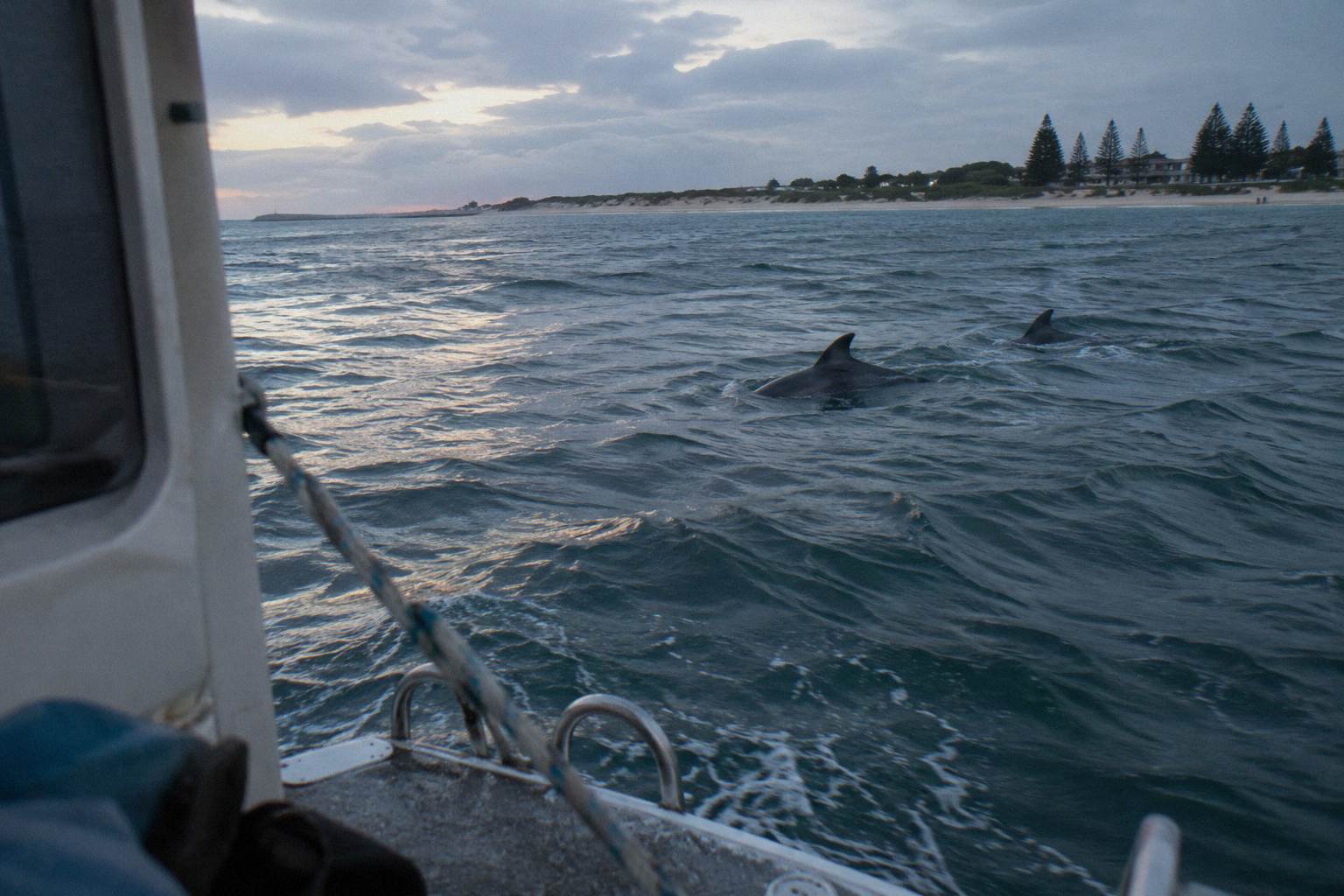
The rules sit in the National Parks and Wildlife (Protected Animals, Marine Mammals) Regulations 2025, and they matter to this question because they define the outer boundary of any water entry. A swimmer, which includes anyone snorkelling, may not come closer than 30 m to a marine mammal, must stay at least 150 m from an animal that shows disturbance, appears sick or injured, is stranded or entangled, or is a calf or pup, and may not spend more than 30 minutes within 150 m of a dolphin. Vessels have their own distances: at least 50 m from a non-whale marine mammal, and 150 m where there is a calf or the dolphins show disturbance, with no feeding and no touching anywhere in the chain.
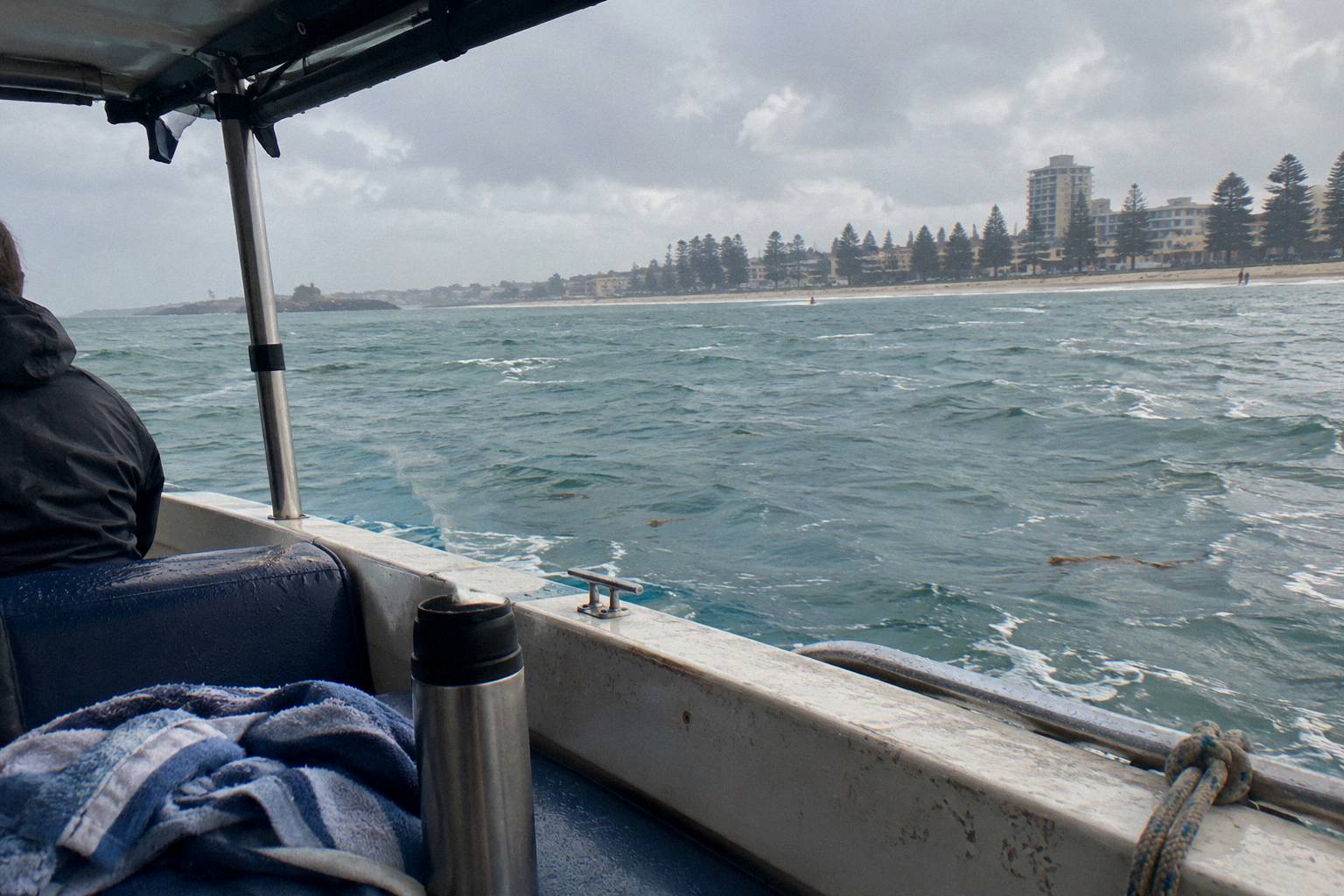
The practical effect on a commercial swim is that the boat and the line do the approaching, not you. Because swimmers hold a line while the vessel moves slowly, the legal distances are managed by the crew, which is one reason entries are staged and gated rather than continuous. The 30-minute figure is often misread online as a permit condition or an operator rule; it is neither, it is a regulation that applies to the swimmer, and it does not tell you how long any operator will keep you in the water on a given morning. Feeding and touching are prohibited outright, so no lawful swim involves luring dolphins to the line, which in turn caps how long an interaction can be sustained.
| Rule in the 2025 regulations | What it means in the water |
|---|---|
| Swimmers keep at least 30 m from a marine mammal | Approaching a dolphin to close the gap yourself is an offence, not part of the swim |
| 150 m from calves, sick, injured, stranded or entangled animals | Whole pods get extra space when a young animal is present |
| No more than 30 minutes within 150 m of a dolphin | The only legal cap on water time; it binds the swimmer, not the operator |
| Vessels keep at least 50 m, or 150 m with a calf or disturbance | The boat manages the approach distance while you hold the line |
| No feeding, no touching | No operator may lure dolphins to swimmers, which limits how long an interaction lasts |
| Expiation fee of AUD 315 per alleged offence | The enforcement backstop for each breach |
For readers weighing the ethics of the whole enterprise alongside the entry count, the full regulatory picture, including why a permitted swim is lawful at all, is set out in the site's piece on whether swimming up to wild dolphins is illegal in South Australia. The short version: unpermitted fee-based swims are unlawful, permitted ones operate inside the distance and duration rules above, and the enforcement backstop is the expiation fee.
When Entries Stop, Start Again, Or Never Happen
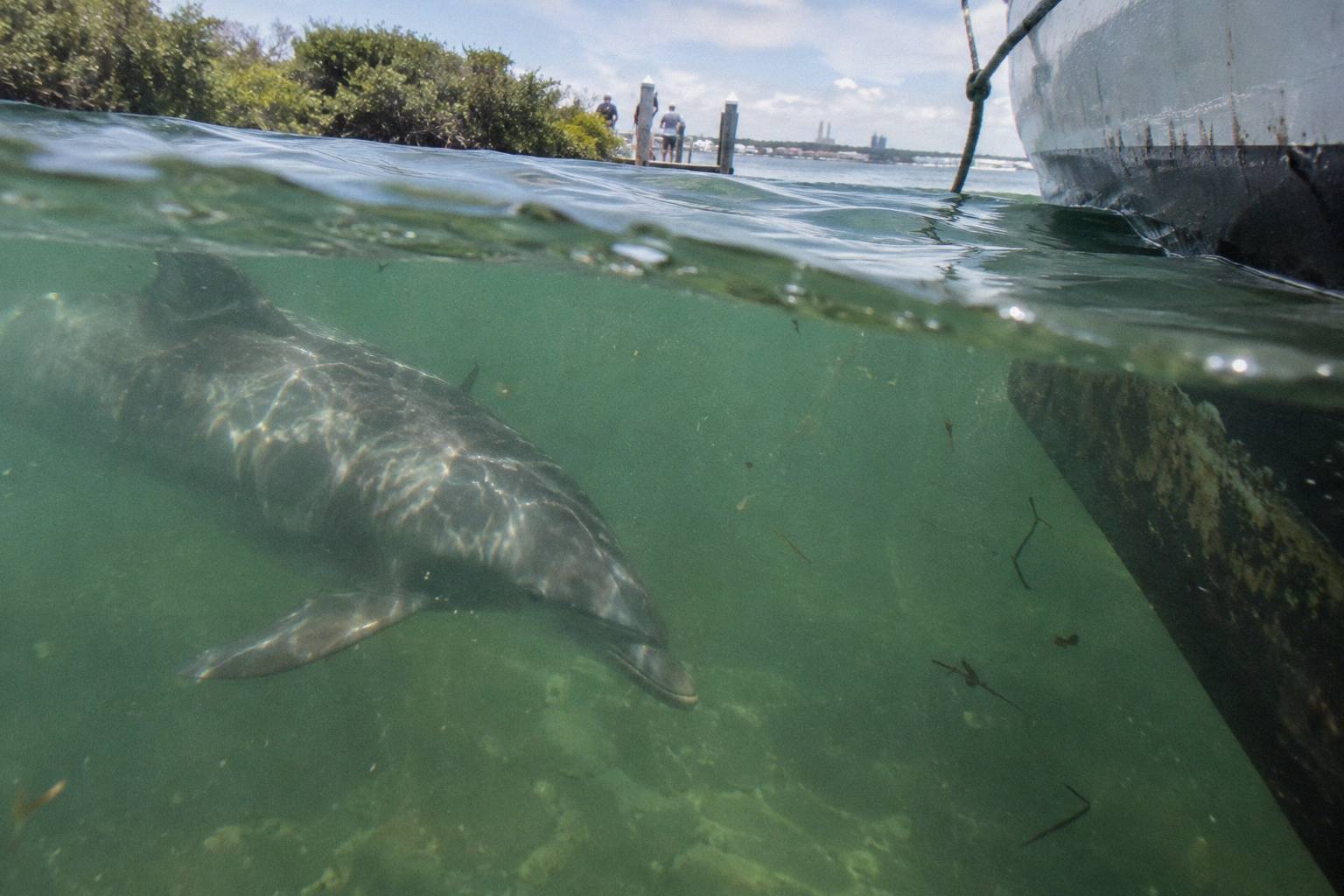
Both operators reserve the right to gate every entry on dolphin behaviour and sea conditions. Temptation Sailing stops entries when dolphins get too close and cancels outright for weather or mechanical issues with a full refund or reschedule; Kangaroo Island Ocean Safari refunds in full only if it cancels for minimum numbers, weather or unforeseen circumstances with no alternative time. Neither promises a set number of entries on any sailing.
The cancellation machinery is worth understanding before you book, because it is the real answer to what happens when the water part of your trip shrinks. At Glenelg, the operator may cancel as late as immediately before departure for weather or mechanical reasons, in which case passengers choose a full refund or a reschedule. Under the operator's direct-booking terms, small bookings cancelled under 24 hours or on a no-show get nothing, larger groups are charged per person within certain windows, and seasickness earns no refund, with tablets suggested 30 minutes before departure. The operator also notes hot days do not cancel trips, since temperatures on the water run 3 to 4 degrees cooler than on land.
Then there is the sighting question, which is entangled with the entry question. The Glenelg operator says it has never had a day without seeing dolphins from above the water and its tour page claims a 100 percent success rate of seeing dolphins on board since 2002, an operator claim about above-water sightings only, never an underwater promise. For bookings made direct with the operator, if no dolphins are seen from above the water, passengers may return free within one year, non-transferable, or take a 50 percent refund if interstate or overseas, and swimmers who did not see dolphins underwater get the swim-minus-watch difference back or a return trip within the year. Reseller booking pages may carry their own terms.
Kangaroo Island's version is starker, as covered above: wildlife interactions are not guaranteed, and entering the water at any stage ends refund eligibility for the interaction. The site's deeper treatment of these policies, dolphin swim sightings and what happens if none appear, compares the two operators' guarantees side by side. The one-line takeaway for an entry counter: on one trip a missed sighting has a defined remedy, on the other the water entry itself is the point of no return.
Questions To Ask Before You Pay
Ask the operator, not the internet, four things: how entries are structured on the day, what happens if you choose not to enter after the briefing, what the refund trigger is if dolphins are seen from the boat but not underwater, and whether the trip you booked is a swim or a watch ticket. Every one of these has a documented answer from at least one local operator, and none of them is the entry count.
The first question is the honest substitute for the question this article is titled with. "How are entries structured, and what gates them?" gets you the rotation system at Glenelg or the dolphins-seals-snorkel menu at Kangaroo Island, which is everything an operator can truthfully promise. The second question, about staying aboard, matters if your confidence is uncertain: the Glenelg operator explicitly allows a post-briefing change of heart with a fare difference refund on direct bookings, so a hesitant swimmer is not trapped. The third question separates the two refund philosophies cleanly, and the fourth catches a genuine booking mistake, since swim and watch guests ride the same boat at Glenelg and can book together or separately.
Timing and seasonality fold in here too. The Glenelg season runs September to April, with no cruises in the cooler months, while the Kangaroo Island operator says its thick wetsuits allow the swim year round, and dolphins are present around the island year-round. Sea temperature off Adelaide runs from around 14 degrees in August to around 21 degrees in February, per seatemperature.org, which is why full-length 5 mm suits are standard issue rather than optional comfort. On water quality, SA testing shows zero or low Karenia along the metropolitan coast and Kangaroo Island; check the operator before booking a swim, and follow the official health advice on algal blooms, which boils down to: if the water is clear, it is fine to swim, and avoid foamy or abnormally coloured water.
That is the whole picture, and it is the picture Adelaide Swimming With Dolphins was built to give: the number of water entries is not a fact anyone can sell you, but the structure, the rules and the refund triggers around each entry are all documented, and comparing those is how you buy well.
Common Questions About Dolphin Swim Water Entries
How Many Times Do You Get In The Water On A Dolphin Swim?
Neither South Australian operator states a fixed number. At Glenelg, swimmers rotate between a front and a back swim experience, with entries gated by dolphin behaviour; on Kangaroo Island, the trip may be dolphins, seals or a coastal snorkel. The count flexes with the pod on the day.
Is There A Time Limit Per Water Entry?
No operator publishes one. The only legal figure is a swimmer regulation capping you at 30 minutes within 150 m of a dolphin, which applies to swimmers generally, not to any operator's schedule.
Do You Have To Get In Every Time The Crew Offers?
No. At Glenelg, a swimmer who is not confident after the briefing can stay aboard as a watcher, and for bookings made direct with the operator the swim-minus-watch fare difference is refunded.
What If You Get In The Water But See No Dolphins?
It depends on the operator. At Glenelg, direct bookings get the swim-minus-watch difference back or a return within a year. On Kangaroo Island, if you get in the water at any stage there is no refund.
Does The Number Of Entries Change The Price?
No local operator prices by entry. The Glenelg swim is listed from USD 104 per person and the Kangaroo Island safari from USD 132 per person, regardless of how many entries the day allows.