Do You Change On The Boat Or The Dock For A Dolphin Swim?
Where swimmers actually get changed for the Glenelg and Kangaroo Island dolphin swims, what the operators state about boarding, and a practical checklist for the day.
Neither South Australian swim operator states where you change, on the boat or ashore, and neither publishes anything about changing rooms, toilets or privacy. What is stated is the boarding routine: Glenelg swimmers board at Marina Pier 15 minutes before departure and are handed a wetsuit on boarding, while Kangaroo Island swimmers meet at an information stop 30 minutes before departure for fitting and a safety brief. That difference matters for how you plan your morning, and it is the honest starting point for this question.
The question itself is a practical one, the sort travellers ask in forums the night before a trip: do I turn up already in my swimwear, or is there somewhere to get changed? This page answers it from what the two operators actually publish, flags clearly what they do not publish, and finishes with a checklist that works regardless of which operator you book. Where a fact is an operator's own statement rather than an independent one, it is attributed to that operator, because terms differ between the two businesses and generalising them would be misleading.
Two swim products are in scope. The Wild Dolphin Swim From Glenelg With Temptation Sailing runs about 4 hours, from USD 104, rated 4.7 across 493 reviews, with a minimum age of 9. The Kangaroo Island Ocean Safari Swim runs 2 hours, from USD 132, rated 4.4 across 137 reviews, also with a minimum age of 9. Both include a wetsuit and swim gear. Watching-only cruises, including the Wild Dolphin Watch From Glenelg at from USD 62, are a different day out and mostly a different clothing problem, though the same checklist logic applies.
Where Boarding Actually Happens At Each Operator
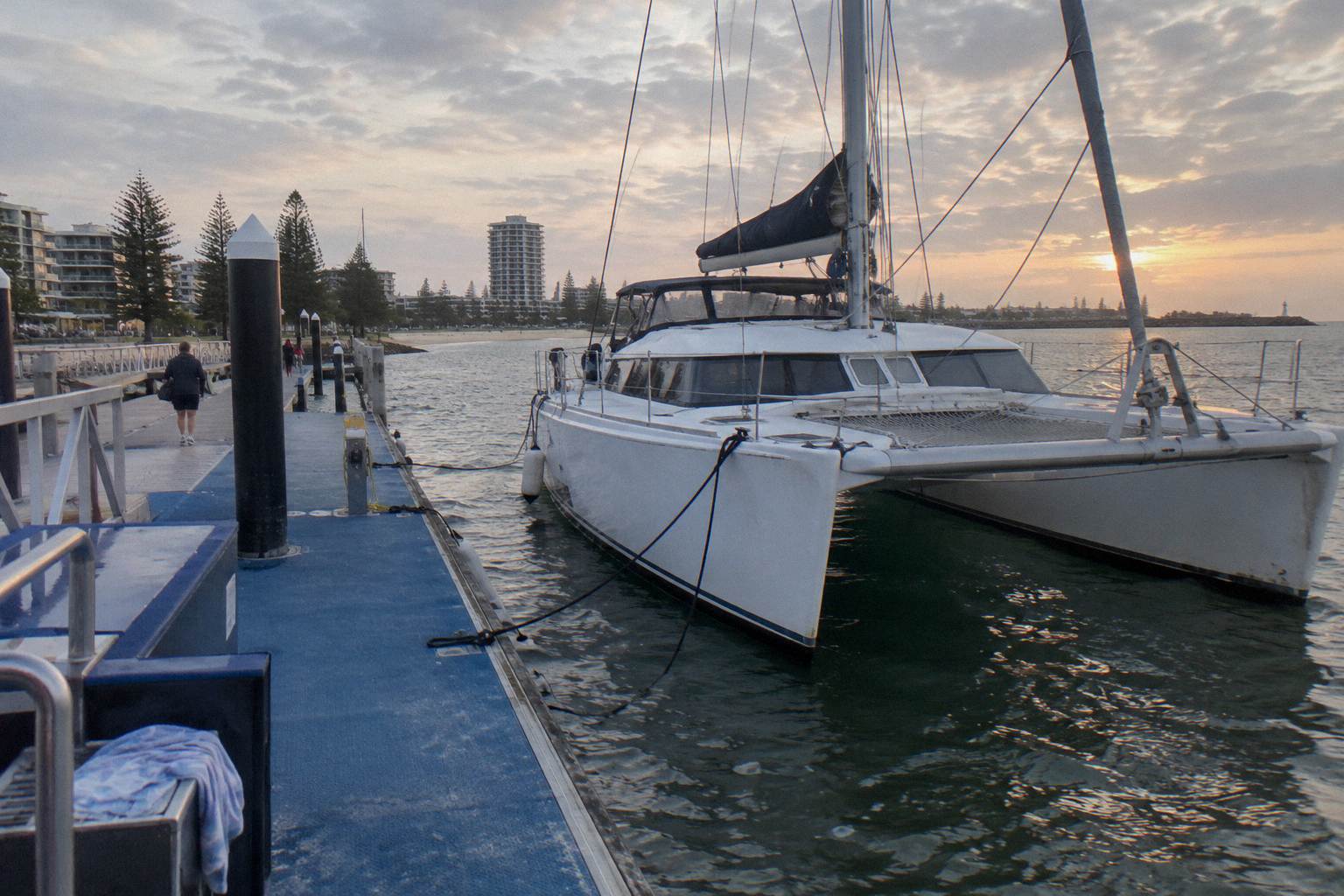
Glenelg swimmers board at Marina Pier, Holdfast Shores Marina, at the bottom of the stairs in front of the Oyster Bar, with boarding starting 15 minutes before departure. Kangaroo Island swimmers meet at the Kangaroo Island Information Stop, 43 Howard Drive, Penneshaw, 30 minutes before departure, for wetsuit fitting and a safety brief. Neither statement says where you change, but the different lead times tell you how much slack each operator builds in.
The Glenelg routine is the tighter of the two. The operator describes the vessel as a 58 ft sailing catamaran surveyed for up to 50 passengers, and says it has run dolphin swim and watch tours from Glenelg since 2002, calling itself the first vessel in South Australia given a licence to swim with dolphins, an operator claim worth printing only as such. Fifteen minutes is enough for a wetsuit handout and a boarding check, not for a leisurely transition from street clothes, so the practical reading is to arrive at the marina ready for the water. The tour is a morning departure, roughly 4 hours, with the operator saying the boat is back in the marina between 11:30am and midday; the exact departure time appears on your booking confirmation.
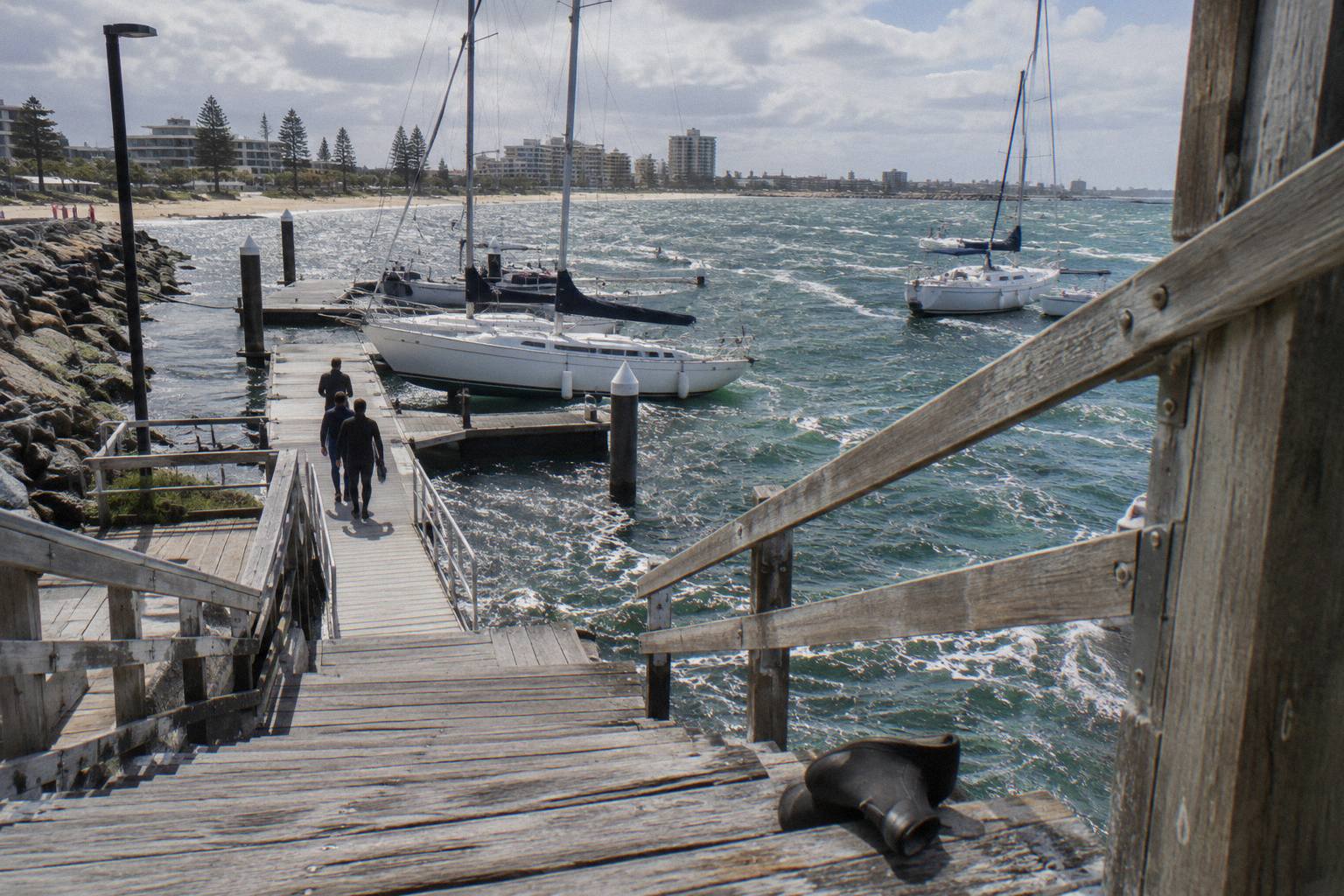
Kangaroo Island builds in double the time, and it spends that time on gear. The operator's meeting instruction is explicit: arrive 30 minutes before departure at the Information Stop for fitting and a safety brief, and the snorkelling safari page describes wetsuit, gloves, mask, snorkel and fins all provided, on vessels the operator calls 28-seaters. A scheduled fitting session before the boat leaves strongly suggests you step into your wetsuit at or near the meeting point rather than mid-trip, but that is inference from the stated routine, not a published fact about a changing room, and this page will not dress one up as the other.
The one thing worth deciding before you read further is which of these mornings is yours, because the logistics are genuinely different. A deeper comparison of the two locations, including what a day trip to Kangaroo Island involves, sits in the Kangaroo Island or Glenelg dolphin swim guide.
What The Operators Say About Wetsuits And Swim Gear
At Glenelg, the operators kit out every swimmer with a full-length 5 mm wetsuit as they board, and this same suit is said to double as a full body flotation device. Gear extends across a wide range, with wetsuits stocked up to size 4XL and prescription masks also carried on board. At Kangaroo Island, wetsuit, gloves, mask, snorkel and fins are provided, with fitting done in the 30 minutes before departure. In both cases you do not need to bring your own suit, and in both cases the suit is part of how the swim is managed rather than a comfort extra.
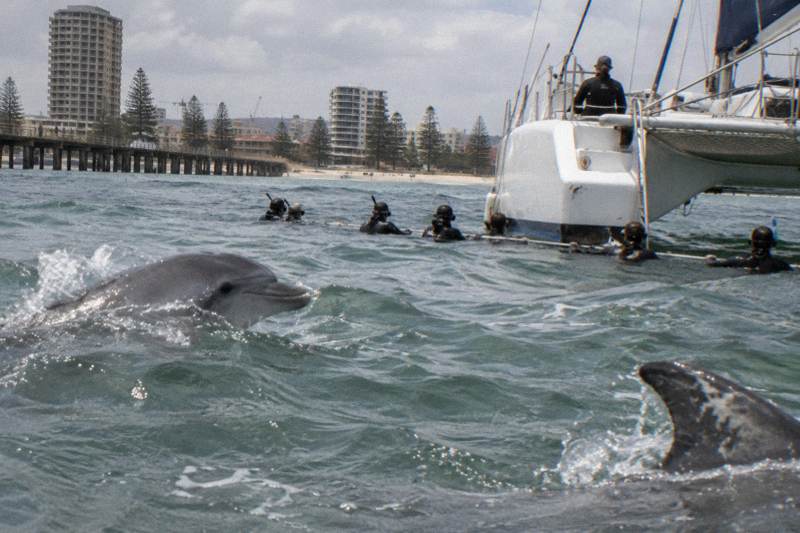
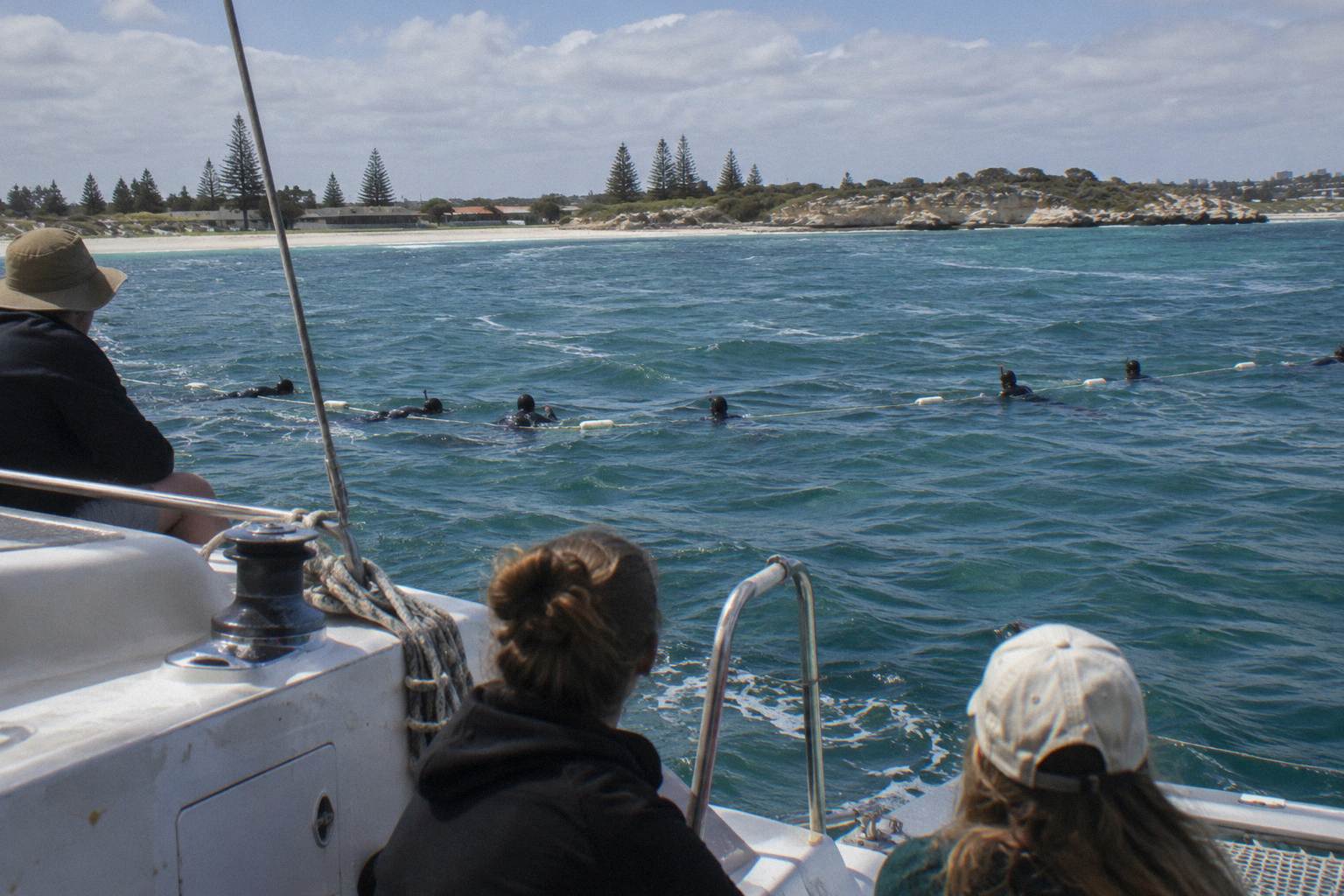
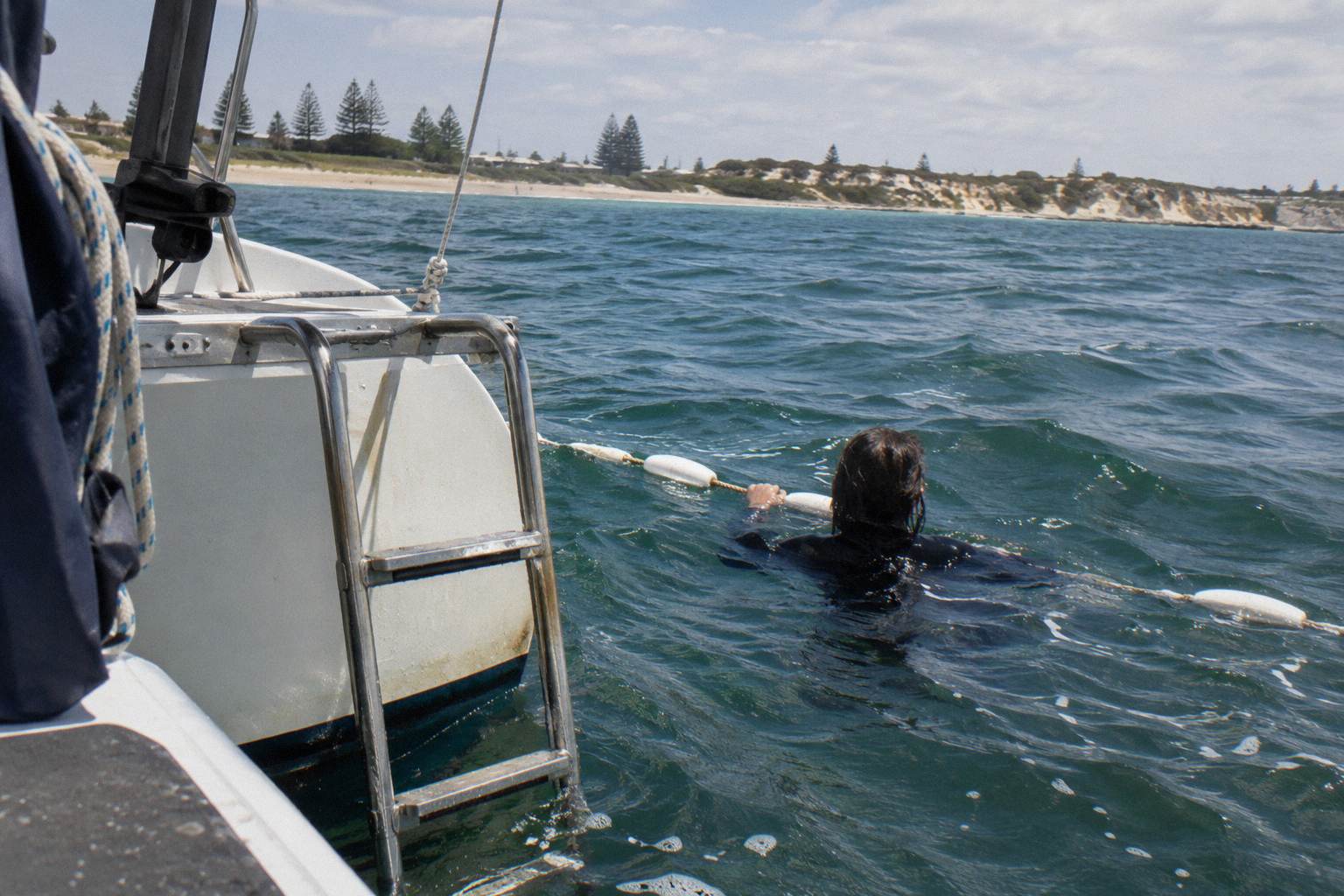
The Glenelg wetsuit shapes the whole answer to this article's question. Because the suit is handed out on boarding and doubles as flotation, the swimmer's job is to get into it before the boat reaches the dolphins, then hold a flotation line connected to the stern while the boat moves slowly. The operator describes this as a fully controlled swim, not free swimming in open ocean, with two experiences, Front Swim and Back Swim, and swimmers rotated between them. A crew briefing of about 15 minutes covers the mask and snorkel demonstration. The crew puts swimmers in only once dolphins have turned toward the boat and stops entries when the dolphins get too close. Marine biologist hosts are aboard.
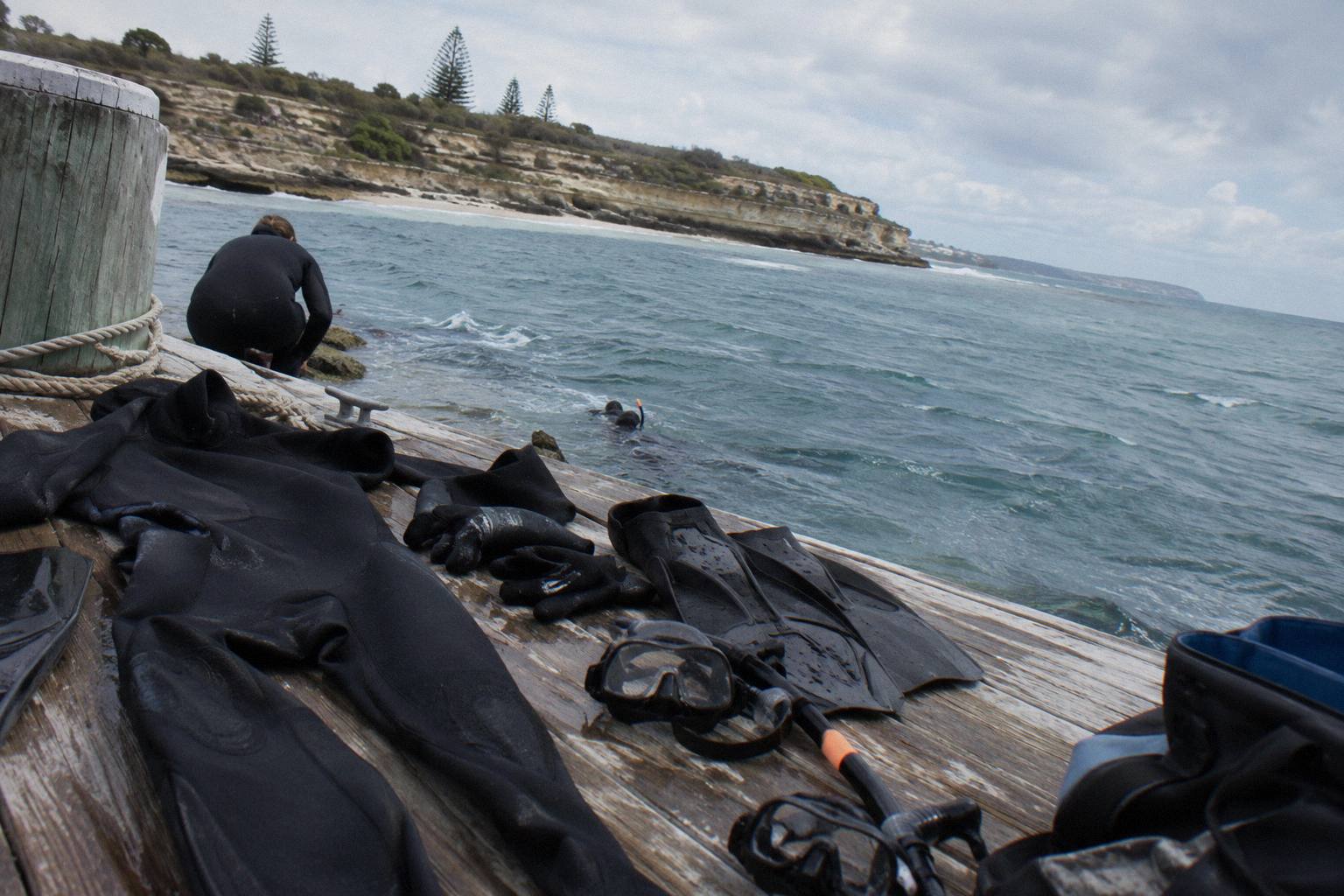
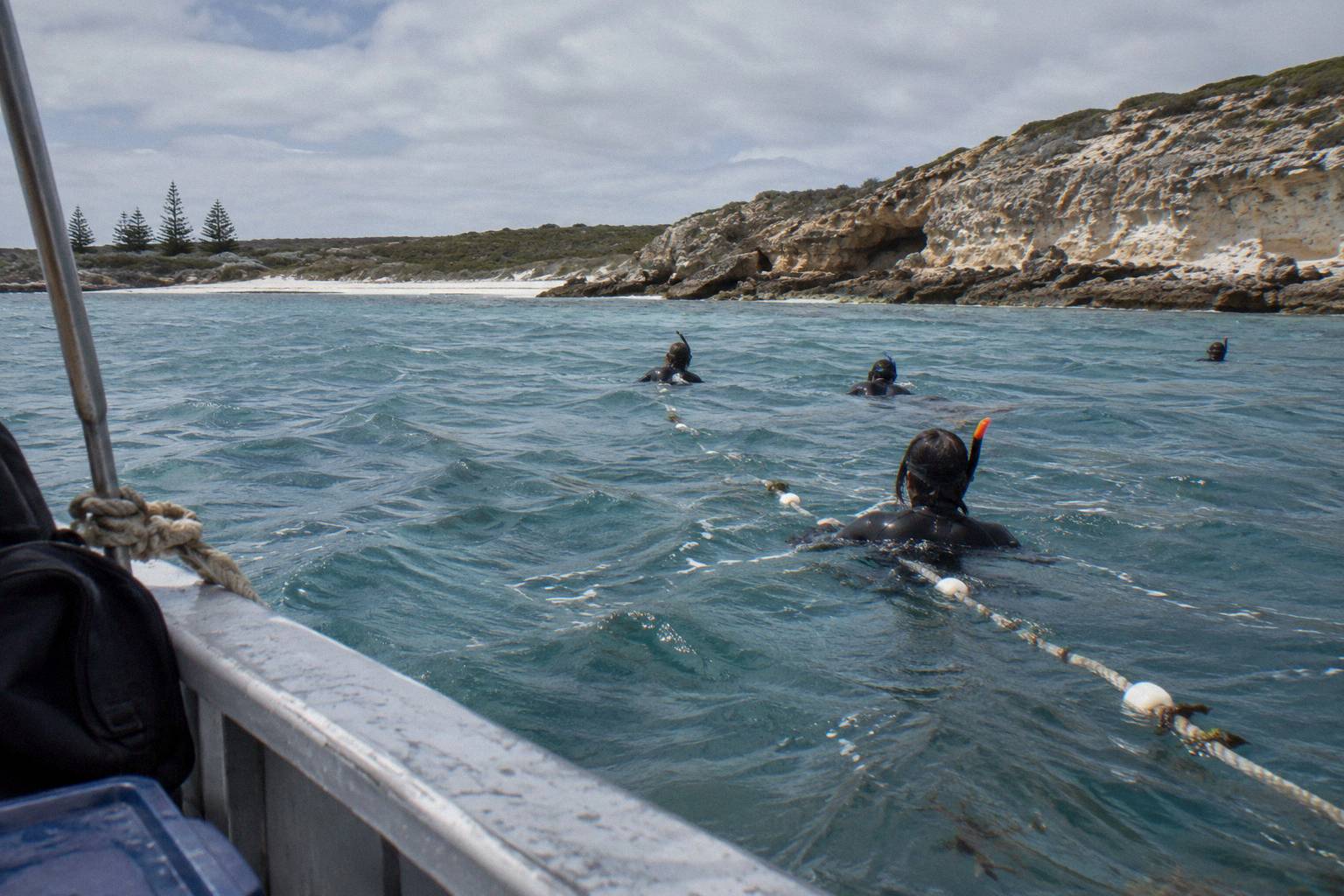
Kangaroo Island's version is a swimmer line with buoys, often used at the back of the vessel for the dolphin swim, which the operator says needs upper body strength, while the ladder exit needs lower body strength. Shark shields run fore and aft. Reasonable swimming ability is recommended, and a life jacket and noodle are available. The operator also says its water sits between 14 and 15 degrees, without naming a month, and that thick wetsuits allow the swim year round. Neither operator's statements settle where you physically step in and out of your suit, which is exactly why the checklist later in this page exists.
| What is stated | Glenelg swim | Kangaroo Island swim |
|---|---|---|
| Where you report | Marina Pier, Holdfast Shores Marina, Glenelg | Kangaroo Island Information Stop, 43 Howard Drive, Penneshaw |
| Lead time before departure | 15 minutes | 30 minutes |
| What that time is for | Boarding and wetsuit handout | Fitting and a safety brief |
| Wetsuit provided | Full-length 5 mm, to size 4XL | Thick wetsuit, gloves, mask, snorkel, fins |
| Where you change | Not stated | Not stated |
| Swim format | Flotation line at the stern, Front and Back Swim rotation | Swimmer line with buoys at the back of the vessel |
One figure that helps with the "will I be cold" worry, separate from where you change: Adelaide's sea temperature runs from around 14 °C in August to around 21 °C in February, with November around 18 °C, per seatemperature.org. The wetsuits and water temperature guide takes that further if cold water is your main hesitation.
So Where Do You Actually Get Changed?
The honest answer is that neither operator publishes a location for changing. No changing room is mentioned on either operator's pages, no toilet block is listed, and no cabin space gets a mention either. Neither company offers any guidance on the question at all, which means there is no documented, operator-confirmed spot where you can actually get changed. What you can rely on is the boarding routine itself: arrive in your swimwear under your clothes, treat the pre-departure window as your margin, and assume any changing happens wherever you staged yourself before check-in. That is a checklist answer rather than a facility answer, and it is the same advice both operators' routines point to.
This is worth saying plainly because plenty of travel copy would invent a detail here, a "changing shelter at the marina" or "onboard changing cabin", and neither appears in anything the operators state. The Glenelg FAQ answers questions about parking, boarding, seasickness and the swim itself; the Kangaroo Island page answers questions about water temperature, strength requirements and cancellations. Neither addresses changing, toilets or privacy anywhere this site's research found. A fact not stated is not stated, and pretending otherwise sends readers to the dock expecting a facility that may not exist.
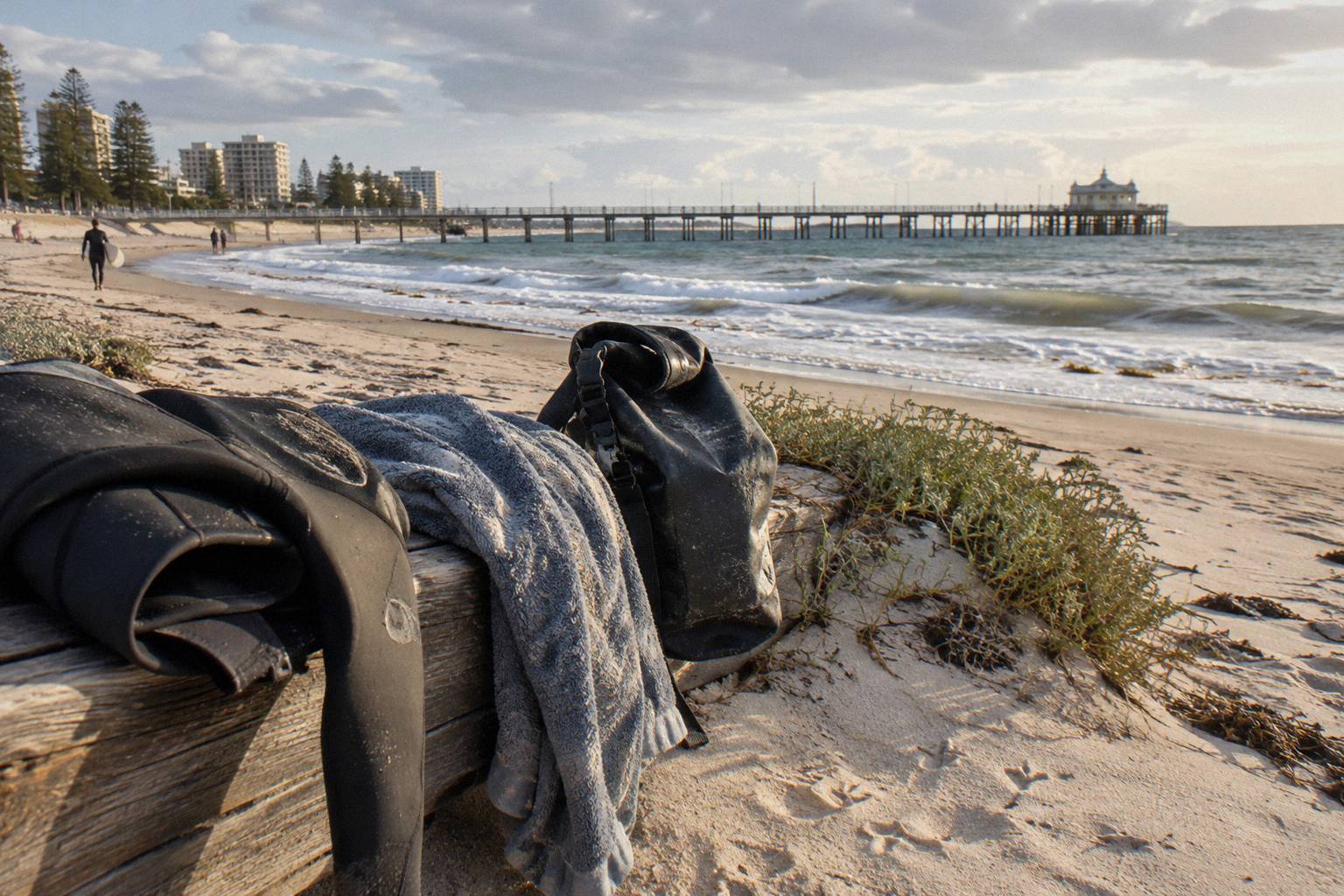
The practical workaround is older than dolphin tours. Wear your swimsuit to the marina or meeting point under ordinary clothes, so that getting "changed" means pulling on a wetsuit over swimwear, a thirty-second job, rather than a full strip-and-redress needing privacy. Bring a dry bag or a towel for afterwards, and a warm layer for the ride home, because a 5 mm wetsuit comes off wet. If you are staying anywhere near Glenelg or Penneshaw, doing the wet-suit-to-dry-clothes change back at your accommodation, or in your car with a towel, is the lowest-stress plan available on the published facts.
There is one more timing fact that supports the arrive-ready approach. Glenelg swimmers must be able to climb the three rungs of the ladder at the back of the boat and hold the flotation line while towed slowly, and under-18s need a parent or guardian on board. The less time the crew spends waiting for a swimmer to finish getting dressed, the more of the roughly 4 hours goes to dolphins. It is also the operator, not you, that decides the water is right: entries happen only when dolphins turn toward the boat.
A Packing Checklist That Works For Either Swim
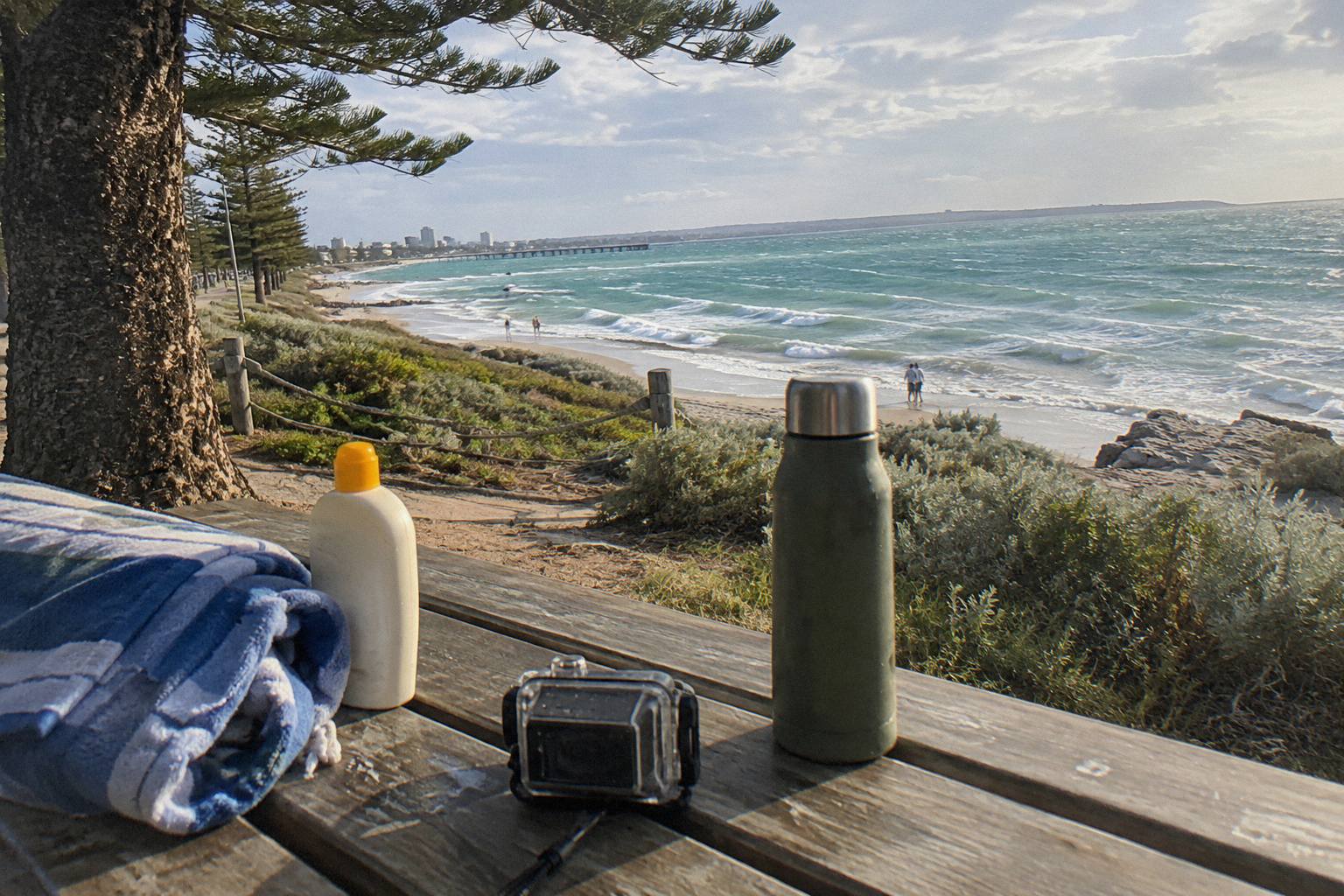
Pack swimwear that you can wear under your clothes, plus a towel, a dry bag, a warm layer for after the swim, and any personal swim accessories the operator does not provide. Anything that cannot get wet should stay behind in secured storage, so you can focus on the water rather than your belongings. The Glenelg operator states secured underground parking at Marina Pier, and each swimmer's wetsuit, mask and snorkel are supplied, so the list is short. What follows is the full version, sized for either operator.
The list is deliberately conservative: it assumes no changing facility, because none is stated. Swimwear on the body is the single highest-value item, since it converts the whole question of where to change into the much smaller question of where to pull on a wetsuit. A towel and dry bag handle the wet suit on the way home. Thongs or sandals beat lace-ups because you may be stepping on and off pontoons. The Glenelg operator notes prescription masks on board in three strengths, and contact lens wearers have their own considerations covered in the glasses and contacts on a dolphin swim post.
| Item | Why | Covered by operator? |
|---|---|---|
| Swimwear already worn | Removes the need for a private changing spot | No, bring your own |
| Towel | Wetsuits come off wet | No |
| Dry bag | Carries the wet suit home | No |
| Warm layer, beanie | Wind on the return leg; the operator says the water is often 3 to 4 °C cooler than on land on hot days | No |
| Sandals or thongs | Pontoon and boarding-stairs access | No |
| Wetsuit | Core of the swim | Yes, both operators |
| Mask and snorkel | Supplied and demonstrated | Yes, Glenelg states this; Kangaroo Island lists them provided |
| Seasickness tablets | Glenelg operator suggests taking them 30 minutes before departure | No, bring your own |
Two roster notes fit here. If someone in your group would rather not swim at all, both locations have a watching option on the same stretch of water: the Glenelg trip carries swim and watch guests on one boat, booked together or separately, and the dedicated Wild Dolphin Watch From Glenelg, from USD 62, rated 4.8 across 409 reviews, covers the same ground without the water. A nervous swimmer can also stay aboard as a watcher, and for direct bookings the operator refunds the swim-minus-watch difference, terms that apply only to bookings made direct with the operator.
After The Swim: Wet Gear And The Ride Home
Expect the wettest part of your day to be the final half hour, because the wetsuit comes off somewhere you choose rather than somewhere the operator designates, and neither operator publishes anything describing rinse facilities or heated changing space. The ride home is therefore something to plan for before you ever get in the water. The Glenelg boat is back in the marina between 11:30am and midday per the operator, and the Kangaroo Island safari runs 2 hours, so both leave most of the day for drying out.
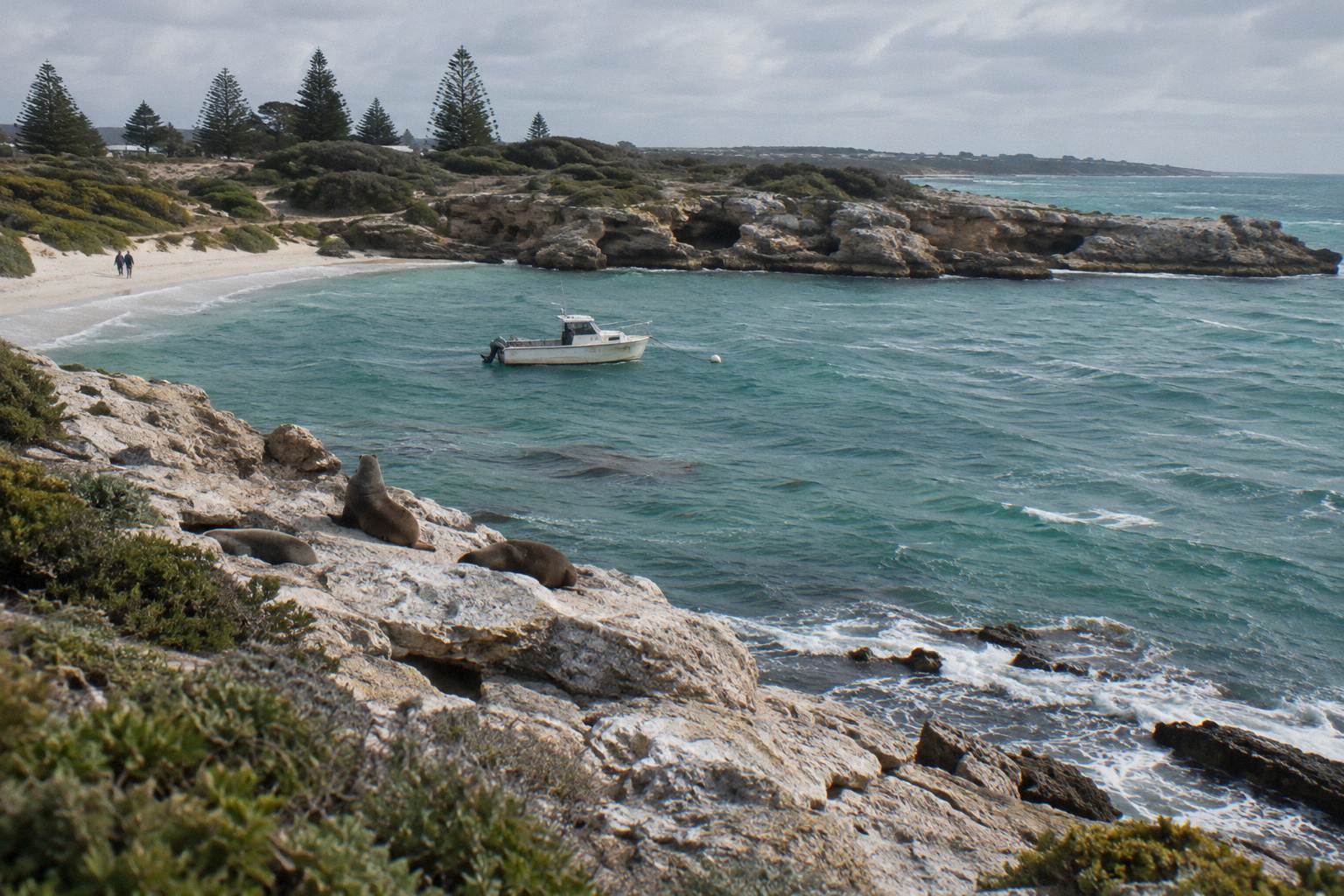
The return-leg arithmetic is kind. A morning departure from Glenelg, roughly 15 minutes' drive from the Adelaide CBD by the operator's home-page description, means you can be back at a hotel with a proper shower and towel before lunch. Kangaroo Island's operator notes its base is close to the SeaLink ferry terminal, and a 45 minute drive from Kingscote airport, both operator wording, so day-trippers should plan the wet suit with the same dry-bag logic. In neither case is there a stated bag-storage or rinse service, so the dry bag you brought is the facility.
Clothing choice before boarding does double duty here. A swimsuit that dries fast, worn under clothes you can re-put on over damp skin without misery, beats jeans every time. The what to wear and bring guide expands this into a full wardrobe discussion, including the layering question, and it is worth a read the week before rather than the morning of. Cold-after-the-swim worries have their own write-up in the post on whether you get cold after a dolphin swim.
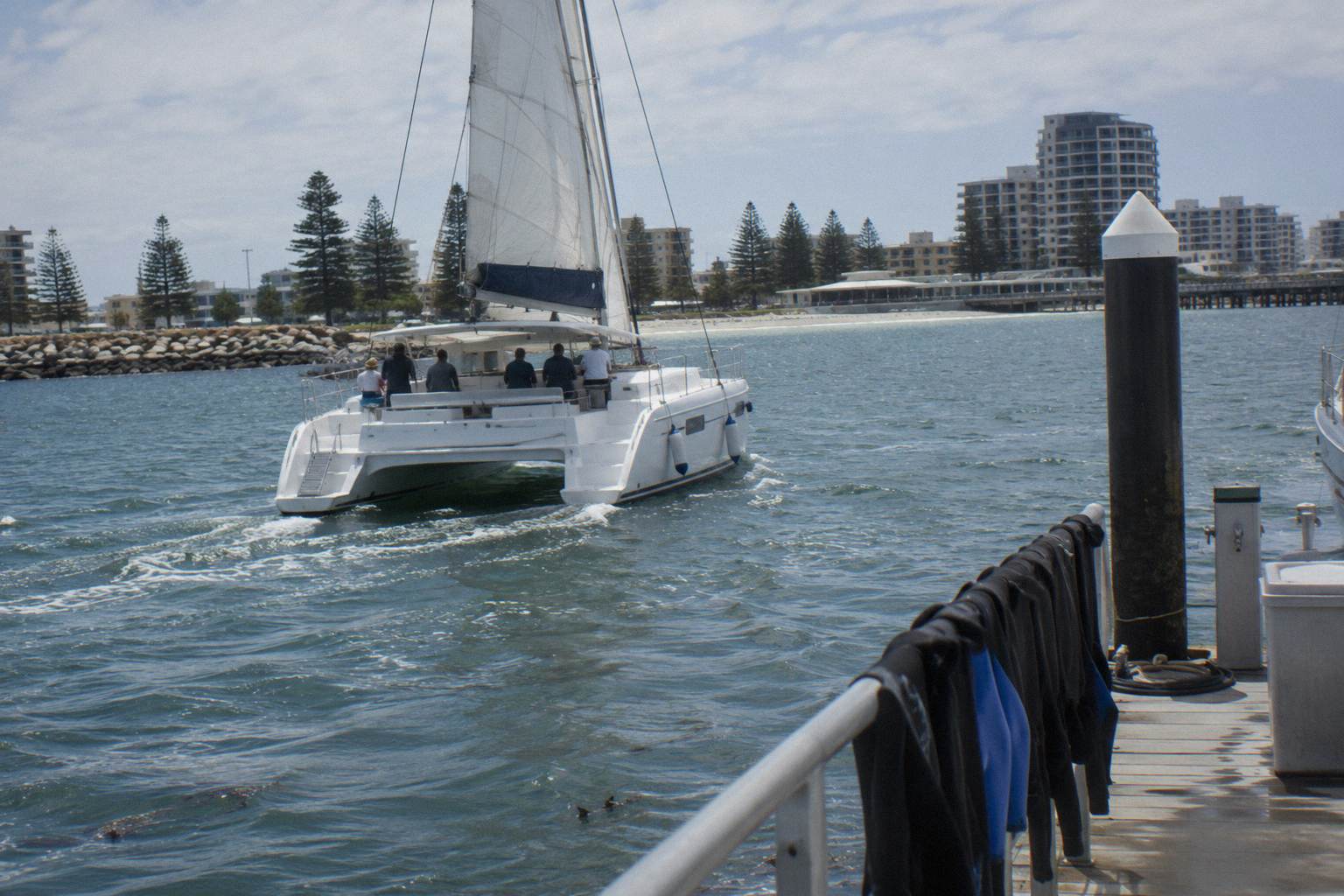
One detail worth knowing in advance: the Glenelg operator's cancellation terms mean a no-show or a cancellation under 24 hours for bookings of five or fewer forfeits the fare, while an operator cancellation for weather or mechanical reasons brings a full refund or reschedule, and the operator may cancel as late as immediately before departure. Turning up changed and on time is therefore not just comfort, it is money. The Kangaroo Island operator's own terms are different again, with credit held 24 months for late cancellations, while its booking page shows free cancellation up to 24 hours. Those are two separate regimes, and neither is the other's.
The Short Answer, And The Two Swims Side By Side
Both swims follow the same practical routine: arrive with your swimwear already on, use the pre-departure window for the wetsuit, then change back into dry clothes at your own staging point afterwards. Put the two operators side by side and their published routines support this same plan, so the short answer holds for either swim. Glenelg gives you 15 minutes from boarding to departure and hands you the suit on the boat; Kangaroo Island gives you 30 minutes at a shore-side meeting point and spends it on fitting. Neither promises a changing room, and a trip planned without expecting one cannot be disappointed by one.
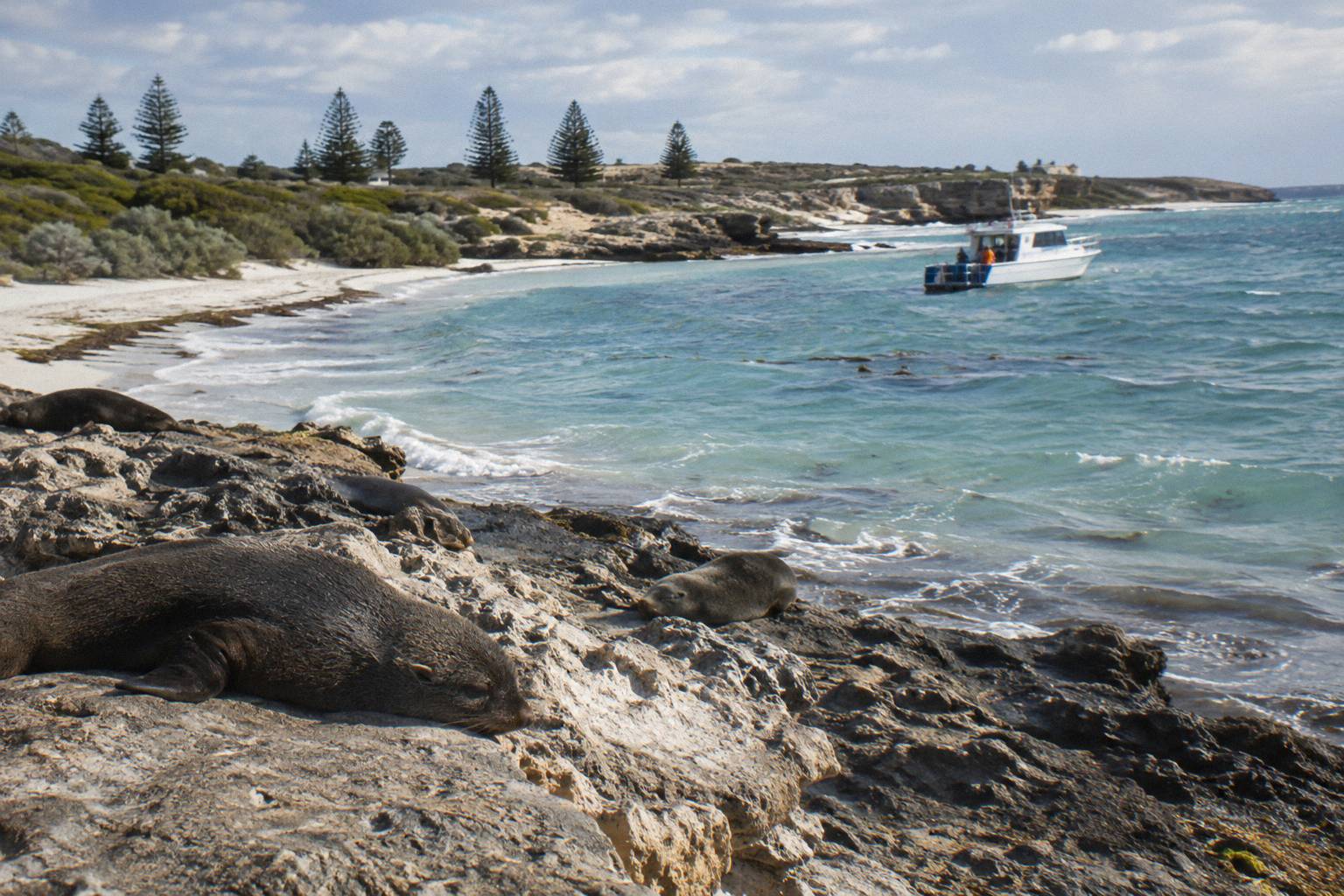
For readers choosing between the swims rather than packing for one already booked, the two formats suit different travellers. The Glenelg swim is the longer, bigger-boat version: roughly 4 hours, from USD 104, rated 4.7 across 493 reviews, on a catamaran the operator describes as surveyed for up to 50 passengers, with a September-to-April season stated in its FAQ. The Kangaroo Island swim is the shorter, smaller-boat version: 2 hours, from USD 132, rated 4.4 across 137 reviews, run year round per the operator, with the caveat that its page says a trip may be dolphins only, seals only or a coastal snorkel, and wildlife interactions are not guaranteed. Both have a minimum swim age of 9.
A reader working through the full decision, how far ahead to book a dolphin swim, will find the seasonal wrinkle matters more than the changing question: the Glenelg season closes for the cooler months between May and August, while the Kangaroo Island operator says dolphins are present year round and thick wetsuits allow the swim in any month. Neither fact tells you where to get changed, but both shape which morning you are packing for.
This article has stayed deliberately narrow, because the question is narrow. For the wider picture, from the swim format to the rules on how close you may legally get, the coverage at Adelaide Swimming With Dolphins runs from planning guides to the fine print of the marine mammal regulations that make permitted swims lawful in the first place.
Common Questions About Changing For A Dolphin Swim
Do You Change On The Boat Or The Dock For A Dolphin Swim?
Neither operator states where changing happens. At Glenelg you board 15 minutes before departure and are handed your wetsuit on boarding; at Kangaroo Island you meet 30 minutes before departure for fitting and a safety brief. Wear your swimwear under your clothes and treat the pre-departure window as your margin.
Is A Wetsuit Provided, Or Do I Bring My Own?
Both operators provide wetsuits. Glenelg gives each swimmer a full-length 5 mm suit on boarding, in sizes to 4XL, and Kangaroo Island provides wetsuit, gloves, mask, snorkel and fins, with fitting in the 30 minutes before departure. You bring swimwear to wear under the suit.
How Early Should I Arrive At The Marina Or Meeting Point?
Glenelg boarding starts 15 minutes before departure at Marina Pier, Holdfast Shores Marina, at the bottom of the stairs in front of the Oyster Bar. Kangaroo Island asks swimmers to meet 30 minutes before departure at the Information Stop, 43 Howard Drive, Penneshaw, for fitting and a safety brief. Arrive earlier if you need time to get into swimwear.
Can I Wear Glasses Or Contact Lenses For The Swim?
Glenelg's operator states prescription masks are on board in strengths of -1.5, -3 and -4.5, and masks and snorkels are demonstrated during the briefing. Contact lens wearers have specific considerations; the site's dedicated post on glasses and contacts covers them in detail.
What If Someone In My Group Does Not Want To Swim?
Both locations have watching options. Glenelg carries swim and watch guests on the same boat, booked together or separately, and a dedicated watch cruise, from USD 62, rated 4.8 across 409 reviews, is also available. Kangaroo Island trips may be dolphins only, seals only or a coastal snorkel, so check the live listing if watching is the priority.
Will I Be Cold After Getting Out Of The Water?
Adelaide's sea temperature ranges from around 14 °C in August to around 21 °C in February, and the Kangaroo Island operator puts its water at 14 to 15 degrees, per seatemperature.org and the operator's own page respectively. A towel, dry bag and warm layer in your kit cover the gap between the ladder and dry clothes.