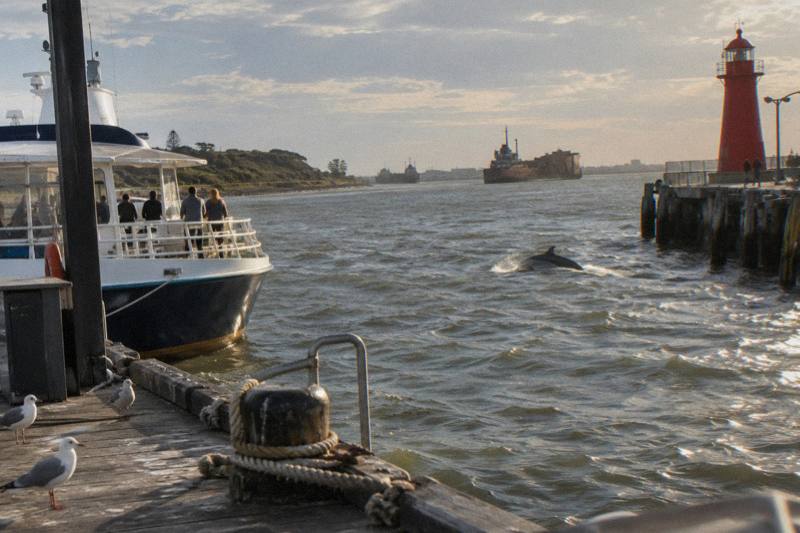
Are There Sharks In The Adelaide Dolphin Sanctuary?
No official page states anything about sharks in the Adelaide Dolphin Sanctuary. Here is what is actually documented, which tours go where, and where shark shields appear.
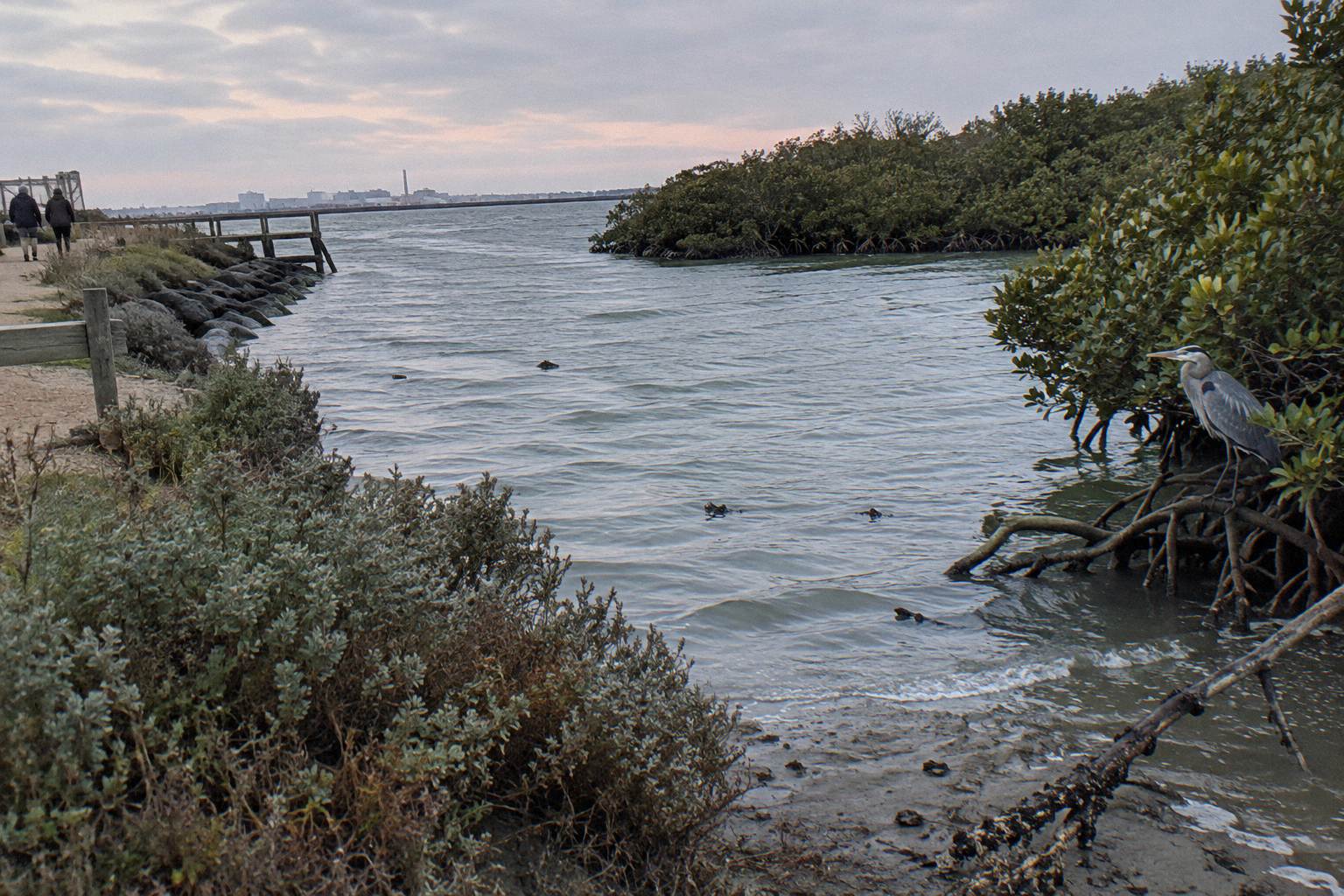
No official page states anything about sharks in the Adelaide Dolphin Sanctuary: that detail is simply not stated. What is documented is different and more useful. The sanctuary is a 118 sq km estuary of mangroves, saltmarsh, tidal flats and tidal creeks north of Port Adelaide, home to Indo-Pacific bottlenose dolphins, and every commercial tour inside it is a watching or paddling trip, never a swim.
That combination matters more than a shark statistic would. People ask this question for one of two reasons. Either they are standing at Port Adelaide about to board a cruise or a kayak and want a risk answer, or they have booked a dolphin swim elsewhere around Adelaide and are mapping their worry onto the nearest famous name. Both readers deserve the same honest starting point: the shark question, asked specifically about the sanctuary, has no documented answer on any official page, and anyone who gives you a confident one is filling the gap with folklore.
What can be said with sources is where the sanctuary is, what lives in it according to the South Australian government's own pages, which tours operate there and in what mode, and, separately, what the two open-water dolphin swim operators say about shark shields on their boats. Those are operator statements about the Glenelg and Kangaroo Island swims, not about the sanctuary, and keeping the two straight is the whole point of this article.
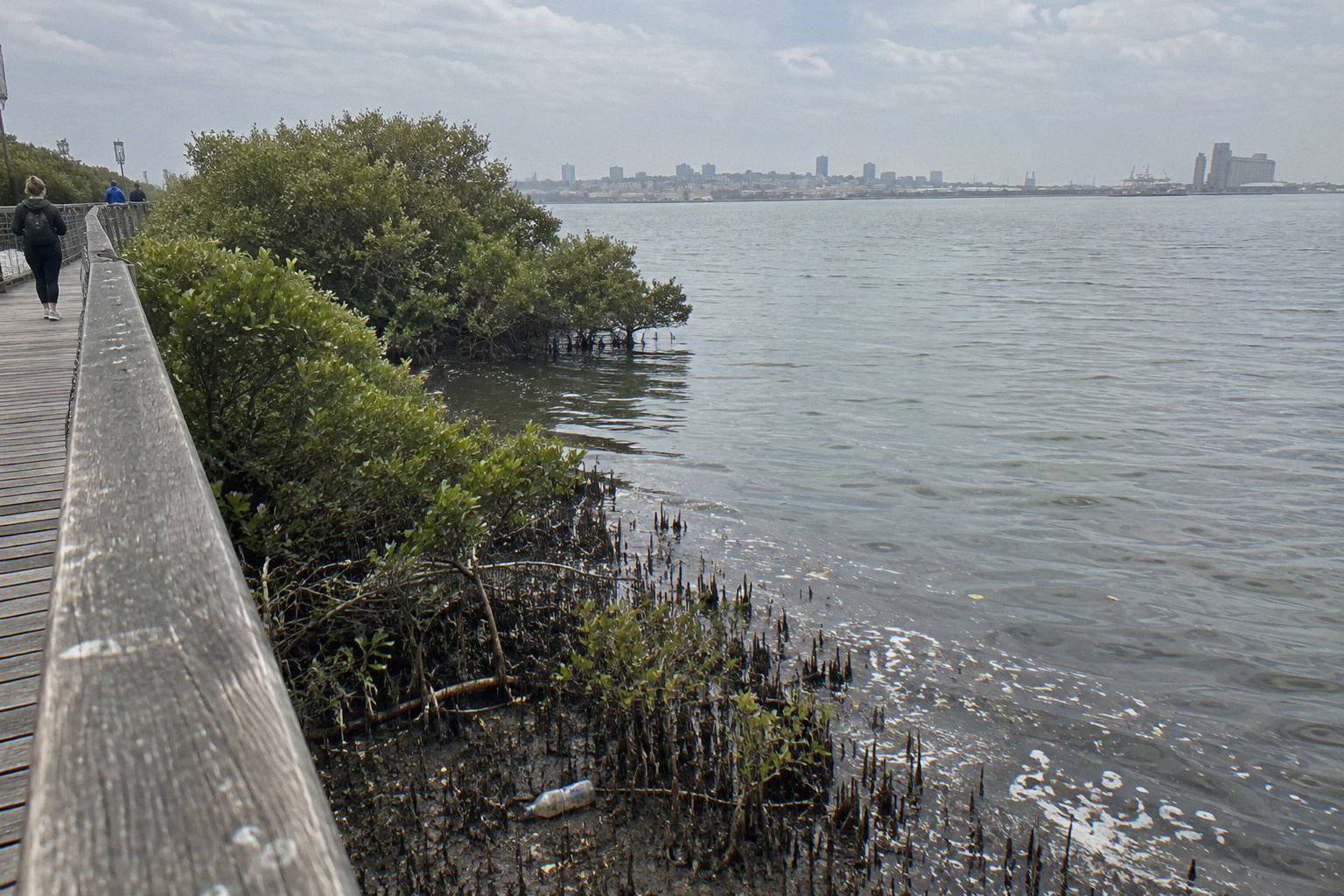
Start with the geography, because it dissolves half the confusion. The Adelaide Dolphin Sanctuary is the Port River and Barker Inlet estuary north of Port Adelaide, a shallow, sheltered arm of water hemmed by mangroves and tidal flats. The famous dolphin swim from Glenelg, run by Temptation Sailing, departs from Marina Pier at Holdfast Shores on the open Gulf St Vincent side of the city. That swim does not happen in the sanctuary, they are separate bodies of water, and the operator does not name its swim site. A reader who blends the two in their head ends up imagining a swim through the Port River mangroves, which no licensed tour offers.
If your underlying worry is safety on a swim rather than sharks in an estuary, the fuller safety picture, including seals and water conditions, is in the guide to whether a wild dolphin swim is safe, which covers the swim products rather than the sanctuary.
For readers deciding what to actually book in or around the sanctuary, these are the three options this site covers that fit a Port Adelaide plan: the kayak through the sanctuary itself, the dolphin cruise on the Port River, and, for another day, the open-water swim from Glenelg.
What Is The Adelaide Dolphin Sanctuary?
The Adelaide Dolphin Sanctuary covers 118 sq km of water, mangroves, saltmarsh, tidal flats and tidal creeks at the Port River and Barker Inlet estuary north of Port Adelaide. Its dolphins are Indo-Pacific bottlenose dolphins, Tursiops aduncus, and many of the near-shore animals are year-round residents, while transient individuals also use the wider Adelaide coast and Gulf St Vincent.
The sanctuary exists because that knot of mangroves, creeks and shallow flats turned out to be a permanent home for bottlenose dolphins rather than a place they merely pass through. The government's twenty-facts page for the sanctuary's twentieth anniversary describes exactly that mix: resident animals that hold territory in the estuary, and transients that come and go along the coast and through Gulf St Vincent. A fully grown bottlenose dolphin in these waters can be around 120 to 160 kg and more than 2 m long, which puts the estuary's residents among the larger animals you will see from an Australian city shoreline.
Two population figures appear in the sources, and they count different things. The Adelaide Dolphin Sanctuary Management Plan speaks of around 20 residents, with some 400 individuals observed over time. Separately, a long-term monitoring dataset covering 1993 to 2020 recorded seasonal averages of about 85 dolphins in summer and about 69 in winter across its survey area. The first figure counts the estuary's core residents, while the second averages a wider and shifting survey effort. Adding, blending or ranking the two mixes counts of different kinds.
| What the record states | Figure | Source type |
|---|---|---|
| Sanctuary area | 118 sq km of water, mangroves, saltmarsh, tidal flats, tidal creeks | SA Government |
| Dolphin species | Indo-Pacific bottlenose dolphin (Tursiops aduncus) | SA Government |
| Adult dolphin size | Around 120-160 kg, more than 2 m long | SA Government |
| Resident dolphins | Around 20 residents, some 400 observed over time | Sanctuary Management Plan |
| Seasonal survey averages | About 85 in summer, about 69 in winter, 1993-2020 dataset | Long-term monitoring |
Notice what the table does not contain. There is no row for sharks, because no page read for this article states anything about sharks in the sanctuary. Not a count, not a species list, not an absence claim. The official twenty-facts page is rich on dolphins, habitat and history, and silent on sharks, and silence is not evidence either way.
Do Any Tours Swim In The Sanctuary?
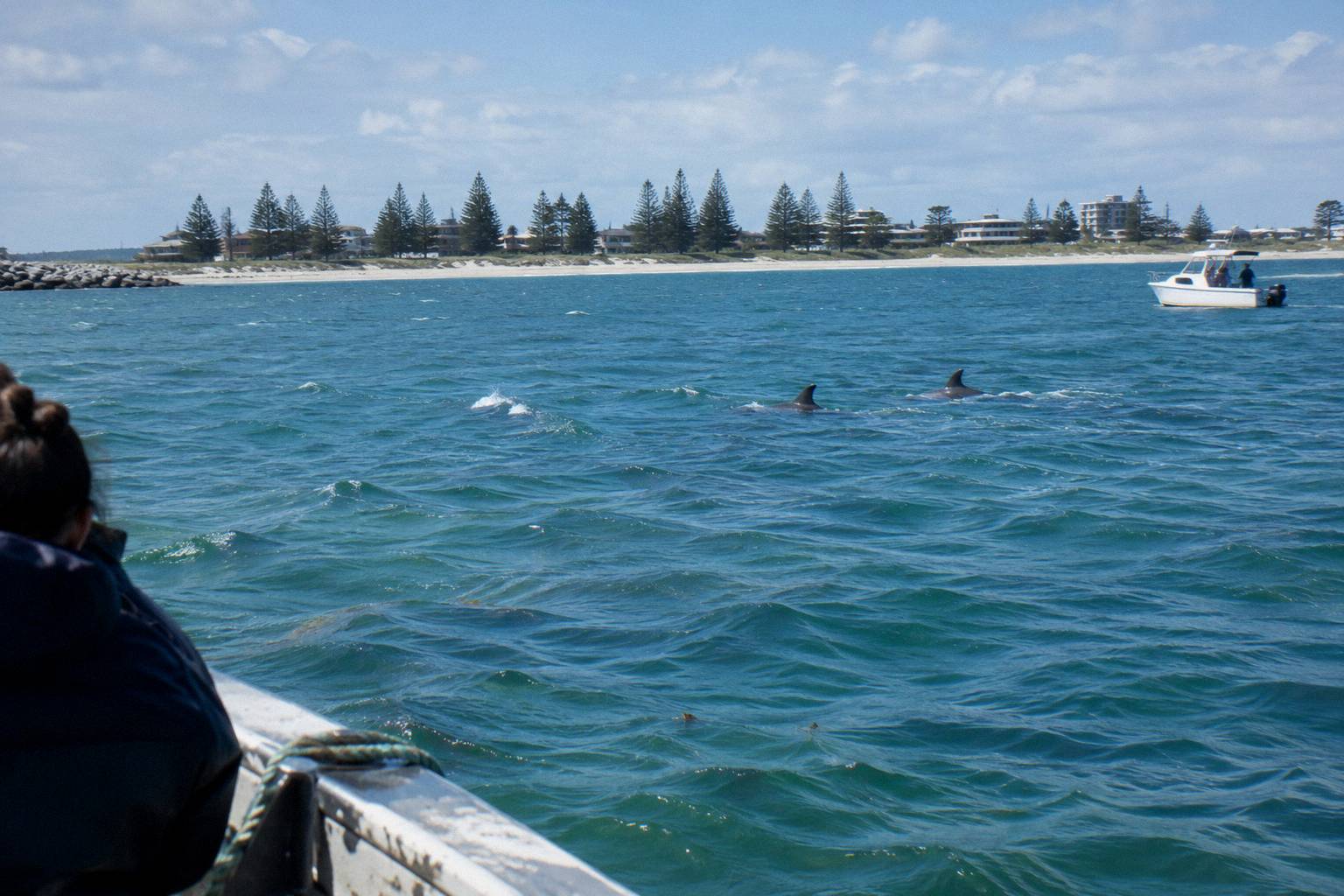
No. Every tour covered on this site that operates in the Adelaide Dolphin Sanctuary is a watching or paddling trip, never a swim. The Port River Dolphin Cruise is a 1.5 hour watching cruise from Port Adelaide, and the Dolphin Sanctuary Kayak Tour, run by Adventure Kayaking SA, is paddling only with a minimum age of 8. No operator offers a swim inside the sanctuary.
This is the practical answer underneath the shark question. If you are on the Port River, you are on a boat or a kayak, above the water, not in it. The Port River Dolphin Cruise runs 1.5 hours from Port Adelaide, is rated 4.5 across 481 reviews, and costs from USD 60 per person on its booking page, with free cancellation up to 24 hours. It is watching only, the operator name is not printed on this site, and no sighting guarantee is stated for it. Gear, vessel type, group size and commentary details are not stated either.
The kayak option goes deeper into the estuary's geography. The Dolphin Sanctuary Kayak Tour, operated by Adventure Kayaking SA, departs Port Adelaide and paddles through the sanctuary's tidal creeks and mangrove channels, past the wrecks of the ships graveyard that give the area its other claim to fame. It costs from USD 54.72 per person, is rated 4.8 across 300 reviews, carries a minimum age of 8, and shows free cancellation up to 24 hours on its booking page. Its duration is not confirmed on the listing, so this site prints none. Like the cruise, it is paddling only: you stay in your kayak the whole time.
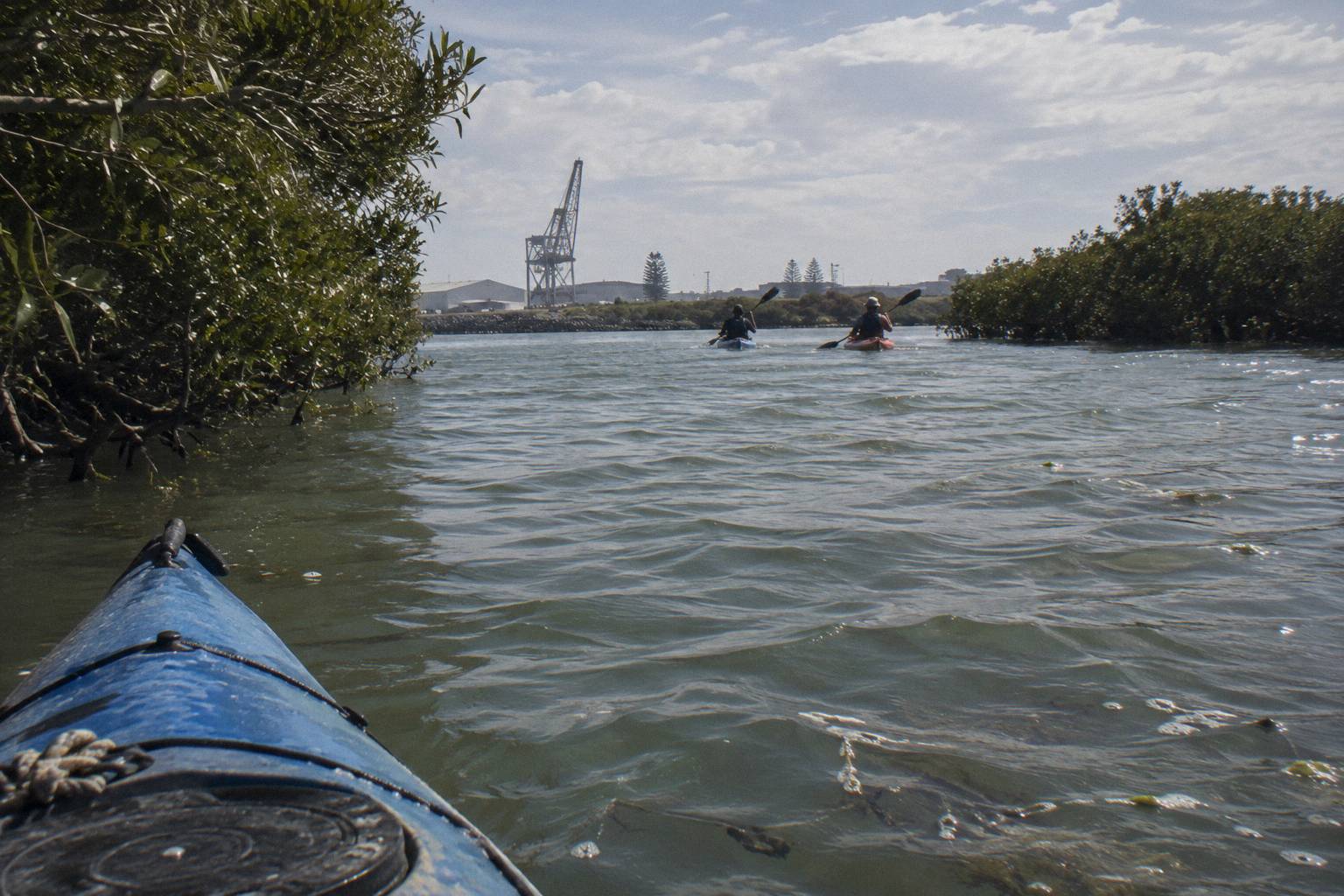
For a reader weighing the two, the choice is intimacy against effort. The cruise seats you on a vessel with a 1.5 hour loop and no participation required. The kayak puts you at water level among the mangroves, close enough to see fish in the shallows, but asks for paddling and a willingness to be out in weather. Neither asks you to enter the water, which is why a shark question about either tour is really a question about capsizing comfort, and no page states swimming-adjacent risk figures for these products.
Where Do Shark Shields Actually Appear?
Shark shields appear, as operator statements, on the two open-water dolphin swims, not in the sanctuary. Temptation Sailing says two shark shields run during its Glenelg back swim and none on the front swim. Kangaroo Island Ocean Safari says its vessels carry shark shields fore and aft. Both are the operators' own descriptions of their trips.
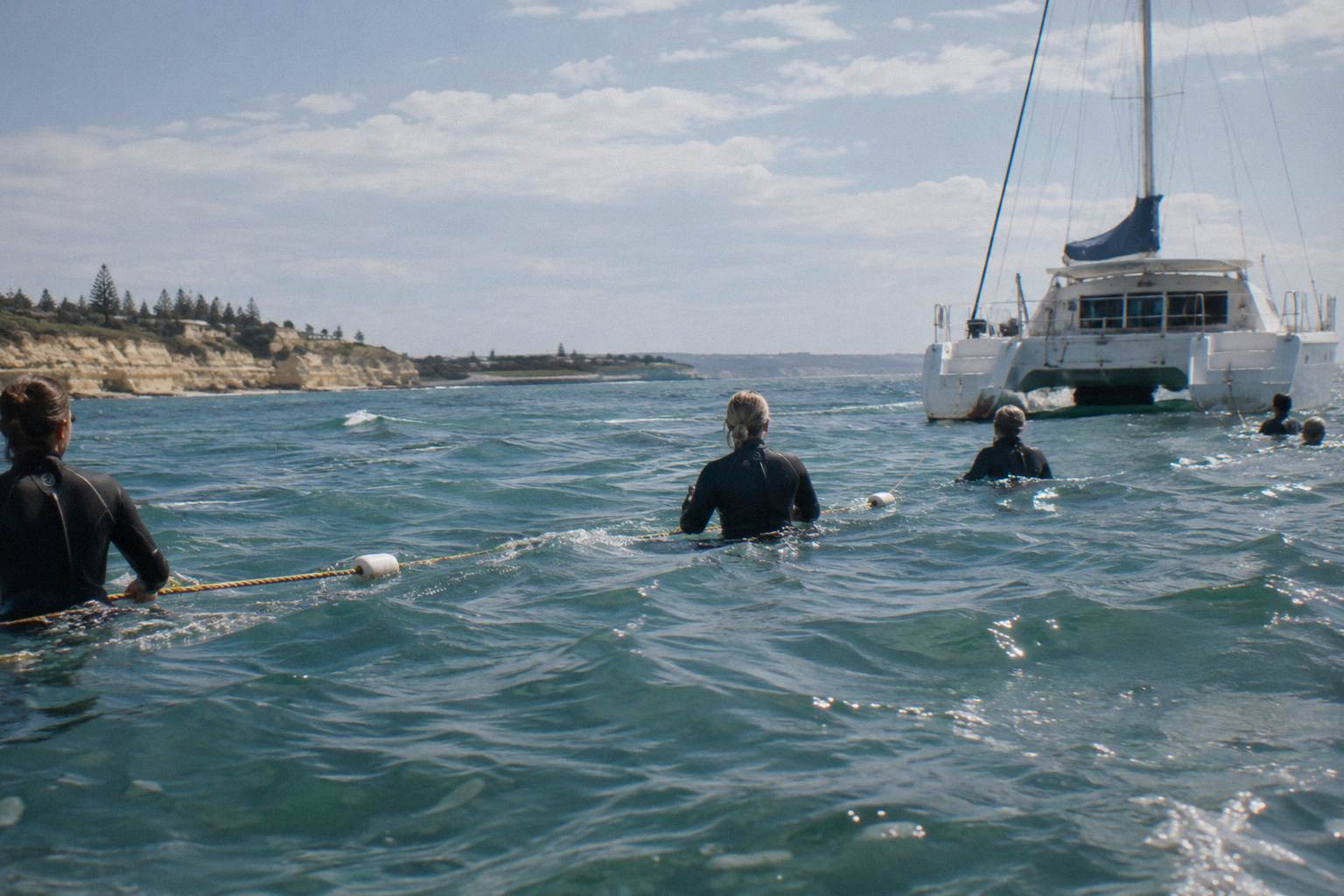
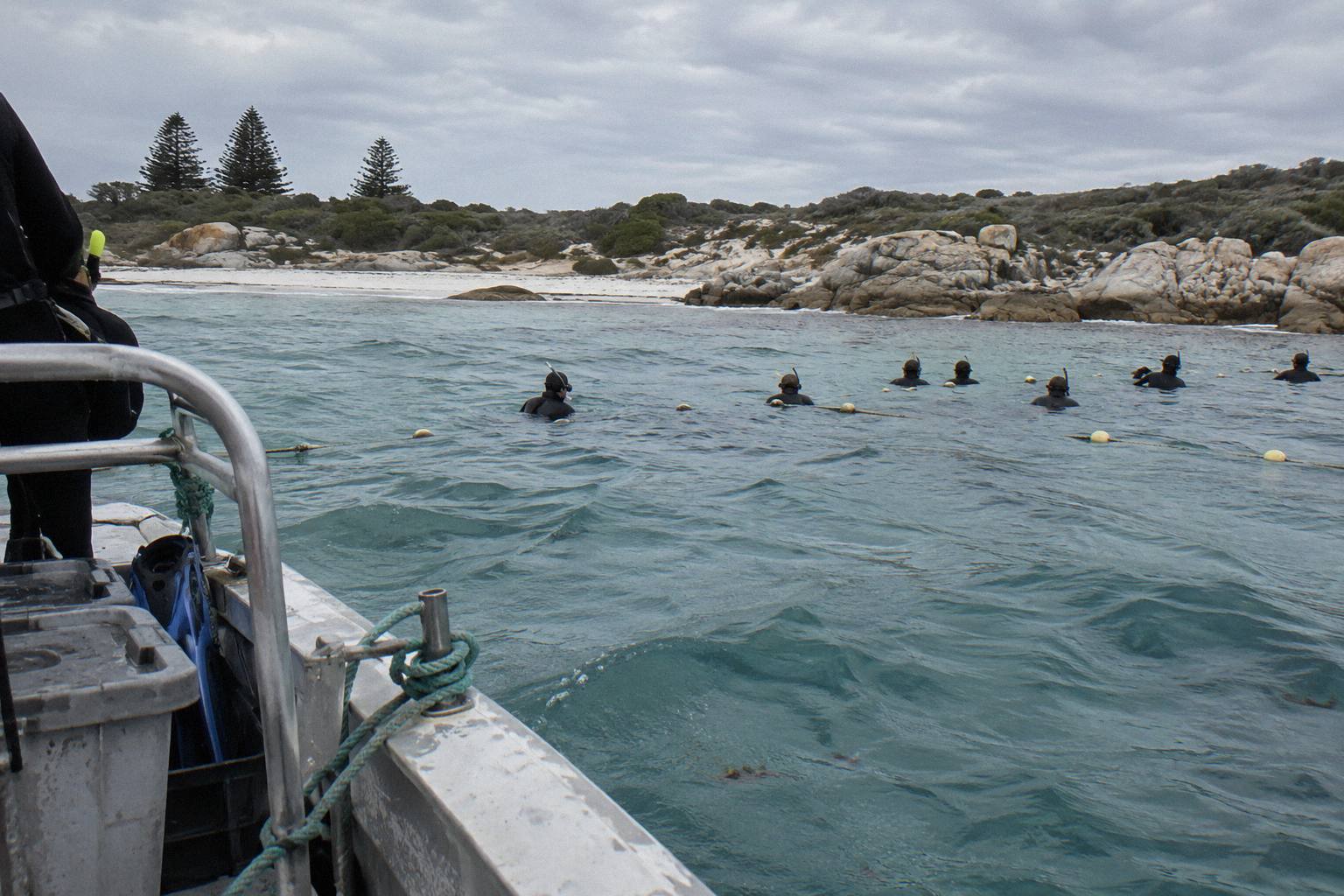
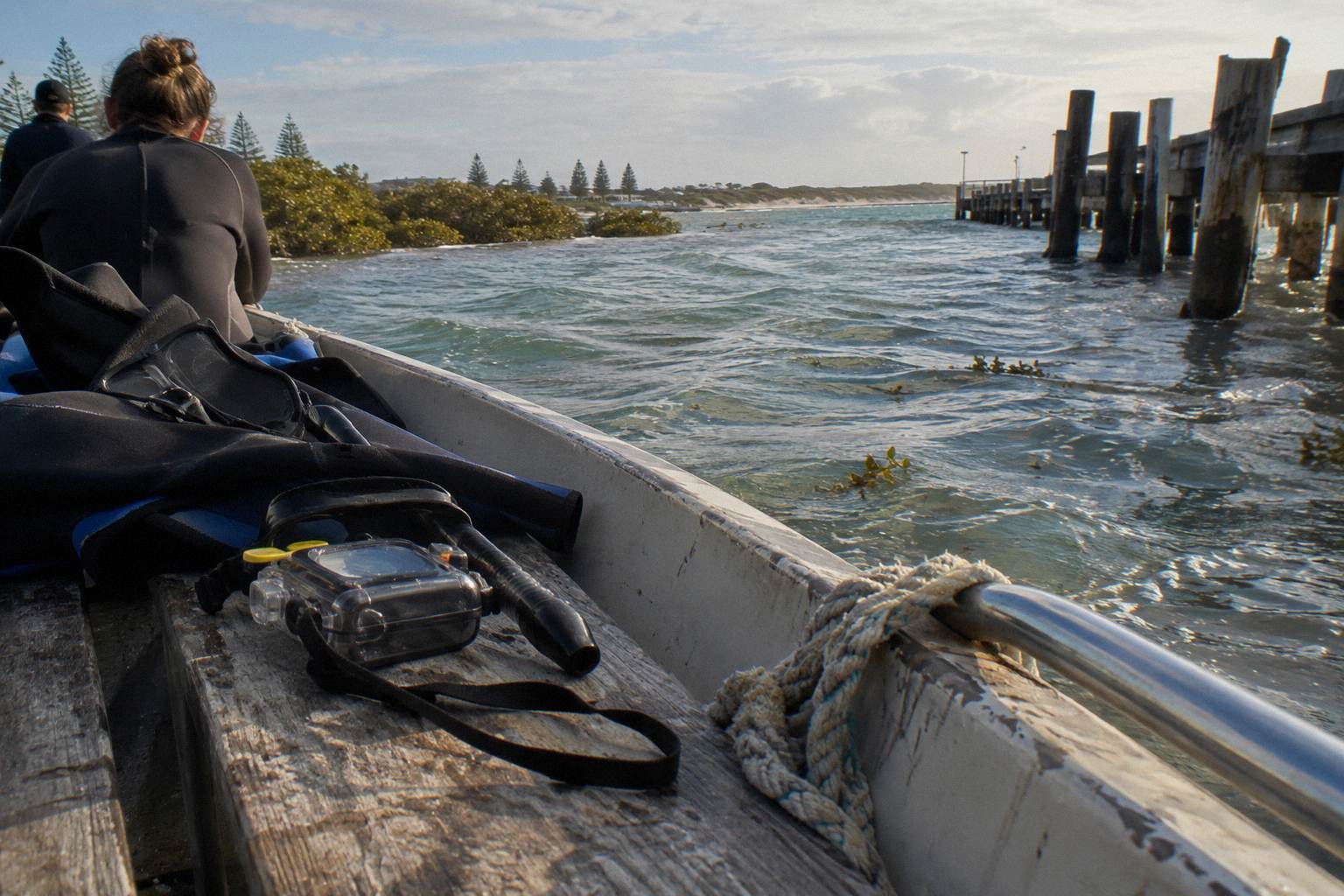
Neither statement is about the sanctuary, and this site prints them only as what the operators say. The Glenelg detail is the more granular one: Temptation's swim has two experiences, a Front Swim and a Back Swim, with swimmers rotated between them, and its materials state that two shark shields run during the back swim while the front swim has none. The same materials explain the swim's structure, a full-length 5 mm wetsuit that doubles as flotation, a crew briefing of about 15 minutes, and a flotation line connected to the stern that every swimmer holds while the boat moves slowly. It is a controlled swim, not free swimming in open ocean. The crew puts swimmers in only once dolphins have turned toward the boat and stops entries when dolphins get too close.
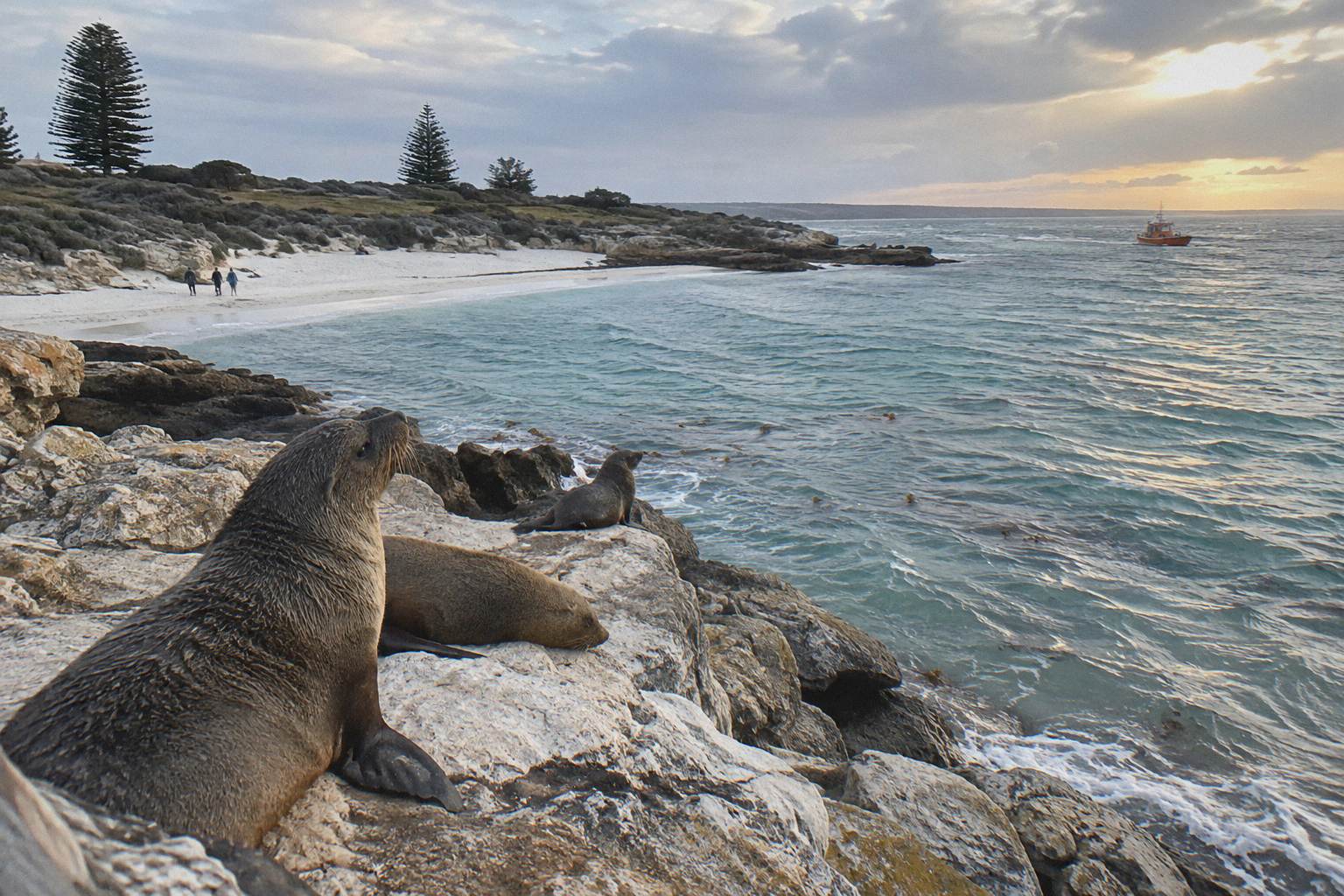
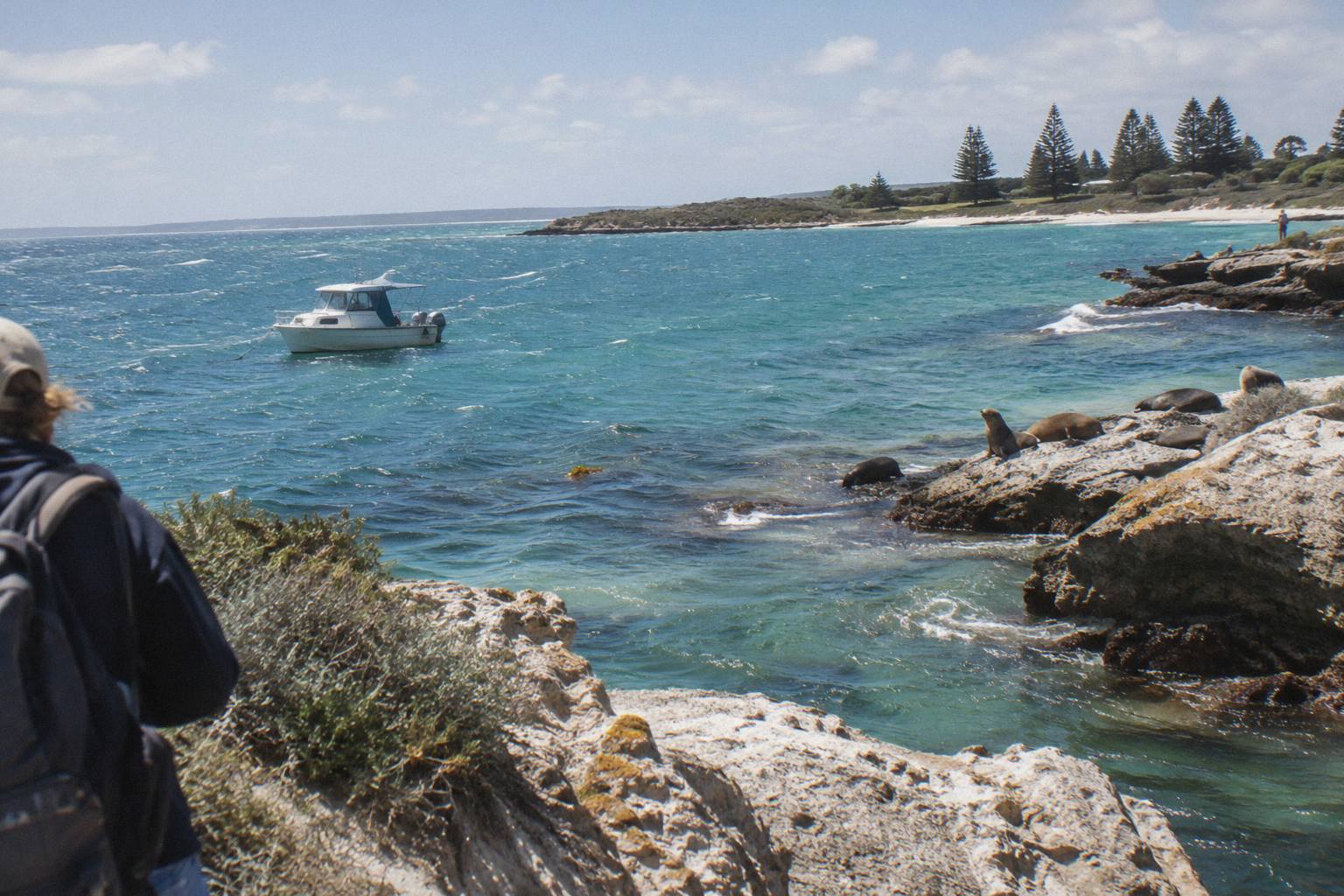
The Kangaroo Island statement is simpler. The operator's Snorkelling Safari page says its 28-seater vessels carry shark shields fore and aft, alongside a swimmer line with buoys often used at the back of the vessel for the dolphin swim, which the operator notes needs upper body strength, while the ladder exit needs lower body strength. The operator's own history of incidents is not printed here as fact; what is printable is the equipment statement only.
The gap between the two products is instructive. On the Glenelg swim, a shield is present for one rotation and absent for the other, which tells you the operator treats shields as one layer among several rather than a guarantee. On Kangaroo Island, shields sit at both ends of a smaller vessel on a swim that may turn out to be dolphins, seals or a coastal snorkel depending on what the day allows. Neither operator promises anything about sharks, and this article will not manufacture a promise they did not make.
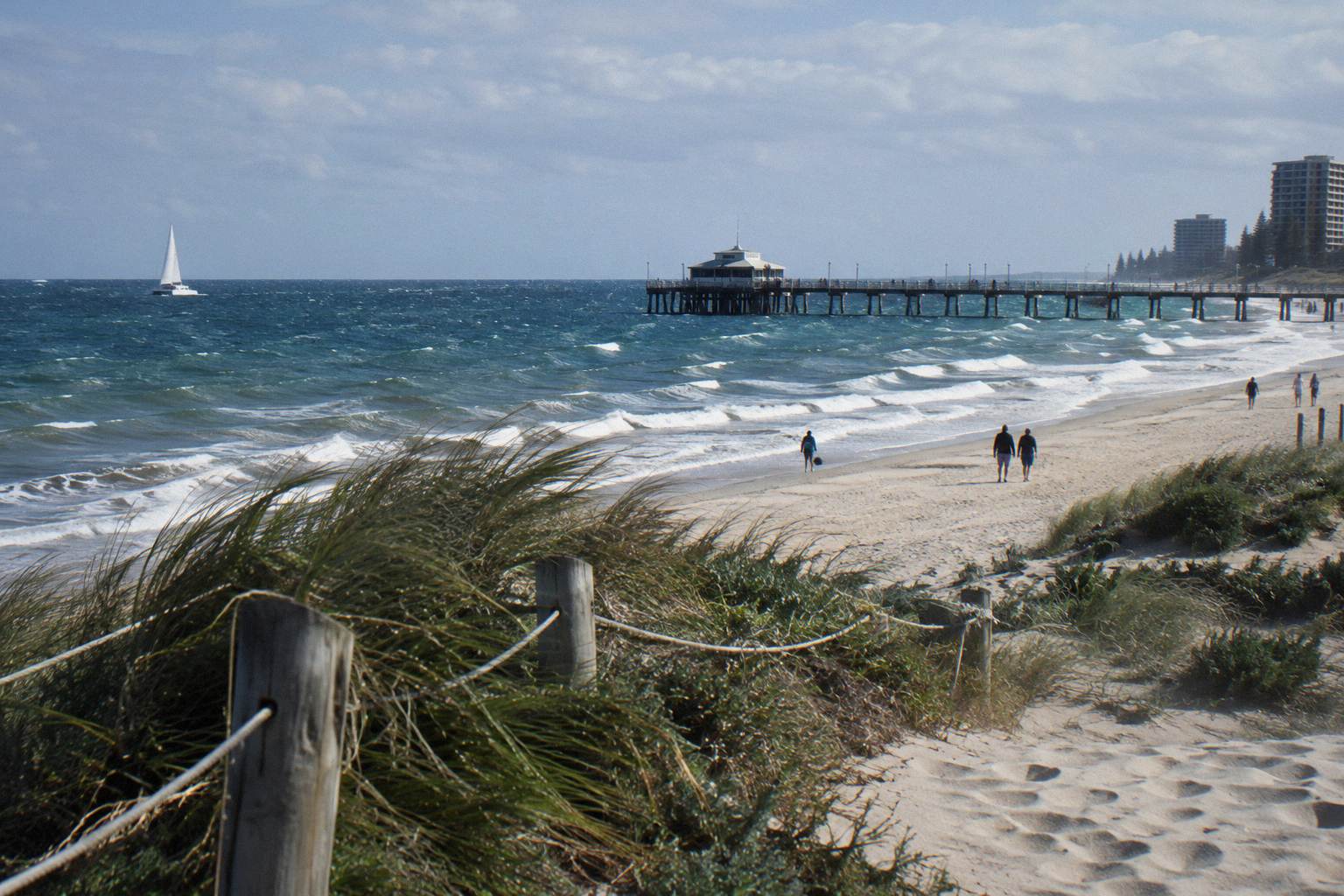
If your question is really about how close you may legally get to a dolphin, in the water or from a vessel, the rules are specific and written down. Swimmers may not go closer than 30 m to a marine mammal, vessels must keep 50 m, or 150 m with a calf or if the dolphins show disturbance, and feeding and touching are prohibited outright, under the South Australian marine mammal regulations in force since 1 September 2025. The broader rulebook is unpacked in the guide to dolphin swim rules and approach distances.
The law also explains why swim products are rare. A person must not, for fee or reward, use a vessel to take another person into the vicinity of a marine mammal to observe it or swim near it without a permit or other lawful authority, so a fee-based swim is lawful only under permit. Temptation states it was the first vessel in South Australia given a licence to swim with dolphins and has run swim and watch tours from Glenelg since 2002, an operator claim printed here as exactly that.
How Do You Choose Between Watching, Paddling And Swimming?
Match the product to the water. For the sanctuary itself, the choice is the Port River Dolphin Cruise, from USD 60, rated 4.5 across 481 reviews, or the Dolphin Sanctuary Kayak Tour, from USD 54.72, rated 4.8 across 300 reviews, both watching or paddling only. For an actual swim, the licensed products run from Glenelg or Kangaroo Island, outside the sanctuary entirely.
The decision has three honest branches. Branch one, you want to see the sanctuary's resident dolphins with minimal commitment: take the cruise, 1.5 hours, from USD 60, free cancellation up to 24 hours on its booking page. Branch two, you want to be inside the estuary's landscape rather than looking across it: take the kayak, from USD 54.72, minimum age 8, free cancellation up to 24 hours, run by Adventure Kayaking SA. Branch three, you want to be in the water with dolphins: that is the Glenelg swim with Temptation Sailing, from USD 104, rated 4.7 across 493 reviews, listed at about 4 hours with a minimum age of 9, or the Kangaroo Island Ocean Safari swim, from USD 132, rated 4.4 across 137 reviews, 2 hours, minimum age 9. Neither swim happens in the sanctuary.
| Product | Where it runs | Mode | From (USD, per person) | Rating and reviews | Cancellation on the booking page |
|---|---|---|---|---|---|
| Dolphin Sanctuary Kayak Tour | Port Adelaide, sanctuary waters | Paddling only, min age 8 | 54.72 | 4.8 across 300 | Free up to 24 hours |
| Port River Dolphin Cruise | Port Adelaide, Port River | Watching only, 1.5 hours | 60 | 4.5 across 481 | Free up to 24 hours |
| Wild Dolphin Swim From Glenelg With Temptation Sailing | Glenelg, open water, not the sanctuary | Swim, about 4 hours, min age 9 | 104 | 4.7 across 493 | Free up to 24 hours |
| Kangaroo Island Ocean Safari Swim | Penneshaw, Kangaroo Island | Swim, 2 hours, min age 9 | 132 | 4.4 across 137 | Free up to 24 hours |
Two cautions on reading that table. Ratings and review counts are printed together because a number without its pool misleads, and they are never compared or ranked here, because the tours serve different days, budgets and travellers. And the cancellation column records what each booking page shows; Kangaroo Island Ocean Safari also publishes its own steeper operator tiers for late changes, which are its terms, not the booking page's.
One more thing belongs in a planning article about water: the Karenia algal bloom that affected South Australian waters. State testing shows zero or low Karenia along the metropolitan coast and Kangaroo Island, and the official health advice is that clear water is fine to swim in, while foamy or abnormally coloured water should be avoided. Temptation's FAQ still carries an undated notice that the bloom may affect its tours, especially the swim product, with a full refund if it cancels. The practical step is unchanged: check the operator before booking a swim. The same caution logic applies to the curiosity behind this article, and the companion piece on whether dolphins protect swimmers from sharks covers what is and is not documented on that front.
If you came here weighing a first swim, this site's honest summary of every option, with what each price includes, sits alongside this page rather than inside it. For now, the shark question stands where it started: not stated for the sanctuary, documented as equipment statements for the swims, and never honestly answerable with a number nobody has published.
A Final Word Before You Book
Ask the operator, not the internet. The shark question about the sanctuary has no published answer, so the reliable move is to ask whichever operator you book with directly about conditions on the day, and to book the mode you actually want: watching, paddling or swimming, in the water each one really uses.
The pattern across every verified page is consistent. The sanctuary's official material documents habitat, species and history in detail and says nothing about sharks. The watching and paddling operators describe their routes and their mode, and no swim claim attaches to them anywhere. The swim operators describe shields, wetsuits, lines and briefings as their own statements about their own trips. Where a fact is not stated, this site prints nothing rather than guessing, and that discipline is the whole value of a page like this one. For everything else on planning a swim around Adelaide, Adelaide Swimming With Dolphins keeps the verified detail in one place.
Common Questions About Sharks In The Adelaide Dolphin Sanctuary
Are There Sharks In The Adelaide Dolphin Sanctuary?
No official page states anything about sharks in the sanctuary, so the honest answer is that the detail is not stated. What is documented is the sanctuary itself: 118 sq km of estuary water, mangroves and tidal creeks north of Port Adelaide, home to Indo-Pacific bottlenose dolphins.
Do Any Tours Swim In The Sanctuary?
No. The Port River Dolphin Cruise is watching only over 1.5 hours, and the Dolphin Sanctuary Kayak Tour from Adventure Kayaking SA is paddling only with a minimum age of 8. No swim product operates inside the sanctuary.
Where Do Shark Shields Appear On Adelaide Dolphin Tours?
As operator statements on the two open-water swims. Temptation Sailing says two shark shields run during its Glenelg back swim and none on the front swim, and Kangaroo Island Ocean Safari says its vessels carry shields fore and aft. Neither statement concerns the sanctuary.
Is The Glenelg Dolphin Swim Inside The Sanctuary?
No. The Glenelg swim departs from Marina Pier, Holdfast Shores Marina, on the Gulf St Vincent side, while the sanctuary is the Port River and Barker Inlet estuary north of Port Adelaide. They are separate bodies of water, and the operator does not name its swim site.
How Many Dolphins Live In The Adelaide Dolphin Sanctuary?
The Management Plan speaks of around 20 residents, with some 400 observed over time, and a separate 1993 to 2020 monitoring dataset averaged about 85 dolphins in summer and about 69 in winter. The two figures measure different things.
What Should I Ask An Operator Before Booking?
Ask about conditions on your date, including any algal bloom notice, the mode of the tour (watching, paddling or swimming), age minimums, and the cancellation terms that apply to your booking. State testing currently shows zero or low Karenia along the metropolitan coast and Kangaroo Island, so checking with the operator before a swim is the right final step.