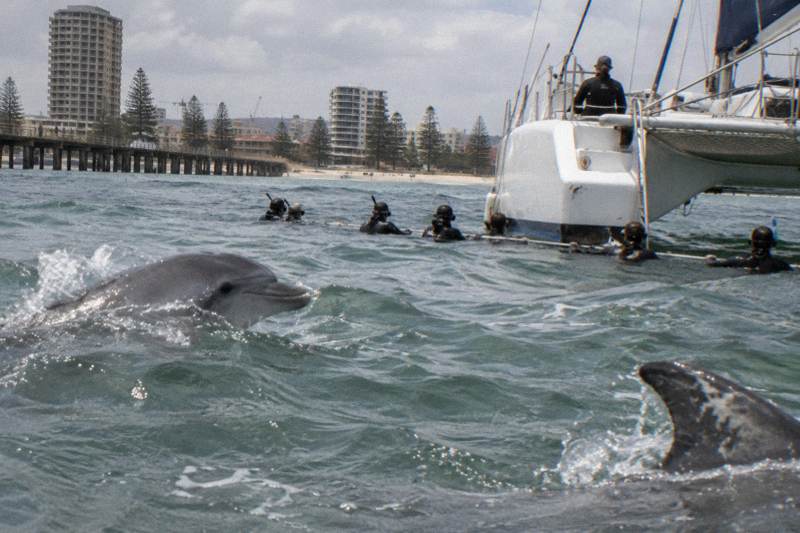
Do Dolphins Protect Swimmers From Sharks?
The idea that dolphins circle swimmers to keep sharks away is a common reassurance on swim day. Here is what the Adelaide swim operators actually say and do about sharks.
The honest answer is that this is not stated in the pages read for this article. No operator page, government page or official source here claims dolphins protect swimmers from sharks, and none denies it. What the swim operators actually publish is their own shark equipment and crew control: the Glenelg operator runs two shark shields on its back swim, and the Kangaroo Island operator runs shields fore and aft. The belief itself is everywhere, though. It shows up in dockside conversation, in pre-swim briefings retold by past guests, and in the general reassurance people reach for when they are about to step off a ladder into open water. It is worth separating what the story claims from what the people running these trips actually rely on, because those are two very different things.
The story usually goes like this: dolphins, being territorial and clever, will detect a shark long before a human does and either drive it off or form a loose ring around vulnerable swimmers. It is a comforting image and it has been retold in popular culture for decades. But comfort is not evidence. For this article the operator pages for both South Australian swim products were read, along with the state's marine mammal regulations, and not one of them makes the claim. The operators do not lean on dolphins for shark defence at all. They lean on electronic deterrents, flotation lines that keep every swimmer attached to the boat, and crews who decide moment to moment when swimmers enter the water and when they come out.
That distinction matters for anyone booking a first swim. If you arrive believing the dolphins are your lifeguard, you are placing your confidence in something no operator promises. If you arrive knowing the boat carries shields and the swim is controlled, your confidence sits where the operators themselves put it. The rest of this article walks through exactly what each operator states, what the law requires around marine mammals, and what a swim day actually looks like, so the shark question sits on solid ground.
What The Swim Operators Actually Do About Sharks
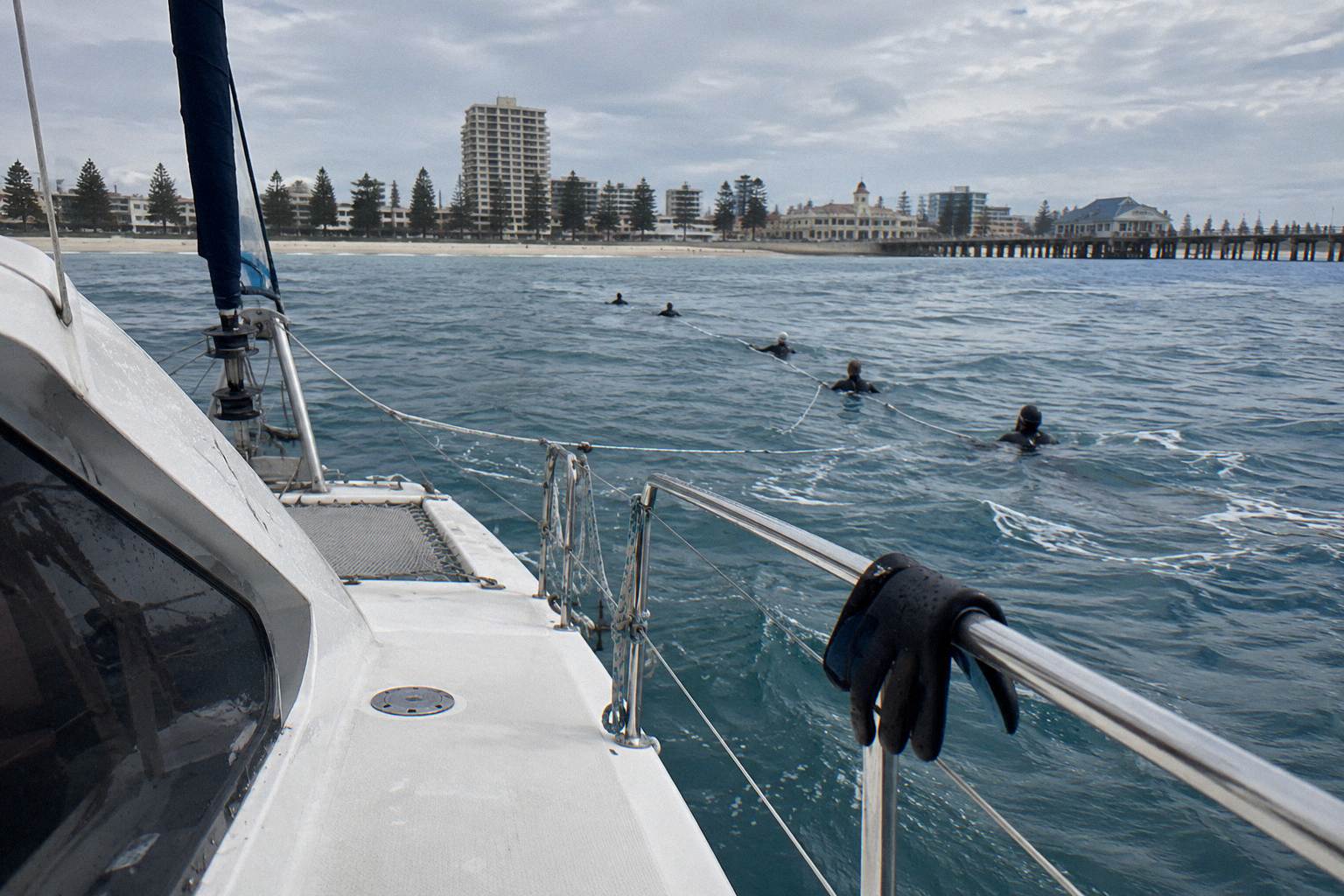
Both swim operators publish shark measures as their own statements. Temptation Sailing at Glenelg runs two shark shields during its Back Swim experience and none on the Front Swim, while Kangaroo Island Ocean Safari runs shark shields fore and aft on its swim trips. Neither operator attributes shark safety to the dolphins themselves, and neither page states that dolphins protect swimmers. This is the practical heart of the matter. The equipment is named, the placement is named, and the crews treat it as their own responsibility rather than the pod's.
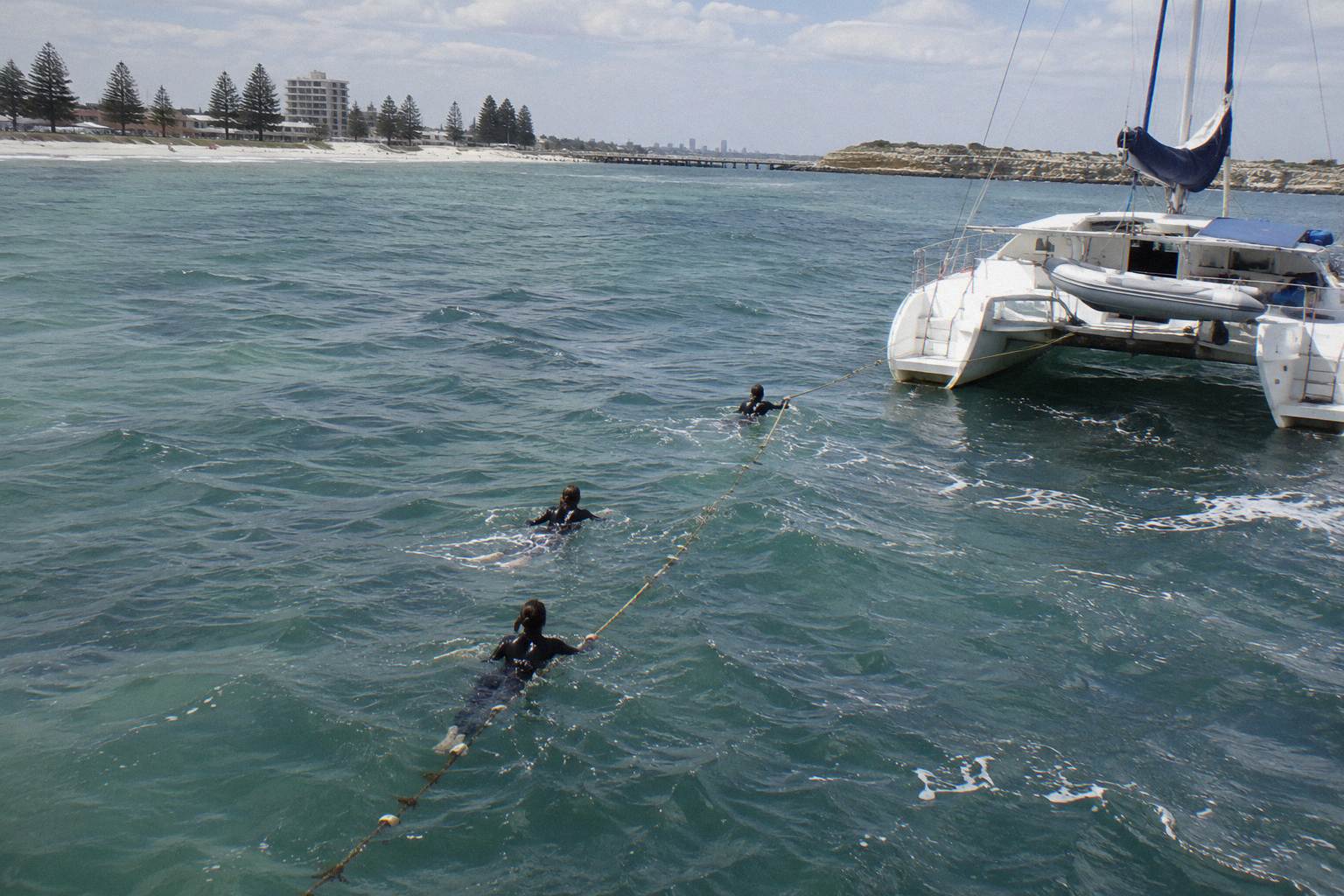
At Glenelg, the swim is built so that a swimmer is never free-floating in open ocean. Each swimmer holds a flotation line connected to the stern while the boat moves slowly, which the operator describes as a fully controlled swim. The crew puts swimmers into the water only once dolphins have turned toward the boat, and stops entries when the dolphins come too close. There are two swim experiences, the Front Swim and the Back Swim, and swimmers are rotated between them. A marine biologist hosts the trip. The shark shields run on the back swim; the operator's pacemaker guidance exists precisely because of that equipment, so pacemaker wearers should ask the operator before booking.
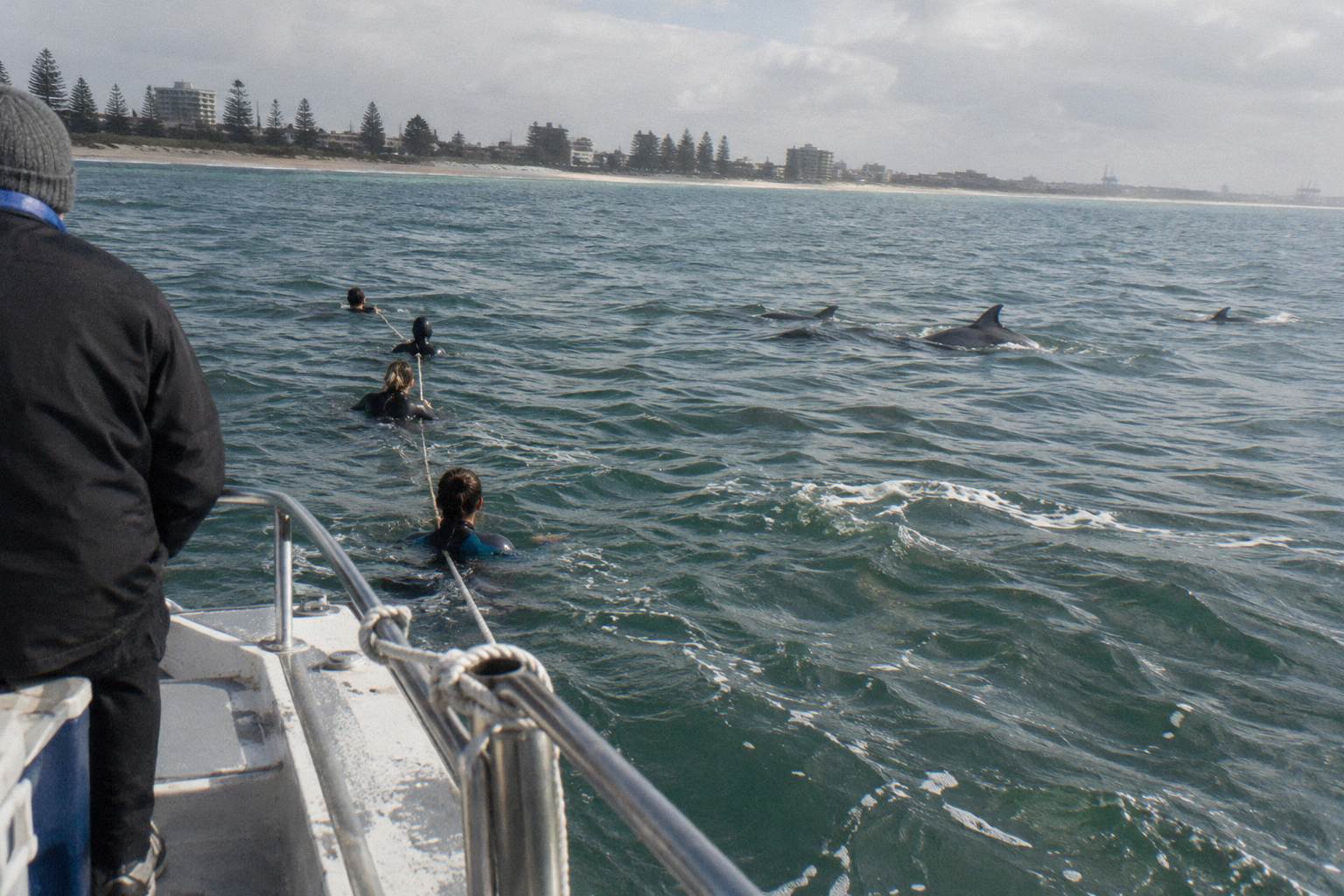
Kangaroo Island Ocean Safari, working out of Penneshaw, describes its vessels as 28-seaters and provides wetsuit, gloves, mask, snorkel and fins. A swimmer line with buoys is often used at the back of the vessel for the dolphin swim, which the operator notes needs upper body strength, and the ladder exit needs lower body strength. Its shields run fore and aft. Reasonable swimming ability is recommended, with a life jacket and noodle available. The two-hour Snorkelling Safari is billed as a swim with wild dolphins or among seals, and the page is candid that a given trip may be dolphins only, seals only, or a coastal snorkel.
| Operator and trip | Shark measures stated by the operator | How swimmers are held |
|---|---|---|
| Temptation Sailing, Glenelg wild dolphin swim | Two shark shields on the Back Swim; none on the Front Swim | Flotation line connected to the stern; crew-controlled entries |
| Kangaroo Island Ocean Safari, 2-hour Snorkelling Safari | Shark shields fore and aft | Swimmer line with buoys at the back; ladder exit |
Notice what is absent from that table: any claim about dolphins intervening. The operators are describing boats, lines and electronics. A guest who wants a deeper look at the local shark question can read whether there are sharks in the Adelaide Dolphin Sanctuary, which covers the estuary north of Port Adelaide rather than the open Gulf St Vincent water off Glenelg.
The site's own featured trip is the Glenelg wild dolphin swim tour, rated 4.7 across 493 reviews and listed from USD 104 per person with a minimum age of 9 and free cancellation up to 24 hours on the booking page. The shields, the line and the crew rotation are the operator's published approach to the water, not a promise made by the dolphins.
Where The Dolphin Guardian Story Comes From
The guardian-dolphin story is a folk belief reinforced by fiction and retold anecdotes, and in the material read for this article it appears nowhere as an operator or official claim. It is not stated in the pages read, and the pages instead emphasise equipment, permits and control. The story survives because it feels plausible, not because any swim operator in South Australia prints it. People have told versions of it for as long as humans have shared water with dolphins, and a handful of widely reported anecdotes around the world, where dolphins have interacted with swimmers in ways that looked protective, keep the belief alive. Looking protective and being a guarantee are different things, and no page read here bridges that gap.
There is a second reason the story persists on swim days. Dolphins and sharks do sometimes interact as predators and competitors over the same food, so a pod busily working a patch of water is a patch of water where a shark might also hunt. That is ecology, not escort service. An operator cannot schedule a dolphin's mood, and South Australian law deliberately keeps swimmers at a distance from the animals, which is the opposite of a protective ring. Swimmers must stay at least 30 m from a marine mammal under the regulations, a figure set for the dolphin's protection, and a swim tour works around dolphin behaviour rather than commanding it.
The honest framing for a nervous swimmer is this: the dolphins are wild animals choosing to be near the boat, the crew decides when that choice is close enough for a swim, and the shark question is answered with shields and lines rather than with folklore. Swimmers who want a fuller picture of the risks and comforts of the day can read whether a wild dolphin swim is safe, which covers sharks, seals and the water in one place.
The practical reassurance, repeated across both operators' pages, is that you are never swimming alone or untethered. At Glenelg you hold a line off the stern of a 58 ft sailing catamaran surveyed for up to 50 passengers. At Penneshaw you hold a buoyed swimmer line behind a 28-seater vessel. In both cases a crew is watching the water, the animals and you, which is a much more concrete safety arrangement than a hopeful myth.
What A Controlled Swim Actually Looks Like On The Day
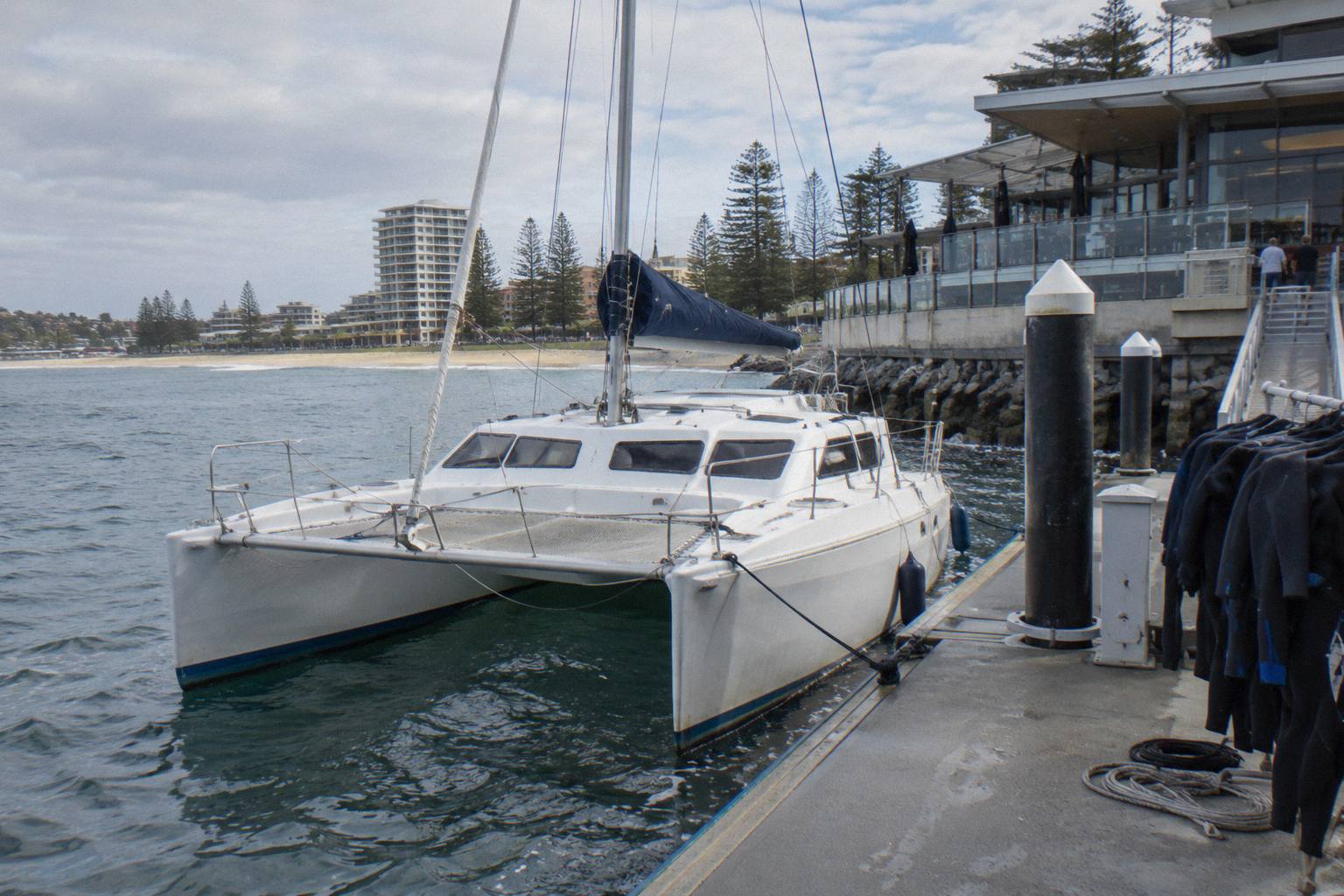
On the Glenelg trip, swimmers board at Marina Pier, Holdfast Shores Marina, get a full-length 5 mm wetsuit that doubles as flotation, hear a briefing of about 15 minutes, then take turns holding a stern line in the water while the boat moves slowly. The operator describes the tour as approximately 4 hours with a morning departure, and the boat is back in the marina between 11:30am and midday. Understanding the mechanics is the best antidote to shark nerves, because every step of the design keeps a swimmer connected to the boat and observed by crew.
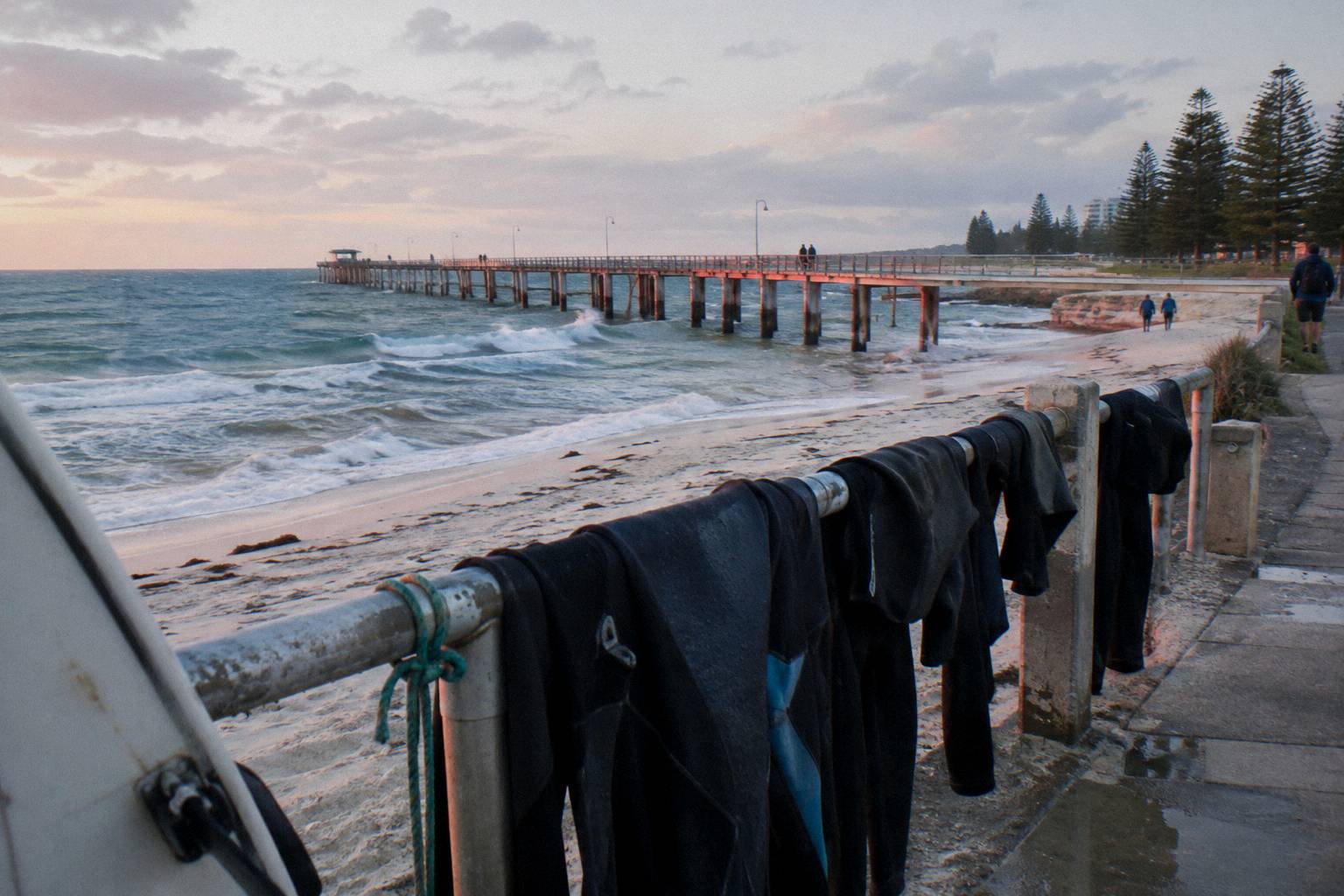
Boarding starts 15 minutes before departure, at the bottom of the stairs or ramp in front of the Oyster Bar. The departure time itself is on the booking confirmation, so check that rather than assuming a clock time. Each swimmer is fitted with the wetsuit, which the operator notes also acts as a full body flotation device, and masks and snorkels are demonstrated. Prescription masks are on board in -1.5, -3 and -4.5, and wetsuits run to size 4XL. Life jackets are carried but are not used for the swim. The whole entry system is conditional: the crew waits for dolphins to turn toward the boat before anyone goes in, and stops entries when the animals get too close.
The Kangaroo Island product follows a similar logic in a different setting. Guests meet at the Kangaroo Island Information Stop, 43 Howard Drive, Penneshaw, 30 minutes before departure for fitting and a safety brief. The operator says its water sits between 14 and 15 degrees and that thick wetsuits allow the swim year round. For anyone comparing the two trips, the age floors are the same for the swim itself, 9 at both operators, though the Kangaroo Island page adds that a coastal snorkel is offered from age 8 and that the swim is not suitable with a pacemaker or pregnancy.
| Feature | Glenelg wild dolphin swim | Kangaroo Island Snorkelling Safari |
|---|---|---|
| Listed duration | About 4 hours | 2 hours |
| Listing price | From USD 104 per person | From USD 132 per person |
| Rating on the listing | 4.7 across 493 reviews | 4.4 across 137 reviews |
| Minimum age to swim | 9 | 9 (coastal snorkel from 8) |
| Wetsuit | Full-length 5 mm, provided, to 4XL | Thick wetsuit, gloves, mask, snorkel, fins provided |
| In-water setup | Flotation line at the stern, crew-controlled | Swimmer line with buoys, upper body strength needed |
Neither trip is a free dive beside a pod. Both are line-hold swims behind a moving or stationary vessel, with crew deciding the windows. That structure, more than any story about dolphins, is why the operators can speak confidently about how the water is managed. Guests with questions about what to pack can read what to wear and bring for a wild dolphin swim, since the operators supply most of the gear and the list is shorter than people expect.
What The Law Says About Swimming Near Dolphins
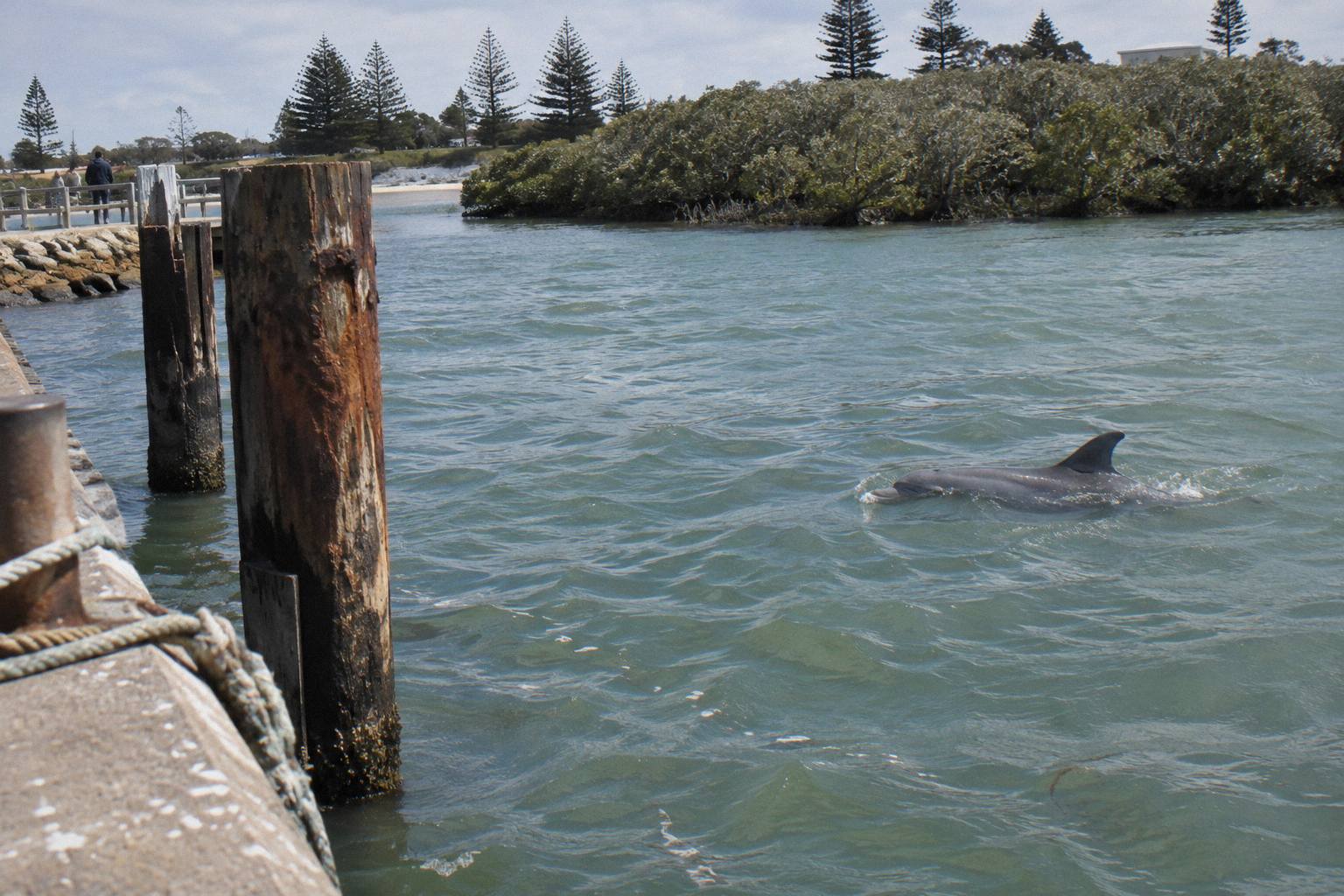
South Australia's marine mammal regulations, in operation since 1 September 2025, require swimmers to stay at least 30 m from a marine mammal and at least 150 m from one that is disturbed, sick, injured, entangled, stranded, or a calf or pup, with no more than 30 minutes within 150 m. A fee-based dolphin swim is lawful only under a Ministerial permit, and the expiation fee is AUD 315 per alleged offence. The full text sits in the National Parks and Wildlife (Protected Animals - Marine Mammals) Regulations 2025 on the legislation site, and it frames every commercial swim in the state.
Two points from the regulations matter for the shark question. First, the distance rules mean a swimmer is never supposed to be pressed up against a dolphin, let alone surrounded by a protective formation. The 30 m figure for swimmers, and the vessel rule of at least 50 m from a non-whale marine mammal, or 150 m with a calf or if the dolphins show disturbance, exist to give the animals room. Snorkelling counts as swimming under the regulations. Feeding and touching are prohibited outright.
Second, the permit system means a lawful swim is a supervised swim. A person must not, for fee or reward, take another person into the vicinity of a marine mammal to observe it or swim near it without a permit or other lawful authority. The permit register and any permit conditions, such as swimmer numbers or time in the water, were not found anywhere official, so none are described here. What is clear is that the legal design assumes crew control, not dolphin cooperation.
That legal frame is also why the operators' language is so careful. Temptation says it has run dolphin swim and watch tours from Glenelg since 2002 and calls itself the first vessel in South Australia given a licence to swim with dolphins, printed here only as the operator's own statement. The claim that matters on the day is not about history but about procedure: crew decide when swimmers enter, hold and exit, inside rules written for the dolphins' protection. More detail on the distances is in dolphin swim rules and how close you can get.
Should The Shark Question Change Your Booking?
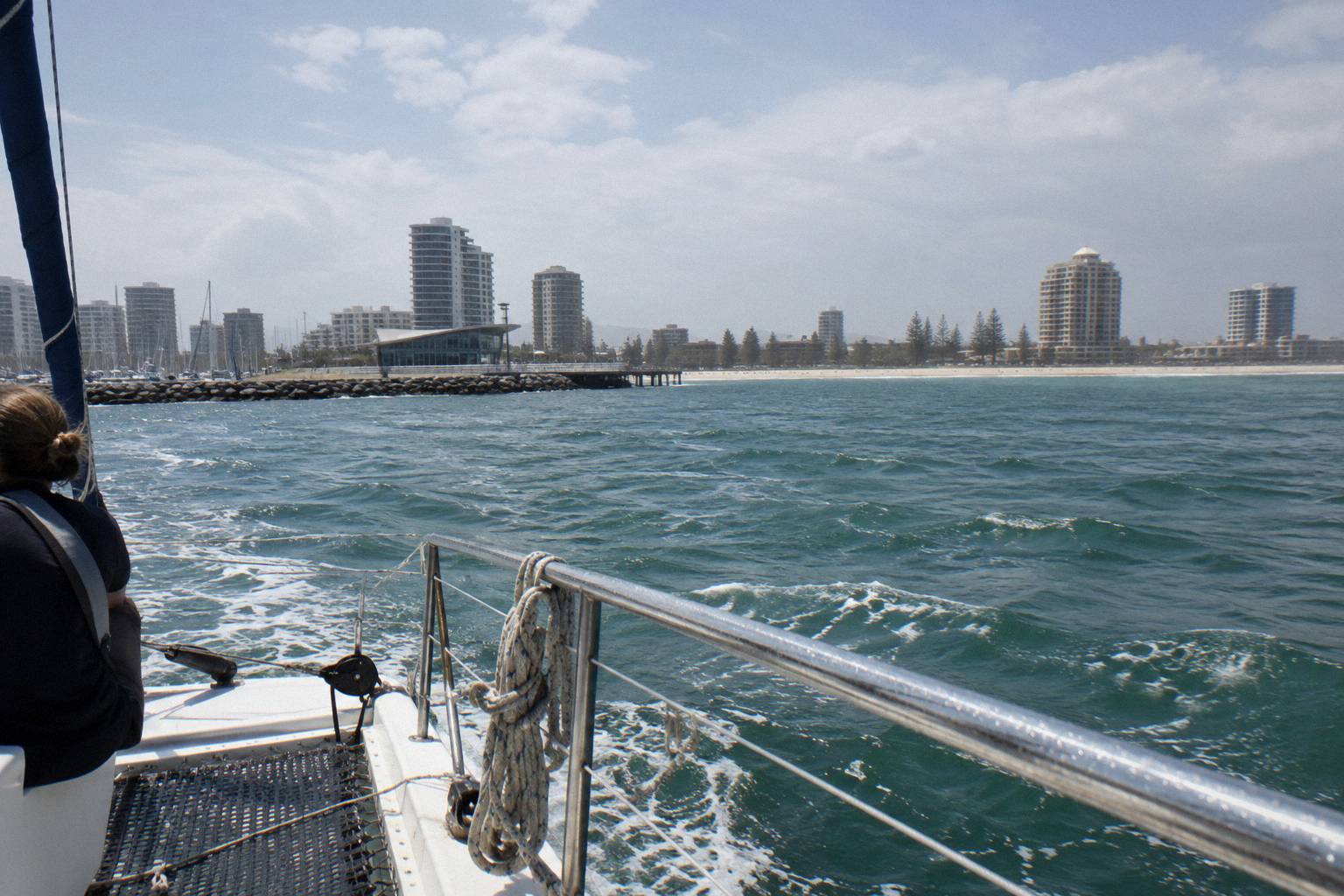
For most swimmers the shark question is already answered by the format: line-held swims behind crewed boats with electronic deterrents, run under state permit. The Glenelg swim is listed from USD 104 per person and the Kangaroo Island safari from USD 132, both with a minimum age of 9, and neither operator's safety story depends on the guardian myth. Watching-only options exist from USD 62 if the water itself is the barrier. Deciding between getting in and staying dry should rest on your comfort in the water, not on a belief no operator shares.
For swimmers who are nervous, the Glenelg operator has a published path: if you are not confident after the briefing, you may stay aboard as a watcher, and for bookings made direct with the operator the swim-minus-watch difference is refunded. A non-swimmer in your group can ride as a watcher on the same boat, booked together or separately. That flexibility is worth knowing before you book, because it turns an anxious morning into a wildlife cruise rather than a forfeit.
Sightings and refunds are handled differently by each operator, so keep their terms separate. Temptation says it has never had a day without seeing dolphins from above the water, and its tour page states a 100% success rate of seeing dolphins onboard since 2002, an operator claim about above-water sightings only, never an underwater promise. For bookings made direct with the operator, if no dolphins are seen from above the water there is a free return within one year, non-transferable, or a 50% refund for interstate or overseas guests. Kangaroo Island Ocean Safari is blunt the other way: wildlife interactions are not guaranteed, and if you get in the water at any stage there is no refund. The booking page shows free cancellation up to 24 hours, while the operator's own terms are tiered, with no refund within 48 hours and credit held 24 months.
None of that is shark information, but it is the decision information that sits beside it. The same boat that carries shields carries a refund policy, an age floor and a ladder with three rungs you need to be able to climb. If getting in the water is not for you, the Wild Dolphin Watch From Glenelg, rated 4.8 across 409 reviews and listed from USD 62 per person, runs on the same waters with the same dolphins visible from the deck.
What Is Actually Known About The Dolphins Off Adelaide
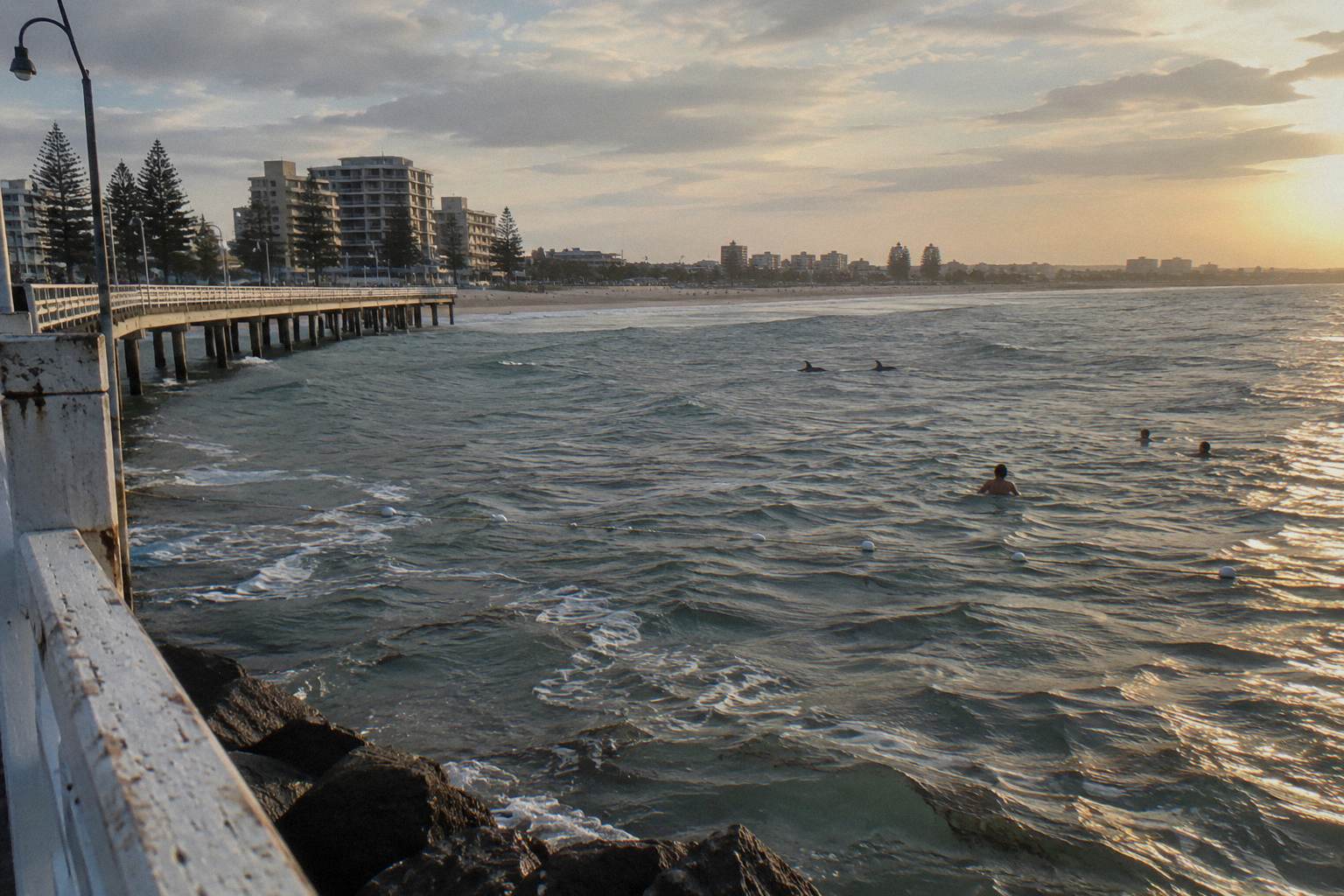
The dolphins around Adelaide are Indo-Pacific bottlenose dolphins, many of them year-round residents of the Adelaide Dolphin Sanctuary, a 118 sq km estuary of the Port River and Barker Inlet north of Port Adelaide. The Glenelg operator says it watches Indo-Pacific bottlenose and short-beaked common dolphins, as its own claim. None of the official pages describe dolphin behaviour toward sharks. The state's own twenty facts for 20 years of the Adelaide Dolphin Sanctuary covers habitat, species and size, and a fully grown bottlenose can be around 120 to 160 kg and more than 2 m long, but it does not wade into the guardian question.
It helps to keep the geography straight, because the sanctuary and the swim area are different places. The sanctuary is the Port River and Barker Inlet estuary; the Glenelg swim departs from Holdfast Shores Marina and the operator does not name its swim site, so neither does this article. Kangaroo Island's operator says dolphins are present year-round in the waters around the island, and that seals there peak in winter and are lowest from November to January. These are population facts, and they are the kind of fact official sources do supply.
Behavioural claims about dolphins defending humans are a different category of claim, and this is where the honest answer has to stay narrow. It is not stated in the pages read. Anyone who tells you otherwise on swim day is sharing the story, not the science, and no page from either operator or the state government read for this article makes or endorses it. The operator's own FAQ page answers practical questions about the swim, the wetsuits and the season, and its shark answer is equipment, not folklore.
One water-quality note belongs here too, since it is the kind of thing swimmers ask alongside the shark question. SA testing shows zero or low Karenia along the metropolitan coast and Kangaroo Island; check the operator before booking a swim, because the Glenelg operator's FAQ still carries a notice that the bloom may affect its tours. State health advice is that if the water is clear, it is fine to swim, and to stay away from foamy or abnormally coloured water.
| Claim type | Who says it | Status |
|---|---|---|
| Dolphins protect swimmers from sharks | Nobody in the pages read | Not stated, neither asserted nor denied |
| Shark shields on the back swim, Glenelg | Temptation Sailing, its own statement | Operator-published |
| Shark shields fore and aft, Kangaroo Island | KI Ocean Safari, its own statement | Operator-published |
| Swimmers must keep 30 m from marine mammals | SA marine mammal regulations 2025 | Law, expiation fee AUD 315 per alleged offence |
| Bottlenose dolphins, many year-round residents | Official sanctuary facts page | Government-published |
For anyone weighing the whole question of whether the experience justifies the nerves, the season runs September to April at Glenelg, with the operator taking May to August off, and the water sits around 14 °C in August to around 21 °C in February. More on timing is in the best time of year for a wild dolphin swim. Whatever month you choose, the dolphins will be wild, the line will be attached, and the shields will be switched on, which is exactly the arrangement Adelaide Swimming With Dolphins exists to explain.
Common Questions About Dolphins And Sharks
Do Dolphins Protect Swimmers From Sharks?
Not stated in the pages read for this article. No operator page, official page or regulation read here claims dolphins protect swimmers from sharks, and none denies it. What the operators publish is their own approach: shark shields on the swims and flotation lines that keep every swimmer attached to the boat under crew control.
Do The Adelaide Dolphin Swim Boats Carry Shark Protection?
Yes, per the operators' own statements. The Glenelg operator runs two shark shields during its Back Swim experience, with none on the Front Swim, and the Kangaroo Island operator runs shields fore and aft. Both trips also keep swimmers on lines rather than free swimming.
Are Swimmers Allowed To Get Close To The Dolphins?
Regulations require swimmers to stay at least 30 m from a marine mammal, and at least 150 m from one that is disturbed, sick, injured, entangled, stranded, or a calf or pup, with no more than 30 minutes within 150 m. Commercial swim tours operate under permit, and crews control when swimmers enter and exit the water.
What Happens If I Get Nervous Once On The Boat?
At Glenelg, if you are not confident after the briefing you may stay aboard as a watcher, and for bookings made direct with the operator the swim-minus-watch difference is refunded. Swim and watch guests travel on the same boat and can book together or separately.
Can I Do A Dolphin Trip Without Getting In The Water?
Yes. The Wild Dolphin Watch From Glenelg is listed from USD 62 per person, rated 4.8 across 409 reviews, and stays on deck. The Kangaroo Island Dolphin Watch is listed from USD 61.74 per person, rated 4.8 across 640 reviews, though its booking page marks it non-refundable.
Is The Water Cold On A Dolphin Swim?
Adelaide sea temperature runs around 14 °C in August to around 21 °C in February, with November around 18 °C. Both swim operators supply thick wetsuits, and the Glenelg operator's full-length 5 mm suit also acts as a flotation device.