Are Wild Dolphins Friendly Toward Swimmers?
An honest answer to whether wild dolphins are friendly toward swimmers, based on what the operators themselves promise: controlled swims, distance rules and no guarantees of a mood.
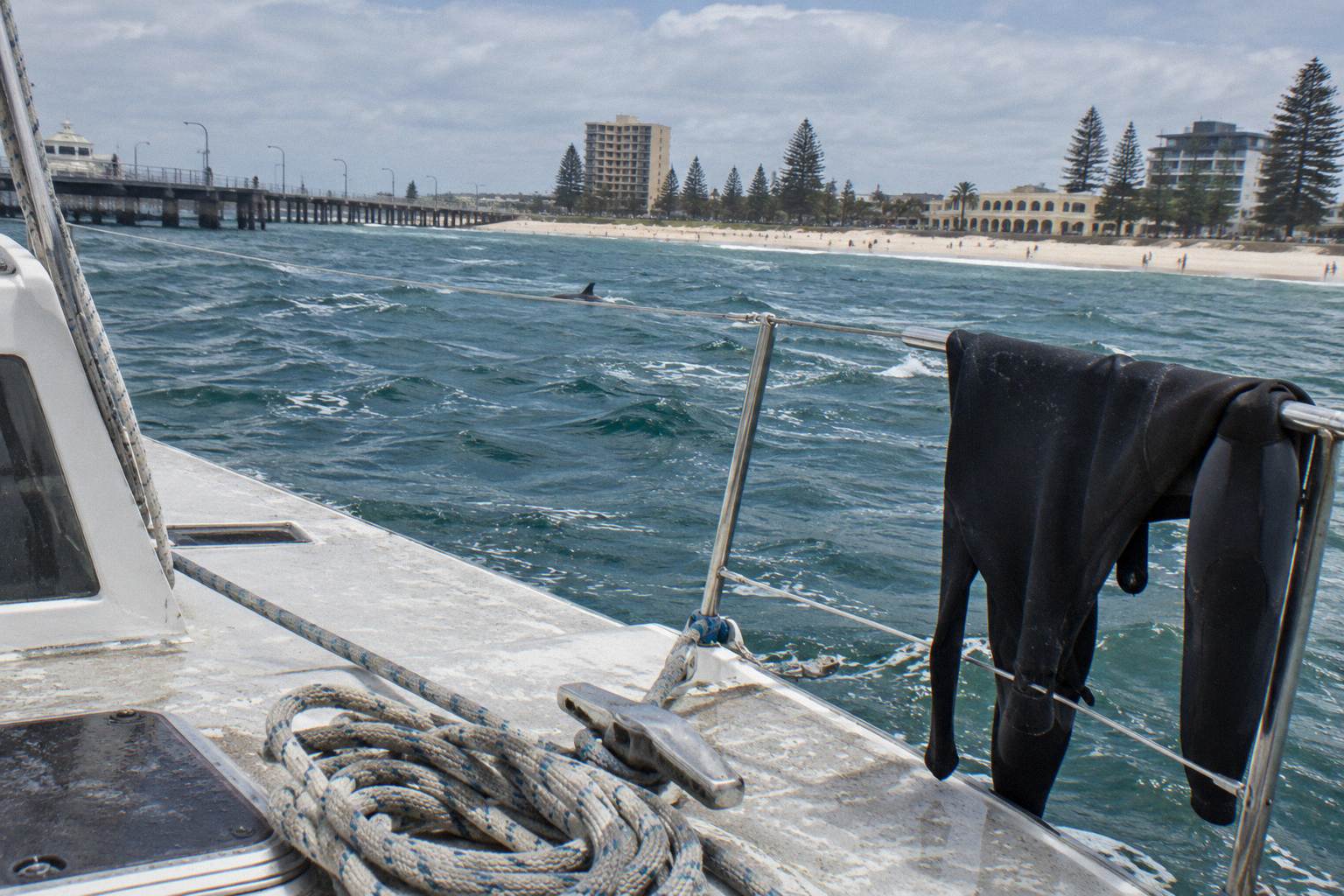
No honest operator will answer that question with a yes. The wild dolphins off Adelaide and Kangaroo Island are free-ranging animals, and friendliness is a mood no tour can schedule. What the licensed operators describe instead is a framework of controls: swimmers hold a flotation line, crews enter the water only when dolphins turn toward the boat, and the law keeps everyone at set distances. Sometimes the dolphins linger; sometimes they pass.
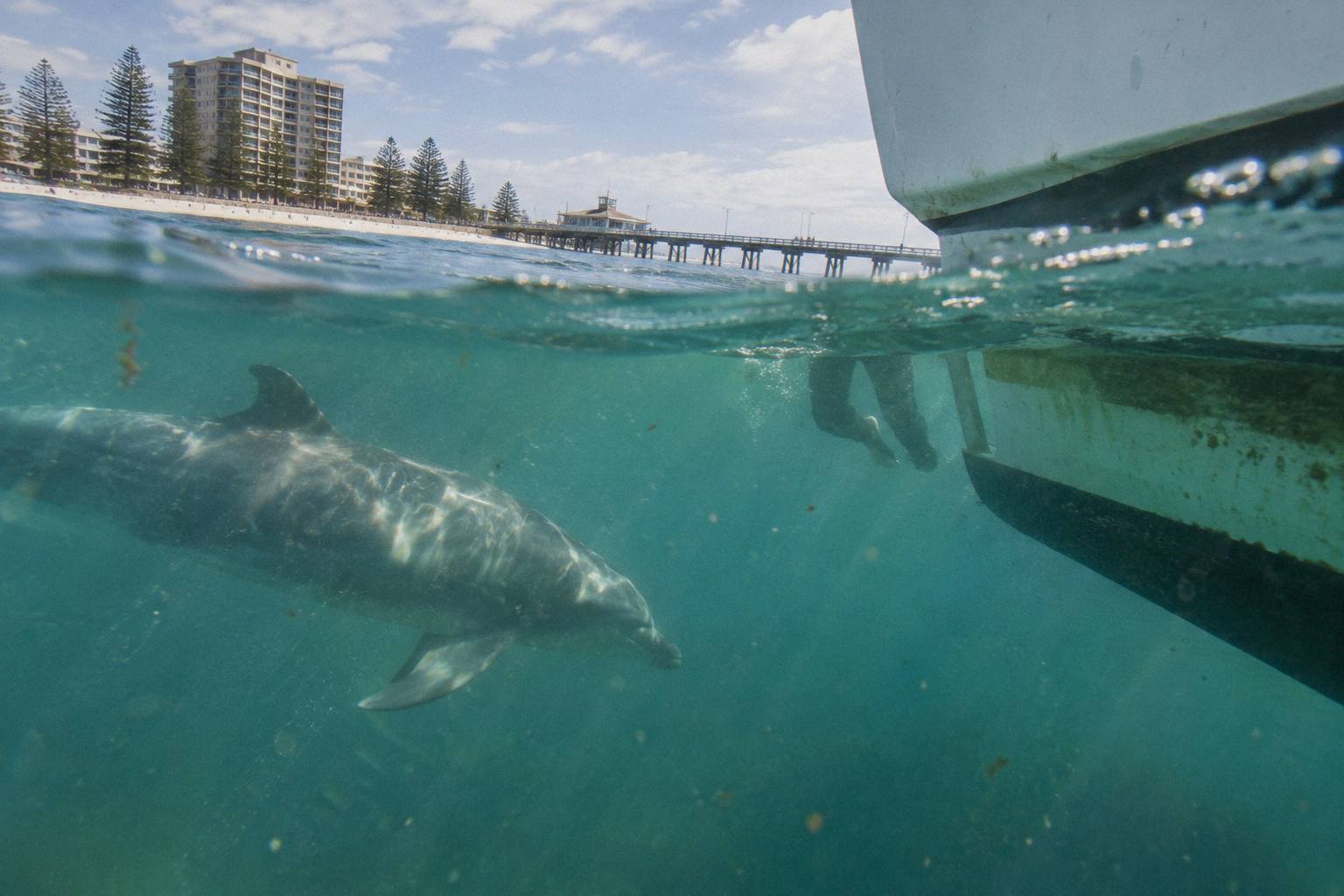
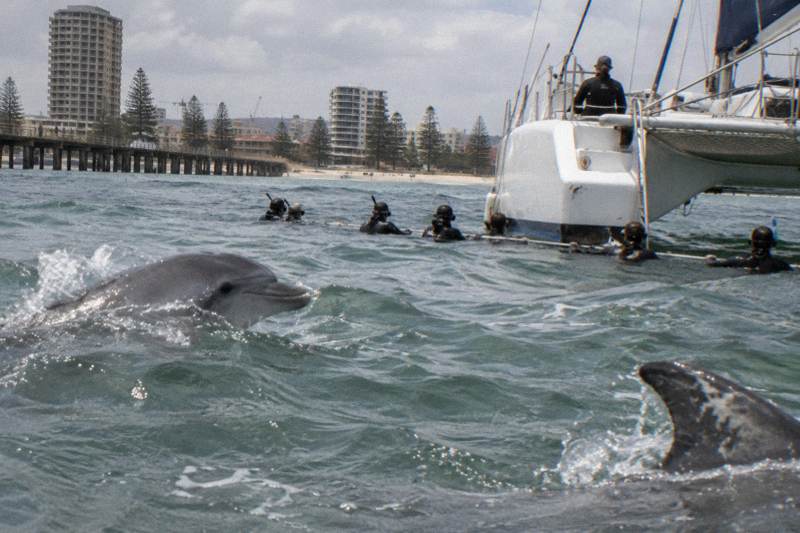
That distinction, between a temperament claim and a behaviour observation, is the whole story. Temptation Sailing, the Glenelg operator that says it has run dolphin swim and watch tours since 2002 and calls itself the first vessel in South Australia given a licence to swim with dolphins, does not promise that the animals will be friendly, curious or playful. It describes something more concrete: the crew puts swimmers in the water only once dolphins have turned toward the boat, and it stops entries when the dolphins get too close. That is an operator reading animal behaviour in real time and managing the encounter around it, not a guarantee of a warm welcome.
Kangaroo Island Ocean Safari goes further in the cautious direction. Its Snorkelling Safari is booked as "swim with wild dolphins OR among seals," and its own page says a given trip may turn out to be dolphins only, seals only or a coastal snorkel. Wildlife interactions, the operator states plainly, are not guaranteed. If you get in the water at any stage, there is no refund. That is what an honest commercial dolphin encounter looks like: the operator controls the venue, the equipment and the rules, and the dolphins decide the rest.
The question of whether dolphins are friendly toward swimmers is worth asking, and worth answering properly, because the answer shapes what you book. A traveller expecting an affectionate animal that seeks out human company may be disappointed by a pod that passes at range. A traveller who understands that a controlled swim is built around the dolphins' own choices tends to read the same pass differently: as a genuine wild encounter, which is the entire point. The rest of this article sets out what the operators actually say, what the law allows, and what a first-time swimmer can reasonably expect in the water.
If you are weighing a booking now, these are the three encounters this site covers most often, the Glenelg swim, the Kangaroo Island snorkelling safari and the Glenelg watch-only cruise.
What Do The Operators Actually Promise?
The operators describe controls, not a mood. Temptation Sailing's materials talk about a controlled swim on a flotation line, crew decisions about when to enter the water, and an above-water sighting record, while Kangaroo Island Ocean Safari states that wildlife interactions are not guaranteed at all. Neither operator anywhere claims the dolphins are friendly, and a booking page that did would be promising something no wild animal can deliver.
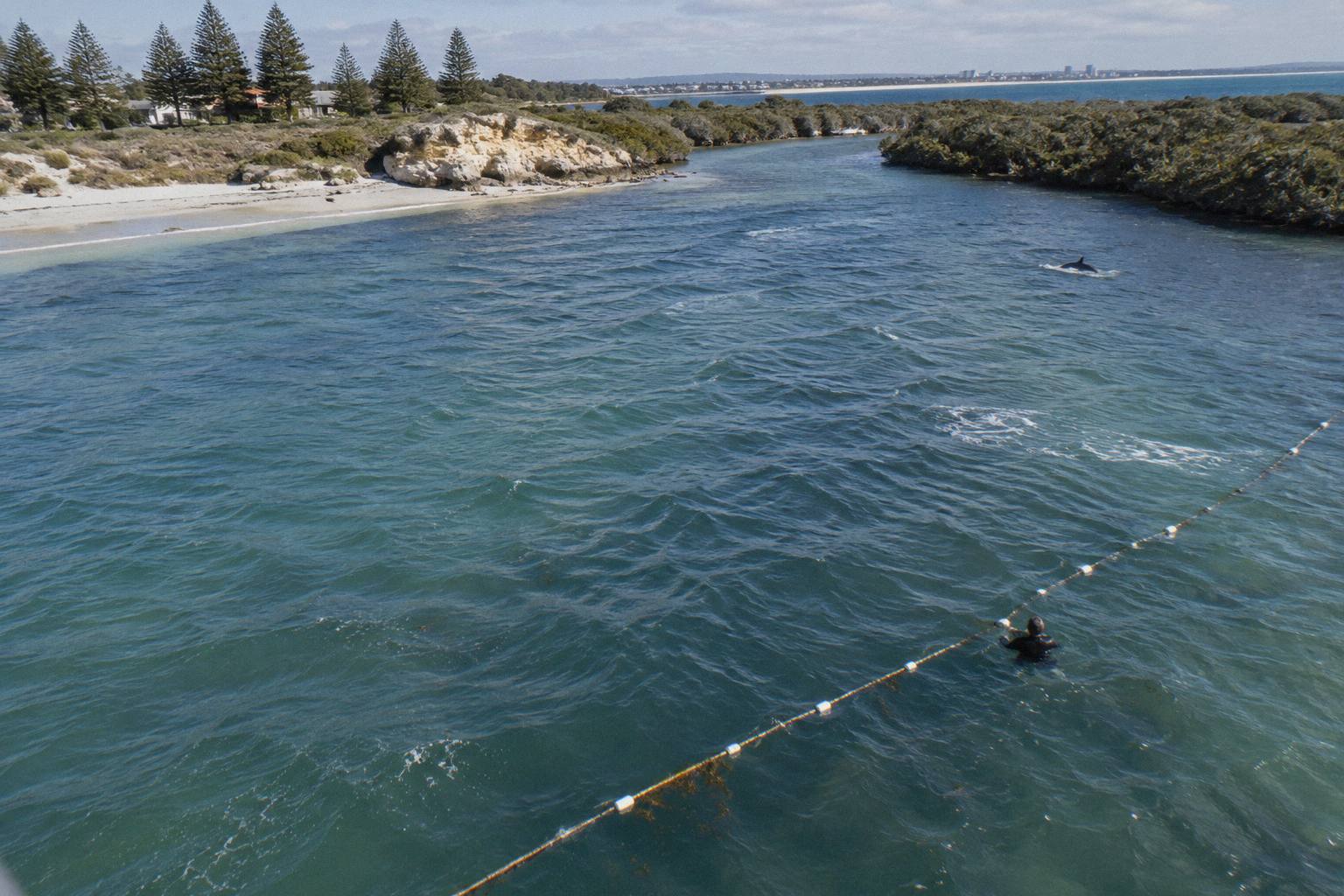
This matters because the language around dolphin tourism tends to drift. Travel writing fills with words like playful and curious, and readers arrive expecting a personality. The primary sources say something quieter. Temptation's own FAQ, which covers everything from wetsuits to seasickness, frames the swim as fully controlled: swimmers hold a line connected to the stern while the boat moves slowly, which makes it, in the operator's words, not free swimming in open ocean. The dolphins remain free. The swimmers are the managed half of the encounter.
The Glenelg operator does make one claim that sounds like a promise, and it deserves careful reading. It says it has never had a day without seeing dolphins from above the water, and its tour page states a "100% success rate of seeing dolphins onboard since 2002." Two things are doing the work in that sentence: it is an operator claim rather than an independent count, and it covers above-water sightings only, never an underwater encounter. A dolphin seen from the deck has satisfied the sighting record. Whether it circles the swimmers at the end of the line is a separate question the operator leaves open.
Wild Dolphin Swim From Glenelg With Temptation Sailing is listed from USD 104 per person, rated 4.7 across 493 reviews, with free cancellation up to 24 hours before. You can check the live listing for the Glenelg swim alongside Wild Dolphin Swim, 4 Hours before committing.
Kangaroo Island's stance is starker and, in its way, more useful for expectation-setting. The operator's page says sightings can't be guaranteed and that it does not promise a sighting on every trip, and its refund line is blunt: if you enter the water at any stage, no money comes back. Combine that with the trip's variable outcome, dolphins, seals or a coastal snorkel, and you have a product honestly sold as a bet on the day. Dolphins are present year-round in the waters around Kangaroo Island, per the operator's FAQ, but presence is not the same as an audience.
How A Controlled Dolphin Swim Actually Works
A controlled swim keeps every swimmer on a line behind a slowly moving boat. At Glenelg, each swimmer wears a full-length 5 mm wetsuit that also acts as a flotation device, holds a stern line while the vessel travels slowly, and is rotated between two experiences called the Front Swim and the Back Swim. The crew decides when the dolphins' behaviour permits an entry, and ends entries when the animals get too close.
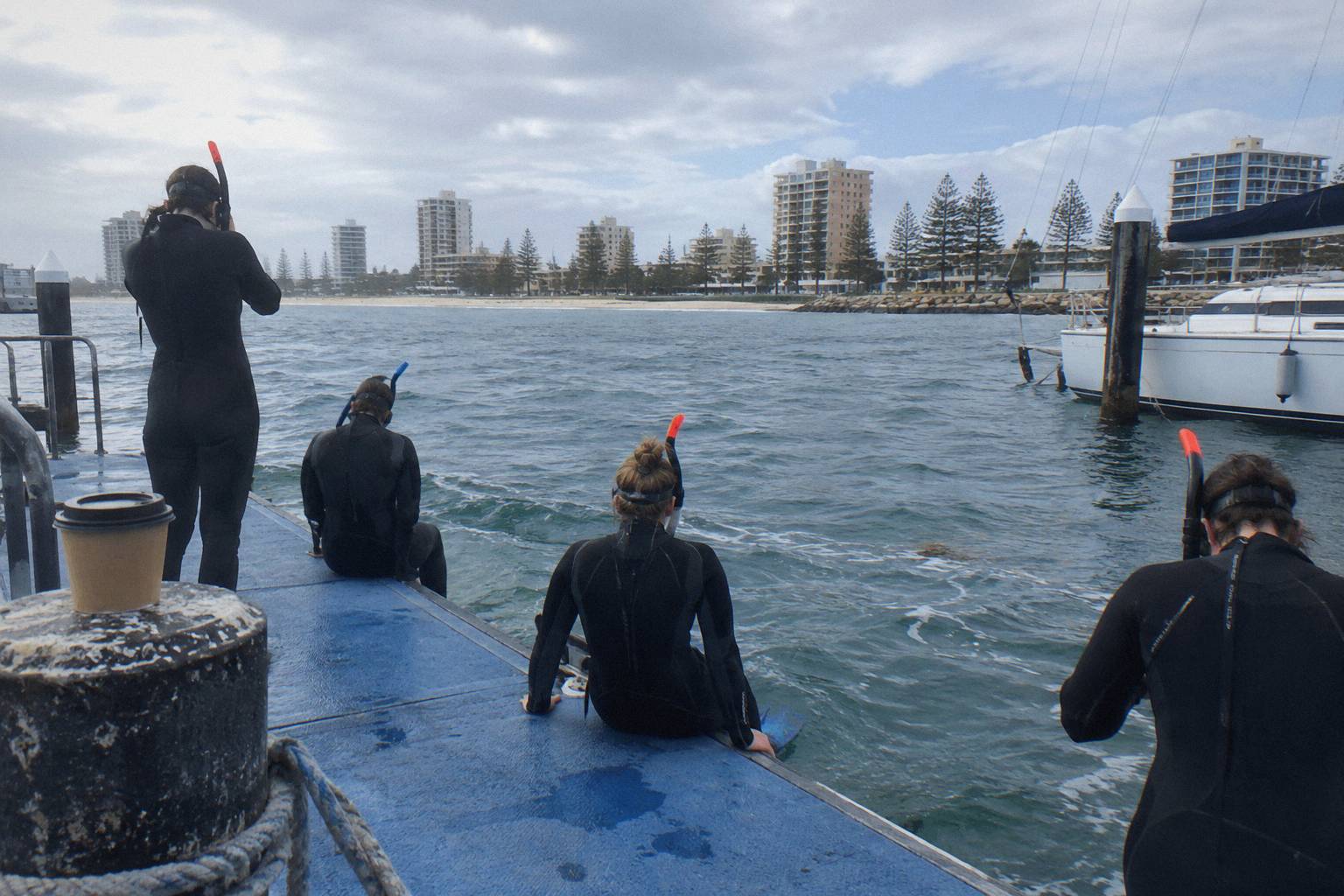
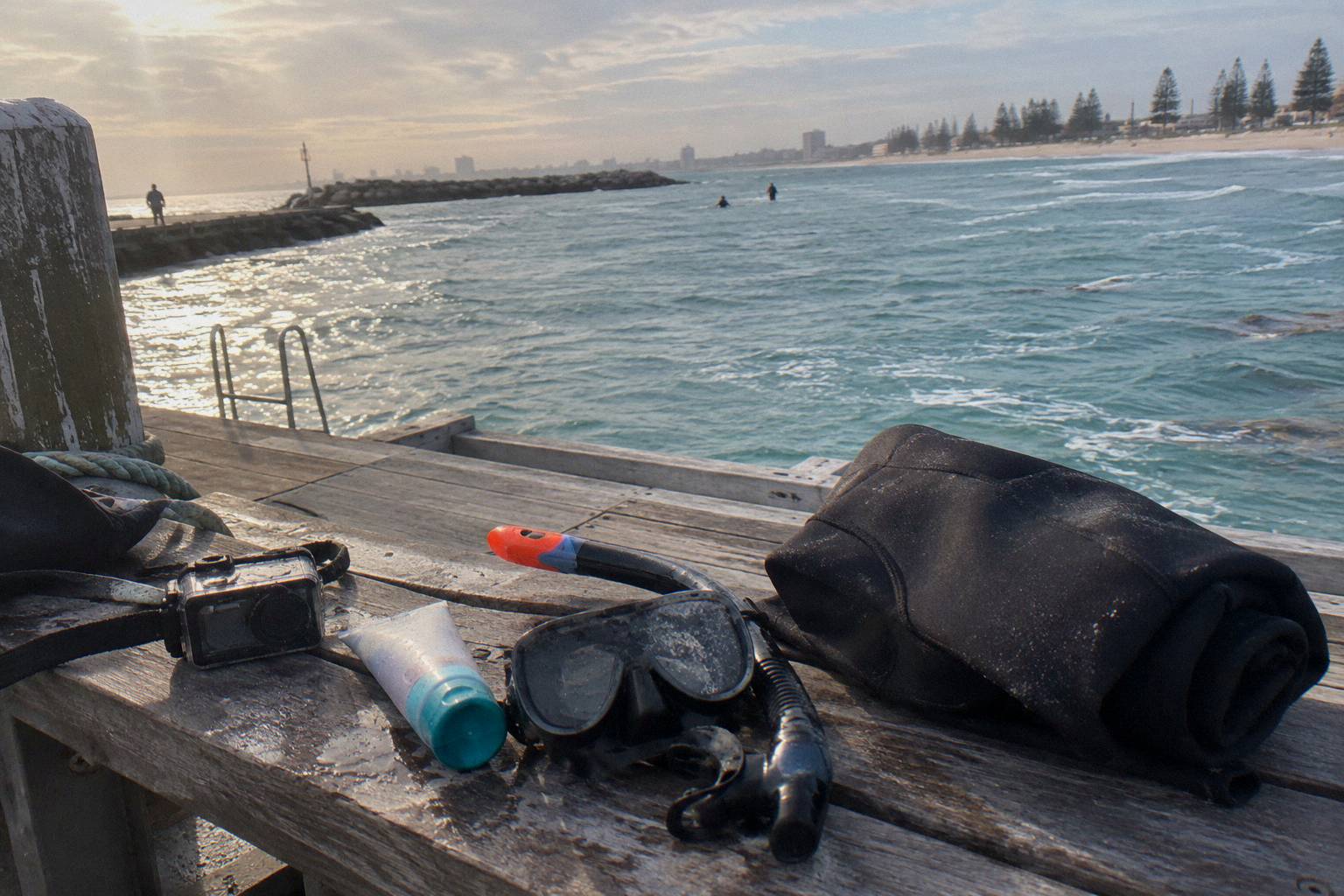
The mechanics are worth knowing because they explain the mood question better than any adjective. On boarding at Marina Pier, Holdfast Shores Marina, Glenelg, at the bottom of the stairs in front of the Oyster Bar, each swimmer is fitted with the wetsuit, which the operator says also works as a full-body flotation device. A crew briefing of about 15 minutes follows, with mask and snorkel demonstrated. Prescription masks are on board in three strengths, wetsuits run to size 4XL, and life jackets are carried but not used for the swim. None of this makes dolphins friendly. All of it makes the swim survivable for an ordinary person in cool water.
The entry rule is the heart of it. The crew puts swimmers in only once dolphins have turned toward the boat. Turning toward the boat is a behaviour the crew can read: an approach, or at least an acceptance of the vessel's presence. When the dolphins get too close, entries stop. Read those two rules together and you can see what the operator is actually engineering, an encounter that happens on the dolphins' initiative, in a window the animals themselves open, with a hard cutoff when the encounter gets too intense. That is as close as a commercial operation honestly gets to "friendly": the animals are choosing to be there.
Two shark shields run during the back swim; the front swim has none. Marine biologist hosts are on board. Under-18s need a parent or guardian on board, who may swim or hold a watch ticket. The minimum swim age is 9, which the operator attributes to insurance, and children under 9 may watch. Pacemaker wearers should ask the operator before booking. Swimmers need to hold the flotation line while towed slowly and climb the three rungs of the rear ladder. Nervous swimmers can stay aboard as watchers after the briefing, and for bookings made direct with the operator, the swim-minus-watch fare difference is refunded.
The same honest framing applies to the boat itself. The operator describes a 58 ft sailing catamaran surveyed for up to 50 passengers, with swim and watch guests on one boat, booked together or separately. A non-swimmer in your group can ride as a watcher on the same trip, which is one of the better designs in Australian wildlife tourism: nobody is stranded on the dock because a travel companion prefers to stay dry.
What South Australian Law Says About Getting Close
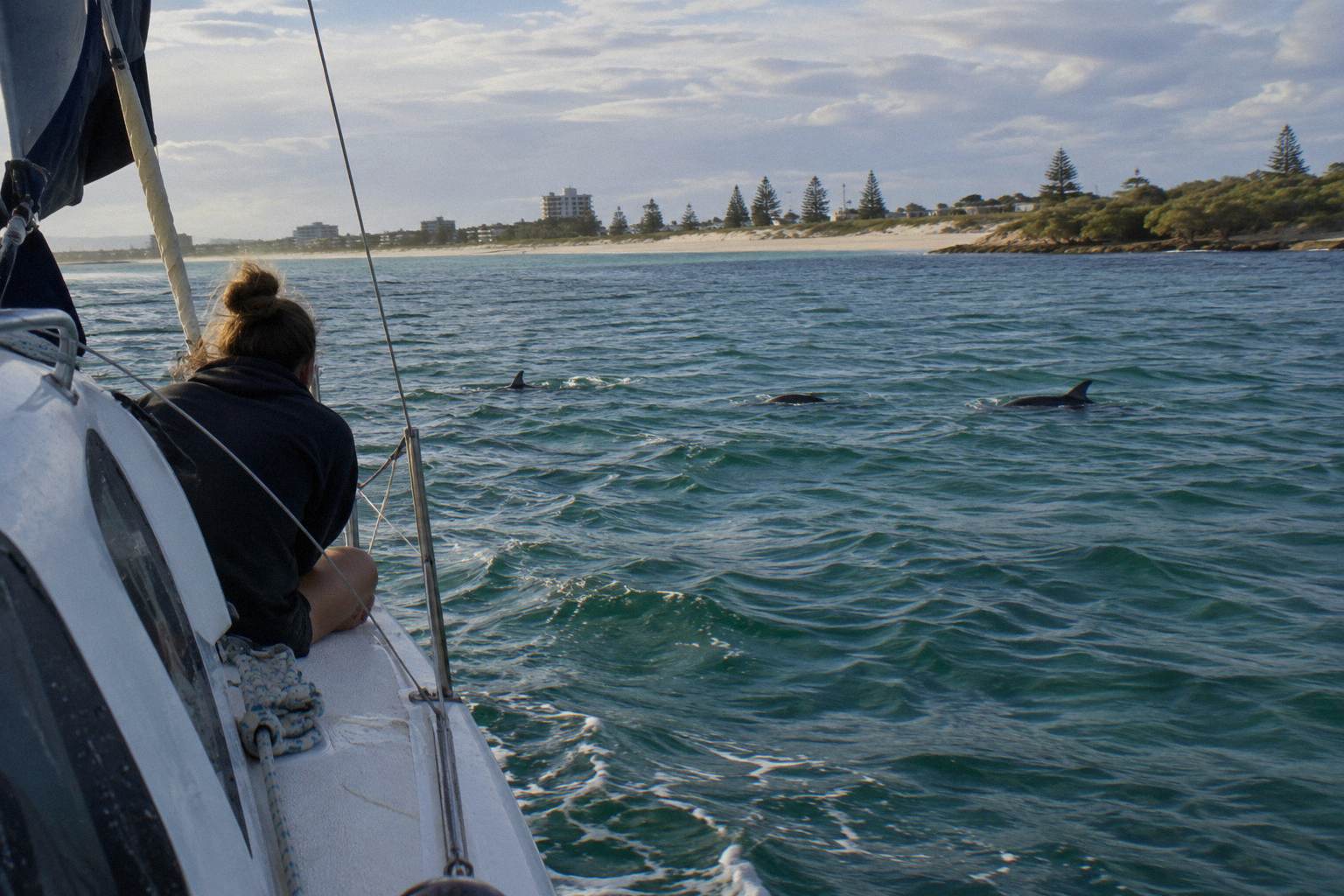
The law does not regulate dolphin moods, it regulates distance. Swimmers and snorkellers must stay at least 30 m from a marine mammal, and 150 m from one that shows disturbance, appears sick or injured, is stranded or entangled, or is a calf or pup, with no more than 30 minutes spent within 150 m. Vessels keep 50 m, or 150 m with a calf or if the dolphins show disturbance. The expiation fee is AUD 315 per alleged offence.
These rules come from the National Parks and Wildlife (Protected Animals - Marine Mammals) Regulations 2025, in operation since 1 September 2025, and they sit behind every licensed swim. The same instrument is why a fee-based dolphin swim can exist at all: under regulation 19, a person must not, for fee or reward, use a vessel or other means to take another person near a marine mammal to observe it or swim near it, without a Ministerial permit or other lawful authority. The permitted operator is the mechanism by which ordinary swimmers legally get near wild dolphins at all. If you want the detail, the full regulation text is published by South Australian legislation.
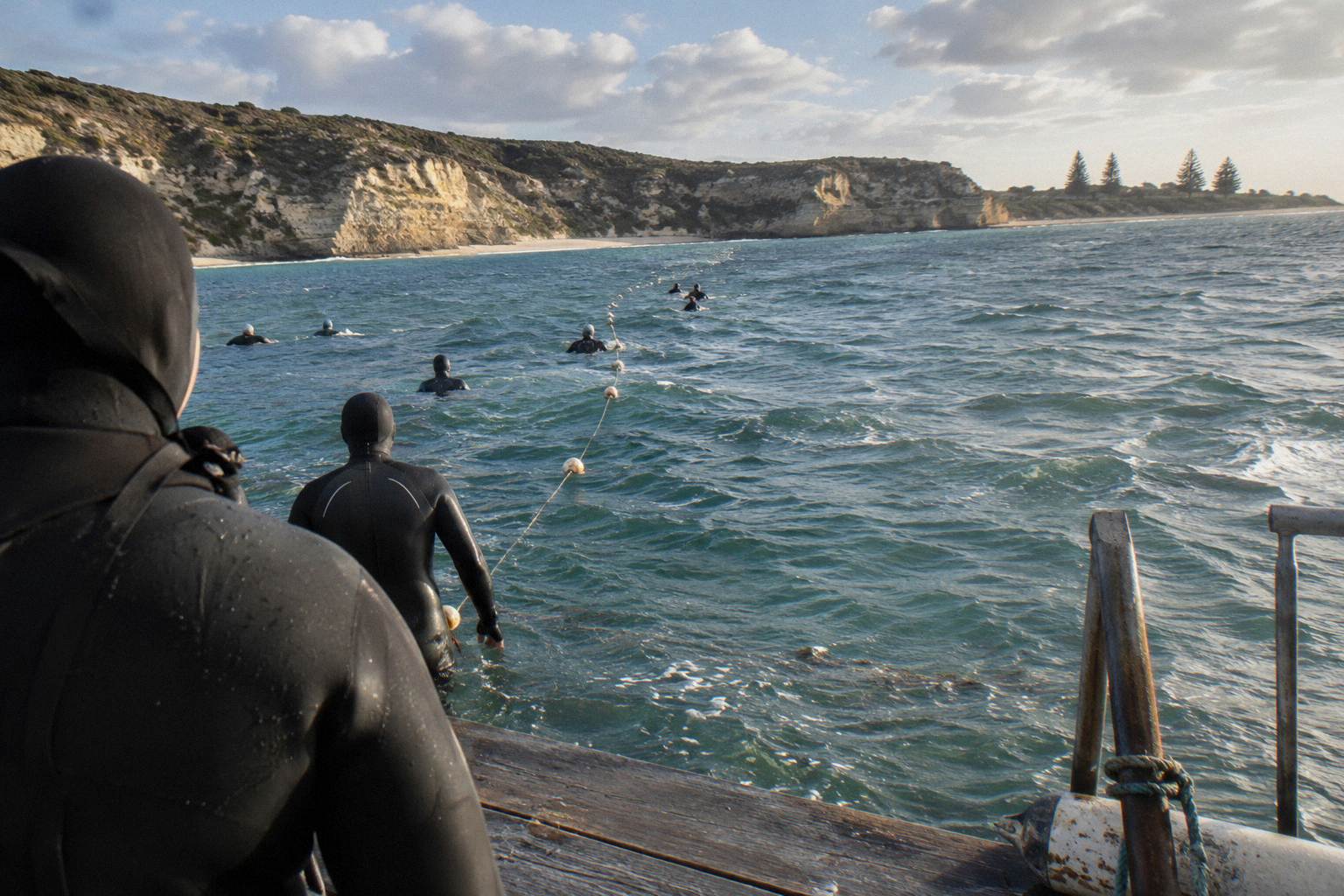
Feeding and touching are prohibited outright. This is where the friendliness question collides with reality in the sharpest way: a wild dolphin that has been fed by people is not a friendly dolphin, it is a habituated one, and habituation is generally bad for the animal. A swim built on holding a line while the boat drifts slowly, with entries only when the animals approach, is designed to avoid creating that dependency. The friendliness you experience on a lawful swim, when it happens, is unmanufactured. That is precisely what makes it worth the cold water.
| Rule | Applies to | Distance or limit |
|---|---|---|
| Approach distance | Swimmers and snorkellers | At least 30 m from a marine mammal |
| Protected situations | Swimmers and snorkellers | 150 m if the animal shows disturbance, is sick or injured, stranded or entangled, or is a calf or pup |
| Time limit | Swimmers and snorkellers | No more than 30 minutes within 150 m of a non-whale |
| Vessel distance | Boats | 50 m, or 150 m with a calf or if the dolphins show disturbance |
| Feeding and touching | Everyone | Prohibited, with an expiation fee of AUD 315 per alleged offence |
For a fuller walk through the distance rules in plain language, see this site's guide to dolphin swim rules and how close you can get.
When Dolphins Come To You, And When They Don't
The dolphins decide the encounter. The Glenelg crew enters the water only when dolphins turn toward the boat and stops entries when they get too close, which means the animals' own behaviour opens and closes the window. Kangaroo Island's operator goes further and publishes the full range of outcomes: dolphins only, seals only, or a coastal snorkel, with no refund once you have entered the water.
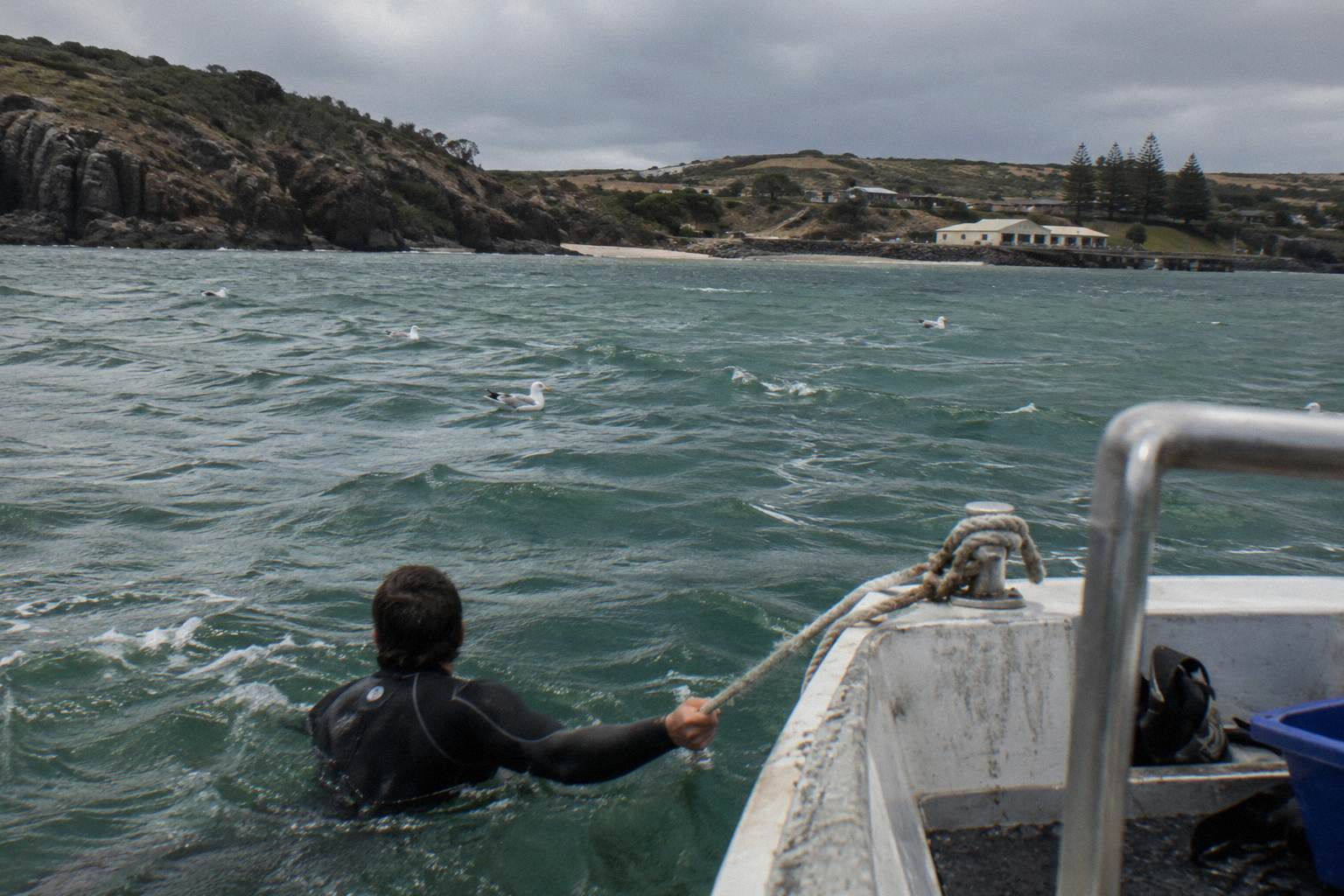
So what does a good day actually look like? On the Glenelg swim, the operator's structure suggests the common pattern: the boat locates a pod, the crew watches whether the dolphins' heading turns toward the vessel, and only then do swimmers go over the stern on the line. Sometimes the dolphins stay in the vicinity of the swimmers for the full rotation between Front Swim and Back Swim. Sometimes they move off after a few minutes and the boat relocates. The tour runs approximately 4 hours with a morning departure, which is enough time for the crew to try more than one pod. Other pages covering the same trip are gathered on Adelaide Swimming With Dolphins.
What the operator will not do is chase. The vessel rules in the regulations, 50 m minimum, 150 m with a calf or disturbance, 4 knots inside 150 m, exist precisely so that boats cannot press an encounter on uninterested animals. A dolphin that does not want company swims away at speed no catamaran should match. The system only works when the animal's participation is voluntary, which is the entire ethical architecture of the swim, and something this site examines in more depth in is a wild dolphin swim ethical.
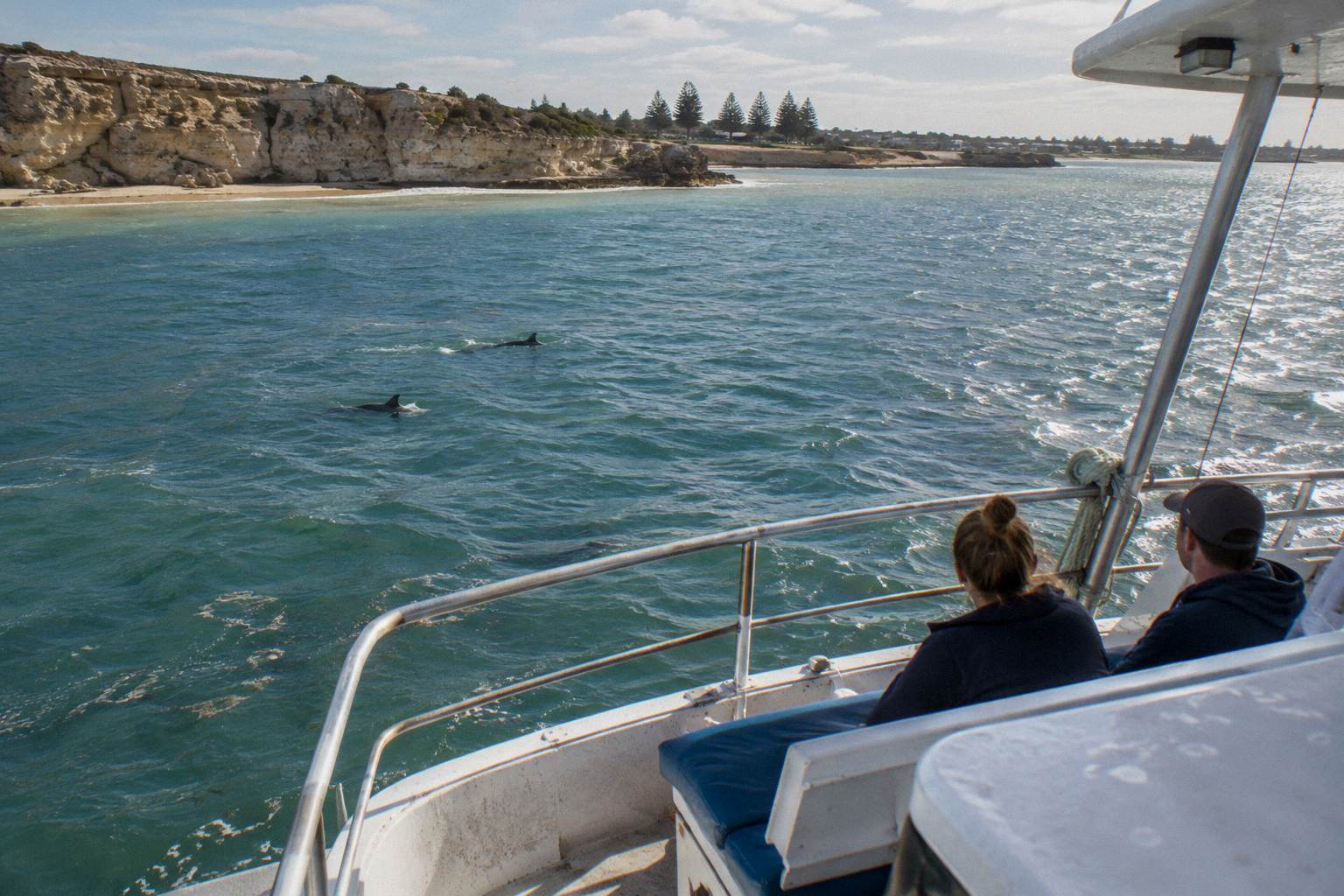
On Kangaroo Island, the honest range of outcomes is published up front. The 2-hour Snorkelling Safari may be dolphins only, seals only or a coastal snorkel, wetsuit, gloves, mask, snorkel and fins are provided, and a swimmer line with buoys is often used at the back of the vessel for the dolphin swim. Swimmers meet at the Kangaroo Island Information Stop, 43 Howard Drive, Penneshaw, 30 minutes before departure for fitting and a safety brief. The booking page adds a detail that belongs in any discussion of dolphin welfare and mood: the swim does not run when the pod has neonates. A group with newborn calves is left alone entirely. That single policy says more about how these operators read dolphin behaviour than any brochure adjective.
If A Dolphin Approaches You On Your Own
Outside a permitted tour, the rules flip: if a wild dolphin swims toward you while you are snorkelling or swimming, the legal duty to keep 30 m falls on you. Do not reach out, do not follow, and do not feed. The distance rules protect the animal from habituation and protect you from an animal that weighs, fully grown, somewhere around 120 to 160 kg and more than two metres long.
That size figure comes from the official South Australian page marking twenty years of the Adelaide Dolphin Sanctuary, and it is worth sitting with. Indo-Pacific bottlenose dolphins are not large whales, but they are massively stronger than a human in water, with a tail stock built for hard acceleration. Encounters are overwhelmingly calm, but calm is a product of the animals' own restraint, not of any guarantee. An animal that chooses to circle a swimmer at close range is choosing; the regulations and every responsible operator's design keep the human from ever forcing that choice.
The algal bloom episode of recent years is a reminder of how quickly conditions around these animals change. SA Health's current advice is that beaches can still be enjoyed, with the guidance to stay away from foamy or abnormally coloured water, rinse afterwards, and the simple rule that if the water is clear, it is fine to swim. The state's bloom monitoring page, at algalbloom.sa.gov.au, records zero or low Karenia along the metropolitan coast and Kangaroo Island, and agencies continue monitoring while remaining vigilant to the possibility of future blooms. Temptation's own FAQ carries an undated notice that the bloom may affect its Wild Dolphin Tour, especially the swim product, with the concentration assessed a week before the season starts and a full refund if the operator cancels.
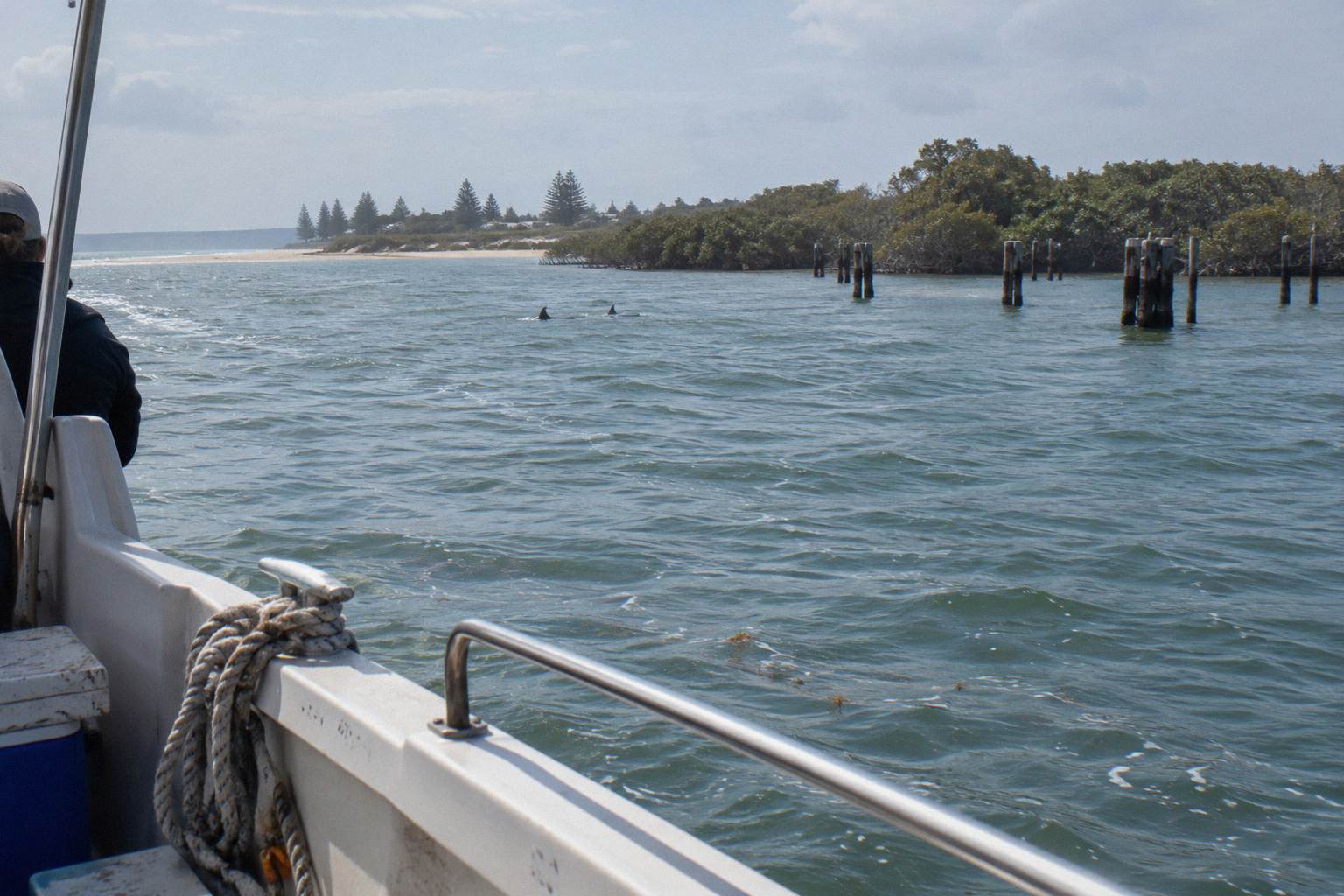
For swimmers who meet a dolphin outside a tour, and it happens along these coasts, this site has a dedicated piece on what to do if a dolphin swims up to you. The short version is the same principle the licensed tours are built on: let the animal set the distance.
Watching From The Boat Instead
If the honest uncertainty of a swim puts you off, a watch-only cruise removes the mood question almost entirely. Wild Dolphin Watch From Glenelg costs from USD 62 per person, rated 4.8 across 409 reviews, and the Port River Dolphin Cruise costs from USD 60, rated 4.5 across 481 reviews. Dolphins seen from a deck are the same wild animals, observed under the same vessel rules, with dry clothes and a railing.
The watch products deserve a place in this discussion because they reframe the question. A dolphin that passes a stationary boat is not performing friendliness for swimmers; it is simply there, and a deck full of watchers gets the encounter without the wetsuit. The Glenelg operator's sighting claim, a 100% success rate of seeing dolphins onboard since 2002 as an operator statement covering above-water sightings, is attached to the boat, not to the swim. A watcher on the same catamaran shares in that record.
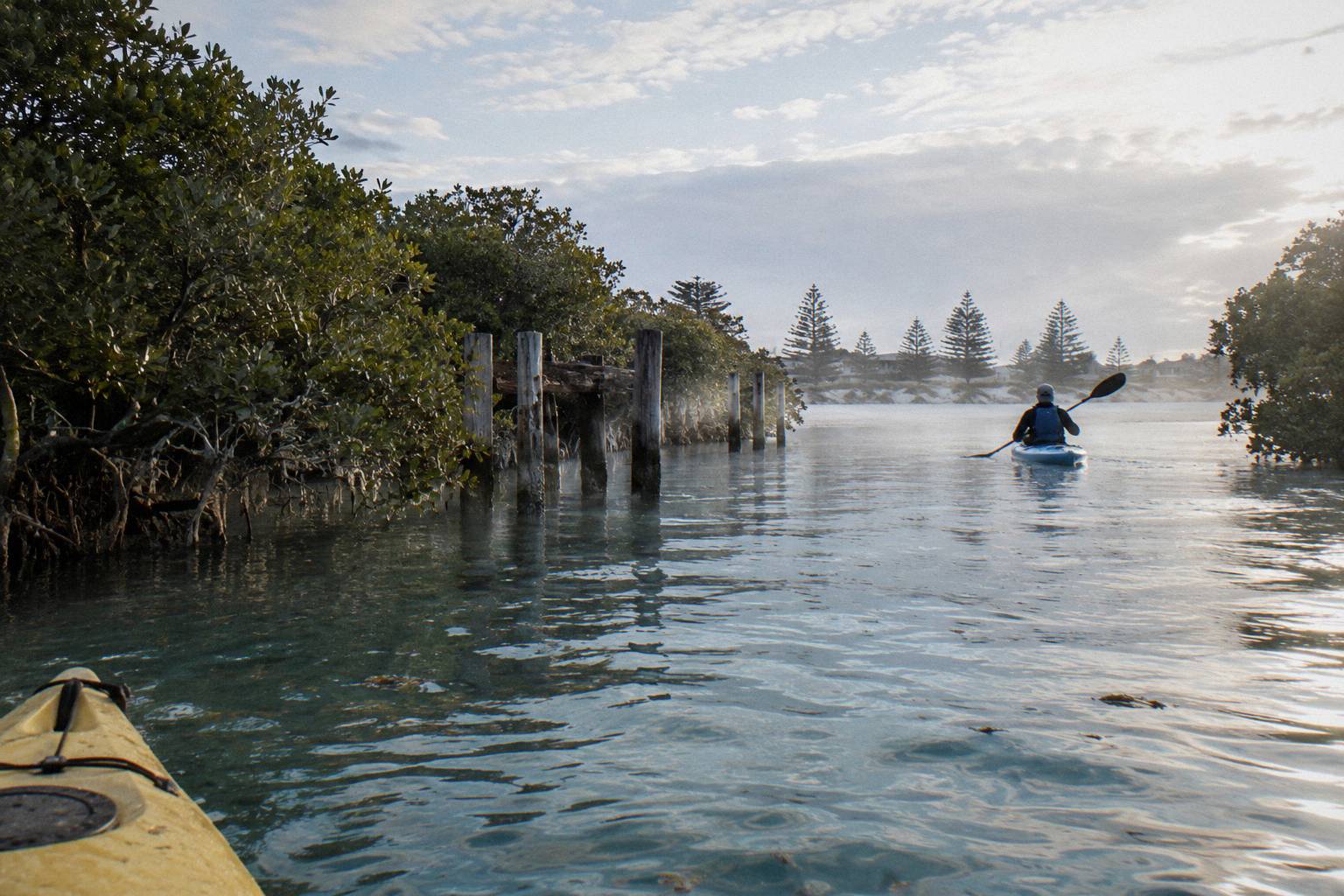
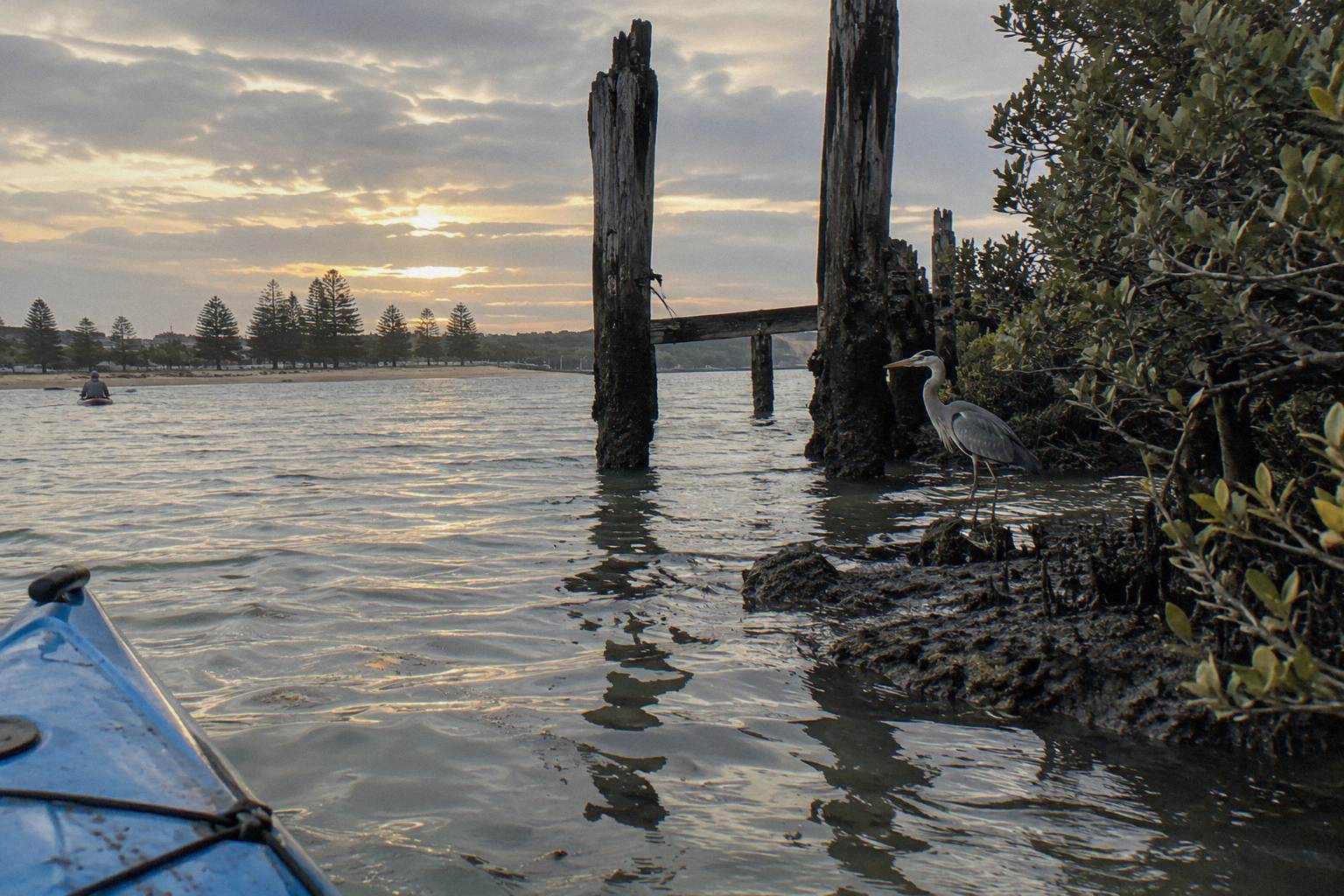
The Port River option is a different animal in a different place. The Adelaide Dolphin Sanctuary is the Port River and Barker Inlet estuary north of Port Adelaide, covering 118 sq km of water, mangroves, saltmarsh, tidal flats and tidal creeks, and its dolphins are Indo-Pacific bottlenose, many of them year-round residents with others transient through Gulf St Vincent. It is separate from the Glenelg swim area, and a sanctuary cruise is a slow wildlife drive past a resident population rather than an open-water pursuit.
| Tour | Format | Listed from | Rating and reviews | Cancellation |
|---|---|---|---|---|
| Wild Dolphin Swim From Glenelg With Temptation Sailing | Swim, flotation line | USD 104 | 4.7, 493 reviews | Free up to 24 hours |
| Kangaroo Island Ocean Safari Swim | Swim or coastal snorkel | USD 132 | 4.4, 137 reviews | Free up to 24 hours |
| Wild Dolphin Watch From Glenelg | Watch only | USD 62 | 4.8, 409 reviews | Free up to 24 hours |
| Port River Dolphin Cruise | Watch only | USD 60 | 4.5, 481 reviews | Free up to 24 hours |
There is also a middle path for the undecided. Swim and watch guests travel on the same Glenelg boat, booked together or separately, so a couple can split the decision without splitting the day, and a swimmer who loses nerve after the briefing can remain aboard as a watcher, with the fare difference refunded for bookings made direct with the operator.
So, Are They Friendly? An Honest Summary
Friendly is the wrong word, and interested is closer to the truth when the day goes well. Wild dolphins near Adelaide and Kangaroo Island are free animals that sometimes approach slow boats and the swimmers hanging behind them, and the operators' controls exist to let that choice remain the dolphins' own. The Glenelg operator's never-missed-a-day sighting record covers above-water views only, and Kangaroo Island promises nothing at all. Book the encounter, not the mood.
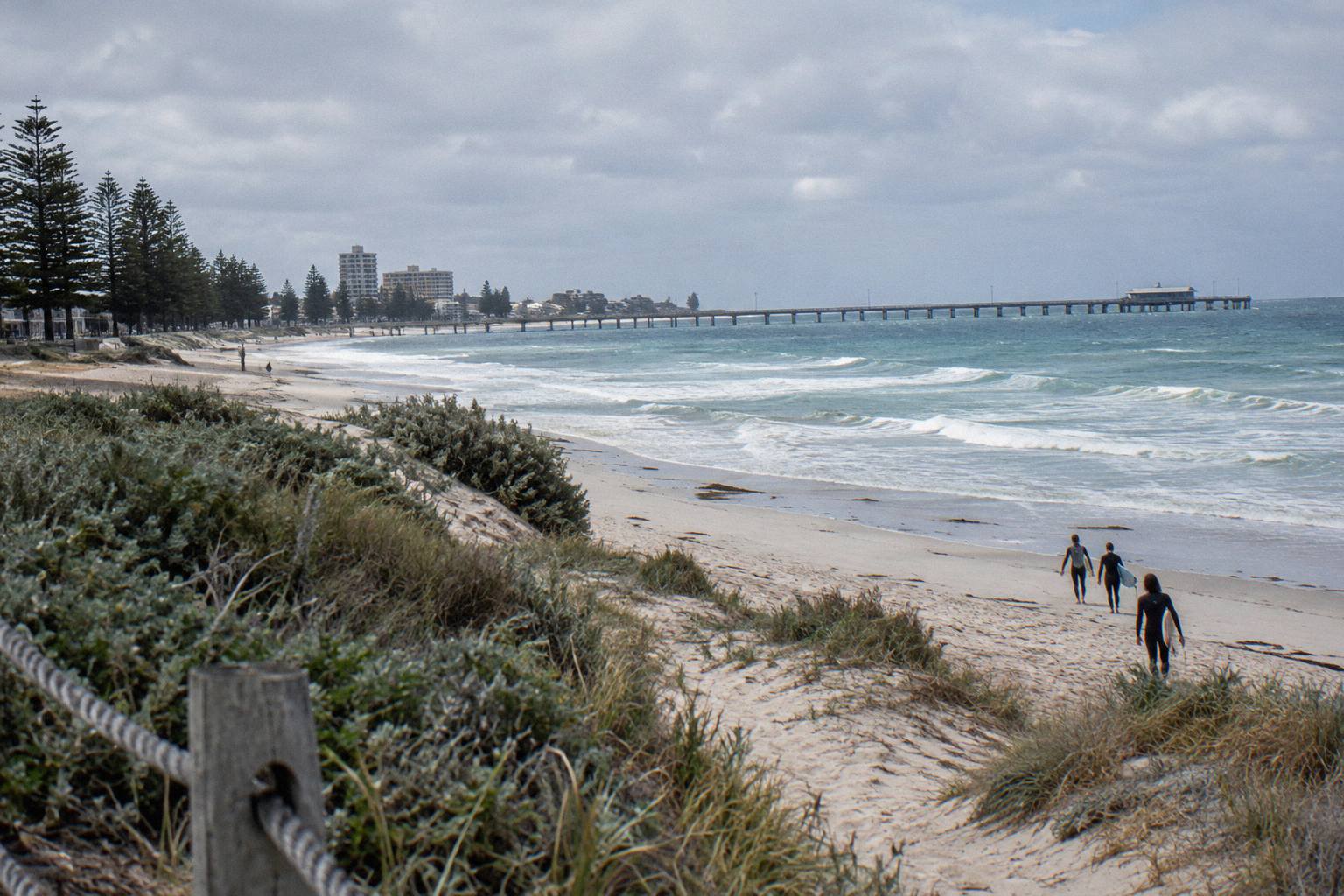
The distinction earns one more statement, because it is the difference between a satisfied customer and a disappointed one. Every element of a licensed South Australian dolphin swim, the 30 m swimmer rule, the 50 m vessel rule, the line behind the stern, the entry only on approach, the no-touching and no-feeding prohibitions, is built to make the encounter voluntary for the animal. When a wild dolphin then chooses to swim beside you for a minute or ten, you have been given something no theme park can sell. When it chooses not to, you have still spent a morning on the Gulf with marine biologist hosts on a 58 ft catamaran, which is not nothing. For first-timers, the practical preparation matters as much as expectations, and this site's guide to what happens on a wild dolphin swim cruise walks through the whole sequence from boarding to ladder.
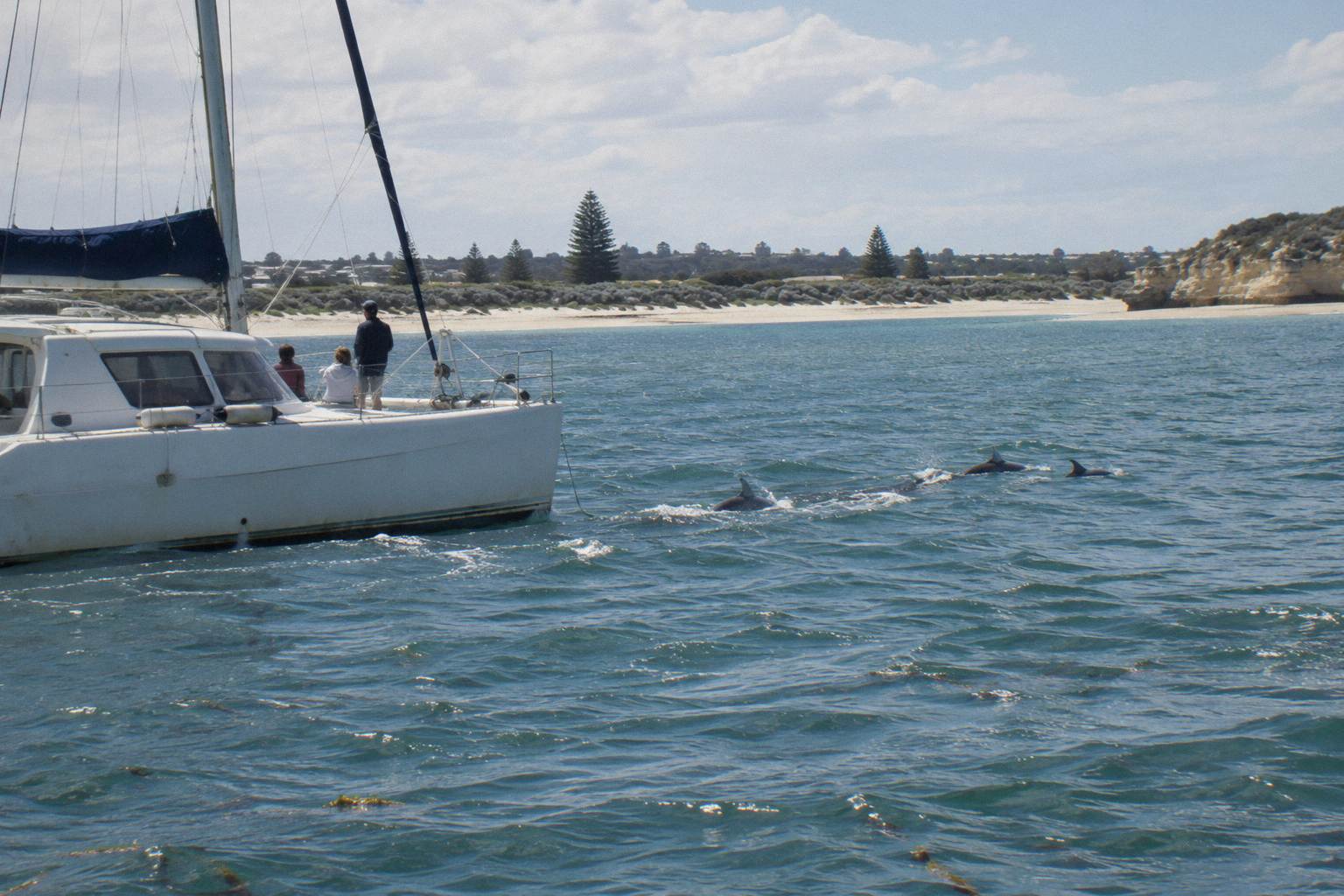
One more practical note before you book: the Glenelg season runs September to April, with May to August off. The water off Adelaide runs around 14 °C in August to around 21 °C in February, per seatemperature.org's generic Adelaide figures, and the supplied 5 mm wetsuit is the operator's own answer to the cold. Kangaroo Island's operator states water temperature between 14 and 15 degrees and says its thick wetsuits allow the swim year round. Neither figure is a comfort promise, they are equipment planning numbers, and the same honesty applies to them as to everything else in this article.
Whichever way you lean, swim or watch, Glenelg or Kangaroo Island, these three are the encounters worth comparing.
Common Questions About Wild Dolphins And Swimmers
Are Wild Dolphins Friendly Toward Swimmers?
Not in any way an operator can promise. The licensed operators describe controls rather than a mood: swimmers hold a flotation line, crews enter the water only once dolphins have turned toward the boat, and entries stop when the dolphins get too close. Sometimes the animals linger nearby; sometimes they pass at range.
Do Dolphins Come Close To Swimmers On A Tour?
They can, when they choose to. The design of a permitted swim puts the decision with the dolphins: the crew reads the pod's heading and only puts swimmers in when the animals turn toward the boat. Kangaroo Island's swim does not run at all when the pod has neonates.
Can You Touch Or Feed A Wild Dolphin During A Swim?
No. Feeding and touching are prohibited under the National Parks and Wildlife (Protected Animals - Marine Mammals) Regulations 2025, with an expiation fee of AUD 315 per alleged offence. Swimmers must stay at least 30 m from a marine mammal, and 150 m from a calf or a disturbed, sick, injured, stranded or entangled animal.
What Happens If No Dolphins Appear?
At Glenelg, the operator says it has never had a day without above-water dolphin sightings and offers, for bookings made direct with the operator, a free return within one year or a 50% refund for interstate or overseas guests. Kangaroo Island's operator states plainly that wildlife interactions are not guaranteed and that no refund follows once you have entered the water.
Is It Safer To Watch From The Boat Instead?
Watching removes the cold water, the line and the ladder entirely, and the same dolphins pass the same boat. Wild Dolphin Watch From Glenelg is listed from USD 62 per person, rated 4.8 across 409 reviews, and a nervous swimmer can stay aboard as a watcher after the briefing.
Are The Dolphins Near Adelaide The Same Ones At Kangaroo Island?
They are the same species in the main, Indo-Pacific bottlenose dolphins, but different populations. The Glenelg operator says it watches Indo-Pacific bottlenose and short-beaked common dolphins, while Kangaroo Island's operator says dolphins are present in its waters year round.