Do Dolphins Bite Swimmers? What The Rules And Operators Say In Adelaide
No operator page for Adelaide's dolphin swim tours documents a bite or an injury. Here is what is actually stated: the law, the controlled swim format, and the questions to ask before booking.
Do Dolphins Bite Swimmers?
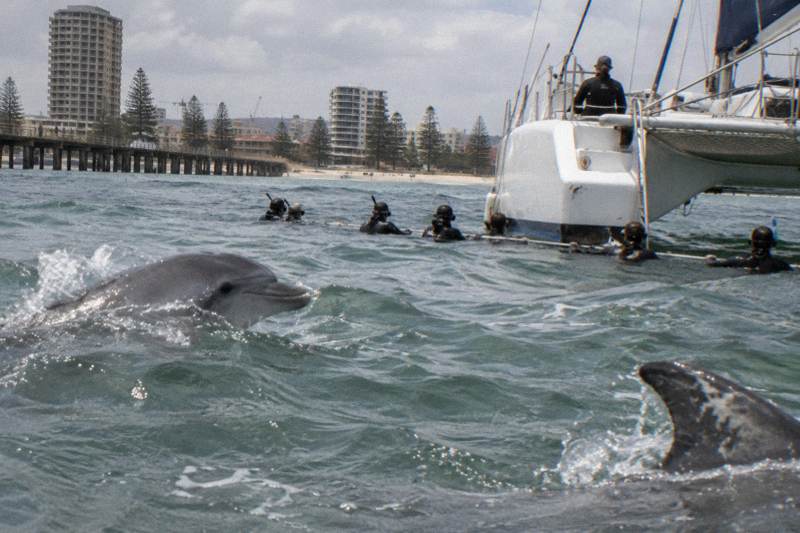
No bite, injury, or incident of any kind appears in any page read for Adelaide's dolphin swim or watch tours, and no operator, regulator, or booking listing for these products states such a count, so no dolphin bite on a swimmer is documented in anything reviewed for these tours. What is stated, plainly and repeatedly, is everything that makes the question smaller than it looks. South Australian law bans touching and feeding marine mammals, sets a 30-metre minimum distance for swimmers, and fines breaches. Operators run controlled swims on a flotation line behind a slow boat, and crews decide when swimmers go in and when they come out. If the worry behind the search is teeth, the stated reality is distance.
The question usually arrives from a nervous swimmer, or from the parent of one, in the week before a booking window opens. It deserves a careful answer rather than a reassuring one, because reassurance that is not backed by a printed source is worthless. This article sticks to three sources only: the South Australian marine mammal regulations, the operators' own published pages for the Glenelg and Kangaroo Island swims, and the tour listings themselves. Where a source says nothing, this article says so once and moves on.
One framing point before anything else. Sharks and dolphins are different animals with different pages of the rulebook, and this article keeps them separate. Shark shields appear on both swim boats discussed here, and they relate to sharks; no operator statement links them to dolphin behaviour, and none is implied here. For the shark side of the question in depth, see whether the water and its animals make a wild dolphin swim safe.
What South Australian Law Says About Getting Close
The National Parks and Wildlife (Protected Animals, Marine Mammals) Regulations 2025, in operation since 1 September 2025, prohibit touching and feeding marine mammals and set swimmer distances: never closer than 30 metres to a marine mammal, never closer than 150 metres to one that is a calf, disturbed, sick, injured, stranded or entangled, and no more than 30 minutes within 150 metres of a non-whale. The expiation fee is AUD 315 per alleged offence. Feeding and touching are prohibited outright. Snorkelling counts as swimming under the regulations, so a swimmer holding a line in a wetsuit is fully inside these distances.
The legal text is public and worth reading directly: the full regulations are published as a PDF on legislation.sa.gov.au. Two provisions matter to this question. First, regulation 19(1): a person must not, for fee or reward, use a vessel or other means to take another person into the vicinity of a marine mammal to observe it or swim near it, unless they hold a Ministerial permit or other lawful authority. A fee-based dolphin swim in this state is lawful only under a permit. Second, the swimmer distances above, which exist precisely so that a wild animal keeps control of its own space.
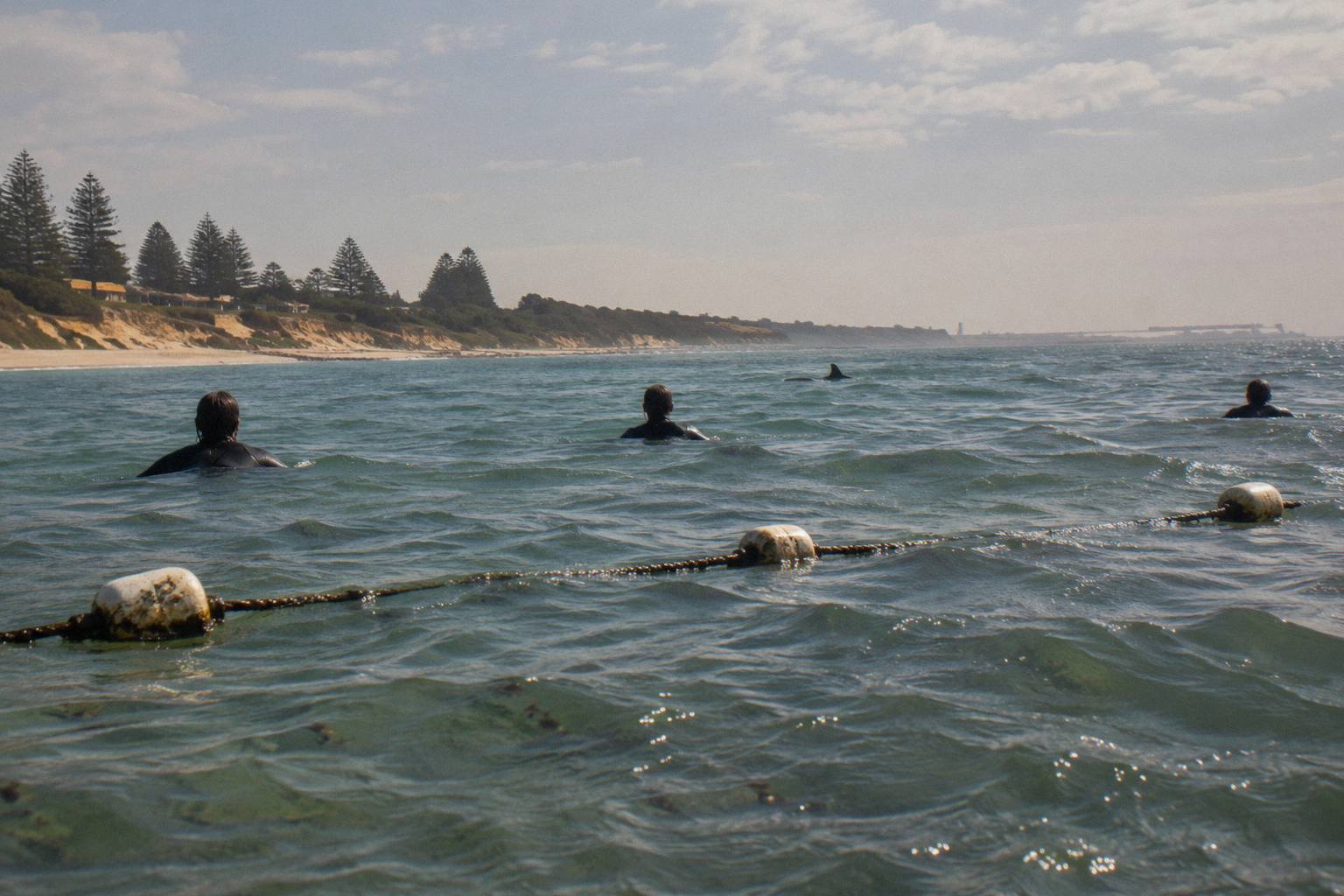
What the law does not publish is just as relevant. A public register of permits, and any permit conditions such as swimmer numbers or time in the water, were not found anywhere official. No article, including this one, can tell you what a permit requires an operator to do, because that is not stated. If a booking page or a review claims to know the permit conditions, treat the claim as invented.
| Rule in the 2025 regulations | What it means for a swimmer |
|---|---|
| No touching, no feeding | Your hands stay on the flotation line, never on an animal |
| 30 m minimum swimmer distance to a marine mammal | The dolphins choose to approach; you never swim onto them |
| 150 m from calves or disturbed, sick, injured, stranded or entangled animals | Protected classes get far more room, and crews avoid them |
| No more than 30 minutes within 150 m of a non-whale | A cap on any single encounter, in law rather than in a brochure |
| AUD 315 expiation fee per alleged offence | The cost of breaching the distance and contact rules |
Notice what the table does not contain: a rule about bites. The law regulates people, not dolphins. It assumes the animals are wild, sets human behaviour accordingly, and leaves the animal's own conduct to the animal. That is the honest legal answer to the bite question: the state's framework is built on respect for a wild mammal's space, not on any expectation of contact.
How The Operators Keep The Swim Controlled
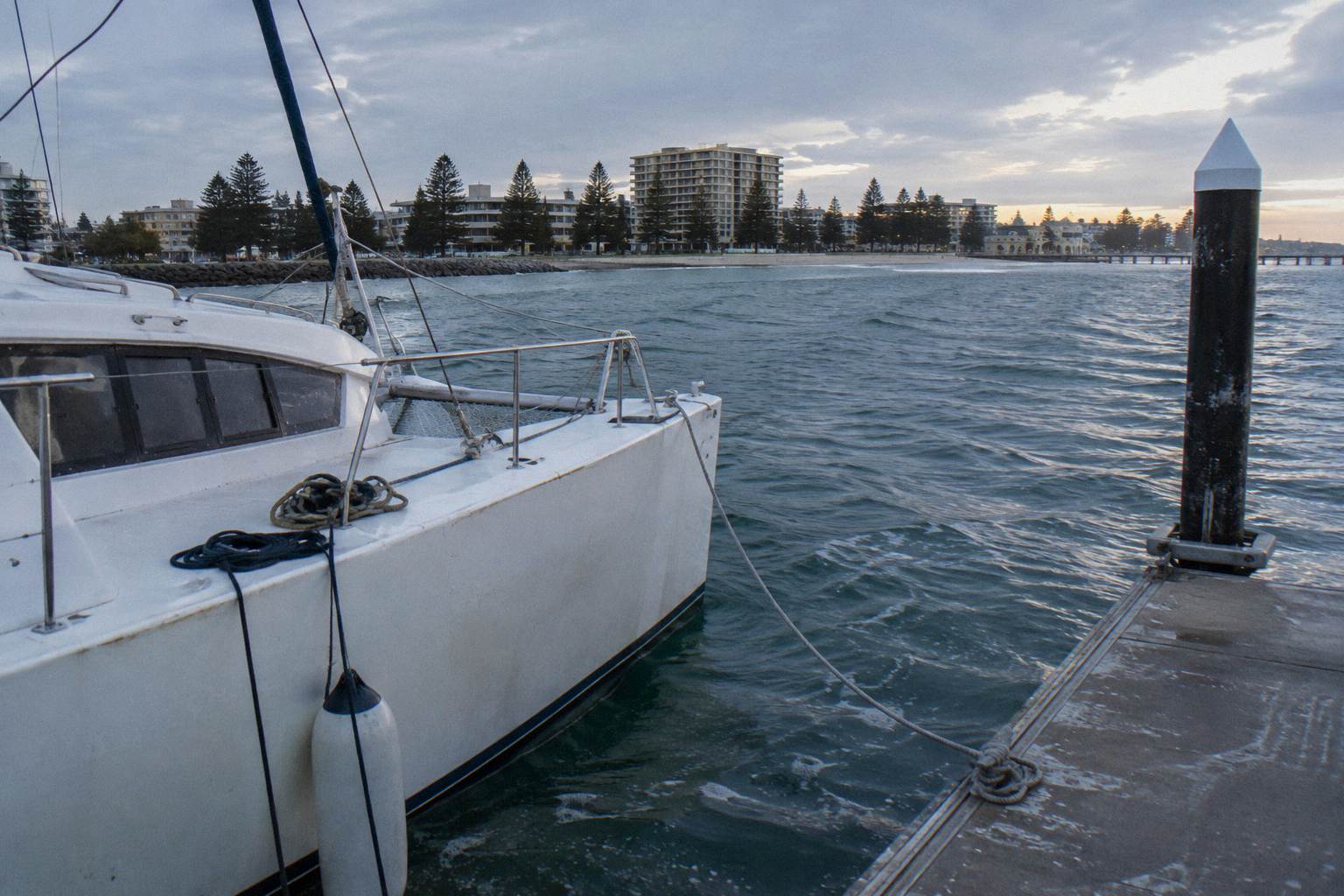
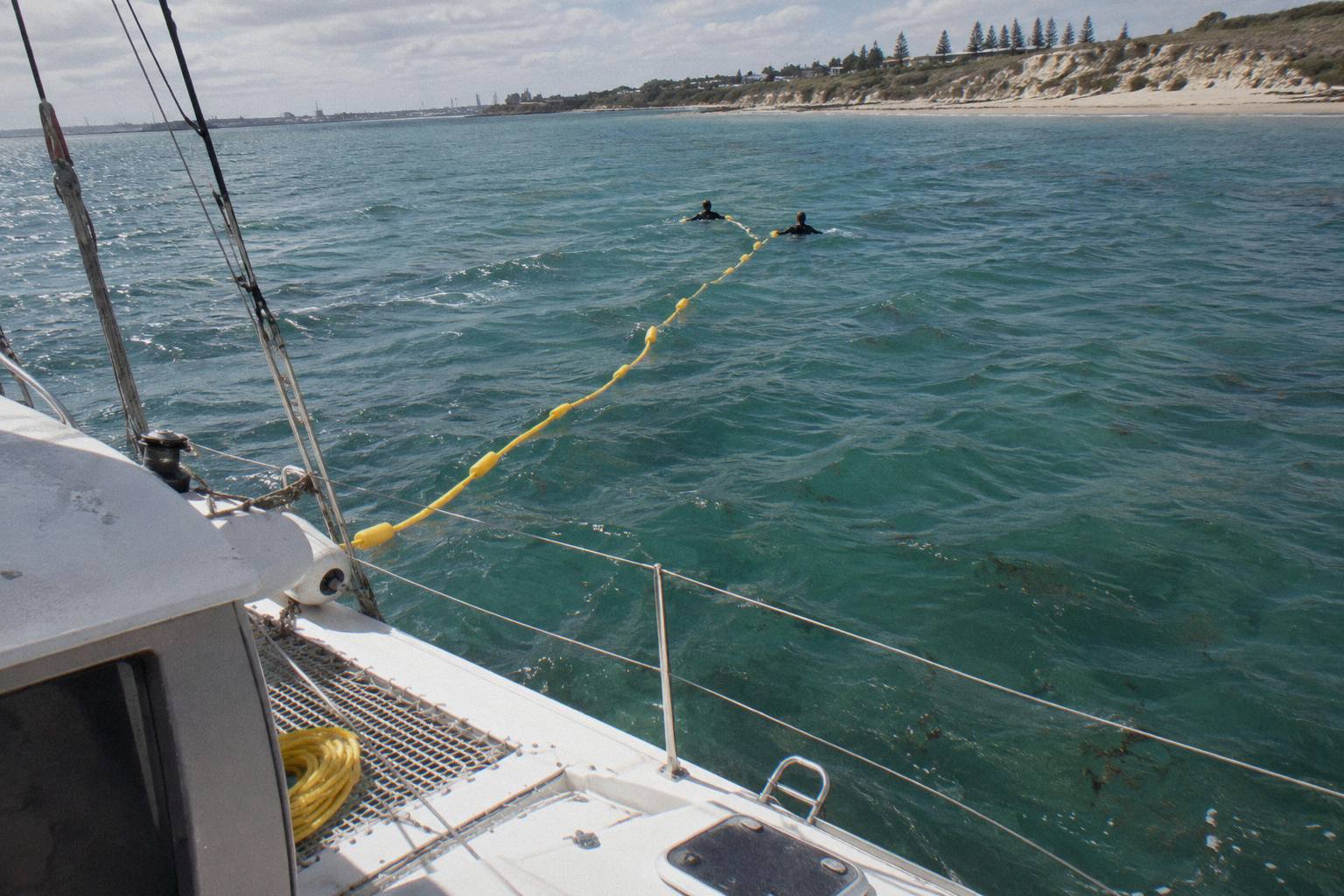
Both swim operators on this site's roster describe a controlled format: swimmers hold a flotation line or swimmer line connected to the boat while it moves slowly, gear and briefings are provided, and the crew, not the swimmer, decides when entries happen. The Wild Dolphin Swim From Glenelg With Temptation Sailing, rated 4.7 across 493 reviews and from USD 104 per person, gives each swimmer a full-length 5 mm wetsuit the operator says also works as a flotation device, runs a crew briefing of about 15 minutes, and rotates swimmers between two experiences called the Front Swim and the Back Swim. Every swimmer holds a line connected to the stern. The operator's own words describe a fully controlled swim, not free swimming in open ocean.
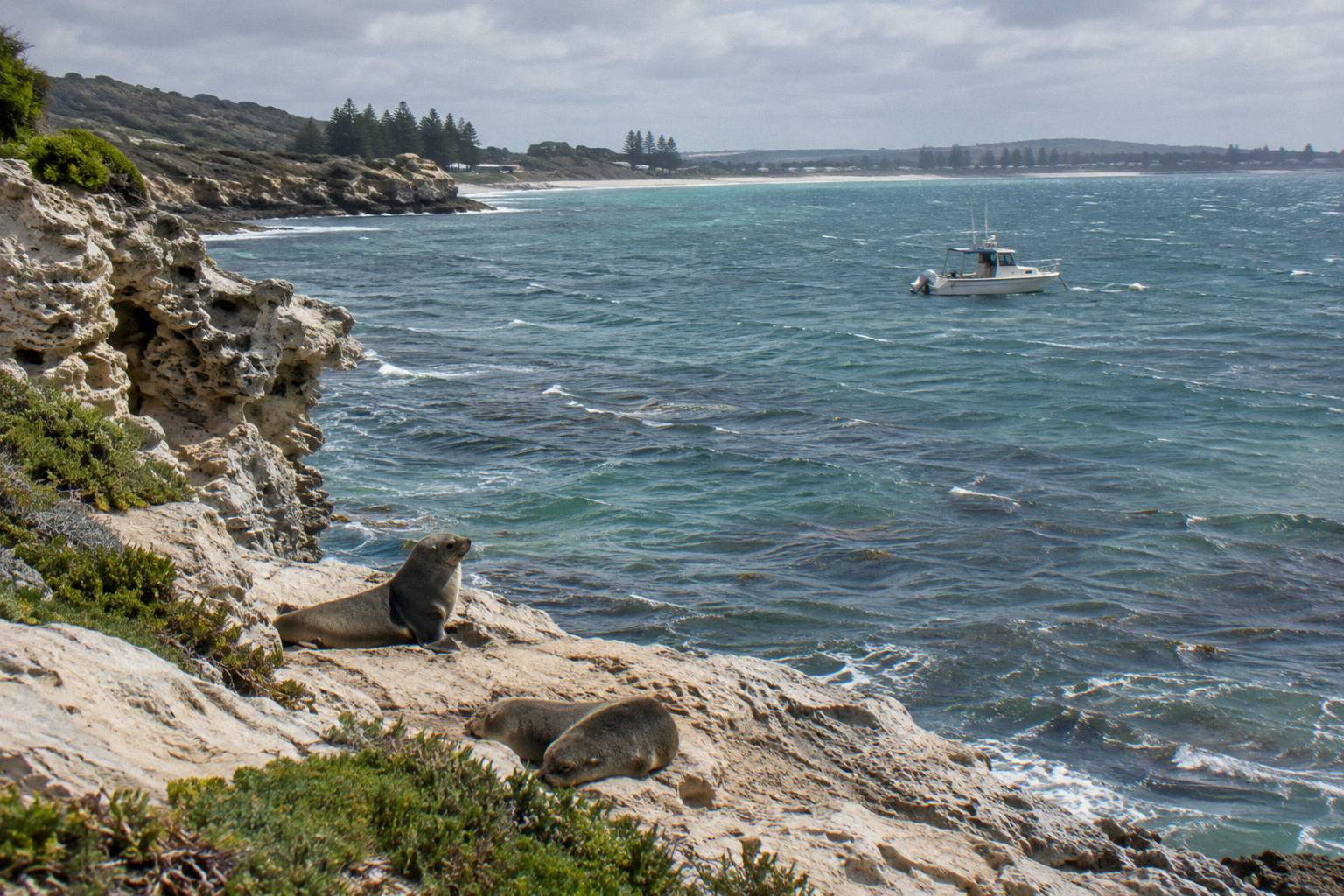
The detail that answers the bite question most directly is entry timing. The Glenelg operator states that the crew puts swimmers in the water only once dolphins have turned toward the boat, and stops entries when dolphins get too close. Read that twice: the animals' approach governs the swim, and the default response to a close dolphin is to keep people out of the water, not to put them closer. That is the opposite of the scenario a nervous swimmer imagines, in which people chase animals.
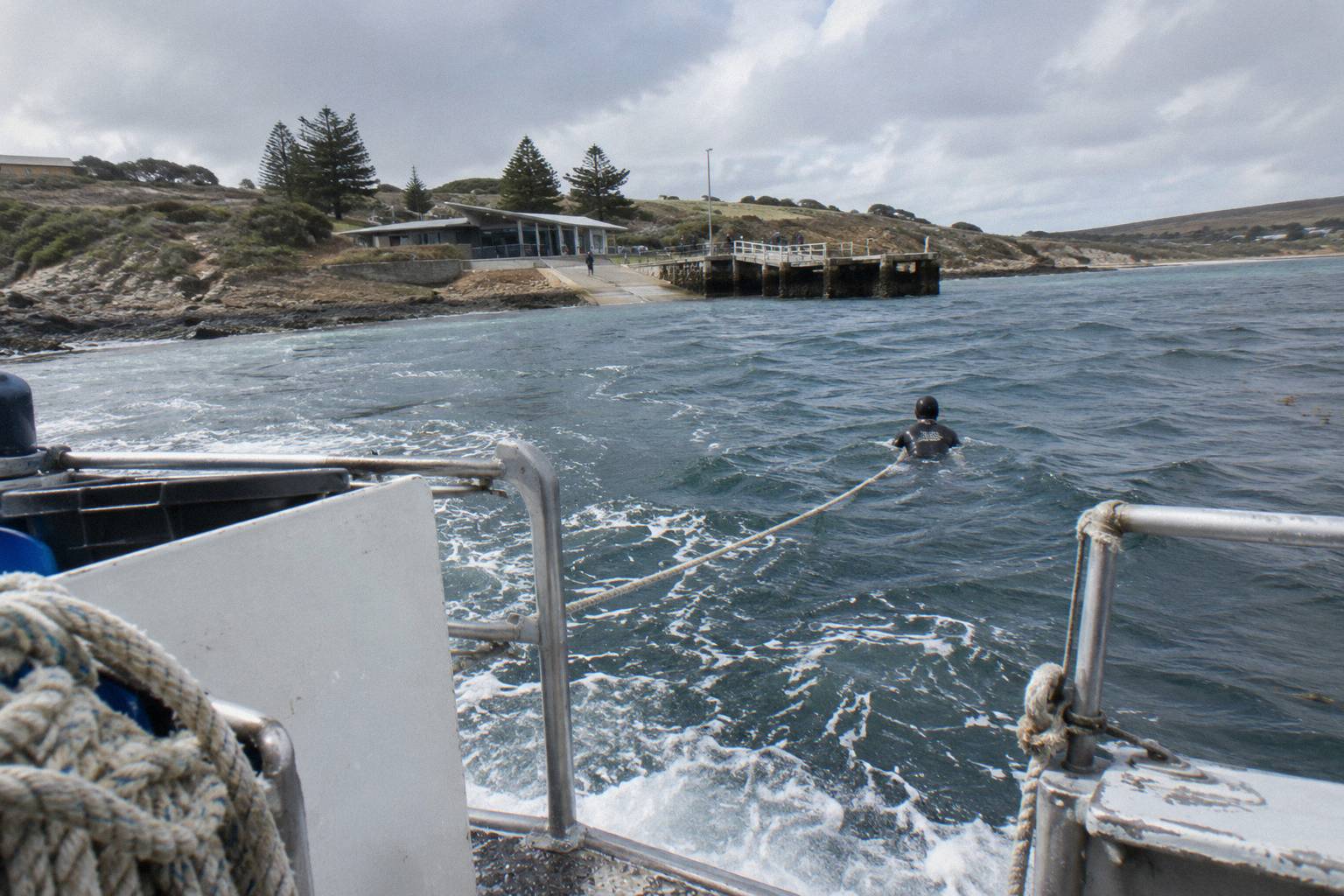
At Kangaroo Island, the format is similar in kind. The Kangaroo Island Ocean Safari Swim, rated 4.4 across 137 reviews and from USD 132 per person, is a 2-hour Snorkelling Safari in which the operator says a swimmer line with buoys is often used at the back of the vessel for the dolphin swim. Wetsuit, gloves, mask, snorkel and fins are provided, vessels are described as 28-seaters, and the operator recommends reasonable swimming ability because holding the line needs upper body strength and the ladder exit needs lower body strength. The booking page adds that the swim does not run when the pod has neonates, newborn calves, which mirrors the 150-metre calf rule in the regulations.
None of this describes the animals' temperament, and this article will not. Whether wild dolphins are friendly, indifferent or inquisitive toward swimmers is a behavioural claim no page in this site's research states, and it is covered more carefully in whether wild dolphins are friendly toward swimmers. What the operators do state is structure: a line, a briefing, a rotation, a crew watching the animals, and a boat that moves slowly. For anyone weighing whether their swimming ability is up to it, the guide for non-swimmers and weak swimmers works through the same stated facts.
If the structure sounds right but the open water does not, the featured swim is worth a look beside its watch-only sibling: the Wild Dolphin Swim From Glenelg puts swimmers on the line behind the boat, and check availability shows the live listing's current dates.
Shark Shields Relate To Sharks, Not Dolphins
Both swim operators run shark shields on their boats, and both describe them as shark measures: the Glenelg operator runs two shields during the back swim and none on the front swim, while the Kangaroo Island operator fits shields fore and aft. No operator statement connects the shields to dolphin behaviour. A reader who has seen "shark shields" on a FAQ page and wondered whether it implies something about dolphin teeth is reading the wrong clause: the shields exist for a different animal, and the operators say nothing more about them than where they are mounted.
This separation matters because search results blur it. A page about whether dolphins bite does not become a page about sharks, and vice versa. The Glenelg operator's pacemaker restriction for the back swim is tied to the shields' electronics, which is the one place a shield crosses into booking practicalities: pacemaker wearers should ask the operator before booking. Beyond that, the shields are a fact about the boat, listed in the same breath as wetsuits and ladders.
The deeper shark discussion, including what the state's monitoring currently shows about the water itself, lives in the site's dedicated guide, Adelaide dolphin swim safety: sharks, seals and the water. This article's job is narrower: nothing about a shark shield, on either boat, is a statement about dolphins and people.
Watching-Only Tours: Dolphins Without Getting In
Four tours on this site's roster put people near dolphins with nobody in the water at all: a watch cruise from Glenelg, a Port River cruise, a sanctuary kayak paddle and a Kangaroo Island fast boat, from USD 54.72 to USD 62 per person at the low end. For a swimmer whose real question is "do I have to share the water with a wild mammal to see one", the answer is no. Watching and paddling are different products from swimming, and no swim claim is made for any of the four.
| Tour | Format | Rating and reviews | From, per person | Key stated terms |
|---|---|---|---|---|
| Wild Dolphin Watch From Glenelg | Watching only, about 3.5 hours listed | 4.8 across 409 reviews | USD 62 | Free cancellation 24 hours |
| Port River Dolphin Cruise | Watching only, 1.5 hours | 4.5 across 481 reviews | USD 60 | Free cancellation 24 hours |
| Dolphin Sanctuary Kayak Tour | Paddling only | 4.8 across 300 reviews | USD 54.72 | Min age 8, free cancellation 24 hours |
| Kangaroo Island Dolphin Watch | Watching only, about 1 hour 15 minutes | 4.8 across 640 reviews | USD 61.74 | Non-refundable per its booking page |
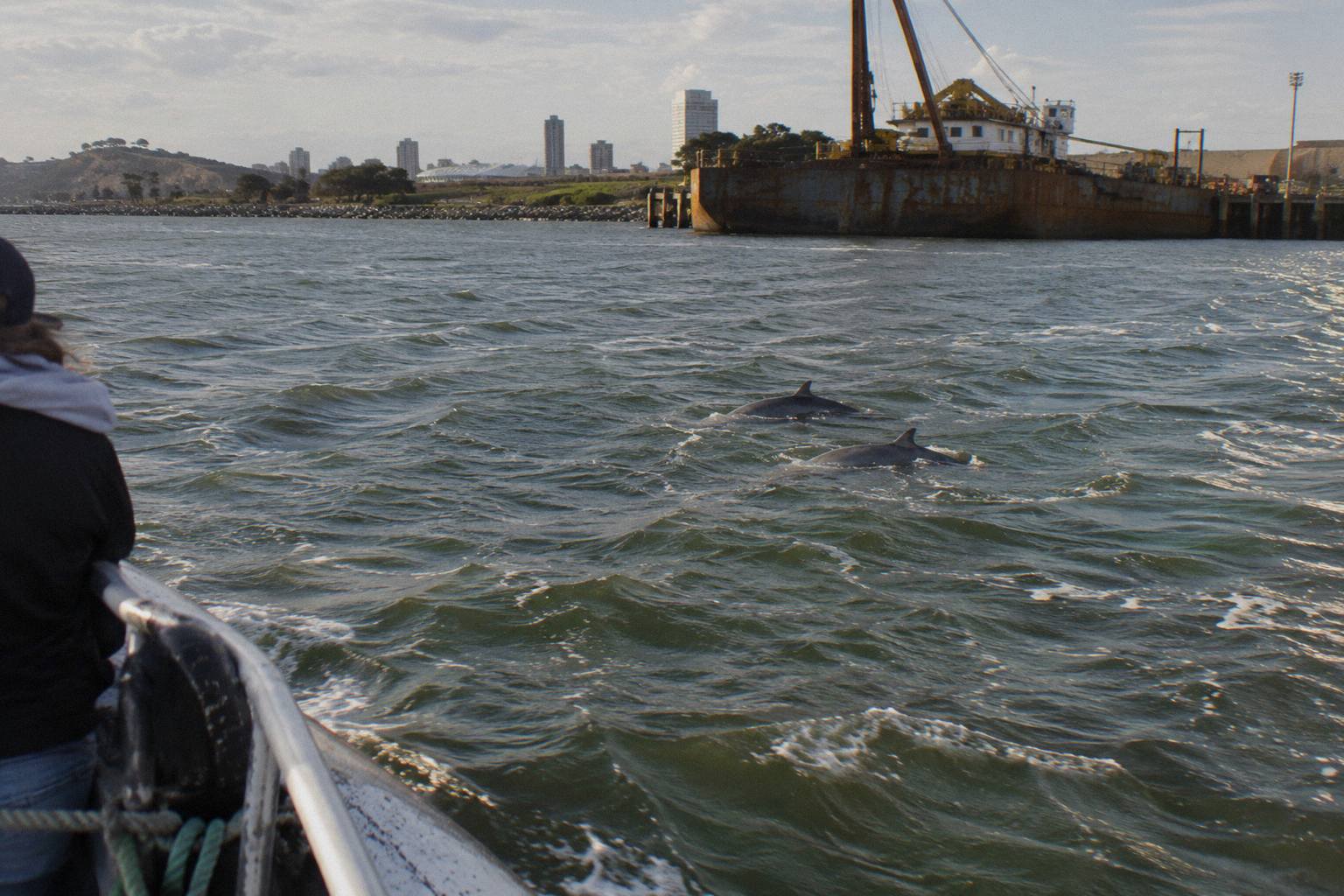
Two honest notes on that table. The Glenelg watch tour's booking-page title carries the word "Guaranteed"; that is the tour page's own wording and never a promise of this site, and it belongs to that tour alone. For the other three, no inclusions, gear, vessel type, group size, pickup, commentary or meal is stated. The kayak tour is the closest to the water anyone can get on this roster without swimming: paddling in the Adelaide Dolphin Sanctuary, the 118-square-kilometre Port River and Barker Inlet estuary that the state describes as home to Indo-Pacific bottlenose dolphins, many of them year-round residents. Whether swimming is allowed in the sanctuary itself is its own question, answered in can you swim in the Adelaide Dolphin Sanctuary.
The watching option also solves the family version of the bite worry. A child under 9, a nervous swimmer, or a grandparent can ride the same Glenelg boat as the swimmers on a watch ticket, booked together or separately. The question "do dolphins bite" often dissolves once everyone in the group can choose their own distance from the water.
Questions To Ask Before You Book A Swim
Before you pay anything, ask the operator five questions: what the swim format actually is, who decides whether you enter the water, what happens if you change your mind once you are on the boat, what the sighting terms are, and what the cancellation window is. These five answers tell you what you are really booking before any money changes hands. Every one of them has a stated answer in the operators' published pages, which means an operator who will not answer them plainly is telling you something. This checklist turns an anxious Google search into a concrete pre-booking conversation.
| Question to ask | What a good answer looks like, based on stated operator terms |
|---|---|
| How does the swim work? | A flotation or swimmer line behind a slow boat, briefed crew, provided wetsuit and mask |
| Who decides when we get in? | The crew, based on the dolphins' behaviour toward the boat |
| What if I lose my nerve after the briefing? | The Glenelg operator lets a swimmer stay aboard as a watcher, with the swim-watch difference refunded for bookings made direct with the operator |
| What if we see nothing? | Stated terms vary sharply between operators; the Kangaroo Island operator gives no refund once you have entered the water |
| What is the cancellation window? | Both swim listings show free cancellation 24 hours before; the operators' own terms are stricter in the final week |
The sighting question deserves special attention, because it is where the two swim operators differ most. The Glenelg operator says it has never had a day without seeing dolphins from above the water, and its tour page states a "100% success rate of seeing dolphins onboard since 2002", an operator claim about above-water sightings only. Its return and refund offers apply for bookings made direct with the operator. The Kangaroo Island operator says the opposite in structure: wildlife interactions are not guaranteed, and if you get in the water at any stage, no refund. Neither statement is about bites, but both tell you how each operator handles an encounter that falls short, which is a reasonable proxy for how it handles everything else.
Medical and mobility questions belong in the same conversation. The Glenelg swim lists a minimum age of 9 and requires swimmers to hold the line while towed slowly and climb three ladder rungs. The Kangaroo Island swim shares the age 9 minimum and states it is not suitable with a pacemaker or pregnancy. Fitness, medical and age questions are worked through at length in fitness and medical conditions for a dolphin swim and dolphin swim age limits and kids.
What A Nervous Swimmer Should Actually Take Away
Take away the structure, not a promise: no touching and no feeding in law, 30 metres of swimmer distance, a line to hold, a crew that gates every entry on the dolphins' own behaviour, and watching-only alternatives from USD 54.72 for anyone who would rather not find out. The bite question has no documented answer for these specific tours, because no operator or authority publishes one. The rules and formats that are published all point the same way: keep distance, keep control, and let a wild mammal be wild.
The state's own context supports the calm reading of the water more broadly. SA testing shows zero or low Karenia along the metropolitan coast and Kangaroo Island, and the official health advice is plain: "If the water is clear, it's fine to swim", with a standing note to avoid foamy or abnormally coloured water and rinse afterwards. Still, check the operator before booking a swim; the Glenelg operator's FAQ carries an undated notice that the bloom may affect its tours. The species themselves are not a mystery either: a fully grown bottlenose dolphin can be around 120 to 160 kg and more than 2 metres long, per the state's twenty-facts page for the sanctuary's twentieth year. An animal that size is not a pet, and no part of a lawful swim treats it as one.
If the decision now feels less about teeth and more about which format suits, the site's comparison of swimming with dolphins on Kangaroo Island or from Glenelg lays out the two swim products side by side, and how far ahead to book a dolphin swim covers timing. The Adelaide Swimming With Dolphins guide library exists for exactly this kind of question: verifiable, sourced answers where a brochure would simply say yes.
Common Questions About Dolphin Bites And Swimmers
Do Dolphins Bite Swimmers?
No page for the Adelaide or Kangaroo Island tours on this site's roster documents a bite or an injury; that information is not stated anywhere official. The stated framework is distance and control: no touching, no feeding, a 30-metre swimmer minimum, and crew-gated entries on a flotation line.
Can You Touch Wild Dolphins During A Swim?
No. Touching and feeding marine mammals are prohibited under the South Australian marine mammal regulations, and the expiation fee is AUD 315 per alleged offence. Swimmers hold a flotation line connected to the boat, not the animals.
How Close Can You Swim To A Dolphin Legally?
Under regulations in operation since 1 September 2025, swimmers must stay at least 30 m from a marine mammal and at least 150 m from a calf or any dolphin showing disturbance, sickness, injury, stranding or entanglement, with no more than 30 minutes within 150 m of a non-whale.
Do The Boats' Shark Shields Protect Swimmers From Dolphins?
No statement links shark shields to dolphin behaviour. The Glenelg operator runs two shields during the back swim and none on the front swim; the Kangaroo Island operator fits shields fore and aft. Both describe them as measures relating to sharks.
What If I Get Nervous And Do Not Want To Get In The Water?
The Glenelg operator says a swimmer who is not confident after the briefing may stay aboard as a watcher, with the swim-minus-watch difference refunded for bookings made direct with the operator. Reseller terms can differ, so check the live listing before booking.
Can I See Dolphins Without Swimming At All?
Yes. Watching-only tours from this roster start at USD 60 per person for the Port River Dolphin Cruise, and the Dolphin Sanctuary Kayak Tour offers paddling from USD 54.72. Nobody enters the water on any of the four watch or paddle options.