What Does It Mean If A Dolphin Circles You In The Water?
A straight answer to what a circling dolphin means, what the South Australian distance rules require of swimmers, and who decides when you get in and out of the water on a swim tour.
There is no stated answer: no page read for this article, official or operator-run, says what it means when a dolphin circles a swimmer, and none claims to read a wild dolphin's intent. The sources instead cover what surrounds that moment, from legal distances in the water to crew decisions and the questions worth asking before you get in.
That is an honest starting point rather than a dodge. Plenty of online content assigns meanings to dolphin movements, curious, playful, aggressive, protective, but none of the official South Australian pages or the two operators' own pages reviewed for this site make any such claim. The Adelaide Dolphin Sanctuary material published by the South Australian government describes Indo-Pacific bottlenose dolphins as wild residents of the Port River and Barker Inlet estuary, some year-round, some transient, and stops well short of decoding individual behaviour. A fully grown bottlenose can be around 120 to 160 kg and more than 2 m long, which is a good practical reason to care about process rather than interpretation.
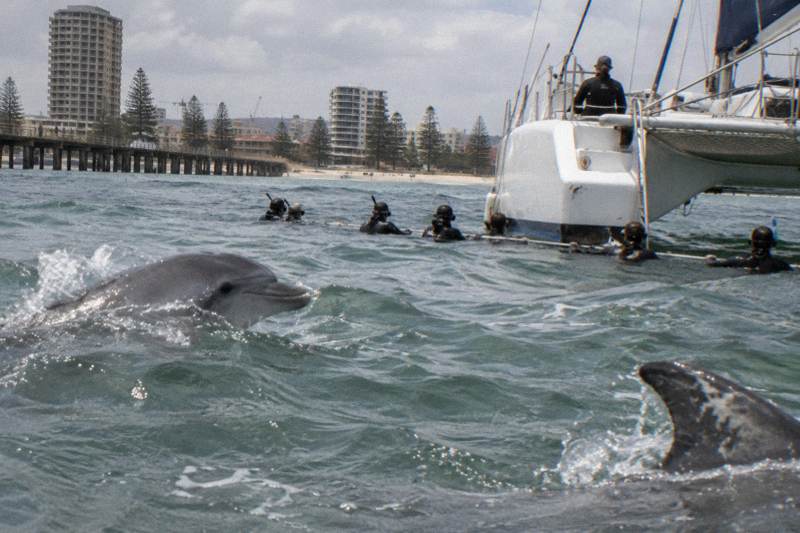
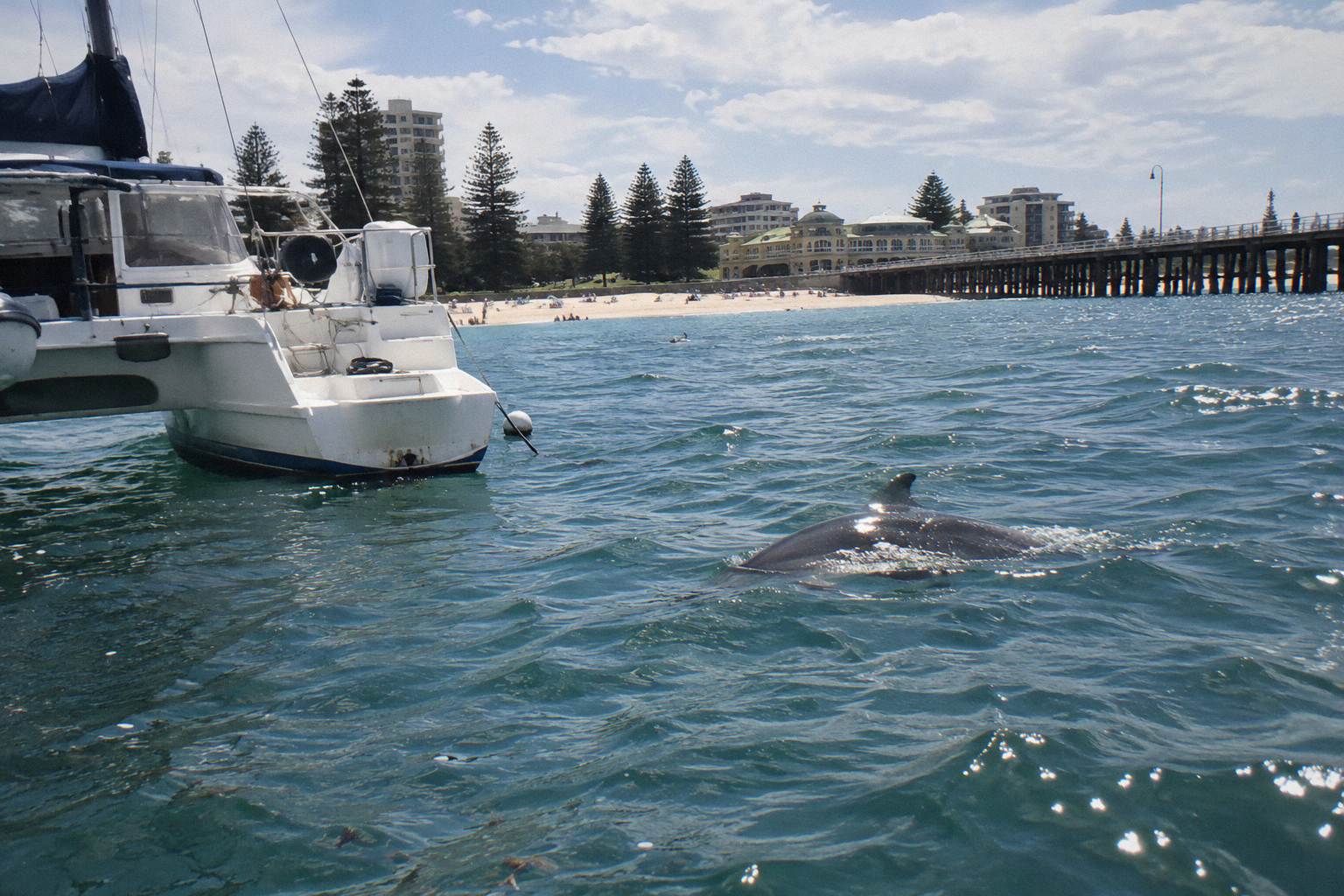
What you can control is the situation you are in if a dolphin comes near. On a permitted swim tour you are never free swimming in open ocean hoping for the best. At Glenelg, the operator states that every swimmer holds a flotation line connected to the stern while the boat moves slowly, and that the crew puts swimmers in only once dolphins have turned toward the boat, stopping entries when dolphins get too close. On Kangaroo Island the operator describes a swimmer line with buoys used at the back of the vessel. In both cases the people running the trip are watching the animals the whole time, and their judgment, not yours, governs the water.
If you are weighing whether a swim is right for you at all, the wider picture is covered in the guide to what actually happens on a wild dolphin swim cruise, and the question of behaviour and safety more broadly in whether wild dolphins are friendly toward swimmers. This page stays on the circling question and the rules that frame it.
How Close Are You Legally Allowed To Be?
In South Australia, the law sets the distances: swimmers and snorkellers must keep at least 30 m from any marine mammal, and at least 150 m from one that is disturbed, sick or injured, stranded or entangled, or a calf or pup. Touching and feeding are banned outright, and you may not stay within 150 m of a non-whale marine mammal for more than 30 minutes.
These figures come from the National Parks and Wildlife (Protected Animals, Marine Mammals) Regulations 2025, in operation since 1 September 2025, published in full at the official South Australian legislation text. Snorkelling counts as swimming under these rules, so a guest on a swim tour is a swimmer in the regulatory sense the moment they enter the water.
| Rule | Applies to | Distance or limit |
|---|---|---|
| General swimmer distance | Swimmers and snorkellers | At least 30 m from a marine mammal |
| Protected situations | Swimmers and snorkellers | At least 150 m from a calf or pup, or a dolphin showing disturbance, sick, injured, stranded or entangled |
| Time limit | Swimmers and snorkellers | No more than 30 minutes within 150 m of a non-whale marine mammal |
| Vessel distance | Boats | At least 50 m from a non-whale marine mammal, or 150 m with a calf or disturbance |
| Speed | Vessels | 4 knots within 150 m |
| Contact and food | Everyone | Touching and feeding prohibited |
Two practical points follow from that table. First, the calf rule is the one most likely to matter on a real trip: dolphin mothers with young are a defined case in the regulations, and it is one reason a crew will hold swimmers back regardless of how approachable an animal looks. Second, the 30-minute rule is a swimmer regulation, not a tour schedule; no official source states any permit condition on swimmer numbers or time in the water, and none is invented here.
The same regulations explain why fee-based dolphin swims exist at all. A person must not, for fee or reward, use a vessel to take another person near a marine mammal to observe it or swim near it, unless they hold a Ministerial permit or other lawful authority. Temptation states on its own tour pages that it was the first vessel in South Australia given a licence to swim with dolphins and that it has run swim and watch tours from Glenelg since January 2002; that is the operator's statement about itself, printed here as exactly that.
Who Actually Decides When You Get In The Water?
The crew, not the dolphins and not you, decides every entry and every stop on both swim tours in this site's roster, and a dolphin approaching the boat does not put anyone in the water. At Glenelg, swimmers enter only once dolphins have turned toward the boat, entries stop when dolphins get too close, and on Kangaroo Island the swim does not run when the pod has newborn calves; your job is to hold the line and follow instructions.
This is the part of a circling moment that matters most, because it is the part with a stated answer. A swimmer holding a flotation line behind a slowly moving boat is not making decisions about distance. The crew on deck is watching the animals, the boat speed and the other swimmers, and the whole design of the tour exists so that no guest has to judge whether a dolphin's movement is safe.
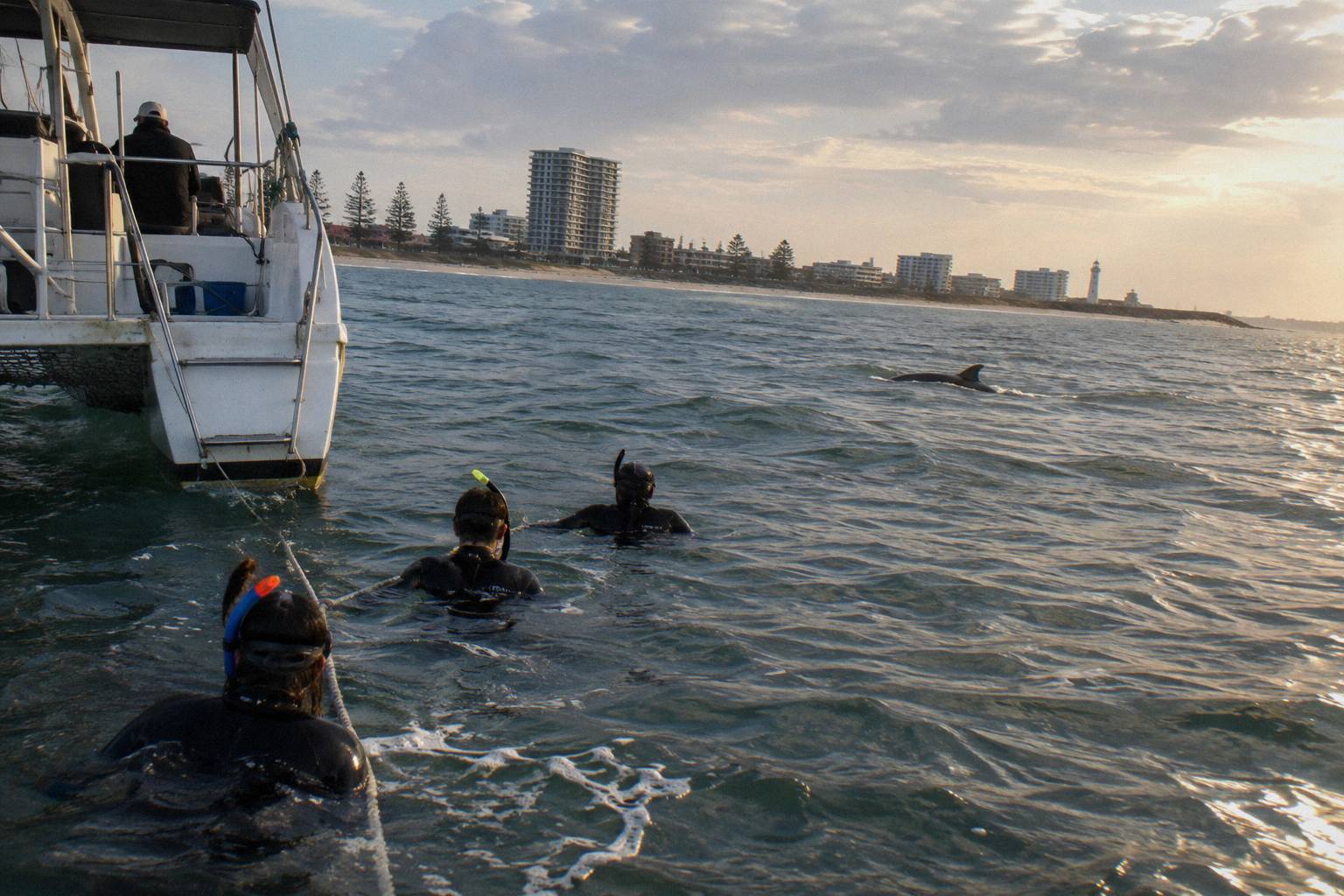
The two operators describe the mechanics differently, and their own words are worth separating. The table below holds only what each operator states about its own trips.
| Glenelg, Temptation Sailing | Kangaroo Island Ocean Safari | |
|---|---|---|
| How swimmers are held | Flotation line connected to the stern while towed slowly | Swimmer line with buoys often used at the back of the vessel |
| When entries start | Only once dolphins have turned toward the boat | Decided by crew; trip may be dolphins, seals only, or a coastal snorkel |
| When entries stop | When dolphins get too close | Booking page: no swim when the pod has neonates |
| Swim format | Front Swim and Back Swim, swimmers rotated between them | 2-hour Snorkelling Safari on 28-seater vessels |
| Minimum swim age | 9, the operator cites insurance | 9 for the swim; coastal snorkel from 8 |
| Provided gear | Full-length 5 mm wetsuit, mask and snorkel; prescription masks on board | Wetsuit, gloves, mask, snorkel and fins |
The rotation detail at Glenelg is easy to miss and worth knowing before you book. The operator runs two swim experiences, the Front Swim and the Back Swim, and rotates customers between them. Two shark shields run during the back swim and the front swim has none, which is why pacemaker wearers should ask the operator before booking rather than assuming either option is open to them. A marine biologist hosts the trip.
A nervous swimmer has a stated exit path at Glenelg. The operator says a swimmer who does not feel confident after the briefing may stay aboard as a watcher, with a refund of the swim-minus-watch difference for bookings made direct with the operator. Swimmers and watchers share one boat, booked together or separately, so a mixed group can travel as a group.
What To Ask The Crew At The Briefing
Use the roughly 15 minute Glenelg briefing to ask your questions before you are ever holding the line in the water. Ask what the crew's signals mean, what happens if a dolphin comes within the 30 m swimmer distance on its own, whether any situation calls for letting go of the line, and how the ladder exit works while you are still fresh, since every one of these has a real operational answer on a permitted tour.
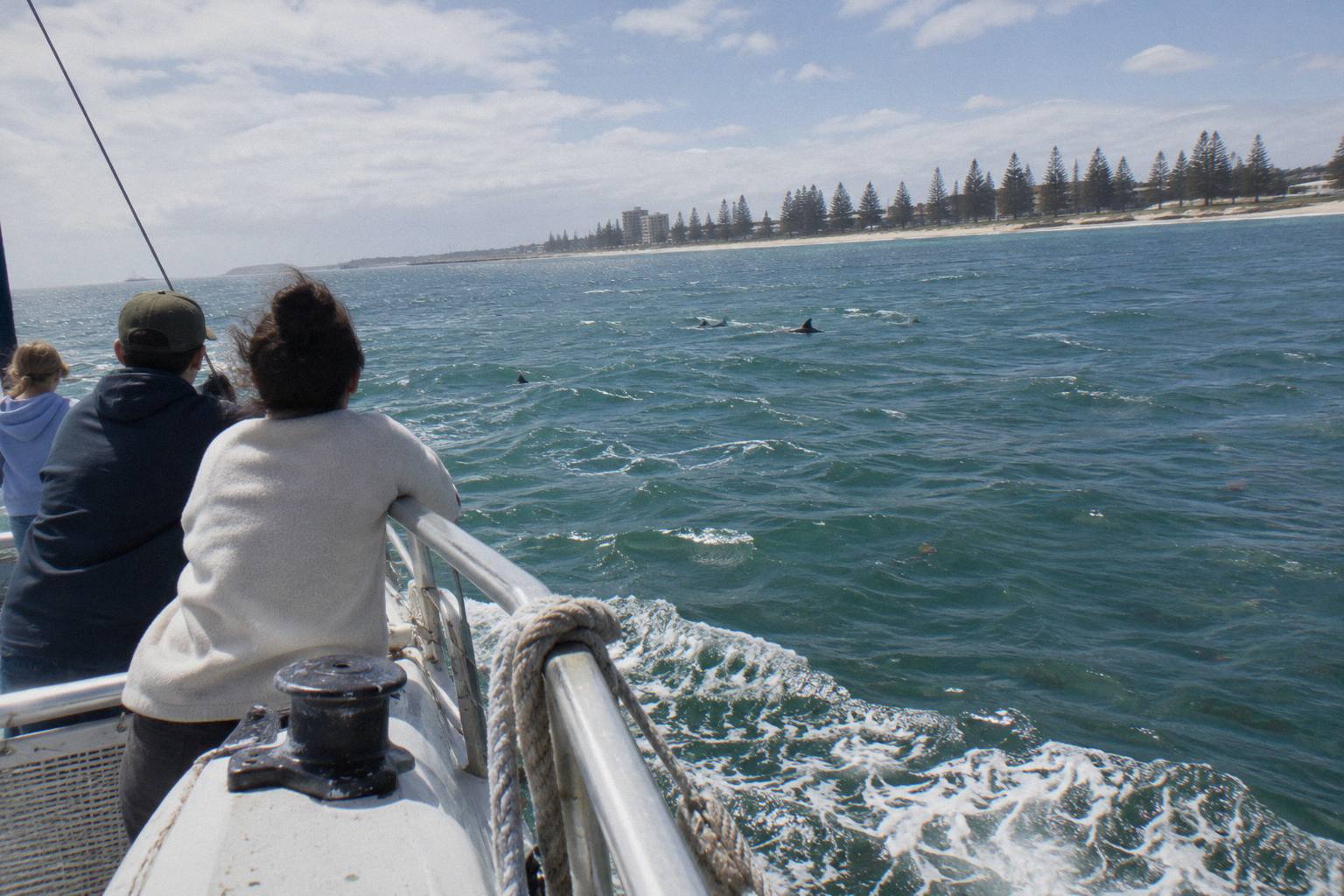
The operator states that masks and snorkels are demonstrated during the briefing, that wetsuits run to size 4XL, that prescription masks in three strengths are on board, and that life jackets are carried but not used for the swim. Swimmers must be able to hold the flotation line while towed slowly and to climb the three rungs of the ladder at the back. Knowing that in advance, on the dock rather than at the stern, changes what the briefing is for.
| Ask this | Why it matters |
|---|---|
| What are the crew's entry and exit signals? | Entries stop when dolphins get too close; you need to know what "stop" looks like |
| What do I do if a dolphin approaches me? | No source here interprets behaviour; the crew's instruction is the answer |
| Should I ever let go of the line? | The Glenelg swim is a controlled line swim per the operator |
| How does the ladder exit work? | Three rungs at the stern, climbed while the boat moves slowly |
| Is this trip a dolphin swim or a seals-only trip? | The Kangaroo Island safari may be dolphins, seals or a coastal snorkel |
| What happens if I change my mind? | At Glenelg, nervous swimmers may ride as watchers, with a difference refund on direct bookings only |
It is also fair to ask about the water itself. Around Adelaide the sea runs roughly from about 14 °C in August to about 21 °C in February, with a November average around 18 °C, per seatemperature.org's generic Adelaide figures. The Kangaroo Island operator gives its own water temperature as between 14 and 15 degrees and says its thick wetsuits allow the swim year round; at Glenelg the season is September to April, with no cruises in the cooler months. The full picture on suits and temperatures is in the guide to wetsuits and water temperature on a dolphin swim.
What You Must Not Do If A Dolphin Comes Close
Touching and feeding wild dolphins are prohibited by regulation, regardless of how close an animal comes or how long it stays near you. A dolphin that circles within arm's reach does not change your obligations: hands stay off, no food enters the water, and the crew's instructions govern everything else. The expiation fee is AUD 315 per alleged offence, and these rules bind the swimmer, not just the operator.
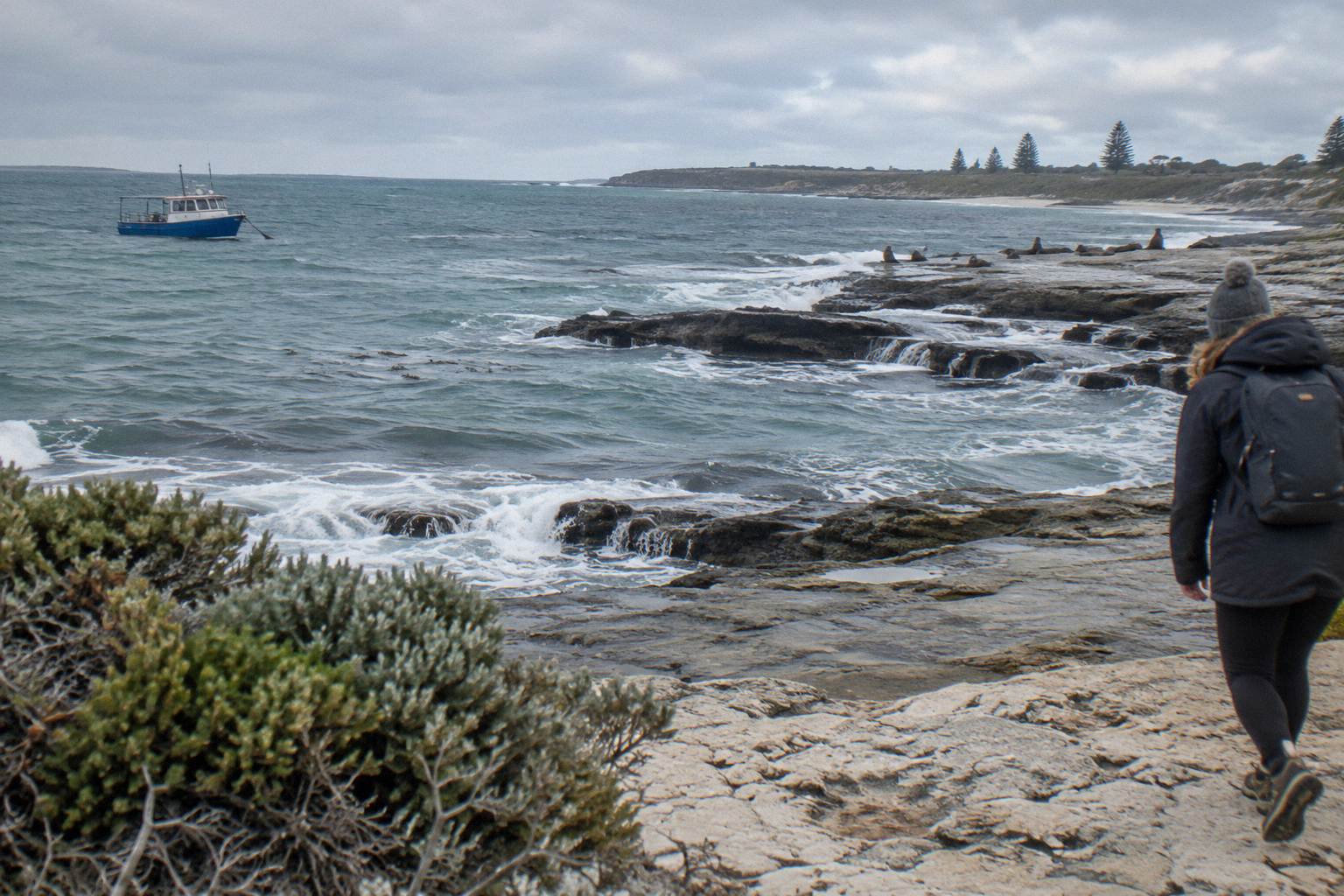
This is where the circling question has a hard edge. People sometimes reason that an animal approaching them must be inviting contact. No page read for this site says that, and the regulations do not contain an exception for eager dolphins. The rules on proximity, contact and food are summarised honestly in the site's guide to dolphin swim rules and how close you can get, and the frequently asked question of whether you can touch wild dolphins during a swim is answered there in full.
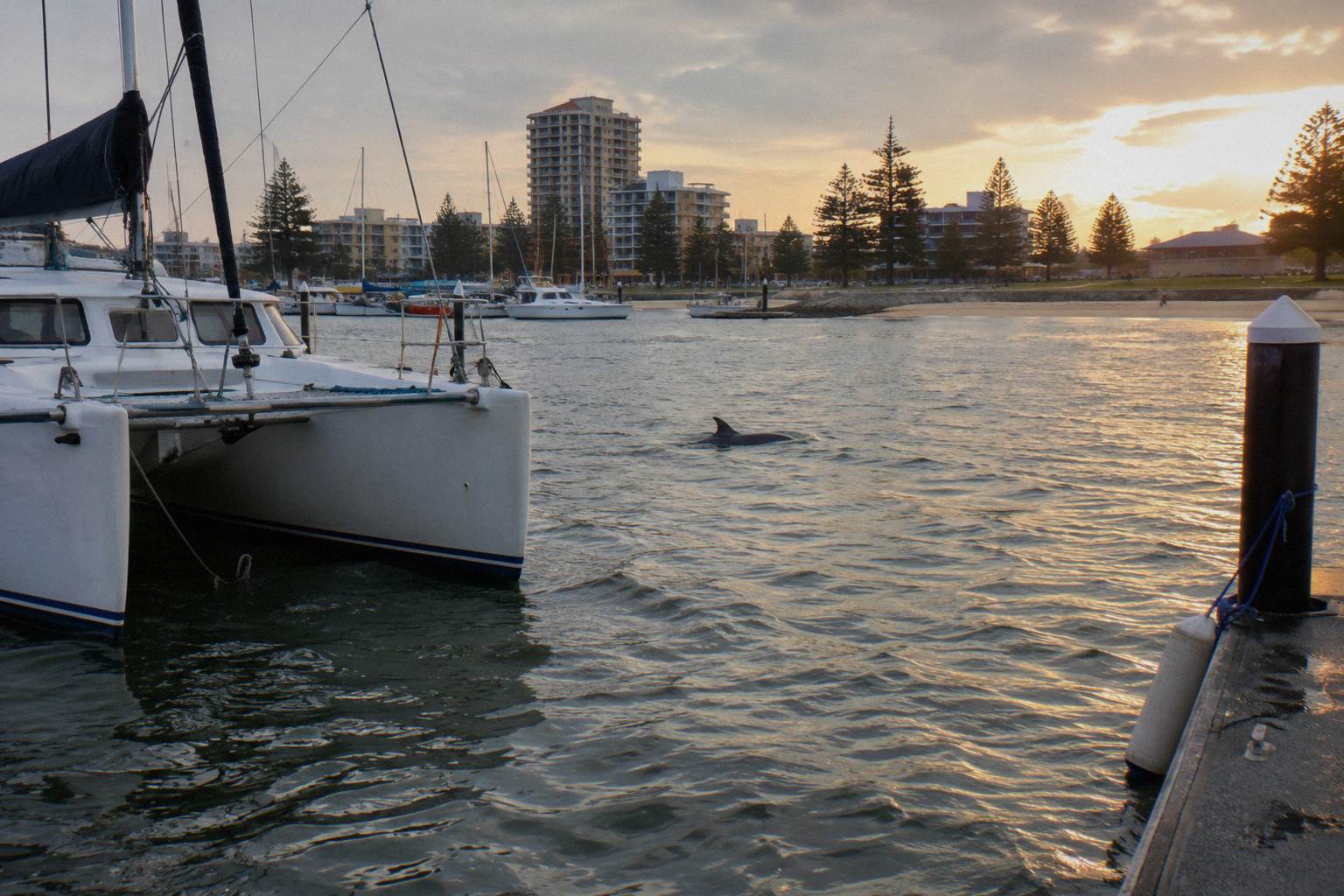
The health context is checked rather than assumed. SA testing shows zero or low Karenia algae along the metropolitan coast and Kangaroo Island, and the official health advice is that if the water is clear, it is fine to swim, while staying away from foamy or abnormally coloured water and rinsing afterwards. Temptation's FAQ still carries a notice that the bloom may affect its wild dolphin tour, especially the swim product, with the concentration assessed before the season and a full refund if the operator cancels. The practical step is simple: check the operator before booking a swim.
What If You Would Rather Watch From The Boat?
Watching is a full experience in its own right and both operators sell it on the same boats as the swim. The Wild Dolphin Watch From Glenelg is rated 4.8 across 409 reviews and runs from USD 62 per person, against from USD 104 for the swim, and the Port River Dolphin Cruise is rated 4.5 across 481 reviews from USD 60. If the circling question makes you hesitant about the water, watching removes it entirely.
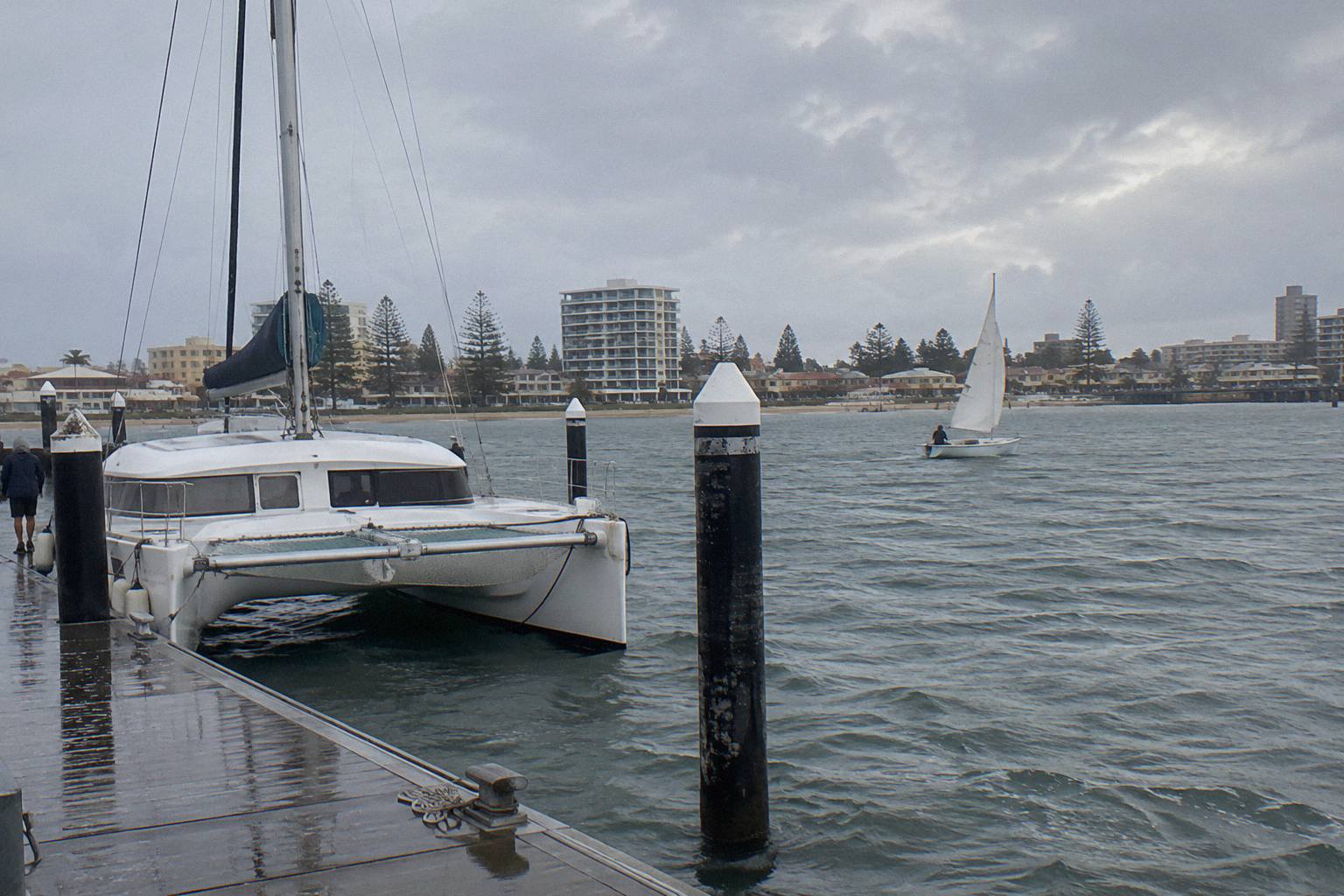
The Glenelg watch cruise shares the same 58 ft sailing catamaran, surveyed for up to 50 passengers, with the swimmers. A family can split tickets, some swimming and some watching, and still spend the whole morning together. Temptation states it has never had a day without seeing dolphins from above the water, and its tour page carries the claim of a 100% success rate of seeing dolphins onboard since 2002; that is the operator's own statement, an above-water claim only, and never a promise about what a swimmer will see beneath the surface.
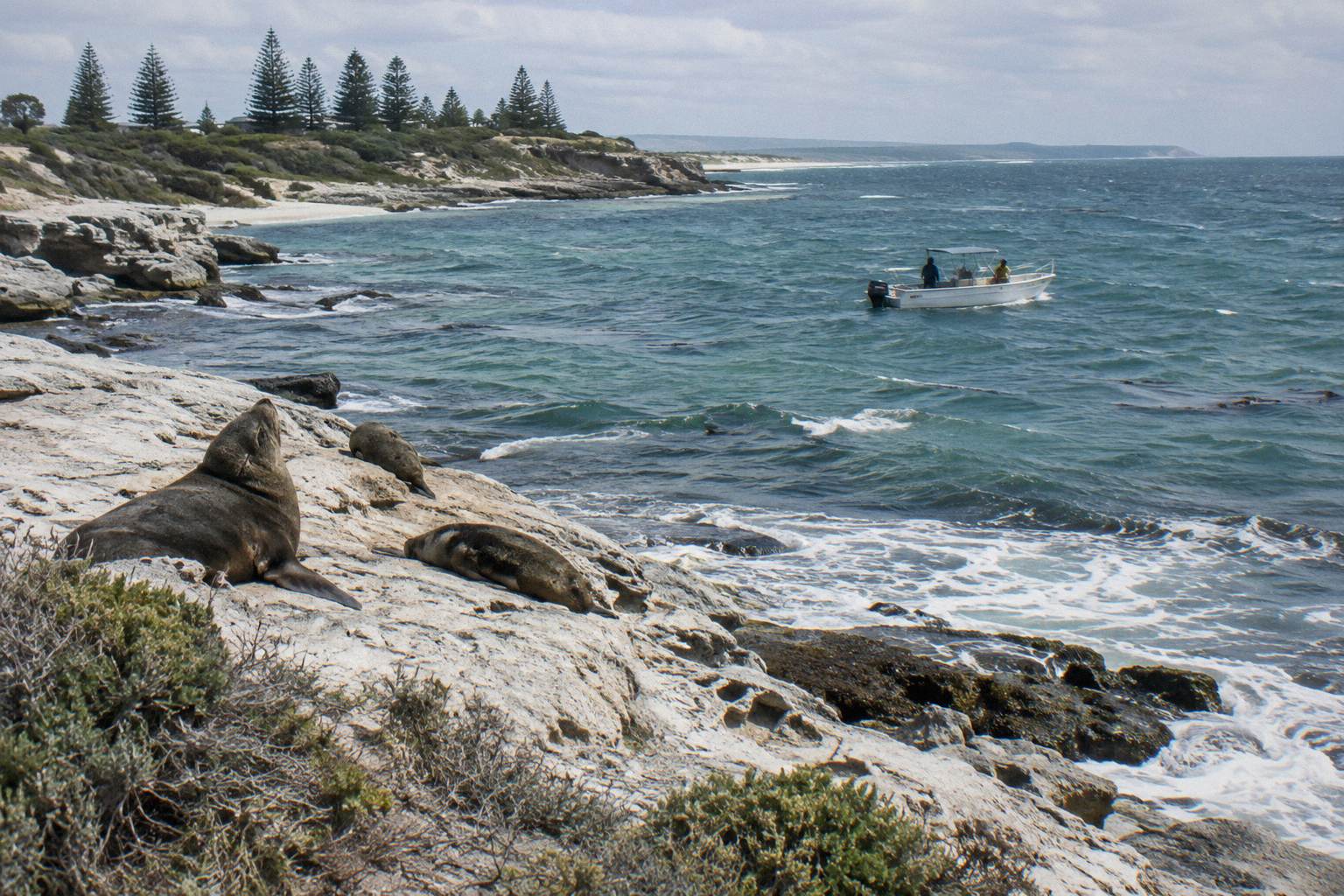
The sighting and refund terms differ by operator and by how you booked, so treat them as booking-page facts rather than general rules. The booking page for the Glenelg swim shows free cancellation up to 24 hours. For bookings made direct with the operator, if no dolphins are seen from above the water, passengers may return free within one year, non-transferable, or take a 50 percent refund for interstate or overseas guests. Kangaroo Island's own terms are starker: wildlife interactions are not guaranteed, and if you get in the water at any stage, no refund. The site's guide to dolphin swim sightings and what happens if none appear works through all of it.
Does The Same Apply On Kangaroo Island?
Yes, the same 2025 rules apply to every swimmer in South Australian waters, and Kangaroo Island is no exception. The Kangaroo Island Ocean Safari's 2-hour Snorkelling Safari from Penneshaw, rated 4.4 across 137 reviews and priced from USD 132 per person, may deliver wild dolphins, seals or a coastal snorkel, since the operator decides the experience on the day based on what the coast offers.
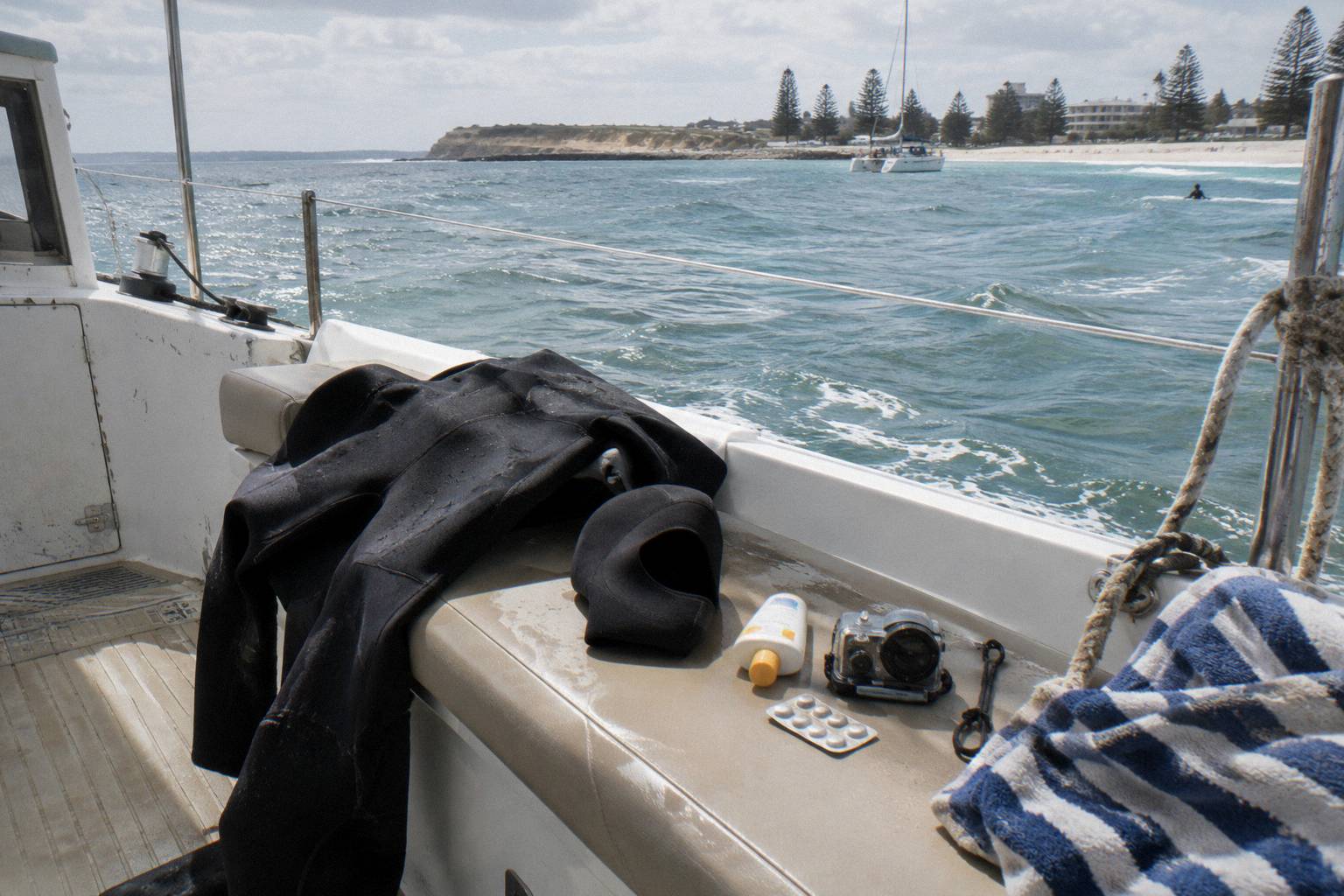
The Kangaroo Island operator meets guests at the Kangaroo Island Information Stop, 43 Howard Drive, Penneshaw, 30 minutes before departure for wetsuit fitting and a safety brief, and describes its vessels as 28-seaters. The swim needs upper body strength to hold the line with buoys and lower body strength for the ladder exit; shark shields run fore and aft; a life jacket and noodle are available; and the operator recommends reasonable swimming ability. The swim is open from age 9, a coastal snorkel from age 8, and the operator states the trip is not suitable with a pacemaker or pregnancy. More on the day-trip logistics is in the guide to a Kangaroo Island dolphin swim day trip from Adelaide.
Circling, if it happens there, lands in the same framework: the crew's call, the line in your hands, the distance rules in force. The one operator-specific difference worth flagging is the neonate rule, which means a pod with newborns ends the swim option before it starts. That is a good illustration of the whole article in a single fact: the system around you is built to protect the animals first, and your best experience comes from trusting it.
Putting it together, the answer to the circling question is that nobody with authority claims to know what a circling dolphin means, and everything that keeps you safe does not depend on knowing. The Adelaide Swimming With Dolphins roster exists for the parts you can plan: which tour, which boat, watch or swim. The Wild Dolphin Swim From Glenelg, featured across this site, runs about 4 hours with a morning departure, holds swimmers on a stern line, and carries a marine biologist host; its tour page here has the full listing. What the dolphin does next stays the dolphin's business.
Common Questions About A Dolphin Circling You
What Does It Mean If A Dolphin Circles You In The Water?
Not stated in the pages read. No official South Australian source and neither operator's pages interpret what circling behaviour means, and this site does not invent an interpretation. What is stated is the framework around you: on permitted tours the crew decides entries and stops, swimmers hold a flotation line, and the distance, no-touch and no-feeding rules apply throughout.
How Close Can A Swimmer Legally Get To A Dolphin In South Australia?
Swimmers and snorkellers must stay at least 30 m from a marine mammal, and at least 150 m from a calf or pup or from a dolphin showing disturbance, or one that appears sick, injured, stranded or entangled. No more than 30 minutes may be spent within 150 m of a non-whale marine mammal. The expiation fee is AUD 315 per alleged offence.
Can I Touch Or Feed A Dolphin If It Comes Right Up To Me?
No. Touching and feeding wild dolphins are prohibited by the 2025 regulations, without exception for an animal that approaches closely. If a dolphin comes within reach, you stay on the line and follow the crew's instructions.
Who Decides When Swimmers Get In The Water?
The crew. At Glenelg the operator states swimmers enter only once dolphins have turned toward the boat and entries stop when dolphins get too close. On Kangaroo Island the booking page states the swim does not run when the pod has neonates. Guests never judge proximity for themselves on a permitted tour.
What Should I Ask At The Swim Briefing?
The Glenelg briefing runs about 15 minutes. Ask what the crew's entry and exit signals are, what to do if a dolphin approaches you, whether to ever let go of the line, how the three-rung ladder exit works, and what the trip's dolphin-or-seals makeup is likely to be that day.
Is There A Refund If No Dolphin Comes Near Me In The Water?
It depends on the operator and how you booked. Kangaroo Island's own terms state that if you get in the water at any stage, no refund. For bookings made direct with the Glenelg operator, swimmers who did not see dolphins underwater get a refund of the swim-minus-watch difference or a return within a year. The booking pages carry their own cancellation terms, including free cancellation up to 24 hours on the Glenelg listings.