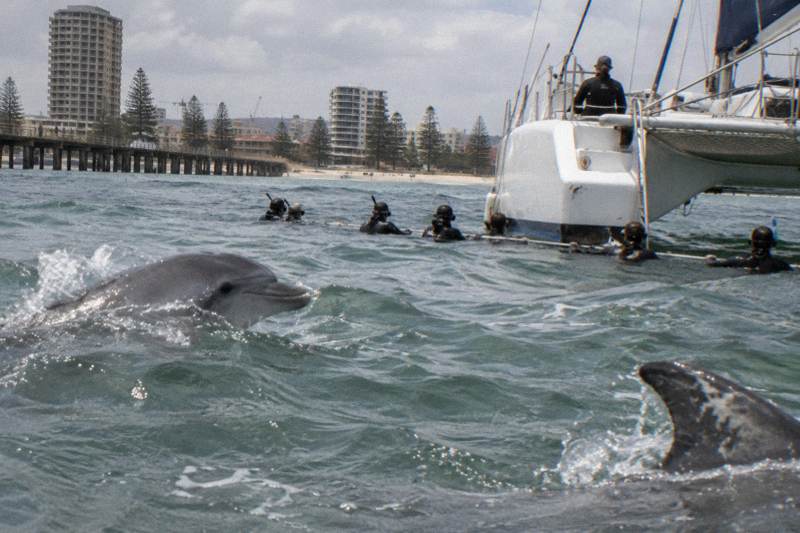
Underwater Photos And Cameras On A Dolphin Swim
No swim operator serving Adelaide or Kangaroo Island states a camera, phone or photo-package policy on its public pages, so the honest answer on dolphin swim photos is: ask before you book. Here is what is stated, what the law adds, and the questions worth putting to the operator.
Short answer
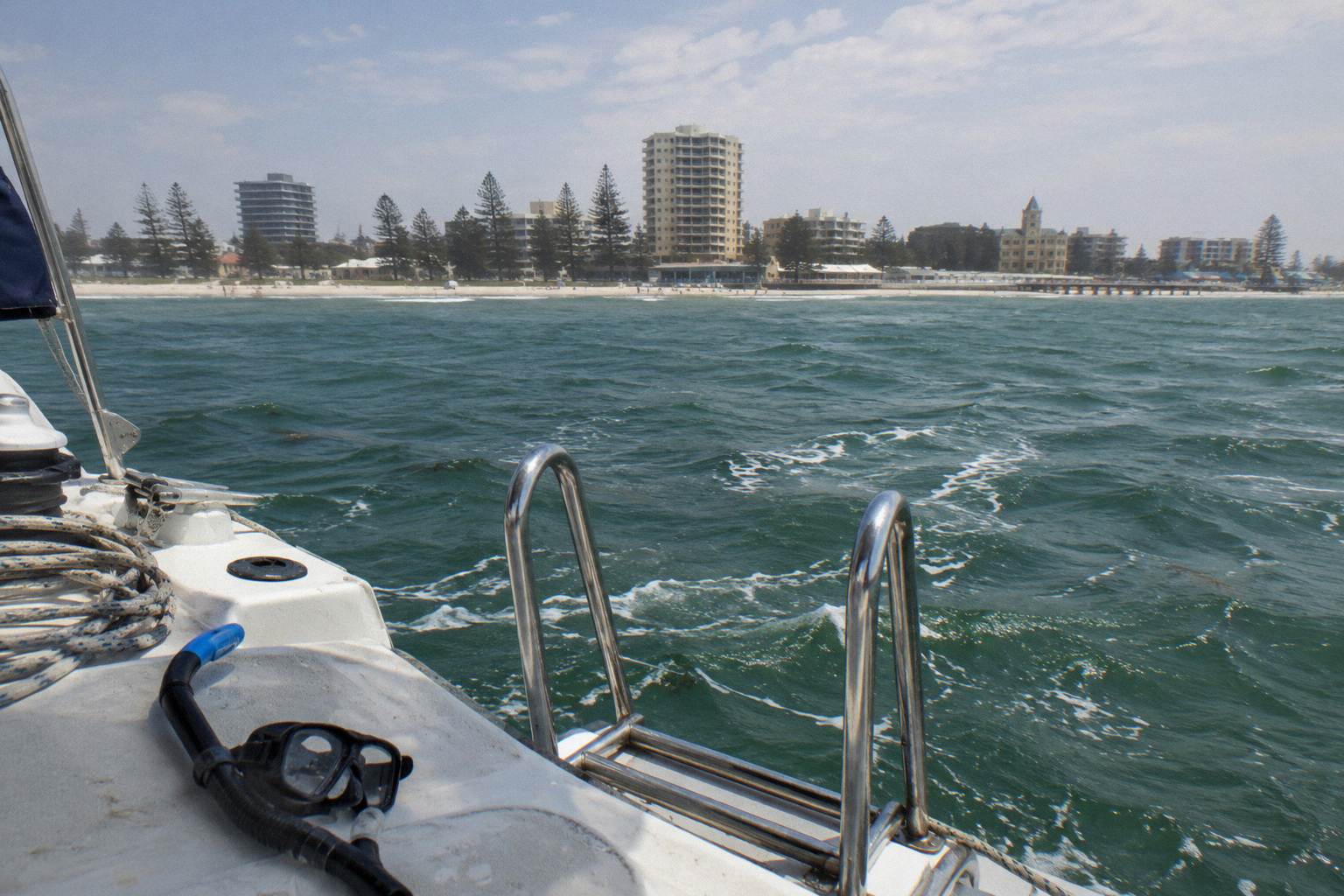
Neither swim operator publishes a camera or photo-package policy: it is not stated, so ask the operator. What is stated is that swimmers hold a flotation line while towed, that swimmers must stay 30 m from dolphins (150 m with a calf or disturbed animal) by law, and that touching and feeding are prohibited. Watch-only trips free both hands for a camera.
The single most useful thing to know about dolphin swim photos is a negative: on every operator page read for this article, from Glenelg to Penneshaw, no camera policy, phone policy or photo-package offer is stated anywhere. Not for the swim, not for the watch, not for staff photography. That silence is not a hidden ban, it is simply an unanswered question, and the right response is to put it to the operator directly before money changes hands. This page sets out what is actually stated, what South Australian law adds for anyone pointing a lens at a wild dolphin, and the checklist that turns an unknown into a few plain questions.
Can You Take A Camera On A Wild Dolphin Swim?
Whether a camera, phone or action camera may go in the water is not stated on any operator page for either swim, so the answer is to ask the operator before booking. Neither Temptation Sailing at Glenelg nor Kangaroo Island Ocean Safari at Penneshaw publishes a device policy, a photography service or a photo package. What both do publish are swim mechanics that occupy your hands for most of the water time.
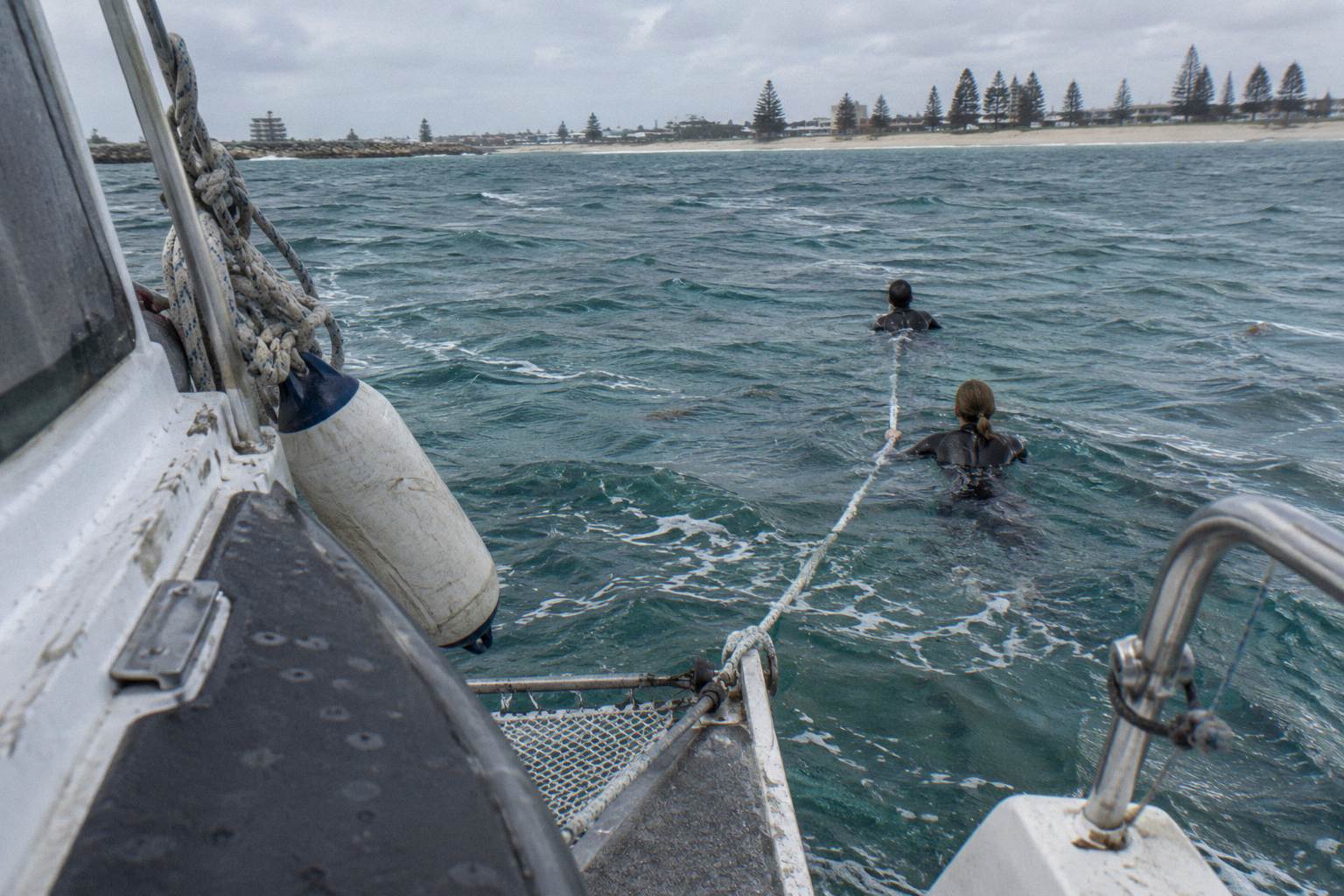
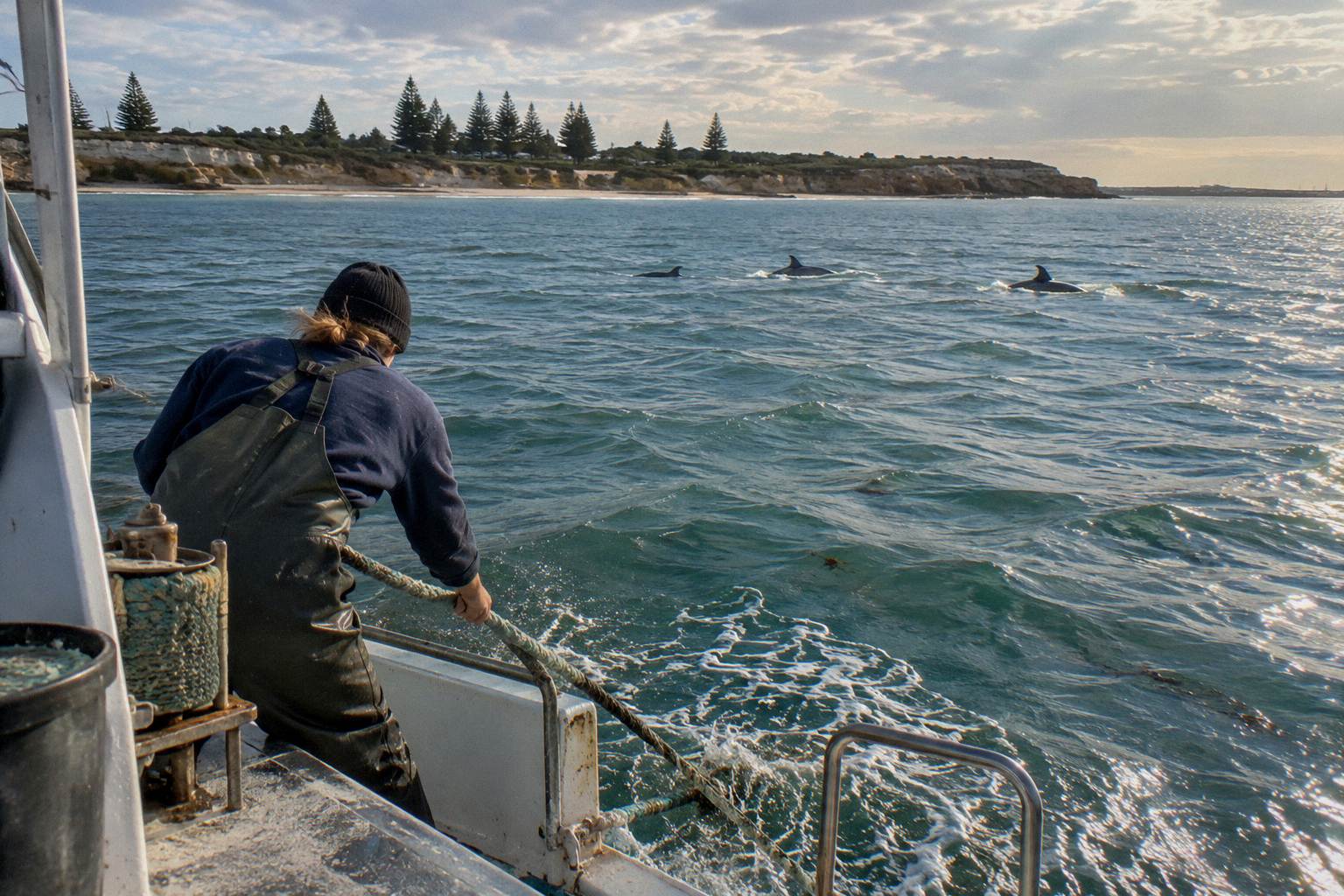
That last clause matters more than it sounds. The Glenelg swim is run as a controlled experience: every swimmer holds a flotation line connected to the stern while the boat moves slowly, with a crew briefing of about 15 minutes before anyone enters the water, and the crew puts swimmers in only once dolphins have turned toward the boat. Kangaroo Island Ocean Safari describes something similar: a swimmer line with buoys often trails behind the vessel for the dolphin swim, and the operator says holding it needs upper body strength while the ladder exit needs lower body strength. A line in one hand and a dolphin in view leaves at best one hand for anything else, and a device that is dropped from a moving line is a device the ocean keeps.
None of this is stated as a prohibition, and it must not be read as one. The operators simply do not address cameras in their published material, and a policy that is not published can differ trip to trip, season to season, or between the front and back swim positions on the same boat. The only reliable route to an answer is the operator's own contact point before the booking is final.
A workable checklist, built only from what is published about how the swims run:
- Ask whether a camera may be taken into the water at all, or only on the boat.
- Ask whether a device may be attached while holding the swim line, given that both operators describe a held line under slow tow.
- Ask whether crew photograph swimmers or dolphins and whether images are sold or shared after the trip.
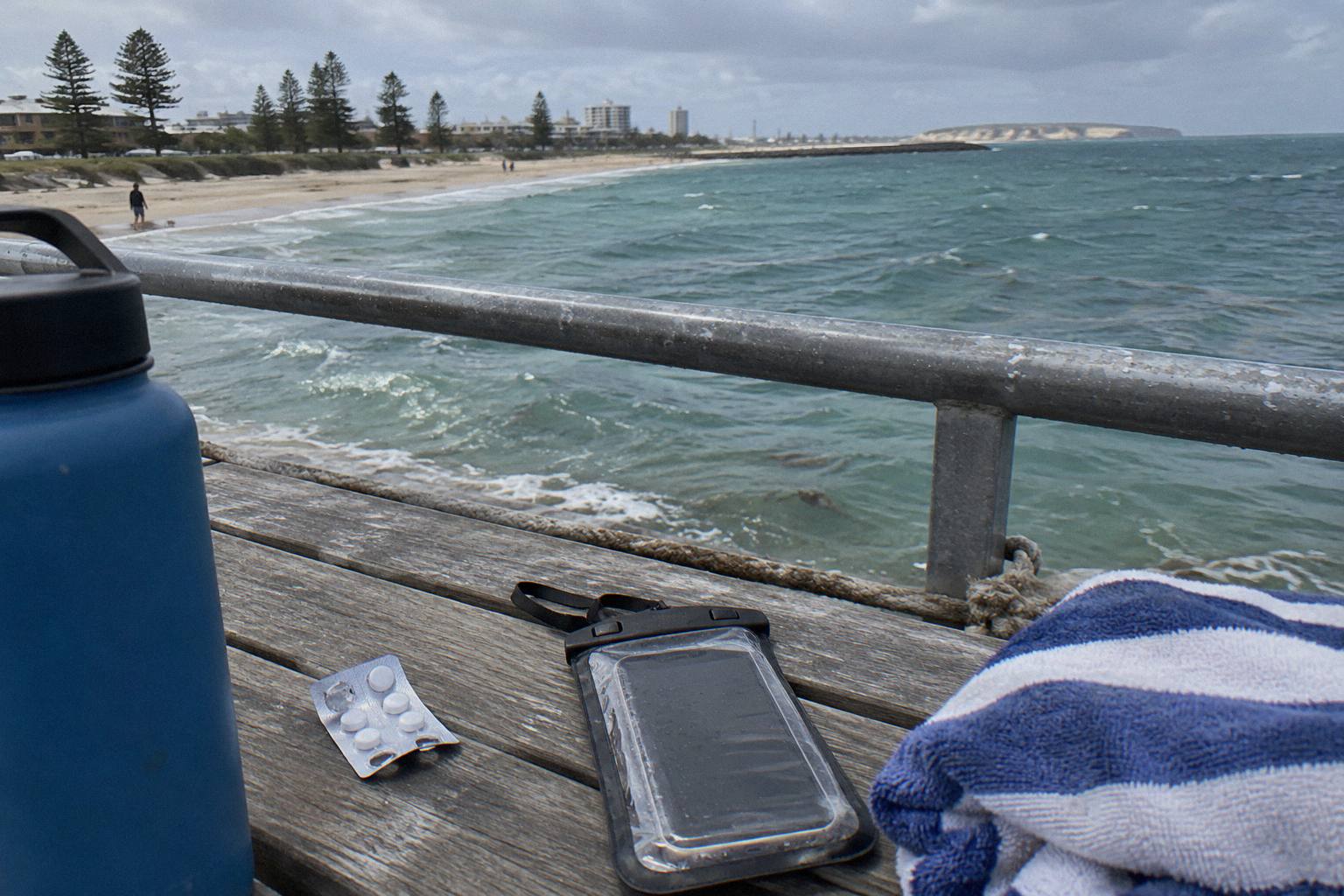
- Ask where phones and valuables can be left on board during the swim, since neither operator publishes storage arrangements.
- Ask whether the answer differs between swim positions, because the Glenelg trip rotates swimmers between two experiences.
For a fuller picture of how the water time actually unfolds, the guide to what happens on a wild dolphin swim cruise walks through the sequence from boarding to the ladder.
Why Your Hands Are Busy During The Swim
On both swims, a swimmer's hands are committed to a flotation line for much of the time in the water. Temptation Sailing says all swimmers hold a stern line while the boat tows them slowly; Kangaroo Island Ocean Safari says its buoyed swimmer line needs upper body strength and its ladder exit needs lower body strength. That is the practical frame for any camera decision.
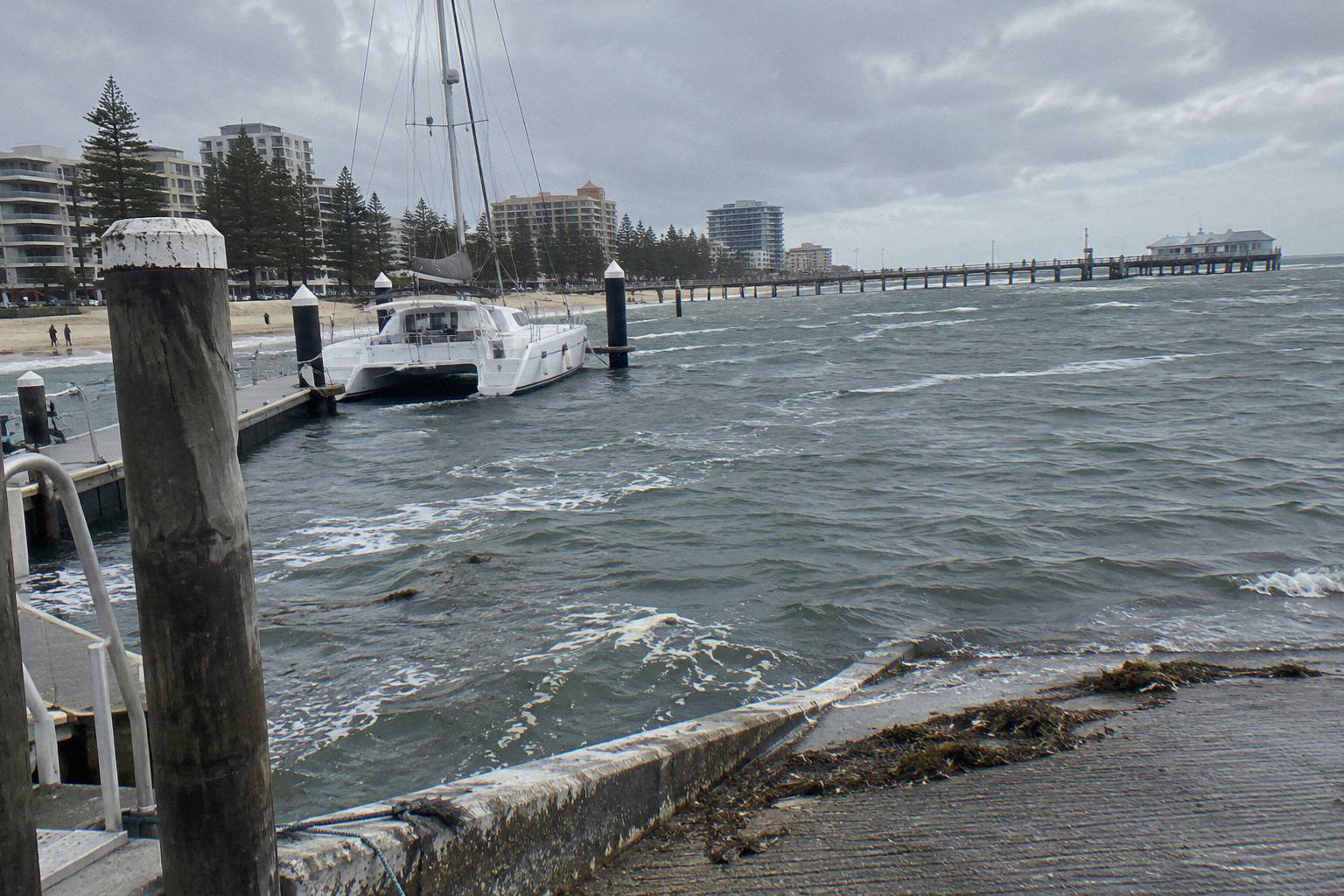
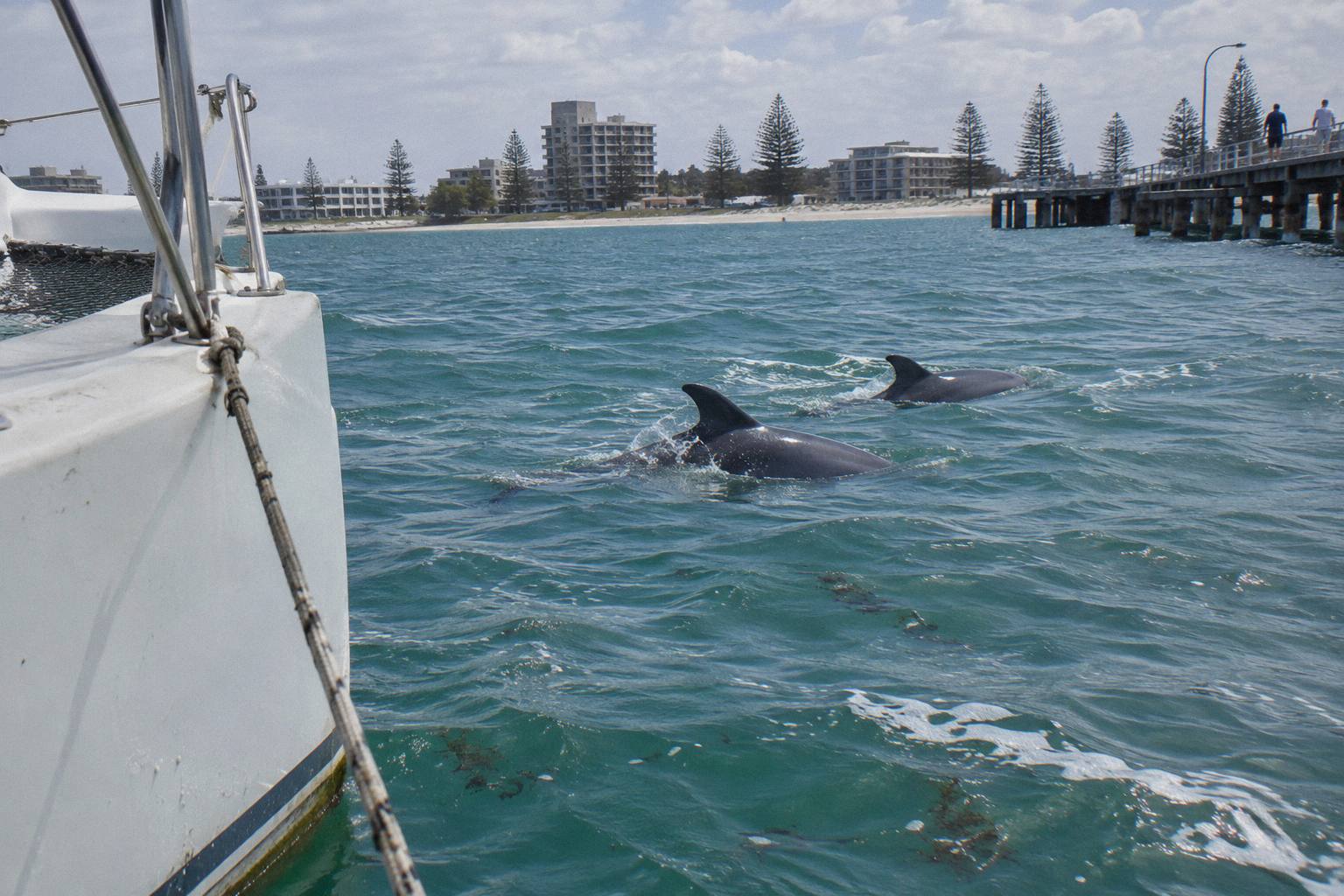
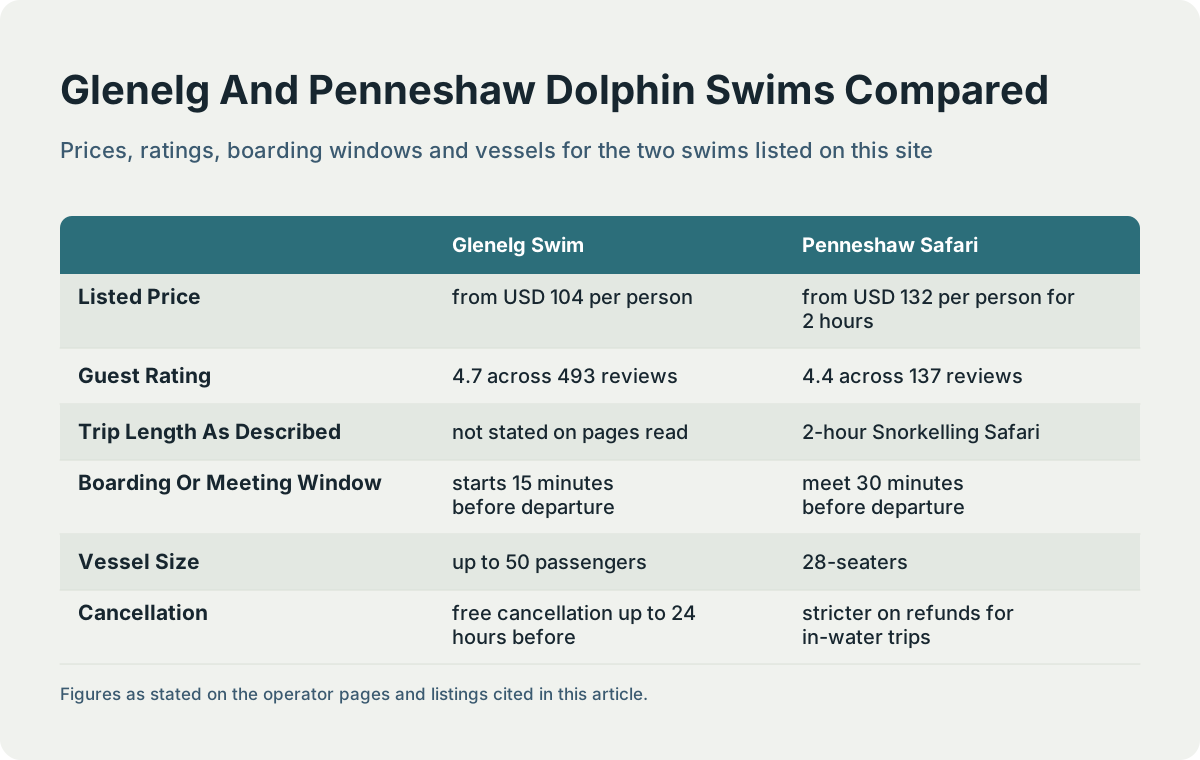
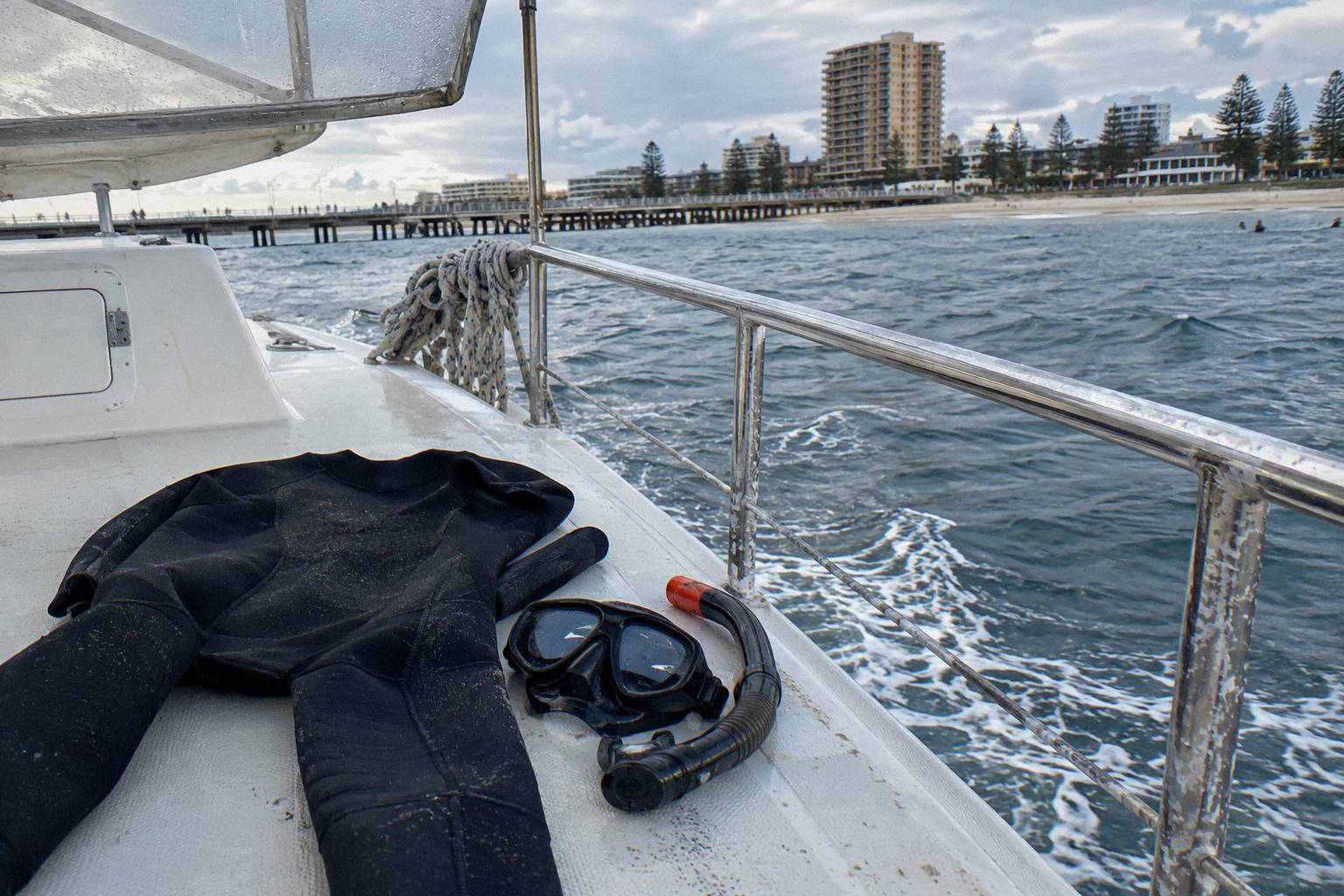
The Glenelg trip, operated from Marina Pier at Holdfast Shores Marina, runs on a 58 ft sailing catamaran surveyed for up to 50 passengers, per the operator's description. Each swimmer is fitted with a full-length 5 mm wetsuit that the operator says also acts as a flotation device, masks and snorkels are demonstrated, and prescription masks are on board in three strengths. There are two water experiences, a Front Swim and a Back Swim, and swimmers are rotated between them. The crew decides the timing: entries happen only when dolphins turn toward the boat, and entries stop when the dolphins get too close. Two shark shields run during the back swim; the front swim has none, and marine biologist hosts sail on the trip.
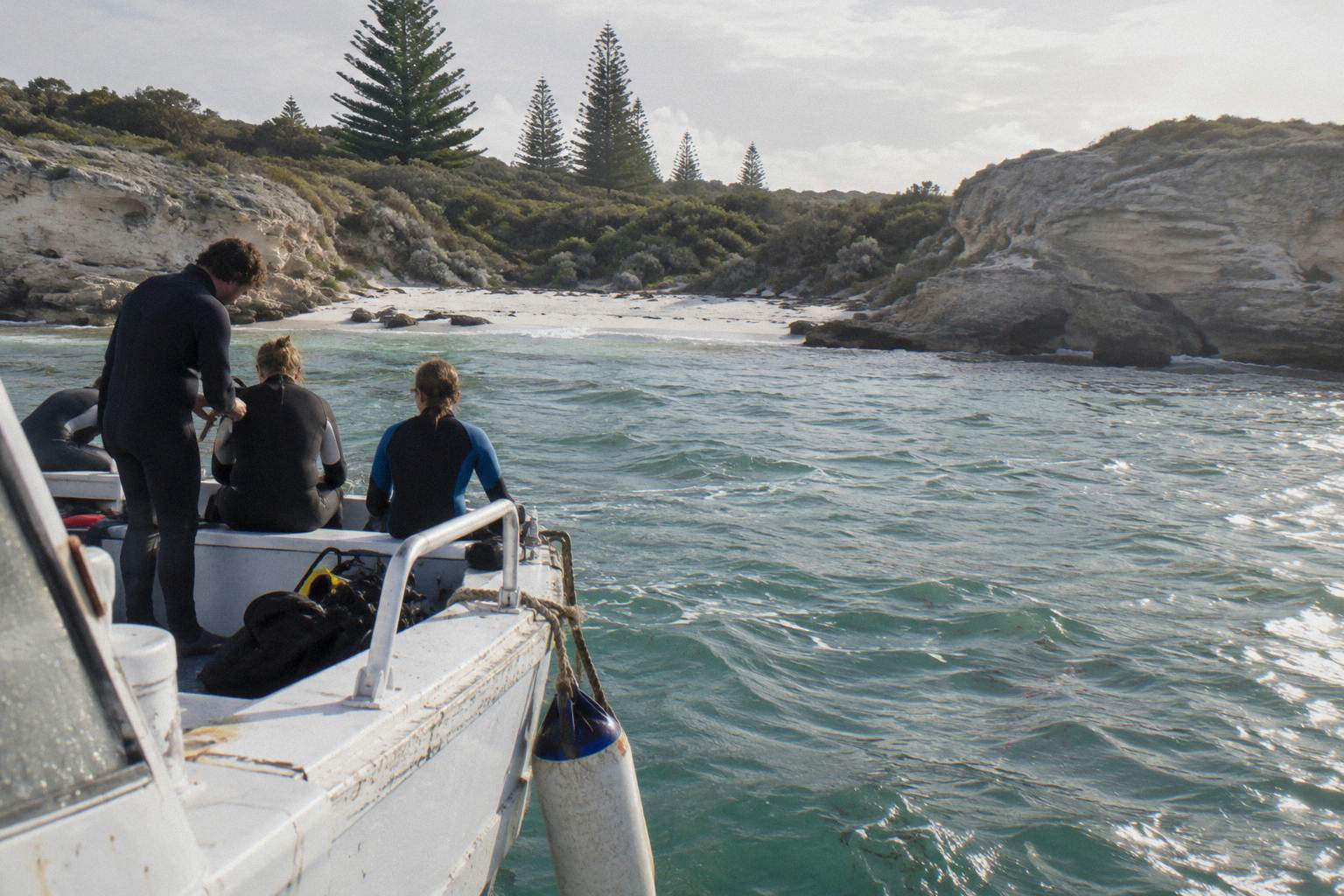
The Penneshaw swim compresses all of this into a 2-hour Snorkelling Safari described as "swim with wild dolphins OR among seals," with the operator noting a given trip may be dolphins only, seals only or a coastal snorkel. Wetsuits, gloves, masks, snorkels and fins are provided, and the vessels are described as 28-seaters. Meeting point is the Kangaroo Island Information Stop at 43 Howard Drive, Penneshaw, 30 minutes before departure for fitting and a safety brief.
For a photographer, the structure is the story. In the water, you are a towed participant on a line, not a free swimmer choosing an angle. On the boat, between rotations, you are a passenger with both hands free, a deck, and dolphins that the operator says appear on the surface. Many of the best dolphin swim photos on any trip like this are taken from the deck, not from the line.
The featured swim from Glenelg, the Wild Dolphin Swim From Glenelg With Temptation Sailing, is rated 4.7 across 493 reviews and listed from USD 104 per person, with free cancellation up to 24 hours before. Whether a camera may accompany you in the water is a question for its crew, asked before booking. Check availability
What The Law Says About Cameras Near Dolphins
South Australian law sets the distances, not the camera. Swimmers, including snorkellers, must not go within 30 m of a marine mammal, and not within 150 m of an animal that shows disturbance, appears sick or injured, is stranded or entangled, or is a calf or pup. Touching and feeding are prohibited outright, and the expiation fee is AUD 315 per alleged offence. A camera changes none of these numbers.
The rules come from the National Parks and Wildlife (Protected Animals, Marine Mammals) Regulations 2025, in operation since 1 September 2025. A swimmer who pushes toward a dolphin to fill a frame is not an enthusiastic photographer under these regulations, they are a swimmer inside 30 m of a marine mammal. The same regulations cap a swimmer at no more than 30 minutes within 150 m of a non-whale marine mammal, and that 30-minute figure belongs to the swimmer regulation alone, never to any operator or permit condition.
Vessels carry their own numbers: at least 50 m from a non-whale marine mammal, and at least 150 m if there is a calf or the dolphins show disturbance. This is why the sanctioned photo platform on any licensed trip is the boat. The vessel holds its legal distance, the dolphins approach or do not, and the swimmer on the line is placed by crew who are managing exactly these limits. Feeding and touching are prohibited under regulations 16 and 17, and nothing in any operator material suggests otherwise. Anyone wanting the deeper legal picture can read the rules on how close you can get, and the full text sits in the official regulations on the SA legislation site.
There is also a permit layer worth knowing. Under regulation 19 a person must not, for fee or reward, use a vessel to take another person near a marine mammal to observe it or swim near it without a Ministerial permit or other lawful authority, so a fee-based swim is lawful only under a permit. The public permit register and any permit conditions, such as swimmer numbers or time in the water, were not found anywhere official, so nothing can be said about them here, and any claim about them on a booking page deserves the same skepticism.
Do The Operators Photograph The Trip For You?
No staff-photography or photo-package offer is stated on either operator's pages. Whether crew photograph swimmers or dolphins, and whether images are sold or shared afterwards, is not stated: ask the operator. The Glenelg trip carries marine biologist hosts and the Kangaroo Island trip runs with crew fitting gear and running the swimmer line, but neither publishes anything about cameras in crew hands.
The Glenelg operator's pages do say something adjacent and useful. Its tour page states a "100% success rate of seeing dolphins onboard since 2002," and the operator says it has never had a day without seeing dolphins from above the water. Both are the operator's own claims, about above-water sightings only, never an underwater promise, and never a photo guarantee. But they do mean a watch-ticket holder with a camera on deck is, on the operator's own account, very likely to have dolphins in view at some point in roughly four hours.
Kangaroo Island Ocean Safari is the more cautious publisher. Its pages state plainly that wildlife interactions are not guaranteed, that sightings "can't be guaranteed," and that it does not promise a sighting on every trip. It also notes that if you get in the water at any stage there is no refund, since a swim took place regardless of which animals appeared. A photographer weighing the two should treat the Glenelg claim as an operator's marketing statement and the Kangaroo Island statement as an operator's disclosure, and price their expectations accordingly.
The question list for either operator is short and concrete. Ask whether crew photograph the trip. Ask whether those images are included, sold, or simply not taken. Ask whether a guest camera is welcome on the swim line, on the boat, or neither. And ask before booking rather than at the boarding stairs, because the answer can reasonably change what ticket you buy: a swimmer who cannot take a camera may still want the swim, while a photographer who cannot may prefer a watch ticket on the same boat.
Where Do You Leave Phones And Valuables?
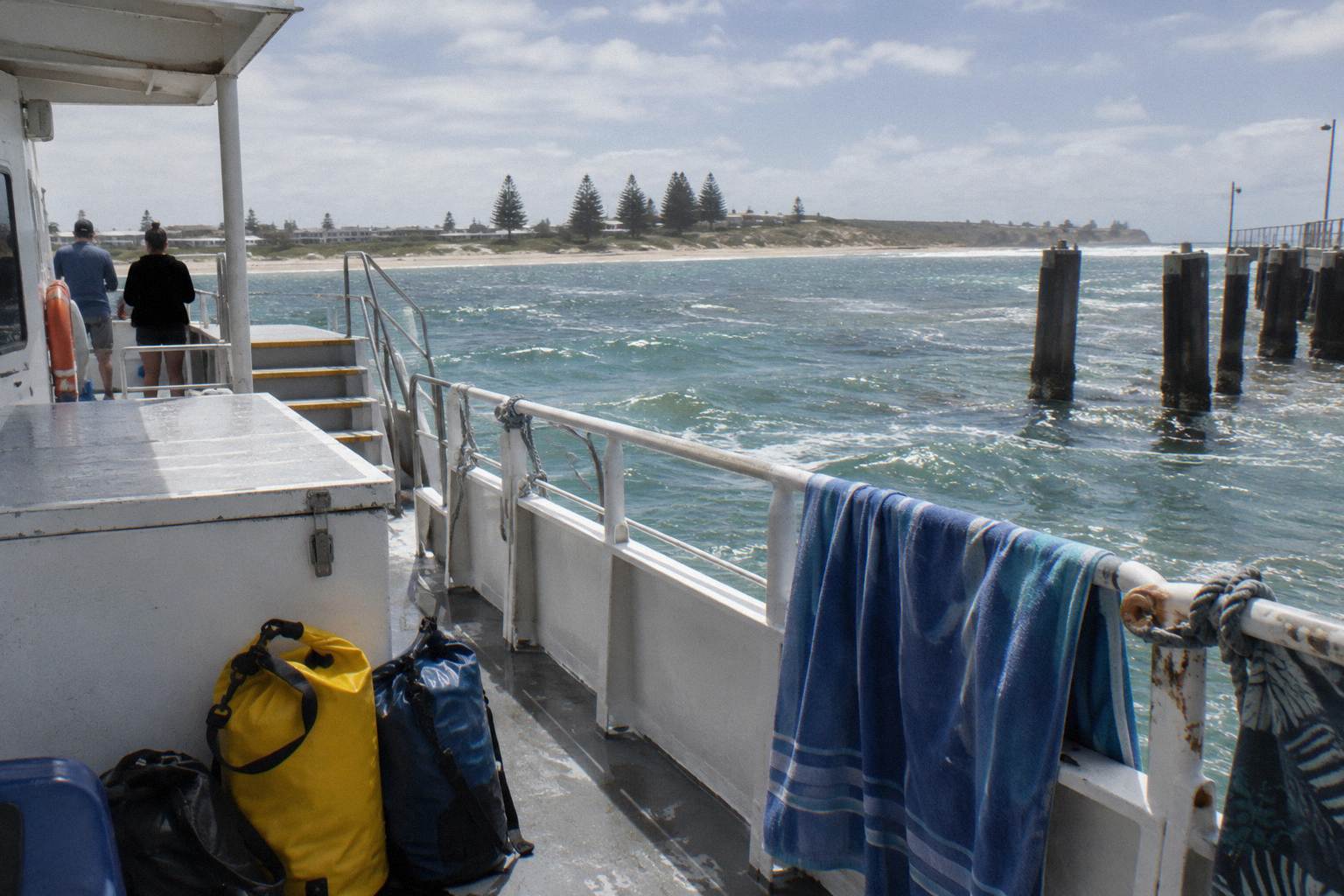
Neither operator publishes storage arrangements for phones, keys or valuables on board, so this too is a not-stated item: ask the operator. What is stated is the boarding routine. Glenelg boarding starts 15 minutes before departure at the bottom of the stairs in front of the Oyster Bar at Marina Pier, and Kangaroo Island swimmers meet 30 minutes before departure for fitting and a safety brief.
Those two windows are the practical answer. A 15-minute boarding window on a 50-passenger catamaran, or a 30-minute fitting window beside 28-seat vessels in Penneshaw, is exactly when a crew member can tell you what happens to devices, whether there is a dry bag, a cabin, or nothing but a seat. Nothing published says which it is. The Glenelg operator does mention secured underground parking at Marina Pier, a home-page claim, which solves the car-key half of the problem for drivers but says nothing about what a swimmer carries aboard.
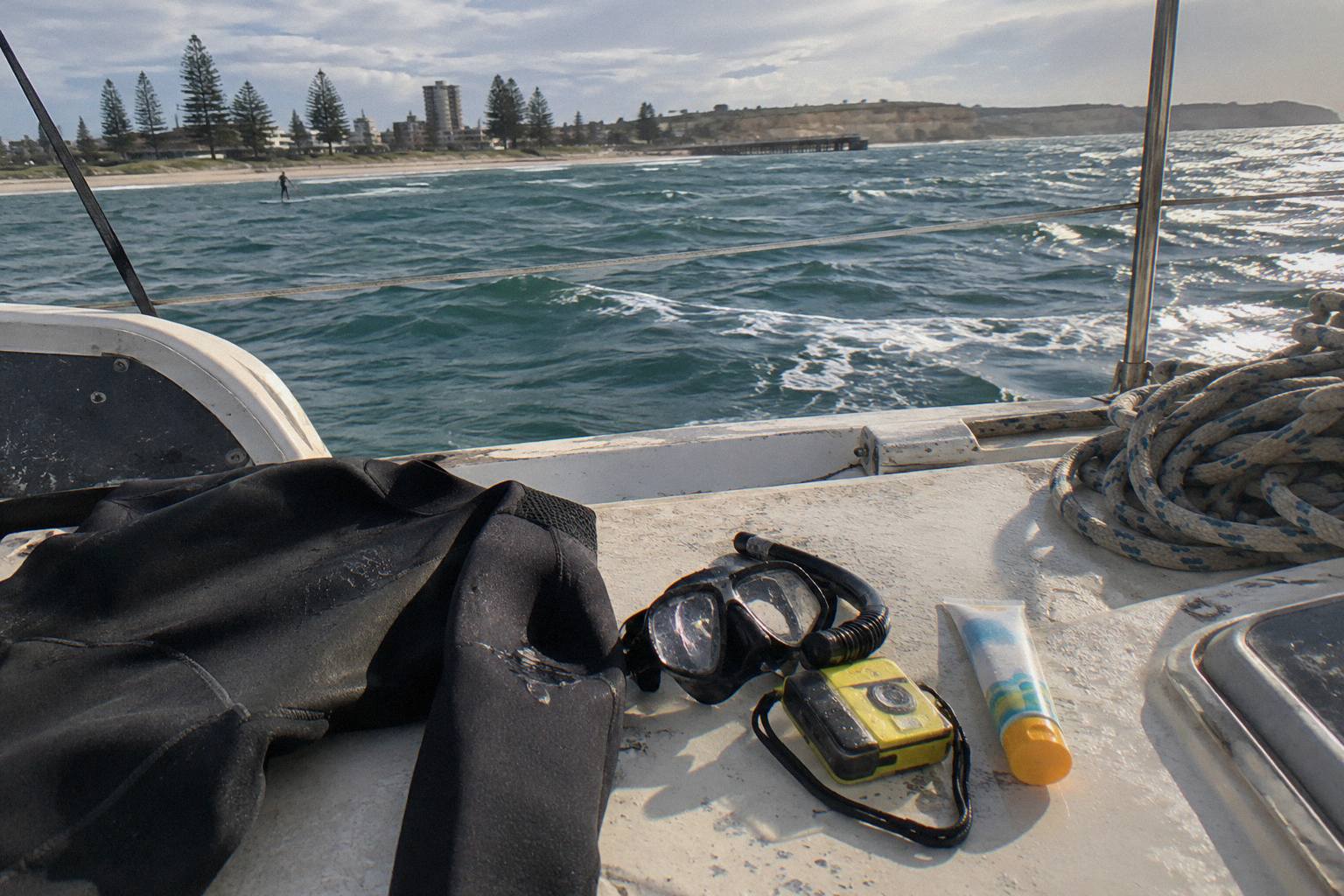
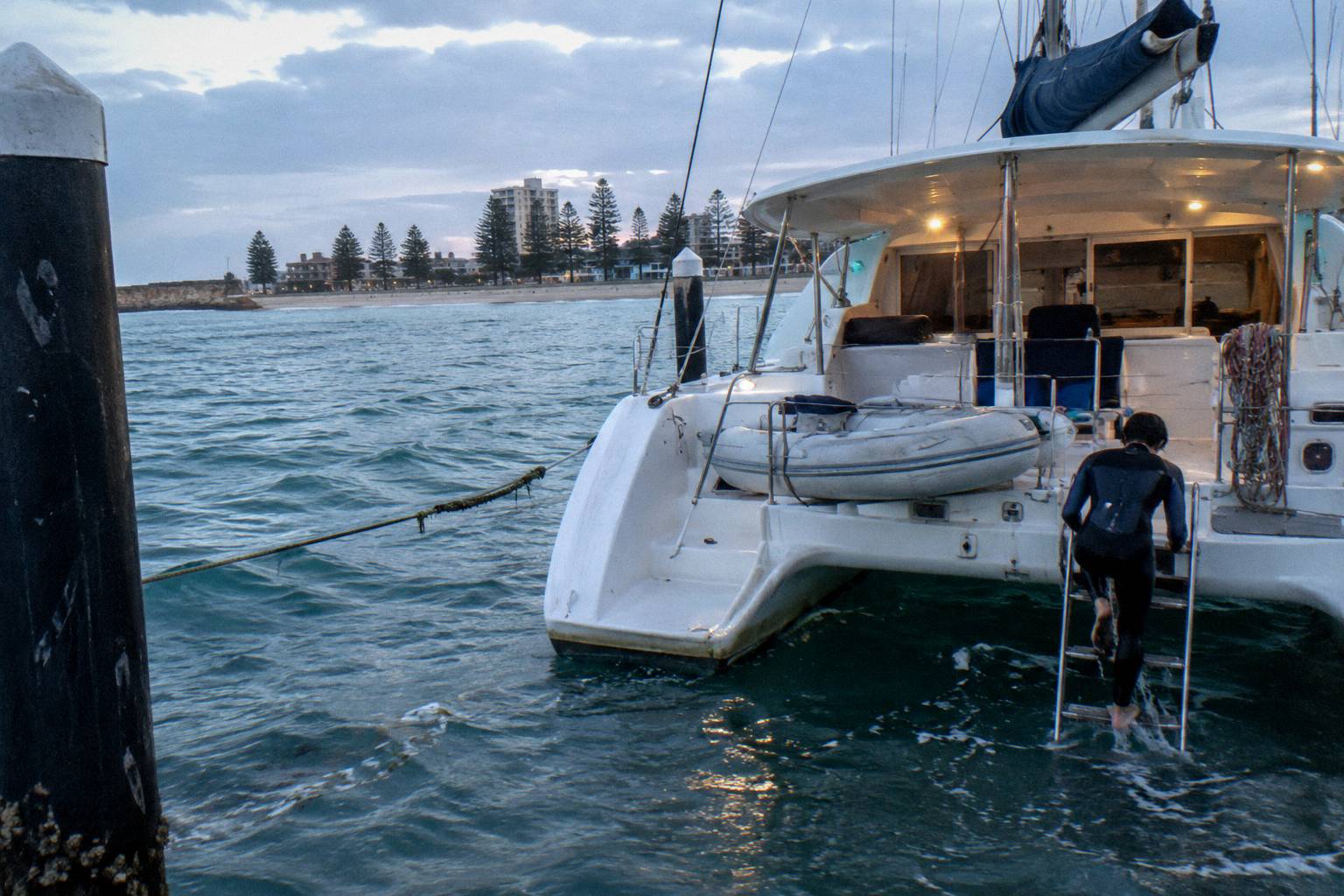
Wetsuit fitting also deserves a mention here. Suits go on before departure, and a phone in a wetsuit pocket is a decision the operator has not endorsed anywhere in print. The safer default, offered as planning logic rather than policy, is to treat the swim as phone-free unless the crew says otherwise, and to give the deck time to a device that stays aboard. The question of whether you change on the boat or the dock is covered in its own piece, and the answer shapes where your belongings end up sitting for four hours.
One habit worth forming whatever the operator says: arrive with the device charged, backed up and, if it matters to you, insured for water damage. No operator page read for this article promises anything about lost or damaged gear, and a boat is a wet, moving, salted environment by definition. That is not a warning against bringing a camera; it is a reason to ask first and pack deliberately.
The Kangaroo Island Ocean Safari Swim, rated 4.4 across 137 reviews and listed from USD 132 per person for 2 hours, is the alternative if your trip already includes the island. Its own terms are stricter on refunds for trips where you enter the water, which is worth weighing if photos are the main goal and a watch-only option would serve better.
Phones, Salt Water And The Marine Environment
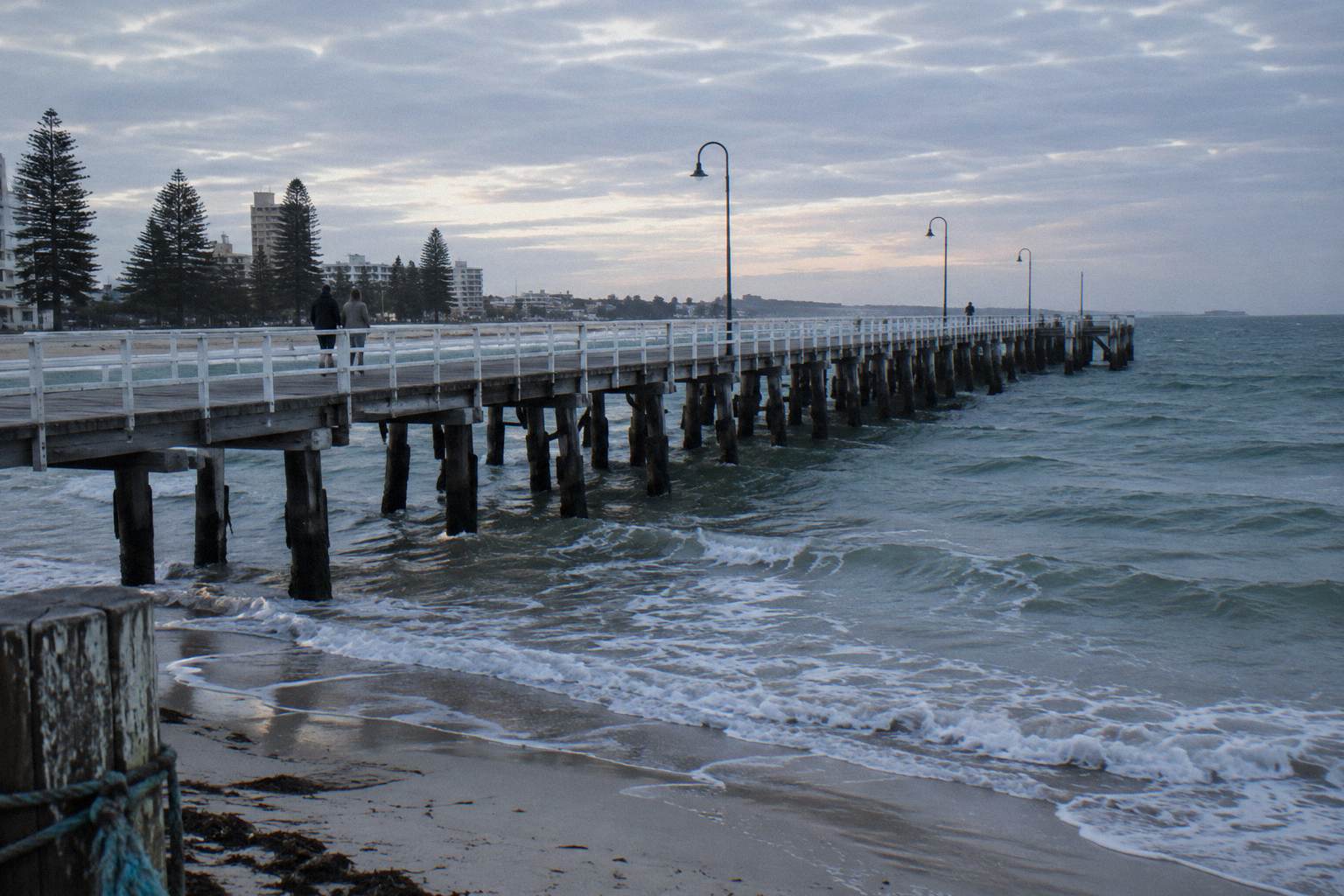
No product advice applies here, and none is offered. Neither operator states that any phone, case or camera is suited to its trips, and no waterproofing claim appears on any page read. What is stated is the environment itself: sea temperatures around 14 to 15 degrees off Kangaroo Island per that operator, Adelaide readings from around 14 °C in August to around 21 °C in February, salt spray on a moving deck, and boarding via stairs.
Sea temperature is the quiet variable in every camera conversation, because it decides how much of the trip you spend in a wetsuit versus on deck. The Adelaide figures come from seatemperature.org as a generic Adelaide series: around 14 °C in the coldest month and around 21 °C in the warmest, with a November reading around 18 °C. The Kangaroo Island operator states 14 to 15 degrees for its own water, no month given, and says its thick wetsuits allow the swim year round. The Glenelg operator instead runs a season, September to April, and does not cruise in the cooler months at all. More on that scheduling picture sits in the guide to the best time of year for a wild dolphin swim.
None of these figures say anything about a device's survival, and they should not be stretched to. The honest summary is that the environment is cold, salty and wet, the operators publish nothing about protecting guest electronics, and the reader's own preparation fills the gap. That is the entire substance of what can be said, and saying more would be inventing a policy no operator has written.
The algal bloom that affected South Australian waters adds one planning check rather than a barrier. SA's official testing shows zero or low Karenia along the metropolitan coast and Kangaroo Island, and the state's health advice is that if the water is clear it is fine to swim, with a rinse afterwards and a sensible distance from foamy or abnormally coloured water; the current summary sits at the SA government's health advice page. The Glenelg operator's FAQ still carries an undated notice that the bloom may affect the tour, especially the swim, with algae concentration assessed before the season starts, so check the operator before booking. Water clarity is also, incidentally, a photography variable: clear water is the condition the state itself names as fit for swimming, and it is the same condition a camera lens prefers.
Watch-Only Trips: The Photographer's Compromise
A watch ticket keeps both hands free while the boat manages every legal distance. The Wild Dolphin Watch From Glenelg, rated 4.8 across 409 reviews, is listed from USD 62 per person on the same catamaran as the swim; the Port River Dolphin Cruise, rated 4.5 across 481 reviews, runs 1.5 hours from USD 60. For a photographer whose priority is images over water time, these are the trips built for the camera.
The Glenelg pairing is unusually tidy: swim and watch guests travel on one boat, booked together or separately, so a couple can split tickets and one swims while the other photographs from the deck. A parent or guardian of an under-18 swimmer can hold a watch ticket on the same vessel. The operator's own sighting claim, above-water only, applies to everyone aboard. The Port River alternative runs inside the Adelaide Dolphin Sanctuary, the Port River and Barker Inlet estuary north of Port Adelaide, a different body of water from the Glenelg swim area and home to dolphins the official SA account describes as including year-round residents.
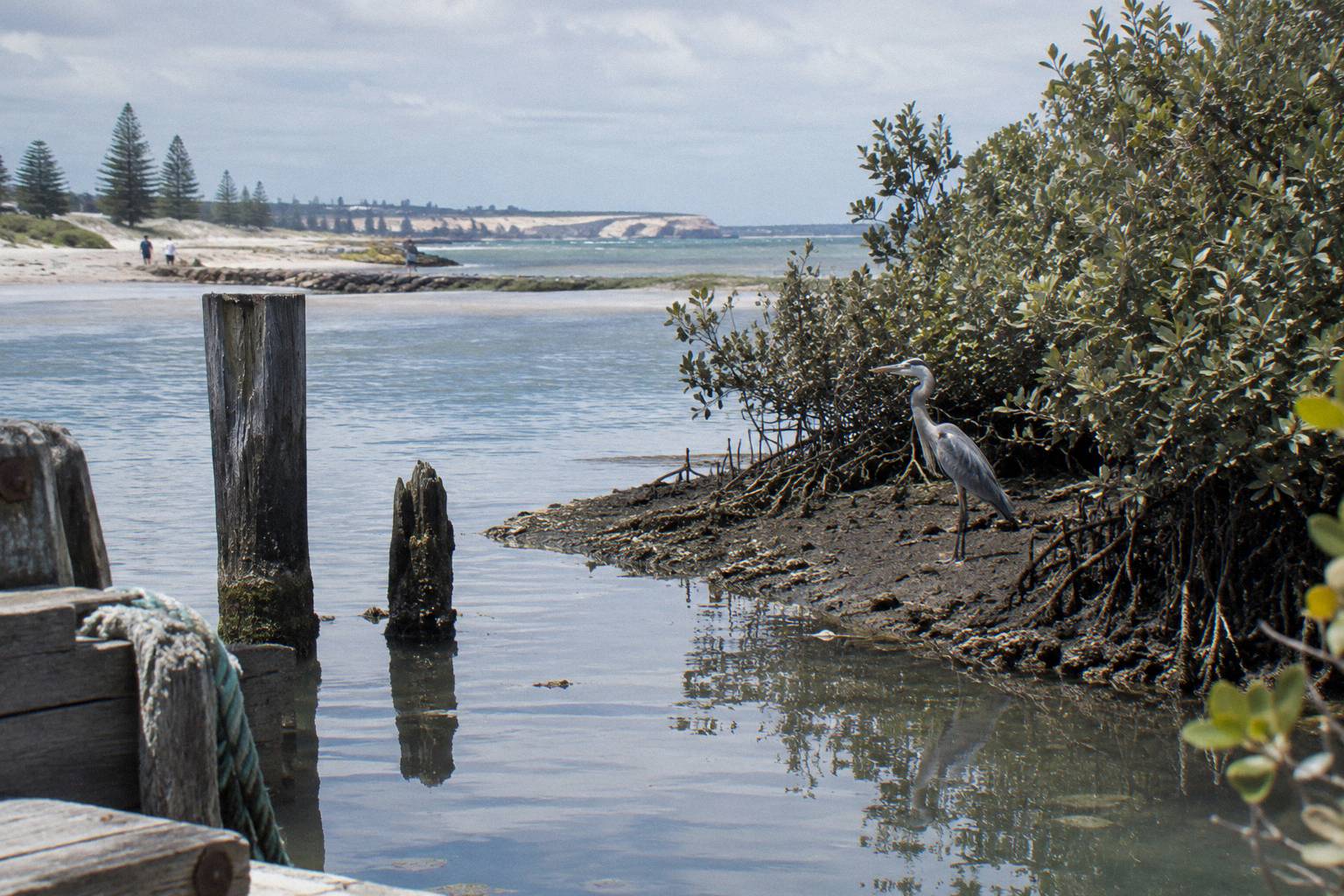
The sanctuary itself deserves a sentence of profile, because it changes what a camera sees. Official SA material describes 118 sq km of water, mangroves, saltmarsh, tidal flats and tidal creeks, occupied by Indo-Pacific bottlenose dolphins, with a fully grown animal running 120 to 160 kg and more than 2 m. These are shallow, sheltered waters compared with the open Gulf, and a 1.5-hour cruise through them is a low-commitment photography trip in a way a 4-hour swim cruise is not. Whether a camera may be used on any of these watch trips is, again, not separately stated: the general rule of this article, ask the operator, holds everywhere.
Questions To Ask Before You Book, In Order
The booking question for a photographer is not which camera but which ticket, and the operator conversation decides it. Ask, in this order: may a camera go in the water; may one go on the line; does crew photograph the trip; where do devices sit during the swim; and does any answer differ between swim positions. Five questions, two minutes, and the difference between a planned trip and a guessed one.
Each question earns its place. The first two establish whether the water time is photographable at all. The third covers the possibility that the operator solves the problem for you, which several dolphin-swim operators elsewhere in Australia do, though nothing published says these two do. The fourth protects the device you leave behind. The fifth matters specifically at Glenelg, where swimmers rotate between a Front Swim and a Back Swim, and conditions such as the two shark shields on the back swim differ between them.
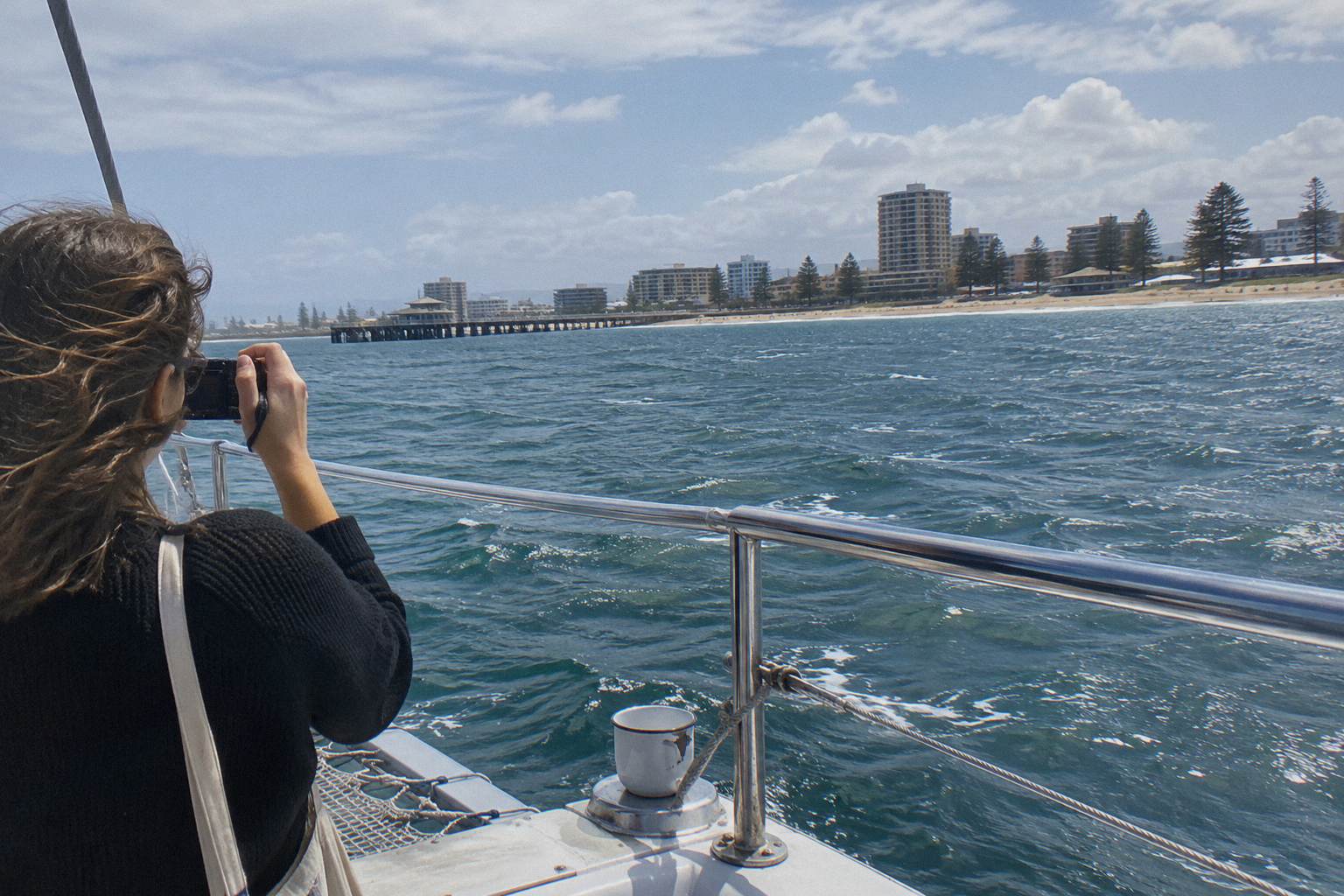
| Question | Why it matters | Stated anywhere? |
|---|---|---|
| May a camera go in the water? | Decides whether the swim itself is photographable | Not stated; ask the operator |
| May a device be held on the swim line? | Both swims occupy your hands on a towed line | Line is stated, camera policy is not |
| Does crew photograph the trip? | May replace your own camera entirely | Not stated; ask the operator |
| Where can phones be left on board? | A wet deck for up to 4 hours | Not stated; ask at boarding |
| Does the answer differ by swim position? | Glenelg rotates Front and Back Swim | Rotation is stated, policy is not |
| Is a watch ticket better for photos? | Frees both hands on the same boat | Watch tickets are stated options |
The pattern across the table is deliberate: the mechanics of each trip are published in detail, and the camera layer on top of them is published nowhere. An operator that will answer five plain questions by email is also an operator whose answers you can hold them to; one that will not answer them at all has told you something too.
Watching, Paddling And Other Camera-Friendly Dolphin Trips
Not every dolphin experience in this region asks you to hold a line. The Dolphin Sanctuary Kayak Tour, rated 4.8 across 300 reviews from USD 54.72, is a paddling-only trip in the sanctuary, and the Kangaroo Island Dolphin Watch, rated 4.8 across 640 reviews from USD 61.74, stays aboard for about 1 hour 15 minutes. Both leave a photographer's hands free, with very different commitments of time and money.
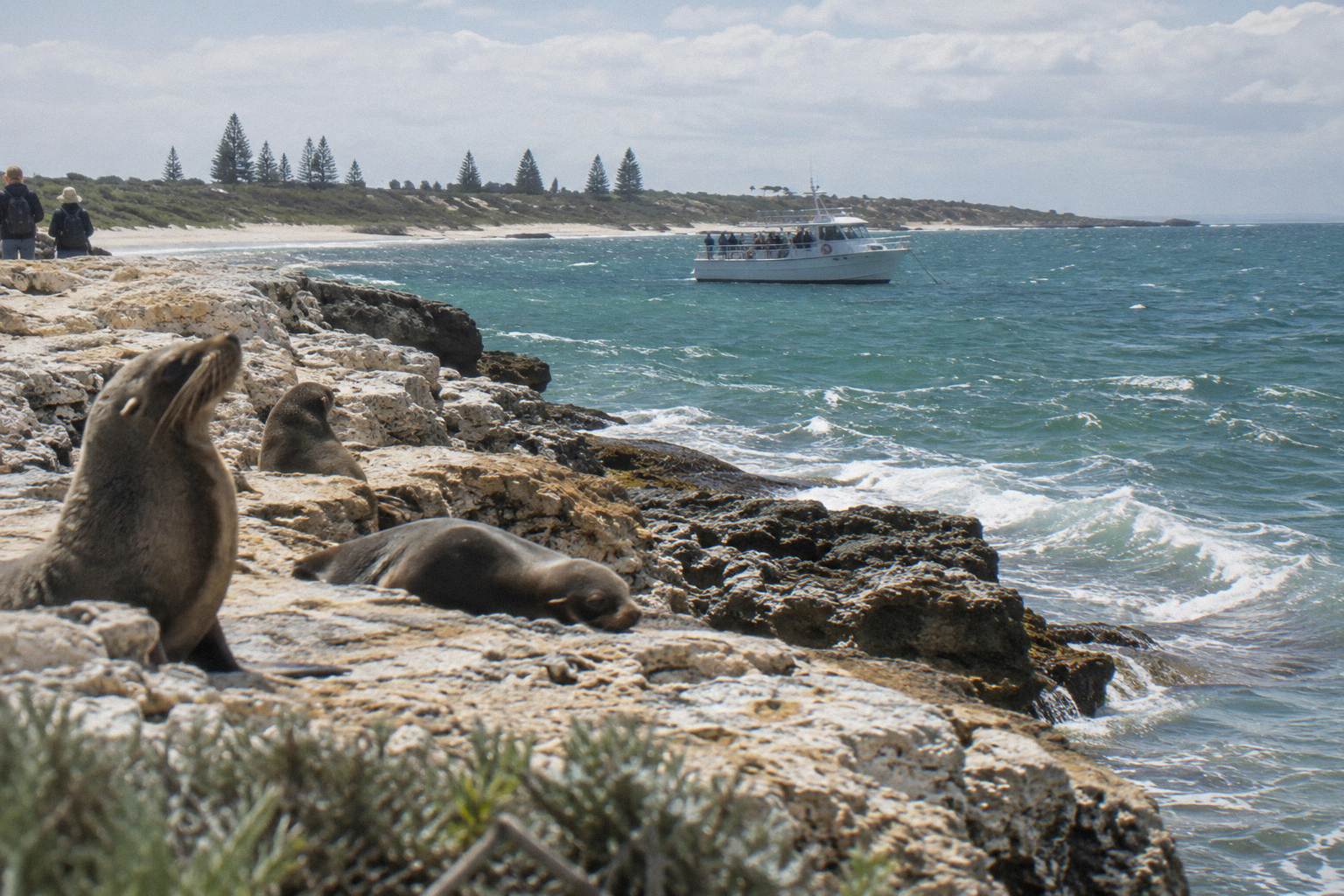
The kayak tour is the interesting middle case. Paddles occupy the hands in the way lines do, but the trip never asks you to enter the water, and paddling among mangroves and tidal creeks in the sanctuary's sheltered waters is a slower, quieter photographic platform than a towed swim. Whether a dry bag or device storage is offered is, consistent with everything on this page, not stated: ask the operator. The Kangaroo Island Dolphin Watch is the lowest-commitment option of all, a short coastal safari aboard a vessel with both hands free throughout, though it is the one trip on the roster flagged as non-refundable on its booking page, which a photographer booking around weather should weigh carefully.
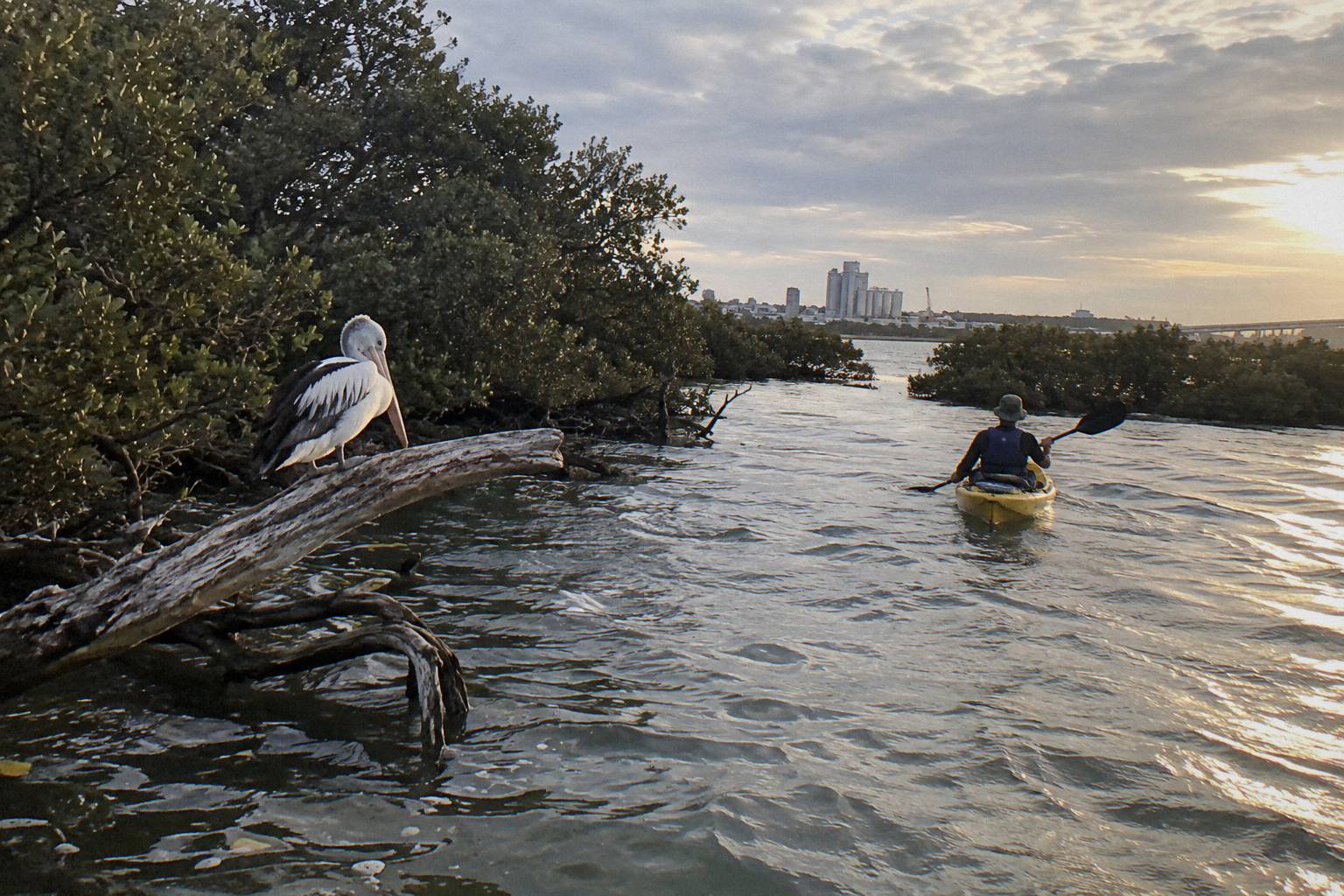
A comparison of the realistic camera platforms:
| Trip | Format | Hands free? | Listed from | Rating |
|---|---|---|---|---|
| Wild Dolphin Swim From Glenelg | Swim on a held line | No, line is held | USD 104 | 4.7 from 493 reviews |
| Kangaroo Island Ocean Safari Swim | Snorkel safari, 2 hours | No, line is often used | USD 132 | 4.4 from 137 reviews |
| Wild Dolphin Watch From Glenelg | Watch aboard the same boat | Yes | USD 62 | 4.8 from 409 reviews |
| Port River Dolphin Cruise | Watch, 1.5 hours | Yes | USD 60 | 4.5 from 481 reviews |
| Dolphin Sanctuary Kayak Tour | Paddle only | No, paddling | USD 54.72 | 4.8 from 300 reviews |
| Kangaroo Island Dolphin Watch | Watch, about 75 minutes | Yes | USD 61.74 | 4.8 from 640 reviews |
Read the table as a spectrum rather than a ranking. At one end sits the swim, the experience itself, with the camera an unresolved question and both hands committed. At the other end sit the short watch cruises, where the camera is the easiest thing in the world and the water time is nil. The kayak splits the difference, and the Glenelg watch ticket, uniquely, sits on the same boat as the swim, which is why it earns a place in this article's conversation.
The practical trade-offs between the formats, side by side:
| Format | Time commitment | Refund position on the booking page | Camera difficulty |
|---|---|---|---|
| Swim on a held line (Glenelg) | About 4 hours | Free cancellation up to 24 hours | Hardest: one hand on the line |
| Snorkel safari (Kangaroo Island) | 2 hours | Free cancellation up to 24 hours | Hard: line often used, 14-15 °C water |
| Watch aboard (Glenelg or Port River) | 3.5 hours or 1.5 hours | Free cancellation up to 24 hours | Easiest: both hands free throughout |
| Short coastal safari (Kangaroo Island watch) | About 1 hour 15 minutes | Non-refundable per its booking page | Easiest, but no refund flexibility |
The Wild Dolphin Watch From Glenelg is the one ticket that puts a camera and a swimmer in the same frame: same catamaran, same dolphins, no line in either hand. For a photographer travelling with someone booked on the swim, it is the natural pairing, and the cheapest way onto that boat.
Planning The Photo Side Of The Day
Treat the camera question as part of booking, not part of packing. Confirm the device policy in writing, choose swim or watch on the answer, arrive inside the stated boarding window with the device ready, and keep the law's distances in mind on the water. The trip mechanics are published, the camera layer is not, and the gap is yours to close with five questions.
Timing and season complete the plan. The Glenelg operator runs September to April with a morning departure, returning to the marina between 11:30am and midday per its FAQ, with the exact departure time on the booking confirmation; the Kangaroo Island safari runs year round on the operator's own account. Seasickness closes the loop: the Glenelg operator gives no refund for it and suggests tablets 30 minutes before departure, and a photographer leaning over a rail is exactly the person that advice was written for. More on that in seasickness and boat comfort on a dolphin swim.
Cancellation terms deserve one honest pass, since they apply to a booking made around a photography plan. On the booking pages, the Glenelg swim, the Kangaroo Island swim, the Glenelg watch, the Port River cruise and the kayak tour all show free cancellation up to 24 hours before. The Kangaroo Island Dolphin Watch is the exception, non-refundable per its booking page. The operators' own direct terms differ from the booking pages: Temptation's sighting-related returns and refunds apply for bookings made direct with the operator, and Kangaroo Island Ocean Safari's own tiers include no refund within 48 hours of a water-entry trip. Booking-page terms and operator-direct terms are two different documents; read the one that governs your ticket.
Everything on this page comes back to the publisher behind it: Adelaide Swimming With Dolphins exists to answer exactly these questions before a booking is made. If a camera policy appears on an operator's page, it will be recorded here; until then, the checklist above is the honest answer, and asking the operator is the reliable one.
Common Questions About Underwater Photos And Cameras On A Dolphin Swim
Can You Take A Camera On A Dolphin Swim?
It is not stated by either operator serving Adelaide or Kangaroo Island: no camera, phone or photo-package policy appears on any page read. Ask the operator before booking whether a device may go in the water, on the swim line, or only on the boat.
Do The Operators Sell Photos Of Your Swim?
No photo package or staff-photography service is stated on either operator's pages. The Glenelg trip carries marine biologist hosts and the Kangaroo Island trip runs with fitting and line crew, but nothing published says anyone photographs guests or dolphins.
Why Is It Hard To Photograph While Swimming With Dolphins?
Because both swims occupy your hands. Temptation Sailing says all swimmers hold a flotation line connected to the stern while towed slowly, and Kangaroo Island Ocean Safari says its buoyed swimmer line needs upper body strength. One line, one hand, at best one free hand for anything else.
Are There Laws About Photographing Wild Dolphins In South Australia?
The law sets distances, not cameras. Swimmers must keep 30 m from a marine mammal and 150 m from a calf or a disturbed, sick, injured, stranded or entangled animal, may spend no more than 30 minutes within 150 m, and must not touch or feed dolphins. The expiation fee is AUD 315 per alleged offence.
Is A Watch Ticket Better For Dolphin Photos Than A Swim?
For photography alone, usually yes: both hands are free, the boat holds the legal vessel distances, and at Glenelg the watch ticket is on the same boat as the swim. The operator claims a 100% above-water sighting record since 2002, an operator statement about the boat, not a promise of any particular photo.
Where Do You Leave Your Phone During The Swim?
Not stated by either operator. Glenelg boarding starts 15 minutes before departure at Marina Pier, and the Kangaroo Island meet is 30 minutes before for fitting, so both windows are the moment to ask crew where devices can sit during the water time.